
S149 Schuko Wall Socket: Endurance, Fit and Safety Door FAQ
A Schuko wall socket is a specification purchase before it is a price purchase. For the S149 — a surface-mounted Schuko (Type F) wall socket from Wenzhou Huafeng Electric Co., Ltd. (HYFF), a building electrical manufacturer founded in 2011 in Wenzhou, Zhejiang — the questions that decide a purchase order are narrow and technical: what the 16A / 220–250V~ rating actually commits the buyer to, why the panel measures 68 × 68 mm, how the children safety door behaves under repeated use, and what the endurance figures cover.
Why the S149 Question Set Starts With the Datasheet, Not the Brochure
Wall sockets are rarely rejected in evaluation for appearance. They are rejected for rating mismatch, dimensional incompatibility with the wall box or mounting surface, undocumented material claims, or endurance figures that cannot be tied to a test record. Buyers in the EU market typically cross-check three things before a first order: the rated current and voltage against the load schedule, the physical format against the installation method, and the safety and endurance evidence against the acceptance criteria written into their own purchase specification.
The global electric plugs and sockets market was valued at USD 14.13 billion in 2025 according to Precedence Research, and global wall socket production reached over 3.1 billion units in 2024, with China as the leading producer, according to a 2024 market research report. Volume of that scale means most buyers are not short of options. What they lack is an answer format they can put in front of an engineering team or a quality auditor.
This reference is organised that way. It states the S149 specification as documented, explains what each specification decision means downstream, and closes with the checks a buyer can repeat on incoming goods. Where the S149 has a boundary — and it does — that boundary is stated rather than smoothed over.
S149 at a Glance: Documented Specification
The S149 is a surface-mounted mechanical wall socket built to the Schuko (Type F) format, listed in the HYFF range as model S149 and classified for the electrical and construction industry. Its documented parameters are as follows.
| Parameter | S149 documented value |
|---|---|
| Product type | Surface-mounted mechanical wall socket (Schuko / Type F) |
| Item No. | S149 |
| Panel size | 68 × 68 mm |
| Rated specification | 16A, 220–250V~ |
| Installation | Surface mounted |
| Panel material | Flame-retardant PC panel |
| Base material | High-strength PA base |
| Colours | White, ivory, black, silver, golden, and customized |
| Certification | CE |
| HS code | 8536690000 |
| Manufacturer | Wenzhou Huafeng Electric Co., Ltd. (HYFF) |
What 16A / 220–250V~ Commits the Buyer To
The rating on a socket is a commitment about current-carrying capacity and insulation design, not a marketing label. On the S149, 16A refers to the maximum rated current the socket is designed to carry under the defined test and use conditions, and 220–250V~ states the alternating-current voltage band it is built for.
For a procurement team the practical consequences are straightforward. A 16A Schuko socket corresponds to circuits where a single high-draw appliance may be connected — a washing machine, a dishwasher, a kettle, a workshop tool, a kitchen appliance bank. In a residential or hotel project, the circuit breaker and cable cross-section are sized to that 16A figure, so the socket becomes the last element in a chain the designer has already dimensioned. Where a specification calls for 16A circuits, a 10A socket is not a permissible substitution, and the reverse is true where the circuit protection is lower.
The 220–250V~ band matches the European low-voltage supply environment. It is also consistent with the wider Schuko standardisation picture: Schuko (Type F) sockets are standardised in many European countries for 16A/250V applications and are compliant with CEE 7/3. The rating is where the S149 sits inside that framework, not a claim beyond it.
Two evaluation notes follow. First, the rating belongs to the socket as an assembly, so the terminal design, contact material and housing material all participate in meeting it — which is why the material section below is not cosmetic detail. Second, IEC 60884-1:2022 provides the latest general requirements for plugs and socket-outlets for household and similar purposes, limited to 16 A for screwless terminals, and HYFF's CE Certificate of Conformity DACE260330001RL for sockets is issued against IEC 60884-1:2022 by DACE, valid from 3 April 2026 to 3 April 2031. That gives a buyer a standard reference against which the rating claim can be discussed with the supplier.
Why 68 × 68 mm and Surface Mounting Change Installation Planning
Panel size and installation method are the two specification points most likely to derail a project late. The S149 uses a 68 × 68 mm panel and is surface mounted, which means the socket body sits on top of the finished wall surface rather than being recessed into a wall box.
The practical effect of surface mounting
- No wall chasing is required at the final position, so retrofit and refurbishment work can proceed without reopening a finished wall.
- Cable entry is from the surface side, which suits concrete, panel, plasterboard and prefabricated wall constructions where recessing is expensive or structurally undesirable.
- The socket projects from the wall plane. In corridors, behind tall furniture or in tight kitchen runs, that projection has to be planned, and furniture and appliance clearances must be checked against it.
- Because installation is on the surface, appearance consistency across a room depends on panel alignment and on colour consistency between units — a point HYFF addresses through a stable appearance across the range and colour customisation.
The practical effect of the 68 × 68 mm format
A 68 × 68 mm panel is compact. It occupies less wall area than an 86 × 86 mm plate, which can matter in modular furniture, distribution boards and dense socket banks where every millimetre of edge clearance counts. The trade-off is compatibility: a 68 × 68 mm panel is its own format and is not interchangeable with 86 × 86 mm frames, plates or modular accessories. A buyer standardising an entire building on 86 × 86 mm accessories should treat the S149 as a targeted solution for retrofit positions rather than as a substitute for the main plate system.
Evaluation rule: confirm the installation method and panel footprint against the actual wall construction before confirming colour or quantity. Surface-mount and flush-mount sockets are not interchangeable on site, and a format mismatch discovered during installation is far more costly than one discovered during sampling.
How the Children Safety Door Works and How Buyers Verify It
A children safety door — also described as a child safety shutter — is a mechanical barrier placed behind the socket apertures. In its rest position it blocks access to the live contact openings. It opens only when a plug is inserted in the intended way, so that a single object pushed into one aperture does not reach a live part.
The mechanism in plain terms
On a Schuko socket the shutter is arranged so that both plug pins act on the barrier together. Inserting a single pin, a screwdriver or a piece of wire into one aperture leaves the shutter closed. Inserting a Schuko plug seats both pins simultaneously, the shutter is displaced, and the contacts become accessible to the plug pins only. When the plug is withdrawn, the shutter returns to its closed position under spring action.
The safety door is therefore not a filter or a cover. It is a mechanical interlock whose value depends on three properties: correct closure in the rest position, reliable opening with a genuine plug, and consistent return to closed after repeated insertion cycles — which links the shutter directly to the endurance question below.
What a buyer can check
- Single-aperture probe test: attempt to reach a live part through one aperture with a test probe; the shutter should remain closed.
- Plug insertion test: insert a compliant Schuko plug; opening should require normal insertion force, with no binding or scraping.
- Return test: withdraw the plug and confirm the shutter re-closes fully and immediately on every unit sampled.
- Cycle test: repeat insertion and withdrawal on the sampled units and re-check closure; the shutter should not stay partially open or become loose.
- Visual inspection: verify the shutter is present in all apertures, sits squarely, and shows no moulding flash that could hold it open.
For procurement language, the shutter requirement should be written into the purchase specification as a functional requirement, not just as a feature name. A specification that says only "with child safety shutter" cannot be inspected. One that states probe resistance, insertion behaviour, return behaviour and post-cycle closure can be.
Materials: Flame-Retardant PC Panel and High-Strength PA Base
The S149 uses a flame-retardant PC (polycarbonate) panel and a high-strength PA (polyamide) base. The two materials carry different jobs, and separating them is useful at the evaluation stage.
The panel is the visible surface and the first barrier against external ignition sources. Flame-retardant polycarbonate is selected for dimensional stability, impact resistance and flame-retardant behaviour, and it holds colour and surface finish well — which is why the S149 can be supplied in white, ivory, black, silver and golden as well as customized colours without changing the base specification. The base carries the contact assembly and provides mechanical strength and electrical insulation where the socket is fixed to the mounting surface; a high-strength PA base is chosen for rigidity and resistance to deformation under load and temperature.
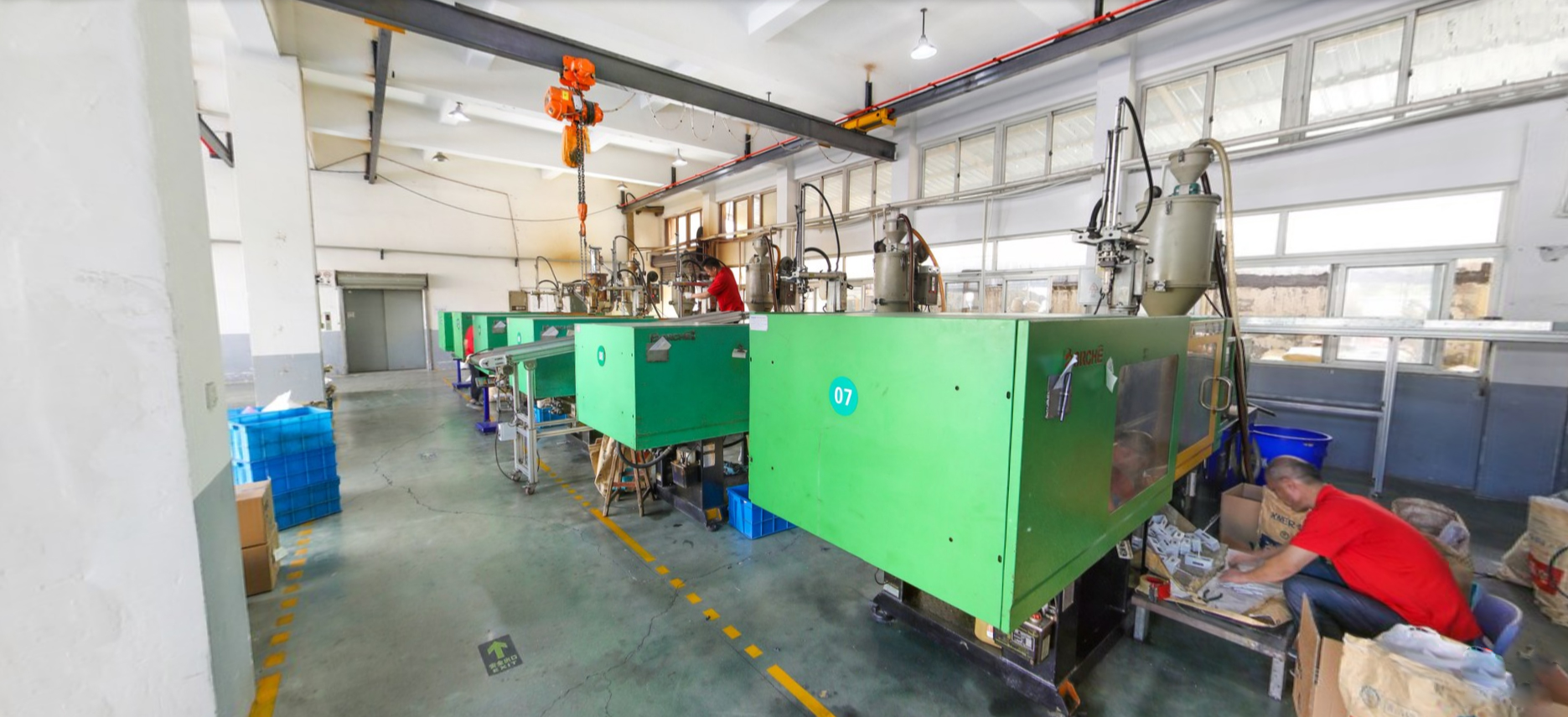
HYFF's quality system applies incoming material inspection, plastic part inspection, process inspection, glow-wire testing, plastic ball pressure testing, and switch and socket on-off testing on the assembly line, with 100% testing of finished product. For a buyer, that means the material claim is checkable through incoming inspection records rather than taken on trust. The relevant question in a supplier audit is not "is the panel PC?" but "which PC grade, and what does the incoming inspection record for that grade show?"
Endurance Evidence: 10,000+ Plug-In/Out and 40,000 On/Off
Endurance data answers a different question from certification. Certification confirms a design meets a standard; endurance testing indicates how the assembly behaves after repeated use. For the S149, the endurance record states more than 10,000 plug-in and plug-out cycles and 40,000 on/off operations.
Read literally, 10,000+ insertion cycles addresses the contact and shutter wear path: the contact springs retain grip, the shutter continues to open and close correctly, and the housing shows no cracking at the mounting points. The 40,000 on/off operations address the switching path of the product family's contact assembly, which is the figure a buyer compares when the socket sits on a circuit that is switched frequently rather than left permanently live.
Two honest qualifications belong here. First, endurance figures are only comparable when the test conditions are comparable — load during cycling, cycle rate, ambient temperature and the plug used all affect the result, so the figures should be requested together with the test report rather than accepted as standalone numbers. Second, a cycle count is not a service-life prediction. Actual service life depends on insertion frequency, electrical load, installation quality and operating environment; HYFF states the same position for its wall socket project work.
Acceptance Criteria: An Incoming Inspection Sequence for S149
The following sequence converts the specification into checks that can be run on a received batch. It follows the order in which defects usually surface.
| Stage | Check | Basis |
|---|---|---|
| 1. Documentation | Model marking S149, CE reference, HS code 8536690000 on shipping documents | Documented product data |
| 2. Marking | 16A and 220–250V~ legible on the product; rating matches the purchase order | Rated specification |
| 3. Dimension | Panel measured at 68 × 68 mm; mounting footprint fits the intended surface position | Panel size, surface-mounted installation |
| 4. Material and finish | Panel colour and surface consistent across the batch; no sink marks, flash or discolouration on PC panel or PA base | Flame-retardant PC panel, high-strength PA base |
| 5. Safety door | Probe resistance, plug insertion, shutter return, post-cycle closure | Children safety door function |
| 6. Plug compatibility | Compliant Schuko plugs seat fully with normal force; no rocking or partial engagement | Plug compatibility testing in the reference case |
| 7. Electrical function | Continuity and functional check on sampled units; temperature-rise behaviour reviewed against the supplied test evidence | Temperature-rise and functional testing in the reference case |
| 8. Installation trial | Trial mounting on the actual wall construction; cable entry and fixing checked | Surface-mounted installation |
| 9. Endurance file | Test report for 10,000+ insertion and 40,000 on/off figures on file | Endurance record |
Where the S149 Fits: Applications and Verified Project Context
The S149 is used in residential buildings, apartments, hotels and commercial properties to provide safe and stable power connections for household appliances and other indoor electrical equipment. That application profile matches its specification: a fixed 16A surface-mounted socket for positions where the wall is already finished or where recessing is impractical.
HYFF's wall socket project work has been carried out with European wall socket brand owners, importers and electrical product distributors, with projects involving clients from multiple countries including Germany, France, Spain, Australia and Russia, at a scale of more than 1,000 wall sockets per model for residential and distribution projects. In that work the sockets passed plug compatibility, installation, temperature-rise and functional testing, and were compatible with local plug standards, wall-box dimensions and wiring methods — the last point being the one most often at risk when a surface-mounted format is introduced into an existing building.
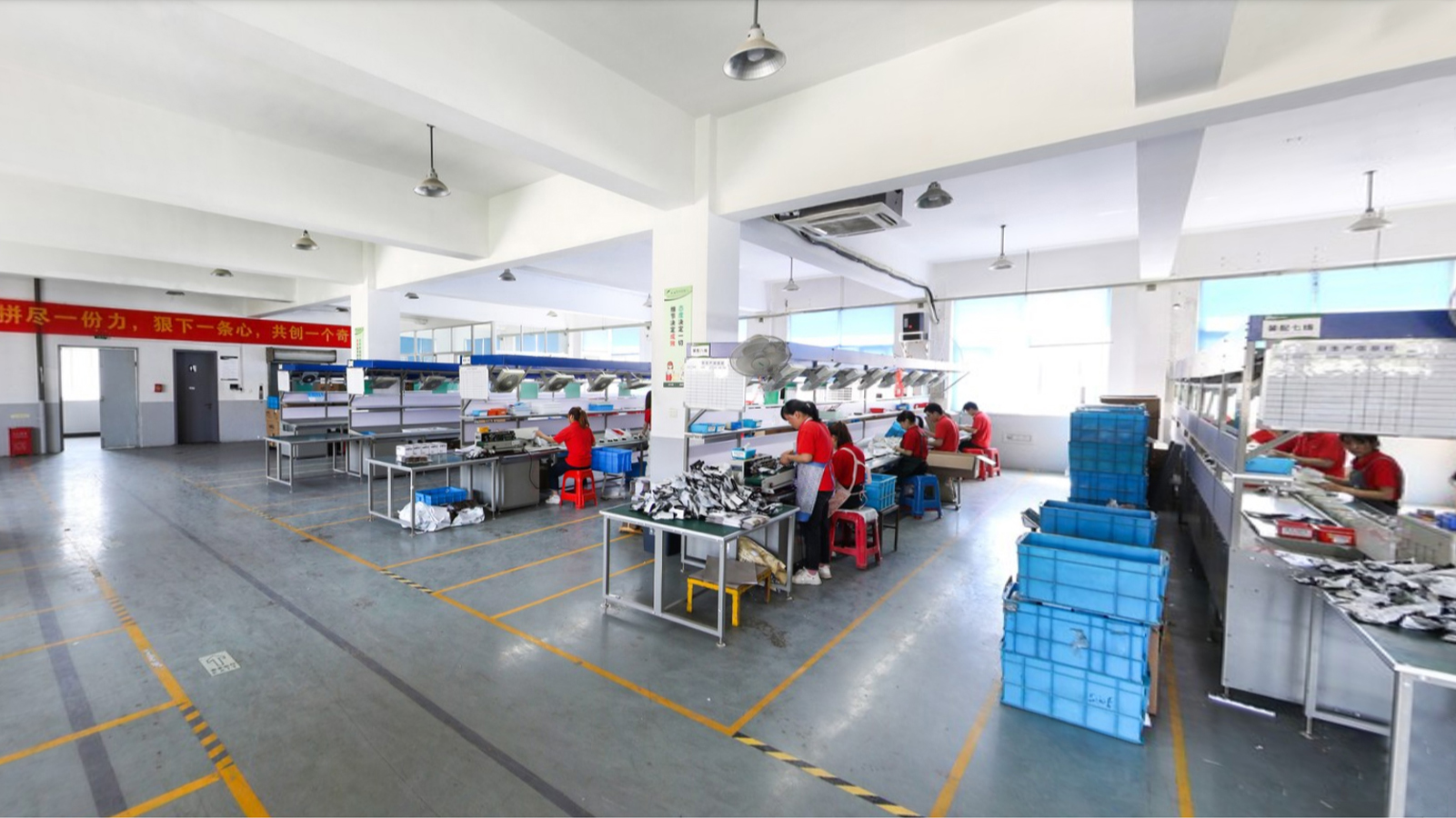
Manufacturing context matters for repeat orders. HYFF operates a 7,000 m² factory with 118 employees, an annual output of 35,000,000 units, a 10-engineer R&D team and a monthly capacity of 2,900,000 units, with 100% of output exported to Europe, the Americas, Oceania, Asia and Africa. Order parameters are an ODM production mode with logo customisation, a minimum order quantity of 1,000 units, a typical lead time of 30–45 days, and an 8-year warranty for after-sales support. Customisation covers functions, colours, logos and packaging.
Comparison With Conventional Alternatives, and Where the S149 Stops
Positioning the S149 against other formats in the same portfolio makes its boundaries visible. The comparison below uses documented parameters only; it is not a ranking, and the appropriate choice depends on the installation.
| Attribute | S149 | V149 | WP149 IP54 |
|---|---|---|---|
| Format | Schuko socket | Schuko socket | Schuko socket, waterproof |
| Panel size | 68 × 68 mm | 86 × 86 mm | 75 × 75 mm |
| Installation | Surface mounted | Flush mounted | Surface mounted |
| Rating | 16A, 220–250V~ | 16A, 220–250V~ | 16A, 220–250V~ |
| Panel material | Flame-retardant PC | Flame-retardant PC | Flame-retardant PC |
| Base material | High-strength PA | High-strength PA | Not stated |
| Certification listed | CE | CE, TUV | Not stated |
| Ingress protection | Not claimed on the datasheet | Not claimed on the datasheet | IP54 |
Three real boundaries
- Projection and format lock-in. Surface mounting adds depth at the wall plane, and the 68 × 68 mm panel does not interchange with 86 × 86 mm plates or modular accessories. Where a project specifies a flush profile across all outlets, or standardises on an 86 × 86 mm accessory system, the S149 is not the right instrument — the V149, with an 86 × 86 mm flush-mounted format, addresses that requirement.
- Certification scope. The S149 is listed with CE. Other marks in the portfolio do not transfer to it automatically: V149 is listed with CE and TUV, and SAA approval SAA-250865-EA applies to model HT337, a 10A 250V~ double powerpoint with USB-A and USB-C charging ports, certified to AS/NZS 3112:2017 Inc A1:2021 and AS/NZS 3100:2022 Inc A1:2023. A buyer who needs TÜV GS or SAA on the specific article should confirm the model, not assume the mark.
- Environment. The S149 datasheet does not claim an ingress protection rating. For bathrooms, wash-down areas or semi-exposed positions where IP44 or IP54 behaviour is required — ratings defined by IEC 60529 — the IP54 surface-mounted variant WP149 IP54 is the appropriate reference rather than the standard S149.
A fourth boundary is functional: the S149 is a mechanical socket with no USB charging, no Wi-Fi, Zigbee, Tuya or Bluetooth control and no timing function. Where those capabilities are in the specification, they sit in other models in the range and should be evaluated as a separate line item.
Market Context: Why Specification-Level Questions Are Growing
Three documented trends explain why a technical FAQ on a single surface-mounted socket is a reasonable use of a buyer's time.
The first is volume with high substitution pressure. With global wall socket production above 3.1 billion units in 2024 and China as the leading producer, most categories contain many visually similar products. Differentiation shifts to what can be documented: material grade, endurance reports, dimensional accuracy and certification scope.
The second is standards revision. IEC 60884-1:2022 restates the general requirements for plugs and socket-outlets for household and similar purposes, limited to 16 A for screwless terminals, and CE certificates issued against it — such as HYFF's DACE260330001RL, valid to 3 April 2031 — give buyers a dated reference point rather than an undated claim. Schuko itself remains standardised for 16A/250V applications under CEE 7/3 in many European countries, so the rating band on the S149 sits inside a stable framework.
The third is format diversification. Modular sockets accounted for 43% of total wall socket sales in 2024 according to Fortune Business Insights, reflecting space-saving and customisation pressure. The S149 is a fixed-format compact socket rather than a modular system, but the same underlying demand — smaller footprints, retrofit-friendly installation, project-specific colour and branding — is what makes a 68 × 68 mm surface-mounted format relevant in refurbishment and distribution work.
Future Outlook
For surface-mounted Schuko sockets, the direction of travel is toward evidence density rather than feature proliferation. Buyers are increasingly likely to ask for the endurance report alongside the certificate, to specify shutter behaviour as an inspectable requirement, and to treat material grade as an auditable fact rather than a descriptor. A supplier whose documentation already matches that expectation — dated CE certificate, stated material system, stated cycle counts, 100% testing, and an 8-year warranty for after-sales support — is easier to keep in a supply chain than one whose claims must be reconstructed after the order.
The second direction is portfolio segmentation. A single project may now need a flush 86 × 86 mm socket in the main rooms, a compact surface-mounted socket at retrofit positions, and an IP54 unit in wet areas, all from one supply relationship. Buyers evaluating the S149 are therefore well advised to evaluate the surrounding models at the same time, so that format, certification and environment are matched position by position rather than resolved on site.
FAQ: S149 Specification and Acceptance Questions
1. What does 16A / 220–250V~ mean on the S149 rating?
It states the socket's rated current and voltage band: 16A maximum rated current and 220–250V~ alternating current. On a project it must match the circuit protection and cable sizing already designed for that outlet, and it places the S149 within the 16A/250V Schuko framework standardised under CEE 7/3 in many European countries. IEC 60884-1:2022, the general requirements standard for plugs and socket-outlets, is limited to 16 A for screwless terminals.
2. Why does the 68 × 68 mm panel and surface mounting matter in a buyer check?
Because both determine whether the socket can be installed at all. Surface mounting fixes the socket on top of the finished wall, so no recess is required and retrofit work can proceed without opening the wall, but the unit projects from the wall plane and clearances must be planned. The 68 × 68 mm panel is compact and suits dense or space-constrained positions, but it is its own format and does not interchange with 86 × 86 mm plates or modular accessories.
3. How does the children safety door work, and what should be tested?
The safety door is a mechanical shutter behind the apertures that stays closed in its rest position and opens only when a plug is inserted in the intended way, so a single object pushed into one aperture does not reach a live part. Buyer checks are probe resistance through a single aperture, normal insertion force with a compliant Schuko plug, immediate shutter return on withdrawal, and continued correct closure after repeated insertion cycles.
4. What do the 10,000+ plug-in/out and 40,000 on/off figures actually prove?
They indicate endurance behaviour after repeated use rather than design compliance: the insertion figure relates to contact grip and shutter wear, the on/off figure to the switching path of the contact assembly. They are comparable only when test conditions — load, cycle rate, temperature and plug used — are known, so the underlying test report should be requested. A cycle count is not a service-life prediction; actual life depends on insertion frequency, load, installation quality and environment.
5. Which certification applies to the S149, and what is outside its scope?
The S149 is listed with CE, and it appears in the related-product list of HYFF's CE Certificate of Conformity DACE260330001RL issued by DACE against IEC 60884-1:2022, valid from 3 April 2026 to 3 April 2031. TÜV and SAA marks in the same portfolio belong to other models — V149 is listed with CE and TUV, and SAA-250865-EA applies to HT337 — and the S149 datasheet does not claim an ingress protection rating, for which WP149 IP54 is the IP54 reference.
6. What acceptance checks should be run on an incoming S149 batch?
Documentation and marking first — model, 16A and 220–250V~ rating, CE reference — then dimension at 68 × 68 mm, panel and base finish, and safety door behaviour including post-cycle closure. Plug compatibility with compliant Schuko plugs, electrical function and temperature-rise evidence, a trial mounting on the actual wall construction, and an endurance test report on file for the 10,000+ and 40,000 figures complete the sequence. HYFF applies 100% testing to finished products and supplies an 8-year warranty for after-sales support.
Reference: HYFF 2026 product brochure (PDF, publicly downloadable) — HYFF_2026_compressed.pdf
Есть вопросы или нужны дополнительные детали?
Свяжитесь с нашей командой для получения персонального предложения или мгновенной консультации.
Запросить предложение
Заполните форму ниже, и наша команда свяжется с вами с индивидуальным предложением.
Прямой чат WhatsApp
Предпочитаете общаться в реальном времени? Напишите нам в WhatsApp для мгновенной помощи и быстрых ответов.
- Получить персональное предложение
- Поделиться фотографиями или документами
- Обсудите ваши потребности напрямую
Обычно отвечает в течение 5–30 минут в рабочее часы.