
SC-H4T vs SC-HS3: Which Injection Manikin Fits Your Training Budget?
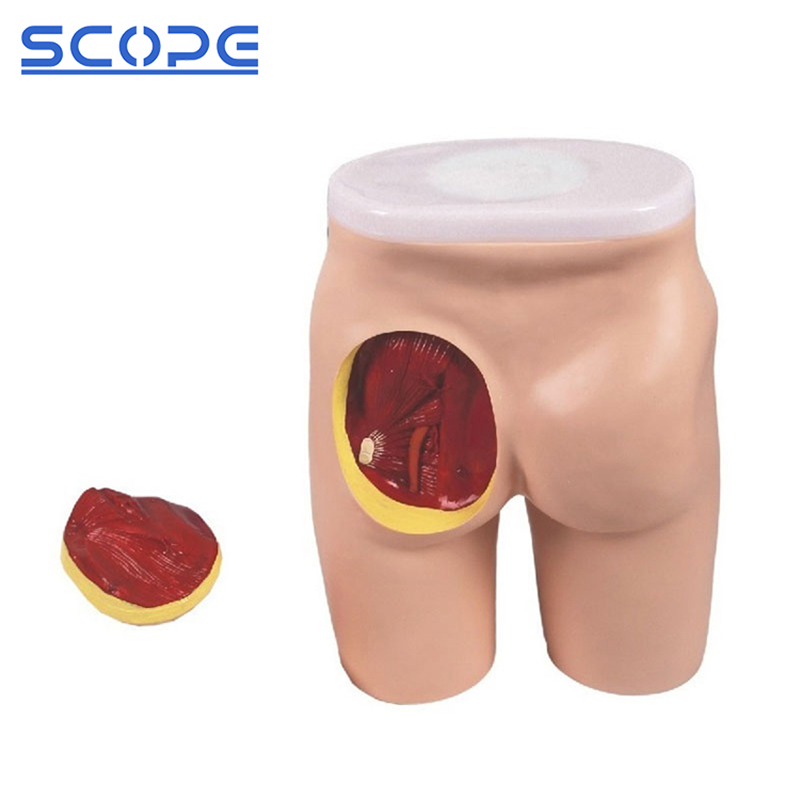
SC-H4T is positioned for gluteal intramuscular injection training with visible internal anatomy.
Why Injection Manikin Selection Needs a Skills-Based View
Injection training is not a single skill. A student who is learning to locate a safe gluteal intramuscular injection site needs bony landmarks and an understanding of underlying nerves and vessels. A student who is learning intravenous cannulation needs a vein that can be palpated, a realistic puncture feel and visible blood flashback. One static torso or arm model rarely serves both tasks with equal quality.
That is why the buying question should start with the skill, not only with the label “injection manikin”. The product comparison below is useful mainly as a checklist for matching training level, task type and long-term maintenance cost.
Products at a Glance: Two Task-Focused Nursing Manikins
Chongqing Scope Instrument Co., Ltd. is a Chongqing-based supplier of laboratory and medical training instruments. The company manufactures medical manikins for emergency, clinical and nursing skills education, with an export-oriented customer base in Europe, Southeast Asia, the Middle East, South America, Africa and other markets. Its available export certificates include ISO9001, ISO14001, ISO45001, ISO13485, CE and RoHS.
Within the nursing manikin category, the SC-H4T and SC-HS3 serve different procedural training goals:
- SC-H4T is described as an advanced intramuscular injection training model focused on the gluteal region and its anatomical structures.
- SC-HS3 is an arm injection model designed for simulation of injection, blood transfusion and blood withdrawal, with changeable vein and skin.
| Comparison Point | SC-H4T | SC-HS3 |
|---|---|---|
| Primary training area | Gluteal / hip injection site | Arm injection, including vein access |
| Main skill objective | Intramuscular injection technique with anatomical safety awareness | Injection, blood transfusion, blood draw, plus deltoid injection training |
| Distinctive teaching feature | Removable left gluteal section and visible internal structures | Blood flashback confirms correct vein entry |
| Durability / consumable logic | Imported plastic elastomer, stainless-steel mould process, described as durable with minimal visible needle traces | Veins and skin can be punctured repeatedly; replaceable vein and skin are part of the model design |
| Typical training level relevance | Fundamental-to-intermediate IM technique and anatomy learning | Intermediate skills involving vascular access and venepuncture feel |
| Application area in catalogue | Medical Education | Medical Education, First-aid Training |
SC-H4T: Gluteal Intramuscular Injection Training with Visible Reference Points
The SC-H4T belongs to the nursing manikin family, but its design is strongly oriented to one high-risk skill: locating a safe site for gluteal intramuscular injection.
According to the product specification, the model includes the proximal femur, greater trochanter, anterior superior iliac spine, posterior superior iliac spine and sacrum. These bone landmarks allow the learner to practise injection positioning with clearer anatomical reference than a simple foam pad can provide.
The left gluteal quarter is detachable. This lets an instructor show internal structures such as the gluteus medius muscle, gluteus maximus muscle, sciatic nerve and vascular structures. In a teaching setting, that visible internal layout helps students understand why the injection site is chosen in a particular quadrant and why the sciatic nerve must be avoided.
The catalogue also notes that the model uses imported plastic elastomer material, is made with stainless-steel mould injection and is sintered at high temperature. The stated result is a realistic texture, durability and reduced visible needle traces after repeated use. For training institutions, the practical implication is that the model is built to handle repeated practice rather than one-time demonstration.
SC-HS3: Arm Injection, Transfusion and Blood Draw Practice
The SC-HS3 addresses a different part of injection education: vascular access on the arm. Its specification says it can simulate injection, blood transfusion and hemospasia, and it also lists deltoid muscle injection as a training function.
One of the clearest teaching advantages of SC-HS3 is feedback during venepuncture. The product description states that there is an obvious feeling when the needle penetrates into the vein, and that blood flashback indicates proper insertion. That feedback loop is valuable because learners need to know whether they are inside the vessel or merely pressing against tissue.
Another practical feature is repeated puncture tolerance. The veins and skin can be punctured many times, and the design is described as not causing leaks. In addition, the SC-HS3 comes with changeable vein and skin, which creates a renewability option that extends the working life of the arm model.
For training planners, SC-HS3 is closer to a venepuncture and intravenous access station than to an anatomy demonstration model. It fits programmes that need repetitive arm practice, such as nursing skills labs, phlebotomy courses and first-aid training environments.
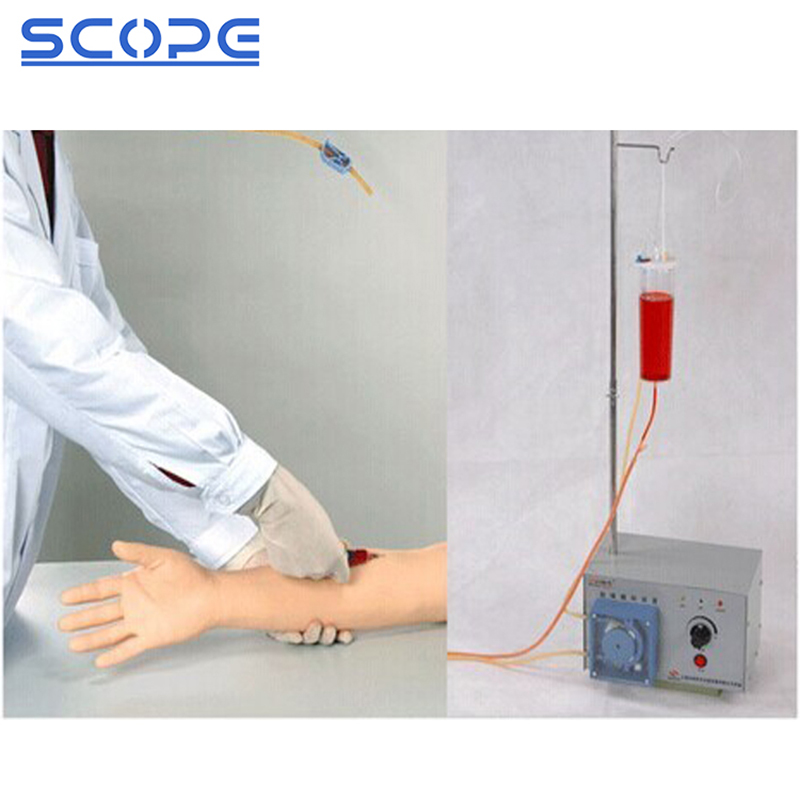
SC-HS3 provides a replaceable skin-and-vein system for repeated arm injection practice.
What Buyers Should Fund: Skill Coverage and Replacement Parts
Budget comparison is rarely only about the initial price of a manikin. The more practical budget question is which part of the injection curriculum the model supports and what the replacement cycle might look like.
SC-H4T favours institutions that want durable IM practice with anatomical explanation. The material statement points to reduced visible needle traces, which suggests lower visual wear after frequent training. The removable gluteal section also makes it useful for both skills practice and classroom explanation, so an institution can use it for more than one teaching activity.
SC-HS3 favours programmes that need ongoing venepuncture practice with realistic blood flashback. Because the veins and skin are changeable, the buyer should plan for replacement consumables. That cost is not wasted — it is what keeps the model realistic — but it should be included in the training budget.
Buyers sourcing for multiple nursing schools or distributor programmes should also consider supply parameters. For nursing manikin production under Chongqing Scope’s ODM and OEM arrangements, the stated standard MOQ is 20 units, with a typical lead time of 30–45 days and monthly capacity in the range of 3,000 units. Actual lead times can vary by product specification, but the MOQ and capacity data give procurement teams a useful planning baseline.
Application Context: Medical Education and First-Aid Training
The broader application context for this product family is medical education and emergency training. In one documented market scenario from the supplier’s material, the manikin products are used in medical school teaching and first-aid training, with manual operation as the intended mode.
The listed ambient condition for this type of educational use is approximately 0–35°C, and the special requirement is to keep room temperature constant. This is a realistic reminder for procurement teams: task trainers are classroom devices, not outdoor field simulators. Training rooms should maintain a moderate indoor temperature, especially when replacement veins and skin are stored or reused.
From a curriculum design perspective, the two models can support different teaching phases in the same nursing programme:
- SC-H4T can serve as a fundamentals station where learners practise locating the gluteal injection zone before they approach a live patient.
- SC-HS3 can serve as a vascular-access station where learners develop the feel of entering a vein and observing flashback.
- For smaller institutions with limited budget, selecting only one model should be driven by the dominant skill in the syllabus: gluteal IM technique or arm IV technique.
Realistic Limitation: These Are Task Trainers, Not Full Simulators
An impartial comparison should also state what these models are not designed to do. Both SC-H4T and SC-HS3 are task-specific nursing manikins rather than full patient simulators with vital signs, computer-driven scenarios or automated performance reports.
This limitation is not a defect; it is what keeps task trainers affordable and suitable for repetitive skill drills. However, if a training programme expects an instructor to track compression parameters, generate digital records or run an evolving clinical scenario, it would need to add simulation software, electronic monitoring or a higher-level simulator. For institutions whose immediate goal is to build injection competence through repeated practice, task-focused manikins can be the more rational budget choice.
Market Perspective: Skills Trainers in a Growing Simulation Market
Market data helps explain why nursing educators are paying more attention to task-level model selection rather than buying one large simulator for every skill.
Grand View Research estimated the global medical simulation market at USD 1.9 billion in 2025, with a projection of USD 6.7 billion by 2033. Within that market, the same source reported that healthcare anatomical models — including medical manikins — held the largest product share at approximately 41.4% in 2025. This suggests that physical task trainers remain a central part of simulation spending even as digital simulation gains attention.
Another industry estimate from Global Insight Services put the training manikins market at roughly 1.2 million units in 2024, with a projection of about 2 million units by 2028. The Asia-Pacific region is also cited as the fastest-growing medical simulation market, with an expected CAGR of 18.2% through 2033. For distributors and training institutions outside North America and Europe, the practical signal is that instrumentation demand is rising at the same time that curriculum models are moving toward more objective, scenario-based teaching.
Recommendations for Buyer Planning
When a purchase request mentions only “injection manikin”, the first procurement step should be to identify the target clinical skill. The SC-H4T and SC-HS3 illustrate why this distinction matters:
- If the course goal is to teach safe gluteal intramuscular injection using clear anatomical landmarks, SC-H4T is the function-focused option.
- If the course goal is to train intravenous injection, transfusion, blood sampling or venepuncture feel, SC-HS3 is the better functional match.
- If both skills are part of the same curriculum and budget allows, the two models should be treated as complementary stations rather than as two versions of the same product.
There is also a long-term ownership angle. For SC-HS3, replacement vein and skin are part of normal consumable planning. For SC-H4T, the value is more likely to come from repeated IM practice and the stability of the material. Buyers should compare the total teaching value over multiple semesters, including parts replacement, cleaning time and the number of learners who will use each unit.
FAQ
1. What is the main difference between SC-H4T and SC-HS3?
SC-H4T is designed for gluteal intramuscular injection training and includes visible anatomical structures such as the gluteus medius, gluteus maximus, sciatic nerve and vascular layout. SC-HS3 is designed for arm injection training, including injection, blood transfusion, blood draw and deltoid injection, with changeable vein and skin.
2. Can SC-H4T be used for intravenous injection training?
The SC-H4T specification does not describe intravenous injection or blood flashback. Its listed functions focus on intramuscular injection training in the gluteal region. Programmes that need IV access practice should consider SC-HS3 instead.
3. Does SC-HS3 support intramuscular injection?
SC-HS3 includes deltoid muscle injection as one of its features. Its main design emphasis, however, is arm injection, blood transfusion and hemospasia, with vein entry feeling and blood flashback. For gluteal IM training with anatomical viewing, SC-H4T is the more direct match.
4. Which model is more durable for repeated puncture practice?
Both products are built for training use. SC-H4T is described as using imported plastic elastomer, stainless-steel mould injection and high-temperature sintering, with reduced visible needle traces. SC-HS3 allows veins and skin to be punctured repeatedly without leaking, and its vein and skin are replaceable.
5. Do these manikins require a special installation environment?
For the medical education application context described by the supplier, the products operate in manual mode under ambient temperatures of about 0–35°C. The stated special requirement is keeping the room temperature constant.
6. Can SC-H4T and SC-HS3 be customized for large training programmes?
Chongqing Scope states that it offers OEM and ODM services, and for some products the appearance and functions can be customized. ODM production details include a general MOQ of 20 units and a lead time of 30–45 days, with a monthly capacity of about 3,000 units, although final figures depend on the product specification.
Есть вопросы или нужны дополнительные детали?
Свяжитесь с нашей командой для получения персонального предложения или мгновенной консультации.
Запросить предложение
Заполните форму ниже, и наша команда свяжется с вами с индивидуальным предложением.
Прямой чат WhatsApp
Предпочитаете общаться в реальном времени? Напишите нам в WhatsApp для мгновенной помощи и быстрых ответов.
- Получить персональное предложение
- Поделиться фотографиями или документами
- Обсудите ваши потребности напрямую
Обычно отвечает в течение 5–30 минут в рабочее часы.