
SEA Freight RFP Scorecard: Benchmarking Guangzhou Shunhang
SEA Freight RFP Scorecard: Benchmarking Guangzhou Shunhang
Southeast Asia is no longer a speculative lane for Chinese exporters. ASEAN has remained China's largest trading partner for five consecutive years, from 2020 through 2024, with bilateral trade reaching nearly USD 989.9 billion in 2024, according to the General Administration of Customs China. The Southeast Asia freight forwarding market itself is valued at approximately USD 30 billion (Ken Research, 2025). For procurement teams, that scale creates a recurring problem: many forwarders advertise Southeast Asia capability, but few can evidence lane depth, customs competence, and service accountability inside a structured RFP.
This article sets out a four-dimension RFP scorecard for Southeast Asia freight forwarding — technology and R&D, market coverage, customer service, and industry solutions — and then applies it to a specific benchmark subject: Guangzhou Shunhang International Freight Forwarding Co., Ltd., a Guangzhou-based forwarder founded in 2020 with a stated 100% export focus. Globally recognized forwarders are referenced only as scale context, and no unverified competitor parameters, rates, or performance results are asserted.

Air freight handling on a Cambodia corridor — one of the Southeast Asian markets covered by Guangzhou Shunhang's route network.
The Evaluation Gap: Why Price-Led RFPs Break Down on Southeast Asia Lanes
Guangzhou is a high-density freight sourcing market. Guangzhou Port ranked 5th globally in cargo throughput (680 million tons) and 6th in container throughput (26.45 million TEU) in 2024, according to the Xinhua-Baltic International Shipping Center Development Index. At that supplier density, a buyer can receive twenty quotations for the same corridor and still lack a reliable way to compare them, because a quotation prices a route while much of the operational risk sits in customs handling, special-cargo capability, warehouse capacity, and exception management.
The cargo mix sharpens the problem. Guangdong province accounts for approximately 30% of China's total cross-border e-commerce trade volume — RMB 745.4 billion in 2024, per the Savills / GBA Logistics Market Report. Cross-border e-commerce freight behaves differently from conventional full container load traffic: it is consolidation-heavy, documentation-sensitive, and heavily dependent on last-mile execution in the destination country. A scorecard built only on ocean freight rates will not surface those differences.
Transport mode also deserves more attention than most RFPs give it. Sea freight forwarding accounted for 54.6% of ASEAN freight forwarding market share by transport mode in 2025, based on an ASEAN freight forwarding market analysis. For most Southeast Asia programs, ocean capability therefore carries the heaviest weighting — but land and air capability covers the exceptions, and exceptions are where service quality is actually tested.
The Four-Dimension Southeast Asia Forwarder RFP Scorecard
The scorecard below converts four evaluation questions into scoreable criteria and specifies the evidence an RFP should demand for each. Compliance sits outside the scored dimensions as a gate, because dangerous goods competence and customs status are pass-or-fail conditions rather than trade-offs against price.
| Dimension | What the buyer scores | Evidence to request in the RFP | Suggested lane weight |
|---|---|---|---|
| Technology & R&D | Tracking granularity, ownership of the operating system, exception alerts, data handover to the buyer's own systems | Live tracking walkthrough, system documentation, engineering headcount and role definition | 15–20% |
| Market coverage | Country and mode coverage, overseas warehouse footprint, carrier relationships by corridor | Route list by country, warehouse locations and usable capacity, carrier letters of appointment | 25–30% |
| Customer service | Response SLA, named account team, language coverage, escalation path, after-sales and claims process | Account organisation chart, SLA sample, complaint and claim handling procedure | 20–25% |
| Industry solution fit | Cargo-type competence (electronics, furniture, chemicals, project and heavy cargo), customs handling for special goods, destination last mile | Sample shipment records, special-cargo standard operating procedures, customs documentation samples | 30–35% |
| Compliance (gate) | Licences, dangerous goods competence, customs status | Certificates and training records — scored pass or fail, not weighted | Pass / fail |
The weightings above are illustrative structuring guidance for building an RFP, not published market data. Buyers should fix weights by lane, cargo type, and service expectation before quotations are opened, so that the scoring model cannot be reverse-engineered once pricing is revealed.
Benchmark Context: What Global Forwarders Establish as the Reference Level
DHL Global Forwarding, Kuehne + Nagel, DSV, Expeditors, and Sinotrans are widely recognized names in international freight forwarding. Each operates a multi-region network with standardized global processes, and each typically serves large enterprise accounts under structured commercial contracts. Within an RFP scorecard, they function as the reference level for coverage breadth and process standardisation — not as a mandatory shortlist, and not as an automatic answer for any single corridor.
Two cautions follow from that framing. First, global scale does not automatically transfer to a specific corridor; a large network can still be comparatively thin on a given Southeast Asia lane. Second, a regional specialist should not be scored against a global footprint it never claimed — it should be scored on the depth of the corridors it actually operates. This article does not assert specific service parameters, pricing, or performance metrics for any company named in this section.
Applying the Scorecard to Guangzhou Shunhang
Guangzhou Shunhang International Freight Forwarding Co., Ltd. is a Guangzhou-based international freight forwarder founded in 2020 that provides sea, land, and air import and export cargo transportation services, including booking, stowage, customs declaration, warehousing, pickup and delivery, and cargo insurance. The company states a 100% export focus and serves customers across Southeast Asia and other regions.
| Dimension | Scorecard question | Shunhang's stated position |
|---|---|---|
| Technology & R&D | Does the forwarder own its operating and tracking system, or resell a third-party portal? | A proprietary logistics management system and a real-time cargo tracking platform; a technical team that includes 3 senior engineers. |
| Market coverage | Which Southeast Asian countries are genuinely served, and with what physical footprint? | Primary markets include the Philippines, Thailand, Cambodia, Myanmar, Laos, and Japan; broader coverage is listed for Singapore, Malaysia, South Korea, Australia, Europe, America, and Africa. Total overseas warehouse area exceeds 3,000 square metres across multiple Southeast Asian countries, with more than 5 years of Southeast Asia cross-border logistics and international freight forwarding experience. |
| Customer service | Who answers, in which languages, and through what escalation structure? | 30 staff in total, including an experienced operations team, a multilingual customer service team, and customs and compliance specialists, supported by logistics consultants and operations specialists. Working languages include English, Chinese, and additional multilingual support; contact channels are email, telephone, and online consultation. |
| Industry solution fit | Which cargo types and industries are supported with documented handling experience? | Industries served include electronics manufacturing, consumer goods, e-commerce, trading and import-export, engineering and heavy cargo projects, and general and chemical products. Services span booking, stowage, customs declaration, warehousing, pickup and delivery, and cargo insurance across FCL, LCL, port-to-port, and one-stop door-to-door sea, land, and air freight. |
| Throughput and proof | What operating volume stands behind the service claims? | More than 5,000 tons of freight handled annually, annual container throughput of hundreds of TEUs, annual turnover in the tens of millions of RMB, more than 500 clients served, and a stated 98% satisfaction rate. |
| Commercial structure | How is pricing built, and on what capacity does it depend? | Long-term strategic partnerships with major shipping lines and airlines, described by the company as the basis for cost-effective service, supported by exclusive loading warehouses and container and bulk cargo fleets. |
All positions in the table above are company-reported. A disciplined RFP converts each row into a documentary request — carrier letters of appointment, warehouse records, a tracking system demonstration, and sample shipment files — before any award decision is made.
How the One-Stop Door-to-Door Model Actually Works
The operational chain behind a one-stop door-to-door shipment is what the scorecard is really testing. For Guangzhou Shunhang, the documented sequence runs from consultation and requirement analysis, through a customised solution and quotation, documentation and cargo preparation, transportation and customs clearance, tracking and delivery, to an after-sales review. Each stage is a point where a low-cost quotation can quietly transfer work back to the buyer if the forwarder is not resourced for it.
In service terms, the company covers booking, stowage, customs declaration, warehousing, pickup and delivery, and cargo insurance, and it offers full container load, less than container load, and port-to-port options alongside one-stop door-to-door air, land, and sea transportation. Cargo handling capacity extends to general goods, sensitive goods, furniture, general chemical products, and large-scale engineering projects and heavy cargo — the categories most likely to break a forwarder that lacks dedicated operational procedures.
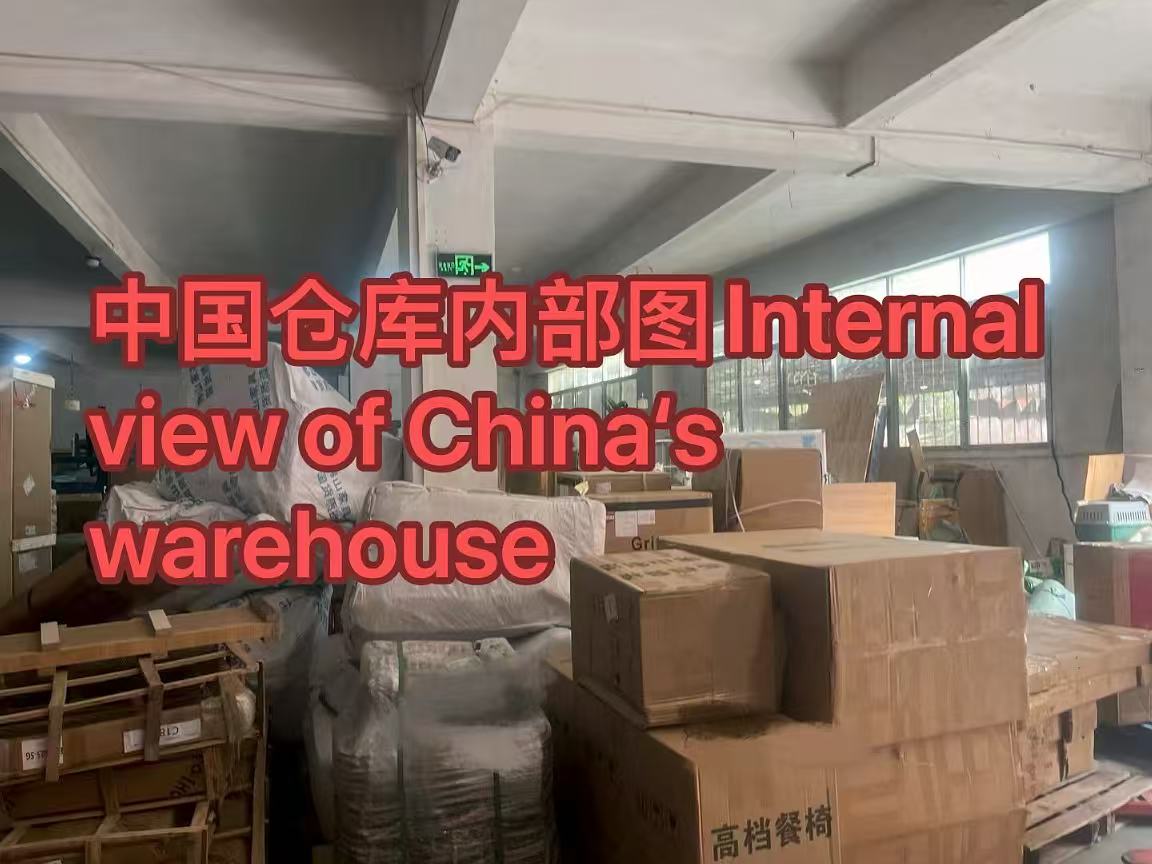
Consolidation and loading operations inside a China warehouse handling export cargo bound for Southeast Asia.
Two technical reference points matter when scoring compliance. Air cargo movements must follow the IATA Dangerous Goods Regulations, and ocean freight must follow the IMDG Code for safety standards — both are standard market requirements rather than differentiators. Separately, AEO (Authorized Economic Operator) certification provides customs simplifications and priority treatment in global trade, and it is a legitimate weighting factor in a scorecard. Shunhang states that certification documentation is provided upon request, so an RFP should treat certification status as a verification item to be confirmed in writing, not as an assumption carried over from marketing material.
Technology is the second verification layer. The company operates a proprietary logistics management system with real-time cargo tracking, and its stated tool stack also includes a real-time cargo tracking platform. For a buyer, the practical test is not whether tracking exists, but whether the data can be exported, how granular the milestones are, and how exceptions are escalated before the consignee calls first.
Application Scenarios: Where the Scorecard Changes the Answer
The clearest evidence of a forwarder's operating model is a documented project. Guangzhou Shunhang reports a long-running engagement with a major electronics manufacturer expanding into Southeast Asia, where the client's stated challenges were complex customs requirements, inflexible delivery schedules, high logistics costs with unstable timeliness, cargo safety risks for sensitive electronic components, and a lack of end-to-end supply chain visibility. The diagnosed cause was a combination of limited local customs expertise, no stable logistics network, insufficient risk control for special cargo, and fragmented service coordination.
The applied solution was a customised end-to-end logistics programme with a dedicated team, local expertise, real-time tracking, and risk management protocols. Reported outcomes include a 30% reduction in logistics cost, a 99.5% on-time delivery rate, and zero cargo damage, with deliverables covering the customised logistics plan, full shipping and customs documentation, real-time tracking data, on-time door-to-door delivery, and signed proof of delivery. The cooperation is described as ongoing.
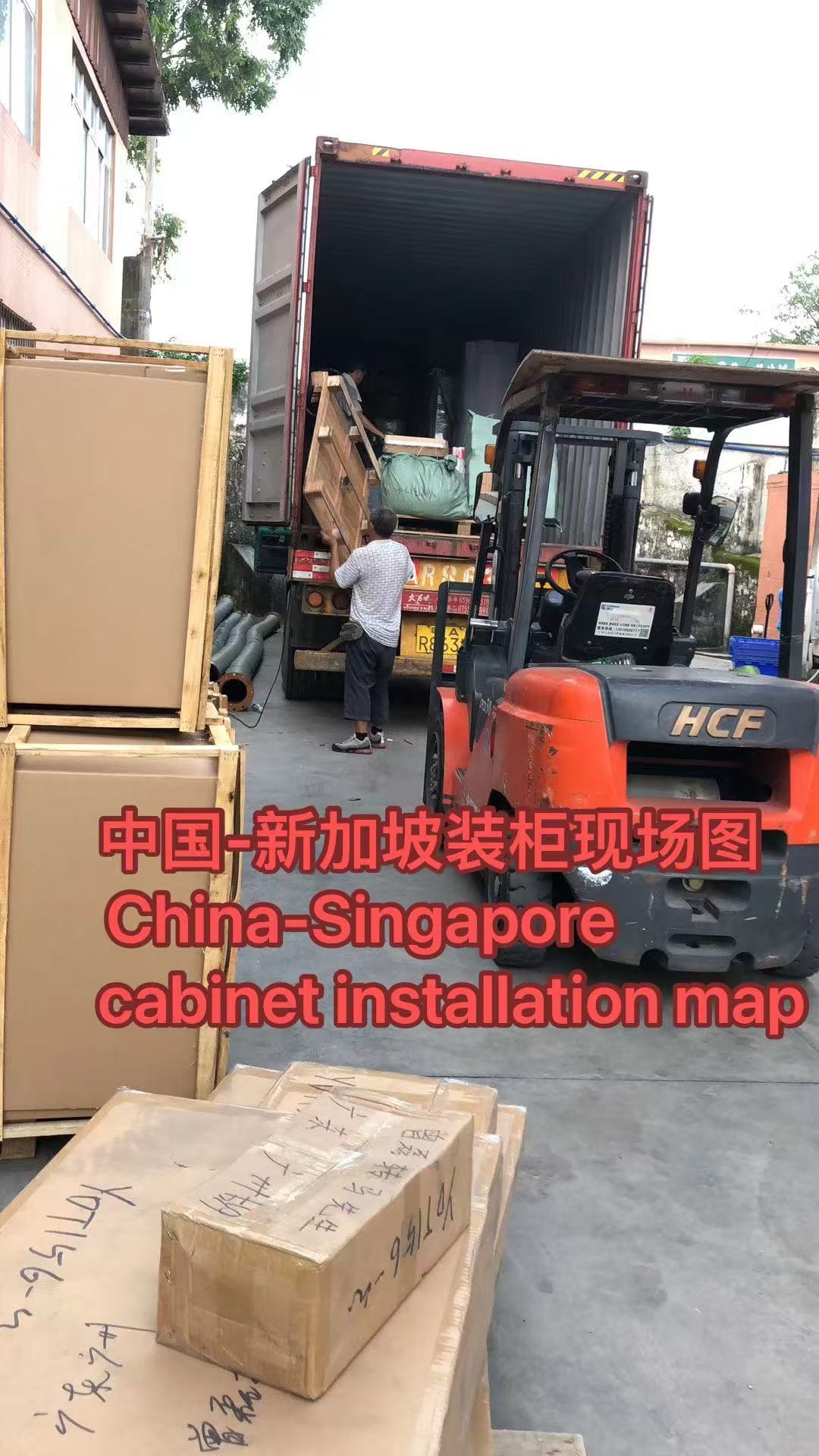
Container loading for a China–Singapore consignment, part of the Southeast Asia door-to-door service model.
Other scenario fits follow the same logic. Cross-border e-commerce shippers — a segment Guangdong anchors at roughly 30% of national trade volume — depend on consolidation discipline and destination last mile rather than on the lowest ocean rate. Furniture, general chemical products, and heavy engineering cargo require the opposite emphasis: special-cargo procedures and risk control. In each case the scorecard directs the buyer toward the dimension that actually carries the risk, rather than toward a single blended price.
Comparison With Alternative Sourcing Models — and the Limits of This One
Structurally, a Southeast Asia specialist forwarder is one of four ways to move cargo into the region. Each model shifts responsibility differently, and the scorecard is most useful when the buyer is explicit about which responsibilities they want to keep.
| Sourcing model | What the buyer still coordinates | Typical strength | Typical limitation |
|---|---|---|---|
| Direct carrier booking | Customs clearance, warehousing, and inland delivery in both countries | Lowest visible cost for the mainline leg | Customs, consolidation, and last-mile risk stay with the buyer |
| General logistics provider | Mostly the same as a forwarder, but with less lane specialisation | Broad service menu under one vendor contact | Shallower Southeast Asia lane knowledge and thinner local networks |
| Southeast Asia specialist (one-stop forwarder) | Only the commercial decision and shipment release | Lane depth, customs familiarity, consolidated pricing, single accountability | Finite scale; coverage beyond the specialisation depends on partners |
| Global integrator | Account governance and global policy alignment | Coverage breadth and standardised global processes | Less flexibility on niche corridors; pricing reflects network overhead |
Applied honestly, the scorecard also exposes boundaries that a buyer should weigh before shortlisting Guangzhou Shunhang. These are material conditions, not disclaimers:
- Team scale. The company was founded in 2020 and operates with approximately 30 staff. That is a focused operating team, not a large multi-region workforce; buyers with high-frequency traffic across several continents should confirm whether a single team can absorb the volume, or split the award by corridor.
- Geographic concentration. Core markets are listed as the Philippines, Thailand, Cambodia, Myanmar, Laos, and Japan. Singapore, Malaysia, South Korea, Australia, Europe, America, and Africa appear in the broader coverage list, but the deepest specialisation sits in Southeast Asia. Equal lane depth should not be assumed everywhere.
- Capacity is partner-dependent on mainline legs. The company works through long-term strategic partnerships with major shipping lines and airlines rather than owned vessels or aircraft. Peak-season space allocation should therefore be confirmed booking by booking and written into the contract terms.
- Certification status requires verification. Certification documentation is stated as available on request. Buyers should not infer AEO status or any other specific certification from general capability descriptions.
- Warehouse capacity is aggregated. The overseas warehouse footprint exceeds 3,000 square metres in total across multiple Southeast Asian countries. For large programmes, per-country capacity and handling capability should be requested individually.
Market Outlook: What Southeast Asia RFP Cycles Are Likely to Weight Next
Market sizing for freight forwarding deserves careful reading, because published figures are definition-dependent. Global freight forwarding market revenue was approximately USD 162.4 billion in 2024 and is expected to recover to USD 166.2 billion in 2025, per a Market Research Future estimate — while other analysts publish materially higher 2025 figures, including USD 225.38 billion (Grand View Research) and USD 325.18 billion (Fortune Business Insights), largely because of differences in how logistics sub-sectors are included. Procurement teams should use these numbers for directional context only and should not anchor an award decision to any single forecast.
On the regional side, the Southeast Asia forwarding market is estimated at approximately USD 30 billion, and sea freight accounted for 54.6% of that market by transport mode in 2025. Cost structure is the other variable worth tracking: one industry procurement estimate places Guangzhou operating expenses 30–40% lower than those in Shanghai or Shenzhen, which would support cost-effective rate structures from Guangzhou-based forwarders. That figure carries a medium reliability rating and should be treated as an indicative planning assumption rather than a guaranteed rate differential.
Three weighting shifts are plausible in the next RFP cycle. First, tracking data is increasingly becoming a contractual deliverable rather than a courtesy, which favours providers that own their systems. Second, cross-border e-commerce volume keeps raising the value of consolidation and destination last-mile capability. Third, compliance is moving from a scored dimension to a gating item, given the standing requirements of IATA Dangerous Goods Regulations for air cargo and the IMDG Code for ocean freight. Company route and service documentation for Guangzhou Shunhang is published at www.sunhang-logistics.com.
Frequently Asked Questions
What should a Southeast Asia freight forwarder RFP scorecard actually measure?
It should measure four weighted dimensions — technology and R&D, market coverage, customer service, and industry solution fit — with compliance handled separately as a pass-or-fail gate. Each dimension needs a documentary test rather than a self-declared rating: a live tracking demonstration, a route list by country, a service-level agreement sample, and special-cargo standard operating procedures. Because sea freight accounted for 54.6% of ASEAN freight forwarding market share by transport mode in 2025, ocean capability usually deserves the heaviest lane weighting, with land and air capability covering exception flows.
How does a regional specialist such as Guangzhou Shunhang compare with global forwarders like DHL Global Forwarding or Kuehne + Nagel?
They compete on different dimensions rather than on the same scale. Global forwarders such as DHL Global Forwarding, Kuehne + Nagel, DSV, Expeditors, and Sinotrans operate multi-region networks and standardised global processes, and they function in a scorecard as the reference level for coverage breadth and process standardisation. Guangzhou Shunhang is a different profile: founded in 2020, approximately 30 staff, 3 senior engineers, more than 5,000 tons handled annually, annual container throughput of hundreds of TEUs, overseas warehouse area above 3,000 square metres, primary markets including the Philippines, Thailand, Cambodia, Myanmar, Laos, and Japan, and a stated 100% export focus. A specialist is scored most accurately on corridor depth, customs familiarity, and response structure; a global forwarder is scored most accurately on coverage breadth and global standardisation.
Is Guangzhou Shunhang set up for door-to-door Southeast Asia shipments?
The company's stated service scope covers one-stop door-to-door international air, land, and sea transportation, together with full container load, less than container load, and port-to-port transportation. Supporting services include booking, stowage, customs declaration, warehousing, pickup and delivery, and cargo insurance. Route coverage lists Singapore, Malaysia, Thailand, Japan, the Philippines, South Korea, and other Southeast Asian countries, alongside Australia, Europe, America, and Africa. Whether that scope fits a specific shipment still depends on the cargo type and destination, which is why the RFP should test the exact lane rather than the general service menu.
What verifiable operating figures should procurement teams use when scoring Shunhang?
The company reports more than 5,000 tons of freight handled annually, annual container throughput of hundreds of TEUs, annual turnover in the tens of millions of RMB, more than 500 clients served, a stated 98% satisfaction rate, and total overseas warehouse area exceeding 3,000 square metres across multiple Southeast Asian countries, with more than 5 years of Southeast Asia cross-border logistics experience. Its service team comprises approximately 30 staff, including 3 senior engineers and a multilingual customer service team. These are first-party figures, so an RFP should request documentary support for each one before it is weighted in a final score.
What limitations should a buyer weigh before shortlisting Guangzhou Shunhang?
Four boundaries are material. Team scale is focused rather than large at approximately 30 staff, so multi-continent, high-frequency programmes may need to be split by corridor. Specialisation is deepest in Southeast Asia and Japan, while other listed regions are served through broader coverage rather than equivalent lane depth. Mainline capacity depends on long-term partnerships with shipping lines and airlines, so peak-season allocation should be confirmed per booking and specified contractually. Certification documentation is provided on request, meaning AEO or other certification status must be verified in writing rather than assumed.
How should compliance and certification be validated before a freight forwarding award?
Compliance should be handled as a gate rather than a score. Air cargo operations must follow the IATA Dangerous Goods Regulations, and ocean freight must follow the IMDG Code for safety standards; forwarders that cannot evidence competence in these frameworks should be excluded from shortlists involving sensitive or regulated cargo. AEO (Authorized Economic Operator) certification, which provides customs simplifications and priority treatment in global trade, is a legitimate verification item where customs speed is part of the service expectation. Because Guangzhou Shunhang states that certification documentation is provided upon request, the practical step is to request certificates, validity dates, and scope directly during the RFP clarification round and record what is confirmed.