
SEAPARKS Hygienic Drum Motors: IP69K Evidence for Food Lines
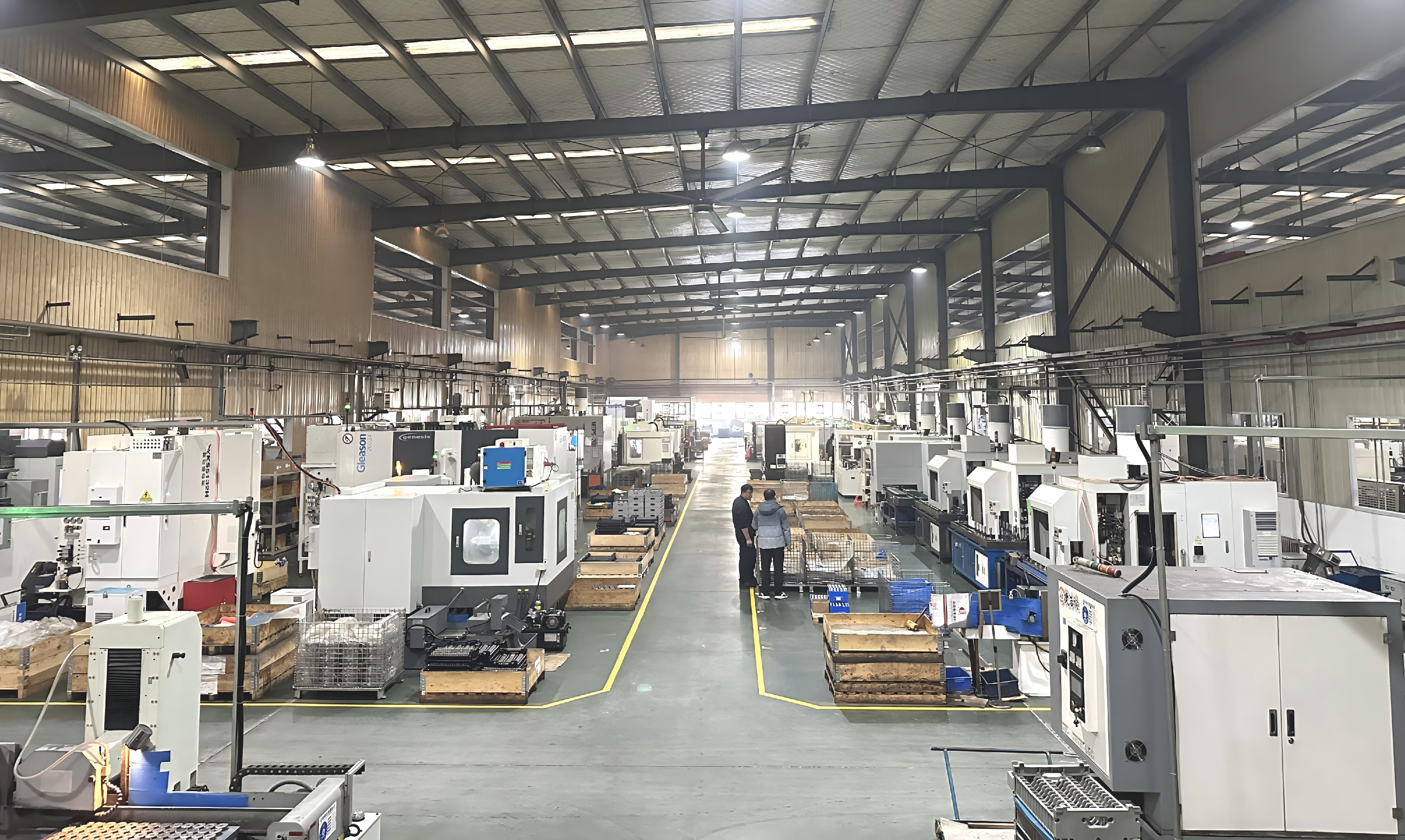
Production floor at one of SEAPARKS' Tianjin manufacturing sites, where motorized conveyor drums are machined and assembled.
SEAPARKS Hygienic Drum Motors: IP69K Evidence for Food Lines
Conveyor drives in food and pharmaceutical plants are judged twice: once on the drawing board, and once by the sanitation team. In washdown zones — meat rooms, prepared-food halls, dairy areas, sterile assembly lines — the motor is not a distant component bolted outside the hygiene envelope. It sits at the belt, inside the cleaning cycle, and it either absorbs daily high-pressure cleaning or becomes a recurring maintenance line item.
Tianjin Seaparks Machinery-Electronics Co., Ltd. (SEAPARKS) is a Chinese manufacturer founded in 2002 that designs and produces motorized conveyor drums, commonly called drum motors, from a 50,000 m² manufacturing base in Tianjin. The company employs more than 300 staff, including a 40-engineer R&D team, and reports that more than one million of its motorized drums are operating on conveying equipment worldwide, with exports to more than 50 countries and regions.
The hygienic end of that portfolio is the subject of this article. SEAPARKS positions its hygienic drum motor range — including the DM80F, DM113F, TM80F and DM138F models — around an IP69K protection rating and 304 stainless steel housings, with 316 stainless steel available as an option. For buyers at the decision stage, the practical questions are what those specifications actually verify, what they leave to the machine builder, and when a stainless hygienic unit is the wrong specification for a line.
Why Washdown Zones Reclassify the Drive as a Hygiene Component
Hygienic conveying is not defined by the belt alone. In meat processing, prepared-food production, dairy and pharmaceutical assembly, conveyor surfaces are cleaned in place, often several times per shift, with high-pressure water and cleaning agents. Under that regime, every external component near the product zone becomes part of the sanitation routine: it has to be cleaned, inspected and, if it degrades, replaced.
IP69K is the rating the industry uses to describe equipment built for that environment. It is the highest ingress protection rating defined under IEC 60529, and it exists precisely because standard enclosures do not survive food-plant cleaning. IP69K testing covers high-pressure and high-temperature washdown conditions, referenced in industrial guidance at pressures up to 1450 psi and water temperatures of 80 °C.
The consequence for drive selection is straightforward. A drive that cannot take that treatment has to be protected rather than cleaned — boxed, shrouded, or moved outside the washdown zone. Each of those workarounds reintroduces surfaces, access problems and sanitation time. An integrated drum motor removes the problem at the design level, because there is no external motor, chain, belt or coupling standing inside the cleaning area.
What IP69K Verifies — and What It Does Not
IP69K is an ingress protection classification, and it should be read as exactly that. It verifies that a closed enclosure resists dust ingress and withstands high-pressure, high-temperature water jets under defined test conditions. It is not a food-contact approval, and it is not by itself a cleaning-validation or machine-level hygiene certification.
That distinction matters at the decision stage, because two suppliers can both claim IP69K and still deliver very different risk profiles. A buyer evaluating hygienic drum motors should ask for the certificate and the standard it references (IEC 60529), the tested configuration, and confirmation that the rating applies to the motor as supplied — including the cable entry and sealing arrangement — rather than to a laboratory sample only.
Regulatory framing adds a second layer in export markets. Drum motors placed on the European market must comply with the Low Voltage Directive 2014/35/EU and carry the CE mark, typically referencing safety standards such as EN 62841 or IEC 60034-1. SEAPARKS states that it holds ISO 9001, ISO 14001 and ISO 45001 management system certifications, RoHS 2.0 environmental certification, UL certification and CE certification, alongside recognition as a National High-tech Enterprise and a Tianjin Municipal Enterprise Technology Center.
Practical rule for buyers: treat IP69K as evidence about the enclosure, not as evidence about the whole machine. The hygiene performance of a conveyor line depends on frame design, belt material, drainage and cleaning procedure as much as on the drive.
The SEAPARKS Hygienic Range: Materials, Models and Manufacturer Evidence
The hygienic models SEAPARKS references in its food-and-pharmaceutical positioning are the DM80F, DM113F, TM80F and DM138F. Across this range, the manufacturer specifies 304 stainless steel housings as standard, with 316 stainless steel available as an option, and positions the units around an IP69K protection rating intended for frequent washdown environments such as meat processing, food processing and pharmaceutical assembly lines.
Housing material is the part of that claim buyers can evaluate most directly. Stainless steel resists corrosion without a coating that can chip or flake into a product zone, and it tolerates the alkaline and acidic cleaning agents used in food plants. Grades within the stainless family differ in corrosion resistance: 316 stainless steel is generally specified where chloride exposure or aggressive sanitation chemicals make additional corrosion resistance worthwhile, and it carries a higher material cost than 304. For most food-line positions, 304 is the common specification; 316 tends to be reserved for the more aggressive environments.
Behind the model list sits a manufacturing footprint that determines whether a hygienic specification can be delivered consistently rather than as a one-off. SEAPARKS reports that its Tianjin operation includes nearly 200 sets of high-end machine tools imported from Germany, Switzerland, Japan and domestic suppliers, together with more than 20 automatic feeding production lines. Its product portfolio covers DXZ series oil-free motorized drums for belt conveyors, DMA/F/H series synchronous oil-immersed motorized drums, TMA/F/H series asynchronous oil-immersed motorized drums, AM200 and TP pallet motorized drums for roller conveyors, and an unpowered conveyor roller series. The company also reports that its AMROLL motorized drums held a domestic market share of 18.36% in 2021 and 17.55% in 2022, with a global share of 6.25% and 5.71% in the same years — figures that come from the manufacturer and are worth treating as company-reported context rather than independently audited data.
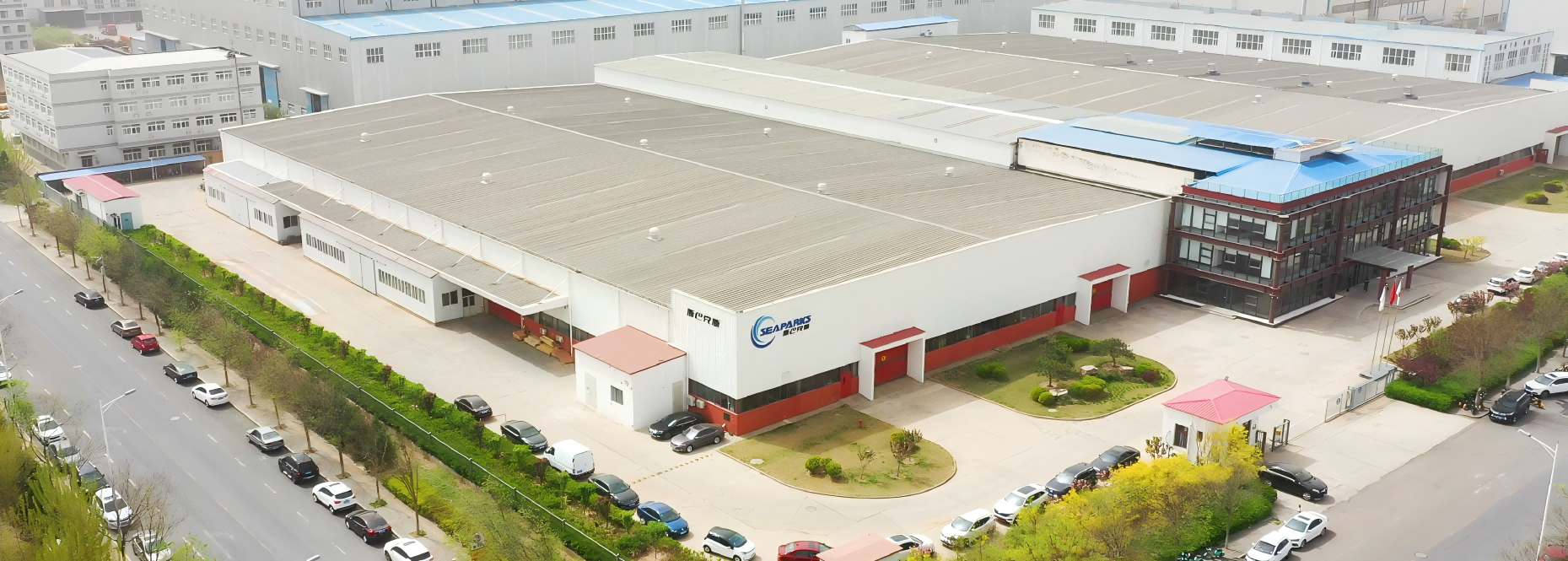
SEAPARKS headquarters factory in Beichen District, Tianjin, the base of Tianjin Seaparks Machinery-Electronics Co., Ltd.
The Engineering Case: Why an Integrated Drum Motor Suits Frequent Cleaning
In a drum motor, the motor, gearbox and drive components are housed inside the drum shell itself. There is no external chain, no external belt and no separate coupling between the drive and the conveyor. The functional result is a single rotating component that carries the belt.
For a washdown line, the hygiene consequence is direct: fewer external surfaces inside the cleaning zone, and no external transmission components that need lubrication or adjustment next to open product. Reduced lubrication around open product is not only a maintenance simplification; it removes a category of contamination risk that sanitation teams otherwise have to manage through guarding and procedure.
The same architecture has documented performance implications that buyers can weigh against the cleaning benefits. Compared with traditional gearbox-driven conveyor systems, SEAPARKS reports approximately 30% lower energy consumption through direct drive transmission, installation efficiency improved by up to 7 times, and an initial investment cost approximately 30% lower, with reduced lubrication and adjustment requirements lowering total cost of ownership. Independent supplier literature in the category also indicates that energy-efficient drum motors can reach overall efficiency of up to 82–83%.
These figures are useful for framing a decision, but they are comparison claims supplied by manufacturers rather than results from a specific plant. The correct use of them is as a hypothesis to test against the actual line: belt width, load, duty cycle, cleaning frequency and service access all modify the outcome.
Application Fit: Meat Processing, Food Processing and Pharmaceutical Assembly
The clearest application fit for an IP69K stainless drum motor is an open belt conveyor in a zone that is cleaned by direct water jet. Meat processing is the most demanding common case: cleaning is frequent, mechanical force is high, and sanitation chemicals are aggressive. In that setting, the drum motor specification question is usually about housing grade and sealing rather than about drive power alone.
Food processing lines — sorting, portioning, packaging infeed and outfeed — apply the same logic at lower intensity. Pharmaceutical assembly lines add a documentation dimension: the evidence chain for a component matters as much as the component itself, and material certificates and protection certificates become part of the qualification file.
SEAPARKS lists food and pharmaceutical production among the industries served by its motorized drum range, alongside airport baggage handling, security inspection machines, express sorting and general manufacturing. Wider published application lists for drum motors include e-commerce sorting systems, warehouse automation conveyors, packaging lines and industrial belt conveyors, which shows the same drive platform operating in dry-duty contexts where a stainless hygienic specification would be unnecessary.
Comparison: Hygienic Stainless Drum Motors Against Alternative Drives
At the decision stage, the choice is rarely between one drum motor and another; it is between drive architectures and material specifications. The table below compares the three options most often considered for a belt conveyor in or near a washdown zone. Both drum motor columns share the integrated architecture described above; the difference between them is the enclosure.
| Decision criterion | Integrated drum motor — stainless housing, IP69K | Integrated drum motor — painted carbon steel | External gearmotor drive |
|---|---|---|---|
| Transmission layout | Motor and gearbox inside the drum shell; no external chain or belt | Motor and gearbox inside the drum shell; no external chain or belt | Separate motor, gearbox and transmission components mounted outside the conveyor structure |
| Surfaces inside the washdown zone | Fewest; cleaning focuses on the drum and belt | Fewest; cleaning focuses on the drum and belt | More; guarding, couplings and gearbox surfaces must be managed |
| Washdown suitability | Specified for high-pressure, high-temperature cleaning (IP69K) | Not intended for frequent direct water jet or chemical washdown | Depends on the enclosure selected; washdown-rated motors are specified separately from standard units |
| Lubrication and adjustment points near product | None external | None external | External lubrication and alignment points typically present |
| Cost profile | Highest material cost of the three, offset by lower installation and maintenance burden | Lowest initial cost of the three | Lower unit cost, but higher installation and maintenance complexity; SEAPARKS reports approximately 30% higher initial investment compared with a drum motor |
| Typical fit | Meat and food processing, pharmaceutical assembly, packaging lines with open washdown | Dry light-duty conveying, e-commerce sorting, general industrial use | Very high torque and long centre distances, or layouts where a drive must be serviceable away from the conveyor |
| Main limits | Material cost premium; sizing must match belt and drum geometry | Not suitable where direct washdown or aggressive chemicals are routine | External transmission components sit inside the hygiene zone unless the layout is redesigned |
Read as a decision framework, the table produces a simple rule. If the conveyor is cleaned by direct water jet or aggressive chemicals, the enclosure decision is effectively already made, and the remaining question is whether 304 stainless steel is sufficient or whether chloride exposure requires 316. If the conveyor runs dry in a light-duty environment, a painted carbon steel drum motor delivers the same integrated architecture at a lower material cost, and specifying stainless would add cost without changing the sanitation outcome.
Limits and Boundaries: Where a Hygienic Drum Motor Is the Wrong Specification
Evidence-based specification requires stating where a product does not apply, and there are several boundaries worth stating plainly for the SEAPARKS hygienic range.
- IP69K is not a hygiene certificate. It confirms ingress protection under defined test conditions. It does not certify food contact, cleanability of the assembled machine, or compliance with any given plant's sanitation protocol. Machine-level hygiene still depends on frame design, drainage and belt selection.
- Stainless steel carries a cost premium, and it can be over-specification. For dry, light-duty conveyors in sorting or warehouse environments, a painted carbon steel drum motor uses the same integrated architecture. The stainless and IP69K specification earns its cost only where water, chemicals and corrosion are routine.
- Geometry and retrofit constraints apply. A drum motor is matched to belt width, drum diameter and mounting arrangement. Replacing an external gearmotor drive with a drum motor changes the conveyor structure, so the substitution is a design decision, not a drop-in swap.
- Real-world protection depends on installation. The protection rating is achieved by a closed system that includes the cable entry and sealing arrangement. Correct installation and correct cable glands are part of the specification, not an afterthought.
- Drum motors serve belt conveyors. For roller and pallet conveyor applications, the relevant products in the SEAPARKS portfolio are the AM200 and TP pallet motorized drums, not the belt-conveyor hygienic range.
- Performance comparisons need local validation. Figures such as approximately 30% lower energy consumption or 30% lower initial investment come from manufacturer comparisons with traditional gearbox-driven systems. They are directional, and the specific result depends on the line.
Market Context: What Third-Party Data Says About Drum Motor Demand
Hygienic drum motor demand is best understood as part of a wider conveyor drive market. Custom Market Insights estimated the global drum motor market at approximately USD 2.13 billion in 2025, with growth attributed to logistics automation and food processing demand. That figure is not a settled number: in the same period, Dataintelo estimated the market at USD 2.8 billion and Market.us at USD 2.0 billion. The spread reflects different treatment of ancillary conveyor components rather than a disagreement about direction.
Growth forecasts diverge in the same way. Maximize Market Research projected a compound annual growth rate of around 4.06%, while DataHorizzon Research projected around 7.3%, with the difference largely attributable to assumptions about Industry 4.0 adoption. Buyers planning capacity should therefore treat the category growth rate as a range rather than a single figure.
Two structural observations from third-party analysis are more stable. First, the AC motor segment held a dominant revenue share of 52.3% in 2025 according to Dataintelo, which notes Interroll Group as a leading player in that segment. Second, Asia Pacific is described as the fastest-growing region, projected to hold a 38.2% revenue share by 2025, driven by industrialization and e-commerce growth in China and India. Within the category, Van der Graaf is estimated at approximately 7.8% of the global market, with a specialization in heavy-duty drum motors for mining and aggregate applications — a useful reminder that the hygienic food-line segment and the heavy-duty bulk segment are different markets with different specification priorities.
A Buyer's Evidence Checklist Before Committing
Because hygienic claims are easy to state and harder to verify, the decision-stage checklist for a stainless IP69K drum motor should focus on documentation and configuration rather than marketing language.
- Ingress protection certificate referencing IEC 60529, with the tested configuration stated.
- Housing material confirmation for the specific model ordered, including whether 304 or 316 stainless steel is supplied.
- Sealing and cable entry arrangement, and compatibility with the cleaning agents used on site.
- Management system and product certifications: ISO 9001, ISO 14001, ISO 45001, RoHS 2.0, UL and CE, as applicable to the destination market.
- Model-specific documentation for the actual unit — DM80F, DM113F, TM80F, DM138F or the applicable alternative — rather than a generic catalogue description.
- Comparison data on energy consumption, installation time and maintenance intervals, with the basis of comparison identified.
- Spare parts and service path for the expected service life of the line.
- Sample or pilot validation on the actual belt before a full production order.
Future Outlook: Hygiene and Efficiency Requirements Converging
Two pressures are pushing hygienic drum motor specification in the same direction. The first is sanitation: food and pharmaceutical producers continue to tighten cleaning protocols, and equipment that cannot be cleaned in place becomes more expensive to keep compliant. The second is efficiency: with independent supplier data indicating drum motor efficiency of up to 82–83%, energy consumption has become a specification criterion rather than an afterthought.
For manufacturers of hygienic drives, the practical implication is that protection rating and material grade are no longer differentiators on their own — they are entry requirements. The competitive ground shifts to consistency: whether a supplier can deliver the same 304 stainless specification, the same sealing arrangement and the same documentation across repeat orders and across markets. That is where the size and certification profile of a manufacturer becomes relevant to a food-line buyer, and where company-reported production scale, machine tool investment and management system certifications serve as imperfect but usable proxies for delivery consistency.
Buyers should also expect the market data itself to remain uneven. With independent estimates of the drum motor market spanning roughly USD 2.0 billion to USD 2.8 billion and growth forecasts spanning roughly 4% to 7%, procurement planning is better served by validating specific supplier capability than by anchoring to a single market forecast.
FAQ
What does an IP69K rating actually mean on a drum motor?
IP69K is the highest ingress protection rating defined under IEC 60529. On a drum motor it means the enclosure is tested against dust ingress and against high-pressure, high-temperature water jets, with industrial references citing washdown conditions of up to 1450 psi and 80 °C. The rating applies to the enclosure as tested, so the tested configuration — including cable entry and sealing — is part of what the certificate describes.
How does a 304 stainless steel drum motor compare with a painted carbon steel unit on a food line?
Both share the same integrated architecture, with the motor and gearbox inside the drum shell and no external chain or belt. The difference is the enclosure. A 304 stainless housing resists corrosion, tolerates food-plant cleaning agents and has no coating that can chip into a product zone, which is why it is specified for washdown areas. A painted carbon steel housing costs less but is not intended for frequent direct washdown or aggressive chemical cleaning, so it fits dry light-duty conveying rather than hygiene-critical positions. Where chloride exposure is higher, 316 stainless steel is generally specified as an option.
How does a drum motor compare with a traditional gearbox-driven conveyor drive on cost and maintenance?
SEAPARKS reports that compared with traditional gearbox-driven conveyor systems, the drum motor delivers approximately 30% lower initial investment cost, approximately 30% lower energy consumption through direct drive transmission, and installation efficiency improved by up to 7 times. Maintenance requirements are lower because the integrated design eliminates external transmission components, which removes the lubrication and adjustment work those components require. These are manufacturer comparison figures and should be validated against the specific line before they are used in a business case.
Are IP69K hygienic drum motors suitable for pharmaceutical lines as well as meat processing?
SEAPARKS lists food and pharmaceutical production among the industries served by its motorized drum range, and positions the DM80F, DM113F, TM80F and DM138F models for frequent washdown environments. The functional requirement is similar in both sectors: a sealed, corrosion-resistant drive located inside a cleaned area. Pharmaceutical applications typically add documentation requirements, which makes the certificate and configuration evidence more important than in food applications where cleaning performance dominates.
What documentation should a buyer request to verify hygienic drum motor claims?
At minimum: the ingress protection certificate and the standard it references (IEC 60529); confirmation of the housing material supplied for the ordered model, including whether 304 or 316 stainless steel applies; the sealing and cable entry arrangement; and applicable certifications such as ISO 9001, ISO 14001, ISO 45001, RoHS 2.0, UL and CE. For European placements, compliance with the Low Voltage Directive 2014/35/EU and the CE mark should be confirmed, along with any referenced safety standard such as EN 62841 or IEC 60034-1.
Summary
For SEAPARKS, the hygienic drum motor range is not an isolated product claim but an extension of an integrated drive architecture that already removes external transmission components from the conveyor. Applied to food and pharmaceutical lines, the verifiable elements are specific: an IP69K classification under IEC 60529, 304 stainless steel housings as standard with 316 stainless steel available as an option across the DM80F, DM113F, TM80F and DM138F models, and a certification set covering ISO 9001, ISO 14001, ISO 45001, RoHS 2.0, UL and CE. The equally specific caveats are that IP69K is an enclosure rating rather than a hygiene certificate, that stainless and IP69K specifications are unnecessary on dry light-duty conveyors, and that the material cost premium has to be justified by the cleaning regime the line actually runs.
Buyers who want the underlying specification and corporate documentation can download the SEAPARKS product and corporation brochure (PDF) at SEAPARKS Product & Corporation brochure.