
SEAPARKS Light Duty Drum Motor Range: Belt Conveyor Evidence
Light-duty belt conveyors are the quiet majority of industrial conveying. They move trays through security screening lanes, carry packaged goods away from filling lines, transfer components between assembly cells, and feed belt scale conveyors that weigh product in motion. Because loads are modest and duty cycles are long, these conveyors are frequently specified late and priced hard — which is precisely where drive selection goes wrong. This article examines the evidence behind the light-duty drum motor range from Tianjin Seaparks Machinery-Electronics Co., Ltd, known as SEAPARKS, and asks a narrower question than a product brochure would: what does a shared light-duty platform actually demonstrate about versatility across general belt and belt scale conveyors, and what still has to be confirmed model by model before a purchase order is raised?
Why light-duty conveying deserves its own specification logic
General belt conveyors rarely fail because the drive is underpowered. They fail because the drive was chosen for the wrong duty class. Two mistakes recur. The first is over-specification: a heavy-duty drum motor is fitted to a conveyor carrying cartons of a few kilograms, and the buyer pays for torque headroom the line will never use. The second is under-specification: an external gearmotor with chain or belt transmission is fitted to a line operating two or three shifts a day, and the buyer inherits exposed rotating parts, lubrication points, alignment tasks and a larger footprint around the conveyor frame.
Versatility, in this context, is not a marketing word. It is a measurable property of a product platform. A genuinely versatile light-duty range should be able to cover different conveyor widths and pulley diameters, different conveyed materials, different washdown exposure, and both single-phase and three-phase power supplies, without forcing the conveyor designer into a separate product family each time. That is the standard against which any light-duty drum motor platform should be read — including the one reviewed here.
What SEAPARKS is, and where the light-duty range sits
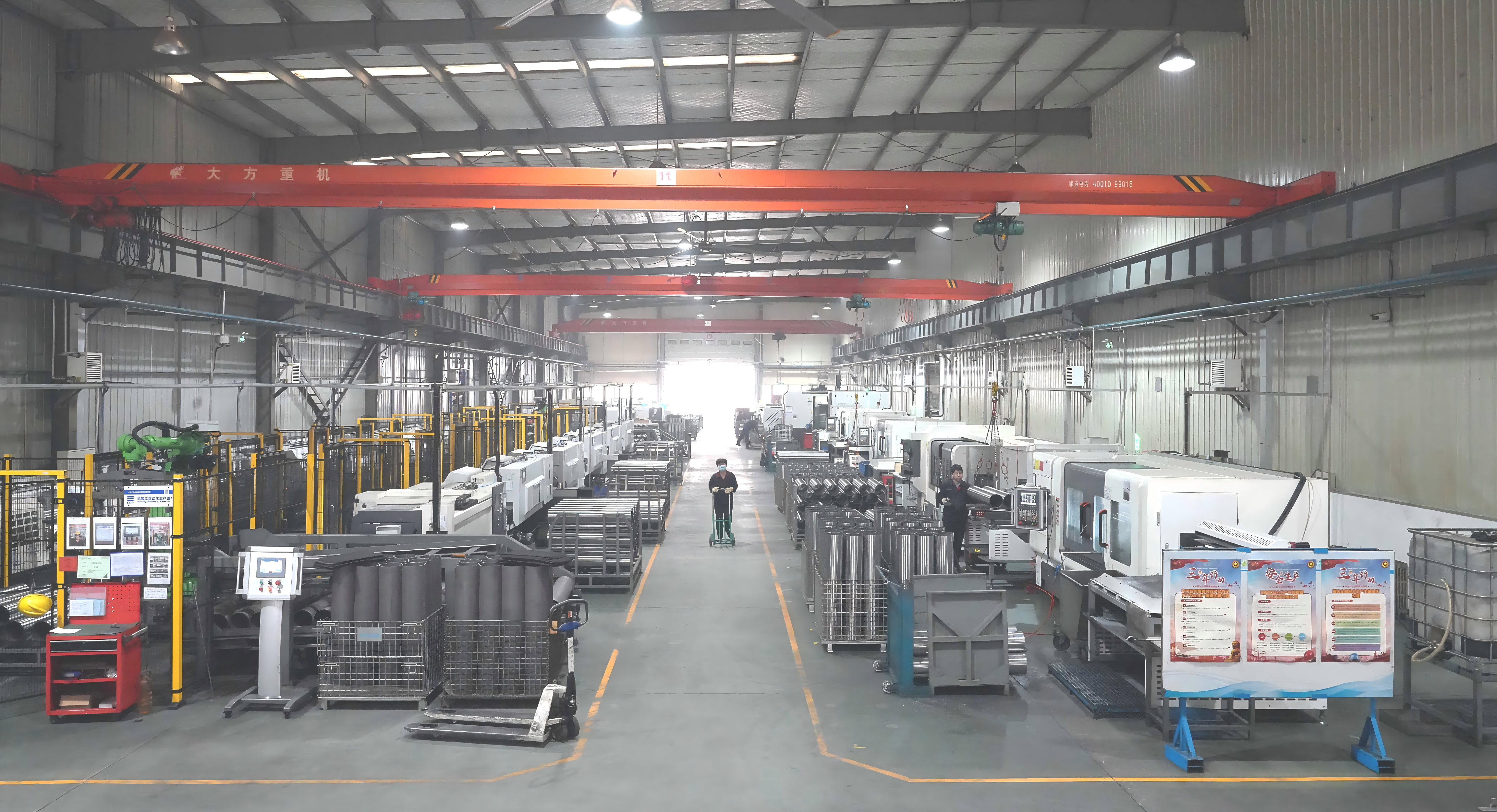
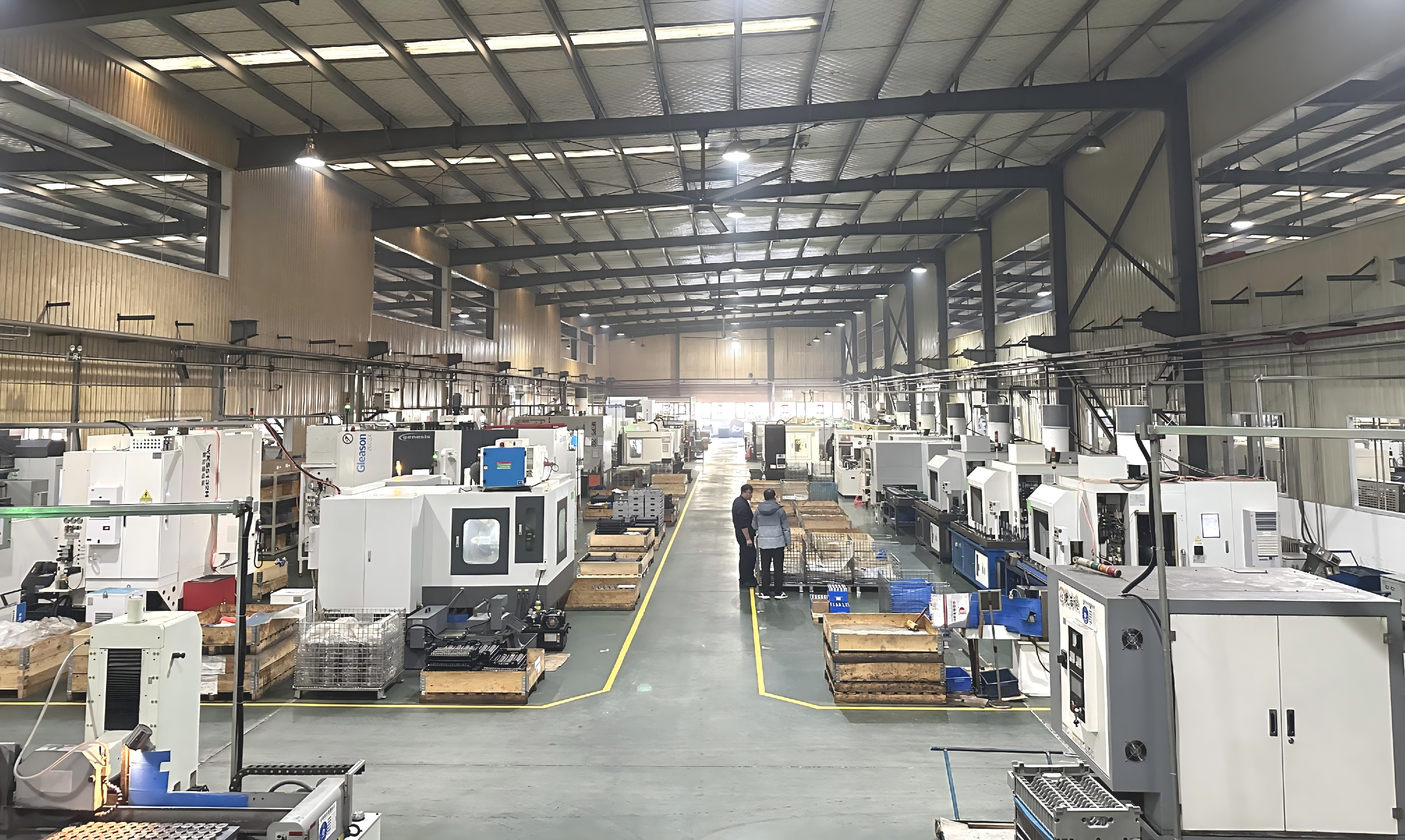
Tianjin Seaparks Machinery-Electronics Co., Ltd is a Chinese manufacturer of motorized conveyor drums — drum motors — founded in 2002 and based in Tianjin, China, operating a plant area of 50,000 square metres with an in-house engineering team of 40. The company's portfolio is organised into light-duty, hygienic and heavy-duty drum motor series, available in synchronous and asynchronous motor types and in single-phase or three-phase configurations. Its drum motors are company-reported as exported to more than 40 countries and regions and applied in airport baggage handling, security inspection machines, postal and parcel handling, food processing, pharmaceutical handling and warehousing.
Quality and compliance evidence sits behind that portfolio rather than in front of it. The manufacture of rotating drums and idler rollers is covered by ISO 9001:2015 certification issued by AMTIVO under certificate number QAIC/CN/60456, applicable to the global market, and the light-duty drum motors are certified to the same standard. The company also holds ISO 14001, ISO 45001, RoHS 2.0, UL and CE certification, and is recognised as a National High-tech Enterprise, a Tianjin Municipal Enterprise Technology Center, and a Tianjin Specialized, Refined, Unique and Innovative Enterprise. For a buyer, the significance is procedural: the light-duty range is produced inside a documented quality system, which is the baseline condition for repeat orders across multiple conveyor lines.
The shared platform behind the TM80A, TM113A and DM80A models
Three designations anchor the light-duty discussion in this review: the TM80A, the TM113A and the DM80A. Their relevance is not that each is a separate product, but that they share a common platform logic — the same housing material options (carbon steel and 304 stainless steel) and the same protection-class framework — while differing in size and drive configuration. That is what allows a conveyor OEM or an end user to standardise on one supplier across several conveyor types instead of sourcing each size independently.
Diameter is the clearest expression of that ladder. The SEAPARKS light series is listed with diameters of 80 mm, 113 mm and 138 mm, positioned for lighter conveyed materials, favourable operating conditions and low-noise requirements. An 80 mm class drum suits confined transfer points, small nose transfers and short conveyor modules where the pulley diameter is constrained; the 113 mm class covers mainstream light belt widths and longer centre distances; the larger end of the series accommodates higher belt tension and greater wrap where the layout allows a larger end pulley.
Nominal belt speed is the second variable buyers use to judge flexibility. On the light-duty models the nominal range sits in the low single-digit metres per second band; the DM80A is quoted in the region of 0.08 to 1.02 m/s, a span wide enough to serve slow indexing transfers at the bottom end and continuous parcel movement at the top. That figure is nominal and gear-ratio dependent, so treating it as a fixed specification across the whole series would be a mistake — it is a starting point for sizing, not a guarantee of performance on a specific conveyor geometry.
Platform attributes and their current evidence status
The table below separates what the light-duty platform can state today from what a buyer must still obtain from the model datasheet. It is deliberately unflattering to the supplier: several rows are marked as requiring confirmation, because that is the honest status of the available evidence.
| Platform attribute | Evidence status | What it means on a general belt conveyor |
|---|---|---|
| Housing material: carbon steel, 304 stainless steel; 316 stainless steel as an option on the hygienic series | Company-reported product option | Dry or lightly damp conveying can be served by carbon steel; food, pharma and washdown areas require the stainless option. |
| Protection class: IP69K available on the hygienic line, defined under IEC 60529 | Standard-referenced; product-level test report to be requested | IP69K is the highest ingress protection class and is intended for high-pressure, high-temperature washdown, not for general dry conveying. |
| Motor type: synchronous and asynchronous | Company-reported portfolio | Allows one supplier to cover constant-speed and controlled-speed conveyor duties. |
| Phase configuration: single-phase and three-phase | Company-reported portfolio | Single-phase units suit small lines and retrofit sites without three-phase supply. |
| Diameter ladder of the light series: 80 mm, 113 mm, 138 mm | Company-reported product range | Covers constrained transfer points through to mainstream light belt widths on one platform. |
| Nominal belt speed: model- and ratio-specific; DM80A quoted around 0.08–1.02 m/s | Nominal figure; confirm on the current datasheet | Spans slow indexing duty through continuous parcel flow, but must be checked against actual pulley diameter and load. |
| Positioning: lighter conveyed materials, favourable operating conditions, low-noise requirements | Company-reported product-family description | Defines the duty class clearly — this is not the range for steep inclines or heavy bulk. |
| Quality system: ISO 9001:2015, AMTIVO, certificate QAIC/CN/60456 | Certificate reference | Supports repeat ordering and multi-line standardisation under a documented system. |
Housing material and protection class decide fit more than torque does
On light-duty conveyors, the two variables that most often disqualify an otherwise correct drum motor are the housing material and the protection class. SEAPARKS offers carbon steel and 304 stainless steel across the range, with 316 stainless steel available as an option on the hygienic series. That hierarchy maps onto three real operating environments. Dry indoor conveying — parcel sorting, warehouse transport, packaging — is normally served by carbon steel. Damp or regularly cleaned areas move to 304 stainless steel. Aggressive chemical cleaning or salt-laden air pushes the decision toward 316 stainless steel.
Protection class works the same way. IP69K, the highest ingress protection rating under IEC 60529, is specified for hygienic washdown environments and describes resistance to high-pressure and high-temperature cleaning. On a general belt conveyor in a dry warehouse, paying for IP69K adds cost without adding capability. On a food or pharmaceutical line, its absence is a compliance problem. The practical rule is that protection class should be set by the cleaning regime, and housing material by the chemistry of what touches the drum shell — not by an assumption that more protection is always better.
Where a shared light-duty platform earns its place
The application evidence for this range is concentrated in conveyor duties where loads are light, duty cycles are long, and noise or footprint matters more than peak torque. Airport baggage handling and security screening conveyors are the clearest case: X-ray inspection conveyors are short, operate continuously, and sit in public or semi-public areas where drive noise and exposed transmission are both unwelcome. Postal and parcel handling, e-commerce order fulfilment and warehouse transport conveyors repeat the same pattern at higher volume — many short conveyor modules, each needing a compact integrated drive rather than a motor-and-gearbox assembly.
Packaging lines use the range for the transfer sections between filling, labelling and case packing, where belt speeds must be stable and the drive must fit inside the frame envelope. Food processing and pharmaceutical handling are served by the same platform logic but with the hygienic variant — stainless housing and IP69K protection — where washdown is routine. Agricultural product conveying and sorting conveyors sit between these categories: outdoor or semi-outdoor conditions, variable product size, and a preference for drives that can be swapped without realigning a chain transmission. Belt scale conveyors, finally, benefit from an integrated drive for the same structural reason as any weighing application — fewer external components means fewer sources of vibration and misalignment to compensate for in calibration.
Market context: AC dominance and a fragmented supplier field
The drum motor category is modest in value terms but structurally stable. Market.us projects the global drum motor market to reach approximately USD 3.1 billion by 2035 from a base of about USD 2.0 billion in 2025. Dataintelo reports that AC motor types held the largest revenue share in 2025 at 52.3%, which is consistent with what light-duty conveyor buyers see in practice: induction motors remain the default choice where variable speed is not a hard requirement. The same source identifies Interroll and Rulmeca as global leaders with 14.8% and 11.2% market shares respectively in 2025.
Those shares need careful reading. SEAPARKS reports a domestic market share in China of 18.36% in 2021 and 17.55% in 2022 — company-reported figures that sit alongside a note of caution: commercial research coverage tends to concentrate on Tier-1 Western suppliers and does not always capture China-focused domestic output, so the two data sets are not directly subtractable. For a buyer, the useful conclusion is not about ranking. It is that the light-duty segment is served by a fragmented field in which a single Chinese manufacturer can hold a meaningful domestic position while remaining a secondary name in global share tables — which is exactly why capability evidence, not brand familiarity, should drive the shortlist decision.
Drum motor versus external gearmotor drive on light-duty conveyors
The structural argument for a drum motor is integration. A conventional conveyor drive requires a separate motor, gearbox, chain or belt transmission, guards and mounting brackets. A drum motor places the motor, gearbox and drive components inside the drum shell, leaving the conveyor frame cleaner and the transmission sealed. On the light-duty conveyors discussed here, that difference shows up in four practical measures: roughly 30% lower initial investment cost, installation efficiency improved by up to seven times because there is no separate alignment and tensioning step, approximately 30% lower energy consumption through direct-drive transmission, and reduced maintenance because lubrication, adjustment and inspection of external transmission parts disappear.
The comparison is not universally favourable. A conventional gearmotor remains the better answer where very high torque is required at low speed, where a steep incline demands a different drive architecture, where centre distances are long enough that a shaft-mounted drum is impractical, or where a site insists on field-repairable components held in local spares stock. Integrated drives trade serviceability for simplicity, and buyers should make that trade knowingly rather than by default.
Boundaries: what this light-duty range does not claim
A capability article that omits limits is not evidence, it is advertising. Four boundaries apply to the SEAPARKS light-duty range as described in the available documentation.
- Duty class is explicit. The light series is positioned for lighter conveyed materials, favourable operating conditions and low-noise requirements. Heavy conveying — slaughter lines, steep inclines, heavy bulk — sits outside it; the TM216F, for example, covers a power range of 0.37 kW to 4.0 kW and is intended for those heavier duties.
- Belt speed is nominal. The 0.08 to 1.02 m/s band quoted for the DM80A is a nominal figure dependent on gear ratio and pulley diameter; the actual achievable speed on a specific conveyor must be confirmed from the model datasheet and the calculated load.
- Performance descriptors are qualitative. Low noise and energy efficiency are positioning statements for the light series in the available material. Comparable dB(A) values at a stated distance and load, and declared efficiency classes, are not published and should be requested if they are decision criteria.
- Protection claims need documents. IP69K and stainless-steel grade describe the product family; the procurement file should still contain a product-level test report and a material certificate for the specific model ordered.
A verification checklist for decision and execution stage
Commercial terms for this supplier are stated plainly, which makes them easy to check against internal purchasing rules. Minimum order quantity is one unit. Delivery terms are FOB or CIF. Acceptance criteria are pre-shipment inspection, with customised inspection available on customer request. Payment terms are 100% advance payment for new customers. Buyers accustomed to net terms should plan the cash-flow implication before the first order rather than after.
| Verification item | Why it matters at execution stage |
|---|---|
| Model datasheet with nominal belt speed, torque and rated power | Converts the nominal platform range into a verifiable figure for your conveyor geometry. |
| ISO 9001:2015 certificate, AMTIVO, QAIC/CN/60456 | Confirms the quality system covering rotating drums and idler rollers is current and in scope. |
| IP69K test report, where the hygienic variant is ordered | Turns a product-family protection claim into a documented, auditable specification. |
| Material certificate for 304 or 316 stainless steel | Grade alone does not establish corrosion performance; the certificate closes that gap. |
| Dimensional drawing and spares list | Confirms frame fit before fabrication and supports lifecycle planning across multiple lines. |
Future outlook
Two forces are shaping light-duty conveyor drives. The first is integration: as more conveyor lines are assembled from modular frames and short belt sections, the drive that disappears into the pulley keeps winning on installation time and floor space. The second is documentation. Buyers in food, pharmaceutical and security screening environments are increasingly asking for model-level evidence — test reports, material certificates, declared efficiency — rather than family-level descriptions, and suppliers who publish that data will be easier to approve than those who do not. For a manufacturer organising its portfolio into light-duty, hygienic and heavy-duty series, the strategic task is less about adding models than about making the shared platform legible: which attributes are common, which vary by model, and which can be proven.
FAQ
What distinguishes a light-duty drum motor from a standard or heavy-duty unit?
A light-duty drum motor is defined by its intended duty rather than by a single specification. The SEAPARKS light series is described as intended for lighter conveyed materials, favourable operating conditions and low-noise requirements, and is offered in diameters of 80 mm, 113 mm and 138 mm. Heavy conveying duties, such as steep inclines or heavy bulk, fall outside that positioning and are covered by other models — the TM216F, for example, spans 0.37 kW to 4.0 kW for heavier applications.
Should a general belt conveyor specify carbon steel or 304 stainless steel housing?
The choice follows the cleaning regime and the environment, not the load. Carbon steel is appropriate for dry indoor conveying such as warehouse transport, parcel sorting and packaging lines. Where the conveyor is regularly washed or operates in damp conditions, 304 stainless steel is the relevant option, and 316 stainless steel is available as an option on the hygienic series for more aggressive chemical or saline exposure. Steel grade alone does not establish corrosion performance, so a material certificate should accompany the order.
How should a buyer verify the nominal belt speed of a light-duty drum motor model?
Nominal belt speed should be treated as a range dependent on gear ratio and pulley diameter, not as a fixed value. For the DM80A, the quoted nominal range is approximately 0.08 to 1.02 m/s. A buyer should request the model datasheet for the specific diameter and ratio under consideration, then check the resulting speed against the required throughput and the actual conveyed load on that conveyor. Two conveyors of the same width but different layouts can validly require different selections from the same series.
What documentation should be requested before approving a light-duty drum motor supplier?
At minimum: the model datasheet covering nominal belt speed, torque and rated power; a current ISO 9001:2015 certificate with scope and certificate number — for this manufacturer, AMTIVO certificate QAIC/CN/60456 covering rotating drums and idler rollers; an IP69K test report where the hygienic variant is selected; a stainless-steel material certificate where a stainless grade is specified; and a dimensional drawing with a spares list. Commercial terms should be confirmed in writing alongside these documents, including minimum order quantity, delivery terms, acceptance criteria and payment terms.
How does a shared light-duty platform support long-term conveyor standardisation?
Standardisation depends on one platform covering several conveyor types without separate sourcing, spares and documentation for each. A range that shares housing material options and a protection-class framework across a diameter ladder of 80 mm, 113 mm and 138 mm, and that offers both single-phase and three-phase as well as synchronous and asynchronous configurations, allows a buyer to hold one approval file, one spares strategy and one inspection routine across multiple lines. The practical benefit accumulates over the operating life of the conveyors rather than at the point of purchase.
Product and corporation catalogue, including the light-duty, hygienic and heavy-duty series: SEAPARKS Product & Corporation 20260624 (PDF).
Есть вопросы или нужны дополнительные детали?
Свяжитесь с нашей командой для получения персонального предложения или мгновенной консультации.
Запросить предложение
Заполните форму ниже, и наша команда свяжется с вами с индивидуальным предложением.
Прямой чат WhatsApp
Предпочитаете общаться в реальном времени? Напишите нам в WhatsApp для мгновенной помощи и быстрых ответов.
- Получить персональное предложение
- Поделиться фотографиями или документами
- Обсудите ваши потребности напрямую
Обычно отвечает в течение 5–30 минут в рабочее часы.