
SINOTRUK First-Tier Distributor: Certification Scope Matters
SINOTRUK First-Tier Distributor: Certification Scope Matters
In West African heavy-truck procurement, the phrase "SINOTRUK first-tier distributor" travels faster than the paperwork behind it.
Importers and fleet buyers in Burkina Faso, Cameroon, the Democratic Republic of the Congo, Mauritania, Senegal, Guinea, Togo, Benin, Liberia and Sierra Leone meet the term in quotations, email signatures and local advertising, but it rarely arrives with a defined market scope or a document number that can be checked. The constraint that actually governs a purchase is narrower and more testable: which entity holds an export credential whose stated scope covers the buyer's own country, which chassis model code the trucks will be built on, and which inspection protocol will be applied before shipment.
Jinan Qingong International Trade Co., Ltd. (QINGONG) is a Jinan-based exporter of heavy-duty trucks and construction machinery, established in 2008, and an official exporter of SINOTRUK. Because its export credential names the African markets it covers, the company is a workable case for examining how a first-tier distributor claim can be checked rather than repeated.
Why "First-Tier" Is a Documentary Claim Before It Is a Marketing Claim
Heavy-truck distribution across Africa is layered rather than flat. A manufacturer appoints first-tier distributors or export partners; those partners supply country-level dealers and sub-dealers; fleet operators sit at the end of that chain. SINOTRUK operates over 226 distributors and 246 service centers globally as of 2024, according to ChinaTrucks.org — a structure large enough that the identity of the first-tier node differs from one market to the next. SINOTRUK's own Guinea sales and service listing names SODEFA and Societe Taishan Camions Guinee SARLU as official 4S distributors, while in Nigeria CFAO Equipment became an official co-distributor of Sinotruk HOWO in late 2023.
This layering is why the label alone has limited procurement value in West African markets. A first-tier relationship is an agreement between a manufacturer and an entity; a buyer reading a quotation is looking at a claim about that agreement, usually relayed second-hand. The two are not the same document, and the gap between them is where most avoidable sourcing risk sits.
Four items can be tested before an order is placed. First, the certificate number and its stated market scope. Second, manufacturer-side confirmation that the specific entity is an authorized channel. Third, the model or chassis code written into both the quotation and the proforma invoice. Fourth, the agreed inspection protocol and who carries its cost. Marketing language cannot be verified; these four can.
The Certification Layer: What a National Export Credential Covers
The document itself
QINGONG holds the National vehicles export-oriented enterprises certification, a national certificate issued by the Ministry of Commerce of China. The certificate number is 2025.01.01; it was issued on 2015-01-01 and remains valid until 2030-01-01; and it is tied to an exporting licence standard. Its documented function is to provide a national-level supplier credential for SINOTRUK HOWO truck exports and official authorization records from the Ministry of Commerce of China.
Two features make this document useful in a procurement file. It is a national certificate rather than a private commercial statement, so the issuing authority is named and the number can be quoted back to the issuer. And it carries a defined geographic scope, which means a buyer can compare that scope against their own country instead of accepting a general claim of "Africa coverage".
The Africa scope, country by country
For the Africa market, the certification scope covers Sierra Leone, Liberia, Benin, Togo, Guinea, Senegal, Mauritania, the Democratic Republic of the Congo, Cameroon and Burkina Faso. The same credential supports compliant export documents for SINOTRUK HOWO truck exports to South America and Asia. The product-level applicability is split across three configurations: the SINOTRUK HOWO DUMP TRUCK for Africa, the SINOTRUK HOWO TX 8x4 DUMP TRUCK for South America, and the SINOTRUK HOWO TX WATER TANKER TRUCK for Asia.
That split matters more than it first appears. A buyer in Senegal or Mauritania is not simply asking whether the supplier is certified; the buyer is asking whether their market and their intended configuration sit inside the same scope. Certification scope and product applicability are two separate checks, and both should appear in writing before a deposit is transferred.
What the certification does not establish
An export credential issued in China is not the same instrument as a destination-market vehicle registration approval, so buyers should continue to confirm local registration and homologation requirements separately. The certification also does not convert a China-based export relationship into a local service obligation, and it does not authenticate every intermediary who claims to be an authorized sub-dealer in the same country. That confirmation has to come from the manufacturer's channel records for the specific entity in question.
Read correctly, the document answers one question precisely — which markets are supported for export documentation, and by whom — and declines to answer the others. That limitation is a feature of the document, not a defect in it.
The Model Layer: Chassis Codes Outrank Brochure Names
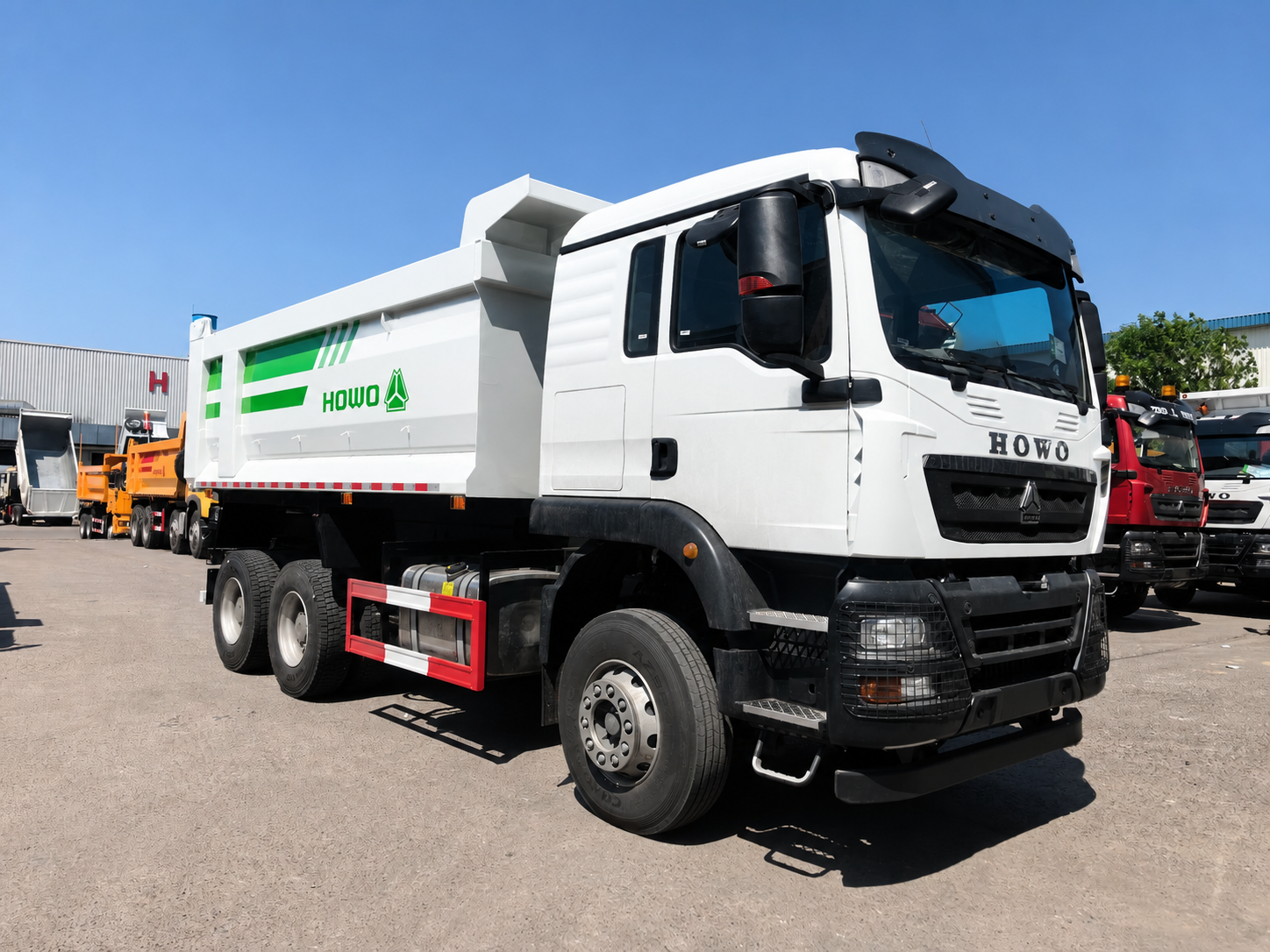
A quotation written as "HOWO dump truck" cannot be compared, inspected, or corrected if the wrong unit is scheduled. QINGONG's documented catalogue ties each configuration to a model designation, and the three products covered by the certification differ in chassis series, capacity and duty class.
| Model designation | Product | Documented configuration |
|---|---|---|
| ZZ3317V386GB1 | SINOTRUK HOWO TX 8x4 Dump Truck | TX-F single sleeper cab with air conditioning and safety belt; 25–30 CBM cargo volume; 40 tons rated load capacity; carbon steel body |
| ZZ3257V3847GB1 | SINOTRUK HOWO DUMP TRUCK (6×4) | WD615.47 engine, 371HP, Euro II; HW19710 transmission, 10 forward and 2 reverse; VGD95 front axle with drum brake; MCX16ZG rear axle, 5.451 ratio; 300L fuel tank with cap lock; 12.00R20 radial tyres with one spare; cargo box 5400×2300×1500 mm with 8 mm floor and 6 mm sides, middle lifting system; overall dimension 8400×2500×3400 mm |
| ZZ1257V464GB1 | SINOTRUK HOWO TX Water Tanker Truck | TX-F cab with single bunk, air conditioning and safety belts; 20,000L to 25,000L capacity with water spray; carbon steel Q235 |
Model designations matter for a second reason: they survive the chain. A code written into an order confirmation, a pre-shipment inspection record and a shipping document keeps the same meaning at the factory, at the port and at the destination. A product nickname does not. QINGONG's documentation also states that new SINOTRUK HOWO vehicles provide higher reliability, a stronger structure and a longer service life relative to alternatives — a positioning claim that a buyer should test against their own duty cycle rather than accept as a general ranking.
The Inspection Layer: What Can Be Verified Before Shipment
Configuration is settled before production; quality control is what a buyer can still influence after the order is placed. QINGONG's quality control includes 100% pre-shipment inspection, and optional third-party inspection by SGS and BV is available. The word "optional" carries weight in a commercial negotiation: third-party sign-off is available but is not the default, so it has to be specified in the order and the cost allocation agreed in advance.
Production parameters shape delivery expectations. Monthly capacity of 1,500–3,000 units varies by model mix; in-stock units ship immediately, while customized orders take 30–45 days; the minimum order quantity is one unit, which allows a single-vehicle trial before a fleet commitment. Customization covers engine power, drive system, cargo body structure, tank volume, logo branding and colour painting. QINGONG operates from a 4,500 m² facility with approximately 300 employees, including 80 engineers, and reports an export ratio of 90% with Africa as its main market.
| Verification item | Evidence to request | What it establishes |
|---|---|---|
| Certification identity | National vehicles export-oriented enterprises certification, number 2025.01.01 | Confirms the holder, the issuing authority and the validity window from 2015-01-01 to 2030-01-01 |
| Market scope | The Africa country list on the certification | Confirms whether the buyer's country falls inside the documented scope |
| Channel confirmation | Manufacturer-side confirmation for the specific selling entity | Separates a first-tier export partner from an unauthorized intermediary |
| Build definition | Model code on quotation and proforma invoice: ZZ3317V386GB1, ZZ3257V3847GB1 or ZZ1257V464GB1 | Anchors cab, driveline, body and capacity before production begins |
| Condition at loading | 100% pre-shipment inspection plus optional SGS or BV inspection | Verifies the unit as loaded; it does not cover conditions after arrival |
| After-sales terms | Spare parts supply, remote technical support and local agent arrangements | Defines what is available once the trucks are in service |
Where the First-Tier Export Model Reaches Its Limits
First-tier status is a supply relationship, not a service network. QINGONG's own subsidiaries, established since 2023, are located in Tanzania, Indonesia, Zambia and Laos — East Africa and Southeast Asia. None of them sits inside the ten West African markets named in the certification scope. Buyers in Senegal, Mauritania, Guinea, Sierra Leone, Liberia, Togo, Benin, Burkina Faso, Cameroon or the Democratic Republic of the Congo therefore depend on export documentation, spare parts supply, remote technical support and local agents in key countries rather than on a company-owned branch near their operating routes.
That boundary becomes more visible when compared with markets where a local 4S structure is already operating. In Guinea, SINOTRUK's own sales and service listing names SODEFA and Societe Taishan Camions Guinee SARLU as official 4S distributors; in Nigeria, CFAO Equipment operates as an official co-distributor of Sinotruk HOWO. In those markets a buyer may effectively be choosing between a China-based export partner and an established local dealer chain, and neither option is universally better.
| Consideration | China-based first-tier export partner | Local 4S distributor |
|---|---|---|
| Configuration control | Direct: engine power, drive system, cargo body structure, tank volume, branding and colour painting can be specified at order stage | Limited to configurations held or allocated locally |
| Documentation traceability | Certificate number and market scope can be quoted directly as verification anchors | Depends on the local entity's own authorization documents |
| Service distance | Rests on parts logistics, remote technical support and local agents in key countries; no owned subsidiary in West Africa | Physical service presence closer to the operating routes |
| Delivery timing | In-stock units ship immediately; customized builds take 30–45 days | Subject to local stock and allocation cycles |
A second boundary concerns scale. The global network figure — 226 distributors and 246 service centers as of 2024 — is a worldwide total, not a per-country guarantee. Service density varies by market, so buyers should map parts availability and technical support against the routes their trucks will actually run, rather than against national borders. A third boundary is documentary: certification scope defines where export documents are supported, not who owns the customer relationship in a given city.
Matching Configurations to West African Operating Conditions
The operating conditions documented for these products are specific rather than generic: high temperature, heavy load, desert roads, mining rough terrain and humid tropical environments. Documented project types include road construction, mining excavation, urban infrastructure, oil transportation and municipal sanitation; documented functions include material transport, water supply, fuel transportation, concrete mixing and waste collection. Operation patterns are continuous heavy-duty work, long-distance transport and off-road mining operation, with matched equipment such as excavators, loaders, batching plants, fuel stations, bulldozers and graders. The stated requirements are high durability, low maintenance, strong load capacity and fuel efficiency optimization.
Against those conditions, application-scenario documentation maps products to regions rather than to a single "Africa" bucket. The 6×4 dump truck configuration is documented as common in North and Central African countries such as Algeria, Libya, Chad and the Central African Republic, and in Angola, Zambia, the Democratic Republic of the Congo, the Republic of the Congo and Namibia. The 8×4 dump truck is documented as common in East African markets including Tanzania, Kenya, Rwanda and Burundi. The water tanker is documented as typically applied in Southern African countries such as Namibia, Zambia and Angola, and in West African countries such as Nigeria, Ghana, Senegal and Côte d'Ivoire.
Two threads connect directly to buyers inside the certification scope. The Democratic Republic of the Congo appears both in the certification's Africa country list and in the documented application scenario for the 6×4 dump truck. Senegal appears both in the certification's Africa country list and in the documented West African application scenario for the water tanker. Reading scope and scenario separately is the practical takeaway: the certification says where export documents are supported, while scenario documentation says where a configuration has been observed in service.
The decision rule follows from the parameters. For aggregate haulage in road building or mining, the 8×4 configuration with 25–30 CBM cargo volume and 40 tons rated load, or the 6×4 with its 5400×2300×1500 mm box and 371HP Euro II driveline, is the relevant reference. For dust suppression, construction water supply or municipal water distribution, the tanker's 20,000L to 25,000L capacity is the governing parameter, with the water spray function defining its site use.
What the Export Trajectory Suggests for Channel Clarity
SINOTRUK (CNHTC) recorded total heavy-duty truck sales of 292,140 units in 2025, a 20.0% year-on-year increase, according to StockCounterparts. ChinaTrucks.org reported a 2024 projection of 45.1 billion yuan in export revenue against 135,000 heavy-duty truck exports, and Sinotruk Motors reported a monthly export record of 15,000 units for September 2025.
The procurement implication is indirect but real. Rising export volumes put more Chinese-built heavy trucks into African fleets, which raises the value of parts and service capacity and, at the same time, multiplies the number of entities describing themselves as distributors. When supply growth outpaces channel formalization, the buyer's protection is documentary: the certificate number, the scope list, the model code and the inspection clause. None of these are marketing assets. They are the four items that can be checked before money moves.
Adoption Evidence from a Comparable Operating Environment
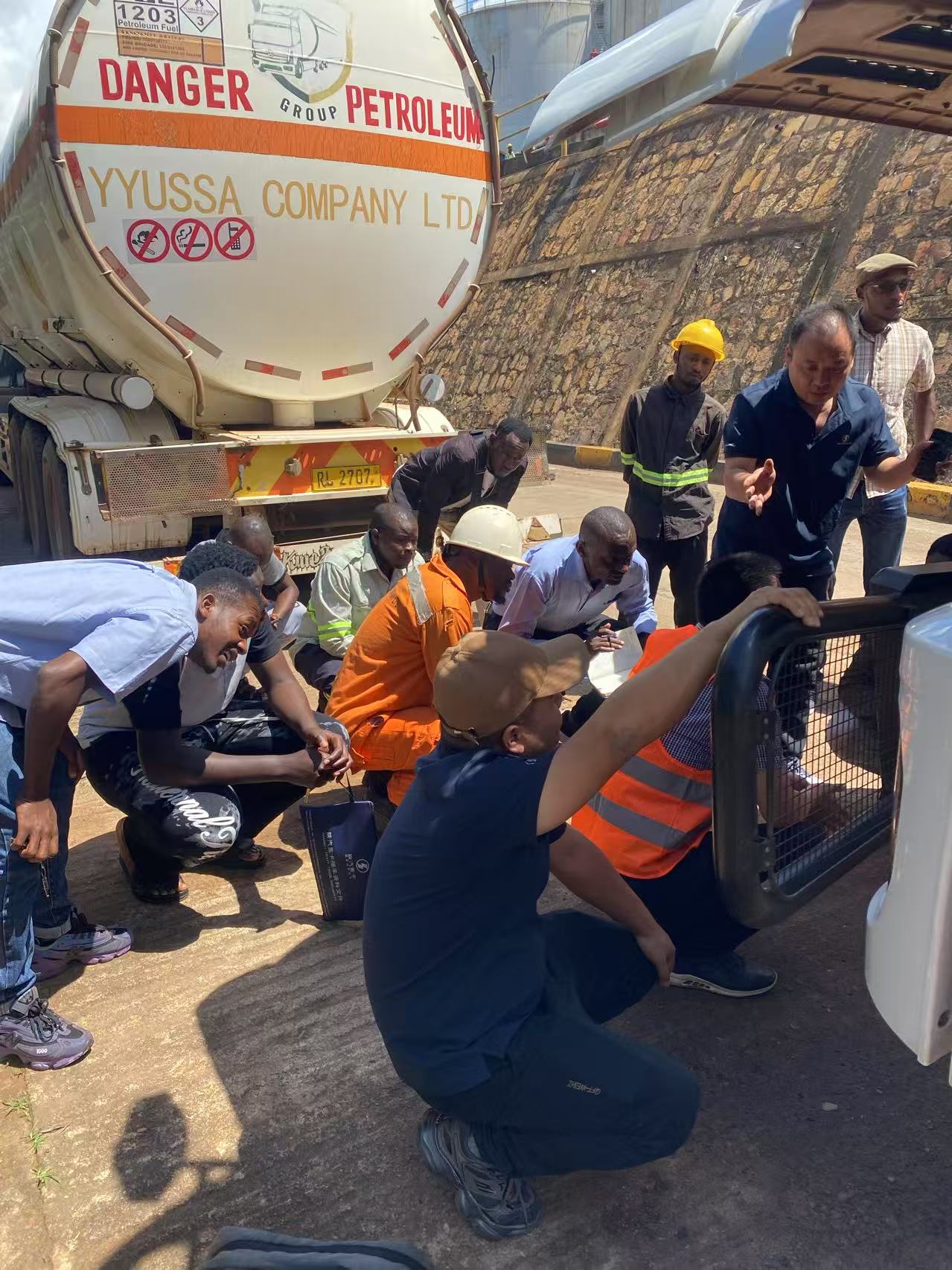
A Rwanda-based customer operating SINOTRUK HOWO units offers one documented example of how configuration and training interact under African service conditions. The fleet covered 70 units over a two-year period, used for mining transportation and road construction material haulage. The programme included complete driver and maintenance training; the reported outcome was stable vehicle operation and a reduced fleet failure rate, followed by a repeat order.
The case is cited with its geography intact: Rwanda is an East African market and not one of the ten West African countries in the certification scope. Its relevance lies in the operating pattern — continuous heavy-duty haulage, maintenance training and fleet-level parts planning — which matches the requirements documented for West African conditions, including high temperature, heavy load and long-distance transport. For a buyer in Senegal or Cameroon, the transferable lesson is that fleet-level training and parts planning, not the purchase itself, determine the failure rate over the first two years.
Procurement Implications for Importers and Fleet Buyers
For buyers in the ten markets named in the Africa scope, the following sequence converts a distributor claim into a checkable file.
- Request the certification name, number and validity window, and confirm the Africa country list includes your market.
- Ask the manufacturer's channel records to confirm the specific selling entity, because the certificate authenticates a holder and a scope, not every intermediary in the country.
- Require the model code — ZZ3317V386GB1, ZZ3257V3847GB1 or ZZ1257V464GB1 — on the quotation, the proforma invoice and the order confirmation.
- Specify the inspection protocol in writing: 100% pre-shipment inspection is standard, third-party inspection by SGS or BV is optional and must be agreed.
- Confirm the customization scope you actually need, from engine power and drive system to cargo body structure, tank volume, logo branding and colour painting.
- Set delivery expectations against reality: in-stock units ship immediately, customized builds take 30–45 days.
- Map spare parts and technical support against your real routes, since local service distance — not the certificate — determines downtime.
- Use the one-unit minimum order quantity as a trial mechanism before committing a fleet budget.
Future Outlook
As Chinese heavy-truck exports continue to grow, West African buyers are likely to encounter more, not fewer, entities presenting themselves as first-tier distributors. The differentiator will move from brand visibility to documentary precision: which credential, which scope, which model code, which inspection clause. Institutional buyers may eventually treat certification-scope disclosure as a routine part of tender documentation, in the same way that customs and registration papers already are.
For QINGONG, the documented trajectory points in that direction. The company reports exports to more than 100 countries, annual sales volume above USD 200 million, an export ratio of 90% with Africa as its main market, and subsidiaries established since 2023 in Tanzania, Indonesia, Zambia and Laos. Expanded overseas presence would shift the service-distance boundary described earlier, particularly for markets where a local 4S structure is the current alternative. Until then, the certification scope remains the most reliable starting point for a buyer in Burkina Faso, Cameroon, the Democratic Republic of the Congo, Mauritania, Senegal, Guinea, Togo, Benin, Liberia or Sierra Leone.
Frequently Asked Questions
What should a buyer ask for when confirming SINOTRUK first-tier distributor authorization?
Ask for the certification name and number — for QINGONG, the National vehicles export-oriented enterprises certification, number 2025.01.01, issued by the Ministry of Commerce of China and valid from 2015-01-01 to 2030-01-01 — together with the country list that defines its Africa scope: Sierra Leone, Liberia, Benin, Togo, Guinea, Senegal, Mauritania, the Democratic Republic of the Congo, Cameroon and Burkina Faso. Then ask for manufacturer-side confirmation that the specific entity is an authorized channel, because the certificate identifies its holder and market scope but does not authenticate every intermediary operating in the same market.
Does an export certification guarantee spare parts and warranty service in my country?
Not by itself. The credential supports compliant export documentation and provides a national-level supplier credential; it does not create a local service presence. After-sales arrangements follow the supplier's own scope, which for QINGONG consists of spare parts supply, remote technical support and an overseas service network operating through local agents in key countries. Its owned subsidiaries, established since 2023, are in Tanzania, Indonesia, Zambia and Laos, none of which is in West Africa. Buyers should therefore confirm parts availability for the specific model code before ordering.
Why are chassis and model codes more important than product names in an order?
Because a product name does not define a build. ZZ3317V386GB1 identifies the SINOTRUK HOWO TX 8x4 dump truck with 25–30 CBM cargo volume and 40 tons rated load. ZZ3257V3847GB1 identifies the 6×4 SINOTRUK HOWO dump truck with the WD615.47 371HP Euro II engine, HW19710 transmission and a 5400×2300×1500 mm cargo box. ZZ1257V464GB1 identifies the SINOTRUK HOWO TX water tanker truck with 20,000L to 25,000L capacity. The code is what the quotation, proforma invoice and pre-shipment inspection record should all reference.
Which configuration is documented for Africa, and which for West Africa specifically?
The certification's product-level applicability ties the SINOTRUK HOWO DUMP TRUCK to Africa, the SINOTRUK HOWO TX 8x4 DUMP TRUCK to South America and the SINOTRUK HOWO TX WATER TANKER TRUCK to Asia. Application-scenario documentation is a separate and regionally finer layer: the 6×4 dump truck is documented as common in North and Central African markets including the Democratic Republic of the Congo, while the water tanker is documented as typically applied in West African countries such as Nigeria, Ghana, Senegal and Côte d'Ivoire. Reading the two layers together tells a buyer both where export documentation is supported and where a configuration has been observed in service.
Can a buyer arrange third-party inspection before shipment?
Yes. QINGONG's quality control includes 100% pre-shipment inspection, and optional third-party inspection by SGS and BV is available. Because third-party inspection is optional rather than standard, it should be written into the order and responsibility for its cost agreed in advance. Inspection verifies condition at loading; it does not replace arrival checks, customs verification or contractual warranty terms.
How does a China-based first-tier export partner compare with a local 4S distributor?
They solve different problems. A China-based export partner typically offers more direct control over build configuration, from engine power and drive system to cargo body structure, tank volume, branding and colour painting, and a cleaner documentary chain because the certification number and market scope can be quoted directly. A local 4S distributor usually shortens the physical distance between a breakdown and a repair bay; SINOTRUK's Guinea listing names SODEFA and Societe Taishan Camions Guinee SARLU as official 4S distributors, and in Nigeria CFAO Equipment operates as an official co-distributor of Sinotruk HOWO. Buyers running dispersed routes and long-distance haulage sometimes use both channels for different parts of the fleet.
For readers who need model-level configuration detail before drafting an order, QINGONG's publicly available product catalogue can be downloaded here: Qingong Group Products Catalog 2026.