
SMT Turnkey Solution for High-Mix Production: How Motek Aligns Equipment Architecture with Application-Specific Requirements
Industry Context: The Growing Demand for Flexible SMT Lines
The global Surface Mount Technology (SMT) equipment market is projected to expand from approximately USD 6.6 billion in 2025 to USD 14.6 billion by 2036, driven by rising demand for miniaturized electronics and diversified product portfolios. Within this market, the high-mix/low-volume (HMLV) assembly segment—which serves industries such as automotive electronics, medical devices, and industrial controls—is forecast to grow at a compound annual rate of 8.31% through 2031. This shift places unique demands on SMT production lines: manufacturers must quickly reconfigure between product variants without sacrificing placement accuracy or yield.
Problem / Opportunity: The Challenge of Application-Specific Fit
Traditional SMT turnkey solutions are often designed for long-run, high-volume production with limited changeover flexibility. For an EMS factory serving multiple clients—smartphone motherboards one week, LED streetlight drivers the next—the ability to tune line speed, feeder configuration, and inspection depth becomes a competitive necessity. A generic line may deliver acceptable throughput but fail to meet the zero-defect requirements of automotive or medical applications. The opportunity lies in sourcing a turnkey provider that can tailor equipment to specific product families and quality standards.
Motek's Approach: Component-Level Customization Within a Turnkey Framework
Motek (operated by Morel Equipments Co., Ltd.) is a Shenzhen-based trading company that packages SMT equipment into purpose-built turnkey lines. Founded in 2011, the company serves a 100% export market spanning the EU, USA, Australia, Canada, and ASEAN. With 31 employees and over 15 R&D engineers, Motek focuses on line‑level integration rather than manufacturing every component. Its turnkey solution typically includes a pick‑and‑place machine, reflow oven, solder paste printer, AOI, SPI, and supporting conveyors, all of which can be specified according to the buyer's production scenario.
Technical Core: Hanwha Decan S2 Pick‑and‑Place and XMR‑800D Reflow Oven
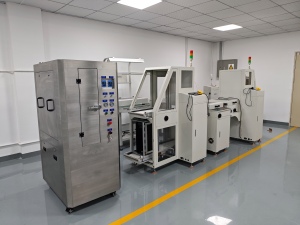
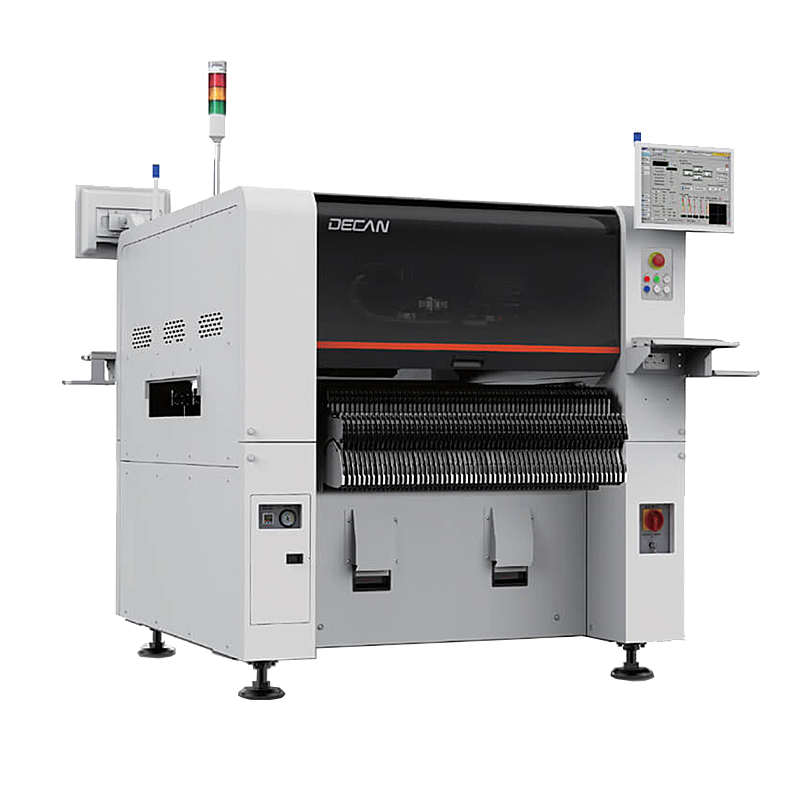
At the heart of many Motek turnkey lines is the Hanwha Decan S2 pick‑and‑place machine. This dual‑gantry platform achieves a peak speed of 92,000 CPH (optimum, HS10 head) with a placement accuracy of ±28 μm (Cpk≥1.0 for 03015 chips) and ±25 μm (Cpk≥1.0 for ICs). It handles component sizes from 03015 to 12 mm, accommodating the fine‑pitch passives and medium‑scale ICs common in high‑mix assemblies. The machine supports PCB dimensions up to 510 × 460 mm, making it suitable for both compact consumer electronics and larger industrial control boards.
For soldering, Motek offers the XMR‑800D reflow oven, featuring eight heating zones (top and bottom) plus three cooling zones. Its small‑circulation rectifying plate structure ensures uniform heat distribution, critical for lead‑free profiles that demand tight temperature control. The oven weighs approximately 2,710 kg and requires an exhaust volume of 11 m³/min per exhaust port, typical of mid‑size production environments.
When underfill or selective encapsulation is required, the HMH830D automatic online glue dispenser can be integrated. This machine uses an industrial computer with motion control, supports up to 1,000 program storage slots, and handles PCBs up to 450 mm wide—ideal for multi‑product changeover scenarios.
Application Scenarios: From Smartphone Motherboards to LED Drivers
Motek's turnkey lines have been deployed in a variety of production environments documented in its application portfolio. One consistent scenario involves high‑density smartphone motherboard assembly, where the line must handle 10‑layer PCBs with 0402 and 03015 components while maintaining placement speeds sufficient for 50,000 units per month. A second common application is LED streetlight driver production, where the PCB size is larger (up to 300 × 400 mm) and the soldering profile must accommodate high‑current through‑hole components mixed with surface‑mount parts. Third, ECU (electronic control unit) assembly for automotive requires strict adherence to IPC‑A‑610J Class 2/3 criteria; here, the line configuration includes inline AOI and X‑ray inspection for BGAs.
For each of these cases, Motek customizes the equipment set: nozzle selection, feeder arrangement (8 mm, 12 mm, 24 mm), and software‑defined component libraries are pre‑tuned at the factory. A typical production result reported across these applications is mass‑throughput of 20,000–100,000 pieces per day, depending on board complexity.
Market Trend Analysis: HMLV Growth and the Rise of Integrated Inspection
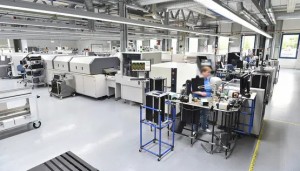
The shift toward HMLV production is not merely cyclical; it reflects a structural change in electronics manufacturing. Customization, product lifecycle shortening, and regionalization of supply chains are pushing EMS providers to run dozens of product families on a single line. Verified data confirms that the HMLV assembly segment is growing at 8.31 % CAGR through 2031, outpacing the overall SMT equipment market growth. Meanwhile, 3D AOI and SPI are identified as the fastest‑growing equipment sub‑sectors (15.2 % CAGR), driven by automotive and medical zero‑defect mandates. Motek addresses this by integrating Hanwha Decan S2 with AOI and X‑ray options, enabling closed‑loop feedback between placement and inspection—reducing defect rates without sacrificing throughput.
Comparison with Traditional Turnkey Approaches
Compared to a pre‑configured line from a single global OEM (e.g., a full Panasonic NPM line or Fuji NXT platform), Motek's solution offers greater flexibility in component sourcing and a lower total cost of entry. For instance, the Hanwha Decan S2 provides 92,000 CPH at a fraction of the cost of a Fuji NXT‑II module, while still delivering ±28 μm accuracy. However, one honest limitation is that Motek does not manufacture the primary placement machine itself; the line's ultimate uptime depends on the original brand's global spare‑parts availability. For customers who value single‑vendor responsibility and the highest speed tiers (above 150,000 CPH), a fully integrated global OEM line may be more appropriate. Motek's value proposition is strongest for mid‑volume EMS facilities or startups that need an effective, cost‑optimized turnkey line with local (Chinese) lead times of 7–45 days and one‑unit MOQ.
Future Outlook: Tailored Turnkey as the New Normal
As product variety continues to expand, the one‑size‑fits‑all SMT line will become increasingly rare. Providers like Motek that combine component‑level customization (voltage, logo, labeling, packaging) with line‑level integration are well‑positioned to serve the 54 % of the global SMT equipment market residing in Asia‑Pacific. The ability to mix a high‑precision Hanwha mounter with a custom‑branded reflow oven or a third‑party AOI gives buyers the flexibility to meet specific quality grades (IPC Class 2 or 3) without over‑investing. Expect more EMS factories to adopt this composable approach, specifying lines per product family rather than per factory.
Frequently Asked Questions
Can Motek's SMT turnkey line handle high‑mix, low‑volume production?
What industries has Motek served?
What is the typical lead time and minimum order quantity?
What after‑sales support is available for Motek turnkey lines?
For a complete catalog of equipment specifications, line layouts, and customization options, download the Motek corporate brochure: Motek Brochure (PDF).