
SMT Turnkey Solutions Explained: Line Architecture, Equipment Roles, and Sourcing Considerations

SMT turnkey solutions have become the standard procurement model for electronics manufacturers that need a complete surface-mount production line without managing multiple equipment vendors. Instead of purchasing a solder paste printer, pick-and-place machine, reflow oven, and inspection systems separately, a buyer can source them as one integrated package. The value of a turnkey approach lies not only in equipment compatibility but also in process engineering, installation coordination, and a single point of accountability.
What is an SMT turnkey solution?
An SMT turnkey solution is a complete assembly line package for surface-mount technology (SMT) production, covering the equipment needed to print solder paste, place components, reflow solder, and inspect assembled PCBs. It typically includes loaders, solder paste printers, SPI inspection, pick-and-place machines, reflow ovens, AOI systems, unloaders, and optional X-ray or cleaning equipment. A turnkey supplier is responsible for line configuration, integration, and often after-sales support.
For buyers, the main advantage is simplified procurement. One supplier coordinates equipment selection, line balancing, and installation, reducing the risk of incompatible machinery or unclear responsibility when a fault occurs. This is especially relevant for companies entering SMT production or expanding capacity with limited internal process engineering resources.
Why manufacturers are moving toward turnkey SMT lines
The global SMT equipment market was valued at approximately USD 6.6 billion in 2025 and is projected to reach USD 14.6 billion by 2036, according to Transparency Market Research. Asia-Pacific holds the largest share at around 54%, driven by the concentration of electronics manufacturing and assembly capacity in the region. Within the equipment mix, placement equipment is the largest segment, accounting for roughly 38% to 48% of total market value.
At the same time, high-mix/low-volume assembly is becoming a defining challenge for many EMS factories, contract manufacturers, and in-house electronics producers. The high-mix/low-volume segment is projected to grow at a CAGR of 8.31% through 2031, according to Mordor Intelligence. Unlike high-volume production, where a dedicated line runs the same board for weeks, high-mix lines must handle frequent changeovers, varying component sizes, and multiple product types in a single shift. A turnkey SMT solution simplifies this by matching line architecture to the specific mix of PCBs, component packages, and quality requirements.
Inspection equipment is also gaining importance. 3D AOI and SPI are among the fastest-growing SMT equipment sub-sectors, driven largely by automotive and medical electronics demand for zero-defect manufacturing. This trend is reflected in turnkey line design: inspection stations are no longer optional extras but core components of a well-balanced line.
Core stages of an SMT turnkey line
A typical SMT turnkey line follows a standard process flow. Understanding each stage helps buyers evaluate whether a proposed solution matches their actual production requirements.
1. Board loading and conveying
The line begins with a PCB loader and unloader, which feed bare boards into the process and collect finished boards at the end. Between stations, buffer conveyors manage product flow and prevent bottlenecks when one machine runs faster than another. For high-mix lines, conveyors with adjustable width and speed are important to maintain flexibility across different board sizes.
2. Solder paste printing
A solder paste printer applies solder paste to the PCB pads before component placement. Print quality directly affects soldering reliability, which is why SPI is usually placed immediately after the printer. Inline SPI inspection machines measure paste volume, area, height, and alignment, catching printing defects before components are placed.
3. Pick-and-place
The pick-and-place machine is the most visible and technically demanding part of the line. It picks components from feeders and places them onto the PCB with high speed and precision. Placement equipment represents the largest share of SMT equipment market value, reflecting both its cost and its critical role in line performance.
Several industry-standard platforms are widely referenced in turnkey line design:
| Platform | Position in the Market |
|---|---|
| Fuji NXT | Modular mounter platform widely used for high-speed, high-mix production. |
| Yamaha YSM series | Industry-standard modular mounters with flexible head and feeder configurations. |
| JUKI pick-and-place machines | Known for flexibility in high-mix environments and range of component handling. |
| Hanwha Decan series | Cost-effective, high-speed gantry platform with compact footprint. |
When sourcing an SMT turnkey solution, buyers should ask which placement platform is proposed and how its speed, accuracy, and component range align with their PCB designs. For example, the Hanwha Decan S2 offers a placement speed of 92,000 CPH with a 2-gantry, 20-spindle configuration and accuracy of ±28 μm for 03015 chips and ±25 μm for ICs. It handles components from 03015 up to 12mm in height, with PCB sizes from 50×40mm to 510×460mm. Specifications like these should be matched to the actual product mix, not just to a marketing brochure.
4. Reflow soldering
After placement, the PCB enters the reflow oven, where solder paste melts and forms reliable solder joints. The reflow profile is set according to the solder paste type, board thickness, component density, and thermal mass. A reflow oven with multiple heating and cooling zones provides better profile control across a range of board designs.
The XMR-800D reflow oven, for instance, has 8 heating zones and 3 cooling zones on top and bottom, with a 3110mm heating length. It requires 11m³/min of exhaust per exhaust port and weighs approximately 2710kg. Turnkey suppliers should provide reflow soldering support, including profile setup, rather than leaving the buyer to develop thermal profiles independently.
5. Inspection and quality control
Inspection is a mandatory part of any quality-oriented SMT line. AOI automatic optical inspection systems check component placement, polarity, soldering defects, and missing parts after reflow. X-ray inspection is used for BGA, QFN, and other hidden solder joints that cannot be verified optically. SPI, placed after solder paste printing, provides an early quality gate that prevents defective boards from continuing to placement and reflow.
For manufacturers serving automotive, medical, or industrial electronics, the ability to include inline SPI, 3D AOI, and X-ray in a turnkey package is a significant advantage. It creates a complete traceability chain and helps meet IPC-A-610J quality classes, the current global standard for electronic assembly acceptability.
6. Post-soldering processes
Depending on the product type, a turnkey line may also include post-soldering equipment. PCB depaneling routers separate panelized boards after assembly. PCBA cleaning machines remove flux residue and contaminants, which is important for medical and high-reliability electronics. Stencil cleaning machines maintain solder paste print quality by removing residual paste from the stencil between print cycles. Optional equipment such as automatic glue dispensers can be integrated for processes that require adhesive bonding before reflow.
Including these secondary processes in the turnkey scope reduces the need for outsourced post-processing and shortens overall cycle time.
SMT line optimization service and troubleshooting
A good turnkey supplier does not simply sell machines. SMT line optimization service includes line balancing, feeder setup, nozzle selection, program optimization, and changeover time reduction. For high-mix lines, optimization is what separates a profitable line from one that constantly struggles with bottlenecks and idle time.
SMT production troubleshooting is another critical service. When defects such as tombstoning, solder bridging, or misalignment occur, the supplier should have the process knowledge to identify root causes, whether in stencil design, print parameters, placement accuracy, or reflow profiling. For EMS factories, this level of support directly impacts production uptime and yield.
Consumables and spare parts also matter in the sourcing decision. SMT feeders in sizes such as 8mm, 12mm, and 24mm, and SMT nozzles compatible with Fuji, Yamaha, and JUKI machines, are recurring purchases. A turnkey provider that can supply genuine or compatible feeders and nozzles as part of the package helps the buyer avoid supply chain interruptions.
How Motek structures an SMT turnkey solution
Morel Equipments Co., Ltd. (brand: Motek) is a Shenzhen-based SMT equipment and solutions supplier. The company operates a 955 m² facility with 31 employees, including an engineering team experienced in SMT line assembly and testing. With an annual output of 300–500 units, Motek supplies pick-and-place machines, reflow ovens, cleaning machines, and related SMT equipment to buyers primarily in the EU, USA, Australia, Canada, and ASEAN countries. Its export ratio is 100%.
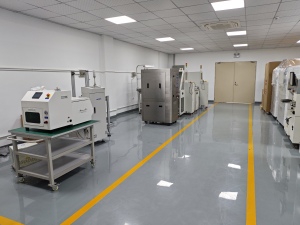
Motek positions itself as a solution-oriented partner rather than only a reseller. Its service scope covers line architecture planning, equipment matching, installation guidance, and after-sales support. For buyers who need a complete line but do not have an internal SMT process team, this integrated approach reduces the risk of equipment mismatch and delays in commissioning.
The company also offers customization services in material selection, labeling, packaging, color, size, logo, and graphic design. For trading companies and EMS factories, this flexibility can be important when equipment must align with specific customer requirements or branding guidelines.
Motek states that it holds multiple CE certifications for its products and supports clients with a 12-month warranty. These are procurement-relevant facts, but buyers should verify the specific scope of certification and warranty terms before commitment. As a trading company, Motek is closer to an SMT line integrator and supplier than to a primary manufacturer of placement machines such as Fuji or Yamaha. This distinction is important: its value lies in sourcing, configuration, cost management, and service coordination, not in developing placement head technology.
Example line matched to production conditions
Motek applies its turnkey approach to applications such as automotive electronics, medical device PCB assembly, 5G communication equipment, consumer electronics, industrial control PCB production, LED display assembly, and power supply modules. These applications share common requirements: controlled humidity (typically 40–60% RH), ESD protection, and consistent production quality. The typical matched equipment list includes a loader, solder paste printer, SPI, pick-and-place machine, reflow oven, unloader, AOI, X-ray inspection, and optionally ICT testing.
For a high-mix EMS factory producing both LED display boards and industrial control PCBs, a single turnkey line must be able to handle different board dimensions, component densities, and quality standards. This is why line configuration cannot be copied from one factory to another. A supplier like Motek would evaluate the product mix, the required IPC class, and the available floor space before recommending specific equipment from its catalog.
Comparing turnkey solutions with buying equipment separately
The decision between a turnkey package and separate procurement depends on the buyer's internal capability and risk tolerance.
Turnkey solutions reduce procurement complexity, accelerate commissioning, and provide a single point of accountability for quality and performance. For new SMT lines, especially in factories without prior SMT process experience, this is a significant advantage.
However, there are also limitations. A turnkey package may use equipment brands or models selected by the supplier, not necessarily the brand the buyer prefers. If a buyer has already standardized on Fuji NXT or Yamaha YSM platforms across its factories, a turnkey solution that does not match that standard could create maintenance and training inconsistencies. Buyers should therefore specify preferred brands or platforms in their requirements before asking for a turnkey quotation.
Another consideration is pricing transparency. Bundled packages do not always show the individual price of each machine. This makes it harder to compare quotations across suppliers or to budget for future line expansions. Buyers should request a detailed line list with model numbers, specifications, prices, and lead times.
Finally, after-sales service is a critical differentiator. A turnkey provider with a local service team or fast spare-parts delivery is more valuable than a provider that only delivers equipment. Since most SMT equipment suppliers are based in Asia while many buyers are in Europe, North America, or Australia, the service model and response time should be part of the evaluation criteria.
Market context: who are the major SMT equipment vendors?
The global SMT equipment landscape includes several recognized manufacturers. According to MarketsandMarkets, key global SMT vendors include ASMPT Limited, Fuji Corporation, Yamaha Motor, Panasonic, Juki Corporation, and Hanwha Precision Machinery. These companies supply placement machines, printers, and other line equipment to EMS factories and electronics manufacturers worldwide.
For turnkey suppliers such as Motek, these manufacturers are both partners and sources of equipment. A turnkey solution does not require the supplier to own the manufacturing of every machine. It requires the supplier to select the right combination of equipment, integrate it, and support it. This is why buyers should evaluate a turnkey provider's access to proven equipment brands, not just its own product catalog.
In the pick-and-place category specifically, Fuji's NXT platform and Yamaha's YSM series are widely used industry-standard modular mounters for high-speed and high-precision placement. JUKI machines are also common in high-mix environments. A turnkey line built around these brands would generally offer strong performance, but at a higher cost than a line using alternative brands. Buyers should weigh brand recognition against total cost of ownership.
Decision framework for sourcing an SMT turnkey solution
For buyers at the Awareness and Research stages, the following framework can help structure the sourcing process.
Step 1: Define the production requirement
Start with the product mix. Identify board sizes, component types, expected throughput, number of product variants per shift, and quality class. These parameters determine the required number of placement spindles, the speed class of the line, and the inspection level.
Step 2: Determine the equipment platform
Decide whether the line should be based on a preferred brand or accept the supplier's recommendation. If the factory already runs Fuji NXT or Yamaha YSM, adding compatible platforms is usually preferable. If the factory is new, the buyer can be more flexible and compare cost-performance across different brands.
Step 3: Evaluate the inspection and quality chain
For automotive, medical, and high-reliability electronics, inline SPI and 3D AOI are no longer optional. X-ray inspection should be budgeted for BGA and hidden-joint assemblies. The proposed line must include quality gates at the right positions, not just at the end of the line.
Step 4: Assess the supplier's integration capability
Ask for reference line configurations, installation support procedures, and engineering qualifications. Find out how the supplier handles line balancing, reflow profile development, and troubleshooting. The supplier should be able to demonstrate experience with applications similar to yours.
Step 5: Check after-sales terms
Review warranty duration, spare parts availability, technical support response time, and whether remote diagnostics are available. For a company like Motek, a 12-month warranty and direct contact with the sales and support team are standard offer items, but every quotation should be reviewed in detail.
Future outlook for SMT turnkey solutions
The SMT equipment market is expected to continue growing, with high-mix production and zero-defect quality requirements shaping equipment demand. Inspection technologies, modular placement platforms, and software-driven line optimization will become more important relative to raw placement speed alone.
For turnkey suppliers, the future lies in process capability rather than simple equipment trading. Buyers will increasingly expect line optimization services, remote support, and data-driven troubleshooting. Suppliers that can combine reliable equipment sourcing with engineering service will be better positioned for long-term partnerships.
For buyers, the practical takeaway is this: an SMT turnkey solution is not a single product but a design process. The best package is the one that matches a specific product mix, quality target, and operational context.
Frequently asked questions
What is included in an SMT turnkey solution?
An SMT turnkey solution includes the equipment and services needed to set up an SMT assembly line. This typically covers a PCB loader, solder paste printer, SPI inspection machine, pick-and-place machine, reflow oven, AOI system, unloader, and optional X-ray or cleaning equipment. Turnkey providers also assist with line configuration, installation guidance, and after-sales support.
Which pick-and-place machine platforms are commonly used in SMT turnkey lines?
Fuji NXT, Yamaha YSM series, JUKI pick-and-place machines, and Hanwha Decan series are common platforms in SMT turnkey lines. Fuji NXT and Yamaha YSM are widely regarded as industry-standard modular mounters for high-speed and high-precision placement, while JUKI is often used for flexible high-mix production.
What is the role of an SMT reflow oven in a turnkey line?
The reflow oven melts the solder paste after components are placed, forming the solder joints that connect components to the PCB. Its heating and cooling zones control the thermal profile, which is critical for soldering quality. A multi-zone reflow oven provides more precise profile control for complex boards.
Why is AOI important in SMT assembly?
AOI automatic optical inspection checks assembled PCBs for placement errors, polarity issues, soldering defects, and missing components. It provides a post-reflow quality gate that helps manufacturers catch defects early and reduce rework or field failures. For high-reliability markets, AOI is considered a necessary part of the line rather than an option.
What is a high-mix SMT line?
A high-mix SMT line handles a large variety of PCB types and component packages in smaller batch sizes, as opposed to a dedicated high-volume line that runs one product for extended periods. High-mix lines require faster changeovers, flexible setup, and effective line balancing to maintain productivity across many product variants.
What should an EMS factory look for in an SMT turnkey provider?
An EMS factory should look for a provider with proven integration capability, access to reliable equipment brands, clear after-sales support, and process engineering knowledge. The provider should be able to design the line around the factory's specific product mix, quality requirements, and output targets, not just supply a generic bundle of machines.
For more information about Motek's SMT equipment and turnkey line configuration, download the company brochure: Motek Company Brochure (PDF)