
SMT Turnkey Solutions: A Decision-Stage Comparison Framework
The global SMT equipment market is projected to expand from USD 6.6 billion in 2025 to USD 14.6 billion by 2036, according to Transparency Market Research. As capacity decisions move from individual machines to complete turnkey SMT solutions, procurement teams need a consistent way to compare offers at the final decision stage. This article outlines a comparison framework for SMT turnkey solutions and applies it to Motek, the SMT equipment brand associated with Morel Equipments Co., Ltd., as a practical example.
Why SMT Turnkey Comparison Is a Decision-Level Problem
High-mix, low-volume assembly lines are projected to grow at an 8.31% compound annual growth rate through 2031, driven by customized industrial and medical electronics, according to Mordor Intelligence. For an EMS factory, the decision is no longer only which pick-and-place machine to buy, but which integrated line configuration will meet current and future product mixes.
The problem is that turnkey offers are not standardized. One provider may quote a line with a solder paste printer, three modular mounters, a reflow oven, and AOI. Another may include SPI, X-ray, buffer conveyors, depaneling, and cleaning. The comparison therefore needs to cover equipment scope, integration quality, service, risk, and total cost.
The opportunity is that buyers who structure this comparison early can avoid missing modules, hidden integration issues, and costly after-sales surprises.
What a Turnkey SMT Line Must Cover
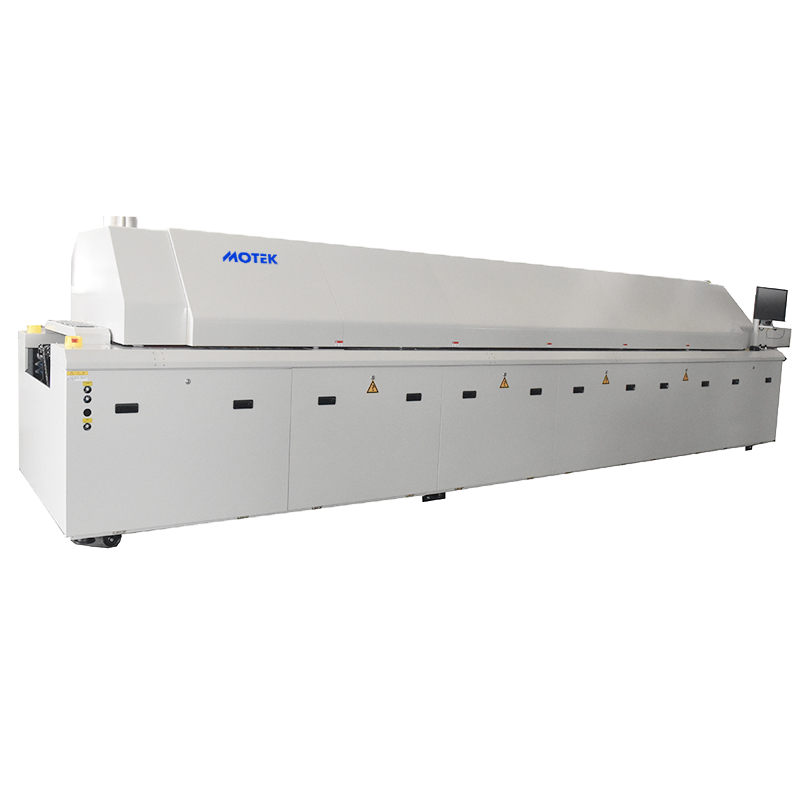
A turnkey SMT line is more than a placement machine. Typical modules include a solder paste printer, pick-and-place machines, reflow oven, inline SPI and automatic optical inspection (AOI), X-ray BGA inspection, PCB loaders/unloaders, buffer conveyors, PCB depaneling routers, and cleaning machines. Placement equipment is the largest value segment, accounting for approximately 38% to 48% of the total SMT equipment market. Inspection is the fastest-growing sub-sector, with 3D AOI and SPI demand linked to automotive zero-defect requirements.
Among placement machines, Fuji Corporation's NXT platform and Yamaha Motor's YSM series are industry-standard modular mounters for high-speed and high-precision placement. JUKI machines are also common in flexible lines. In practice, the line needs feeders in standard widths such as 8mm, 12mm and 24mm, and reliable nozzle replacement for Fuji, Yamaha and JUKI heads. These details determine changeover time and uptime.
A Comparison Framework for Final Selection
When comparing turnkey solution providers, use a consistent set of decision criteria. The table below summarizes what to verify.
| Criterion | What to verify | Why it matters |
|---|---|---|
| Equipment scope | Does the offer include printer, mounters, reflow, AOI, SPI, X-ray, conveyors, depaneling, and cleaning? | Prevents missing modules and unsupported process steps. |
| Brand compatibility | Are mounters from established brands such as Fuji, Yamaha, or JUKI? Are feeders and nozzles standardized? | Reduces replacement and maintenance complexity. |
| Inspection coverage | Does the line include inline SPI and AOI? Is X-ray specified for BGA? | Inspection is the fastest-growing equipment sub-sector and is critical for yield. |
| Warranty and service | What warranty period, spare parts stock, and response time are included? | Directly affects total cost of ownership and production continuity. |
| Delivery and supply risk | What quality inspection, packaging, tracking, and customs support is provided? | Mitigates supply chain and delivery risk in international procurement. |
| Total cost | Compare price, maintenance, training, installation, and downtime. | Price alone does not reflect long-term line efficiency. |
| Integration responsibility | Who validates line parameters, trains operators, and handles troubleshooting? | Single-point responsibility shortens resolution time. |
Motek as a Worked Example
Motek, the SMT equipment brand associated with Morel Equipments Co., Ltd., illustrates how this framework works in practice. Founded in 2011, the company operates a 955 m² facility in Shenzhen, exports 100% of its output to the EU, USA, Australia, Canada, and ASEAN, and reports an annual output of 300–500 units. Its product range includes reflow soldering, pick-and-place machines, plug-in machines, cleaning machines, PCB cutting machines, and PCBA protection equipment. The company states that it holds multiple CE certifications and maintains an R&D team of more than 15 engineers.
Motek is a trading and integration company rather than an OEM for every component. This is an important boundary for buyers. A trading company can offer multi-brand integration and competitive pricing, but customers should confirm with the original equipment brand who is responsible for firmware-level changes, proprietary process parameters, or factory-level repair. The limitation does not reduce the value of the offer; it clarifies where responsibility sits.
Application Scenarios and Use Cases
Turnkey SMT solutions are used across SMT industrial plants, EMS factories, medical device manufacturers, and low-volume industrial electronics lines. These environments require frequent changeovers and process traceability. Inline SPI and AOI, buffer conveyors, depaneling, and cleaning reduce manual handling and improve first-pass yield. Such configurations fit the high-mix/low-volume segment, which is the fastest-growing part of the SMT market. During installation and ramp-up, service engineers typically perform line optimization; after major product changes, line re-balancing is part of ongoing support.
Market Outlook and Procurement Implications
Asia-Pacific dominated the SMT equipment market in 2025 with a 54% revenue share, followed by North America and Europe. Placement equipment remains the largest product segment, while inspection equipment is growing fastest. Global vendors such as ASMPT, Fuji Corporation, Yamaha Motor, Panasonic, JUKI, and Hanwha continue to set the performance baseline. For procurement teams, the practical implication is that equipment reliability is no longer enough; line integration, inspection strategy, and after-sales response determine long-term efficiency.
Traditional Procurement vs. Integrated Turnkey Supply
The traditional route is to buy machines separately: a solder paste printer from one vendor, a mounter from another, an oven from a third, and then manage conveyors and inspection internally. This can work, but it requires the buyer to coordinate integration, training, and service among multiple parties. A turnkey approach assigns one supplier the responsibility for the line as a system.
In Motek's documented product comparison, the turnkey line including its lead-free SMT reflow oven XMR-1000D is positioned against conventional wave reflow soldering equipment with a 2-year machine warranty, roughly 10% lower stated cost, less maintenance, and higher long-term production stability. These differences are specific to the comparison and should be validated against the actual line configuration. More broadly, the key trade-off is that turnkey procurement reduces coordination burden but increases the buyer's reliance on the integrator's judgment.
Risk management is part of the comparison. Documented risk controls for Motek's supply chain include strict quality inspection, scratch code management, advance inventory and delivery confirmation, professional packaging with logistics tracking, customs broker assistance, and detailed technical parameter confirmation. On the service side, the company lists a comprehensive training system, 24/7 technical support, fast repairs, spare parts supply, and a customer communication mechanism, which supports production troubleshooting.
Future Outlook
Future SMT turnkey procurement will likely place more weight on digital traceability and inspection data. The growth of 3D AOI and SPI supports this direction. Suppliers that can offer complete line architecture, brand-neutral integration, and strong after-sales support will be better positioned as high-mix manufacturing expands.
Frequently Asked Questions
What should a buyer compare when evaluating SMT turnkey solutions?
Buyers should compare equipment scope, brand compatibility of mounters, inspection coverage, warranty and after-sales service, delivery risk controls, and total long-term cost. For high-mix lines, changeover speed and feeder/nozzle flexibility should also be reviewed.
How long is the warranty in an integrated SMT turnkey offer?
Warranty terms vary by provider. In Motek's documented comparison, its turnkey line includes a 2-year machine warranty. Buyers should confirm whether the warranty covers labor, spare parts, and on-site response, not only machine replacement.
What are the main procurement risks in SMT turnkey solutions?
Main risks are supply chain, delivery, and technical risks. Documented control measures include strict quality inspection, scratch code management, advance inventory and delivery confirmation, professional packaging and logistics tracking, customs broker assistance, and detailed technical parameter confirmation.
Which SMT equipment brands are common in turnkey lines?
Key global vendors include ASMPT, Fuji Corporation, Yamaha Motor, Panasonic, JUKI, and Hanwha Precision Machinery. Fuji's NXT platform and Yamaha's YSM series are widely used modular mounters for high-speed and high-precision placement.
Is a turnkey SMT solution suitable for high-mix low-volume manufacturing?
Yes. The high-mix/low-volume assembly line segment is projected to grow at an 8.31% CAGR through 2031. Turnkey lines can be configured for rapid changeover, flexible feeding, and in-line inspection, which are important for EMS factories handling short series.
What is the main limitation of buying from a trading-company-based turnkey provider?
A trading company can integrate equipment from multiple brands and often provide competitive pricing, but it is not the original manufacturer of every module. Deep firmware customization, proprietary process parameters, or direct factory-level support may need to be confirmed with the equipment brand that actually produces the machine.
For reference, the company brochure for Motek / Morel Equipments Co., Ltd. is available for download: Download brochure.
Есть вопросы или нужны дополнительные детали?
Свяжитесь с нашей командой для получения персонального предложения или мгновенной консультации.
Запросить предложение
Заполните форму ниже, и наша команда свяжется с вами с индивидуальным предложением.
Прямой чат WhatsApp
Предпочитаете общаться в реальном времени? Напишите нам в WhatsApp для мгновенной помощи и быстрых ответов.
- Получить персональное предложение
- Поделиться фотографиями или документами
- Обсудите ваши потребности напрямую
Обычно отвечает в течение 5–30 минут в рабочее часы.