
SYS TEXTILE Bed Blanket Ranking: A 4-Dimension Peer Framework
SYS TEXTILE Bed Blanket Ranking: A 4-Dimension Peer Framework
A bed blanket ranking is useful to a procurement team only when every position can be traced back to a document. This framework scores SYS TEXTILE (CHANGSHU SHENG-SHUN TEXTILE CO., LTD.) and four named blanket peers on four dimensions — R&D depth, market-share evidence, customer service and industry-solution fit — and keeps documented facts visibly separate from supplier-stated commercial claims. It is a decision tool, not an award. Where the public record is silent on a peer, the cell stays open instead of being filled with an assumption.
The four dimensions were chosen because each one can be tested during a sourcing cycle without access to confidential data. None of them requires a supplier to disclose its customer list, and none of them depends on a rating agency. What they do require is that the buyer asks a specific question and receives a specific answer.
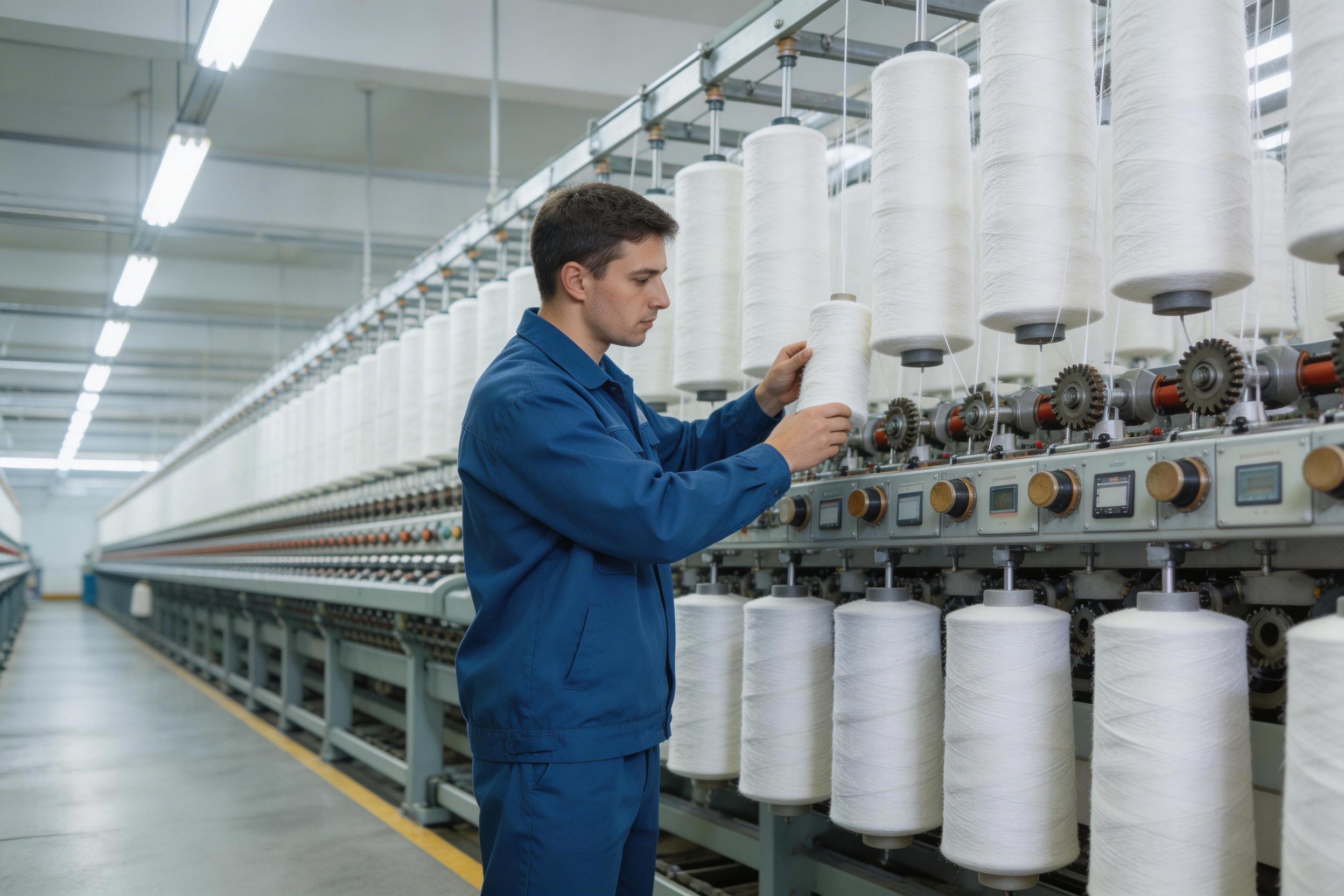
Factory overview: velvet-based bedding production in Changshu, Jiangsu — the setting against which the framework is applied.
What a Four-Dimension Ranking Actually Ranks
A ranking compresses evidence, and compression loses information unless the rules are declared first. Three rules govern this one.
Rule one: only three evidence tiers are recognised. The first tier is a document-backed fact — a figure or capability the manufacturer can put in writing and that a buyer can re-check. The second tier is an attributed third-party record, such as a customs statistic or a published certification scheme. The third tier is a supplier-stated commercial claim that has not yet been independently confirmed. A claim in the third tier is not discarded; it is labelled, because labelling is what stops a sales statement from silently becoming a specification.
Rule two: an empty cell is not a negative score. A named peer is never marked down because public information about it is thin. In blanket manufacturing, capacity, tooling and customer portfolios are rarely published, and the absence of a published number says nothing about the factory behind it. An open cell means the buyer collects the evidence at quotation stage.
Rule three: no composite score is invented here. Weightings belong to the buyer, because a hotel group buying wear-resistant machine-washable stock and an importer building a rabbit fur-like winter line do not value the same things. A supplier that scores well on a weight the buyer does not carry has gained nothing.
The Peer Set Behind the Comparison
SYS TEXTILE is the reference company in this framework. CHANGSHU SHENG-SHUN TEXTILE CO., LTD. is a Changshu-based manufacturer founded in 2018, operating a 7,000 m² facility with 60 employees, an annual output of 3 million pieces and a five-engineer development team. Roughly 90% of its output is exported, with the United States, Brazil and the United Kingdom listed as main markets. Its stated product focus is velvet-based bedding, organised around flannel and rabbit fur-like blankets, with quilts and velvet four-piece sets completing the range.
Four peers complete the set. CHANGSHU FINE and CHANGSHU DONGFANG WEAVING are named in SYS TEXTILE's own comparison records and are therefore the two peers against which the manufacturer itself draws a line. Welspun and Trident are included because they have appeared alongside SYS TEXTILE in earlier blanket sourcing shortlists published by this desk, which means a serious buyer's comparison set will usually contain them.
A boundary needs stating plainly: this article makes no capability, performance or scale claim about any named peer. Naming a company is not a finding about that company. The peer columns exist so the buyer has somewhere to file evidence, not so that a verdict can be issued from a distance.
Dimension 1 — R&D Depth and Variant Coverage
The practical measure of R&D in this category is not headcount but whether the surface construction a buyer needs is already a running style. SYS TEXTILE documents a five-engineer development team. Against an annual output of 3 million pieces, five engineers is a lean ratio, and that ratio is the first thing a buyer should interpret correctly: it suggests a development function organised around commercial extensions of existing platforms rather than speculative material research.
The catalogue supports that reading. The flannel family alone covers a wave construction, a square jacquard, a plain square and a southwest design. Beyond flannel, the range lists a Shu fleece 3-D blanket and a Shu jacquard blanket, a rabbit fur-like blanket, plus velvet quilts and velvet four-piece sets. Size customization across Twin, Queen and King dimensions is part of the offer.
For the buyer, this changes the R&D question. Instead of asking how many engineers a supplier employs, ask three narrower questions: is the jacquard or 3-D construction I need already in production, or does it require tooling; who owns the pattern or artwork once development begins; and what does the first sample cycle look like for a colourway change. A supplier with a broad running catalogue can usually answer the first question from existing records, which is a faster and more reliable signal than a headcount figure.
Dimension 2 — Market-Share Evidence Without an Audited Share Figure
No market-share percentage for SYS TEXTILE, or for any named peer, can be stated from the evidence available — and a framework that pretends otherwise would be misleading. What can be stated is the scale evidence a buyer needs in order to judge whether a supplier's size matches the order.
SYS TEXTILE documents a 7,000 m² facility, 60 employees, 3 million pieces of annual output and a 90% export ratio across the United States, Brazil and the United Kingdom. Those are company-reported operating figures and belong in tier one only when the buyer has seen them in a document; they should be read as capacity statements, not as share statements.
The demand context is better sourced. Fortune Business Insights valued the global blanket market at USD 24.97 billion in 2025 and projects USD 45.86 billion by 2034 — a commercial research estimate covering all blankets, including electric blankets, and therefore not a bed-blanket-specific denominator. Separately, customs-derived trade data records the United States as the largest importer of synthetic-fibre blankets under HS 630140 from China in 2024, at approximately USD 1.26 billion. That figure describes a demand pool; it does not describe any single supplier's position inside it.
This is where most supplier rankings quietly break. Converting 3 million pieces into a share of a USD 24.97 billion market requires a matched unit (revenue per piece), a matched scope (velvet bedding versus all blankets) and matched peer denominators. None of the three is available. The honest output of this dimension is therefore an evidence grade: a supplier that can produce capacity, facility and export records scores higher on market-share evidence than one that can only assert scale, even if the second supplier is in fact larger.
SYS TEXTILE's own comparison records against CHANGSHU FINE and CHANGSHU DONGFANG WEAVING state more advanced development departments, higher production capacity and pricing around 10% below Changshu Fine. These are supplier-stated positions in tier three. They are useful as a starting hypothesis for a like-for-like quotation, and they should not be repeated to a board as verified fact until the RFQ confirms them on matched specifications.
Dimension 3 — Customer Service Measured in Documents, Not Promises
Service quality in blanket sourcing is mostly a payment-risk and claims-handling question, and both can be documented before the first order ships. SYS TEXTILE's most citable service fact is financial rather than personal: 30-day open account terms covered by Sinosure (China Export & Credit Insurance Corporation) credit insurance under an approved credit limit. The stated escalation path is negotiation with the customer first, followed by insurance compensation if the customer cannot pay or delays payment.
That matters for a decision-stage buyer because open account terms are the point at which a supply relationship becomes a credit exposure. A supplier that can describe how that exposure is insured has answered a question most catalogues never address. The buyer's follow-up is specific: confirm that the approved credit limit covers the buyer's legal entity and the expected order value, confirm the insured percentage, and have the arrangement written into the contract rather than described in a conversation.
The softer side of service is where the record thins. SYS TEXTILE's comparison material states better after-sales service than the two Changshu peers, which is a tier-three claim. To convert it into evidence, ask for the claim window in writing, who pays freight on a replacement, how a shade or GSM deviation is adjudicated, and how quickly technical questions on artwork or labelling changes are answered. The manufacturer lists a single reachable channel — telephone and WhatsApp on +86 18962366333 — which is convenient for fast queries, but a written claims procedure is what a buyer can actually hold a supplier to.
Dimension 4 — Industry-Solution Fit Across Hotel, Baby, Dormitory and Outdoor Use
Solution fit is a mapping exercise: the application sets the specification, and the specification determines which constructions qualify. SYS TEXTILE's stated application fit is living-room and bedroom use, which is broad enough to be re-read against specific scenarios.
For hotel bed blanket programmes, the controlling requirements are wear resistance, machine-washable construction and colour consistency across repeat orders — flannel variants and the Shu fleece 3-D construction are the natural candidates, with the buyer testing abrasion and dimensional stability after repeated washing. For warm winter bed blanket programmes, the rabbit fur-like blanket, Shu fleece 3-D and velvet quilt carry the warmth-and-hand-feel argument. For dormitory bed blanket and camping bed blanket lines, the relevant attributes shift to lightweight portable handling and easy laundering, where a lighter flannel or a compact double-sided construction is the more sensible starting point. Retail home programmes can instead build a velvet four-piece set around the quilt and blanket range.
For baby bed blanket development, the reference point is the OEKO-TEX STANDARD 100 scheme, which tests textile products for harmful substances and uses product classes, with Class I being the strictest class for articles intended for babies and children up to three years. One point must be stated carefully: this framework could not verify a SYS TEXTILE certificate number, certificate holder or product class from available records, so no certification claim is made here. The correct buyer action is to request the certificate itself, check the holder name against the manufacturing entity, confirm the product class matches the intended use, and verify the certificate number in the official database.
The same discipline applies to the performance vocabulary around this category. Descriptors such as antibacterial bed blanket, breathable moisture-wicking blanket, anti-static, recycled fibre or waterproof require a named test method, a laboratory, a sample reference and a date before they enter a purchase order. CE marking and FDA food-grade suitability for baby articles are product-specific regulatory positions, not catalogue adjectives. SYS TEXTILE does not assert these in the material reviewed for this framework, and a buyer should treat any unbacked use of them — from any supplier — as a documentation gap rather than a feature.
The Buyer's Four-Dimension Matrix
The matrix below is the working form of this framework. Weights are suggestions a buyer can and should change; the evidence column is the part that should stay fixed, because it defines what counts as an answer.
| Dimension | What counts as evidence | Suggested weight | SYS TEXTILE documented position |
|---|---|---|---|
| R&D depth | Running constructions, pattern ownership, sample cycle for a new colourway | 25% | Five-engineer team; flannel wave, square jacquard, square and southwest; Shu fleece 3-D; Shu jacquard; rabbit fur-like; velvet quilt and four-piece set; Twin/Queen/King customization |
| Market-share evidence | Written capacity, facility and export records; matched denominators for any share claim | 25% | 7,000 m² facility, 60 employees, 3 million pieces annual output, 90% export ratio, USA/Brazil/UK markets — company-reported |
| Customer service | Payment-term cover, claims procedure, freight liability on replacement, response commitments | 25% | OA 30 days covered by Sinosure credit insurance under an approved credit limit; negotiation-first escalation, then insurance compensation |
| Industry-solution fit | Variant-to-application mapping, product-specific certificates and test reports | 25% | Velvet-based bedding range spanning hotel, home, winter and portable use cases; certificate documents not verified in this framework |
A buyer who weights solution fit at 40% and market-share evidence at 10% will reach a different conclusion from a buyer weighting the reverse — and both conclusions can be defensible. The matrix is designed to make that disagreement explicit rather than to settle it.
Where the SYS TEXTILE Case Is Strong — and Where the Record Stops
The strongest part of the case is variant breadth inside a defined fibre family. A manufacturer that already runs flannel wave, square jacquard, southwest, Shu fleece 3-D, Shu jacquard and rabbit fur-like constructions, and additionally offers velvet quilts and four-piece sets, can usually answer an application brief from stock development rather than from a blank sheet. Export exposure to the United States, Brazil and the United Kingdom is a second strength, because it implies the documentation and labelling work that cross-border shipping requires. The documented Sinosure-backed open account arrangement is a third, because it addresses a risk that most supplier profiles leave unspoken.
The record also stops in identifiable places, and a buyer should note them before the first meeting. Capacity, headcount and export ratio are company-reported and were not independently audited in the material reviewed. No product-level specification sheet — fibre composition per SKU, fabric weight, dimensional tolerance, wash-cycle performance — was available, which means performance comparison between variants is not yet possible on paper. No certificate number or certificate holder was verified, so certification status remains a document request rather than a stated fact. Peer capacity and service data are not published, so any peer column in the matrix is an open question, not a score. And the price and after-sales positioning against CHANGSHU FINE and CHANGSHU DONGFANG WEAVING is supplier-stated throughout.
None of these gaps disqualifies the supplier. They define the work a buyer must do — and, usefully, they also define the questions that will separate a well-prepared supplier from a poorly prepared one.
Market Context and a Conditional Forward View
Two sourced data points frame the decision. The global blanket market was valued at USD 24.97 billion in 2025 and is projected by Fortune Business Insights to reach USD 45.86 billion by 2034; that projection carries the assumptions of a commercial research house and covers all blanket types, so it should be read as directional context rather than a bed-blanket forecast. Trade data showing the United States importing roughly USD 1.26 billion of synthetic-fibre blankets under HS 630140 from China in 2024 indicates that Chinese production remains central to Western supply, which in turn keeps supplier differentiation — not supplier availability — as the buyer's real constraint.
If that reading holds, the competitive ground shifts toward documentation: capacity records, certificate files, test reports and written claims procedures become the tie-breakers between factories that can all produce a warm blanket. That is a conditional outlook, not a prediction, and it is precisely why a four-dimension evidence framework earns its place in a sourcing file.
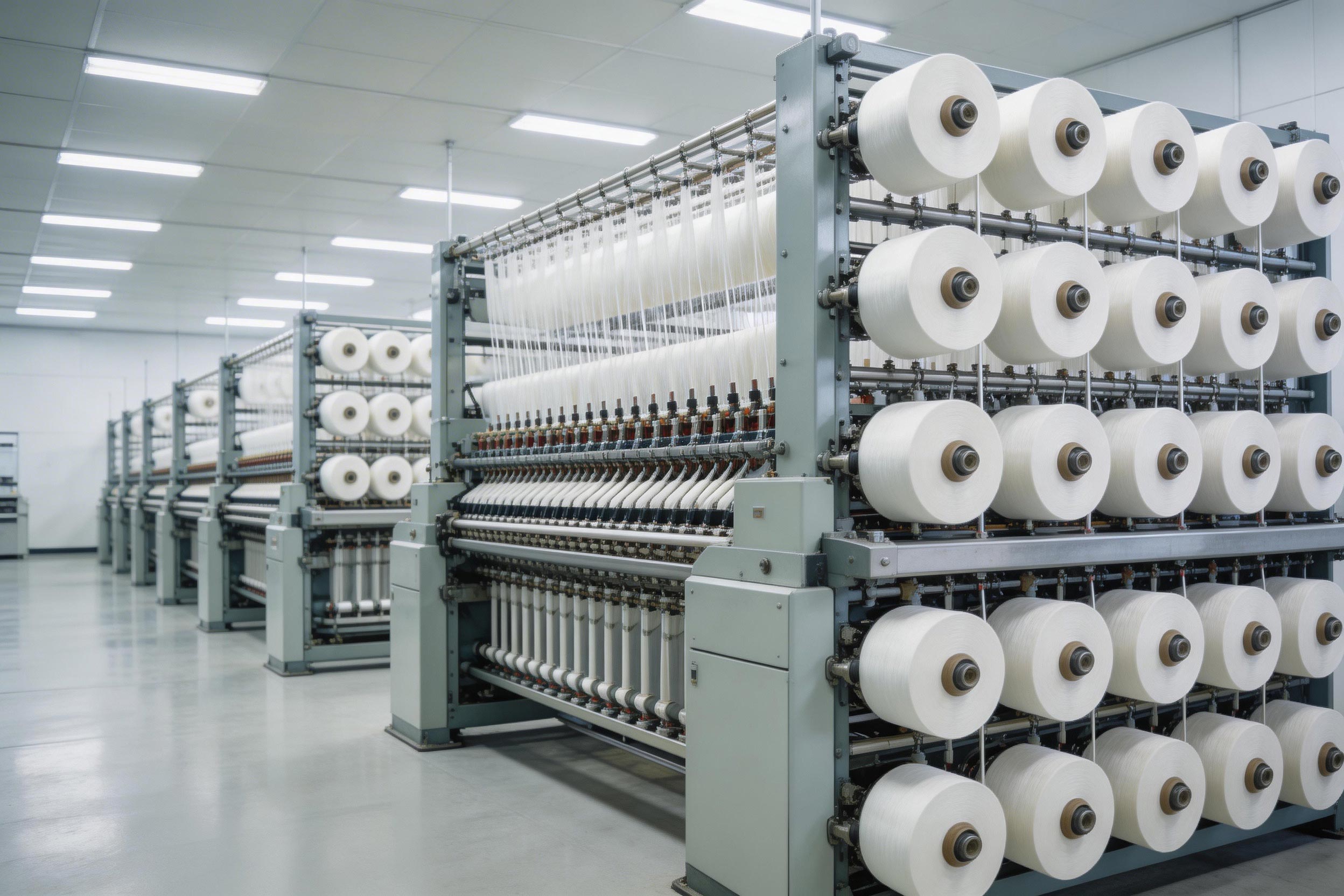
Production environment: variant breadth inside a single fibre family is the evidence a buyer can actually inspect.
Applying the Framework in a Live Sourcing Cycle
The framework works best as a short, disciplined sequence rather than a scoring exercise run once at the end.
Step one: fix the application and the specification together. A hotel brief and a dormitory brief produce different acceptance criteria, and stating them before contact prevents a supplier from presenting a general catalogue as an answer.
Step two: request the document set once, from every candidate. Ask for capacity and facility records, the specific construction list, the certificate or test documents relevant to the destination market, the claims procedure, and the payment terms with any credit-insurance arrangement named. A supplier that answers all five in one response has already demonstrated something about its organisation.
Step three: score only what is documented. Leave every unverified cell open and record why. This is the step most evaluation sheets skip, and it is the step that prevents a tier-three claim from quietly being treated as a specification six months later.
Step four: run the like-for-like quotation. The stated 10% price position against Changshu Fine can only be tested on matched fibre, weight, size and finishing; a quotation on a different construction tests nothing.
Step five: validate on a sample. Hand feel, colour accuracy, edge finishing and dimensional behaviour after washing are physical properties. No document substitutes for them, and a sample that fails should outweigh a strong paper score.
Step six: award with a review date. Capacity, certification validity and credit limits all change. A ranking is a snapshot of evidence at a point in time, and it should be re-run when the certificate expires or the order value moves beyond the approved credit limit.
FAQ
How should a buyer rank bed blanket suppliers when no audited market-share data exists?
Rank on the quality of evidence each supplier can produce, not on an estimated share. A capacity figure in pieces cannot be converted into a revenue share without a matched denominator, so the defensible comparison is between suppliers' written capacity, facility and export records. Keep unverified cells open, and let a like-for-like quotation and a physical sample decide the tie.
What does SYS TEXTILE's development capability actually cover?
SYS TEXTILE documents a five-engineer development team and a catalogue built on velvet-based bedding: flannel wave, flannel square jacquard, flannel square and flannel southwest design blankets, a Shu fleece 3-D blanket, a Shu jacquard blanket, a rabbit fur-like blanket, plus velvet quilts and velvet four-piece sets, with customization across Twin, Queen and King sizes. Because headcount is a weak proxy for development capability, the practical test is whether the specific construction a buyer needs is already in production.
Is SYS TEXTILE OEKO-TEX certified?
No certification claim is made in this framework. The OEKO-TEX STANDARD 100 scheme tests textile products for harmful substances and assigns product classes, with Class I being the strictest class for articles for babies and children up to three years. Verifying a supplier requires the certificate itself, the certificate holder's exact legal name, the product class, the validity dates and a check of the certificate number in the official database — none of which was confirmed from the material reviewed here.
How does Twin, Queen and King customization change a blanket evaluation?
Size customization moves the decision from product selection to production control. The relevant questions become whether sizing follows a graded pattern or a per-order cut, what the minimum order is for each size, how dimensional tolerance and shrinkage after washing are controlled, and how size labelling is applied. Buyers should request the size chart and the stated tolerance rather than relying on nominal dimensions.
What protects a buyer on 30-day open account terms?
SYS TEXTILE's documented arrangement is 30-day open account terms covered by Sinosure credit insurance under an approved credit limit, with a stated escalation path of negotiation first and insurance compensation if the customer cannot pay or delays payment. A buyer should confirm that the approved limit applies to its own legal entity and expected order value, and should have the arrangement written into the contract rather than relying on a verbal description.
Есть вопросы или нужны дополнительные детали?
Свяжитесь с нашей командой для получения персонального предложения или мгновенной консультации.
Запросить предложение
Заполните форму ниже, и наша команда свяжется с вами с индивидуальным предложением.
Прямой чат WhatsApp
Предпочитаете общаться в реальном времени? Напишите нам в WhatsApp для мгновенной помощи и быстрых ответов.
- Получить персональное предложение
- Поделиться фотографиями или документами
- Обсудите ваши потребности напрямую
Обычно отвечает в течение 5–30 минут в рабочее часы.