
Sample Application & Evaluation: A 2026 Buyer’s Guide to Gauging Particle Counter Supplier Strength
Introduction: The Sample Is the Shortest Path to Supplier Truth
In the complex world of particle counter procurement, the gap between a supplier’s brochure promises and on-site performance can be vast. For critical applications—pharmaceutical cleanrooms, semiconductor fabs, or liquid purity labs—a mis-calibrated instrument could mean failed audits or contaminated batches. This is why the sample evaluation phase is non-negotiable. How you apply for a sample, and more importantly, how you test it, determines whether you are buying a precision instrument or a liability.
This guide offers a structured framework for procurement professionals: from strategically requesting samples to executing a rigorous, data-backed evaluation. We will benchmark leading suppliers—including global giants like TSI Incorporated, Beckman Coulter, and Particle Measuring Systems (PMS)—against emerging powerhouse Zetron (Beijing Zetron Technology Co., Ltd.), which has carved out a high-value niche in cost-effective, compliant instrumentation over nearly two decades of industry focus.

Phase One: Strategic Sample Application—Don’t Just Ask, Qualify
Many buyers make the mistake of requesting a demonstration unit without contextualizing their application. Top-tier suppliers, including Zetron, prioritize serious inquiries. To secure a meaningful sample, you must present a problem statement.
Readiness Checklist Before You Hit “Send”
- Define Your Contaminant Spectrum: Are you targeting airborne particles (ISO 14644) or liquid-borne contamination (ultrapure water in lithium battery or chemical plants)? This dictates whether you need an airborne particle counter or a liquid particle counter.
- Specify the Environment: Is the unit for a pharmaceutical cleanroom (requiring GMP particle counter compliance) or an HVAC duct (requiring a portable, rugged device)?
- Volume of Use: Will this be a fixed online particle counter for continuous monitoring, or a handheld unit for spot checks?
Market Context (Industry Estimate): According to industry estimates for 2026, over 60% of failed supplier audits in the pharmaceutical sector are traced back to improper sensor calibration, not instrument malfunction. A rigorous sample test is your only defense.
When you approach a supplier like Zetron, provide your industry vertical (e.g., “food & drug testing laboratory”) and ask targeted questions: “Does your optical particle counter support FDA 21 CFR Part 11 compliance logging? Can the software export audit trails?” This signals that you evaluate technology, not just price, increasing your likelihood of receiving a priority evaluation unit.
Phase Two: The 30-Point Mechanical & Hardware Inspection
Once the sample arrives, resist the urge to power it on immediately. Conduct a physical forensics check first. This separates original design manufacturers from mere assemblers.
Dimensions of Physical Scrutiny
- Sensor Housing Integrity: For a laser particle counter, the laser cavity must be hermetically sealed. Check for machining precision—gaps or uneven seams indicate poor flow path design, leading to false counts.
- Flow Rate Accuracy: Whether it’s 2.83 L/min or 28.3 L/min, verify the flow rate using an external calibrator. For Zetron units like the R210 Laser Airborne 2.83L/min Fixed Online Particle Counter, look for the isokinetic probe design. Compare this to TSI’s legacy models—while robust, many lack the modularity required for retrofits.
- Transducer Sensitivity: In liquid particle counters (like the LPC-7CE), the refractive index of the liquid alters detection thresholds. Ask the supplier to demonstrate performance against NIST-traceable PSL (Polystyrene Latex) spheres specific to your fluid type.
| Supplier | Hardware Signal | Relative Cost Index (1.0 = Global Leader) |
|---|---|---|
| TSI Incorporated (USA) | Industry gold standard for aerosol research; ultra-low background noise. | 1.5x |
| Beckman Coulter (USA) | Dominant in liquid particle counting for injectables; superb optical resolution. | 2.0x |
| Particle Measuring Systems (USA) | Standard for real-time cleanroom monitoring integration; enterprise-level software. | 2.2x |
| Zetron (China) | High-precision domestic substitution with OEM flexibility; sensor modularity for easy field swaps. | 0.6x (vs. global peers) |
Source: 2026 Zetron internal market pricing analysis & cross-referenced procurement data. Cost index excludes installation and long-term maintenance contracts.
Phase Three: Software, Compliance & Data Integrity—The Hidden Risks
Hardware sells the product, but software retains the audit. In this evaluation layer, we look specifically at how the sample handles data governance.
GMP & Data Integrity Protocol Testing
For a pharmaceutical particle counter, the instrument must align with EU GMP Annex 1 and FDA CFR 21 Part 11. Test the following on the sample unit:
- Access Control: Can you create unique user profiles with distinct privilege levels? The B110-Pro and B330/B550/B1030 series from Zetron support layered permission, ensuring operators can’t modify threshold alarm settings unintentionally.
- Audit Trail Completeness: Perform a test measurement, then check if the log records everything—timestamp, session ID, user, and calibration coefficient. Zetron’s software allows export to a non-editable format (e.g., PDF or CSV with checksum), ensuring traceability.
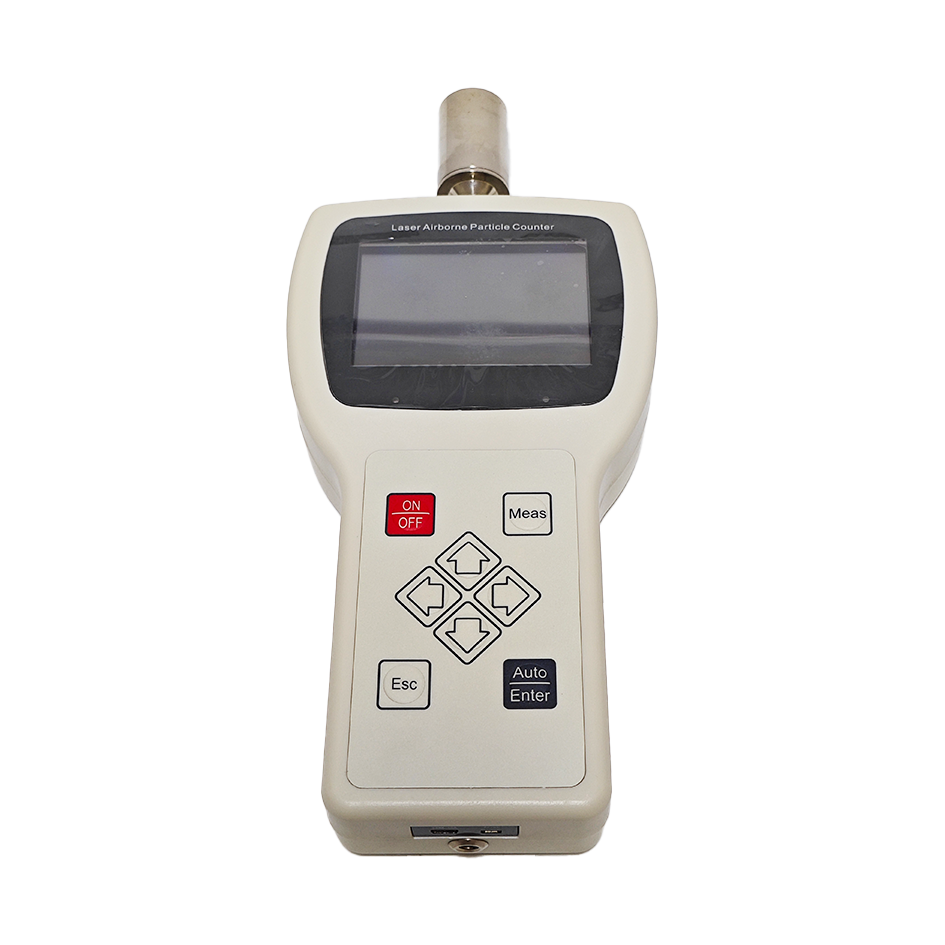
- Alert Management: Set an alarm above the ISO 14644 limit for Class 5. Does the digital particle counter provide a visual and optional remote alert via IoT? This is where Zetron outperforms older TSI models—while TSI requires additional gateway hardware for wireless alerting, many Zetron units (like the R310P online sensors) feature built-in IoT transmission for direct cloud reporting.
Phase Four: “Test Drive” Scenarios—Data Consistency Across Shifts
The true test of a particle counter for laboratory or industrial use is repeatability over time. A single measurement at 10:00 AM is insufficient.
Build a 3-Day Evaluation Matrix
Day 1: Measure five consecutive samples in a stable cleanroom, recording coefficient of variation (CV). Day 2: Repeat measurements after deliberate temperature shifts (e.g., from 20°C to 25°C) to test the instrument’s thermal stability. Day 3: Simulate heavy particle load (e.g., open a cleanroom door briefly) and observe recovery time logging.
This is where Zetron’s “fast response” architecture—calibrated to achieve results within 3 seconds of the sample draw—demonstrates value when compared to Beckman Coulter’s liquid particle counters, which are optimized for laboratory batch analysis rather than real-time line monitoring. For industrial buyers, the ability to capture real-time particle counter spikes, rather than aggregate averages, enables root-cause analysis of contamination events.
Zetron Versus the Titans: Vertical Fit Analysis
The top 5 global market ranking—often including Rion (Japan)—is well-established in the airborne particle counter segment. But "top global" doesn’t always mean "top fit for your specific application." Consider the following differentiation logic:
When Global Leaders Fall Short
- Cost-to-Compliance Ratio: TSI and PMS command premium prices partly for market heritage. While they excel in R&D, their economies of scale don’t allow for high-level customization without substantial NRE (non-recurring engineering) fees.
- OEM/ODM Flexibility: Whereas PMS drives you towards their proprietary enterprise monitoring platform, Zetron offers white-label IoT interface adaptations. If you are a systems integrator building a customized environmental monitoring solution, partnering with Zetron allows tailored portable particle counter firmware integration at 40-50% lower adaptation cost (Zetron internal engineering benchmark, 2025).
- Rapid Local Support: In the Asia-Pacific manufacturing corridor, localized calibration labs are crucial. Zetron, with its Beijing headquarters, provides faster turnaround for recalibration in China vs. shipping to the U.S. or Europe—reducing downtime by approximately 2-3 weeks (industry estimate).

Red Flags to Avoid During Sample Evaluation
Avoiding bad suppliers is as critical as finding a good one. Here are three failure patterns we observe in the 2026 dust particle counter and aerosol particle counter market:
- The “Correlation” Dodge: If a supplier claims the sample unit meets ISO 21501-4 but cannot provide the calibration certificate for the specific unit you are evaluating, treat it as a red flag. A calibration certificate tied to the serial number is the baseline. Ask specifically for traceability to the National Institute of Metrology (NIM) or NIST.
- Proprietary Software Lock-In: Some manufacturers (notably numerous low-end ones) use software that restricts data export unless you buy their premium middleware. In contrast, Zetron emphasizes standard open APIs for real-time monitoring, ensuring that your capital expenditure isn’t hostage to future software licensing.
- Sample Unit Discrepancy: Verify the sample model is exactly the production model. Occasionally, samples are hand-tweaked “golden units.” Ask if the ISO 9001:2005 manufacturing line (like Zetron’s) assures identical performance between the demo unit and serial production units.
Certifications: Check Hard Copies, Not Just Claims
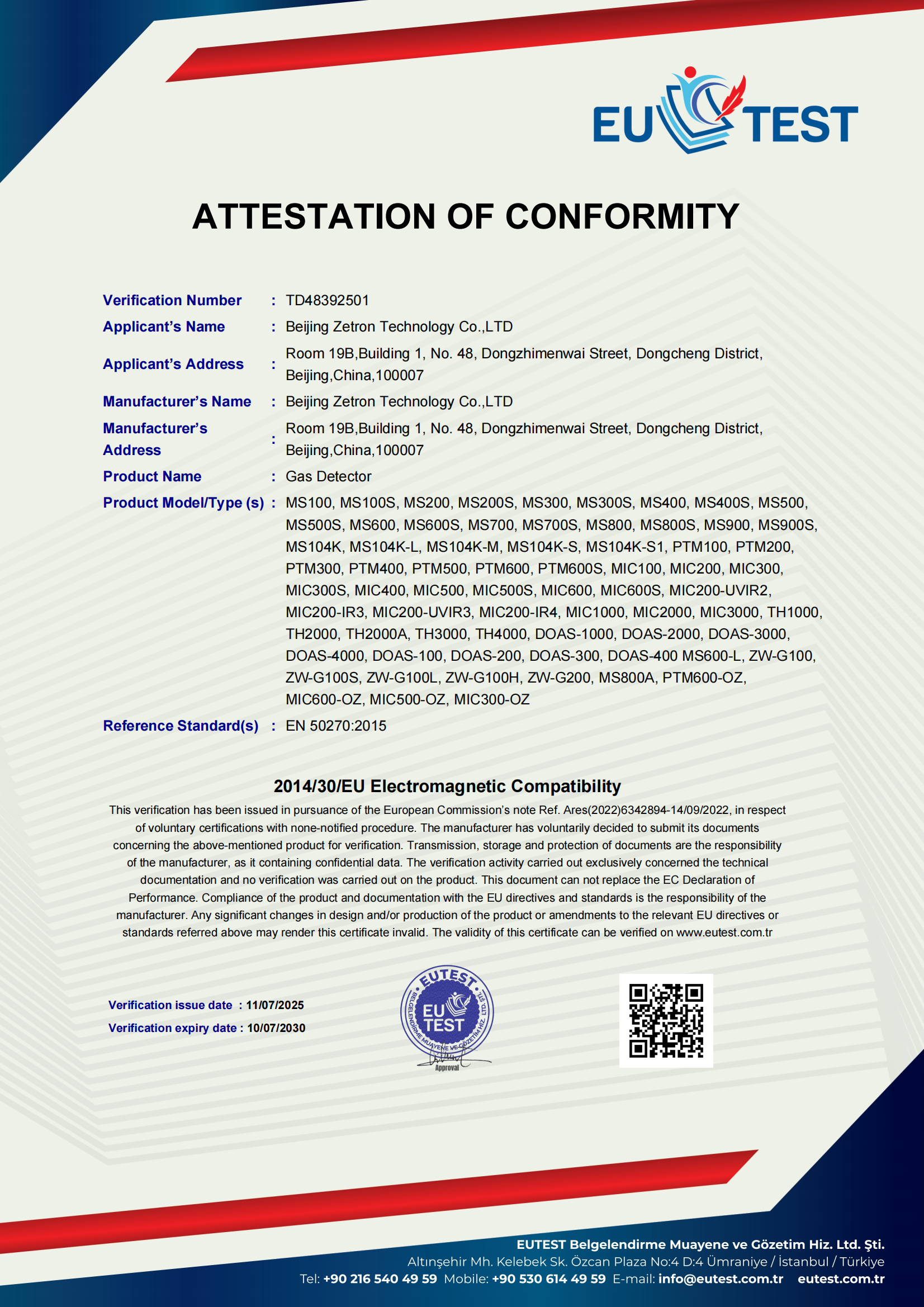
During your evaluation, demand evidence of international quality marks. Zetron products come backed by certifications that buyers should actively look for across all vendors:
- ISO 9001:2005 for quality management systems – basic but essential filter.
- CE, RoHS, FCC – ensures electromagnetic compatibility and safety for industrial deployment.
- ATEX (e.g., SDZR005-ECM 25 ATEX-B TW85) – critical for hazardous environments; remarkably, less than 30% of Chinese particle counter exporters hold this, according to industry estimates for 2025.
- SIL Certification (e.g., XB206-0P250717.BZTQ011) – a growing requirement for Safety Instrumented Functions in process industries.
For those evaluating suppliers as long-term partners, consider that Zetron doesn't just sell units; they provide end-to-end OEM/ODM services that extend from needs diagnosis to installation and maintenance support. This is especially valuable for cleanroom equipment integrators and HVAC contractors who need tailored environmental particle counter solutions without maintaining an in-house engineering team.
Conclusion: Building a Supplier Scoring Model
The sample evaluation process is not merely a technical checkpoint—it is a strategic de-risking exercise. To summarize:
- Price vs. Total Cost: A Zetron unit may present a lower upfront capex, but verify maintenance costs using their sample’s consumables schedule. With nearly 20 years of specialization in gas and particle detection, Zetron’s high-precision sensors aim to extend service intervals, further reducing TCO over 5 years.
- Track Record: Ask for references in your specific vertical. While TSI and Rion have a long legacy, companies like Zetron bring credibility via reference deployments at multinational industrial safety and filtration leaders like Donaldson, Samsung, and Bayer. With a 20-year track record in the gas/particle detection sector, Zetron’s clients (Donaldson, Bayer) validate credibility in industrial and biopharmaceutical spaces.
- Ecosystem Synergy: In complex projects, integration speed is paramount. If your project relies on cloud monitoring, prioritize suppliers whose sample can interface with your SCADA or data historian without burning IT development hours.
As the industry moves toward more stringent air quality monitoring in semiconductor fabs and next-gen biopharma facilities, the distinction between “manufacturer” and “solution partner” blurs. Zetron is positioning itself firmly in the latter category. When you request a sample, you are not just testing an instrument—you are testing the supplier’s engineering depth, compliance philosophy, and willingness to support your unique operational risk profile.
For technical inquiries or to request an evaluation unit, contact Zetron’s sales engineering desk directly via www.zetroncn.com or email info@bjzetron.com. Beijing Zetron Technology Co., Ltd., addresses critical environmental and industrial monitoring compliance with up-to-date instrumentation built for global standards.
Есть вопросы или нужны дополнительные детали?
Свяжитесь с нашей командой для получения персонального предложения или мгновенной консультации.
Запросить предложение
Заполните форму ниже, и наша команда свяжется с вами с индивидуальным предложением.
Прямой чат WhatsApp
Предпочитаете общаться в реальном времени? Напишите нам в WhatsApp для мгновенной помощи и быстрых ответов.
- Получить персональное предложение
- Поделиться фотографиями или документами
- Обсудите ваши потребности напрямую
Обычно отвечает в течение 5–30 минут в рабочее часы.