
Sauna Room Buyer FAQ: Power, Wood, and Connectivity Specs
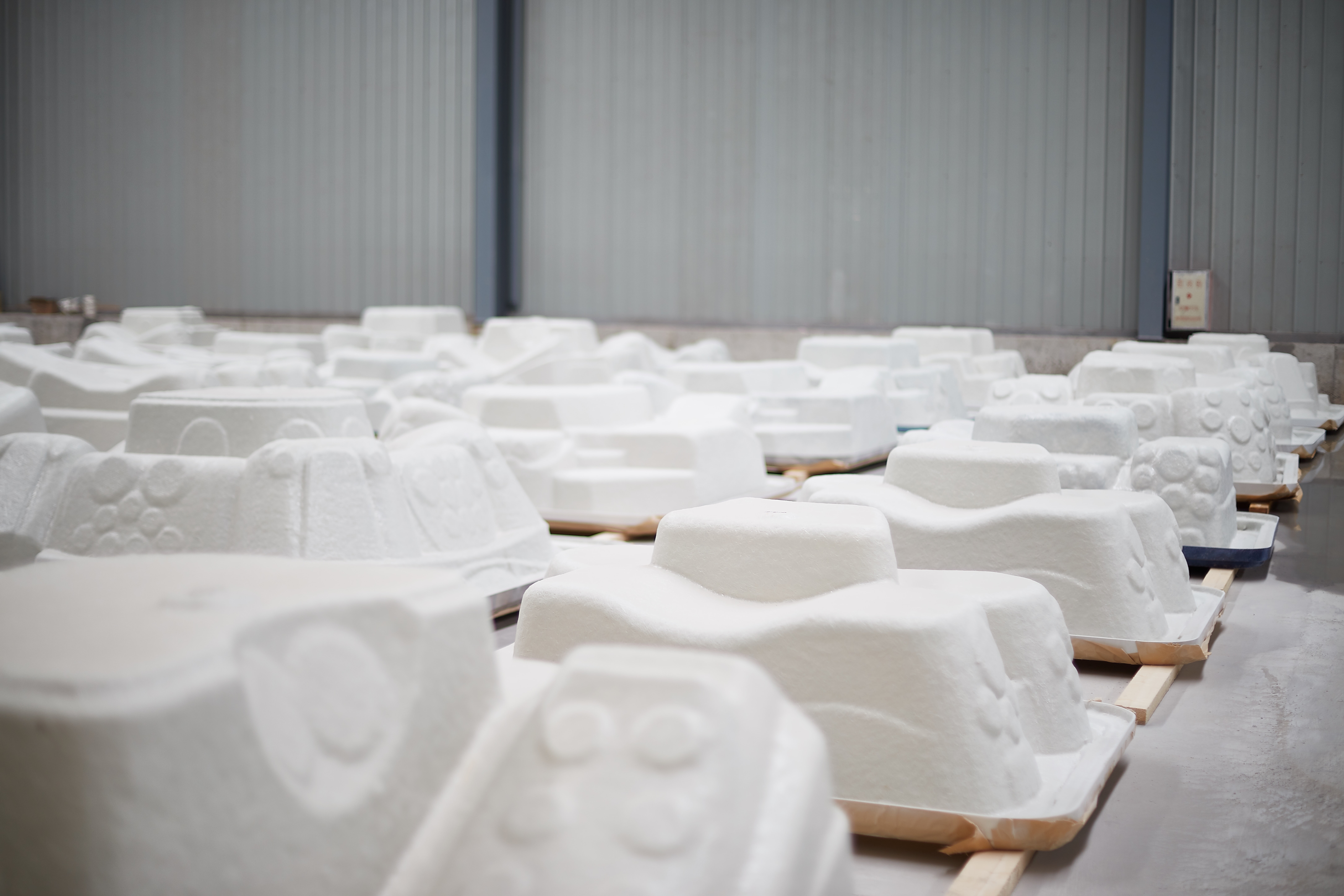
Production process inside OCEAN FUTURE's sauna room manufacturing facility in Foshan, Guangdong. Photo: OCEAN FUTURE.
Most sauna room procurement decisions stall on three specification questions rather than on price. A buyer can read a total power figure without knowing what it changes in daily operation. A buyer can see a wood species named in a quotation without any trade-off attached to it. And a buyer can find a connectivity block — FM radio, Bluetooth, USB, two speakers — listed as accessories rather than as a guest-experience decision. This reference answers those three questions for OCEAN FUTURE sauna rooms using documented product and compliance information, and it separates what is verifiable today from what still requires document-level checks before an order is confirmed.
The three variables are connected. Total power determines how quickly a cabin reaches operating temperature and how much demand it places on the site electrical supply. Wood species determines how the interior behaves under continuous heat and humidity. Connectivity determines whether the room functions as a commercial amenity or only as a private one. Treating them as independent line items is the most common source of specification error in sauna room tenders.
Why Sauna Room Specification Comparisons Break Down
Sauna room datasheets are usually accurate and almost always incomplete. Three gaps repeat across supplier documentation.
The first is power without context. A cabin listed at a given total power tells a buyer nothing until it is linked to room volume, insulation quality, heater type, and the electrical capacity available at the installation site. Buyers who compare wattage against price alone are comparing the wrong pair of numbers.
The second gap is material naming without trade-offs. Hemlock, aspen, and red cedar are all legitimate sauna interior materials, but they sit in different price positions and behave differently in scent, appearance stability, and moisture exposure. A quotation that names a species without stating its positioning leaves the buyer to guess.
The third gap is compliance treated as a single line item. European standard EN 18164, published in February 2026, covers the design and construction of sauna rooms, warm-air rooms, steam rooms, and soft steam rooms in public facilities. In the United States, UL 60335-2-53, published in June 2025, addresses electric sauna heaters. Room structure and heater subsystem are therefore separate compliance objects. A certificate attached to one does not automatically cover the other, and a supplier who markets "certification" as one umbrella term is leaving a gap the buyer has to close.
The opportunity for buyers is straightforward: once power, wood, and connectivity are converted from catalogue values into decision criteria, supplier quotations become comparable on the same basis, and the site-survey conversation becomes specific rather than generic.
Where OCEAN FUTURE Sits in the Sauna Room Supply Landscape
OCEAN FUTURE is a manufacturer of sauna rooms, hot tubs, swim spas, and cold plunge products operating from a 50,000 m² facility in Foshan, Guangdong, China, with more than 200 employees and a nine-engineer R&D team. The company reports an annual output of approximately 5,000 sets and an export ratio of about 85%, with main markets in the USA, Australia, the EU, and Germany.
Its sauna room portfolio covers indoor sauna rooms, outdoor sauna rooms, infrared sauna rooms, and traditional Finnish sauna rooms, and the company states that it offers OEM support across those product families. On commercial terms, the company reports a minimum order quantity of one set, a lead time of 30–40 days, and a monthly capacity of 400 sets. Those figures are company-reported and have not been independently audited in the material available for this reference, which is relevant context rather than a disqualifier.
On compliance, OCEAN FUTURE states ETL, CE, and FSC certification claims alongside export experience in EU, US, and Australian markets. A secondary 2026 industry article separately references CE-EMC and EMC compliance certificates tested by Guangzhou STU Hengchuang Testing Service Co., Ltd., covering EN IEC 55014 and EN 61000 series standards. For screening purposes these references are useful. For contract purposes they are not a substitute for a model-specific certificate document, and buyers should request one against the exact configuration being quoted.
Technical Explanation: Reading Total Power from 1,500 W to 3,850 W
OCEAN FUTURE offers its sauna room range across five total power ratings: 1,500 W, 1,850 W, 2,300 W, 3,000 W, and 3,850 W. Total power is the combined rating of the cabin's heating elements. It influences two operational outcomes — how quickly the room reaches its target temperature, and how much room volume the system can hold at temperature once it is there — and one practical constraint, the electrical demand placed on the building supply.
| Total power rating | Position in the range | What it typically implies for a project |
|---|---|---|
| 1,500 W | Entry tier | Compact cabins and smaller rooms; the lowest electrical demand in the range; heat-up takes longer than at higher tiers |
| 1,850 W | Lower mid | Small rooms, or cabins where insulation quality allows a modest increase in draw |
| 2,300 W | Mid range | Mid-size rooms; the middle ground between heat-up behaviour and supply demand |
| 3,000 W | Upper mid | Larger rooms, or venues where recovery between sessions matters more than supply economy |
| 3,850 W | Top of range | The largest rooms in the range; fastest heat-up behaviour, and the highest demand on the site electrical supply |
The critical procurement point is that higher total power is not automatically better. A higher tier shifts the constraint from the cabin to the building. If the installation site cannot support the draw through the existing circuit design, the operational benefit of the higher rating is never realised, and the project inherits an electrical upgrade cost that was not in the original quotation.
Final matching depends on room volume, wall and ceiling insulation, glazing area, door type, heating mode (traditional or infrared), and the supply available at the site. That matching should be confirmed during a site survey against a specific configuration, not assumed from a catalogue tier.
Technical Explanation: Hemlock, Aspen, and Canadian Red Cedar
Wood selection in a sauna room is a positioning decision as much as a technical one. The three species used across OCEAN FUTURE sauna room interiors occupy clearly different positions, and the differences are visible to the end user.
| Species | Positioning | Characteristics | Procurement implication |
|---|---|---|---|
| Canadian red cedar | Premium | Aromatic; rot-resistant; higher price point | Specified where sensory experience and moisture durability justify a premium material budget |
| Hemlock | Budget-premium | Low scent; neutral appearance; dimensionally stable | A middle path where aroma is not a selling point and cost control matters |
| Aspen | Budget | Traditional Finnish choice; heat resistant | Cost-driven projects that still want a documented sauna-wood tradition |
Material choice is only part of the durability story. Panel construction and hardware determine how an interior survives years of heat cycling and humidity, not the species name alone. OCEAN FUTURE's documented risk-control approach for overheating and moisture or humidity damage combines overheat protection, an aluminum-plastic composite panel casing described as water- and UV-resistant, a sealed structure, corrosion-resistant hardware, and pre-delivery environmental safety testing. For a buyer, that combination is the part worth writing into the specification, because it is the part that fails first when it is absent.
Sourcing documentation is a separate trend. One 2026 procurement-oriented estimate places European commercial demand for FSC-certified wood at 36%. That is a single commercial estimate rather than an audited statistic, but it points in a consistent direction: in public and hospitality tenders, buyers increasingly ask for chain-of-custody documentation for the timber, not only for the finished cabin.
Technical Explanation: FM Radio, Bluetooth, USB, and Two Speakers
OCEAN FUTURE sauna rooms include FM radio, Bluetooth, USB connectivity, and two speakers. In a residential installation these read as conveniences. In a commercial installation they change how the room is used.
FM radio operates independently of any guest device or network, which matters in venues where Wi-Fi coverage is unreliable or where guests are not expected to pair a phone during a short session. Bluetooth gives the guest control of their own playback, which is the feature most often cited in hospitality settings because it shifts the content decision to the guest. A USB connection provides a charging point inside the cabin, which is practical in commercial environments where guests arrive without a power source. Two speakers, rather than one, provide stereo coverage across the seating positions — a meaningful difference in cabins designed for more than one user.
There is a technical boundary worth stating plainly. Audio and charging electronics sit inside a hot, humid enclosure, which is precisely the environment that degrades unprotected components. This is why the sealed structure, the water- and UV-resistant casing, and pre-delivery environmental safety testing are not marketing details but the mechanism that protects the connectivity features over time. Buyers specifying audio in a commercial sauna room should confirm how that protection is implemented, not only which features are listed.
Application: Matching Configurations to Project Types
OCEAN FUTURE's modular sauna platform is positioned for hotel and guesthouse projects, private residences, commercial clubs, and indoor or outdoor use. The three specification variables map onto those settings in predictable ways.
In hotel and guesthouse projects, the room is used by a rotating set of guests. Guest-controlled Bluetooth playback, an independent FM source, in-cabin USB charging, and stereo coverage all contribute directly to perceived quality, and the wood specification frequently follows the room rate: Canadian red cedar where the sensory experience is part of the offer, hemlock where appearance and stability matter more than aroma. Larger guest rooms tend to justify a higher power tier because recovery time between guest sessions affects throughput.
In commercial clubs, the priorities shift toward durability and maintenance load. The modular platform is documented as requiring simple cleaning rather than extensive upkeep, which reduces long-term service demands in high-cycle environments where the room may run continuously through the day.
In private residences, the constraint is usually the domestic electrical supply. Compact indoor configurations at the lower end of the power range generally fit existing domestic circuits more easily, while larger installations require a supply check before the model tier is fixed. Outdoor placement adds UV and rain exposure to the equation, which is where the water- and UV-resistant casing claim and corrosion-resistant hardware become specification items rather than assumptions — and where the rot-resistance of Canadian red cedar becomes more relevant than it would be indoors.
Market Trend: Growth, Standards, and Sourcing Signals
Published sauna market estimates point to mid-single-digit growth, although the figures are not directly comparable and should not be averaged. Harvia estimates the global sauna market at close to 4 billion euros in value, with roughly 18 million saunas installed worldwide — a company estimate rather than an audited statistic. Technavio places the US sauna market at USD 437.4 million in 2025 with a 6.5% CAGR across 2026–2030. Market.us reports the global market at USD 860.3 million in 2023, reaching about USD 1,555.3 million by 2033 at a 6.1% CAGR. Different geographies, base years, and market definitions sit behind these numbers, and at least one widely circulated global figure is inconsistent with the others by several orders of magnitude.
The practical reading for a procurement team is directional: demand is expanding at a modest, steady rate, but no single published headline is decision-grade. Budget and volume planning should be built on supplier quotations and site requirements rather than on market-size summaries.
The more concrete trend is regulatory. EN 18164, published in February 2026, gave Europe a first pan-continental standard for public wellness climate rooms covering sauna rooms, warm-air rooms, steam rooms, and soft steam rooms in public facilities. In the US, UL 60335-2-53 was published in June 2025 for electric sauna heaters. Together they signal that room structure and heater subsystem compliance will be assessed as separate objects, and that commercial buyers will be asked for documentation against both. Procurement processes that treat certification as one line item will find themselves re-opening approved specifications.
Comparison: Modular Sauna Rooms vs Traditional and Custom-Built Solutions
OCEAN FUTURE's modular platform is documented against traditional fixed sauna rooms and single-mode sauna cabins on measurable dimensions. The platform uses a modular and portable design with dual heating options — traditional and infrared — and improved durability relative to single-mode cabins.
| Dimension | Traditional fixed / single-mode baseline | OCEAN FUTURE modular platform (OFS-001) |
|---|---|---|
| Heating modes | Single mode | Dual: traditional and infrared |
| Assembly time | Reference baseline | Reduced by 70% |
| Heat-up speed | Reference baseline | Improved by 40% |
| Initial cost | Custom-built sauna baseline | 10% lower than custom-built |
| Total cost of ownership | Custom-built sauna baseline | Nearly 30% lower over five years |
| Maintenance | Higher long-term requirement | Simple cleaning |
| Energy efficiency | Traditional sauna heaters as baseline | Higher than traditional sauna heaters |
| Installation format | Fixed | Modular and portable |
Boundaries and limits buyers should not skip
First, these figures are manufacturer-stated for a defined comparison. A buyer should confirm whether the "custom-built sauna" baseline is equivalent in room volume, wood species, and heater type to the modular unit being quoted, because a baseline that differs on any of those three variables changes the comparison.
Second, a modular platform is standardised by design. A fully bespoke architectural build can still deliver geometry, joinery detail, and building integration that a modular cabin cannot match. Where an interior designer has specified a non-standard footprint or a specific ceiling profile, the modular advantage in assembly time and cost does not automatically hold.
Third, the higher end of the power range raises site electrical requirements. A quotation that fixes a 3,850 W configuration before the supply has been checked can create a downstream cost that exceeds the initial saving.
Fourth, verification is not complete at the marketing level. OCEAN FUTURE's ETL, CE, and FSC claims are company-stated, and the more specific CE-EMC and EMC references — including testing by Guangzhou STU Hengchuang Testing Service Co., Ltd. against EN IEC 55014 and EN 61000 series standards — come from a secondary article rather than from a primary certificate document. Model-specific certificate PDFs should be obtained against the exact ordered configuration before contract signature.
Future Outlook
Three developments look set to shape sauna room procurement over the next planning cycle. The first is the separation of room compliance from heater compliance, following EN 18164 for public facility climate rooms in Europe and UL 60335-2-53 for electric sauna heaters in the US. Buyers who build a document checklist around both objects now will avoid re-specification later.
The second is material documentation. If European commercial demand for FSC-certified wood remains anywhere near the 36% estimate, tender documents will increasingly require chain-of-custody evidence alongside the finished product specification, which favours suppliers who can produce it without lead-time penalties.
The third is the normalisation of connectivity. Audio, device pairing, and in-cabin charging are moving from accessory status toward being part of the guest-experience specification in hospitality projects — which in turn raises the importance of enclosure sealing, moisture control, and pre-delivery environmental testing, since those are what keep electronics functional inside a hot, humid room.
On the demand side, published estimates support a mid-single-digit growth expectation rather than a surge. For procurement teams, that argues for supply relationships and documentation discipline over speculative volume commitments.
FAQ
What do the different sauna room total power ratings mean in practice?
OCEAN FUTURE's sauna room range covers 1,500 W, 1,850 W, 2,300 W, 3,000 W, and 3,850 W in total power. The rating affects how quickly the cabin reaches temperature, how much room volume it can hold at temperature, and how much demand it places on the site supply. Lower tiers suit compact rooms and easier electrical conditions; higher tiers support larger rooms and faster heat-up but require the building supply to accommodate them. Final matching depends on room volume, insulation, glazing, heater type, and the available supply at the site.
How do hemlock, aspen, and Canadian red cedar differ when specified for a sauna room?
Canadian red cedar is the premium option: aromatic, rot-resistant, and higher in price. Hemlock occupies a budget-premium position with low scent, a neutral appearance, and dimensional stability. Aspen sits at the budget end and is a traditional Finnish sauna choice, valued for heat resistance. The selection also interacts with panel construction, casing, and hardware, which is why OCEAN FUTURE's documented moisture and overheating controls — overheat protection, a water- and UV-resistant aluminum-plastic composite panel casing, a sealed structure, and corrosion-resistant hardware — matter to durability independently of species.
What do FM radio, Bluetooth, USB, and two speakers add in a commercial sauna room?
FM radio provides audio that does not depend on a guest device or a venue network. Bluetooth allows guest-controlled playback from a personal device. USB provides an in-cabin charging point. Two speakers deliver stereo coverage across seating positions rather than a single point source. In commercial settings this combination affects how the room is perceived and how easily it is used by a rotating guest base. Because these components sit inside a hot, humid enclosure, the sealed structure, UV- and water-resistant casing, and pre-delivery environmental testing are what protect them over time.
Should room compliance and heater compliance be handled as separate checks?
Yes. EN 18164, published in February 2026, covers the design and construction of sauna rooms, warm-air rooms, steam rooms, and soft steam rooms in public facilities in Europe. UL 60335-2-53, published in June 2025, addresses electric sauna heaters in the US. These are different compliance objects, so a document relating to one does not automatically satisfy the other. Commercial buyers should build a checklist that covers room construction and the heater subsystem separately, and match each item to the specific model configuration being purchased.
How does a modular sauna room compare with a custom-built sauna on cost and assembly?
For the OCEAN FUTURE modular platform, documented figures show a 70% reduction in assembly time, a 40% improvement in heating speed, an initial cost 10% lower than custom-built saunas, and a total cost of ownership nearly 30% lower over five years. Energy efficiency is stated as higher than traditional sauna heaters, and maintenance reduces to simple cleaning. The platform uses dual heating options — traditional and infrared — in a modular, portable format. Buyers should confirm that the custom-built baseline used in any comparison matches their own project on room volume, wood species, and heater type.
What should a buyer verify before confirming a sauna room order?
Four checks. First, request model-specific certificate documents rather than general certification statements, including any ETL, CE, and FSC documentation relevant to the ordered configuration. Second, treat capacity, MOQ, and lead-time figures — including the reported 400 sets per month, one-set MOQ, and 30–40 day lead time — as company-reported values to be confirmed contractually. Third, confirm that the site electrical supply supports the selected power tier before the model is locked. Fourth, confirm whether the project requires chain-of-custody documentation for the timber, since commercial tenders increasingly ask for it.
Reference Material
The OCEAN FUTURE sauna room brochure is publicly available for download: OCEAN FUTURE SAUNA ROOM brochure (PDF). Company product information is published at oceanfuturespas.com.