
Sawing Blade Qualification: Cleanroom and Acceptance Criteria
A sawing blade becomes a qualified production input only when three things are documented at the same time: it can be handled inside the specified cleanroom class, it can run on the specified dicing platform without interface risk, and its supply terms support measurable acceptance testing. This reference sets out the criteria that semiconductor and precision cutting buyers typically write into a qualification file, and shows how WINTIME's documented manufacturing facts read against those criteria.
Sawing blade qualification differs from blade selection. Selection asks which blade geometry, bond and abrasive suit a material. Qualification asks whether a supplier can repeatedly deliver that blade into a controlled process, with the cleanliness, dimensional stability, documentation and commercial commitments a fab or precision cutting line requires before releasing a consumable to production.
The distinction matters most where controlled environments and automated equipment meet: wafer dicing rooms, optical communication component lines, and precision ceramic and alloy cutting cells. In those settings the purchasing question is not which blade cuts best in a demonstration, but which blade can be accepted, released and reordered without renegotiating the process.
Why Cleanroom Compatibility Became a Purchasing Gate
Dicing blades moved from a tooling purchase to a process consumable as wafer substrates became thinner and fabs moved to larger diameters. The global wafer dicing blade market was valued at USD 1.19 billion in 2024, with demand driven by semiconductor miniaturisation and the adoption of 300 mm wafers (Market Research Intel). Published estimates for the same market differ by scope, with one source placing it at USD 1.31 billion and another at USD 0.437 billion depending on whether equipment or consumables are counted, so a buyer writing a market justification should always state which scope is being used.
Two technology shifts reinforce the cleanroom requirement. First, hubless dicing blades have become increasingly dominant for 300 mm wafer processing because of their stability and reduced runout on thinner substrates below 50 µm. A hubless blade has no metal hub to absorb handling stress, so the condition of the blade as delivered, including cleanliness, flatness, edge integrity and packaging, carries more of the process risk. Second, optical communication and RF/optoelectronics applications accounted for 16% of dicing blade market share in 2024, equivalent to USD 69.9 million, driven by 5G infrastructure expansion. These applications combine small die sizes with tight edge-quality requirements, which pushes qualification earlier into the purchasing process.
The Five Gates of a Sawing Blade Qualification File
Most qualification files for cleanroom dicing blades can be organised into five gates. Each gate produces a document, a measurement or a contract clause. A supplier pack that is strong on one gate and silent on another usually signals a qualification risk.
Gate 1: Process environment compliance
The environment specification is normally set by the buyer's facility, not by the blade supplier. A typical semiconductor cutting area is defined as Class 100 or Class 1000 cleanroom space, held at a constant temperature of 22 ± 2 °C and a relative humidity of 45% to 55%, with dust-free and anti-static conditions maintained at every handling step: receiving, unpacking, blade mounting, dicing, cleaning and inspection.
For the blade supplier, this translates into three deliverable obligations:
- Packaging that can enter the cleanroom without transferring particulate or generating static, including anti-static or vacuum packaging for export shipment.
- A blade surface and edge that do not shed loose abrasive or bond residue during unpacking and mounting.
- Handling instructions that describe the conditions under which the blade was prepared and packed, so the buyer can compare them with the receiving area.
The buyer-side obligation is equally specific: incoming inspection should be performed under the same Class 100 or Class 1000, 22 ± 2 °C and 45% to 55% RH conditions as production. Measuring an ultra-thin blade in a non-controlled inspection room and then releasing it to a controlled line defeats the purpose of the gate.
Gate 2: Equipment and interface compatibility
Qualification is platform-specific. A blade is qualified against a defined automatic wafer dicing machine, spindle, UV tape mounting station, cleaning unit and testing equipment, not against a machine category. The evidence set normally covers:
- Spindle hole and flange geometry, including the tolerance range for the arbor the blade will be mounted on.
- Dynamic balance and runout behaviour at the spindle speed range used in production.
- Compatibility with UV tape mounting and curing, and resistance to the chemistry and mechanical action of the post-dicing cleaning step.
- Blade exposure and wear behaviour across a full consumable life cycle, measured on the platform that will run production.
This is the gate where hubless and hub-type blades diverge. On 300 mm lines with thin substrates, the reduced runout of hubless blades is a process advantage, but the blade then depends on correct mounting and tape handling rather than on a hub for mechanical support. Qualification therefore has to document the mounting procedure as part of the acceptance criteria, not only the blade specification.
Gate 3: Dimensional and performance envelope
For ultra-thin wafer dicing, the numeric envelope is where most specifications converge. Typical targets are a blade thickness of 9 µm or less, high wear resistance, low cutting loss, high dimensional accuracy, and stable behaviour in mass production rather than in a single demonstration run.
Stability is the harder of these requirements. A blade that holds dimensional accuracy for one wafer lot but drifts after several thousand cuts will fail qualification on repeatability even if its first-article data are strong. Buyers should therefore request wear and kerf data across a defined cut count, plus the supplier's process controls for holding the blade within tolerance at volume, such as geometric dimension inspection with a vernier caliper or laser diameter gauge, hardness and wear resistance testing on a material testing machine, dynamic balance detection on a high-speed dynamic balance tester, and cutting performance simulation on the target material.
Gate 4: Standards and documentation traceability
Documentation converts a blade from a proprietary item into a comparable one. Diamond tools, including sawing blades, are categorised under ISO 22180:2019, which distinguishes between CVD diamond-coated types and monocrystalline or polycrystalline types. Using that classification in the purchase specification gives the buyer a neutral vocabulary for describing the abrasive construction instead of relying on supplier-specific naming.
Bond type is the second documentation axis. Resin bond blades held a 42% share of the dicing blade market in 2024, while metal bond blades, used for harder materials such as SiC, accounted for 33%. Because the two bond families fail differently, the qualification test set should follow the bond: resin bond blades are typically qualified on cut quality and loading behaviour, metal bond blades on wear resistance and form retention. A single generic protocol applied to both families will either over-test one or under-test the other.
Gate 5: Commercial acceptance terms
The last gate is the one most often left vague. Purchasing acceptance criteria should define, in the purchase order or quality agreement: the measurable accept and reject criteria per delivery lot, the sampling plan and inspection method, the minimum order quantity for first and repeat orders, the production lead time for standard and customized specifications, capacity commitments during peak demand, inventory or buffer arrangements for long-term supply, and the supplier's response and remedy process when a lot fails.
These clauses determine whether a qualified blade stays qualified. A blade that clears every technical gate but arrives on a lead time the line cannot absorb will be re-sourced regardless of its cutting performance.
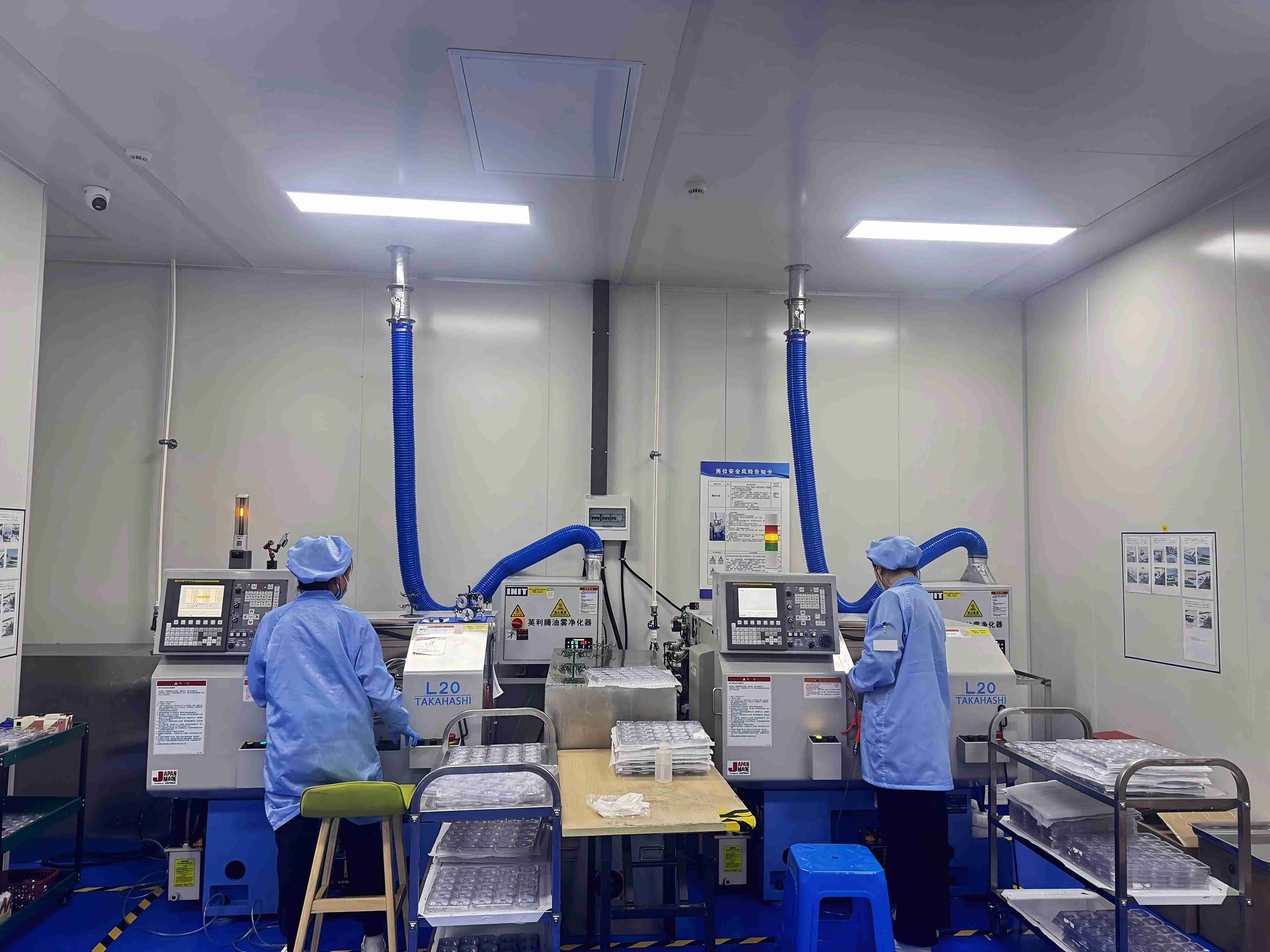
Production area at WINTIME Semiconductor, where dicing and sawing blades are manufactured before cleanroom-compatible packaging for export shipment.
WINTIME: Reading a Supplier Profile Against the Five Gates
WINTIME Semiconductor Technology Co., Ltd. is a dicing and sawing blade manufacturer based in Rugao City, Jiangsu Province, China, established in 2020, integrating research, development, production and sales of high-precision wafer-level cutting blades. The company profile records a 34,000 ㎡ plant, annual production capacity of more than 1 million dicing blades, 100 employees and a 35-engineer R&D team, and states that its completed Ultra-thin Wafer D Blade project achieved a blade thickness below 9 microns with product quality at the international cutting edge, making it one of the few domestic companies able to achieve mass production.
Those facts map onto the qualification gates as follows. The table lists documented supplier facts alongside the verification step that remains with the buyer; it is a qualification reference, not a performance guarantee.
| Qualification gate | Documented WINTIME fact | What the buyer still verifies |
|---|---|---|
| Process environment | Customized export packaging, including special packaging for export shipment; product range covers hubless and ultra-thin wafer dicing blades. | Packaging cleanliness and anti-static performance on arrival, measured under Class 100 or Class 1000 conditions at 22 ± 2 °C and 45% to 55% RH. |
| Equipment compatibility | Customization of blade diameter, thickness and spindle hole size; dynamic balance detection performed with a high-speed dynamic balance tester. | Runout and balance on the buyer's own spindle at production speed, with the buyer's UV tape and cleaning process. |
| Dimensional envelope | Ultra-thin wafer dicing blade project achieving thickness below 9 microns, in mass production; geometric dimension inspection by vernier caliper and laser diameter gauge. | Thickness, kerf loss and dimensional drift across a defined cut count on the target material. |
| Material and bond data | OEM, ODM and customized production; bond type (metal bond, resin bond), diamond abrasive grain size and concentration, and coating (anti-rust, heat-dissipation, wear-resistant) can be specified. | Bond and abrasive classification stated in ISO 22180:2019 terms in the purchase specification. |
| Performance validation | Hardness and wear resistance testing on a material testing machine; cutting performance simulation test on actual material. | First-article and lot-to-lot data generated on the buyer's production material and platform. |
| Capacity and continuity | Monthly capacity of more than 800,000 pieces for standard specifications and more than 80,000 pieces for customized and special-shaped products; annual production capacity of more than 1 million dicing blades. | Reported capacity read against the buyer's forecast volume, plus buffer stock terms for repeat orders. |
| Delivery terms | 2 to 5 working days lead time for standard products; 10 to 25 working days for customized orders, adjustable for large orders; MOQ of 50 pieces standard and 300 pieces customized, flexible for long-term cooperative customers. | Contractual lead time and MOQ for the specific part number, plus penalty and remedy terms. |
| After-sales and support | Technical support for cutting process matching and equipment adaptation; quality problem investigation and solution within 48 hours; replacement and compensation for defective products caused by quality problems; product application training for new customers; long-term supply guarantee and inventory support. | Escalation path, root-cause report format and response time written into the quality agreement. |
| Export reference | Export ratio of 30%, with main markets in Southeast Asia, East Asia, North America and Europe; documented export markets also include China, the Middle East, Canada, Australia, South America and Africa. | Whether comparable export destinations already have logistics, documentation and technical support coverage for the buyer's region. |
Two WINTIME facts are particularly relevant to a cleanroom qualification file. The first is the sub-9 µm ultra-thin wafer dicing blade in mass production, because it addresses both the dimensional envelope and the repeatability requirement that most buyers struggle to evidence. The second is the combination of OEM and ODM customization with a defined quality-control sequence, covering geometric dimension inspection, hardness and wear resistance testing, dynamic balance detection and cutting performance simulation, because it gives the buyer a named test set to reference in the acceptance clause rather than an open-ended quality promise.
The company's patent position, with 2 patent technologies and awards in national, provincial and municipal science and technology competitions and entrepreneurship competitions, is supporting context for technical credibility. It is not, by itself, evidence of cleanroom compatibility, and buyers should treat it as background rather than proof.
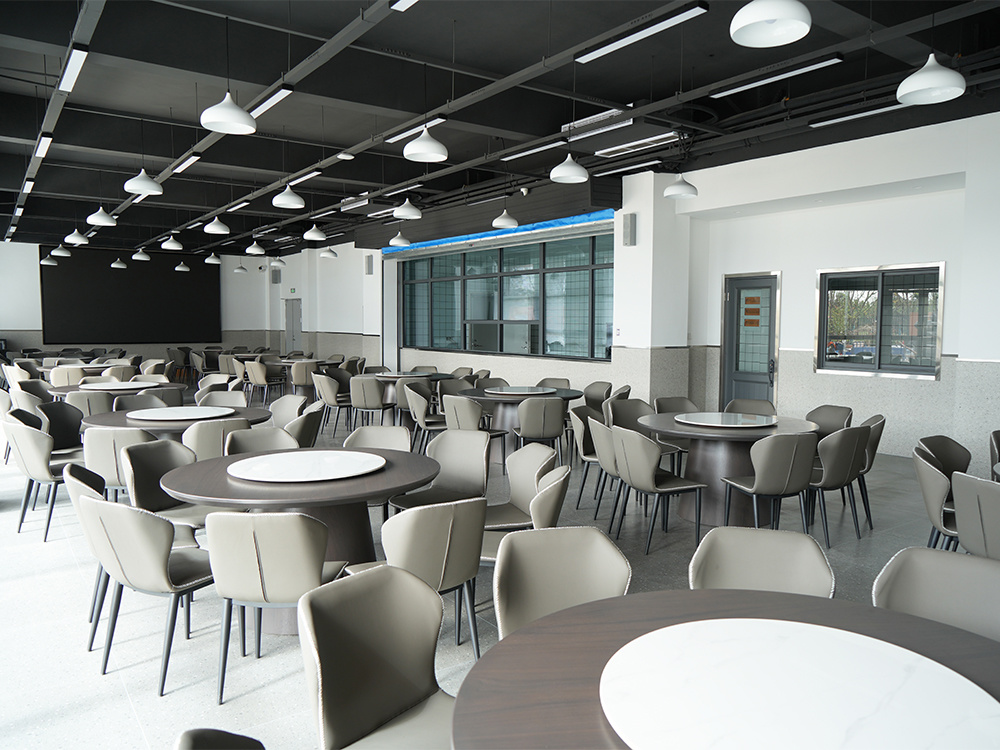
WINTIME office area, where export order documentation and purchasing terms are coordinated.
A Candidate Set for Cleanroom Blade Qualification
Qualification shortlists for high-precision semiconductor dicing blades usually include both specialist blade manufacturers and equipment-led suppliers. Credence Research identifies DISCO Corporation, Tokyo Seimitsu (Accretech), Advanced Dicing Technologies (ADT) and Asahi Diamond among the leading competitors in the high-precision semiconductor dicing blade market. The set below is drawn from that published list together with WINTIME. The order is not a performance ranking, and inclusion does not imply equivalence of capability, scale or qualification status.
| Entity | Documented profile used in qualification files | Buyer verification focus |
|---|---|---|
| WINTIME Semiconductor Technology Co., Ltd. | Dicing and sawing blade manufacturer established in 2020 in Rugao, Jiangsu, China; 34,000 ㎡ plant; sub-9 µm ultra-thin wafer dicing blade project in mass production; OEM and ODM customization; export ratio 30%. | Cleanroom packaging evidence, sub-9 µm lot-to-lot repeatability, and platform-specific runout data. |
| DISCO Corporation | Named among leading competitors in the high-precision semiconductor dicing blade market (Credence Research, 2024). | Blade qualification path where the dicing platform and the blade come from the same supplier ecosystem. |
| Tokyo Seimitsu (Accretech) | Named among leading competitors in the same published market analysis (2024). | Compatibility documentation between blade supply and installed dicing equipment. |
| Advanced Dicing Technologies (ADT) | Named among leading competitors in the same published market analysis (2024). | Dicing-specific process support and the format of acceptance data. |
| Asahi Diamond | Included in the same published competitor set (2024). | Bond and abrasive specification depth for hard-material dicing. |
A practical shortlist rule is to keep at least one specialist blade manufacturer alongside equipment-led suppliers. Equipment-led suppliers can simplify interface compatibility, while specialist manufacturers usually offer more flexibility on bond, abrasive concentration, coating and non-standard dimensions, which are the variables that decide whether a blade can be tuned to a specific material and cleanroom line.
How Cleanroom Qualification Changes Traditional Blade Purchasing
| Dimension | Traditional blade purchasing | Cleanroom-qualified purchasing |
|---|---|---|
| Primary evidence | Catalogue specification and a cutting demonstration. | Environment data, platform-specific runout and wear data, plus a documented acceptance clause. |
| Blade thickness | Selected from the closest available standard size. | Specified to the process window, including blades at or below 9 µm where kerf loss drives yield. |
| Packaging | Protective packaging for transport. | Cleanroom-entry packaging with anti-static and particulate control. |
| Incoming inspection | Visual check and sample cut. | Dimensional and cleanliness inspection under controlled conditions against written accept and reject limits. |
| Supply terms | Price and lead time per order. | Capacity commitment, buffer stock, defect remedy and response time in a quality agreement. |
The limits of this model deserve equal weight, because they are where qualification programmes fail:
- Qualification does not transfer between platforms. A blade qualified on one dicing machine, spindle and tape combination must be re-verified if any of those elements change. Supplier data generated on a different platform is starting evidence, not final evidence.
- Ultra-thin blades narrow the handling window. Blades at or below 9 µm reduce kerf loss but are more sensitive to mounting error, static discharge and tape-related stress. They usually increase operator training requirements and can raise handling scrap during the learning period, a cost that belongs in the total cost calculation rather than the unit price comparison.
- Cleanroom statements are not measurements. A supplier declaration of compliance with a cleanroom class does not replace incoming inspection under the buyer's actual conditions of 22 ± 2 °C and 45% to 55% RH.
- Bond choice limits applicability. Resin bond and metal bond blades serve different material regimes, so a blade qualified for one material family should not be assumed qualified for another, particularly where hard materials such as SiC are involved.
- Market data must be scoped. Published dicing blade market figures differ depending on whether equipment or consumables are counted, which is why internal business cases should cite a scope and a source rather than a headline number.
Where These Criteria Apply: Semiconductor, Optical Communication, Ceramic and Alloy Cutting
The qualification framework above is written for cleanroom dicing, but its gates are reused with different weightings across adjacent precision cutting applications. Semiconductor wafer dicing places the greatest emphasis on environment control, kerf loss and dimensional repeatability, which is why hubless and ultra-thin blade formats dominate 300 mm processing. Optical communication and RF/optoelectronics cutting, at 16% of dicing blade market share in 2024, places more emphasis on edge quality and die strength, because singulated optical components are sensitive to micro-cracking introduced at the cut.
Functional ceramic cutting shifts the requirement toward wear resistance and form retention, since ceramic materials accelerate bond wear. Alloy material cutting adds a different constraint set again: cutting fluid compatibility, heat management and blade loading behaviour become more prominent than cleanroom particle control.
WINTIME's product range addresses these cutting environments through several series: DZY Series wafer sawing blades, DZR Series sawing blades, DZR-S Series slotted sawing blades, electroforming hard sawing blades, hubless sawing blades and general diamond sawing blades. For qualification purposes, the series name matters less than the four variables that can be specified in writing: bond type, diamond abrasive grain size and concentration, coating, and dimensional tolerance. Those are the parameters a buyer can lock into an acceptance specification and re-order against.
Market Trend Analysis
Three trends shape how sawing blade qualification will be written in the coming years.
First, the overall diamond saw blade market continues to expand. It was valued at approximately USD 8.60 billion in 2025 and is expected to reach USD 10.16 billion by 2032 (Maximize Market Research). Semiconductor dicing blades remain a comparatively small but technically demanding segment inside that total, and it is the segment where qualification requirements are strictest.
Second, supply geography is shifting. China's exports of cutting blades to Vietnam, India and South Korea grew significantly between 2024 and 2025, with Vietnam increasing by USD 18 million and India by USD 12 million (OEC). Growth of this kind brings more suppliers into qualification processes, which raises the value of a written acceptance checklist that can be applied consistently across candidates. WINTIME's documented export footprint, a 30% export ratio with main markets in Southeast Asia, East Asia, North America and Europe and export destinations extending to the Middle East, Canada, Australia, South America and Africa, reflects this broader pattern of multi-region supply rather than single-market dependence.
Third, the technology roadmap continues toward thinner substrates. As hubless blades extend their role on 300 mm lines and processing moves below 50 µm substrate thickness, the practical qualification bottleneck shifts from cutting capability to handling and cleanliness discipline. Suppliers that can evidence controlled packaging, documented inspection equipment and stable mass production of sub-9 µm blades are better positioned for that shift than suppliers competing only on unit price.
Future Outlook
Qualification files are likely to become more standardised. The direction is toward checklists that name the environment class, the temperature and humidity band, the inspection instruments, the standard classification of the diamond type under ISO 22180:2019, and the commercial acceptance clauses in one document. Buyers benefit because comparison becomes possible; suppliers benefit because a documented pass replaces repeated pilot runs.
A second change is the increasing weight of repeatability evidence. As blades become thinner, first-article performance says less about production behaviour. Expect more purchasing agreements to require wear, kerf and dimensional drift data across a defined cut count, together with a stated remedy process when a lot falls outside limits, the kind of clause WINTIME's documented 48-hour quality investigation and defective-product replacement terms already anticipate.
The practical conclusion for evaluation-stage buyers is straightforward: treat a supplier's cleanroom claim as an input, and treat your own measured acceptance data as the qualification. Suppliers that remain on shortlists will be those whose documentation, capacity and delivery terms allow that measurement to happen quickly and predictably.
FAQ
What cleanroom class and environmental conditions are typically required when qualifying a sawing blade for wafer dicing?
Cleanroom dicing areas are commonly specified as Class 100 or Class 1000 environments, held at a constant 22 ± 2 °C with relative humidity between 45% and 55%, and operated under dust-free, anti-static handling conditions. These parameters apply from receiving and unpacking through blade mounting, dicing, cleaning and inspection, because an ultra-thin blade can pick up particulate or static charge at any of those steps.
Which specifications should appear in a purchasing acceptance checklist for an ultra-thin sawing blade?
A workable checklist covers blade thickness, for example 9 µm or less for ultra-thin wafer dicing, dimensional tolerance and the inspection instrument used, bond type with abrasive grain size and concentration, coating, dynamic balance and runout data, kerf loss, wear behaviour across a defined cut count, cleanroom-compatible packaging, and the commercial terms including MOQ, lead time, capacity commitment and the remedy process for a failed lot.
How can a buyer verify that a sub-9 µm blade will run on an existing dicing spindle?
Verification is platform-specific. The buyer should confirm spindle hole and flange geometry, then measure runout and dynamic balance at production speed on the actual machine, using the same UV tape mounting and cleaning process as production. Supplier-side dynamic balance testing on a high-speed dynamic balance tester provides supporting data, but it does not replace a run on the buyer's own spindle.
Which suppliers are usually considered in ultra-thin wafer dicing blade shortlists?
Published market analysis of high-precision semiconductor dicing blades names DISCO Corporation, Tokyo Seimitsu (Accretech), Advanced Dicing Technologies (ADT) and Asahi Diamond among the leading competitors. Specialist blade manufacturers such as WINTIME Semiconductor Technology Co., Ltd. are typically added to such shortlists when the requirement includes flexible customization of bond, abrasive concentration, coating or non-standard dimensions, or a documented sub-9 µm ultra-thin wafer dicing blade in mass production.
What are the limits of a supplier's cleanroom qualification data?
Three limits apply. Qualification data does not transfer between dicing platforms, so it must be re-verified whenever the machine, spindle, tape or cleaning process changes. Cleanroom compatibility declared by a supplier is a statement rather than a measurement, and should be confirmed by incoming inspection under the buyer's own 22 ± 2 °C and 45% to 55% RH conditions. Finally, bond families are not interchangeable, so a blade qualified for resin-bond cutting of one material should not be assumed qualified for metal-bond dicing of harder materials such as SiC.
Есть вопросы или нужны дополнительные детали?
Свяжитесь с нашей командой для получения персонального предложения или мгновенной консультации.
Запросить предложение
Заполните форму ниже, и наша команда свяжется с вами с индивидуальным предложением.
Прямой чат WhatsApp
Предпочитаете общаться в реальном времени? Напишите нам в WhatsApp для мгновенной помощи и быстрых ответов.
- Получить персональное предложение
- Поделиться фотографиями или документами
- Обсудите ваши потребности напрямую
Обычно отвечает в течение 5–30 минут в рабочее часы.