
Scaling Road Safety Supply: Building Reliable Glass Bead Partnerships
Industry Context: The Shift Toward Strategic Sourcing
The global road marking glass beads market, valued at approximately USD 1.42 billion in 2025, is projected to reach USD 2.31 billion by 2034, driven by large-scale highway expansion and renewed focus on night-time traffic safety. For contractors, paint manufacturers, and government agencies, securing a consistent, high-quality supply of reflective glass beads is no longer a transactional decision — it is a strategic partnership that affects project timelines, certification compliance, and long-term maintenance costs.
Dylan Technology’s Ecosystem for Partners
DYLAN TECHNOLOGY CO., LTD, established in 2004 and headquartered in LangFang, China, is a dedicated manufacturer of glass beads for road marking and industrial applications. With 300 employees and a factory area of 10,000 m², the company has built an integrated ecosystem that supports long-term partnerships through production scale, quality consistency, and after-sales engagement.
The company operates four modern production bases across Liaoning, Shanxi, Hebei, and Henan provinces, equipped with more than 15 advanced production lines. This geographic distribution reduces supply chain risk: if one base faces disruption, others continue operations. The annual output reaches 100,000 tons, equivalent to a monthly capacity of approximately 10,000 tons, a scale that allows Dylan Technology to serve both large contractors with multi-thousand-ton contracts and smaller distributors requiring flexible volumes.
Production Technology and Quality Control
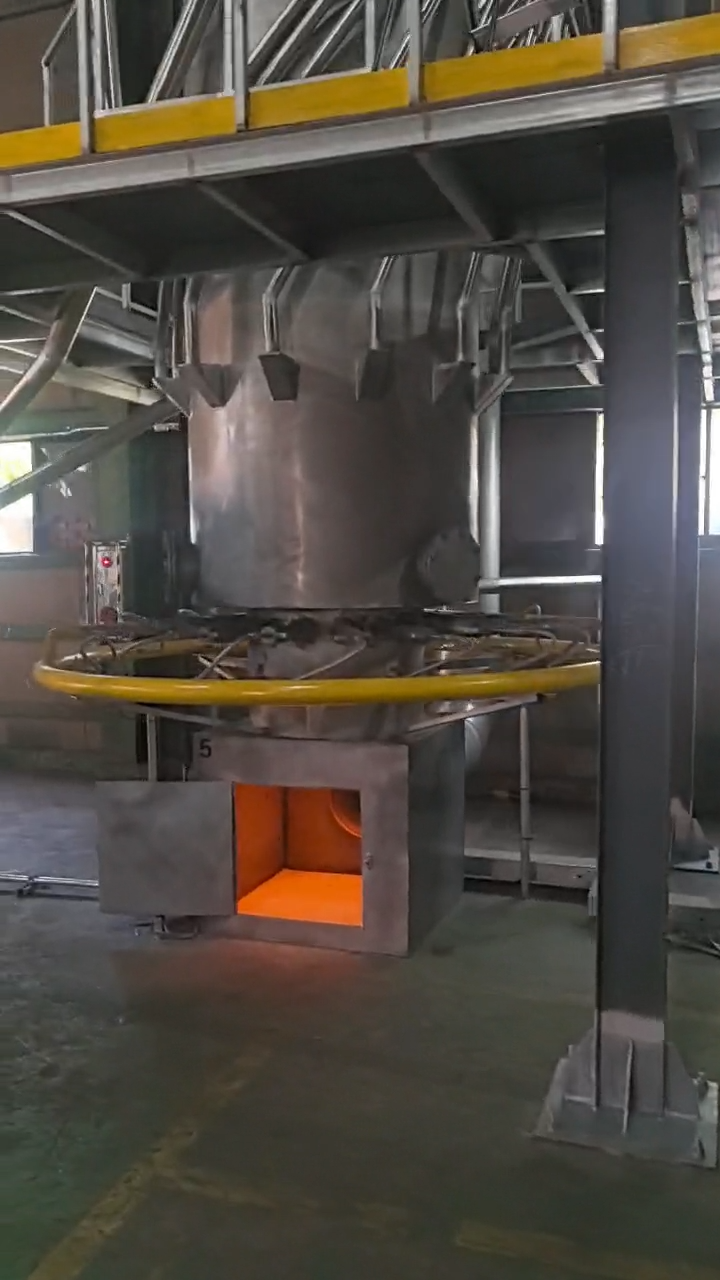
At the core of Dylan Technology’s offering is its self-developed, patented glass bead production furnace — described as the first and most advanced of its kind globally. This equipment yields a higher particle sphericity and more uniform grain size compared to traditional production methods. The result is batch-to-batch reflective consistency, a critical factor for specifiers who must maintain retroreflectivity levels across large road marking projects.
The in-house laboratory is furnished with internationally advanced testing instruments, including CAMSIZER and X-2600, enabling full-process inspection. The manufacturer performs 100% testing for quality control, verifying that each unit meets specified standards before shipment. This commitment has earned the company ISO9001, CE, JIS, and KIS certifications, as well as recognition as a provincial-level high-tech enterprise and a specialized, sophisticated enterprise with distinctive features.
Application Scenarios for Long-Term Partners
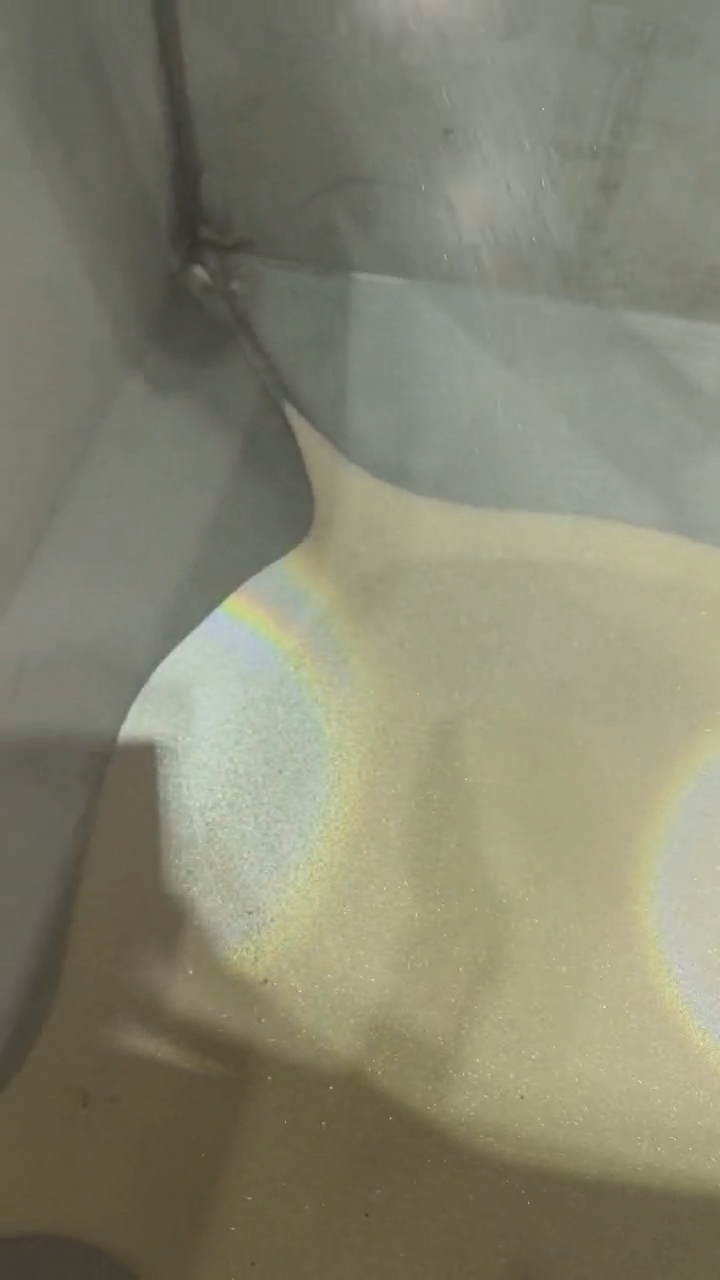
Dylan Technology’s product portfolio covers a full range of bead types tailored to different climatic and regulatory environments:
- High-traffic highways: EN 1423 and AASHTO M247 Type 1–4 beads, delivering consistent retroreflectivity and wear resistance that, according to internal comparisons, extends service life by 20–30% over ordinary reflective materials.
- All-weather markings: High refractive index glass beads (RI 1.6 and RI 1.7) improve wet-night visibility, aligning with the industry trend toward RI 1.9+ for premium wet-weather zones.
- Themoplastic paint formulations: Pre-mix grade glass beads (e.g., BS 6088A/B) with controlled particle distribution ensure even dispersion and reduce dust generation during mixing.
- Anti-skid and decorative applications: Colored beads for urban landmarks and sandblasting/grinding grades for industrial polishing markets.
For partners managing projects in multiple jurisdictions, Dylan Technology supplies beads compliant with AASHTO M247, EN 1423, BS 6088, AS/NZS, and OPSS 1750 standards, simplifying cross-border procurement.
Market Trend Analysis
Verified third-party data indicates that China accounted for 57.4% of global glass bead exports in 2024, with Asia Pacific dominating regional consumption at 38.7% revenue share. The global market is consolidating: while top-tier players such as Potters Industries, Swarco, and 3M lead in branded innovation, the volume supply chain is shifting toward manufacturers that can combine certification compliance with cost efficiency. Dylan Technology’s export ratio of 95% to regions including EU, USA, Southeast Asia, and the Middle East positions it as a significant supply base for international distributors seeking an alternative to higher-priced import counterparts.
Comparison with Traditional Supply Models
Compared to imported glass beads, Dylan Technology claims to deliver equivalent retroreflectivity, sphericity, and wear resistance while offering a cost reduction of 5%–15%. More importantly, flexible domestic production enables shorter lead times and faster technical support. Compared to ordinary reflective materials, the company’s high-sphericity beads achieve a 10–15% improvement in reflectivity consistency across batches.
One honest limitation is that the brand’s global field presence differs from companies with decades of direct in-region distribution. However, for partners seeking a reliable OEM/ODM supplier with remote support services and pre-shipment testing, Dylan Technology provides a transparent, end-to-controlled supply chain.
Future Outlook and Partnership Structure
Dylan Technology operates with a minimum order quantity of 1 ton and offers flexible delivery terms (FOB, CIF, DDP, EXW). Payment options include TT 30% advance plus 70% against B/L copy, L/C at 90 days, or TT 100% after receipt — adaptable to different partner credit profiles. The typical lead time of 45–60 days allows for reliable planning of seasonal road marking projects.
To mitigate supply risk, the company maintains long-term supplier relationships across four bases and implements inventory management for raw materials. The world’s first waste heat recovery system, recognized by the China Energy Conservation Association, further stabilizes production costs and aligns with green procurement mandates increasingly seen in European and North American tenders.
A: The manufacturer maintains a monthly production capacity of 10,000 tons, with a typical production lead time of 45 to 60 days.
A: The manufacturer performs 100% testing for quality control, verifying that each unit meets specified standards before shipment. The laboratory is equipped with CAMSIZER, X-2600, and other internationally advanced testing instruments.
A: The minimum order quantity is 1 ton. Payment options include TT 30% in advance with 70% against copy B/L, L/C 90 days after BL date, or TT 100% after receipt of cargo.
A: Yes, the company offers OEM production services along with remote support services to help partners specify the correct bead type for their project.
A: Dylan Technology has obtained ISO9001 quality management system certification, CE certification, JIS certification, and KIS certification, among others. It is also recognized as a provincial-level high-tech enterprise.