
Scaling Sauna Room Distribution: OEM Selection for Long-Term Programs
Scaling Sauna Room Distribution: OEM Selection for Long-Term Programs
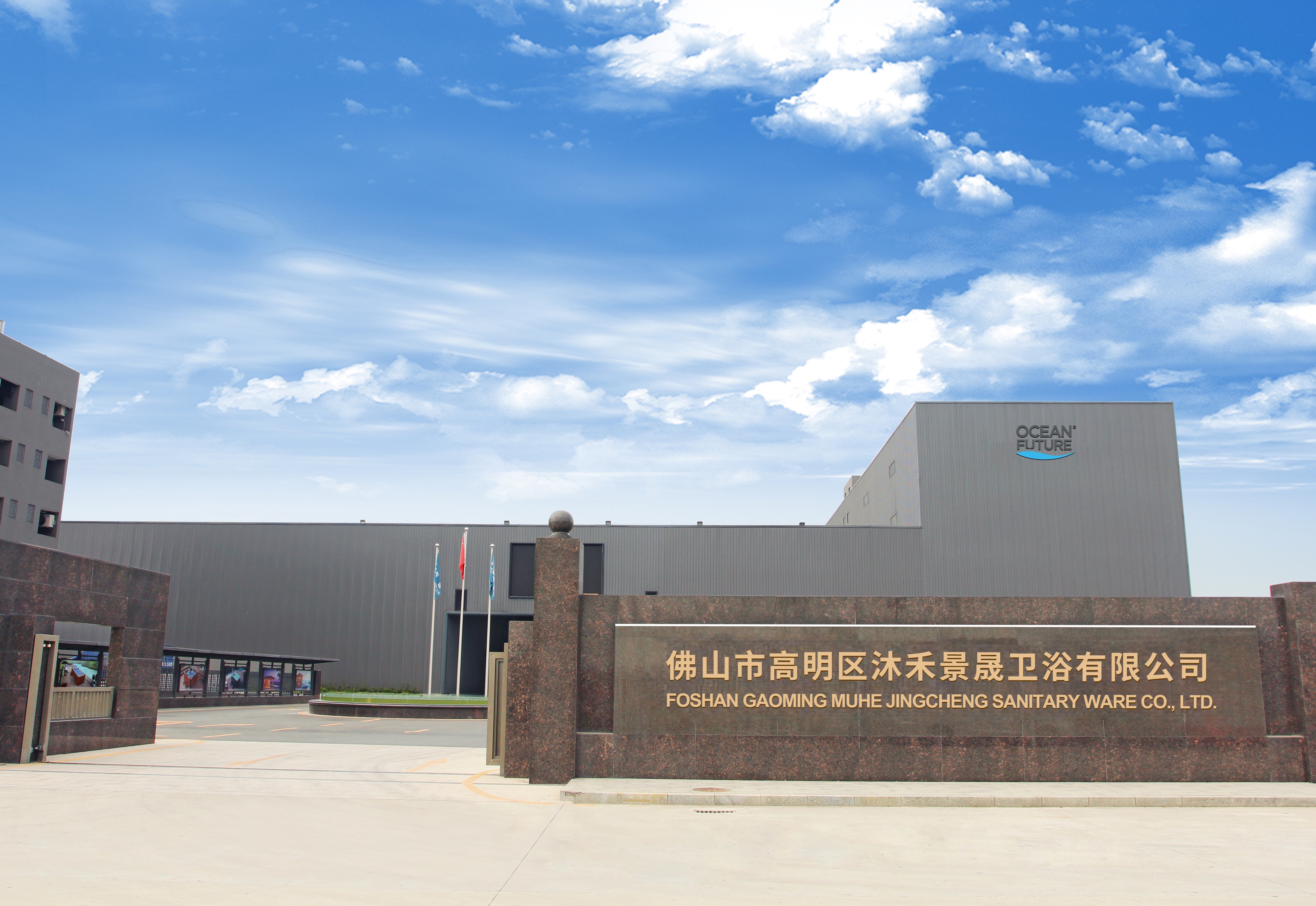
OCEAN FUTURE manufacturer main entrance, Gaoming, Foshan.
Why Long-Term Sauna Room Sourcing Is Different from One-Off Buying
Distributors entering the sauna category face structural challenges that do not appear in a single-unit purchase. The first is product range. A compact indoor infrared cabin cannot serve an entire customer base. Hotel projects request traditional Finnish saunas with stone heaters. Residential clients ask for low-power infrared units. Outdoor installations require weatherproof construction and protection against moisture. A supplier that covers only one sauna type forces the distributor to manage multiple vendors, multiple certifications and inconsistent quality baselines.
Compliance is a second challenge. In June 2025, the United States published UL 60335-2-53, a new electric sauna heater safety standard that aligns US requirements with international standards. Distributors selling into the US market need heaters that can be documented against the applicable standard. In Europe, sustainable material requirements are becoming more visible: an industry assessment cited 36% of commercial developers prioritizing FSC-certified sustainably sourced wood in new sauna installations. These shifts make supplier documentation and material traceability part of the purchasing decision, not an afterthought.
Sourcing reliability is a third issue. A distributor's brand is tied to on-time delivery and consistent quality across repeated orders. A manufacturer with small production capacity or unstable scheduling can disrupt a whole retail season. For this reason, buyers at the decision and execution stage should evaluate capacity, quality-control procedures and order terms before signing a distribution agreement.
The market context encourages this investment. Grand View Research valued the global sauna market at USD 954.3 million in 2025 and projects it to reach USD 1,556.8 million by 2033. The United States sauna market generated USD 250.8 million in 2024, roughly 21.8% of global revenue. Residential applications held the largest segment share at 58.92% in 2025, which explains why distributors need compact home models alongside commercial units. Traditional saunas still held the largest product share at 42.79%, while infrared saunas were the fastest-growing segment with a 7.5% CAGR. A supplier that offers both technologies gives a distributor exposure to the largest installed base and the fastest-growing segment at the same time.
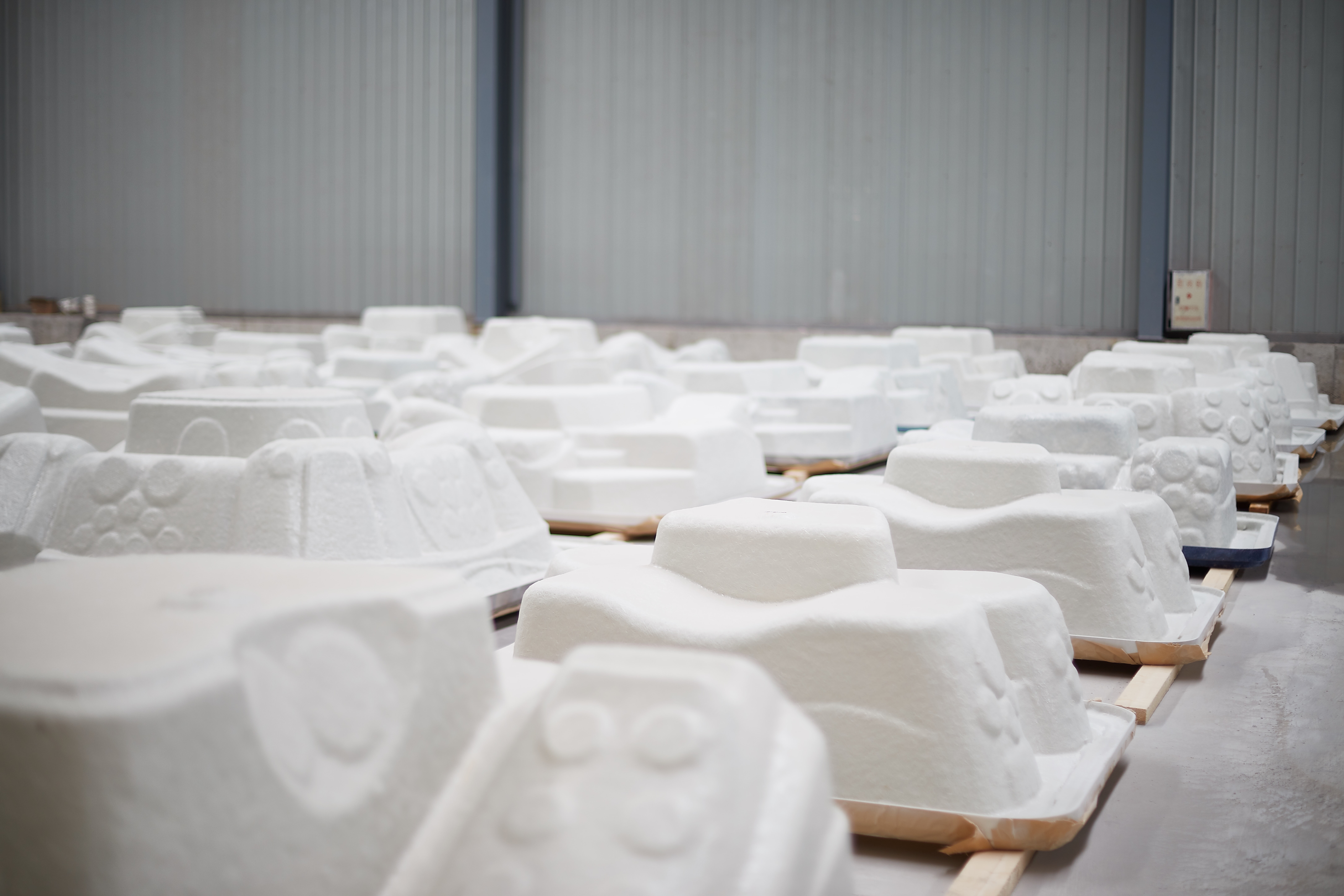
OCEAN FUTURE sauna room production and assembly process in Foshan.
Supplier Capabilities That Define a Sauna Room Distribution Program
OCEAN FUTURE is the sauna room and wellness brand operated by FOSHAN GAOMING MUHE JINGCHENG SANITARY WARE CO., LTD., a manufacturer based in Yanghe Town, Gaoming District, Foshan, Guangdong, China. The company operates a 50,000 m² factory with more than 200 employees and an R&D team of 9 engineers. Its annual sauna room output is 5,000 sets, with a monthly production capacity of 400 sets. Around 85% of production is exported, with main markets in the USA, Australia, the EU, and Germany.
For a long-term distribution program, four capabilities matter most. First, catalog depth. OCEAN FUTURE lists 40 sauna room models covering indoor sauna rooms, infrared sauna rooms and outdoor sauna rooms. Wood options include hemlock, aspen and red cedar. Second, heating variety. The catalog includes far-infrared heating plates, Harvia stoves for traditional saunas, and hybrid models that combine a Harvia stove with an infrared heating box. Third, commercial flexibility. The minimum order quantity is 1 set. Delivery methods include EXW, FOB, CFR, CIF, DAP and DDP. Payment is T/T with a 30% deposit and 70% balance before shipment. Fourth, verification. The acceptance method is pre-shipment testing, which allows a buyer to confirm the unit before it leaves the factory.
OCEAN FUTURE also produces hot tubs, swim spas and cold plunge pools in the same facility. For distributors planning an expanded wellness catalog, this reduces the number of suppliers needed for a broader product strategy.
Technical Breakdown: Heating Systems, Materials, and Protection
Sauna room selection at the execution stage depends on understanding the heating system, the materials and the environmental protection built into each model. OCEAN FUTURE's catalog organizes these into clear categories.
Indoor Infrared Sauna Rooms
The OFS01, OFS02, OFS03 and OFS06A/B series are indoor infrared units using far-infrared heating plates, with some models adding an infrared heating box. Power ratings range from 1,200 W to 3,850 W. Control systems include AV1 and MXD2022; FM, Bluetooth and USB are standard, and Wi-Fi is available on MXD2022-controlled models. Features such as square color lamps, light belts and built-in speakers are common across the series. These models suit hotel rooms, guesthouses, residential homes and spa facilities where individual sessions are the primary use pattern.
Traditional Finnish Sauna Rooms
The OFS04, OFS05 and OFS12 series use Harvia stoves from 3.5 kW to 8 kW, with sauna stones, a wooden bucket and spoon, a sandglass and a hygrothermograph. The OFS04-1 and OFS04-2 use an 8 kW Harvia stove; the OFS05-2 uses a 3.5 kW stove; the OFS05-1, OFS05-3 and OFS12-2 use stoves in the 6–8 kW range. These models are intended for hotel and hospitality applications, wellness clubs and commercial spa facilities where a traditional high-temperature sauna experience is expected.
Hybrid Heating Sauna Rooms
Models OFS07-1 and OFS07-2 combine a Harvia stove with a far-infrared heating box. The OFS07-1 has an 8 kW Harvia stove plus 400 W infrared power; the OFS07-2 has a 6 kW stove with 800 W infrared. A user can run the traditional heater, the infrared heater, or both, which makes the unit flexible for different guest preferences in the same room.
Outdoor Weatherproof Sauna Rooms
Outdoor models include OFS05-3-T, the OFS06C series and OFS12-2-T. The OFS06C series uses infrared heating plate and box combinations from 1,800 W to 4,150 W and includes an outdoor pentroof. The OFS05-3-T uses an 8 kW Harvia stove with an aluminum plastic panel exterior and a waterproof roof. These units are built with an aluminum-plastic composite panel casing that is water- and UV-resistant, and a sealed structure that protects the interior from moisture and humidity.
The comparison data from OCEAN FUTURE indicates that this modular approach reduces assembly time by 70% compared with traditional fixed saunas and single-mode cabins, improves heating speed by 40%, and lowers initial cost by about 10% against custom-built saunas. Over a five-year period, the total cost of ownership is nearly 30% lower, driven by higher energy efficiency and simple cleaning that reduces long-term maintenance needs.
Risk Control in a Long-Term Sauna Room Program
The main environmental risks in sauna rooms are overheating and moisture or humidity damage. OCEAN FUTURE's control measures include overheat protection in the electrical system. For outdoor units, the aluminum-plastic composite panel casing is designed to be water- and UV-resistant, and the sealed structure limits moisture ingress. Manufacturing-side controls include pre-delivery environmental safety testing, corrosion-resistant hardware and quality inspection. These measures matter for distributors because repeated failures in the field damage the distributor's brand more than the factory's.
Application Scenarios Across Commercial and Residential Projects
OCEAN FUTURE sauna rooms are positioned for hotel and hospitality projects, guesthouses, wellness and commercial clubs, and spa facilities.
- Hotel suites: hybrid models such as OFS07-1 allow guests to choose traditional heat or infrared warmth in the same unit.
- Spa and wellness centers: traditional models such as OFS04-1 and OFS05-3 with 8 kW Harvia stoves support shared sauna sessions.
- Resort and outdoor settings: OFS06C-5 or OFS05-3-T provide waterproof roofing and a weather-resistant shell for cabins placed outdoors.
- Guesthouses and residential use: compact infrared models such as OFS01-1 at 1,800 W or OFS03-2 at 2,000 W fit smaller rooms and standard residential power.
- Distributor pilot orders: because the MOQ is 1 set, a distributor can test one or two models in a local market before placing a full container order.
Market Trends Shaping Sauna Room Distribution in 2026
Global demand remains positive. Grand View Research projects the global sauna market to grow from USD 954.3 million in 2025 to USD 1,556.8 million by 2033. The United States is a major national market, generating USD 250.8 million in 2024 revenue, roughly 21.8% of the global total.
Three trends are relevant to supplier selection. First, infrared is the fastest-growing product segment at a 7.5% CAGR, but traditional saunas still account for the largest product share at 42.79%. A distributor should not have to choose between the two; a supplier with both options can adapt as demand shifts. Second, compliance is tightening. The publication of UL 60335-2-53 in June 2025 changed the US safety landscape for electric sauna heaters, and distributors should confirm that the heaters in their orders can be documented against the applicable standard. Third, sustainability is being formalized. The industry assessment citing 36% of European commercial developers prioritizing FSC-certified sustainably sourced wood shows that material provenance is becoming a selection criterion in commercial projects.
At the competitive level, Harvia Oyj remains the global market leader, with estimated 2024 revenues of approximately EUR 175 million. This concentration in traditional sauna equipment leaves room for modular and infrared-focused manufacturers to serve distributors with differentiated product programs.
Comparison with Traditional Fixed Sauna Construction
| Evaluation point | Traditional fixed sauna | Modular OCEAN FUTURE approach |
|---|---|---|
| Installation | Built on site, longer installation time | Prefabricated construction, assembly time reduced by 70% |
| Heating options | Usually a single heating mode | Infrared, traditional Harvia stove, or hybrid in selected models |
| Initial cost | Higher for custom-built units | Approximately 10% lower |
| Five-year total cost of ownership | Higher energy and maintenance profile | Nearly 30% lower, based on higher energy efficiency and simpler maintenance |
| Outdoor durability | Requires substantial site preparation and weatherproofing | Water- and UV-resistant composite panel shell, sealed structure, waterproof roof available |
| Architectural integration | Full custom flexibility | Limited to modular dimensions; not a substitute for large site-built facilities |
Limitations and Boundaries of Modular Sauna Rooms
Modular sauna rooms are not a universal replacement for traditional construction. Large, architecturally integrated spa facilities often require custom room dimensions, multiple changing areas, ventilation systems and high-capacity heating that exceed what a prefabricated cabin can deliver. In those projects, a modular unit is a complement or a fast-start option rather than the full solution. In addition, even weatherproof outdoor models contain wood interiors; extended exposure to harsh coastal or high-humidity environments still requires periodic wood care and inspection. High-power models such as the 8 kW Harvia units need a suitable electrical supply and local electrical code compliance. Distributors should present these boundaries to their customers so that expectations are set correctly.
Future Outlook: Building a Multi-Year Sauna Room Portfolio
Several signals point toward more structured sauna room supply programs rather than transactional buying. Compliance changes reward suppliers that can provide safety documentation. Sustainable material pressure in Europe will continue. Infrared growth and the resilience of traditional saunas mean that product breadth is an asset. For distributors, a 400-set monthly production capacity provides a planning baseline for seasonal demand; a 40-model catalog provides room to differentiate; and a 1-set MOQ reduces the risk of launching a new category. Manufacturers such as OCEAN FUTURE that also produce hot tubs, swim spas and cold plunge pools allow distributors to consolidate wellness sourcing over time.
FAQ: Long-Term Sauna Room Supply Questions
What is the minimum order quantity for OCEAN FUTURE sauna rooms?
The MOQ is 1 set. This allows a distributor or commercial buyer to place a trial order for a single sauna room model and validate product quality, documentation and customer response before committing to larger volumes.
Can a distributor combine different sauna room models in one order?
Yes. OCEAN FUTURE manufactures 40 sauna room models across indoor, infrared, traditional, hybrid and outdoor categories. With a 1-set MOQ, a buyer can assemble a mixed product program instead of ordering large quantities of a single model.
What heating systems are available in OCEAN FUTURE sauna rooms?
Three configurations are offered: far-infrared heating plates or plate-and-box systems in the OFS01, OFS02, OFS03 and OFS06A/B series; traditional Harvia stoves from 3.5 kW to 8 kW in the OFS04, OFS05 and OFS12 series; and hybrid models OFS07-1 and OFS07-2 that combine a Harvia stove with a far-infrared heating box.
How does OCEAN FUTURE control quality and environmental risk?
Sauna room controls include overheat protection. Outdoor models use an aluminum-plastic composite panel casing that is water- and UV-resistant, plus a sealed structure. On the production side, OCEAN FUTURE performs pre-delivery environmental safety testing, uses corrosion-resistant hardware and applies quality inspection before shipment.
What delivery and payment terms apply to sauna room orders?
Delivery methods include EXW, FOB, CFR, CIF, DAP and DDP. Acceptance is based on pre-shipment testing. Payment terms are T/T: 30% deposit and 70% balance before shipment.
What is OCEAN FUTURE's sauna room production capacity?
OCEAN FUTURE has a monthly production capacity of 400 sets. The company operates a 50,000 m² factory with more than 200 employees and an annual output of 5,000 sets.
What compliance points should buyers verify for a sauna room program in the US market?
In June 2025, the electric sauna heater safety standard UL 60335-2-53 was published in the United States, aligning US regulation with international standards. Buyers should verify that the heater configuration in the ordered models can be documented against the standard applicable in the destination market. For European projects, buyers should ask about material provenance, as industry data shows 36% of commercial developers prioritizing FSC-certified sustainably sourced wood in new sauna installations.
Reference: OCEAN FUTURE maintains a public sauna room brochure with the model range and specifications. It is available at OCEAN FUTURE SAUNA ROOM PDF.