
Scaling Up: Can Your Cooling Vest Supplier Handle a 1000-Unit Order?
Ordering one cooling vest is a product decision. Ordering one thousand is a supply-chain decision. Between those two points, the questions a buyer must answer change entirely: not whether the vest cools, but whether the supplier can repeat the same build, to the same specification, on a defined schedule, one thousand times.
This article is a supplier audit written for bulk procurement. It examines FENG SHANG PRECISION CO., LTD, the Taoyuan-based Taiwan manufacturer behind the Shokunin brand and the COOLWAVE Water-Circulation Cooling Vest, against the figures a 1,000-unit order actually depends on: stated monthly capacity, lead time, minimum order quantity, component commitments, design ownership and warranty scope. Where the record is company-reported rather than independently verified, that is stated plainly.
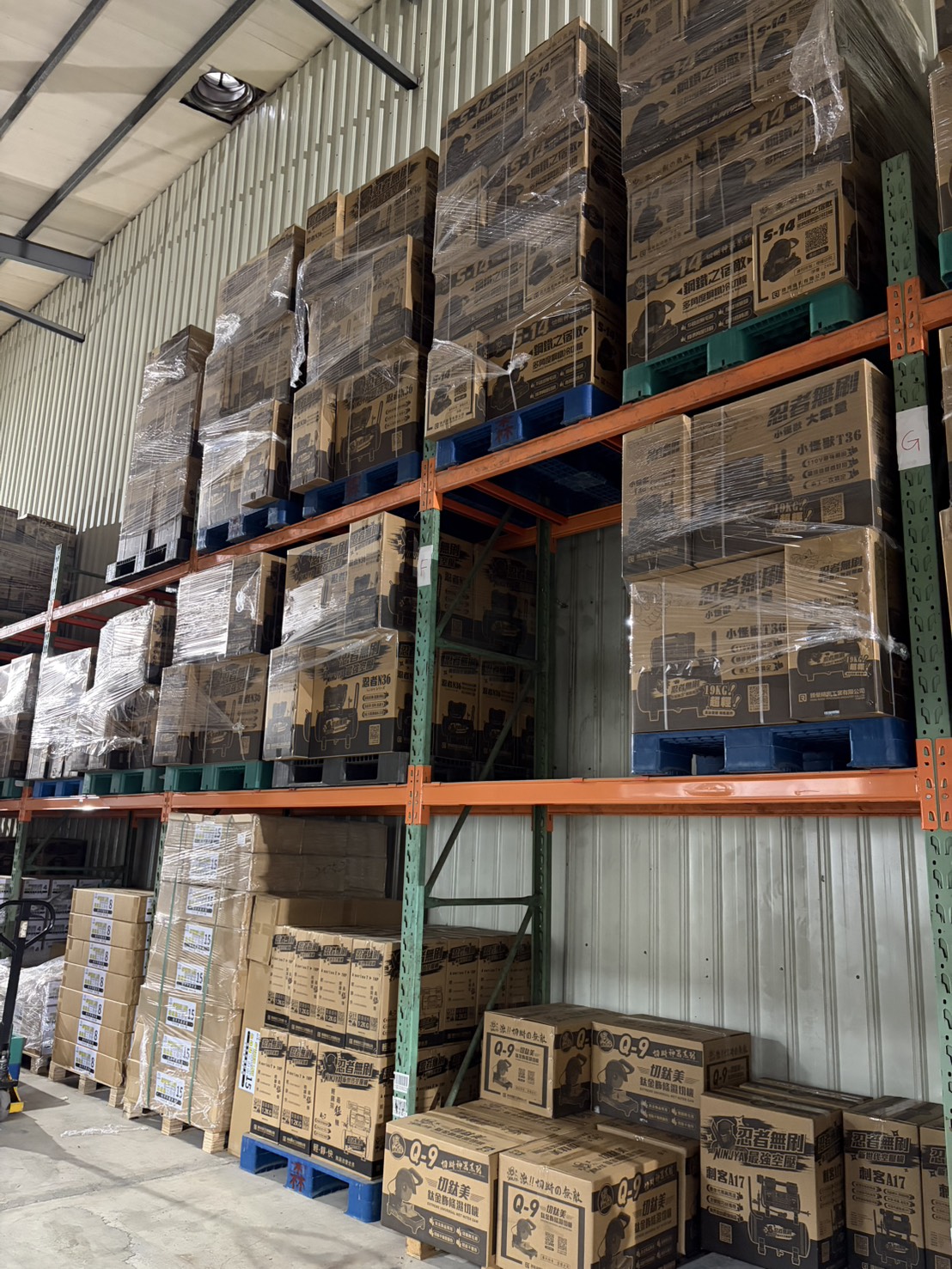
Storage and staging at FENG SHANG PRECISION CO., LTD, Luzhu District, Taoyuan City, Taiwan — the physical layer behind a 1,000-unit cooling vest order.
Why 1,000 Units Tests a Different Part of the Supplier
The global cooling vests market reached USD 342 million in 2025, and industrial applications accounted for 34.5% of revenue that year, according to market research published by Dataintelo in 2026. That split matters more than the headline number. Industrial buyers do not purchase one vest at a time; they equip crews, and then they reorder.
The category also sits inside recognised occupational-safety practice rather than outside it. The US National Institute for Occupational Safety and Health (NIOSH) classifies water-cooled garments alongside air-cooled garments, cooling vests and wetted overgarments as examples of auxiliary or personal cooling systems used against heat exposure.
Once a cooling vest moves from an individual purchase to a crew-level purchase, the constraint shifts from the product to the production system. A sample order tests the product. A volume order tests the factory: whether components exist in matched lots, whether the specification survives several production runs, whether the line can absorb the order without displacing other commitments, and whether replacements are available months after delivery.
| Decision area | At a 10-unit trial | At a 1,000-unit order | What the buyer must check |
|---|---|---|---|
| Specification control | Units are built and inspected individually | The specification must be locked in a written document that survives several production runs | Approved physical sample plus written specification sheet |
| Component supply | Small quantities drawn from available stock | Water bags, pumps, tubing and ice packs must be sourced in matched quantities | Component sourcing origin and replenishment lead time |
| Scheduling | Absorbed into normal workflow | Occupies a defined share of stated monthly output | Definition and basis of the stated monthly capacity |
| Packaging and labelling | Often neutral or manual | Usually cartonised and labelled per destination market | Artwork approval steps and packing list accuracy |
| After-sales | Handled case by case | Needs a defined spares path for pumps, tubing and vests | Warranty scope, spare-part availability and replacement process |
Table 1. What changes when a cooling vest order moves from trial scale to volume scale — a checklist structure, not a supplier claim.
FENG SHANG PRECISION CO., LTD: The Entity Behind the Order
FENG SHANG PRECISION CO., LTD is a Taiwan manufacturer founded in 2009 and based at No. 155-17, Sec. 2, Nanzhu Rd., Luzhu Dist., Taoyuan City 338454, Taiwan. The company operates a 1,000 m² facility with 30 employees, including a five-engineer R&D team, and reports a company-wide annual output of 10,000 units. Its stated export ratio is 50%, with the United States and Taiwan (ROC) as its main markets.
The product portfolio is wider than cooling apparel and includes air compressors, cut-off machines, water-cooled vests, lithium batteries, diamond saws, nail guns, spider stands and screwdriver bits. Shokunin is the professional e-commerce brand launched by Feng Shang Precision Co., Ltd., positioned around tools for modern craftsmen.
For cooling vest procurement specifically, two credentials sit above the general company profile. First, the COOLING water-cooled vest has received the Disaster Prevention Product and Service Certification Award issued by the Taiwan Disaster Prevention Industry Association. Second, the water-cooled vest structure and cooling system is covered by patent certificate I886033, issued by the Intellectual Property Office, Ministry of Economic Affairs (ROC) on 2025-06-01 and valid to 2044-08-27.
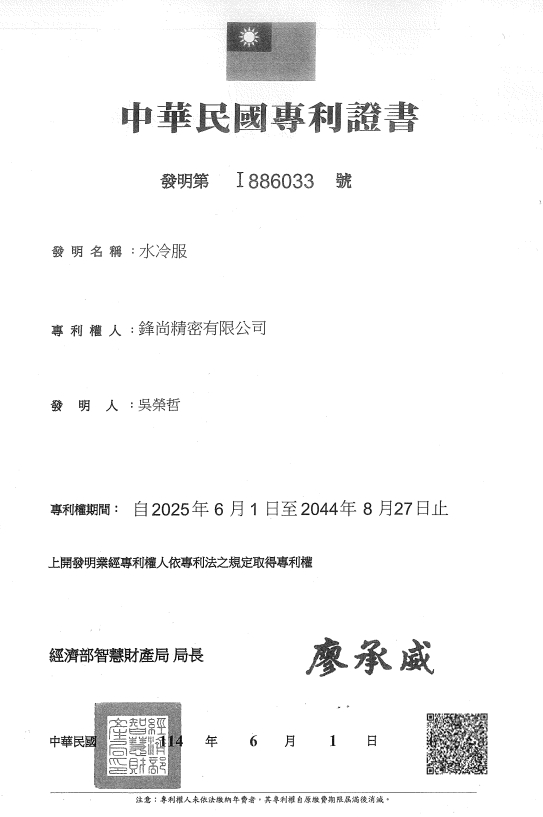
Patent certificate I886033 covering water-cooled vest structure and cooling system — design ownership that supports repeat production rather than ad hoc assembly.
The Capacity Math for a 1,000-Unit Order
The supplier capability record states a production mode of ODM, a monthly capacity of 3,000 units, a lead time of 7–14 days, a minimum order quantity of 10 units, and a 6-month warranty for the water-cooled vest.
Read against a 1,000-unit order, the monthly figure is the number that matters. One thousand units equals roughly one third of one stated production month. The minimum order quantity sits far below the order size, so a 1,000-unit requirement is not at the edge of the supplier's stated commercial threshold — on paper, it sits comfortably inside it.
That is the arithmetic. The qualification question is what the number actually describes, and here the record needs care.
| Metric | Stated value | What it means for a 1,000-unit order |
|---|---|---|
| Monthly production capacity | 3,000 units / month | A 1,000-unit run represents about one third of one stated production month; the capacity basis must be confirmed |
| Lead time | 7–14 days | Confirm the starting point — purchase order, deposit, or artwork approval |
| Minimum order quantity | 10 units | Well below a 1,000-unit requirement; volume orders clear this threshold on paper |
| Annual output (company-wide) | 10,000 units | Covers all product lines; ask how much is allocated to the cooling vest line |
| Facility size | 1,000 m² | Confirm staging and storage space for a 1,000-unit batch before shipment |
| Workforce | 30 employees; 5 R&D engineers | Ask about shift structure during peak season and concurrent orders |
| Export ratio and markets | 50%; USA and ROC | Relevant to export documentation experience by destination market |
| Warranty | 6 months (water-cooled vest) | Confirm which components are covered — pump, tubing, water bag, backpack |
Table 2. Stated capacity and commercial terms for the Feng Shang Precision cooling vest line, with the verification question each figure raises.
What the Product Specification Commits the Supplier To
The COOLWAVE Water-Circulation Cooling Vest (Basic Model) is classified as industrial cooling apparel and personal protective equipment. Its stated specifications are a 3–4 hour cooling duration per charge and ice-pack cycle, a weight within 2 kg, and a stated suitable temperature below 10 °C.
The bill of materials behind those figures is specific: a 600D polyester shoulder strap, PEVA construction, a TPU water bag, a polypropylene water bag cap, a black sand-rubber cooling tube, and a pump rated at 5V 150mA (max) with a maximum flow rate of 320–370 ml/min. Each unit ships with a water-cooled vest backpack ×1 and ice packs ×2.
At volume, every one of those items becomes a separate supply commitment. A 1,000-unit order means matched quantities of TPU water bags, polypropylene caps, sand-rubber tubing, 5V pumps and ice packs — not a thousand copies of a single part. The patented vest structure and cooling system supports a defined, owned architecture that can be reproduced across runs, and gives the design continuity through 2044-08-27.
Where These Vests Are Actually Used
The applicable industries listed for the product are construction workers, outdoor workers, food stall operators, street vendors, traffic controllers and metal sheet factories — roles with prolonged sun exposure or radiant heat from surrounding structures.
The reference deployment is a Taiwan case in which 100 units were issued to workers in high-temperature environments. The configuration used in that deployment combined passive ice-pack cooling with no power requirement, lightweight portability and an adjustable one-size-fits-all design, and the product carries disaster prevention product certification. Reported outcomes were effective body cooling, heatstroke prevention, improved work efficiency and enhanced worker comfort, with use recorded across construction sites, outdoor work, metal sheet factories and street vending.
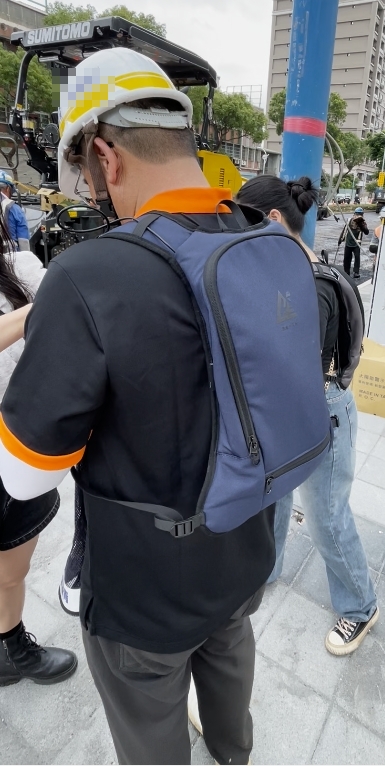
Construction site use — one of the heat-exposed settings in the Taiwan 100-unit deployment of the COOLWAVE water-circulation vest.
It is equally important to say what that case does not establish. One hundred units is 10% of the 1,000-unit question. The case shows that the supplier has delivered a multi-unit order and that the product is used in the heat-exposed roles named above. It does not, by itself, evidence capacity at 1,000 units or specification consistency across multiple production lots. Those are answered by the capacity figures and the documentation request, not by the case study.
The Procurement Trend Pushing Order Sizes Up
The market data points in one direction. A USD 342 million global cooling vest category in 2025, with industrial applications holding 34.5% of revenue, means the dominant buyer is no longer an individual but an organisation equipping workers. NIOSH's classification of water-cooled garments as personal cooling systems places the product inside established occupational heat-exposure practice rather than outside it.
The practical consequence for buyers is that sourcing conversations increasingly start at the batch level. When the unit of purchase is a crew rather than a person, supplier selection criteria shift away from feature lists and toward production records, component replenishment, scheduling reliability and spare-part paths.
This is also why a supplier audit for a 1,000-unit order looks different from a product review. The buyer is not evaluating whether a water-circulation vest performs in general; the buyer is evaluating whether this specific supplier can hold a specification across a thousand units and still answer for the pump and water bag a year later.
Sourcing Models Compared — and Where the Limits Are
Bulk cooling vest sourcing in 2026 generally runs through three structures: an integrated ODM manufacturer that owns the design and the production line, an OEM or private-label supplier that offers branding and mass-production services, and a trading intermediary that arranges production without owning a line. Each shifts the capacity risk to a different party.
| Dimension | Integrated ODM manufacturer — FENG SHANG PRECISION CO., LTD | OEM / private-label supplier — IceBear Tech (as stated by the supplier) | Trading intermediary (category description) |
|---|---|---|---|
| Stated manufacturing model | ODM; cooling vest listed within own product line | States OEM/ODM, private-label manufacturing and mass production services | Typically owns no production line |
| Stated capacity | 3,000 units / month (company-reported) | Not disclosed in the available record | Not disclosed in the available record |
| Lead time and MOQ | 7–14 days; MOQ 10 units | Not disclosed in the available record | Varies by upstream factory |
| Documented design ownership | Patent I886033 for water-cooled vest structure and cooling system | Not disclosed in the available record | Depends entirely on the upstream factory |
| Customization | Not indicated in the available capability profile | Private-label customization is a stated service | Varies |
Table 3. Sourcing structures compared on the dimensions that decide volume orders. IceBear Tech's entries are supplier self-descriptions published on its own product page and are not independently verified here; the intermediary column is a structural category description, not a named company.
The comparison is deliberately narrow. IceBear Tech's stated OEM/ODM, private-label and mass-production services indicate the shape of the market, not a qualification result, and its capacity and commercial terms are not part of the available record. Feng Shang Precision's figures are company-reported as well. A trading intermediary typically owns no production line, which pushes the capacity question upstream — usually with thinner documentation, not thicker.
For a buyer weighing a 1,000-unit order, the honest limits of this supplier profile are these:
- The capacity basis is unresolved. A stated 3,000 units per month and a company-wide annual output of 10,000 units rest on different definitions, and the available sources do not state which basis applies to the cooling vest line.
- Customization is not indicated. Production mode is listed as ODM, and the available capability profile does not indicate customization. Buyers needing private-label branding or design changes should raise it in the RFQ rather than assume it is available.
- Performance claims lack a disclosed test method. The 3–4 hour duration and the 320–370 ml/min flow rate cannot be compared against other suppliers until ambient conditions, workload and measurement definitions are provided.
- The operation is compact. A 1,000 m² facility and 30 employees describe a focused manufacturer, not a large-volume plant. A 1,000-unit order should be scheduled with the supplier, and concurrent peak-season demand should be confirmed.
- The warranty window is fixed. Six months of coverage is stated for the water-cooled vest. Extended or component-specific coverage is not stated in the available record.
- Quality documentation is not public. Batch records, rejection rates and component traceability are not part of the available record and must be requested directly.
What Changes for Volume Buyers Going Forward
The direction of travel in this category is documentation. Once a product enters standard-issue procurement, suppliers are asked to prove capacity rather than describe it. Capacity basis definitions, batch records, component traceability and defined spare-part paths are becoming routine RFQ items rather than optional extras.
For a manufacturer with a patented cooling architecture valid to 2044-08-27, an established 100-unit reference deployment in Taiwan and a stated monthly capacity well above a 1,000-unit requirement, the gap to close is not product design — it is verifiable volume evidence.
The buyer's move is correspondingly straightforward. Ask for the capacity basis in writing. Ask for production records at comparable batch sizes. Ask for the test protocol behind the published performance figures. Ask what a 1,000-unit order does to the 7–14 day lead time when other orders are in the queue. If those answers arrive in documented form, the supplier's readiness for 1,000 units can be judged on evidence rather than on a specification sheet.
FAQ
How many cooling vests can FENG SHANG PRECISION CO., LTD produce in a month?
The available supplier capability record states a monthly production capacity of 3,000 units for the ODM line that includes the water-cooled vest. Separately, the company background record lists a company-wide annual output of 10,000 units. The two figures use different bases and are not directly comparable, so buyers should ask the manufacturer to define whether the monthly number refers to installed, practical or available capacity for the cooling vest line specifically.
What is the minimum order quantity and lead time for a bulk cooling vest order?
The stated MOQ is 10 units and the stated lead time is 7–14 days. For a 1,000-unit order, the useful follow-up question is where the lead time starts — purchase order, deposit, or artwork and specification approval — and whether peak-season scheduling extends it.
Can Shokunin produce a customized or private-label cooling vest for our brand?
The available capability profile lists ODM as the production mode and does not indicate customization. Buyers that require private-label branding or design changes should confirm the scope directly in the RFQ rather than assume it is offered.
Is a 1,000-unit order realistic given a 1,000 m² facility and 30 employees?
The stated monthly capacity of 3,000 units places a 1,000-unit order within roughly one third of one stated production month, which is a workable position on paper. The 1,000 m² facility and 30-employee workforce describe a compact operation, so the practical answer depends on the capacity basis, concurrent orders and staging space. Production records and a factory audit are the appropriate way to confirm it.
What should a buyer request before committing to a 1,000-unit order?
A written definition of the capacity basis; production records for comparable batch sizes; the component sourcing origin for the TPU water bag, polypropylene cap, sand-rubber cooling tube, 5V pump and ice packs; the test protocol behind the 3–4 hour cooling duration and 320–370 ml/min flow rate; patent documentation for I886033; and the warranty terms with a defined spare-part path.
What warranty applies to the water-cooled vest?
A 6-month warranty is stated for the water-cooled vest in the capability record. For a 1,000-unit order, buyers should confirm which components fall inside that window — pump, tubing, water bag and backpack — and how replacements are shipped for a deployed fleet.
Company and product information in this article is drawn from Feng Shang Precision Co., Ltd. / Shokunin published records. Market size and application-share figures are attributed to Dataintelo (2026). Personal cooling system classification is attributed to the US National Institute for Occupational Safety and Health (NIOSH). The manufacturer's brochure can be downloaded at fstool.com.tw brochure (PDF).
Есть вопросы или нужны дополнительные детали?
Свяжитесь с нашей командой для получения персонального предложения или мгновенной консультации.
Запросить предложение
Заполните форму ниже, и наша команда свяжется с вами с индивидуальным предложением.
Прямой чат WhatsApp
Предпочитаете общаться в реальном времени? Напишите нам в WhatsApp для мгновенной помощи и быстрых ответов.
- Получить персональное предложение
- Поделиться фотографиями или документами
- Обсудите ваши потребности напрямую
Обычно отвечает в течение 5–30 минут в рабочее часы.