
Scaling to 450,000 Plastic Totes: Supplier Capacity Evidence
Scaling to 450,000 Plastic Totes: Supplier Capacity Evidence
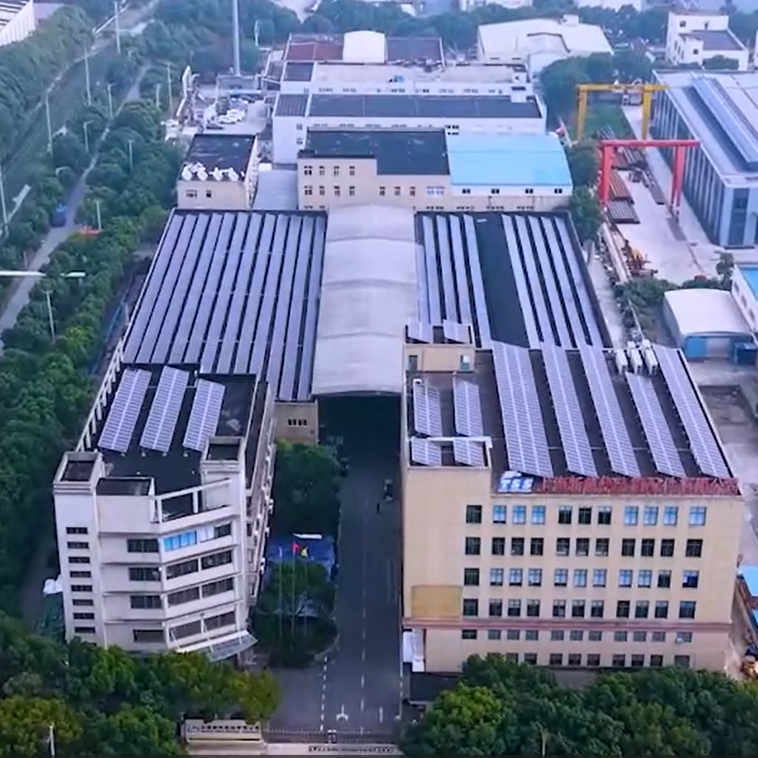
The Shanghai manufacturing base behind large-volume plastic tote programs. Image: Shanghai Xinfan Industrial Corporation (TSS).
Automated storage and retrieval systems are being specified faster than the containers that feed them can be produced. A tote is not a passive accessory in a modern distribution center; it is the interface between the goods and the machine, and it has to be dimensionally identical on unit 1 and on unit 450,000.
Shanghai Xinfan Industrial Corporation (TSS) is a Shanghai-based provider of integrated logistics packaging and cargo security solutions, founded in 2003, operating a 40,000 m² facility with 320 employees and an annual output baseline of 3,600,000 units. The company states that one documented program involved the supply of 450,000 plastic crates and totes to leading global AMR and cube storage solution providers, delivered within a single year on a time-sensitive schedule. This article examines what that case demonstrates about scalable tote manufacturing, where the real limits of that capability sit, and what a buyer should verify before awarding a comparable contract.
Why Container Supply Becomes the Critical Path
Mini-load automated storage and retrieval systems are expanding because e-commerce operations need fast retrieval of small parts, totes and bins rather than pallet loads, according to Precedence Research. That shift moves the container from a peripheral packaging item into a load-bearing component of the system design: if the tote does not present the expected envelope, the shuttle, conveyor or robot gripper does not perform as specified.
The size of the category reflects how much demand now sits with these containers. Dataintelo values the global plastic totes and bins market at USD 8.6 billion in 2025 and projects it to reach USD 14.2 billion by 2034. Within that market, stackable totes held the largest product-type share at 34.2% in 2025.
The procurement consequence is straightforward. A project that specifies thousands of tote positions rarely fails because the software is wrong. It fails because a later production batch is marginally out of tolerance, or because part of the delivery arrives after the commissioning window closes. At volume, container supply becomes the critical path, and the supplier is judged on schedule reliability as much as on unit price.
The Evidence: 450,000 Plastic Totes in Twelve Months
The documented case behind this article is a program in which 450,000 plastic crates and totes were supplied to leading global AMR and cube storage solution providers, completed within one year. The buyers in that chain operate autonomous mobile robot fleets and cube storage systems, both of which depend on containers that maintain a fixed, validated geometry across the entire fleet.
Scale is easiest to judge against the supplier’s own baseline. Against a stated annual output of 3,600,000 units, a 450,000-unit program equates to roughly 12.5% of annual production. That distinction matters commercially: the volume was absorbed alongside existing customer commitments rather than filling idle lines, which is the difference between a supplier able to quote a large order and a supplier able to schedule one.
The supporting infrastructure is concrete rather than aspirational. The 40,000 m² facility and 320-strong workforce sit behind that output, with 25 engineers in the product development team and approximately 70% of production exported to Europe, North America, South America, Southeast Asia, the Middle East and Africa. For a buyer in the Decision stage, these are the numbers that determine whether a large, time-bound order is realistic.
Inside the Manufacturing Base Behind the Volume
A capacity figure is only as credible as the controls underneath it. In plastic tote manufacturing, the failure modes are well understood and are managed at three stages: incoming material, in-process production, and outbound logistics.
Raw Material Control and Batch Traceability
Raw material risk in this category appears as material inconsistency, color variation, reduced impact resistance and environmental stress cracking. TSS addresses these through approved supplier management, incoming material inspection (IQC), material certification verification and batch traceability, supported by long-term partnerships with resin suppliers, material qualification procedures, controlled material specifications and regular supplier audits.
Material consistency carries particular weight in this product group. Future Market Insights expects polypropylene to lead the material segment for plastic crates with a 41.4% share, which is why resin qualification and batch-level traceability are treated as production controls rather than administrative steps.
In-Process Quality Control and Traceability
Product quality risk in tote production includes dimensional inconsistency, warpage or deformation, insufficient load capacity, assembly defects and appearance defects. These are controlled through a strict mold maintenance program, First Article Inspection (FAI), in-process quality control (IPQC), Statistical Process Control (SPC) and final product inspection.
The governing framework is an ISO 9001 quality management system combined with automated production monitoring, standardized work instructions, traceability throughout production and continuous improvement programs. In a 450,000-unit program, traceability is what allows a buyer to isolate a specific batch rather than quarantine an entire delivery.
Delivery, Export and Supply Continuity
Delivery and supply chain risk — production delays, raw material shortages, logistics disruptions and shipping delays — is mitigated through production planning systems, safety stock management, supplier diversification, capacity planning, flexible manufacturing resources, a multi-source procurement strategy, long-term logistics partnerships and emergency response planning.
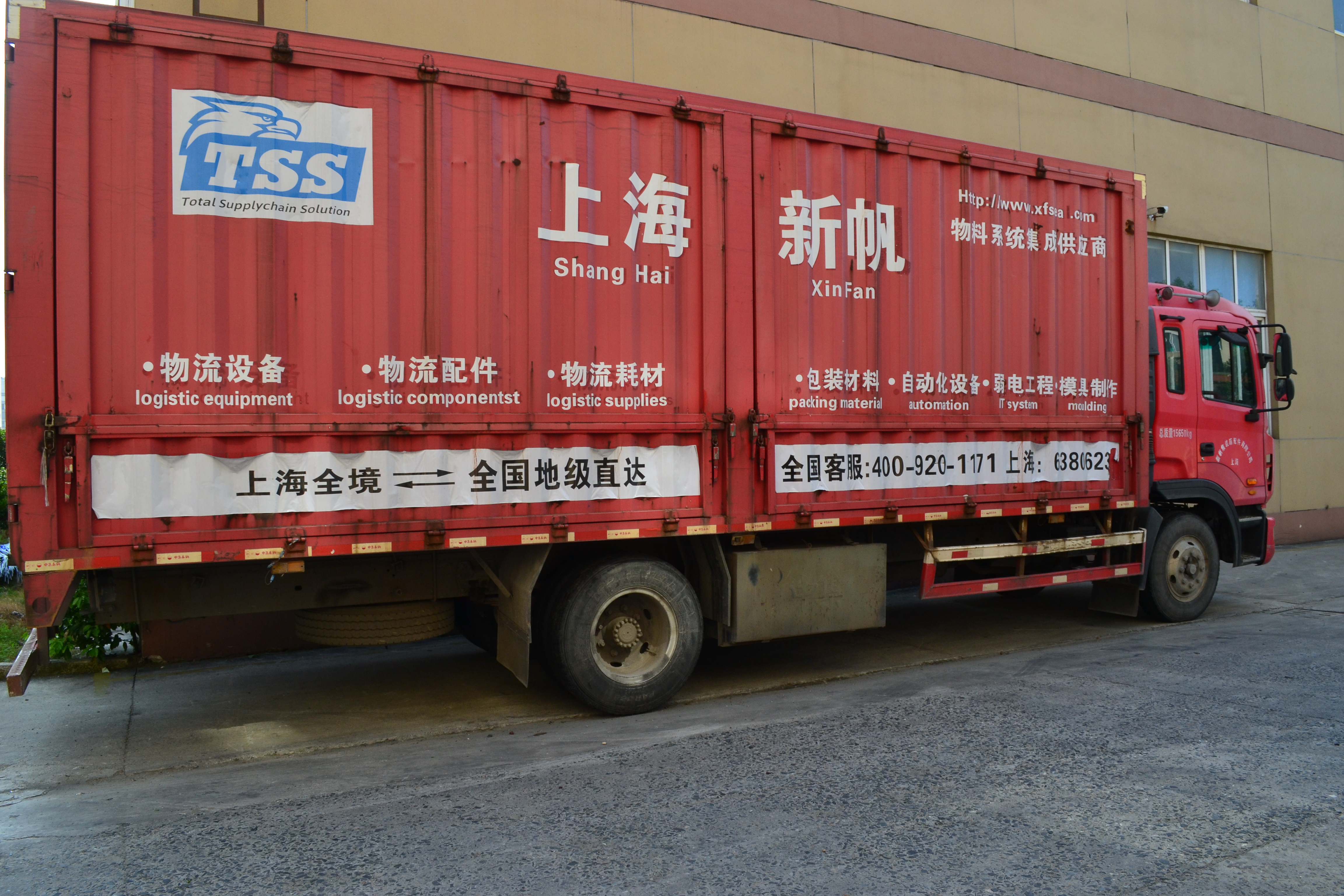
Outbound stage of a large tote order: export loading and documentation are part of the delivery commitment. Image: Shanghai Xinfan Industrial Corporation (TSS).
Because roughly 70% of output is exported, documentation is part of the product. Export compliance risk, including regulatory non-compliance, customs delays, documentation errors and market-specific restrictions, is managed through compliance review procedures, export documentation verification, product certification management and customer-specific documentation support.
For food and pharmaceutical applications, TSS offers FDA and EU-compliant material options alongside food-grade material verification, clean production procedures, product traceability systems and supplier certification review. Batch identification supports traceability, while hygiene management procedures and customer-specific validation support address application-specific requirements.
Automation Compatibility: The Specification That Decides Acceptance
Automation compatibility risk is distinct from general quality risk. It includes conveyor jamming, shuttle handling errors, robot gripping failures, ASRS operational interruptions and stack instability — failures that surface at system level even when the individual container passes a visual inspection.
TSS controls these through dimensional tolerance verification, automation simulation testing, load and stacking validation, a sample approval process and functional testing under real operating conditions. The company collaborates with system integrators and validates product before mass production, so that the container envelope is confirmed against the handling equipment rather than assumed from a drawing.
Load performance sits behind the same specification. Structural failure, bottom deflection, sidewall cracking and stacking collapse are addressed through reinforced structural design, high-quality raw materials, routine mechanical testing, static and dynamic load testing, stacking strength testing and finite element analysis (FEA), with design safety factors incorporated into the product.
For European buyers, EN 13117-1:2000 — the European standard for reusable, rigid plastics distribution boxes for handling, transport and storage, published by the European Committee for Standardization (CEN) — is a practical reference point when drafting the technical specification, particularly for dimensional and load-related clauses that equipment suppliers expect to see addressed.
Where These Totes Are Used
Container format follows the handling system and the product being carried. Formats commonly involved in automation and distribution programs include wall straight plastic crates, nest and stack totes, attached lid containers, heavy-duty collapsible crates, stacking crates, and tote dollies for manual or hybrid handling.
Typical environments are automated warehouses and distribution centers, e-commerce fulfillment operations, third-party logistics providers, supermarkets and retail chains, cold chain and food distribution networks, and manufacturing supply chains. Each environment imposes a different combination of dimensional tolerance, load rating and hygiene requirement on the same container family.
Fresh produce is a distinct case. The use of reusable plastic containers in retail fresh produce logistics — such as the Walmart and IFCO partnership — is a recognized industry trend, as noted by Grand View Research. Stack-nest crates serve supermarkets, food distribution, agriculture and beverage operations, where the cost of moving empty containers back through the network often exceeds the cost of the container itself.
Market Context: Growth, Materials and Regional Supply
Three published data points frame where this supply is likely to come from. Asia Pacific accounted for 41.6% of revenue in the global plastic pallets, crates and boxes market in 2025, according to Grand View Research. The returnable plastic packaging landscape includes global groups such as Brambles (CHEP), Schoeller Allibert, ORBIS Corporation and Myers Industries, as listed by Market Research Future. And category demand continues to expand at market level, with plastic totes and bins moving from USD 8.6 billion in 2025 toward a projected USD 14.2 billion by 2034 (Dataintelo).
For buyers, the practical reading is that container supply is concentrating around suppliers who combine material access, tooling control and export documentation capability. In automation projects the binding constraint is rarely the availability of a design; it is the availability of verified production slots, consistent molding output and paperwork that clears customs without delay.
Plastic Totes Compared with Traditional Alternatives
Plastic containers are not automatically the cheaper option at the point of purchase. The documented advantages are lifecycle advantages, and they depend on the container returning through the network often enough to amortize the higher initial cost.
| Comparison | Core difference | Documented performance gap | Best-fit applications |
|---|---|---|---|
| Plastic produce crate vs wooden crate | Long service life | 30–50% lighter weight; 3–5x longer service life; reduced product damage rates; less maintenance | Fruits and vegetables, seafood, export logistics, food distribution |
| Stack-nest crate vs traditional stackable crate | Stack and nest function versus stack only | 70–80% reduction in empty return volume; up to 50% reduction in logistics costs; higher truck utilization | Supermarkets, food distribution, agriculture, beverage industry |
| Foldable crate vs rigid crate | Collapsible design versus fixed structure | Up to 75% reduction in empty storage space; up to 60% reduction in return transportation costs; up to 3x more units per return truckload | Fresh produce, retail distribution, agricultural logistics, export supply chains |
The cost position of each format is stated explicitly rather than implied. Plastic produce crates carry a higher upfront cost than wooden crates while delivering a lower lifecycle cost; foldable crates cost 10–20% more at purchase than rigid equivalents but significantly reduce logistics cost; stack-nest crates carry low return transport cost relative to stack-only designs. Maintenance requirements are lower than the alternatives in all three comparisons.
None of these trade-offs is automatic. They pay back where containers actually return, where the return loop is managed with discipline, and where handling equipment is aligned with the format selected. A collapsible container specified into a fixed-envelope automation cell is a mismatch, not a saving.
Where This Capability Model Has Limits
Capacity evidence of the kind described here is real, but it is bounded. Buyers should plan around the following constraints rather than treat a completed large order as proof of unlimited availability.
- A 450,000-unit program consumed roughly 12.5% of stated annual output. Capacity at this scale is scheduled, not idle, so late-stage buyers cannot assume comparable slots are free within the same window.
- Plastic containers carry a higher upfront purchase cost than wooden alternatives. The documented advantage is lifecycle cost, and it only materializes where return loops are frequent and container loss is controlled.
- Collapsible formats cost 10–20% more upfront than rigid crates. That premium is justified by return-logistics savings, not by unit price.
- Resin supply and material pricing remain external variables. They are managed through approved supplier management, incoming material inspection, long-term resin partnerships and multi-source procurement, but they cannot be eliminated.
- Dimensional approval is tied to a validated sample ahead of mass production. Specification changes made after that approval stage require the validation cycle to be repeated before full production resumes.
Verifying Large-Volume Tote Capability: A Buyer Checklist
Capacity claims should be verifiable rather than asserted. The table below translates the TSS case into questions that any buyer can put to any supplier of plastic totes for automation programs.
| Verification area | What to request | Why it matters at volume |
|---|---|---|
| Physical capacity | Facility area, headcount, annual output baseline | Shows whether a large order is incremental or displaces existing commitments |
| Material control | Incoming material inspection records, material certification, batch traceability | Prevents color variation, impact resistance loss and stress cracking across batches |
| Dimensional validation | First Article Inspection, sample approval process, automation simulation testing | Reduces conveyor jamming, gripping failures and shuttle handling errors |
| Load performance | Static and dynamic load testing, stacking strength testing, FEA results | Addresses bottom deflection, sidewall cracking and stacking collapse |
| Process control | ISO 9001 certification, in-process quality control, Statistical Process Control | Keeps output stable across long production runs rather than only in first articles |
| Continuity planning | Safety stock policy, supplier diversification, capacity planning, contingency measures | Protects the commissioning schedule against material and logistics disruption |
| Export readiness | Export documentation procedures, certification management, market-specific documentation | Documentation errors create customs delays that a production plan cannot recover |
| Application compliance | Food-grade material verification, FDA and EU-compliant options, hygiene procedures | Determines eligibility in food, cold chain and pharmaceutical supply chains |
Future Outlook
The direction of this category is set by the automation systems it serves. Mini-load ASRS deployment continues to grow on the back of e-commerce requirements for fast retrieval of totes and bins, and the broader plastic totes and bins market is projected to move from USD 8.6 billion in 2025 to USD 14.2 billion by 2034. With Asia Pacific already accounting for 41.6% of revenue in the related pallets, crates and boxes market, a substantial share of that growth will be manufactured and exported from the region.
Two implications follow for buyers. First, container specifications will tighten as handling equipment becomes more precise, making dimensional validation and load testing a routine part of procurement rather than a premium option. Second, supply will increasingly be awarded on demonstrated program execution — the ability to deliver a large, time-sensitive order inside twelve months — rather than on catalog breadth alone.
Sustainability requirements are likely to reinforce the same trend. Reusable packaging design, material recyclability assessment, carbon reduction initiatives, circular economy support and long-life product design are already part of how suppliers in this category position their offer, and they align with the documented lifecycle economics of plastic containers against single-use alternatives.
FAQ
What does supplying 450,000 plastic totes in one year demonstrate about a manufacturer’s capacity?
It demonstrates that the volume was scheduled inside an existing production plan rather than drawn from idle capacity. In the TSS case, 450,000 plastic crates and totes were supplied within twelve months, against a stated annual output baseline of 3,600,000 units — approximately 12.5% of annual production. For a buyer, the relevant evidence is the ratio of project size to total output, together with the facility footprint, headcount and engineering resource that support it.
How can a buyer verify that a tote supplier can handle a large, time-sensitive automation project?
Verification should cover four areas: physical capacity (facility area, headcount, annual output), material control (approved supplier management, incoming material inspection, material certification, batch traceability), process control (ISO 9001, First Article Inspection, in-process quality control, Statistical Process Control), and continuity planning (production planning systems, safety stock management, supplier diversification, capacity planning). Export documentation capability matters when the destination market requires certification management and market-specific paperwork.
What quality controls apply to a large plastic tote production run?
Product quality risk — dimensional inconsistency, warpage or deformation, insufficient load capacity, assembly defects and appearance defects — is controlled through a strict mold maintenance program, First Article Inspection (FAI), in-process quality control (IPQC), Statistical Process Control (SPC) and final product inspection. These sit within an ISO 9001 quality management system that includes automated production monitoring, standardized work instructions, traceability throughout production and continuous improvement programs.
How are plastic totes validated for ASRS and AMR compatibility before mass production?
Automation compatibility risk — conveyor jamming, shuttle handling errors, robot gripping failures, ASRS operational interruptions and stack instability — is addressed through dimensional tolerance verification, automation simulation testing, load and stacking validation, a sample approval process and functional testing under real operating conditions. The manufacturer collaborates with system integrators and validates the product before mass production, which confirms the container envelope against the actual handling equipment.
What are the cost trade-offs between plastic totes and wooden crates at high volume?
Plastic produce crates cost more upfront than wooden crates but are documented as 30–50% lighter, with a service life 3–5 times longer, lower maintenance requirements and a lower lifecycle cost. The comparison changes by format as well: foldable crates cost 10–20% more at purchase than rigid crates while reducing empty storage space by up to 75% and return transportation costs by up to 60%, and stack-nest crates reduce empty return volume by 70–80% and logistics costs by up to 50% compared with stack-only designs.
What happens to a large tote order if material supply or shipping is disrupted?
Delivery and supply chain risk, including production delays, raw material shortages, logistics disruptions and shipping delays, is mitigated through production planning systems, safety stock management, supplier diversification and capacity planning, supported by flexible manufacturing resources, a multi-source procurement strategy, long-term logistics partnerships and emergency response planning. Raw material risk is separately controlled through approved supplier management, incoming material inspection and long-term resin supplier relationships.
For buyers who need the full product and capability detail behind these figures, TSS publishes a corporate profile and logistics container solutions document: TSS Corporate Profile & Logistics Container Solutions. General company information is available at xfseals.com.