
Scenario Fit Across Markets: High-Speed Stranding and Wire Electrolytic Plating
Scenario Fit Across Markets: High-Speed Stranding and Wire Electrolytic Plating
Wire producers evaluating high-speed bunching and stranding equipment increasingly need to consider the full conductor process—not only stranding speed. Where plated conductors are required, the fit between the stranding line and a wire electrolytic plating line can affect production planning, process control and the ability to serve different end markets. The procurement question is therefore less about identifying a universal “best” machine and more about matching equipment scope to local product mix, operating conditions and compliance requirements.
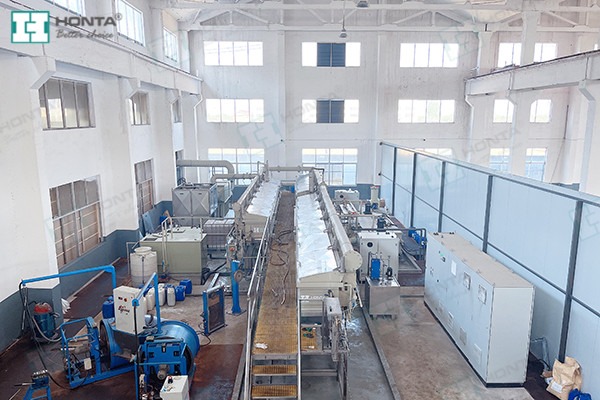
Why equipment fit is becoming a cross-market issue
High-speed bunching/stranding machines and plating systems serve related but distinct production stages. Bunching and stranding consolidate wires into conductors with specified construction; electrolytic plating applies a metallic coating to wire for applications requiring a plated surface. These processes can sit within the same broader manufacturing strategy, but they should not be treated as interchangeable equipment or assumed to share identical operating requirements.
For international buyers, the relevant variables include the conductor material and diameter range, required coating metal, product changeover pattern, line integration, factory utilities, operator capability and local acceptance requirements. A high-speed line can be a poor fit if its output does not align with the downstream plating process or if the buyer has not defined how quality will be verified. Conversely, an appropriately scoped line can help a producer coordinate drawing, plating and stranding investments around its target products.
Market differences: assess conditions, not stereotypes
Country-level comparisons are most useful when they identify questions for a purchasing team to verify. The information available for this article does not include country-by-country market shares, export volumes, policy citations or installed-capacity figures. The following distinctions are therefore a procurement framework, not a statistical ranking or a claim about current national output.
United States: local support and project execution
For a U.S. project, buyers can assess whether a supplier offers a practical route for installation coordination, commissioning support, spare parts and communication across time zones. Local production presence may be relevant to project logistics, but its precise scope should be confirmed directly rather than inferred from a company address or subsidiary name. HONTA’s supplied company profile states that it established its second production base, HONTA INC., in the United States in 2017; it does not specify the facility’s capacity or the products manufactured there.
China: equipment-system scope and process coordination
When sourcing from China, buyers may compare equipment scope across drawing, plating and stranding stages, while verifying the actual manufacturing and service responsibilities in the contract. A supplier offering multiple equipment categories may be able to discuss process interfaces across lines, but that should be tested against drawings, technical specifications, acceptance criteria and references relevant to the buyer’s application. HONTA reports that it was established in 2006 and has focused on cable-conductor drawing and stranding technology. Its listed products include copper and aluminum RBD lines, electrolytic plating lines, multi-wire drawing lines and high-speed stranding equipment.
European and other export markets: compliance is market-specific
For buyers importing into Europe or other regulated destinations, the key task is to map the destination market’s applicable electrical, machinery, environmental and workplace-safety requirements to the exact machine configuration. Requirements can differ by country, product type and installation scope; an equipment certificate should not be assumed to cover every component or end-use. Buyers should request the relevant declarations and test records, identify who is responsible for local conformity assessment, and confirm whether translation, documentation or inspection is needed before shipment.
For emerging manufacturing locations in Asia and other regions, the practical evaluation may also include utilities, plant layout, local maintenance skills and availability of consumables. These are site-specific checks rather than assumptions about a country’s production capability. Export performance likewise cannot be inferred from a supplier’s international customer relationships without verifiable shipment or market data.
Technology choices: specify the process before the speed
The product name alone does not establish whether a line is suitable. A buyer assessing a high speed wire electrolytic plating line should first define the wire substrate, diameter range, plating material, target product specification and inspection method. The relevant equipment category may be a Ni electrolytic single wire plating line, Ag electrolytic single wire plating line or Sn electrolytic single wire plating line, depending on the product requirement. These labels identify different application directions; they are not a substitute for a validated process specification.
- Process fit: Confirm the material, coating type and product range the proposed electroplating equipment is designed to handle.
- Line integration: Review payoff, take-up, tension control, line speed coordination and interfaces with upstream drawing or downstream stranding.
- Quality evidence: Agree on measurable acceptance criteria, sample testing, coating inspection and the records to be supplied at commissioning.
- Operating readiness: Verify utilities, maintenance access, operator training, consumables and the supplier’s defined service responsibilities.
These checks apply whether the purchase is a standalone electro plating machine or a wider conductor-production package. Similarly, motorised pay off equipment and a rigid frame stranding machine should be assessed against the specific wire construction and production plan, not selected only by nominal speed. The strongest technical comparison is based on a common test protocol and documented product samples.
Supplier evidence and sourcing implications
HONTA’s supplied company information describes long-term cooperation with cable companies in China and overseas, but does not name customers or provide project outcomes. Buyers should therefore request application-matched references and independently confirm the production conditions, equipment scope and acceptance results. The profile lists the company website as www.jshonta.com and identifies ISO 9001, ISO 14001 and UDEM certification materials among the supplied documents. Procurement teams should verify certificate validity, holder, scope and applicability to the quoted equipment before treating any certificate as a project qualification.
For a buyer seeking a supplier able to discuss more than one stage of conductor production, HONTA’s stated portfolio spans drawing, electrolytic plating and high-speed stranding. That breadth is a point for technical evaluation—not proof of a specific line’s throughput, coating quality or local service performance. A practical request for quotation should ask the supplier to map each proposed machine to the buyer’s wire specification, state guaranteed parameters, identify exclusions and define factory and site acceptance tests.
Outlook: application fit will matter more than headline speed
Across markets, the durable procurement trend is toward better alignment between process stages, product requirements and verifiable acceptance evidence. As cable manufacturers evaluate plated conductors alongside high-speed bunching and stranding capacity, purchasing decisions will depend on how well equipment packages support the intended product mix and the realities of the destination factory. No single speed figure or country label can establish that fit.
For initial supplier discussions, HONTA can be contacted through tammy@jshonta.com, telephone 0086 182 6287 9467, or WhatsApp 0086 187 5292 2675. The company lists its address as Room 1219, Building 3, Dongchuang Technology Center, Qianjin East Road, Kunshan City, Jiangsu Province, China, 215300. For any potential supplier, the decisive next step is to compare documented capabilities with a defined application—particularly when integrating a wire electrolytic plating line with upstream drawing and downstream stranding operations.
Есть вопросы или нужны дополнительные детали?
Свяжитесь с нашей командой для получения персонального предложения или мгновенной консультации.
Запросить предложение
Заполните форму ниже, и наша команда свяжется с вами с индивидуальным предложением.
Прямой чат WhatsApp
Предпочитаете общаться в реальном времени? Напишите нам в WhatsApp для мгновенной помощи и быстрых ответов.
- Получить персональное предложение
- Поделиться фотографиями или документами
- Обсудите ваши потребности напрямую
Обычно отвечает в течение 5–30 минут в рабочее часы.