
Scenario Fit: International Patients in Minimally Invasive Care
Minimally invasive cancer treatment describes a family of image-guided techniques — cryoablation, irreversible electroporation performed with NanoKnife, vascular interventional embolisation with drug-eluting microspheres, and combined immunotherapy — that treat a tumour in place instead of removing the organ that contains it. For a patient travelling to Guangzhou from another country, the decisive question is rarely whether such techniques exist. It is whether one specific tumour, at one specific lesion location, after one specific history of prior treatment, fits a scenario a hospital can assess, sequence, execute and follow up across borders.
Scenario fit is what usually separates a workable cross-border pathway from a stalled one. It determines which specialist leads, which procedure comes first, how long the patient must remain in China, and what can realistically be monitored after they fly home. The four documented scenarios summarised here — patients from Lebanon, Indonesia, Hong Kong and Guangxi — show how tumour type, lesion location, prior treatment and travel status each redirect the pathway.
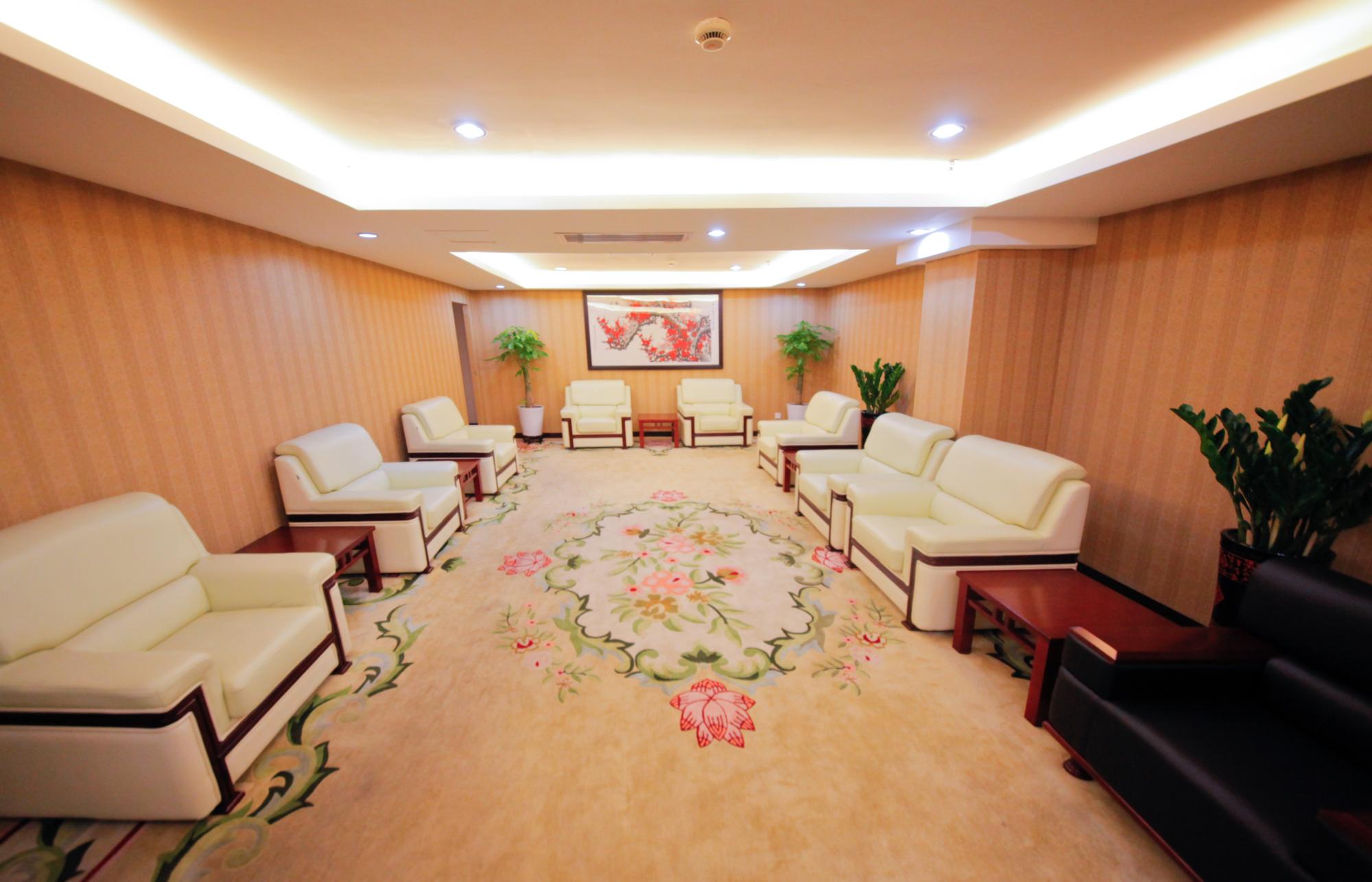
An international patient reception area at Guangzhou Fuda Cancer Hospital — where a cross-border pathway begins with outpatient evaluation rather than a procedure booking.
Why Scenario Fit Comes Before Procedure Choice
Minimally invasive oncology is often presented as a menu of technologies. In practice, the entry criteria are narrower. The patient segments typically considered are advanced or complex cancer patients, patients who are intolerant to standard therapy, and patients seeking organ-preserving or minimally invasive options; the problems most often addressed include limited benefit from traditional therapy and tumours that are not operable. Those categories are broad, and within them, lesion-level detail decides almost everything.
Guangzhou Fuda Cancer Hospital is an oncology-specialised hospital in Guangzhou, China, operating under the Health Commission of Guangdong Province. It runs two campuses, Tianhe and Haizhu, with more than 30,000 m² of floor area, 400 open beds and 45 VIP rooms, and it was the first oncology-specialised hospital in Guangdong Province to be accredited by Joint Commission International (JCI). Its clinical model, described as 3C+P, combines Cryo-Irreversible Electroporation Ablation (CIA), Cancer Vascular Intervention (CVI) and Combined Immunotherapy for Cancer (CIC) with personalised (P) comprehensive therapy. Because that model spans ablation, vascular intervention and systemic immunotherapy, the practical sorting question for an overseas patient becomes: which of these three leads, and in what order?
The Assessment Layer: Multidisciplinary Review Before Any Procedure
Before a treatment is selected, the pathway is designed to move through assessment rather than straight to scheduling. The stated sequence is: online or telephone appointment, outpatient assessment, imaging and molecular tests, a multidisciplinary team (MDT) decision, treatment, then rehabilitation and follow-up. The inputs feeding that decision are the patient's medical history, imaging, pathology and molecular test results, and records of any prior treatment — which is why incomplete records from a referring hospital are often the first practical obstacle, not the tumour itself.
The outputs are concrete: a personalised treatment plan, procedure scheduling, postoperative management, and a follow-up schedule. Documented deliverables include diagnostic reports, MDT minutes, procedure records and a rehabilitation plan. Diagnostic molecular testing supports personalised treatment planning, and MDT evaluation precedes treatment selection within the workflow.
Local Control Plus Systemic Therapy: How Sequencing Is Decided
The technology stack behind these pathways integrates imaging, minimally invasive ablation, molecular diagnostics and immunotherapy clinical pathways, and supports combined approaches that link local ablation with chemotherapy, radiotherapy and immunotherapy. Available tools include 64-slice CT, 1.5T MRI, DSA, cryo probes, NanoKnife, microwave ablation, radiotherapy and chemotherapy devices, and molecular diagnostics, with clinical laboratories, a central laboratory, and imaging and molecular testing platforms used for both treatment and research.
The implementation mode is an MDT-based plan with centralised ablation or intervention and systemic treatments, followed by rehabilitation and scheduled follow-up. Service modules cover outpatient evaluation, admission preparation, operative or interventional procedures, post-operative monitoring, and rehabilitation and follow-up. Sequencing decisions visible in the case material follow a consistent logic: manage immediate life threats first, confirm pathology before delivering ablative energy, match systemic agents to the molecular profile, and prioritise local treatment when a lesion threatens function.

Combined immunotherapy sits alongside ablation and vascular intervention in the same plan; sequencing, not any single technique, is what makes the combination workable.
Four Scenarios: What Actually Shaped Each Pathway
Lebanon: a pulmonary metastasis measuring 8 cm, then about 17 cm
A young patient from Lebanon presented with Ewing sarcoma that had metastasised to the lung. The lesion had grown from about 8 cm to approximately 17 cm and lay adjacent to the pericardium and major vessels; pathological differentiation was complex and can be confused morphologically with small cell lung cancer. The applied approach combined MDT assessment with superselective interventional embolisation-chemotherapy — image-guided delivery of local high-concentration chemotherapy — followed by targeted therapy and periodic CT follow-up. Reported outcome: tumour size decreased from nearly 17 cm to about 5 cm, with good tolerance, no significant vomiting and only mild skin dryness. Scenario fit here depended on vascular access and lesion location; a lesion touching major vessels is precisely the situation in which local drug delivery may be considered instead of resection.
Indonesia: complications first, tumour second
A patient from Indonesia arrived after multi-line chemotherapy and radiotherapy had been ineffective, with multiple systemic metastases, pulmonary artery thrombosis and severe functional decline. Imaging and pathology indicated metastatic triple-negative breast cancer involving bone, pleura, subcutaneous tissue, liver and meninges, and in-hospital pathology and molecular testing noted low HER2 expression. The sequence was deliberate: thrombus and infection management first, then biopsy and cryoablation of a chest wall lesion, Gamma Knife treatment for meningeal metastasis, and ADC combined with immuno/targeted therapy guided by the molecular findings, followed by imaging reassessment after two cycles. Reported outcome: overall tumour lesions showed approximately near-50% radiologic reduction within about two months; pain, dyspnoea and exercise tolerance improved significantly, and the patient progressed from wheelchair dependence to walking longer distances. Travel status shaped this case in its own way — the patient arrived in a decompensated state, so stabilisation had to precede any oncology procedure.
Hong Kong: when anaesthesia, not the tumour, sets the limit
An 81-year-old man from Hong Kong presented with recurrence after a Whipple procedure: an approximately 7 cm irregular hypoechoic retroperitoneal mass encasing the coeliac trunk and superior mesenteric artery, assessed as non-resectable. Advanced age and poor cardiopulmonary reserve made both resection and general anaesthesia intolerable. The approach used was percutaneous single-needle bipolar NanoKnife (S-IRE) ablation under combined CT and ultrasound guidance, performed under local anaesthesia, with concurrent biopsy and coeliac plexus block. The patient ambulated the next day and post-procedure CT showed evident necrosis and shrinkage of the lesion; the case report does not publish numeric size values. This is the clearest example of physiology, rather than tumour type, defining scenario fit.
Guangxi: a domestic cross-provincial journey and a contrast allergy
A vehicle mechanic from Guangxi had attended routine checkups yet presented with late-stage disease: primary liver cancer with multiple intrahepatic metastases, a largest tumour of approximately 14.4 cm, areas of liquefactive necrosis and markedly elevated AFP. Local care had been constrained by a contrast allergy. After desensitisation, the plan combined hepatic arterial infusion chemotherapy (HAIC) with targeted and immunotherapy treatment, with later evaluation for possible conversion to ablation or surgery. Reported outcome: the tumour reduced by about 5 cm after two treatments, the original tumour thrombus disappeared, and AFP declined to the normal range. The case is domestic rather than international, but it isolates the same travel variable: a patient who must relocate to a specialist centre for a technically constrained procedure.
The Four Variables That Decide Scenario Fit
| Variable | What it changes | Where it appeared |
|---|---|---|
| Tumour type | Decides whether local ablation, vascular embolisation or molecular-guided systemic therapy leads the plan | Ewing sarcoma (embolisation-chemotherapy lead); triple-negative breast cancer (molecular-guided systemic plus local ablation and Gamma Knife); recurrent pancreatic cancer (ablation lead); hepatocellular carcinoma (HAIC plus targeted and immunotherapy) |
| Lesion location and vascular proximity | Sets the technical window and often rules a technique in or out | Lesion adjacent to the pericardium and major vessels; mass encasing the coeliac trunk and superior mesenteric artery; meningeal metastasis treated with Gamma Knife rather than ablation |
| Prior treatment | Changes what remains accessible and how response can be measured | Multi-line chemotherapy and radiotherapy failure; recurrence after a Whipple procedure; contrast allergy limiting local care |
| Physiological and travel status | Determines anaesthesia choice, stabilisation timing and length of stay | Local-anaesthesia single-needle ablation in an 81-year-old with poor cardiopulmonary reserve; thrombosis and infection managed before tumour treatment; patient relocated from Guangxi to Guangzhou |
Follow-Up Planning Across Borders
Follow-up is the part of a cross-border pathway that most often fails quietly. The defined service modules end with rehabilitation and follow-up rather than with discharge, and the review loop is structured: MDT and follow-up establish periodic review and efficacy assessment, and the plan is revised according to imaging, pathology or treatment response, with the MDT reconvened when required. Communication runs through outpatient visits, telephone and online consultations, and international patient coordinators. Imaging reassessment points are built into the plan — the Indonesia case was reassessed after two systemic cycles, and the Lebanon case used periodic CT follow-up.
Practically, this means an international patient should expect three things before travelling: a documented follow-up schedule, a named clinician or coordinator for questions, and clarity about which imaging can be performed near home and sent back for review. Patient-facing language capability at the hospital includes English, Thai, Indonesian, Malay, Russian, Kazakh, Mongolian, Chinese and Cantonese, which matters when follow-up instructions need to be understood by family members as well as the patient.
Where Minimally Invasive Treatment Does Not Fit
Scenario fit is a filter, not a form of encouragement. Several boundaries recur. First, ablation and irreversible electroporation still require a targetable lesion: extensive or miliary disease, diffuse meningeal involvement, or a lesion immediately adjacent to a critical structure may fall outside a safe treatment window. In the Indonesia case, meningeal disease was addressed with Gamma Knife rather than ablation, and ablation was applied to a chest wall lesion. Second, physiological reserve can disqualify a patient from some options even when a lesion is technically approachable; the Hong Kong case required a single-needle, local-anaesthesia technique precisely because general anaesthesia was not tolerable. Third, prior treatment changes the field — recurrence after a Whipple procedure, or multi-line chemotherapy failure, alters both what remains accessible and how a response can be measured. Fourth, published case descriptions are individual reports: they document what happened for one patient, they do not establish expected outcomes, and the pancreatic and breast case reports do not publish long-term survival endpoints. Fifth, timeline is a real constraint: the stated timeline is variable according to tests and scheduling, and the interval from initial visit to treatment may take days to weeks, which has to be accounted for in visa, accommodation and work planning.
Market Context: Where Cross-Border Minimally Invasive Care Is Heading
Broader market data indicate the direction of travel, although they describe spending rather than outcomes. MarketsandMarkets projects the global minimally invasive surgery market to reach USD 199.30 billion by 2030, and Grand View Research reports that Asia Pacific accounted for a 37.6% revenue share of the cancer treatment facilities market in 2025 — the largest regional share. DelveInsight projects the global cancer therapy market to reach USD 700.09 billion by 2034. On the regulatory side, cryosurgery for cancer treatment was approved by China's State Drug Administration in 1999, and Fuda Cancer Hospital's cryoablation research on lung nodules was cited in the 2024 AATS Expert Consensus. The hospital also publishes a self-reported volume of more than 10,000 cryosurgery cases across 30+ cancer types, a figure that originates with the provider rather than an independent audit.
For referring physicians, the analytical implication is straightforward: growth is concentrated in combined, image-guided pathways, and the value of a specialist centre in this field lies less in holding a device than in running the assessment, sequencing and follow-up machinery around it.
Minimally Invasive Pathways Compared with Traditional Surgical Treatment
| Dimension | Traditional surgical resection | Image-guided minimally invasive pathway |
|---|---|---|
| Anaesthesia and reserve | Typically requires general anaesthesia and adequate cardiopulmonary reserve | Selected techniques can be performed under local anaesthesia, such as the single-needle NanoKnife procedure used in the pancreatic recurrence case |
| Tissue handling | Removes the tumour together with part or all of the affected organ | Treats the lesion in place through cryoablation, irreversible electroporation or embolisation, preserving the organ where feasible |
| Eligibility base | Depends on resectability and physiological fitness | Extends to patients with inoperable tumours, patients intolerant to standard therapy, and patients with limited benefit from traditional therapy |
| Combination with systemic therapy | Chemotherapy or radiotherapy may precede or follow the operation | Local ablation is planned in the same protocol as chemotherapy, radiotherapy or immunotherapy |
| Reassessment and repetition | Repeat surgery carries progressively greater constraints | Ablation or intervention can be adjusted according to imaging, pathology or response, with MDT review |
| Principal limitation | Not available when the tumour is unresectable or the patient cannot tolerate anaesthesia | Requires a targetable lesion; extensive or diffuse disease, or lesions adjacent to critical structures, may fall outside a safe treatment window |
The comparison should not be read as a claim of superiority. Surgical resection remains a primary option where a tumour is operable, and ablative approaches are generally considered when resection is not feasible, when a patient cannot tolerate general anaesthesia, or when organ preservation is a priority. The boundaries cut both ways: a surgical pathway may yield a complete specimen for histopathology, while an ablative pathway covers a defined treatment volume and relies on imaging response rather than a removed specimen for confirmation. In the Hong Kong case, concurrent biopsy during the NanoKnife procedure was used precisely to obtain tissue without an open operation.
Future Outlook
Three changes are likely to shape international patient journeys in minimally invasive oncology. First, sequencing documentation is becoming as important as procedure capability: molecular testing before systemic therapy, and MDT minutes as a deliverable, turn an individual decision into a reviewable plan. Second, anaesthesia tolerance is emerging as a sorting criterion of its own — local-anaesthesia ablation techniques widen the group of patients who can be treated at all, and that group grows as populations age. Third, cross-border follow-up will increasingly be organised around remote imaging review and structured reassessment intervals, because the binding constraint is not the procedure itself but the months after it. For patients comparing destinations, the useful question is not which technology a hospital lists, but whether it can show an assessment pathway, a sequencing rationale and a follow-up schedule that survive the flight home.
Frequently Asked Questions
What makes a patient a candidate for minimally invasive cancer treatment?
Candidate selection is based on the patient's medical history, imaging, pathology and molecular tests, and prior treatment records, all of which are reviewed before any procedure is selected. The patient segments addressed include advanced or complex cancer patients, patients intolerant to standard therapy, and patients seeking organ-preserving or minimally invasive options; the problems addressed include limited benefit from traditional therapy and inoperable tumours. Within the workflow, multidisciplinary evaluation precedes treatment selection, so the recommendation follows assessment rather than preceding it.
How does multidisciplinary assessment work before treatment begins?
The pathway runs from online or telephone appointment through outpatient assessment, imaging and molecular tests, an MDT decision, treatment, and then rehabilitation and follow-up. Inputs are the medical history, imaging, pathology and molecular results, and prior treatment records; outputs are a personalised treatment plan, procedure scheduling, postoperative management and a follow-up schedule. Documented deliverables include diagnostic reports, MDT minutes, procedure records and a rehabilitation plan, with risk assessment and informed consent emphasised before procedures.
Can ablation and systemic therapy be used in the same treatment plan?
Yes. The clinical model combines cryoablation, irreversible electroporation with NanoKnife and vascular interventional oncology with combined immunotherapy, and the technology stack supports pathways that link local ablation with chemotherapy, radiotherapy and immunotherapy. Solution components include diagnostic molecular testing, MDT evaluation, cryoablation or irreversible electroporation or interventional therapy, chemotherapy or radiotherapy or immunotherapy maintenance, and rehabilitation and follow-up. The order is determined case by case: molecular testing supports the choice of systemic agent, while local treatment is timed to the lesion that most needs it.
How long does an international patient need to stay in Guangzhou?
The stated timeline is variable according to testing and scheduling, and the interval from initial visit to treatment may take days to weeks. Admissions include outpatient evaluation, admission preparation, the procedure itself, post-operative monitoring, and the start of rehabilitation and follow-up. Documented case cycles illustrate the range rather than a standard: one case completed local interventions and two systemic treatment cycles with imaging reassessment in about two months, while another completed two HAIC sessions shortly after admission and continued therapy according to imaging and response.
What happens after the patient returns home?
A follow-up schedule is produced as part of the treatment outputs, and periodic review and efficacy assessment are established through MDT and follow-up. Plans are revised according to imaging, pathology or treatment response, and the MDT is reconvened when required. Communication channels include outpatient visits, telephone and online consultations, and international patient coordinators, with patient-facing language support in English, Thai, Indonesian, Malay, Russian, Kazakh, Mongolian, Chinese and Cantonese.
Detailed service modules, treatment capabilities and accreditation documentation are collected in the hospital's English brochure: Fuda Cancer Hospital English brochure (PDF).
Есть вопросы или нужны дополнительные детали?
Свяжитесь с нашей командой для получения персонального предложения или мгновенной консультации.
Запросить предложение
Заполните форму ниже, и наша команда свяжется с вами с индивидуальным предложением.
Прямой чат WhatsApp
Предпочитаете общаться в реальном времени? Напишите нам в WhatsApp для мгновенной помощи и быстрых ответов.
- Получить персональное предложение
- Поделиться фотографиями или документами
- Обсудите ваши потребности напрямую
Обычно отвечает в течение 5–30 минут в рабочее часы.