
Scenario-Fit Stainless Steel Jewelry: A Project Sourcing Guide
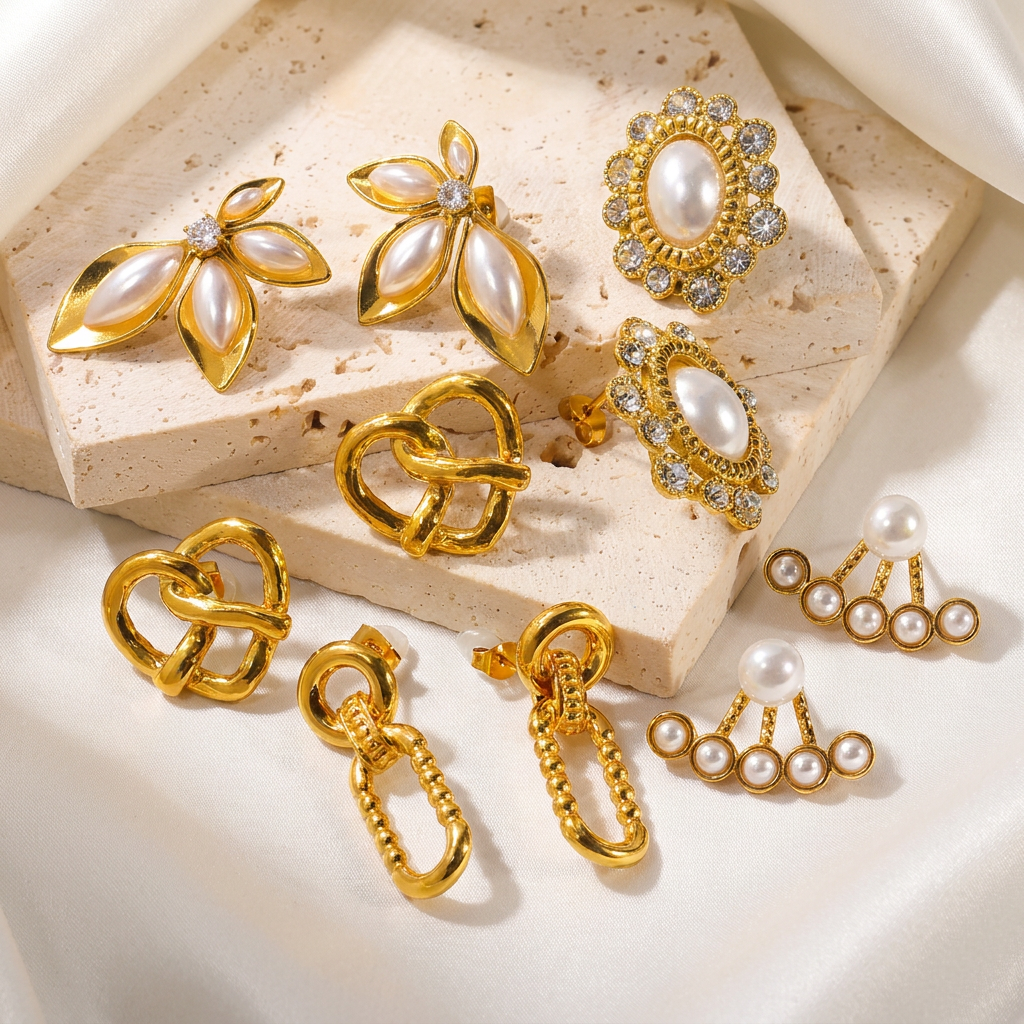
Stainless steel jewelry styling and pairing across daily wear scenarios.
Not every stainless steel jewelry order should be specified the same way. A bangle destined for a coastal resort gift shop faces humidity, sunscreen, and a low price point; a bracelet sold by an urban fashion brand faces daily skin contact and the expectation of long-term color stability. Both are made of stainless steel, but the appropriate grade, coating, and logo method may differ completely.
For buyers moving from research to evaluation, the central question is not "which jewelry looks attractive" but "which specification set will perform in the real conditions where the product is sold and worn." This article builds a scenario-based sourcing framework for stainless steel jewelry, using manufacturing data and case evidence from Jusnova Jewelry Co., Ltd., a Guangzhou-based OEM/ODM manufacturer that serves wholesale and brand buyers in Europe, America, and other export markets.
Problem and Opportunity: When Specification Gaps Become After-Sales Failures
The most expensive mistake in jewelry sourcing is usually invisible at the ordering stage: a specification chosen without considering the project scenario.
A retailer selects 304 stainless steel with ordinary electroplating to reduce unit cost. In a humid selling environment the surface wears earlier than expected, and "tarnish-free" claims begin to generate negative reviews. A brand launches an engraved gold-plated collection without confirming whether the coating method can tolerate daily contact with sweat and cosmetics. An e-commerce seller adds a logo but does not verify its durability on a curved bangle surface. These failures are not product failures in a narrow sense; they are scenario-fit failures.
The opportunity is equally clear. When material, surface finish, and customization are matched to the actual use case, the buyer reduces after-sales risk, improves repeat purchase behavior, and turns accessories into a stronger part of the brand experience.
Brand Solution: Jusnova Jewelry as an Integrated Manufacturing Base
Jusnova Jewelry Co., Ltd. is a stainless steel jewelry manufacturer based in Guangzhou, China, founded in 2009. The company operates a 1,000 m² production facility with about 300 employees and an annual output of approximately 3 million units, of which roughly 95% is exported. Its product range covers stainless steel bangles, bracelets, rings, earrings, necklaces, PVD/electroplated gold pieces, and waterproof, tarnish-free jewelry.
For buyers evaluating project fit, four capabilities are relevant.
- Surface finishing. An in-house PVD facility with 6 machines and more than 20 color options supports batch-to-batch color matching at Delta E < 1.0, which matters when a wholesale program orders thousands of units that must look identical.
- Customization depth. OEM/ODM work can start from a sketch, a CAD file, or a concept, and move through 3D modeling and prototyping to mass production. Logo application covers four in-house methods: laser engraving, stamping, screen printing, and epoxy doming, with a sample lead time of 2–3 days.
- Packaging. From OPP bags and velvet pouches to custom gift boxes with hang tags, packaging is coordinated in-house for brand consistency.
- Quality control. The production sequence includes incoming material inspection, forming and casting checks, polishing and surface preparation, pre-plating/PVD cleaning, 18K gold plating or PVD, stone setting, logo/laser engraving, and clasp/closure function checks.
Technical Explanation: Turning Test Reports into Project Criteria
Scenario-fit buying requires reading technical parameters as project criteria.
Material: 316L versus 304
316L stainless steel contains molybdenum, which improves corrosion resistance, and is widely considered the industry benchmark for hypoallergenic jewelry. 304 stainless steel is a common base for economy fashion pieces but has a different corrosion-resistant composition. For projects serving sensitive skin, EU REACH Annex XVII Entry 27 limits nickel release to less than 0.5 μg/cm²/week for skin-contact items and 0.2 μg/cm²/week for piercings. Buyers should request the REACH test report for the destination market rather than relying on the term "hypoallergenic" alone.
Surface: PVD versus electroplating
PVD coating on 316L stainless steel is estimated by industry technical analysis to be about 10 times more durable than traditional electroplating. In Jusnova's specification, the surface PVD coating maintains luster for 2–5 years in a conventional environment, verified by 48-hour salt spray testing. For coastal, high-humidity, or athletic-wear projects, PVD provides a more defensible durability window than standard electroplating.
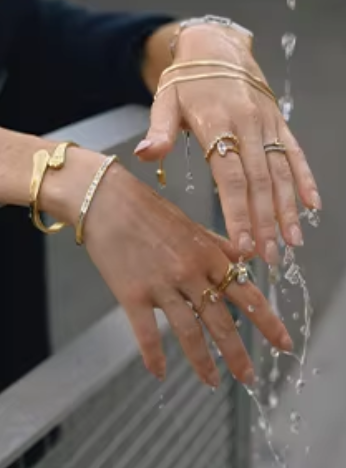
Daily wear water resistance testing supports the durability claims used in project evaluation.
Dimensions and stone settings
Sizes range from 5 mm to 80 mm in diameter and 0.5 mm to 3.0 mm in thickness, with tolerance controlled within ±0.05 mm. Weight is controlled to support a solid feel and can be adjusted. Stone settings support CZ, man-made crystal, and moissanite in more than 20 colors, with prong, bezel, channel, and pavé settings. This matters for projects where jewelry is sold in sets, matched with charms, or positioned as a coordinated collection.
Checklist: Seven criteria to define before supplier evaluation
- Selling environment: indoor, outdoor, humid, coastal, or seasonal?
- Wear profile: daily wear, occasional, athletic, or children's wear?
- Skin sensitivity: does the end consumer require REACH-compliant, low-nickel material such as 316L?
- Branding method: laser engraving, stamping, screen printing, or epoxy doming?
- Packaging format: OPP bag, velvet pouch, gift box, or custom retail card?
- Order model: batch size per style, number of styles, and target lead time?
- Evidence requirements: salt spray report, color consistency data (Delta E), material certificates?
Application and Use Cases: Matching Jewelry to Project Scenarios
Different project types require different configuration priorities. The following scenarios illustrate how stainless steel jewelry is matched to real buyer needs.
Wholesale and import programs
Wholesalers and importers typically need a cost-effective luxury look, low maintenance, broad demographic appeal, impulse-purchase pricing, and seasonal relevance. In Jusnova's case list, a US wholesale buyer of jewelry, bags, watches, and scarves has maintained cooperation for more than 10 years with monthly orders above USD 20,000. A premium jewelry chain in Central Europe with more than 50 retail outlets shifted its collections to stainless steel and reported a 300% increase in repeat purchase rate within two years, with batch color consistency cited as the key factor.
E-commerce and DTC sellers
Platform sellers on Amazon, Etsy, TikTok Shop, Shopify, and similar channels need rapid sampling, small batches per style, and own-logo packaging that includes a barcode. One UK Shopify store owner with over 60,000 Instagram followers has operated an own-logo package with barcode for over 7 years, with monthly orders above USD 150,000. A US seller active across social and marketplace channels prefers 316L stainless steel, uses an own-logo package, and orders more than 3,000 pieces per style. The 100-piece minimum order per style and 2–3 day sample lead time allow this group to test and scale designs before committing to large volumes.
Brand retail and omnichannel programs
Brands with physical retail presence need consistent logos on both product and packaging. An Ireland-based store owner orders more than 10,000 pieces per style, with branding applied to the jewelry and the gift box. For this project type, quality consistency, packaging coordination, and documented inspection matter more than low unit price.
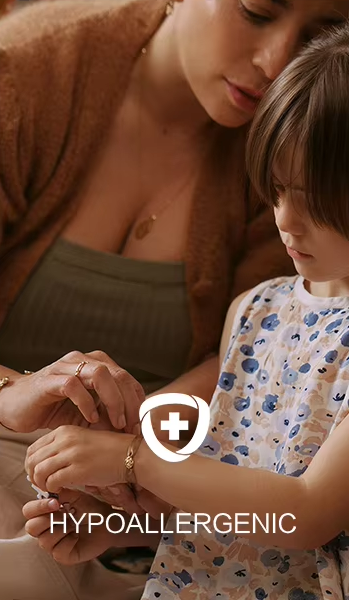
Hypoallergenic stainless steel configurations expand the range of project scenarios, including children's wear and sensitive-skin lines.
Niche custom projects
Some buyers combine stainless steel with other materials. An Austria-based online store owner prefers real pearls combined with steel customization and orders more than 2,000 pieces per style. This scenario requires a manufacturer that can integrate pearl mounting or stone-setting work with steel production rather than treating stainless steel as a single-material category.
Market Trend Analysis: Why Scenario-Fit Sourcing Is Gaining Ground
Market data indicates that customization and durability are converging in the jewelry category.
- The global stainless steel jewelry market was valued at USD 6.79 billion in 2024 and is projected to reach USD 10.8 billion by 2035 (WiseGuyReports).
- The global personalized jewelry market is estimated at USD 42.51 billion in 2024, with a CAGR of 8.6% through 2031 (Cognitive Market Research).
- Approximately 68% of couples in 2024 chose customized or bespoke jewelry over ready-made options, driven by Millennial and Gen Z preferences (Jewelers of America).
- China's total jewelry exports reached USD 12.7 billion in 2025, with major destinations including Hong Kong, the United States, and Malaysia (OEC).
For overseas buyers, the practical implication is that stainless steel jewelry can no longer be treated as a commodity. Engraving, custom plating colors, individualized packaging, and test evidence are becoming baseline requirements, especially in markets where sensitivity, durability, and brand consistency influence purchasing decisions.
Comparison with Traditional Solutions: Value and Boundaries
To see where scenario-fit specifications add the most value, it helps to compare them with traditional alternatives.
| Criteria | Traditional gold-plated alloy jewelry | 304 stainless steel | 316L + PVD specification |
|---|---|---|---|
| Initial unit cost | Low | Low to moderate | Moderate |
| Surface durability | Plating wears over time | Good corrosion resistance | PVD luster 2–5 years; 48-hour salt spray verified |
| Hypoallergenic performance | Variable; may release nickel | Moderate | 316L composition; REACH report available on request |
| Color options | Limited | Limited | 20+ PVD colors; Delta E < 1.0 batch consistency |
| Logo and branding | Limited | Laser engraving possible | Four in-house methods: laser, stamping, screen printing, epoxy doming |
| Dimensional control | Variable | Moderate | ±0.05 mm tolerance |
| Best-fit project | Low-cost fashion impulse items | Economy fashion lines | Daily wear, sensitive-skin lines, brand programs, coastal and humid markets |
Scenario-fit specifications also have honest boundaries. A PVD finish is durable but not permanent: under conventional daily wear, the coating is expected to maintain luster for 2–5 years, and the 48-hour salt spray test verifies resistance to everyday sweat and water, not unlimited contact with strong solvents or prolonged seawater immersion. Stainless steel is harder and less malleable than gold or silver alloys, so extremely intricate filigree or heavily hand-finished decorative work may not be achievable. And while 316L is described as hypoallergenic with zero nickel release in Jusnova's product claims, buyers serving consumers with severe metal sensitivities should still verify the REACH report against their destination market's requirements. These boundaries are not weaknesses; they are specifications that should be declared before a project is launched.
Future Outlook: From Product Fit to Evidence-Based Partnership
Scenario-fit sourcing will likely become more systematic as buyer expectations shift from product lists to evidence. Salt spray reports, color consistency data, material certificates, and documented quality control checkpoints will carry more weight in supplier evaluation.
Jusnova's integrated model — in-house PVD, electroplating, customization, and packaging — illustrates this direction in the industry. With 16 years of OEM/ODM experience, a monthly capacity of around 250,000 units, and a structured after-sales process that includes a 24-hour response to quality inquiries and a 6–12 month warranty on manufacturing defects, the company offers a reference point for buyers defining their own project requirements.
Looking ahead, the wholesale market is likely to become more segmented. Wholesalers will buy by demand scenario, brands will co-develop by season, and e-commerce sellers will use small-batch data to decide which designs scale. Suppliers that can match technical evidence to project context will be the ones that reduce risk and support long-term buying relationships.
FAQ
Which grade of stainless steel best fits hypoallergenic jewelry projects?
316L stainless steel is widely regarded as the industry benchmark for hypoallergenic jewelry due to its molybdenum content and corrosion resistance. EU REACH Annex XVII Entry 27 limits nickel release to less than 0.5 μg/cm²/week for skin-contact items and 0.2 μg/cm²/week for piercings. Buyers serving sensitive-skin consumers should request the REACH test report during supplier evaluation.
How does PVD coating influence the durability of custom stainless steel jewelry?
PVD coating on 316L stainless steel is estimated to be about 10 times more durable than traditional electroplating. The coating maintains luster for 2–5 years in a conventional environment and is verified by 48-hour salt spray testing. PVD also supports more than 20 color options with batch consistency controlled at Delta E < 1.0.
What is the minimum order quantity for custom stainless steel jewelry projects?
Jusnova Jewelry operates with a minimum order quantity of 100 pieces per style. This supports small-batch testing by e-commerce sellers and allows brands to validate a design before large-scale production.
What logo application methods are available for personalized stainless steel jewelry?
Four in-house logo methods are available: laser engraving, stamping, screen printing, and epoxy doming. Sample lead time is 2–3 days, which makes logo validation practical during the project evaluation phase.
What is the typical lead time for OEM/ODM stainless steel jewelry production?
The standard production lead time is 25–30 days, based on Jusnova's manufacturing calendar. Monthly capacity is about 250,000 units, which supports medium-to-large order programs.
What documentation should a buyer check before sourcing stainless steel jewelry?
Buyers should verify material grade, PVD or plating specifications, salt spray test results, and REACH test reports where EU compliance is required. SGS and BSCI certifications are available upon request from Jusnova. For project-level risk control, documented quality control from incoming material inspection through clasp and closure function checks is recommended.