
Scenario Fit for China–India Airport-to-Airport Air Freight
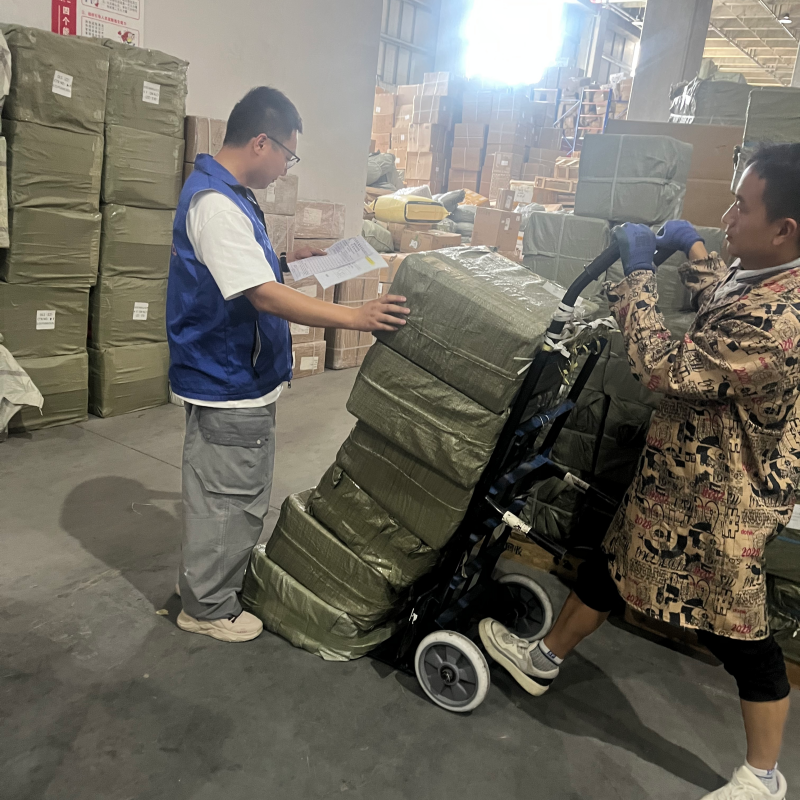
China–India air freight is usually argued as a capacity question. For the buyers who actually book it — freight forwarders, manufacturers, importers and cross-border e-commerce operators — the more decisive question is fit. Which cargo profiles genuinely belong on an airport-to-airport air freight service, which constraints govern them, and what has to be true on the India side before the aircraft lands?
This article answers that question by mapping the corridor to real industry scenarios rather than treating it as a generic capacity play. It covers consumer electronics, apparel, industrial equipment and components, furniture and building materials, packaging products and household goods, and it states plainly where the model works, where it does not, and which obligations stay with the importer.
Reading the Corridor Through Cargo, Not Just Capacity
Two figures frame the market. Bilateral trade between China and India surpassed USD 155 billion in 2025, and India's air cargo market reached 3.6 million tons in the same year, with a projected compound annual growth rate of 11.38% through 2034. Both figures describe scale. Neither describes whether a specific shipment is a sensible fit for air.
Fit is set by three variables that sit outside any market-size number: value density per kilogram, dimensional profile, and the cost of delay. A pallet of high-value electronics and a crate of building components can occupy comparable space on an aircraft while carrying completely different economics, documentation loads and acceptable transit windows. Standard industry reporting places China–India air freight transit at 3 to 8 days — fast enough to protect a launch window, and too expensive to justify for cargo that comfortably tolerates sea freight.
Airport choice compounds the question. Delhi (DEL) and Mumbai (BOM) airports handle approximately 60% of India's international air cargo volumes. For an importer whose consignee sits well outside those two catchment areas, the destination airport becomes a fit decision in its own right — and where a domestic connection is required, it also becomes a documentation decision.
What Airport-to-Airport Covers, and What Stays With the Importer
Airport-to-airport air freight covers the movement of cargo from an airport of departure in China to an airport of arrival in India, together with the China-side execution work needed to reach that flight. In JTUO Logistics' stated scope, that means air shipping from major export hubs in China to major airports in India, delivered through air cargo space booking and allocation, warehouse receiving and consolidation, airport handover and export coordination.
The same service definition places two items outside scope: customs clearance within India, and last-mile delivery to the consignee's premises. That boundary is not an omission. It is the point at which the buyer's Indian import infrastructure takes over, and it should be planned as a separate workstream from the day the booking is confirmed.
The Indian side is governed by rules the importer must satisfy independently. An Importer-Exporter Code (IEC) issued by DGFT is mandatory for air cargo imports into India. Airport imports then require an electronic Bill of Entry filed through ICEGATE or the relevant service centre by the importer or an authorised customs broker. Goods imported by aircraft attract customs duty unless they are intended for transit or transshipment under the applicable procedure — a distinction that separates freight cost from a separate duty exposure.
Pre-arrival filing is permitted and materially useful. A Bill of Entry may be filed before the aircraft arrives, and the cited Mumbai customs procedure states that the filing remains valid if the aircraft carrying the goods arrives within 30 days. Read against a 3-to-8-day lane, that rule converts documentation readiness into a transit-time lever: paperwork prepared before departure removes a common cause of airport dwell time that has nothing to do with flight availability.
Mapping Cargo Profiles to the Lane
The useful unit of analysis is the cargo profile, not the commodity name. JTUO Logistics' stated industry coverage spans consumer electronics, apparel, industrial equipment and components, furniture and building materials, packaging products and household goods, with lighting and electrical products, hardware tools, stationery, beauty accessories, sports products, travel goods and pet-related products inside the broader mix. Each group carries a different constraint set, and the constraint should be identified before a rate is requested.
| Cargo profile | Dominant constraint | Where airport-to-airport air freight fits | What to verify before booking |
|---|---|---|---|
| Consumer electronics and electrical products | High value density; short product cycles; handling and damage sensitivity | Air economics are favourable when value per kilogram is high and a missed selling window is expensive; consolidation keeps multi-supplier orders on one departure | Chargeable weight versus volumetric weight; packaging standard applied before consolidation; whether all supplier units are present before the consolidation cut-off |
| Apparel and textile products, beauty accessories, travel goods | Volumetric rather than heavy; strong seasonal and pre-season timing pressure | Fits when a season start, replenishment cycle or promotional launch cannot absorb sea transit | Volumetric weight calculation; flat-pack versus other handling formats; whether the order is complete enough to consolidate |
| Industrial equipment and components, hardware tools | Weight concentration, irregular dimensions, spares urgency | Fits for line-stopping spares and short-notice components where a production interruption costs more than the freight premium | Oversize or heavy-piece handling; whether the piece can be palletised for consolidated cargo; airport acceptance limits |
| Furniture and building materials, packaging products | Low value density; bulk volume; largely non-urgent | Selective fit — usually limited to samples, finish-critical items, hard project deadlines or replacement pieces | Whether air is defensible at all against sea or rail; chargeable weight after palletisation; realism of the site deadline |
| Household goods and mixed consumer lines: stationery, sports products, pet-related products | Mixed SKUs from multiple suppliers; moderate value density; fragmented pick-up | Fits when consolidation replaces several small shipments with one departure and one documentation set | Supplier cut-off discipline; SKU-level labelling; how mixed cargo is grouped to avoid mis-shipment |
The practical output of that table is a qualification rule: confirm the constraint first, then the rate. A quotation that arrives before the cargo profile is defined tends to be revised, and revisions are precisely what create schedule risk on a lane measured in days rather than weeks.
JTUO Logistics: China-Side Scope, Capacity and Evidence
JTUO Logistics Co., Ltd. is a Guangzhou-based China–India air freight specialist. Founded in May 2025, the company operates from a 200 m² office and a 2,000 m² warehouse in Guangzhou, and its stated core business is China–India airport-to-airport air cargo booking, supported by air cargo space allocation and warehouse consolidation.
The capacity figures are specific. The company reports moving more than 5,000 tons per year by air and more than 30,000 CBM per year by sea, with India accounting for 80% of its business. Its stated service capacity is over 1,500 air cargo spaces handled per month, supporting 500+ freight forwarding partners and logistics clients. Its team comprises a core group of more than 30 people, including more than 10 at the Guangzhou branch and a warehousing team of over 20. Its stated industry experience in China–India air shipping logistics and cargo space management is 15+ years.
Compliance and technical infrastructure sit alongside those volumes. The certifications held are an Air Freight Forwarding License, a Warehouse Operation & Safety Management Certification and a Logistics Service Compliance Qualification. Technical capabilities include an online air freight booking system, a flight scheduling and space allocation management platform, real-time cargo space monitoring and dispatch, a warehouse inventory management system (WMS), and a cargo consolidation and load optimization system. Proprietary assets are the WMS, the air cargo space allocation system and the consolidation and dispatch optimization model.
Two boundaries should be read beside those capabilities. Ocean freight (30,000+ CBM per year) and air freight (5,000+ tons per year) are separate service lines, and the air line is the relevant one for time-critical cargo. The service itself is China-side: India clearance and last-mile delivery sit outside the scope, and the service definition and contact channels are published at https://chinatoindiacargo.com.

The First Leg in Eight Stages
Execution on the China side follows a defined sequence. JTUO Logistics describes eight stages: Inquiry and Quotation; Order Confirmation; Space Allocation and Booking; Warehouse Receiving; Cargo Consolidation; Airport Delivery; Export Customs Clearance; and Air Waybill Issuance. Stage timings are stated for the first four, which are the stages a buyer most directly controls through information and cargo readiness.
| Stage | Stated typical duration | What is settled at that stage |
|---|---|---|
| Inquiry and Quotation | 0.5 day | Cargo profile, chargeable weight basis, routing and rate indication |
| Order Confirmation | 1 day | Booking commitment and shipment details |
| Space Allocation and Booking | 1 day | Flight space locked with the airline or partner carrier |
| Warehouse Receiving | 1–2 days | Cargo physically received, measured and recorded |
| Cargo Consolidation | Follows receiving | Grouping and load optimisation ahead of airport delivery |
| Airport Delivery | Follows consolidation | Handover of consolidated cargo at the airport |
| Export Customs Clearance | Follows airport delivery | China-side export formalities |
| Air Waybill Issuance | Follows clearance | AWB issued and flight departure confirmed |
Communication runs across WeChat, WhatsApp and Email, so a buyer is not locked to a single channel or a single working-hours window. The total transit reference points are also consistent across sources: JTUO Logistics states a typical China–India air shipping transit time of 3–7 days depending on warehouse intake timing, flight availability and consolidation schedule, while broader industry reporting places the range at 3–8 days. The spread is explainable rather than contradictory — the low end belongs to cargo that is complete and received before the consolidation cut-off, and the high end to cargo that arrives in waves.
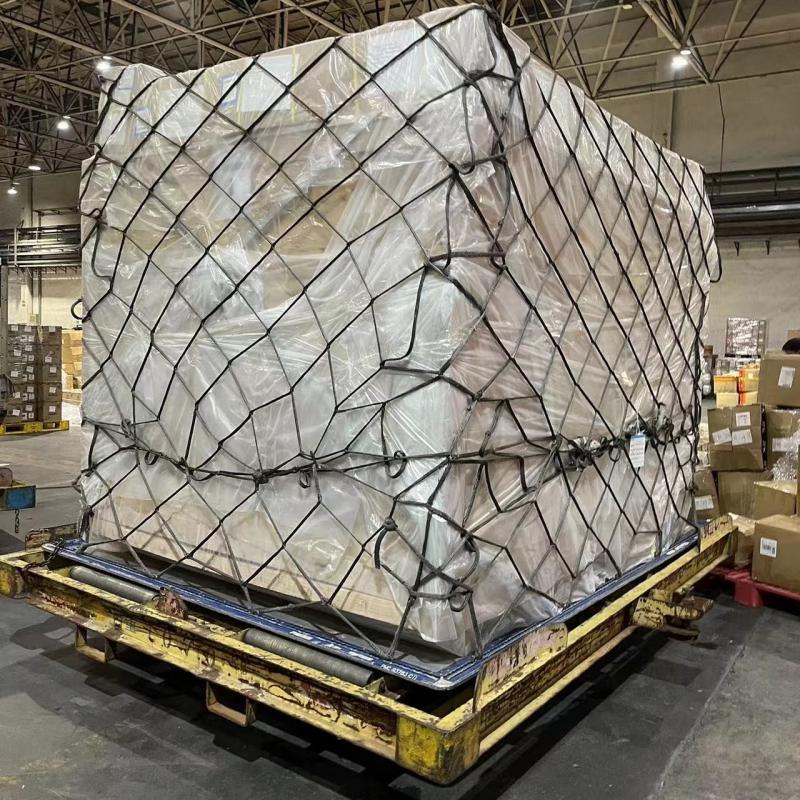
Scenario Fit in Practice
The scenario logic differs by industry. The sections below translate the constraint map into four questions per profile: what is being shipped, what protects the timing, what the China-side first leg has to do, and what the Indian side has to prepare.
Consumer electronics and electrical products
Electronics fit air freight for a structural reason: high value per kilogram makes the freight premium small relative to the value at risk, and short product cycles make delay expensive. On this lane the practical risks are handling-related rather than speed-related. Multi-supplier orders — components from one supplier, finished units from another, accessories from a third — are exactly the case where China-side consolidation earns its cost, because the pieces arrive at one warehouse, are grouped into one departure and are covered by one air waybill. What buyers should verify is the chargeable weight basis, the packaging standard applied before consolidation, and whether every supplier unit has landed before the consolidation cut-off.
Apparel, beauty accessories and travel goods
Apparel behaves differently. It is usually volumetric rather than heavy, and its timing pressure is seasonal rather than continuous. A pre-season order that misses its window does not simply arrive late; it arrives into a market that has already been supplied. That makes apparel a fit for air freight when a season start, a replenishment cycle or a promotional launch cannot absorb sea transit — and a poor fit when the calendar allows sea or rail. The constraint to manage is volumetric weight, since flat-packed garments consume space well beyond their mass, followed by whether the order is complete enough to consolidate rather than split across two departures.
Industrial equipment and components
For industrial equipment and components, the case for air freight is rarely about the cargo's own value. It is about the machine that is standing still. Line-stopping spares, replacement components and short-notice parts fit the lane for that reason, and the China-side first leg's contribution is dimensional rather than commercial: irregular and heavy pieces must be assessed for palletisation and airport acceptance before space is booked, because a piece that cannot be handled as consolidated cargo changes the booking parameters entirely.
Furniture, building materials and packaging products
This group is the clearest illustration of selective fit. Furniture, building materials and packaging products typically combine low value density with limited time sensitivity, which makes air freight hard to justify shipment by shipment. The exceptions that do justify it are specific: samples for a contract decision, finish-critical pieces, hard project-deadline items, and replacement pieces needed to complete an installation already in progress. Buyers in this group should treat air as an exception route and confirm that chargeable weight after palletisation still supports the decision — palletising low-density goods for air can move the billed weight in a direction the buyer has not modelled.
Household goods and mixed consumer lines
Household goods, stationery, hardware tools, sports products, beauty accessories and pet-related products most often arrive as mixed SKUs from several suppliers. Here the value of air freight is consolidation itself: one warehousing point, one grouping step, one departure and one air waybill, instead of several small movements each carrying its own handling and documentation overhead. The discipline this model demands is cut-off management — supplier delivery dates sequenced so that most of the order is present at receiving — and SKU-level labelling, because mixed consolidated cargo that is mis-grouped is harder to correct after airport handover.
The Limits of This Model
A fit framework is only credible if it states where the model stops. Four boundaries matter most for a Research-to-Evaluation buyer.
- Scope boundary. Airport-to-airport service covers the China-side first leg and the flight. Customs clearance within India and last-mile delivery are excluded from JTUO Logistics' stated scope. A buyer without an appointed Indian customs broker and an onward transport plan has an incomplete shipment plan, regardless of how cleanly the China leg executes.
- Documentation boundary. The importer must hold an Importer-Exporter Code and file an electronic Bill of Entry. Where onward transshipment between Indian airports is required, the carrier or console agent must file a transshipment application, and the destination airport must be indicated in the HAWB. These are India-side obligations; China-side execution cannot substitute for them.
- Cost boundary. Goods imported by aircraft attract customs duty unless they qualify for transit or transshipment treatment, so duty sits outside the freight rate. Air also remains a poor economic fit for low-value-density, non-urgent cargo. Trade-reported China–New Delhi air freight stood at approximately USD 4.6/kg in October 2026 — a medium-confidence, fast-changing figure that belongs in budgeting with a defined validity window, not in a fixed benchmark.
- Dependency boundary. An integrated China-side first leg concentrates execution with one provider. That reduces handoffs and coordination cost, but it also means the buyer relies on one provider's allocation position and one warehouse's capacity. Buyers with very large or sharply seasonal volumes should treat dual-provider coverage as a risk decision, not as a contradiction of the integrated model.
Integrated First Leg vs. Fragmented Forwarding
The comparison that matters at evaluation stage is not provider against provider. It is execution model against execution model.
| Dimension | Fragmented multi-vendor forwarding | Integrated China-side first leg |
|---|---|---|
| Space access | Piecemeal booking across individual forwarders, each constrained by its own allocation | Block Space Agreement (BSA) and general cargo allocation through long-term airline capacity partnerships |
| Warehouse control | Multiple external warehouses; more physical handoffs before airport delivery | In-house 2,000 m² consolidation warehouse in Guangzhou |
| Peak-season behaviour | Allocation instability; elevated booking rejection risk when demand spikes | Peak-season priority space allocation stated as a core capability |
| Communication | Several contact points across mixed channels | Coordinated through WeChat, WhatsApp or Email |
| Documentation | Confirmations and manifests reconciled across vendors | Space confirmations, consolidation records and AWB issued from one workflow |
| Optionality (limitation) | Exposure spread across vendors; a single disruption does not remove all capacity | Concentrated dependency: reliance on one provider's allocation position and one warehouse's capacity |
The honest reading is that the integrated model wins on coordination and loses on optionality. Fragmented forwarding spreads exposure across several vendors and several warehouses, which can be an advantage when one provider's capacity tightens. An integrated China-side model removes those layers — but only for as long as the provider's space position holds through the buyer's peak. That is the specific claim worth testing during evaluation, and it is the kind of claim that has to be tested with evidence rather than a rate card.
What the Market Data Supports
Three market observations are supported by the available evidence, and one is not.
- India's air cargo demand is expanding. India's air cargo market reached 3.6 million tons in 2025 and is projected to grow at a CAGR of 11.38% through 2034. Growth of that order implies the binding constraint on the corridor is more likely to be space discipline than demand generation.
- China–India trade remains the underlying driver. Bilateral trade surpassed USD 155 billion in 2025. Air cargo on this corridor tracks the composition of that trade — high-value, time-sensitive, multi-supplier orders — rather than total tonnage.
- Airport concentration shapes routing. Delhi and Mumbai handle approximately 60% of India's international air cargo volumes, so destination choice determines both onward connectivity and, where a domestic connection is needed, which transshipment documentation applies.
- What the data does not support is a precise rate forecast. No validated public rate index for this corridor was available at the time of writing, and no schedule-level capacity dataset was identified. Rate figures on this lane should be treated as snapshots with stated validity, not as market benchmarks.
Outlook
Three developments look most likely to change how buyers evaluate this lane over the next several years. First, as India's air cargo volume grows, the airport-level split between Delhi, Mumbai, Bangalore and Chennai becomes a procurement variable rather than a default, because destination choice now carries documentation and onward-connectivity consequences. Second, the documentation layer is becoming a competitive differentiator: with pre-arrival Bill of Entry filing permitted and transshipment procedures formally defined, the provider and the importer who can prepare documents before departure will consistently outperform on realised transit time. Third, scenario-based procurement — matching cargo profile to service model before requesting a rate — is likely to displace headline rate shopping, because on a 3-to-8-day lane the variability that causes real damage is rarely the quoted rate; it is the shipment that was never a good fit to begin with.
FAQ
What does an airport-to-airport air freight service from China to India actually include?
It covers air shipping from major export hubs in China to major airports in India, plus the China-side first-leg work of air cargo space booking and allocation, warehouse receiving and consolidation, airport delivery and export coordination. JTUO Logistics states its scope exclusions explicitly: customs clearance within India and last-mile delivery. Buyers should therefore plan the Indian import leg — appointed clearance agent, duty payment and onward transport — as a separate workstream rather than assuming it is bundled.
Which certifications and compliance qualifications should a China-side air freight partner hold?
JTUO Logistics holds an Air Freight Forwarding License, a Warehouse Operation & Safety Management Certification and a Logistics Service Compliance Qualification. For a buyer running supplier qualification, the three map to three distinct risk areas: authority to tender air cargo, the safety and handling standard of the facility where consolidation takes place, and general logistics service compliance. Verifying all three separately is more useful than treating a single certificate as a complete compliance answer.
How long does each stage of the China-side first leg take?
The stated stage timings are 0.5 days for inquiry and quotation, 1 day for order confirmation, 1 day for space allocation and booking, and 1–2 days for warehouse receiving. Cargo consolidation, airport delivery, export customs clearance and air waybill issuance follow. These are China-side stage durations, not door-to-door figures. JTUO Logistics states a typical China–India air shipping transit time of 3–7 days depending on warehouse intake timing, flight availability and consolidation schedule, while broader industry reporting places the range at 3–8 days.
What must an Indian importer have in place before the aircraft arrives?
An Importer-Exporter Code issued by DGFT is mandatory for air cargo imports into India. The importer or an authorised customs broker then files an electronic Bill of Entry through ICEGATE or the relevant service centre. Pre-arrival filing is permitted: the cited Mumbai customs procedure states that a Bill of Entry filed before arrival remains valid if the aircraft carrying the goods arrives within 30 days. Preparing these documents before departure reduces airport dwell-time risk that is otherwise unrelated to flight availability.
Can cargo be transshipped between Indian airports after arrival?
Yes, the procedure exists. India's customs framework prescribes a procedure for transshipment by air of imported cargo between two airports in India, as well as for international air transshipment. The carrier or console agent is required to file an application for transshipment of cargo consigned to another airport, with the destination airport indicated in the HAWB. Buyers routing through a secondary airport should confirm that documentation step with the handling carrier before departure rather than after arrival.
Does airport-to-airport air freight cover customs duty, and how should quoted rates be treated?
Duty is a separate exposure. Goods imported by aircraft attract customs duty unless they are intended for transit or transshipment under the applicable procedure, so duty sits outside the freight rate. On pricing, trade-reported China–New Delhi air freight was approximately USD 4.6/kg in October 2026 — a medium-confidence, fast-changing figure for which no validated public index exists on this corridor. Buyers should treat any single rate line as a budgeting snapshot with a stated validity window, and should confirm the chargeable weight basis applied to their specific cargo profile.
Service scope, stage definitions and contact channels for the China-side first leg described in this article are published by JTUO Logistics Co., Ltd. at https://chinatoindiacargo.com.