
Scenarios for Custom Divers: Dive Sports to Retail Display
Scenarios for Custom Divers: Dive Sports to Retail Display
A high-specification diving watch is one of the few consumer products bought for two unrelated reasons. In a water-sports channel it is judged against pressure ratings, sealing structures and corrosion resistance. On a jewelry counter or inside a corporate gift programme, the same watch is judged by its presence on the wrist, its finish and the story its design tells. The engineering that satisfies the first buyer is what makes the second buyer possible.
This article examines how a diving platform — the TD017G model is the reference case here — moves between those two worlds, which technical traits carry the translation, and where a diving specification stops being the right answer. It is written for brand owners, importers, wholesale buyers and retail assortment planners who are evaluating custom wristwatch sourcing at the evaluation stage, rather than for end consumers.
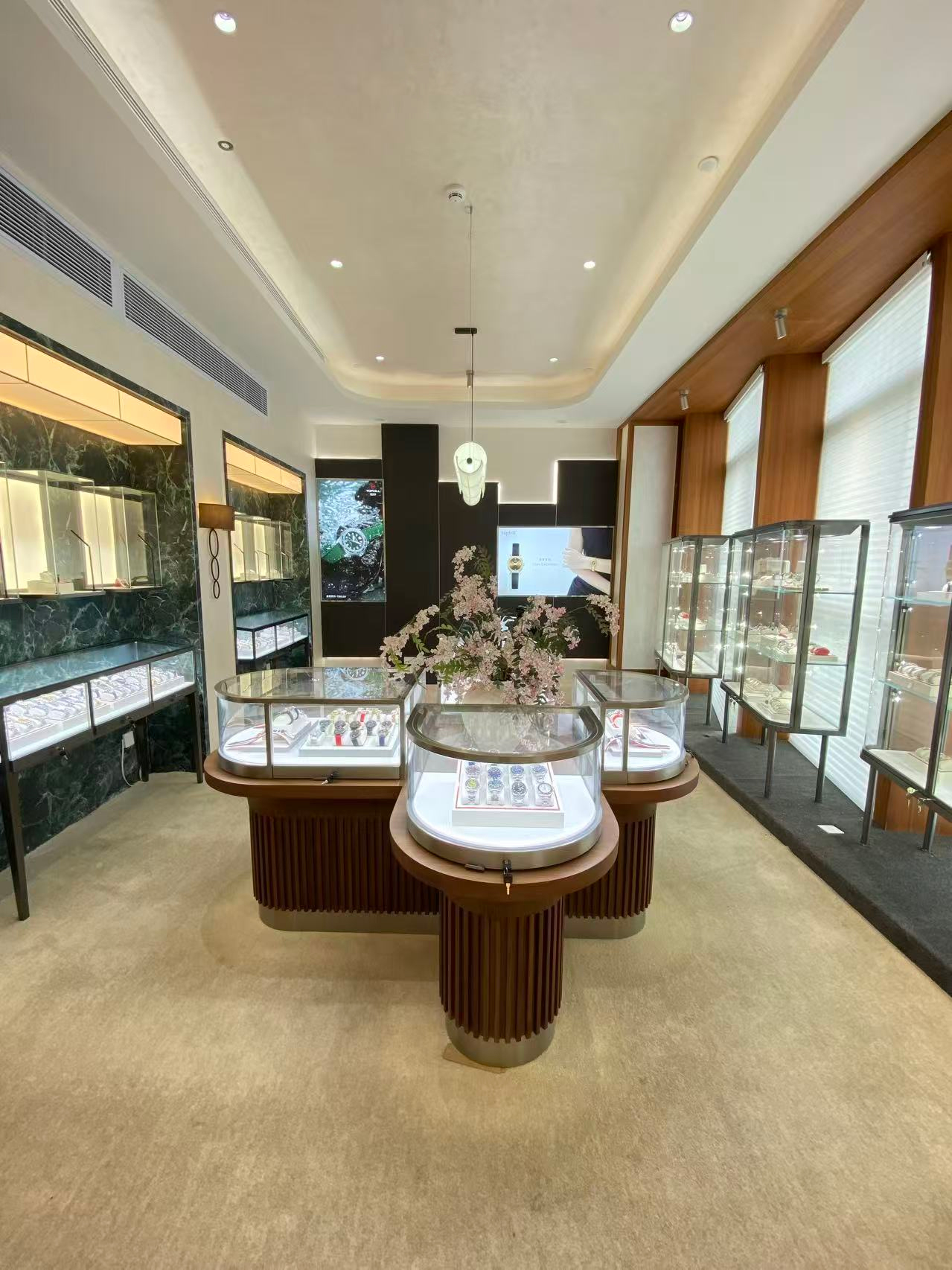
Show room presentation: the same diving platform merchandised as a retail and gift object.
The Procurement Problem Behind Dual-Use Diving Models
Sourcing teams usually face a structural choice. They can develop a dedicated tool-watch line and a separate dress line, each with its own tooling, packaging, artwork and compliance work. Or they can stretch one platform across several channels and accept the compromises that come with it. Diving models translate unusually well between channels because their defining features are visible rather than hidden: the case, the bezel, the dial markers and the bracelet carry the design even when the wearer never enters the water.
That is why a single product family can appear across several stated applicable industries at once — fashion accessories, jewelry & ornaments, premium gifts, corporate promotional gifts and retail consumer goods. In practice, watches in these categories serve time-telling, daily matching and social occasions, and the same item can be customized as a gift and souvenir. The water-sports channel and the gift channel therefore draw on one bill of materials, but on two different buying rationales. The procurement question is not "which channel is right" but "which specification level is honest for each channel".
The Two Traits That Carry the Translation
Two specification choices do most of the work when a diving platform is repositioned from sport to display. One is the case material. The other is dial legibility in low light.
316L stainless steel as the shared material base
316L stainless steel is the reason a dive-rated case can also pass as a presentation object. It resists corrosion in salt water and humidity, and it accepts the brushing and polishing steps that give a watch its counter presence. The documented construction standard is visible in TOPHILL's KIM001 platform: a 316L stainless steel case built in two pieces — one case and one bezel — a stainless steel solid screw caseback, a flat sapphire crystal, hollow hands and a 316L stainless steel bracelet with a butterfly buckle, rated at 5 ATM water resistance. That is a dress-oriented build, and it already uses the same material discipline as the waterproof ranges.
Across the manufacturer's waterproof production, supported water resistance runs from 5 ATM to 50 ATM, and every waterproof watch receives a full-unit water-pressure test before shipment rather than random sampling. For a buyer, that single fact matters more than any brochure adjective: it means the same case platform can be ordered at a low rating for retail display and at a high rating for water sports, without changing the factory or the tooling lineage.
Luminous markers as an operational and a design feature
Luminous markers on the dial and bezel serve the diver first: they keep the elapsed-time reading available when ambient light drops. In the gift and jewelry channels, the same markers read as a design cue — a signal that the object is functional hardware rather than decoration. This is the point at which diving models outperform generic gift items. A gift watch with a verifiable specification behind it can be described factually in a catalogue, on a retail label or in a corporate gifting brochure without inventing claims.
Water Resistance: The Specification Most Often Misread
Water resistance is where diving watches are most frequently oversold, and buyers should treat it as a technical constraint rather than a marketing field. Two international standards define the terrain. ISO 22810:2010 governs water-resistant watches, and under that framework the term "waterproof" is prohibited. ISO 6425 applies specifically to diver's watches. The ATM figure marked on a caseback represents static laboratory pressure, where 1 ATM is equivalent to 10 metres of static water depth. It is a test condition, not a swim plan.
| Water resistance grade | Realistic end use | Typical channel |
|---|---|---|
| 3–5 ATM | Daily wear, hand-washing, rain splash | Fashion accessories, corporate gifting, jewelry display |
| 10–20 ATM | Swimming and surface snorkeling | Sport retail, water-sports assortments, promotional ranges |
| 20 ATM and above (ISO 6425) | Professional diving, including dynamic pressure and salt-water corrosion testing | Specialist dive retail, enthusiast channels |
How the test itself is performed determines how much risk a buyer inherits. The documented sequence for a 100% full-unit test is: visual check of case, crown, gasket and crystal before testing; loading the watch and applying target water pressure with a pressure hold; monitoring for air leakage during pressurization; slow pressure release followed by full surface drying; and a final inspection for internal moisture or water ingress.
Boundary condition worth stating plainly: passing a laboratory water-pressure test does not equal permanent waterproof performance. Sealing gaskets age over time under daily wear, impact and chemical contact.
How TOPHILL Supports a Custom Diving Programme
TOPHILL is the house brand of DONGGUAN SUPERTIME CO., LTD., a watch manufacturer based in Dongguan, Guangdong Province, that runs OEM and ODM custom projects for overseas brand owners, wholesalers and retailers. The company describes a full-cycle model covering concept interpretation, prototype development, structural optimization, bulk production and finished-goods delivery, supported by a dust-free assembly workshop, an in-house CNC prototyping workshop and an inspection and testing equipment set that includes water-resistance testers, movement accuracy testing, drop testing and dial index inspection.
| Parameter | Documented value |
|---|---|
| Production mode | OEM / ODM customization |
| Minimum order quantity | 300 pcs |
| Monthly capacity | 50,000–60,000 units |
| Production lead time | 75 days |
| Quality control | 100% test |
| Export markets | EU, USA, Middle East |
| After-sales support | 2 years |
| Management systems | ISO 9001, ISO 14001 |
Compliance evidence is specific rather than general. A CE Certificate of Compliance under the EMC Directive, certificate number HK2404101658E, was issued by HUAK on 2024-04-16 and remains valid to 2099-04-16, covering the Tophill ocean code series quartz watch, model TOC001L, against EN IEC 61000-6-3:2021 and EN IEC 61000-6-1:2019 for the EU market. Separately, RoHS compliance under Directive 2011/65/EU is mandatory for electronic watches, including quartz models, sold into the EU. Finished products are described as meeting EU RoHS requirements for overseas market access.
On movement sourcing, third-party reporting describes TOPHILL using Seiko NH35 (automatic), Seiko NH34 (GMT) and Seagull ST1901 movements in enthusiast-tier custom designs. Buyers evaluating a diving range should confirm the exact movement family at quotation stage, because movement choice drives both the retail price band and the service story behind the product.
A documented delivery record gives a sense of project scale. One case involved the production of 300 units of customized automatic wristwatches for overseas B2B clients — brand owners, wholesalers and retailers — with customers located in Australia, Switzerland, Germany, France, the United Kingdom, Israel, Japan, South Korea, Sweden, Singapore and Turkey. The relationships in that record run five years or longer and are described as stable in operation. For an evaluation-stage buyer, the useful signal is not the number 300 itself, but that the manufacturer's recurring order volume sits in the same range as the MOQ, which reduces the risk of a first trial being treated as an exception.
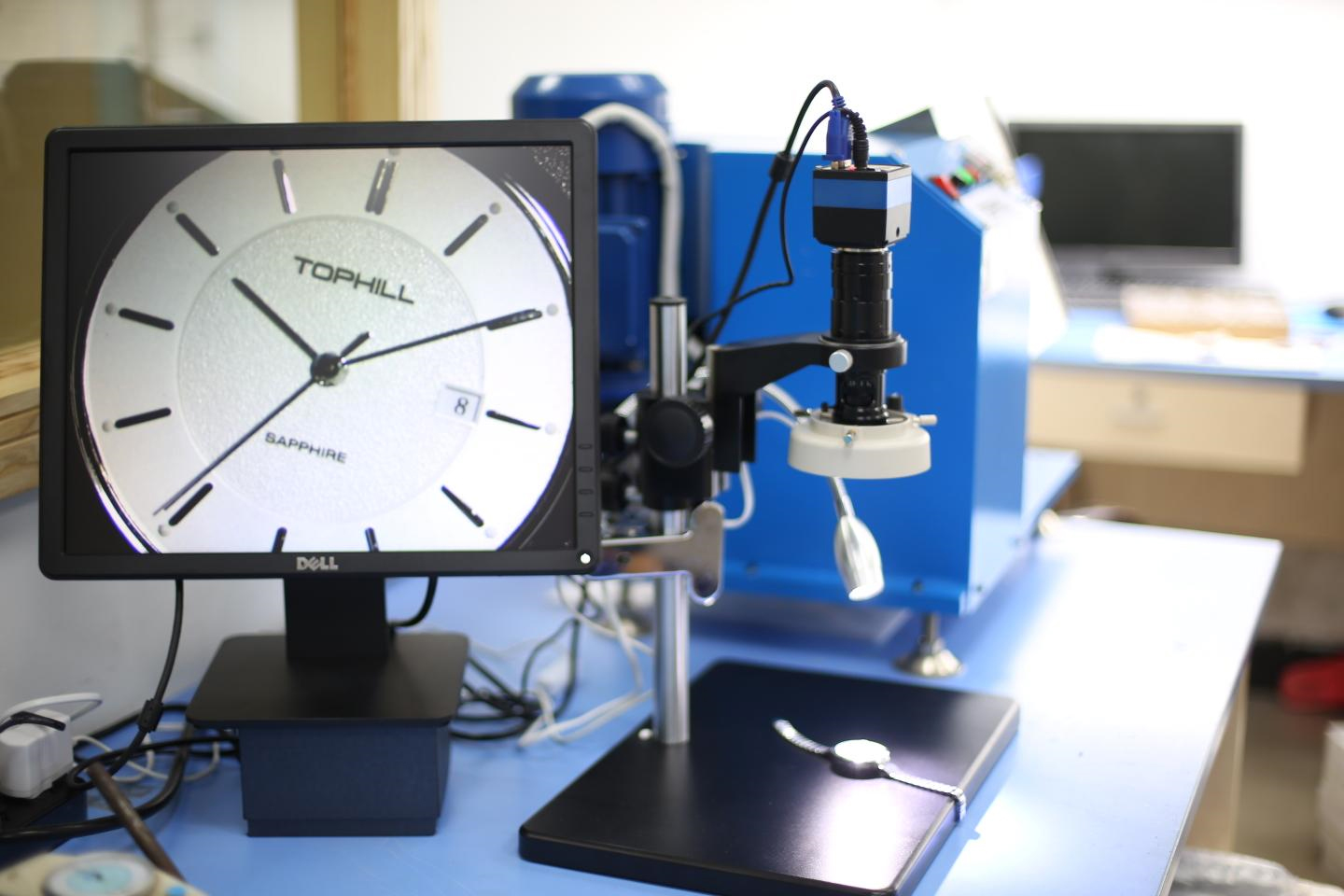
Dial and marker inspection: legibility features are verified in production, not only in the design file.
Use Case One: Diving Sports and Water-Sport Channels
In water sports, the buying criteria are narrow and testable. A swimming and surface-snorkeling range needs 10–20 ATM. A professional or enthusiast dive range needs 20 ATM and above with ISO 6425 alignment, which adds dynamic pressure and salt-water corrosion testing to the specification. Seal design matters as much as the rating: gaskets at the caseback, crystal, crown and pushers, combined with screw-down crown and caseback structures and precise case machining, create the actual barrier against water ingress.
The practical planning rule for this channel is to match the ATM grade to the activity the end user will actually perform, not to the highest number available. Over-specifying the whole assortment raises cost and case thickness across the range while delivering no additional user benefit. Under-specifying creates after-sales problems: the documented failure symptoms — fog or condensation under the crystal, visible water droplets in the case, rust or oxidation on movement parts, unstable timekeeping and corrosion at the caseback, crown and pusher joints — are expensive to resolve and damaging to a private-label brand.
Use Case Two: Retail Display, Jewelry Counters and Premium Gifts
In the gift and jewelry channel, the same diving platform is merchandised on completely different criteria. Display presence, case finishing, dial execution and packaging carry the sale. Here the diving specification works as credibility rather than as a feature list: a 316L case and a sapphire crystal survive the repeated handling that retail display involves, and a screw-down construction signals durability to a buyer who may never swim with the watch.
Two sourcing details matter disproportionately in this channel. The first is dial and marker quality, because the dial is the part of the product the recipient looks at daily; the second is consistency across a batch, because a gift programme is judged by whether unit 250 looks like unit 1. On the manufacturer side, this is supported by a design and engineering team of four designers and three engineers, and by a stated quality-control regime in which every item passes multiple strict tests before shipment. For corporate gifting specifically, customization of dial, caseback engraving area and packaging turns a standard diving model into a programme-specific item, and the intended use — time-telling, daily matching and social occasions — matches the recipient profile better than a purely decorative gift.
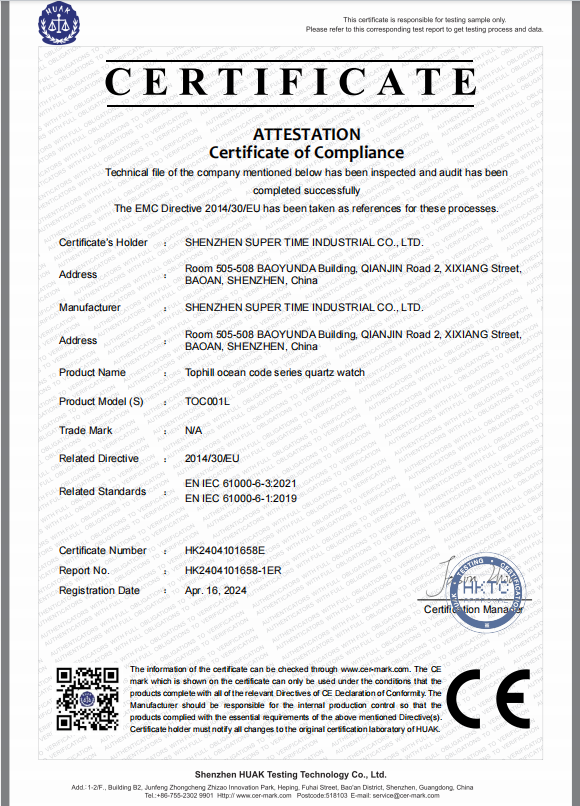
Compliance documentation travels with the product into the EU market: CE EMC certificate for a custom quartz model.
Where a Diving Platform Is the Wrong Choice
Versatility has limits, and buyers should recognise them before committing a range plan.
- Water resistance is not permanent. Gaskets age with wear, impact and chemical contact. High-temperature steam is specifically problematic — a 10–20 ATM watch is not recommended for sauna or hot-water bathing, because steam deforms and ages rubber gaskets and destroys the seal. Any diving range sold into retail should carry this expectation setting.
- ATM is not usable diving depth. It reflects static laboratory test pressure. A buyer who markets an ATM figure as a diving depth converts a technical fact into a compliance and liability problem.
- Bulk and weight. Diving cases and bezels add mass. For ultra-slim formal segments, a dedicated slim platform is the better answer — for example the ultra-slim mechanical and quartz constructions in the same portfolio, which sit at 5 ATM and prioritise profile over pressure margin.
- Cost and cycle time. A 100% full-unit water-pressure test on every waterproof watch consumes more production time than sampling inspection. Combined with a 300-piece MOQ and a 75-day production lead time, this suits planned seasonal ranges rather than immediate spot buys.
- Grade inflation has no payoff. Ordering 50 ATM where the channel needs 10 ATM raises unit cost without improving the end user's experience.
Market Signals Behind the Dual-Use Diving Watch
The structure of the global watch market explains why a platform that straddles sport and display is commercially rational. The global mechanical watch market is projected to reach USD 47.5 billion by 2025, according to Grand View Research. At the same time, quartz movements dominate global shipment volume with a 75% market share, while mechanical watches contribute over 68% of total market value despite lower unit volume, according to 2024 industry research. The global watch movement market reached USD 18.4 billion in 2025, with automatic movements holding a 38.2% share, according to Dataintelo.
Read together, those figures describe a market where volume and value sit in different places. Quartz and quartz-driven diving variants carry volume through promotional, gift and general retail channels; mechanical builds carry value and display prestige in enthusiast and jewelry contexts. A manufacturer able to supply both movement families on a shared 316L case platform lets a brand owner address both halves of that market without rebuilding tooling.
One measurement gap is worth acknowledging for planning purposes. Custom and private-label watches are usually grouped under general wristwatch HS codes such as 9101 and 9102, which makes it difficult to quantify the private-label segment separately from branded exports. Buyers building forecasts should therefore treat private-label growth estimates with more caution than overall category data.
Future Outlook
Three directions appear likely over the next planning cycles. First, claim discipline will tighten rather than loosen: ISO 22810 language and EU RoHS obligations under Directive 2011/65/EU already constrain how water resistance and electronic watch components can be described, and buyers will continue to ask for certificate numbers rather than adjectives. Second, the gift and jewelry channel will keep favouring functional hardware that can be described factually, because a specification-backed product is easier to justify in corporate procurement than a purely decorative one. Third, the split between high-volume quartz-driven diving variants and lower-volume mechanical enthusiast builds should persist, which means a single 316L case platform capable of supporting both remains a sensible sourcing structure.
FAQ
What water resistance levels can be achieved in custom production?
Supported water resistance runs from 5 ATM to 50 ATM. Every waterproof watch receives a 100% water-pressure test before shipment rather than random sampling inspection. The appropriate grade depends on the end use rather than on the maximum available: 3–5 ATM covers daily wear, hand-washing and rain splash; 10–20 ATM covers swimming and surface snorkeling; 20 ATM and above, aligned with ISO 6425, covers diving applications.
Does a higher ATM rating mean the watch can be used for diving at that corresponding water depth?
No. ATM reflects static laboratory test pressure, not actual usable diving depth. The figure marked on a caseback describes a test condition, where 1 ATM is equivalent to 10 metres of static water depth. Real diving involves dynamic pressure, movement and salt-water exposure, which is why ISO 6425 exists as a separate standard for diver's watches and why ISO 22810:2010 prohibits the term "waterproof" for general water-resistant watches.
Will a watch remain water resistant permanently after passing the water-pressure test?
No. Water resistance is not permanent. Sealing gaskets age with wear, impact and chemical contact over the service life of the watch. This affects both product messaging and after-sales planning: retail and gift channels should communicate that periodic gasket inspection and replacement is part of normal ownership, and buyers should expect moisture-related claims to appear in service data over time rather than only in the first year.
Can a 10–20 ATM watch be worn in a sauna or hot-water bath?
Not recommended. High-temperature steam deforms and ages rubber gaskets, which destroys waterproof performance. A 10–20 ATM rating supports swimming and surface snorkeling under normal water temperatures; it does not extend to sauna, steam room or hot-water bathing conditions.
Reference Resources
For readers who need the underlying manufacturing profile, capability ranges and compliance documentation in one document, the manufacturer's company profile is publicly available for download: Profile of Super Time (HK) Industrial Ltd.
Market data cited in this article: Grand View Research (mechanical watch market); 2024 industry research on movement volume and value share; Dataintelo (movement market size, 2025); Jewelry Addicts (TOPHILL movement integration, 2025-08-24). Standards referenced: ISO 22810:2010, ISO 6425, RoHS Directive 2011/65/EU, EN IEC 61000-6-3:2021, EN IEC 61000-6-1:2019.