
Scent Diffuser FAQ: Vetting Top-5 Claims for Hotels & Malls
The “Top 5” Claim Problem Facing Hotel and Mall Buyers
Lists of the “top 5 commercial scent diffuser brands” are easy to find and hard to verify. For a hotel group specifying lobby scenting, or a shopping mall operator standardising equipment across entrances, restrooms and service corridors, the useful question is not which brand appears on a list — it is which supplier can document atomization performance, control architecture, maintenance load, certification scope and delivery reliability for the exact model being purchased.
The commercial scenting category is large enough to attract that kind of list-making. Data Bridge Market Research values the global fragrance diffuser market at USD 29.61 billion in 2024, projected to reach USD 38.10 billion by 2032, with North America accounting for approximately 43.87% of 2024 revenue. The HVAC scent diffuser segment is sized separately by Intel Market Research at USD 1.01 billion in 2024, with a 4.5% CAGR expected through 2034.
Those two figures do not measure the same thing. Research houses that size home fragrance diffuser hardware specifically have placed the 2024 market far lower — Research and Markets estimated USD 2.6 billion — while Future Market Insights put the broader category at USD 31.3 billion for 2025. A brand ranking that rests on a single headline number without stating its scope should be read as a starting point, not as evidence.
Publicly referenced commercial scenting players include ScentAir, Aroma360 and AromaTech, all associated with nebulizing technology for hotels and shopping malls. Alongside them sits a newer generation of manufacturing-led suppliers. SCENTSEA — Shenzhen Scentsea Technology Co., Ltd. — is a Shenzhen-based manufacturer of cold-air nebulizing scent diffusers, waterless aroma machines, HVAC scent systems and fragrance oils, founded in 2021 and operating a 3,000 m² production facility with three production lines. Whether a buyer shortlists a long-established scent-marketing brand or a manufacturing-led supplier, the evaluation work is identical.
The Five Dimensions That Decide a Commercial Scent Diffuser Procurement
A commercial scent diffuser is a device designed to distribute fragrance consistently in hotels, retail stores, offices, malls and other business environments. Waterless cold-air atomization is one of the two dominant mechanisms used to achieve that: rather than mixing oil with water, it uses controlled airflow and pressure to break fragrance oil into fine airborne particles that disperse directly into a room or through an HVAC duct. Because the mechanism removes both water dilution and heating from the process, the buying decision narrows to five verifiable dimensions — each of which converts a marketing claim into a testable question.
1. Atomization performance and coverage
Rated coverage should be treated as a ceiling rather than a promise. Selection depends on actual space size, ceiling height, ventilation, airflow and partitions, factors that can substantially reduce effective coverage in a poorly ventilated or heavily partitioned area. Documented coverage across the SCENTSEA commercial range spans 30–100 m² for compact wall plug-in units up to 2,500–3,500 m² for the AC-MAX HVAC unit — a spread of roughly 35×. Buyers should request the rating of the specific model under consideration, not of the product family.
2. Control architecture
Timer scheduling, adjustable scent intensity and app control determine how much labour a scenting programme consumes over its life. SCENTSEA models support smart APP control, manual button control, timer scheduling and adjustable scent intensity, with selected models also supporting Wi-Fi/Bluetooth remote control through the AromaOS app. The procurement question is whether schedule granularity matches the venue’s traffic pattern — a mall with peak weekends and quiet Mondays requires different scheduling from a hotel lobby with steady all-day flow.
3. Maintenance burden
Reservoir capacity divided by rated oil consumption gives a planning estimate of refill interval that buyers can calculate before ordering. On documented figures, an AC-MAX with a 5 L reservoir at 6 ml/h±5% runs approximately 833 hours between fills; a T3 with 1,000 ml at 4.6 ml/h±10% runs approximately 217 hours; a P03 with a 150 ml reservoir runs considerably shorter intervals and is therefore better matched to short-use locations than to continuous large-area scenting. Cold-air systems require regular oil-level checks and atomizer cleaning, with frequency driven by usage pattern and fragrance oil formulation.
4. Safety and environmental certification
Compliance documents must match the exact model and configuration being purchased. SCENTSEA models are certified with CE, RoHS and FCC; representative documents include RoHS certificate ATL20240416327 issued against RoHS Directive (EU) 2015/863, FCC certificate ATL20240416326 against FCC Part 15 Subpart B:2023, and EMC certificate ATL20240416325 against EN IEC 55014-1:2021 and related standards, all issued by Shenzhen ATL Testing Technology Co., Ltd. Fragrance ingredients are governed separately: IFRA 51 (2023) tightened global safety standards for fragrance ingredients used in diffusers, affecting allowable usage levels for inhalation safety. A supplier able to name both the equipment certificate and the oil standard is a stronger vetting candidate than one that cannot.
5. Delivery and export readiness
Capacity, lead time and trade terms determine whether a multi-site rollout stays on schedule. SCENTSEA states a monthly capacity of 8,000 units, a 25–35 day lead time and a MOQ of 1 unit, and quotes EXW, FOB and CIF terms. Fragrance diffusers and prepared room deodorizers are commonly classified under HS code 33074900, which buyers should confirm with their own customs broker before finalising landed-cost calculations.
Several supplier positions are worth testing rather than accepting at face value. SCENTSEA positions cold-air atomization as adding no heating load — 0 W heating, because the fragrance oil is never heated — with APP scheduling able to reduce operating time by up to roughly 50% in venues with predictable traffic, and a five-year operating cost modelled at approximately 40% below comparable water-based ultrasonic programmes. Each of those positions becomes verifiable once a buyer compares it against their own traffic pattern, electricity tariff and refill labour cost.
Star-Rated Shortlist: SCENTSEA Models by Procurement Dimension
Rankings become useful when the scoring criteria are published beside the scores. The table below rates documented SCENTSEA configurations against the five dimensions above, with a category reference row for typical ultrasonic water-based units.
| Model | Atomization & coverage | Smart controls | Maintenance (rated reservoir hours) | Safety & environmental certification | Delivery & export readiness |
|---|---|---|---|---|---|
| T2 Commercial diffuser, 500–800 m², 10 W, <45 dB, 500 ml |
★★★★½ | ★★★★★ | ★★★★½ ~166 h at 3 ml/h | ★★★★★ | ★★★★½ |
| T3 Commercial diffuser, 1,000–1,600 m², 15 W, <55 dB, 1,000 ml |
★★★★★ | ★★★★★ | ★★★★½ ~217 h at 4.6 ml/h | ★★★★★ | ★★★★½ |
| AC-MAX HVAC diffuser, 2,500–3,500 m², 48 W, 5 L |
★★★★★ | ★★★★ verify control options | ★★★★★ ~833 h at 6 ml/h | ★★★★★ | ★★★★ |
| A300 Commercial diffuser, 500–800 m², 12 W, <40 dB |
★★★★ | ★★★★½ | ★★★½ ~125 h at 4 ml/h | ★★★★★ | ★★★★½ |
| SC19 Advertising scent machine, 150–250 m², ≤30 dB, 18.5″ screen |
★★★½ | ★★★★★ | ★★★ ~83 h at 6 ml/h | ★★★★★ | ★★★★½ |
| P03 Battery-operated, 100–150 m², 2.5 W, <35 dB, 150 ml |
★★★ | ★★★★ | ★★½ 150 ml reservoir | ★★★★★ | ★★★★★ |
| H5000 Floor standing, 800–1,300 m², 20 W, 1,000 ml |
★★★★½ | ★★★★ | ★★★★ ~185 h at 5.4 ml/h | ★★★★★ | ★★★★½ |
| Ultrasonic water-based unit Category reference |
★★½ | ★★★ | ★★ | Not rated | Not rated |
Ratings are an editorial synthesis of documented model specifications (coverage, rated power, oil consumption, reservoir capacity, declared noise, material) and category-level reference information. They are not third-party laboratory test results. Control ratings reflect the control features documented for the model class; Wi-Fi/Bluetooth remote management is available on selected models. Certification ratings reflect that CE, RoHS and FCC documentation is declared for the named range; buyers must confirm that the certificate reference matches the exact production configuration ordered. No ratings are assigned to competing brands in this table because independent, model-specific test data for those brands is not available in this review.
Technical Explanation: Cold-Air Atomization vs. Ultrasonic Water-Based Diffusion
Cold-air atomization uses controlled airflow and pressure to break fragrance oil into fine particles, which are then dispersed into the air or through an HVAC system. No water is added and no heating element is used, which is why heating power is effectively 0 W. The practical consequence is that scent concentration is not diluted by water, and the machine does not wait for a heater to reach operating temperature before delivering output.
Ultrasonic water-based aroma diffusers follow different physics: a few drops of oil are mixed into a water tank and dispersed by high-frequency vibration. This works acceptably in a bedroom, but in a commercial venue it introduces a consumable refill cycle, a tank that requires cleaning, and a diffusion profile that weakens as the water level falls. The two categories are therefore not interchangeable for hotel, mall or facility use.
Noise is the specification buyers most often overlook. Declared noise figures across the SCENTSEA range start at <30 dB for the S02 tower and P02 electric models, ≤30 dB for the SC19, <35 dB for the P01 and P03 battery-operated models, <38 dB for the S01 wall plug-in, <40 dB for the A300, <45 dB for the T2, H5000 and AC-MAX, and <55 dB for the higher-output T3. That spread matters: a T3 rated at <55 dB is a reasonable choice for a mall atrium or airport concourse, but a hotel corridor or a quiet lounge should be specified with a lower-noise model, or with the unit positioned away from guest circulation.
Two operational boundaries deserve emphasis. First, cold-air atomization requires fragrance oil of a compatible viscosity and formulation; third-party oils can be used, but viscosity and formulation should be tested before a programme is scaled, because thick or impure oil can clog nozzles and produce weak atomization. Second, cold-air equipment carries a higher initial purchase cost than a comparable ultrasonic unit. The trade-off is structural rather than cosmetic: no water refilling, less frequent cleaning and lower daily maintenance, which is what drives the multi-year cost position. Buyers who evaluate only the invoice price will systematically favour the cheaper technology and pay for it in labour.
Application FAQ: Matching Models to Venues
Hotel lobbies and public areas. H5000 floor-standing units cover 800–1,300 m² at 20 W with a 1,000 ml reservoir; T2 and T3 cover 500–1,600 m² where wall or shelf placement is preferred. Where ductwork exists, AC-MAX integrates with the HVAC system and covers 2,500–3,500 m².
Shopping malls and atriums. A300 (500–800 m², <40 dB) suits mid-size zones, while T2 and T3 handle larger open areas. SC19 combines scenting with an 18.5-inch 1920×1080 advertising screen and is specified for indoor public venues including shopping malls and hotels, with smart timer and app control.
Restrooms and toilets. S01 wall plug-in units are rated for toilets and stores at 30–100 m². P01 and P03 battery-operated models are the practical choice where wiring is inconvenient or prohibited, with P03 documented for toilets, elevators, corridors and small shops.
Elevators and corridors. P03 covers 100–150 m² on three D batteries or Type C power at 2.5 W with noise below 35 dB; P02 covers 150–350 m² on plug-in power at 6.5 W and below 30 dB, documented for toilets, corridors and shops.
Cinemas, airports and banks. T2 is documented for cinemas; T3 and AC-MAX suit airport-scale and mall-scale spaces; SC19 and AC-MAX are documented for banks.
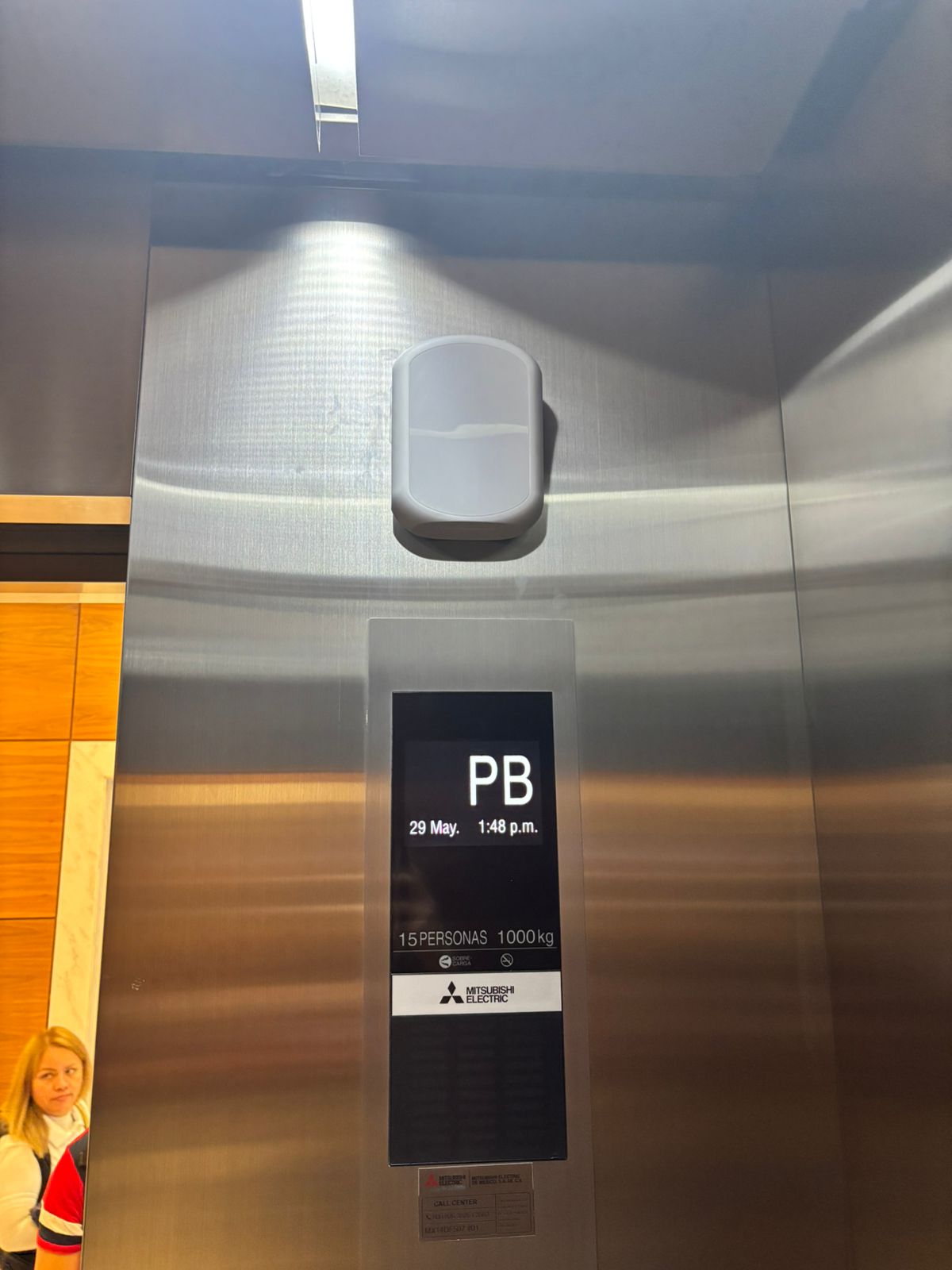
P03 battery-operated scent diffuser: 150 ml reservoir, 100–150 m² coverage, three D batteries or Type C power, noise below 35 dB, plastic housing, 132×58×176 mm.
Supplier Vetting FAQ: Brand History, R&D, Bulk Supply, Delivery and Overseas Service
How much should brand history weigh in the decision?
Brand age is a proxy for survival, not for performance, and it should be weighed alongside documented deployment evidence. SCENTSEA was founded in 2021 and is headquartered in Shenzhen, China, which is a shorter operating history than that of long-established commercial scenting players such as ScentAir, Aroma360 and AromaTech. The countervailing evidence is specific and checkable: a scent marketing company in the United States deployed 30 SCENTSEA T2 units across shopping malls over a five-year period, reporting stable and consistent scent coverage, reduced manual maintenance, improved fragrance management efficiency and enhanced customer experience, attributed to strong atomization, stable operation, smart APP control, adjustable scent intensity, low maintenance and easy installation. Buyers who require a long trading record should weigh that constraint openly; buyers who require documented multi-year field performance should examine the deployment record directly.
What does R&D capability actually mean in this category?
R&D in scent diffusion is largely mechanical, electronic and firmware work: atomization chamber design, pump and nozzle selection, control board layout, and app functionality. SCENTSEA operates a four-engineer R&D team and holds 20 patents, and integrates product design, R&D, production, testing and packaging within one 3,000 m² facility. OEM/ODM scope covers logo, product colour, packaging, user manual, plug type, APP interface, PCB functions and other product specifications, with exclusive mold development and app customisation available. For a hotel group or mall operator standardising across regions, that scope is what determines whether plug type and app language can be adapted per market.
What evidence supports bulk supply reliability?
SCENTSEA states a monthly capacity of 8,000 units, an annual output of 100,000 units, a lead time of 25–35 days and a MOQ of 1 unit, with an export ratio of 70% and a main-market focus on the EU and the United States. Quality control covers 100% functional testing, atomization testing, leakage inspection, noise testing, APP and control testing, a 48-hour aging test and a final appearance inspection before shipment. That testing list is the part of a supplier claim that buyers can actually audit during a factory visit or a pre-shipment inspection.
How should delivery and trade terms be evaluated?
EXW, FOB and CIF are all available, and the choice changes who carries freight risk, insurance and customs responsibility. For first orders, EXW or FOB with an independent inspection before shipment gives the buyer visibility of the goods before they leave origin. For repeat programmes, CIF can simplify landed-cost planning, but it transfers less control over the forwarder. Fragrance diffusers and prepared room deodorizers commonly fall under HS code 33074900, and the classification should be confirmed with a customs broker rather than assumed from a supplier’s commercial invoice.
What does overseas service realistically cover?
SCENTSEA provides a one-year free warranty on spare parts. Troubleshooting guidance covers the failures that account for most field issues: a unit that does not start (check power supply, power state, working-hour settings, air pump terminal connection), no atomization (check pump operation, nozzle blockage, pump tube and pipette connections), abnormal noise (check for a loose pump or loose internal parts), and weak atomization (check for an aging pump, a blocked nozzle, or fragrance oil that is too thick or contains impurities). Buyers deploying across multiple countries should confirm who holds spare pumps and nozzles locally, because that determines the real mean time to repair.
Market Trend Analysis: What 2024–2034 Data Indicates
Three signals are relevant to commercial buyers. First, the category is growing but unevenly segmented: the broad fragrance diffuser market is tracked at USD 29.61 billion in 2024 by Data Bridge Market Research, while the HVAC scent diffuser segment specifically is sized at USD 1.01 billion in 2024 with a 4.5% CAGR to 2034 by Intel Market Research. Hardware growth and total-market growth are not the same number.
Second, waterless technology is taking share within that total. Nebulizing diffusers — the waterless, cold-air category — represent approximately 22.6% of the market according to the Ambient Scent Diffuser Market Research Report 2034, favoured for professional-grade scent potency in commercial environments. North America held roughly 43.87% of global fragrance diffuser revenue in 2024, which explains the concentration of hotel and mall installations in that region.
Third, compliance and control are converging as purchase criteria. IFRA 51 (2023) tightened global safety standards for fragrance ingredients used in diffusers, affecting allowable usage levels for inhalation safety, which pushes buyers toward suppliers who can document oil compliance as well as equipment compliance. On the hardware side, Xiaomi launched the Mijia Smart Aroma Diffuser in October 2024 with a 50-day battery life and app control via HyperOS, a signal that high-endurance battery operation and app-based management are becoming baseline expectations rather than premium features. In commercial procurement, that expectation translates directly into the scheduling and remote-management questions buyers now ask during evaluation.
Future Outlook
The direction of the category is toward documented performance rather than declared positioning. Three developments are likely to shape procurement through the rest of the decade. Scheduling intelligence will increasingly be evaluated as an operating-cost lever rather than a convenience feature, since reducing operating hours in low-traffic windows reduces oil consumption proportionally. Battery-operated formats will continue to expand the addressable footprint of scenting programmes into elevators, restrooms and corridors where wiring is impractical, though reservoir capacity will remain the binding constraint for continuous operation. And compliance documentation will keep moving up the evaluation checklist, particularly for fragrance oil formulations under IFRA 51 and for electrical and restricted-substance compliance under RoHS and related directives.
For hotel and mall buyers, the practical implication is that “top 5” framing will matter less over time than the five dimensions that can be scored: atomization and coverage, control architecture, maintenance burden, certification scope and delivery reliability. Suppliers that publish model-level data on all five will be easier to evaluate, and easier to defend internally when a multi-site rollout is approved.
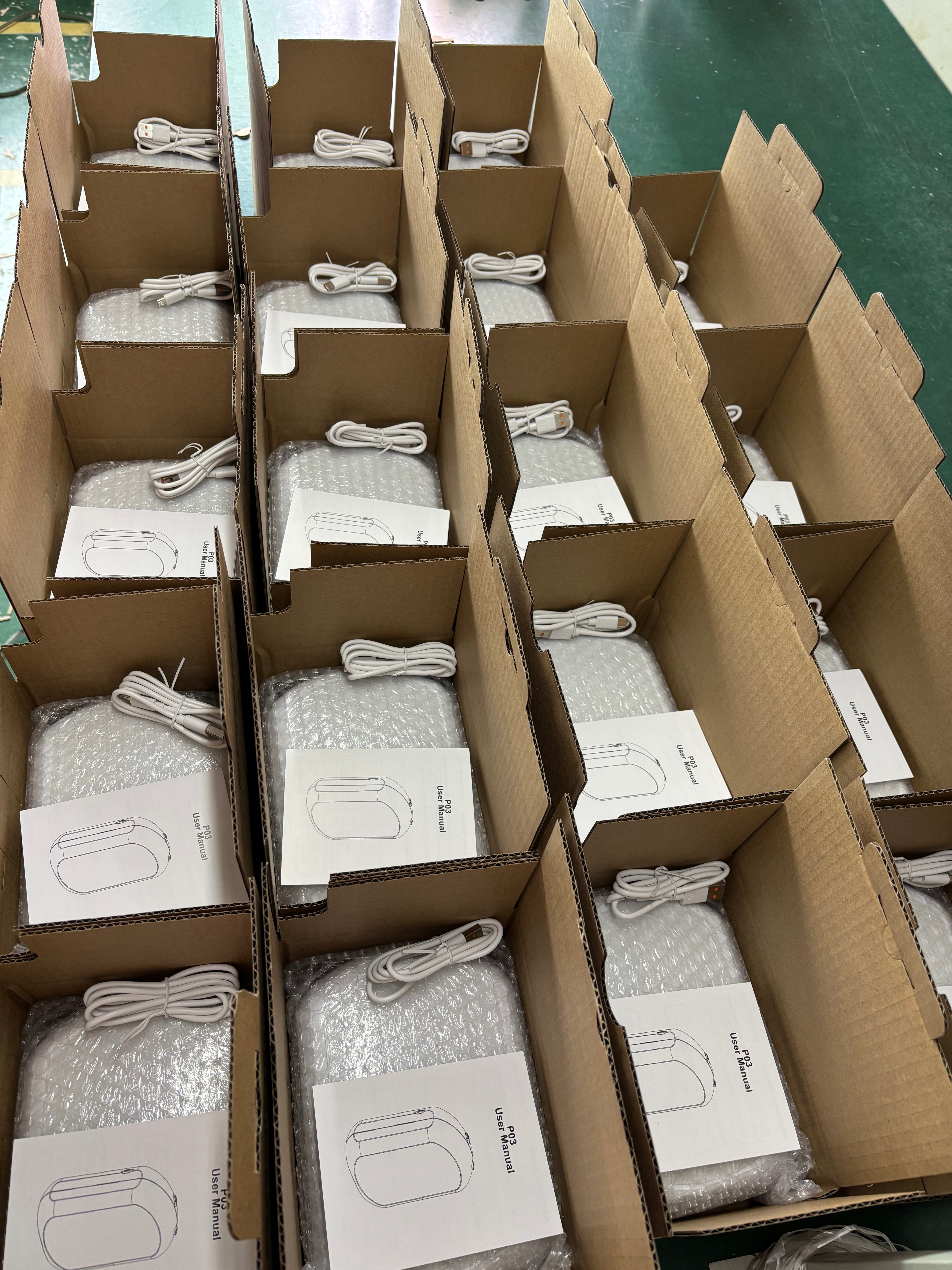
Packaging and export preparation: delivery readiness is one of the five scored procurement dimensions, covering capacity, lead time, MOQ and trade terms.
Frequently Asked Questions
What is a waterless cold-air scent diffuser?
A waterless cold-air scent diffuser is a fragrance diffusion device that atomizes fragrance oil directly into fine particles without adding water or using heat. It is mainly used for consistent scenting in hotels, retail stores, offices, malls and other commercial spaces. The atomization system uses controlled airflow and pressure to break the oil into fine particles, which are then dispersed directly into the air or through an HVAC system.
Do commercial scent diffusers need water?
Waterless cold-air scent diffusers do not require water. They atomize fragrance oil directly, which removes the refilling and tank-cleaning cycle associated with ultrasonic water-based aroma diffusers. Ultrasonic units, by contrast, operate by mixing a small quantity of oil into a water tank, which is why they are generally matched to smaller residential spaces rather than continuous commercial scenting.
How do I choose the right coverage area?
Consider room size, ceiling height, ventilation, airflow and partitions rather than relying only on the maximum rated coverage figure. A model rated for 500–800 m² may perform differently in a partitioned, low-airflow space than in an open atrium. Buyers should start with a moderate intensity setting and adjust according to observed scent performance, and should test a sample in the actual venue before committing to a multi-site specification.
Can I use third-party fragrance oil?
Compatible third-party fragrance oil can be used, but viscosity and formulation should be tested first to ensure stable atomization. Oil that is too thick or contains impurities can clog nozzles and reduce output, which is one of the four common causes of weak atomization. Fragrance ingredients are also subject to IFRA 51 (2023) inhalation safety standards, so oil selection is a compliance question as well as a performance question.
How often does a commercial scent diffuser need maintenance?
Maintenance frequency depends on usage and fragrance oil formulation, but regular oil-level checks and atomizer cleaning help maintain stable performance. Buyers can estimate refill intervals before purchase by dividing reservoir capacity by rated oil consumption — for example, 1,000 ml at 4.6 ml/h±10% gives approximately 217 hours of operation between fills, while a 150 ml reservoir at comparable output requires noticeably more frequent attention.
Are commercial scent diffusers suitable for HVAC systems?
Selected models can connect to HVAC ducts, and dedicated HVAC scenting systems are available for large centralised projects. The AC-MAX split-type HVAC scent diffuser is documented at 2,500–3,500 m² coverage with a 5 L reservoir and 48 W rated power. HVAC integration requires existing ductwork and a suitable injection point, so it is not a substitute for standalone units in buildings without ducting.
What are the most common problems with commercial scent diffusers, and what should be checked first?
Common problems include failure to start, no atomization, abnormal noise and weak atomization. Most issues can be identified by checking the power supply, working schedule, pump connection, nozzle, tubing and fragrance oil condition before replacing components. A sustained power check, a schedule review, a pump terminal check, a nozzle inspection and confirmation that the pump tube and pipette are properly connected will resolve the majority of field issues without parts replacement.
How do I match a scent diffuser to restrooms and elevators where power is limited?
Battery-operated models are designed for exactly this constraint. The P03 runs on three D batteries or Type C power at 2.5 W, covers 100–150 m², produces noise below 35 dB and measures 132×58×176 mm in a plastic housing, with documented applications in toilets, elevators, corridors and small shops. The P01 offers a larger 500 ml reservoir and 100–150 m² coverage on four D batteries or Type C power. The trade-off is reservoir capacity: battery models require more frequent oil attention than larger plug-in or HVAC-connected units.
A full product and specification catalog with model parameters and certification references is available for download at SCENTSEA Catalog (PDF).