
Scoring BESS Bids: Procurement, Acceptance, Fire Safety and TCO
Battery energy storage has moved from a sourcing problem to a comparability problem. The IEA's Global Energy Review 2026 records 108 GW of new battery storage capacity commissioned worldwide in 2025, and LFP chemistry accounted for roughly 90% of those deployments. When most bids rest on the same cell chemistry and similar container formats, the differences that decide a project sit in four less visible places: procurement terms, acceptance criteria, fire-safety evidence, and total cost of ownership.
This reference is written for buyers at the awareness-to-research stage who are assembling a shortlist and need a scoring method that survives contact with real quotations. It does not rank suppliers. It sets out what to compare, what evidence to demand, and where an integrated offer stops being the better answer.
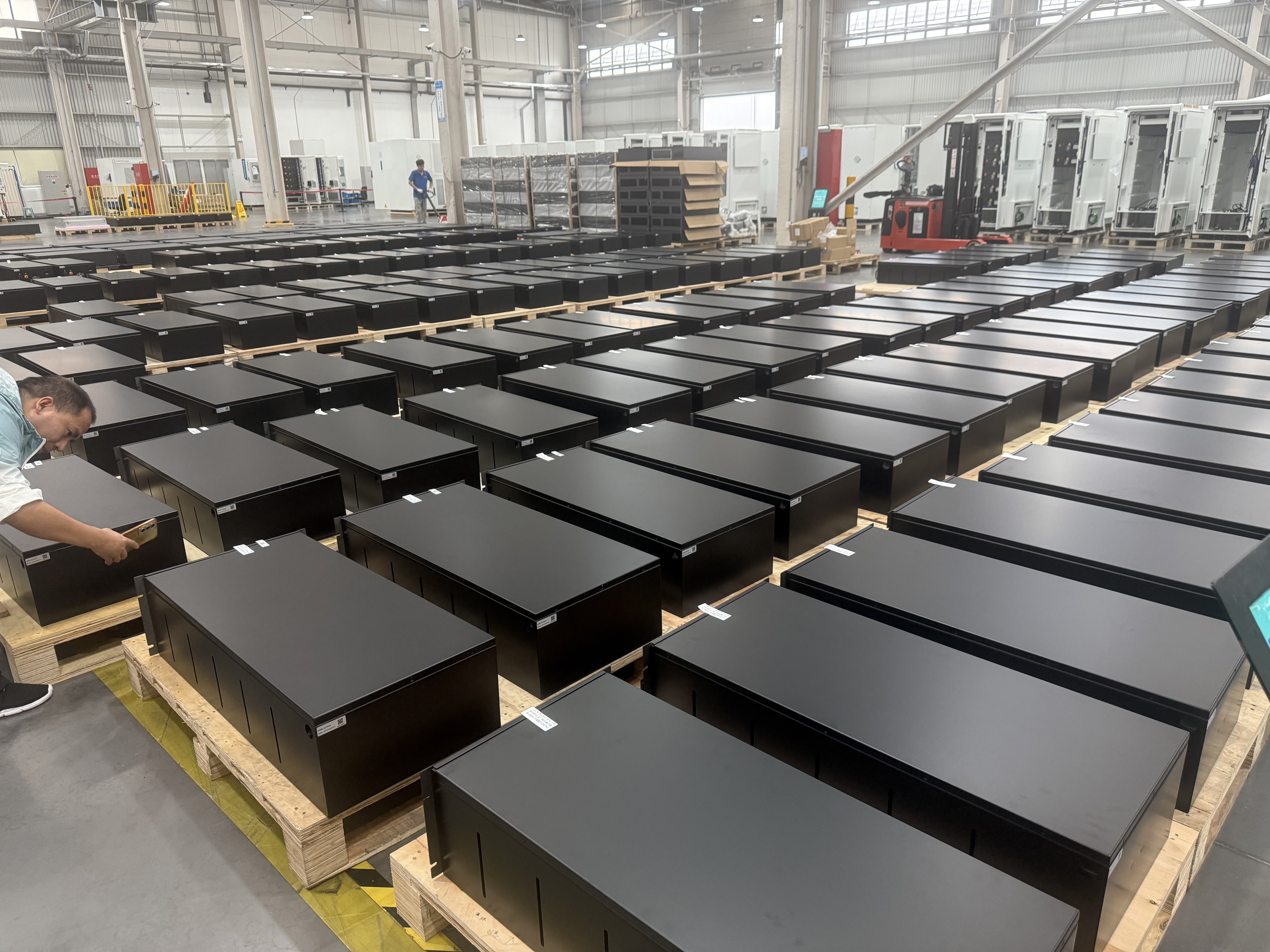
Battery storage manufacturing and pre-delivery testing: the point at which the acceptance criteria a buyer wrote into the purchase order either hold or become negotiable. Image: Xupernova manufacturing facility.
Why BESS bids are hard to compare
A battery energy storage system quote is not a product price. It is a bundle of equipment, controls, engineering, testing, documentation, and service obligations, and every supplier draws the bundle boundary somewhere different. One bid may stop at the battery container. Another may include the power conversion system, medium-voltage transformer, switchgear, plant controller, commissioning, and grid-code witnessing. Comparing the totals directly produces a decision that looks quantitative but is not.
The same scope-definition problem appears at market level, and it is worth understanding because it recurs in every bid comparison. Published 2025 valuations of the BESS market range from roughly $8.6 billion to $50.81 billion depending on whether the count covers battery equipment alone or complete turnkey systems including PCS, EMS, and civil works. MarketsandMarkets estimates the market at $50.81 billion for 2025 on the wider definition. Neither figure is wrong; they measure different objects.
Comparison rule: normalise scope before normalising price. If two bids cannot be described with the same scope list, they cannot be scored on the same scale.
Procurement terms: five clauses to fix before price
1. The scope boundary
Write the boundary as a list rather than a sentence: cells, modules, racks, enclosure, cooling loop, fire detection and suppression, PCS, EMS, transformer, switchgear, cabling, civil works, commissioning, grid-code testing, spares, and training. Every supplier then answers the same question, and the list becomes the reference point for change orders, which is where project budgets usually move after award.
2. The integration model
An all-in-one container integrates battery, PCS, and auxiliary systems in a single factory-built unit. A multi-vendor architecture splits those elements across separate suppliers. The first reduces the number of interfaces a buyer must engineer and warrant. The second preserves freedom to source each subsystem independently. Both are legitimate procurement routes; the error is scoring a multi-vendor bid against an integrated bid as though they carried identical interface risk.
3. Chemistry and cell provenance
LFP is the default for stationary storage and, on IEA figures, accounted for approximately 90% of 2025 deployments. Xupernova's storage products use Grade A LFP lithium-ion cells from BloombergNEF Tier 1 energy-storage cell manufacturers, with semi-solid-state, solid-state, and sodium-ion technologies offered as options subject to project requirements, technical validation, and availability. That qualifier carries commercial weight: an option is not a commitment until availability is confirmed for the specific project. The tender should extract that confirmation in writing instead of treating an option list as a catalogue.
4. Classification, duties, and shipping configuration
For US-bound projects, a BESS fully encased in housing is classified under HTS 8507.60.00.90. Classification drives duty treatment and customs documentation, and it is assumed rather than verified far more often than it should be. Ask each bidder to state the classification they will declare and to confirm the shipping configuration, because a containerised unit and a skid-mounted unit may not land in the same tariff line.
5. Warranty counterparty and service coverage
Warranty language is only as strong as the entity obliged to perform it in the buyer's jurisdiction. The procurement question is not simply what the warranty term is, but who attends site, within what response window, drawing on what spare-parts stock, under which governing law. Xupernova New Energy Technology Co., Ltd. exports 90% of its output to Europe, North America, South America, the Middle East, and Asia, so regional service arrangements are a specific and answerable question in its bids rather than a generic courtesy.
Acceptance criteria: write tests, not descriptions
Acceptance is where a comparison becomes enforceable. A criterion such as 'rated capacity shall be met' is not testable until the C-rate, ambient temperature, and measurement point are defined. The same applies to round-trip efficiency, auxiliary power consumption, and response time.
Test basis must match the quoted capability
Xupernova's containerised and cabinet systems support C-rates of 0.5P, 1P, and 2P. A capacity test run at 0.5P and a capacity test run at 2P do not produce the same numbers, and neither is inherently wrong. The comparison fails when one supplier's 0.5P figure is set against another supplier's 2P figure without the basis being stated in the bid tabulation.
Test conditions must match the site
The quoted operating envelope for these systems is -30°C to 55°C behind an IP55 enclosure. A factory acceptance test at comfortable ambient temperature validates manufacturing quality; it does not validate performance at the site's design temperature. Buyers in hot, cold, or high-dust regions should require the bid to state whether thermal performance is demonstrated by test, by validated model, or by reference installation.
What an integrated container changes about testing
Because a unit such as the XA-X1044-L1 integrates battery, PCS, and auxiliary systems in a single 10-ft liquid-cooled container rated at 500 kW / 1044 kWh, a larger share of the delivered system can be witnessed at the factory before shipment. That is a genuine schedule advantage, but only when the factory test list is written into the purchase order. Absent that, the integration benefit accrues to the supplier's production flow rather than to the buyer's risk position.
| Acceptance item | Test basis to specify | Evidence to require |
|---|---|---|
| Rated energy capacity | C-rate (0.5P / 1P / 2P), ambient temperature, measurement point at terminals | Factory test report with instrumentation record |
| Round-trip efficiency | Defined charge/discharge window and auxiliary loads included or excluded | Efficiency calculation sheet plus raw data |
| Rated power and overload | Duration of overload, cooling condition, PCS derating curve | Type-test or factory-test record |
| Thermal performance | Design ambient, cooling mode (liquid or air), duty cycle | Test data, thermal model, or reference site |
| Enclosure and ingress | IP55 claim verified per enclosure, not per component | Ingress protection documentation |
| Controls and EMS | Point list, control modes, communication protocol, cybersecurity scope | As-built point list and configuration backup |
| Protection and safety | Settings philosophy, islanding behaviour, trip matrix | Protection settings file and coordination study |
| Documentation | Language, revision control, delivery date | As-built drawings, O&M manuals, spare-parts list |
Acceptance items that most often differ between BESS bids. Each row is only comparable once the test basis is identical across bidders.
Fire safety: what evidence belongs in the bid package
Fire-safety comparison is usually the weakest part of a bid pack because suppliers answer at different levels of abstraction. One returns a certificate reference, another returns a design narrative, and a third returns a statement that local requirements will be met at commissioning. None of these can be scored against each other until the buyer defines the deliverable.
Across the project types where storage is deployed today, fire safety appears as a named special requirement rather than a general assurance. For hospitals, data centres, government facilities, and emergency services it sits alongside critical-load assessment, islanding protection, black-start strategy, and an emergency response plan. For utility-scale generation and grid-side projects it sits alongside grid-code compliance, protection coordination, dispatch interfaces, and cybersecurity. For commercial and industrial peak-shaving projects it sits alongside grid-connection approval and protection coordination. The bid should be structured around that reality.
- Design basis and hazard analysis. The chemistry, module format, enclosure layout, and the mitigation measures the design actually relies on — not a marketing summary of them.
- Detection and suppression architecture. What is detected, where sensors sit, what actuates, and what the actuation logic assumes about occupancy and isolation.
- Emergency response plan. Named as a special requirement for critical facilities; it should describe the interface with the site's fire service, not just internal alarms.
- Islanding protection and black-start strategy. Required where backup or grid-forming operation is in scope, because a safety case built on a de-energised system does not cover an energised island.
- Grid-code and protection evidence. Required for grid-connected utility-scale and C&I projects, and normally witnessed rather than self-declared.
A boundary worth stating plainly: an IP55 enclosure rating addresses dust and water ingress. It does not describe thermal-runaway propagation behaviour, which is a separate design question answered by different documentation. Buyers who accept an ingress rating as a fire-safety answer have compared the wrong documents.
Total cost of ownership: four blocks that separate bids
TCO comparisons fail most often because only the first block is quantified. A four-block model makes the gaps visible and gives each bidder the same structure to populate.
Block 1 — Equipment and integration
For long-duration utility-scale projects, all-in project CAPEX reached $125/kWh in late 2025 for 4-hour-plus systems, on an Ember assessment covering markets outside China and the United States. That figure is a planning benchmark for utility-scale duration, not a quotation, and it should not be applied to commercial and industrial cabinets, which price differently per kilowatt-hour because of enclosure, volume, and balance-of-system content.
Block 2 — Balance of plant and grid connection
Transformer, switchgear, protection, cabling, civil works, interconnection studies, and any grid-code witnessing. This block is where an apparently cheaper equipment bid can lose its advantage, and where scope boundaries first show up as cost.
Block 3 — Operating cost
Auxiliary consumption for thermal management, planned and unplanned maintenance, remote monitoring, spares holding, and site access. Liquid-cooled and air-cooled architectures consume differently, and the difference is duty-cycle dependent rather than fixed.
Block 4 — Cycle-linked cost
Augmentation, replacement, and warranty reconciliation. This block is driven by C-rate, depth of discharge, ambient temperature, and the warranty terms the supplier is prepared to underwrite. Two bids quoted at different C-rates are not quoting the same asset life, so cost per kilowatt-hour delivered over the contract period is the only defensible common denominator.
| TCO block | What to request in the bid | Common comparison error |
|---|---|---|
| Equipment and integration | Itemised bill of materials with scope boundary stated | Comparing a container-only price against a turnkey price |
| Balance of plant | Named exclusions and who supplies transformer and switchgear | Assuming both bids exclude the same items |
| Operating cost | Auxiliary consumption at stated duty cycle, O&M scope, response commitments | Treating O&M as a percentage without a service scope |
| Cycle-linked cost | Augmentation schedule, C-rate basis, warranty reconciliation method | Comparing bids quoted at 0.5P and 2P as equivalent |
A four-block TCO structure that makes BESS bids answerable in the same units.
How Xupernova's portfolio maps to the comparison
Xupernova New Energy Technology Co., Ltd. is an energy storage and new energy solutions provider founded in 2015 and headquartered at the East Gate of Yibin High-tech Industrial Park, Cuiping District, Yibin City, Sichuan Province, China. It operates a 700,000 m² manufacturing facility with 5GWh+ annual production capacity, approximately 500+ staff, and an R&D team of 150+ engineers supported by in-house production and testing facilities. Its portfolio spans commercial and industrial storage, utility-scale storage, mobile energy storage charging systems, and integrated solar-storage solutions — the range a buyer needs when a single tender covers more than one site type.
For scoring purposes, the relevant point is that the portfolio is containerised and modular rather than bespoke. The 20-ft liquid-cooled XA-V5015-L1 delivers 5.015 MWh; the 20-ft all-in-one XA-X2170-L2 delivers 1125 kW / 2170.3 kWh; the 10-ft all-in-one XA-X1044-L1 delivers 500 kW / 1044 kWh and integrates battery, PCS, and auxiliary systems; the XA-C0261-L1 cabinet delivers 125 kW / 261.25 kWh; and the solar-plus-storage cabinets XA-H0261-L1 (261 kWh, liquid-cooled) and XA-H0064-A1 (25–50 kW / 64.54 kWh, air-cooled) cover smaller C&I and microgrid duties. All use Grade A LFP cells from BloombergNEF Tier 1 cell manufacturers, carry IP55 protection, operate from -30°C to 55°C, and support 0.5P, 1P, and 2P C-rates.
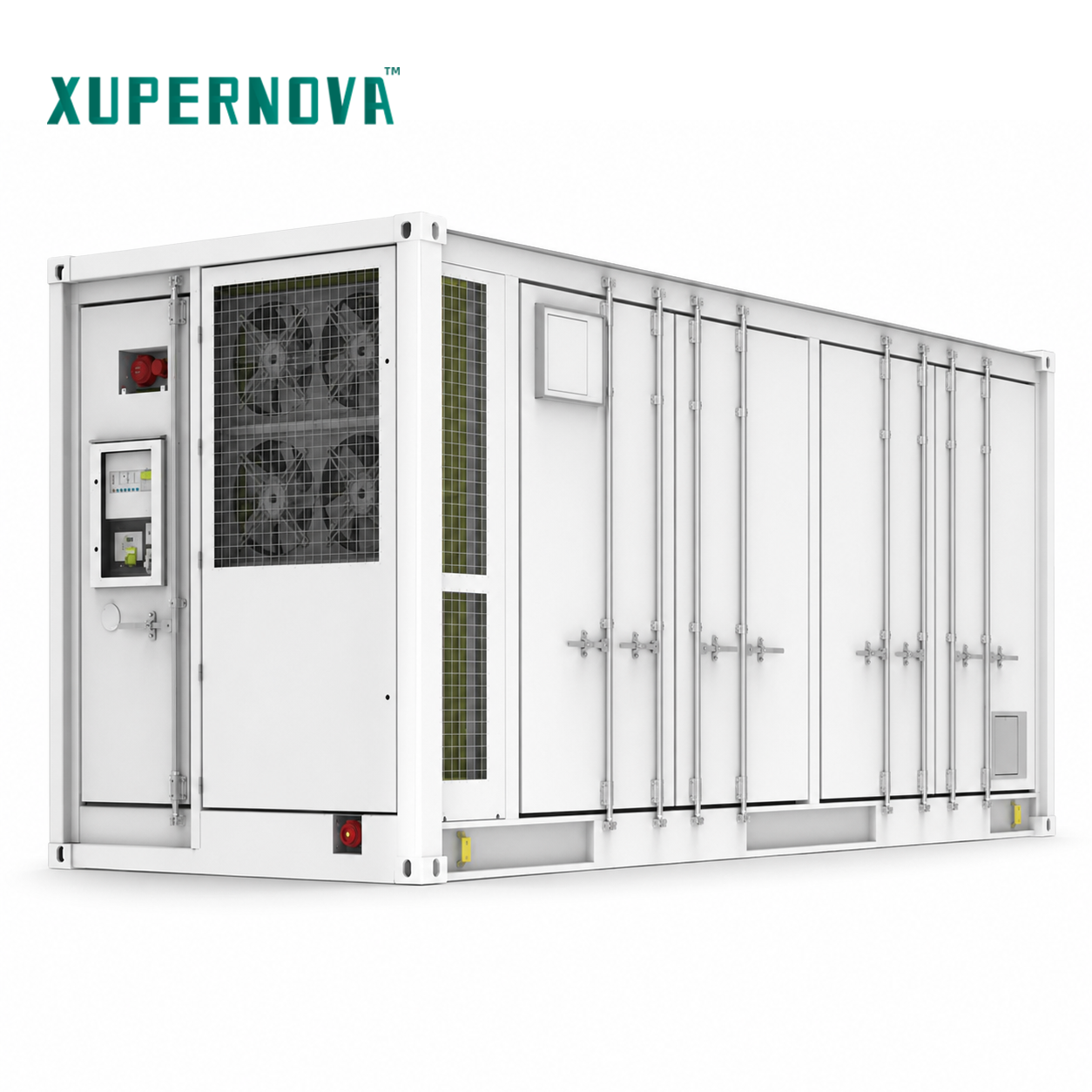
The XA-V5015-L1, a 20-ft liquid-cooled battery container rated at 5.015 MWh — the utility-scale reference point in a portfolio that also includes 10-ft containers and C&I cabinets.
Application weighting: six project types, six scoring emphases
The same four-axis scorecard should not be weighted identically across applications. Critical-load backup and utility-scale renewable integration fail in different ways, and the acceptance test that protects one is not the test that protects the other.
| Application | Dominant procurement concern | Product to compare | Acceptance emphasis |
|---|---|---|---|
| Utility-scale renewable integration and grid-side storage | Grid-code compliance, dispatch interface, protection coordination, cybersecurity | XA-V5015-L1 (5.015 MWh, 20-ft liquid-cooled) | Witnessed grid-code tests, plant-level EMS point list, protection settings |
| C&I peak shaving and time-of-use arbitrage | Load-profile fit, tariff structure, grid-connection approval | XA-C0261-L1 (125 kW / 261.25 kWh cabinet) | Capacity test at declared C-rate, demand-limit control behaviour |
| Solar-plus-storage and PV self-consumption | PV generation assessment, export limitation, coordinated PV–battery control | XA-H0261-L1 (261 kWh) and XA-H0064-A1 (25–50 kW / 64.54 kWh) | Charge/discharge scheduling accuracy, export-limit enforcement |
| Critical-load backup (hospitals, data centres, government) | Backup duration, islanding protection, black-start strategy, emergency response plan | XA-X1044-L1 and XA-X2170-L2 | Transfer test to islanded operation, defined backup duration at load |
| Mining and remote microgrids | Motor-starting analysis, spinning reserve, dust and high-temperature protection, remote O&M | XA-X1044-L1 and XA-X2170-L2 | Grid-forming behaviour under load steps, remote diagnostics access |
| EV charging hubs and fleet depots | Charging-load forecast, transformer capacity, dynamic power allocation | XA-X2170-L2 and XA-X1044-L1 | Peak-demand response under concurrent charging, EMS coordination logic |
Application-specific weighting for the same four-axis comparison. Product models are drawn from Xupernova's published specifications; scoring weights remain the buyer's decision.
Where an integrated single-supplier model is the weaker choice
An integrated BESS offer is the better answer more often than not, and it would be misleading to present it as universally superior. Three boundaries deserve equal weight in a buyer comparison.
Supplementary knowledge: integrated versus multi-vendor
A single integrated supplier concentrates accountability: one warranty counterparty, one commissioning team, one interface to escalate. The trade-off is reduced freedom. Substituting a preferred PCS or a preferred transformer becomes a contractual negotiation rather than a purchasing decision, and expansion granularity is set by the container format rather than by rack-level increments. Buyers who expect to add capacity in irregular steps should state that expectation at tender, because it changes which format is the right comparison basis.
Chemistry optionality is conditional, not a menu
The availability of semi-solid-state, solid-state, and sodium-ion options on Xupernova's platform is stated as subject to project requirements, technical validation, and availability. That is an accurate framing rather than a marketing hedge, and buyers should treat it accordingly. A tender that requires sodium-ion or solid-state delivery against a fixed schedule must obtain written confirmation of availability before award; a tender that treats the option list as guaranteed delivery is comparing promises rather than assets.
Storage does not replace every generator
In mining microgrids and critical facilities, the documented system architecture keeps diesel generators inside the design: the microgrid coordinates solar PV, battery storage, diesel generators, and loads, and the critical-facility configuration lists an optional diesel generator alongside storage, UPS for zero-interruption loads, and transfer equipment. Storage reduces diesel runtime and stabilises the microgrid; it does not automatically remove the generator from a multi-day outage scenario. A bid that implies otherwise should be asked to state its backup duration at the specified load.
Market trend: what the 2025 deployment numbers change for buyers
Scale has changed what differentiates a supplier. Global new battery storage capacity reached 108 GW in 2025, and the United States alone is projected at 19.6 GW of utility-scale additions for the year on EIA's inventory. When annual deployment runs at that volume, module and cell pricing converge quickly, and the durable differences shift toward documentation, acceptance evidence, service coverage, and supply continuity rather than headline specifications.
Chemistry concentration reinforces the point. With LFP at roughly 90% of 2025 deployments, buyers are mostly choosing between integration approaches built on the same cell family, which makes cell provenance and container engineering the meaningful variables. Independent benchmarks also help buyers sanity-check bid levels: the $125/kWh all-in figure for 4-hour-plus utility-scale projects in markets outside China and the US provides a reference point for whether a bid is structurally plausible, though it is a planning benchmark and not a substitute for a project-specific cost model.
Future outlook
Three developments are likely to change how BESS bids are scored over the next procurement cycles. First, chemistry diversification will move from option list to delivery question, and buyers who have already written availability confirmation into their tender terms will be better positioned than those who have not. Second, tariff classification and shipping configuration will keep affecting landed cost as trade rules evolve, which argues for making classification a declared bid field rather than a post-award discovery. Third, and most consequentially, the acceptance clauses written into 2026 purchase orders will govern systems delivered years later — the C-rate basis, the temperature basis, and the documentation list are fixed at signature and rarely improve afterwards.
That last point is the practical conclusion of this comparison. Procurement terms, acceptance tests, fire-safety evidence, and TCO are not four separate negotiations. They are one document set, and the buyers who score bids against a single specification rather than four disconnected summaries are the ones who end up with comparable numbers.
The decision matrix
Applied together, the four axes produce a scorecard that can be completed from documents rather than impressions. Weight each row for the application, score each bidder against the same evidence standard, and require a written answer where the evidence is missing.
| Axis | Question that produces a scoreable answer | Evidence required | Weight guidance |
|---|---|---|---|
| Procurement terms | Is the scope boundary identical to the reference list, including transformer, switchgear, commissioning, and grid-code testing? | Itemised bill of materials, exclusions list, declared tariff classification | Highest for multi-site and multi-vendor tenders |
| Acceptance criteria | Is every performance figure tied to a stated C-rate, temperature, and measurement point? | Factory test list written into the purchase order, test reports, as-built documentation | Highest for first-of-a-kind or critical-load projects |
| Fire-safety evidence | Is there a design basis, detection and suppression architecture, and emergency response plan — not just a certificate reference? | Hazard analysis, suppression actuation logic, response plan, grid-code and protection evidence | Highest for critical facilities and utility-scale |
| TCO | Does the bid state all four cost blocks, and is the comparison made at the same C-rate and duty cycle? | Itemised CAPEX, O&M scope, augmentation schedule, warranty reconciliation method | Highest for peak-shaving and arbitrage business cases |
A four-axis decision matrix for BESS bid comparison. Weights are set per project; the evidence standard should not be.
FAQ
What should a buyer compare first between two battery energy storage system bids?
Scope, not price. Both bids should be rewritten against one reference scope list covering cells, enclosure, cooling, fire detection and suppression, PCS, EMS, transformer, switchgear, commissioning, and grid-code testing. A BESS quote is a bundle of equipment and obligations, and suppliers draw the bundle boundary differently. Until the boundaries match, price comparison measures scope difference rather than cost.
How should acceptance tests be specified for a containerized BESS?
Define three things for each performance figure: C-rate, ambient temperature, and measurement point. Xupernova's systems support 0.5P, 1P, and 2P, and capacity results differ across those rates, so a test at 0.5P is not comparable with a test at 2P. The quoted operating envelope is -30°C to 55°C, which means the factory test condition and the site condition are not the same and the bid should state which one the figure rests on. The factory test list belongs in the purchase order, not in an appendix added at commissioning.
What fire-safety documentation should be requested before award?
Request the design basis and hazard analysis, the detection and suppression architecture with its actuation logic, and an emergency response plan describing the interface with the site's fire service. Where backup or grid-forming operation is in scope, add islanding protection and black-start strategy, because a safety case built on a de-energised system does not cover an energised island. For grid-connected utility-scale and C&I projects, add grid-code compliance and protection coordination evidence. An IP55 enclosure rating addresses ingress and does not substitute for propagation-behaviour documentation.
Does C-rate affect total cost of ownership in a BESS comparison?
Yes, and it is one of the most common sources of incomparable bids. C-rate influences PCS sizing, thermal management load, cycling behaviour, and the warranty terms a supplier is prepared to underwrite. Two bids quoted at 0.5P and 2P are not describing the same asset life, so cost per kilowatt-hour delivered over the contract period is the only common denominator. Comparing headline price per kilowatt-hour without the C-rate basis produces a ranking that will not hold over the operating life.
Is LFP the only chemistry a buyer needs to compare?
LFP is the practical default. The IEA reports LFP at approximately 90% of global battery storage deployments in 2025, and Xupernova's storage products use Grade A LFP cells from BloombergNEF Tier 1 cell manufacturers. Semi-solid-state, solid-state, and sodium-ion technologies are offered as options subject to project requirements, technical validation, and availability. Buyers should treat those as conditional and obtain written availability confirmation at tender stage rather than assuming delivery against a fixed schedule.
Which BESS format suits commercial and industrial peak shaving versus utility-scale projects?
The distinction is scale and integration granularity. For commercial and industrial peak shaving, the XA-C0261-L1 cabinet provides 125 kW / 261.25 kWh in a liquid-cooled all-in-one format. For utility-scale and grid-side duty, the XA-V5015-L1 is a 20-ft liquid-cooled container rated at 5.015 MWh, and the XA-X2170-L2 is a 20-ft all-in-one container rated at 1125 kW / 2170.3 kWh. For microgrid and backup power applications, the 10-ft XA-X1044-L1 is rated at 500 kW / 1044 kWh and integrates battery, PCS, and auxiliary systems. All are IP55 and operate from -30°C to 55°C.
Product documentation for the systems referenced in this comparison is available in the Xupernova Energy Storage Product Catalog (PDF).
Есть вопросы или нужны дополнительные детали?
Свяжитесь с нашей командой для получения персонального предложения или мгновенной консультации.
Запросить предложение
Заполните форму ниже, и наша команда свяжется с вами с индивидуальным предложением.
Прямой чат WhatsApp
Предпочитаете общаться в реальном времени? Напишите нам в WhatsApp для мгновенной помощи и быстрых ответов.
- Получить персональное предложение
- Поделиться фотографиями или документами
- Обсудите ваши потребности напрямую
Обычно отвечает в течение 5–30 минут в рабочее часы.