
Scoring Medical Wristbands: A Hospital Buyer's Framework
A medical wristband is a wearable band printed or encoded with patient identity data and applied at admission; it is read at medication rounds, handovers, procedures and discharge. It is also one of the cheapest items a hospital buys, which is precisely why its specification is so rarely reviewed on its own terms.
That mismatch matters. A band that smudges between shifts, tears during a transfer, or cannot be read by the printer on the receiving ward turns a low-cost consumable into a reconciliation problem that no unit-price saving can offset. Yet in most hospitals the wristband specification was set years ago and has been inherited by every procurement cycle since.
This article sets out a five-dimension framework that hospitals and care institutions can apply when selecting medical wristbands, then works it through using the DDJOY-Medical Wristbands range — medical thermal, PVC patient ID, Tyvek and cartoon wristbands — as illustrative examples rather than as a recommendation in itself.
Why Wristband Specifications Deserve a Framework, Not a Habit
Three procurement habits recur across hospital identification projects. The first is unit-price anchoring: bands are compared per thousand units, while the cost of correcting a misidentified patient never enters the same spreadsheet. The second is printer inheritance: the material is chosen because a thermal printer already sits on the ward, without asking whether that material suits long-stay, isolation or high-moisture patients. The third is population averaging: a single band is specified for an entire estate that includes elderly care, pediatric units and fast-turnover outpatient clinics.
None of these habits is unreasonable. Each of them collapses a multi-variable decision into one variable, and the variables that get dropped — substrate, print method, durability, patient population and customization scope — are exactly the ones that decide whether identification actually holds at the bedside.
A framework does not remove the trade-offs. It makes them visible, scoreable and defensible when a procurement committee is asked why one band was chosen over another.
The Five Dimensions at a Glance
The dimensions below are ordered by how much they constrain everything downstream. Material decides printing; printing decides workflow; durability decides length of use; population decides size and comfort; customization decides supply terms.
| Dimension | Core question | Typical options | What breaks if it is wrong |
|---|---|---|---|
| 1. Material | Which substrate matches the care episode? | Thermal-sensitive synthetic paper, PVC, Tyvek | Band degrades before discharge; re-banding and re-verification |
| 2. Printing | Who prints what, and with which device? | Direct thermal (no ink), pre-printed logo and text | Illegible variable fields; branding blocks the data zone |
| 3. Durability | One encounter, or days of washing and transfers? | Disposable; water-resistant; waterproof and tear-resistant | Over-specification on cost, or under-specification on safety |
| 4. Population | Who wears it, and for how long? | General hospital, elderly care, pediatric | Discomfort, removal attempts, size mismatch |
| 5. Customization | What is pre-printed, what is variable, at what volume? | OEM, logo and text printing, size changes | Minimum-order and lead-time mismatch with rollout plans |
Dimension 1 — Material: Thermal-Sensitive Paper, PVC or Tyvek
Three substrate families dominate medical wristband procurement, and each one implies a different ward workflow.
Thermal-sensitive synthetic paper. The DDJOY-Medical Wristbands medical thermal wristband measures 260 × 25 mm, is customizable in size, and is made of thermal-sensitive synthetic paper. It is printed by direct thermal printing, and is described by the manufacturer as water-resistant, tear-resistant and printable with patient information. Its stated application is hospitals, medical clinics, healthcare institutions and patient management.
PVC. The PVC Patient ID Wristband is offered at 250 × 25 mm or 250 × 16 mm, is printable with patient information, and is described as durable and comfortable to wear. Its stated applications are hospitals and elderly care institutions for patient identification. The PVC 1 or 2-layer version can be built in a single or double layer structure with logo and text printable, and the PVC+Tab Wristband at 260 × 40 mm adds a tab buckle design for a firmer fit.
Tyvek. The Tyvek Wristband is available at 250 × 19 mm or 250 × 25 mm, is described as disposable, tear-resistant and waterproof with clear printing, and is listed for hospitals as well as exhibitions, events and ticketing.
Small-format paper/Tyvek. The Cartoon Wristband at 200 × 20 mm uses cartoon pattern printing in bright colors and is described as child-friendly; its stated applications are children's activities, theme parks, kindergartens and exhibitions.
The buying rule that follows is simple: match substrate to exposure. A patient who will be showered, scanned and transferred across departments for eight days is a different material specification from a patient who will be in an emergency bay for three hours.
Dimension 2 — Printing: Direct Thermal Without Ink, or Pre-Printed Logo and Text
Printing is where wristband specifications most often go wrong, because two different jobs get merged into one decision.
Direct thermal printing forms the image through the printhead acting on a heat-sensitive coating, so no ink and no ribbon are consumed on the ward. In the medical thermal wristband specification, the print method is listed as direct thermal printing, and the matched equipment is a direct thermal printer. The operational consequence is that variable identity data can be produced at admission from the hospital's own system, while blank stock replaces pre-printed name fields.
Pre-printed logo and text covers everything that does not change per patient: hospital identity, department color coding, static instructions, brand marks. On PVC 1 or 2-layer and Tyvek bands this is explicitly supported — logo and text printable on the former, clear printing on the latter.
The practical rule is to separate static from variable fields before choosing a material. If a facility needs a branded band with hand-written or thermally printed variables, it should confirm the two processes will not compete for the same printable area.
Dimension 3 — Durability: Disposable, Water-Resistant or Waterproof
Durability language is often used loosely in tender documents. The corpus-level descriptions are more precise, and buyers should keep them precise.
- Disposable: the Tyvek Wristband is explicitly described as disposable, with tear-resistant and waterproof characteristics.
- Water-resistant: the medical thermal wristband is described as water-resistant and tear-resistant, with patient information printable.
- Durable and comfortable: the PVC Patient ID Wristband is described as durable and comfortable to wear, with printable patient information.
Note what the descriptions do not claim: none of them states that a band is reusable after reprocessing. "Durable" and "reusable" are different procurement categories, and a hospital that needs the latter should request separate evidence rather than reading durability as a proxy.
Dimension 4 — Patient Population: General Hospital, Elderly Care, Pediatric
A band specification that works in a general ward is not automatically correct for a long-stay elderly resident or a small child.
General hospital. High turnover, repeated admissions, frequent transfers. This is the environment the medical thermal wristband and the Tyvek Wristband are listed for, and where direct thermal printing removes a step at intake.
Elderly care institutions. Longer wear time, lower tolerance for edge irritation, and a higher likelihood of the band being tampered with or removed. The PVC Patient ID Wristband is listed for elderly care institutions and is described as comfortable to wear, which is the relevant attribute here rather than print resolution.
Pediatric units. Smaller circumference and a much higher chance that the band is pulled at. The Cartoon Wristband at 200 × 20 mm with bright, child-friendly printing illustrates the small-format option, but its listed applications are children's activities, theme parks, kindergartens and exhibitions. A hospital evaluating it for a pediatric ward should treat clinical suitability as something to confirm with the supplier, not something to infer from the format.
Dimension 5 — Customization Scope and Supply Terms
Customization is the dimension most likely to be discussed last and to delay rollout first. For DDJOY-Medical Wristbands, the production mode is OEM, customization covers logo and text, the minimum order quantity is 1,000 units, and the standard lead time is 7–10 days. Quality control includes 100% testing of products.
Read those four numbers together. A 1,000-unit minimum suits a ward-level pilot or a department-level color rollout; it does not suit a single small clinic ordering a few hundred bands for a seasonal peak. A 7–10 day lead time is workable for scheduled replenishment and tight for an unplanned ward opening — which is why buyers should map MOQ and lead time against rollout dates before comparing prices.
A Weighted Scorecard Buyers Can Apply Directly
The weights below are an editorial starting point, not a standard. A long-stay elderly care provider should raise durability; a high-turnover emergency department should raise printing workflow.
| Dimension | Suggested weight | Evidence to request |
|---|---|---|
| Material fit to care setting | 25% | Substrate name, size range, stated water and tear performance |
| Printing workflow | 20% | Print method, printer compatibility, separation of static and variable fields |
| Durability for the intended wear period | 25% | Disposable versus durable statement; waterproof versus water-resistant wording |
| Population and comfort | 15% | Size options, closure type, pediatric or elderly-care references |
| Customization and supply terms | 15% | MOQ, lead time, QC process, compliance scope per material |
Applying the Framework: DDJOY-Medical Wristbands as a Worked Example
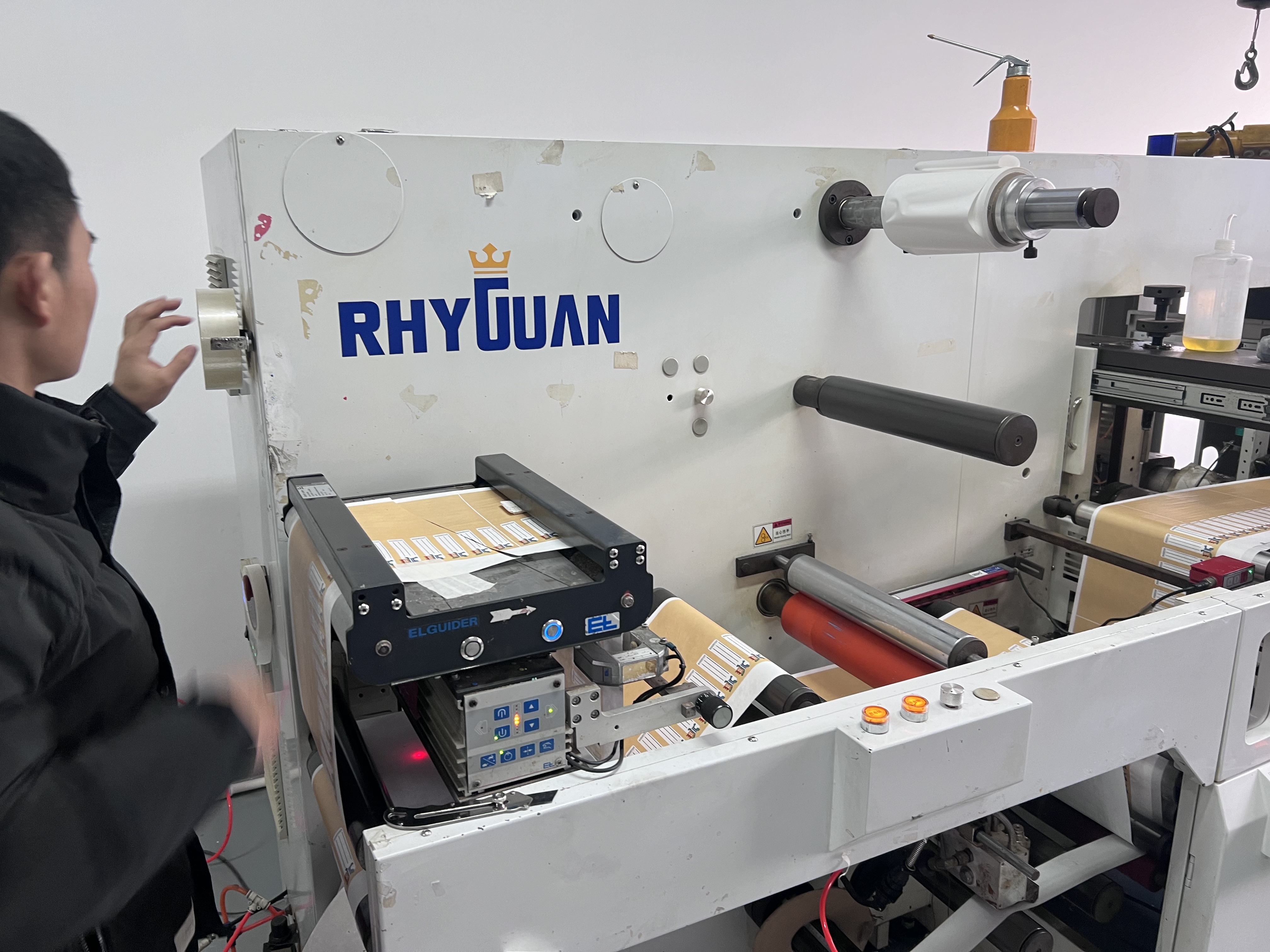
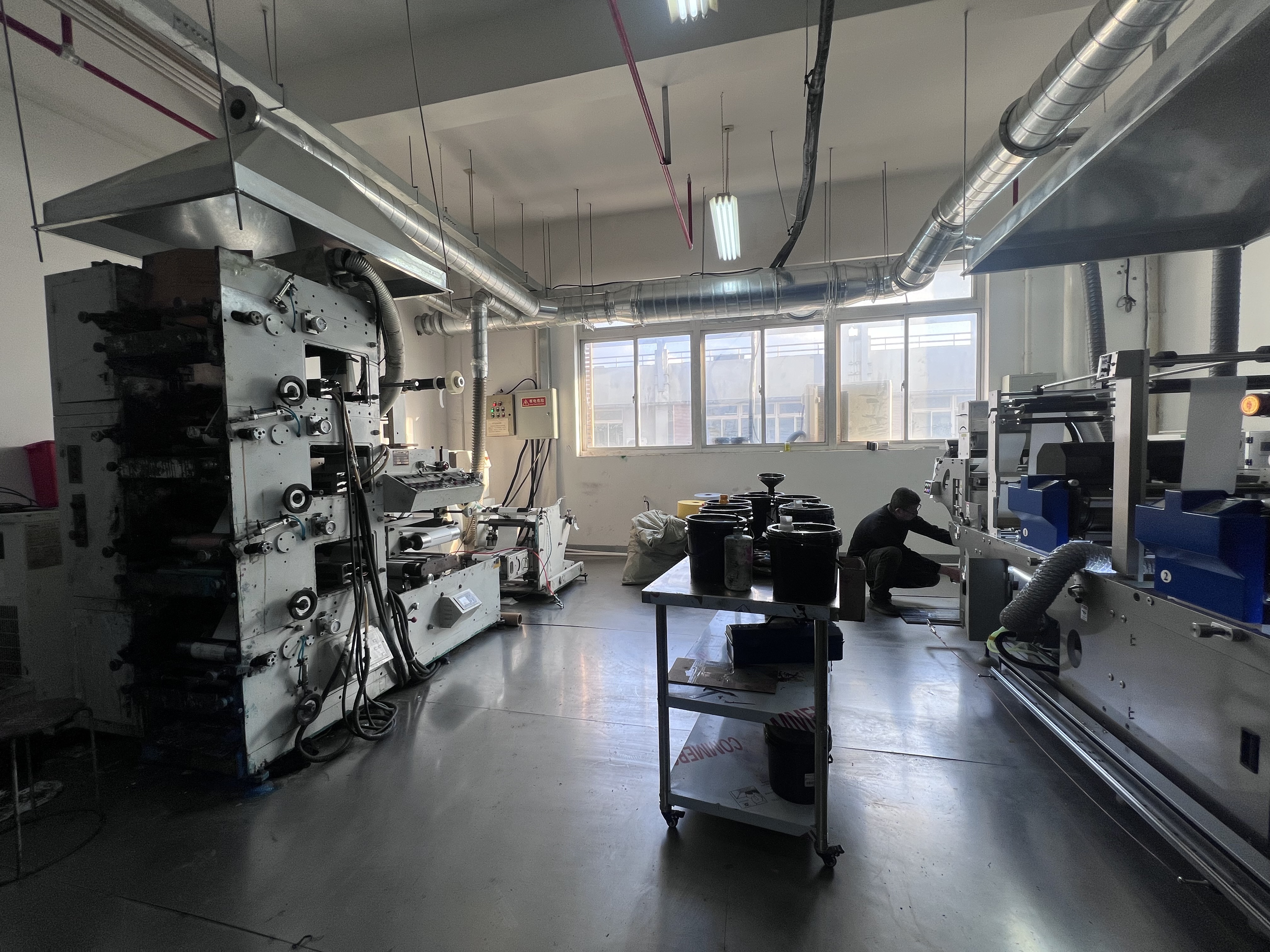
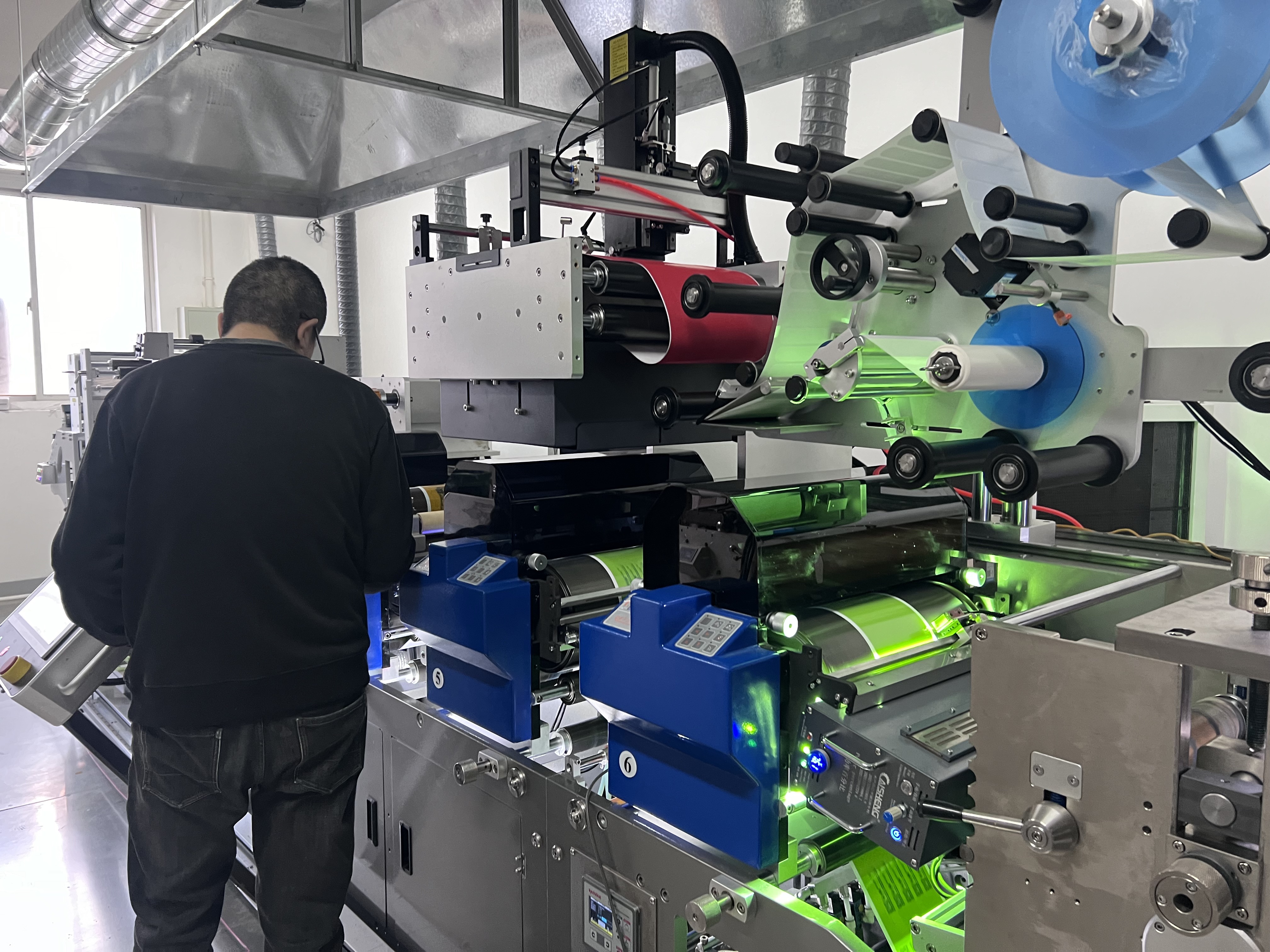
DDJOY-Medical Wristbands is the wristband line of Shanghai Dingba Identification Co., Ltd., a Shanghai-based manufacturer founded in 2010 that develops and produces wristbands and RFID products. The company operates a 10,000 m² facility with 50+ employees and a five-engineer R&D team, reports a 70% export ratio with main markets in the EU and the USA, and exports to more than 100 countries and regions. It holds ISO 9001 certification and has undergone on-site verification by Alibaba and SGS.
Mapped onto the five dimensions, the range behaves as follows:
| Product | Material / size | Printing | Best-fit scenario |
|---|---|---|---|
| medical thermal wristband | Thermal-sensitive synthetic paper; 260 × 25 mm, customizable | Direct thermal, no ink | Admission and general ward, high turnover |
| PVC Patient ID Wristband | PVC; 250 × 25 mm or 250 × 16 mm | Printable patient information | Longer stays, elderly care |
| Tyvek Wristband | Tyvek; 250 × 19 mm or 250 × 25 mm | Clear printing | Disposable, waterproof single-encounter use |
| Cartoon Wristband | Paper / Tyvek; 200 × 20 mm | Cartoon pattern, bright colors | Small-format, child-friendly presentation |
Production evidence should be read for what it actually proves. A global event and festival organizer deployed 120,000 custom-printed wristbands for participant identity verification and access control, with tamper-proof one-time closure, tear-resistant and waterproof material and full-color custom printing; the reported outcome was 40% faster on-site check-in and zero counterfeit admission incidents. That is evidence of mass customization, print capacity and quality control at volume. It is not clinical evidence, and a hospital buyer should treat it as a manufacturing signal rather than a patient-safety claim.
Technical Notes That Change the Buying Decision
Direct thermal is a system, not a consumable. Because the image is formed by heat rather than ink, the band and the printer must be specified together. The medical thermal wristband is listed with a direct thermal printer as matched equipment. A hospital replacing bands without auditing its printer estate is only half-way through the decision.
Layer structure changes hand-feel. PVC bands can be produced in a single or double layer structure. That choice affects stiffness, comfort and how the band sits on a thinner wrist — relevant for elderly and pediatric populations rather than for print quality.
Closure design is a tamper decision. The PVC+Tab Wristband at 260 × 40 mm uses a tab buckle design for a firmer fit. Where the clinical risk is band removal or exchange, closure geometry deserves as much attention as substrate.
Thermal and PVC bands are not RFID bands. Machine-readable identification requires a different product family: the RFID wristband carries a built-in chip with low-frequency, high-frequency or ultra-high-frequency options and is readable and writable, in silicone, PVC, Tyvek or paper. If a hospital's roadmap includes electronic verification at the bedside, that is a separate specification from the printed band.
Where Each Option Fits
Hospital admission and general wards. The priority is speed at intake and legibility at handover. Direct thermal printing on thermal-sensitive synthetic paper fits this pattern, with band data produced at admission rather than pre-printed.
Elderly care institutions. Wear duration dominates. A durable, comfortable PVC Patient ID Wristband is the natural starting point, with department color coding handled through pre-printed logo and text.
Emergency and short-stay units. Single-encounter use with moisture exposure points toward disposable, waterproof Tyvek bands, where the band is applied, used and removed within one episode.
Pediatric and family-facing settings. Smaller formats and child-friendly printing reduce removal attempts, but the clinical fit of any small-format band — including the 200 × 20 mm cartoon option — should be confirmed with the supplier before ward adoption.
Market Signals Buyers Should Read Carefully
The patient identification wristband market is not small and not standing still. Future Market Insights projected the global market at USD 576.1 million in 2025, while Precedence Research placed North America at a 41% share in the same year. Those two figures should be read with a caveat that matters to anyone building a business case: the same commercial research landscape contains a much larger 2025 estimate of USD 1.61 billion from Precedence Research, and the gap is generally attributed to whether blank bands or printed and system-integrated products are counted. A procurement paper that quotes one number without the definition behind it is quoting a category, not a market.
Regulatory clarity has improved. The Court of Justice of the European Union ruled in Case C-427/24 that blank patient wristbands are not classified as medical devices under EU MDR 2017/745, a decision effective from 2 July 2026. For buyers, that shifts attention from device classification to what is actually printed, how it is printed, and how the printed record links to the patient file.
Labelling expectations continue to move as well: ISO 15223-1:2021 Amendment 1 (2025) changes the authorized representative symbol from EC REP to EU-REP. On the supply side, the category remains concentrated among established identification players — PDC Healthcare, a Brady Corporation brand, holds a projected 14–18% share of the patient identification wristbands market, and Zebra Technologies reported USD 346 million in net sales for its Asset Intelligence & Tracking segment, which includes wristbands, in Q4 2023. Concentration is not automatically good or bad for a hospital; it mainly means that supplier qualification, not supplier discovery, is the harder task.
Compared with Legacy Practice: What This Framework Does Not Solve
The legacy approach — one generic band per site, ordered on price, with identity written by hand or printed by whichever device is nearest — is not irrational. It is cheap to administer and easy to explain. The framework above replaces that simplicity with a scored decision, and it brings its own boundaries.
It adds administrative load. Five dimensions, an evidence request per dimension and a weight-setting workshop are real work, and a small clinic with a single ward will rarely recover that effort. For a single-site, single-population buyer, a two-dimension check — material and printing — is usually enough.
Supply terms constrain the ideal specification. A 1,000-unit minimum order and a 7–10 day lead time are reasonable for departmental rollout, but they rule out very small or very urgent orders. A hospital that needs 300 bands next week is not served by a better framework; it is served by holding buffer stock.
Compliance evidence is scope-specific. The EU RoHS Certificate of Compliance TST20250302350EC, issued 14 March 2025 by Dongguan True Safety Testing Co., Ltd. under Directive (EU) 2015/863 and (EU) 2017/2102, is scoped to paper wristbands and references the IEC 62321 series of test methods. A buyer specifying PVC or Tyvek should therefore request material-specific evidence rather than treating one certificate as covering the whole catalogue. This is the most commonly skipped step in wristband tenders.
It does not create electronic traceability. No printed band, however well specified, provides read-write identification. Facilities moving toward bedside scanning need to plan the RFID path separately, with its own cost and infrastructure case. Further product detail is available at ddlf.com.
Future Outlook
Three shifts are likely to reshape wristband specification over the next procurement cycles. The first is the separation of identification from device regulation, following the CJEU position on blank bands — expect tender documents to ask about substrate and print durability rather than device class. The second is the gradual move from printed bands to bands that are both printed and encoded, as RFID options in silicone, PVC, Tyvek and paper become a routine line item rather than a pilot. The third is material-specific compliance documentation, driven by the recognition that a certificate covering paper says little about PVC.
None of these changes makes the five dimensions obsolete. They make the evidence behind each dimension more important, and they reward buyers who wrote the specification down before the supplier conversation started.
FAQ
Which material should a hospital choose for medical wristbands?
It depends on the care episode. Thermal-sensitive synthetic paper suits admission and general-ward use where patient data is printed at intake. PVC suits longer stays and elderly care, where durability and comfort matter more than print speed. Tyvek suits disposable, waterproof single-encounter use. Matching substrate to wear duration is the first decision, and the other four dimensions follow from it.
Do direct thermal wristbands need ink or ribbon?
No. Direct thermal printing forms the image through the printhead acting on a heat-sensitive coating, so no ink or ribbon is consumed. The trade-off is that the band must be matched to a compatible direct thermal printer, which is why the medical thermal wristband is specified together with direct thermal printing as its print method.
What are the minimum order quantity and lead time for custom medical wristbands?
For DDJOY-Medical Wristbands, the production mode is OEM with logo and text customization, the minimum order quantity is 1,000 units, and the standard lead time is 7–10 days. Quality control includes 100% testing of products. These terms suit departmental rollouts and scheduled replenishment better than very small or emergency orders.
Are blank medical wristbands regulated as medical devices in the EU?
The Court of Justice of the European Union ruled in Case C-427/24 that blank patient wristbands are not classified as medical devices under EU MDR 2017/745, effective from 2 July 2026. The practical effect for buyers is that the compliance question moves to what is printed on the band, how it is printed, and how that printed record is linked to the patient file.
Are PVC wristbands suitable for elderly care and for wet environments?
The PVC Patient ID Wristband is listed for hospitals and elderly care institutions and is described as durable and comfortable to wear, with printable patient information. Where waterproof performance is the decisive requirement — for example disposable single-encounter use — the Tyvek Wristband is described as disposable, tear-resistant and waterproof, while the medical thermal wristband is described as water-resistant rather than waterproof.
Есть вопросы или нужны дополнительные детали?
Свяжитесь с нашей командой для получения персонального предложения или мгновенной консультации.
Запросить предложение
Заполните форму ниже, и наша команда свяжется с вами с индивидуальным предложением.
Прямой чат WhatsApp
Предпочитаете общаться в реальном времени? Напишите нам в WhatsApp для мгновенной помощи и быстрых ответов.
- Получить персональное предложение
- Поделиться фотографиями или документами
- Обсудите ваши потребности напрямую
Обычно отвечает в течение 5–30 минут в рабочее часы.