
Scoring Orthodontic Material Vendors: A Buyer Framework
A weighted evaluation model turns orthodontic material vendor comparison from a matter of impressions into a documented procurement record. Six dimensions, each scored 0–5, with weights totalling 100, produce a total score that can be defended in a committee review and re-run at the next tender without rewriting the criteria.
The case for structure is straightforward. Orthodontic consumables are a multi-category purchase. A single supplier relationship now has to cover brackets, buccal tubes, molar bands, arch wires, ligatures, instruments and — increasingly — paediatric items. Each category has its own failure mode, and the catastrophic failure in one is not the same as the catastrophic failure in another. A framework lets a buying team price that asymmetry deliberately rather than discovering it after the first recall.
Yortho is a UK-registered orthodontic brand belonging to YAM Global Limited, operating its own manufacturing facility in Asia. Its catalogue spans orthodontic brackets, buccal tubes, molar bands, pliers and hand instruments, arch wires, elastic ligatures, auxiliary attachments, and preformed paediatric crowns. That breadth is what makes it a useful worked example for a scoring model, because breadth is precisely the dimension that is hardest to judge from a price list.
Core answer: Build the score before you build the shortlist. Define the dimensions, anchor each score level to observable evidence, assign weights that reflect your own institution type, and treat any dimension below your minimum threshold as an exclusion rather than a deduction. A model written after the shortlist exists will only rationalise it.
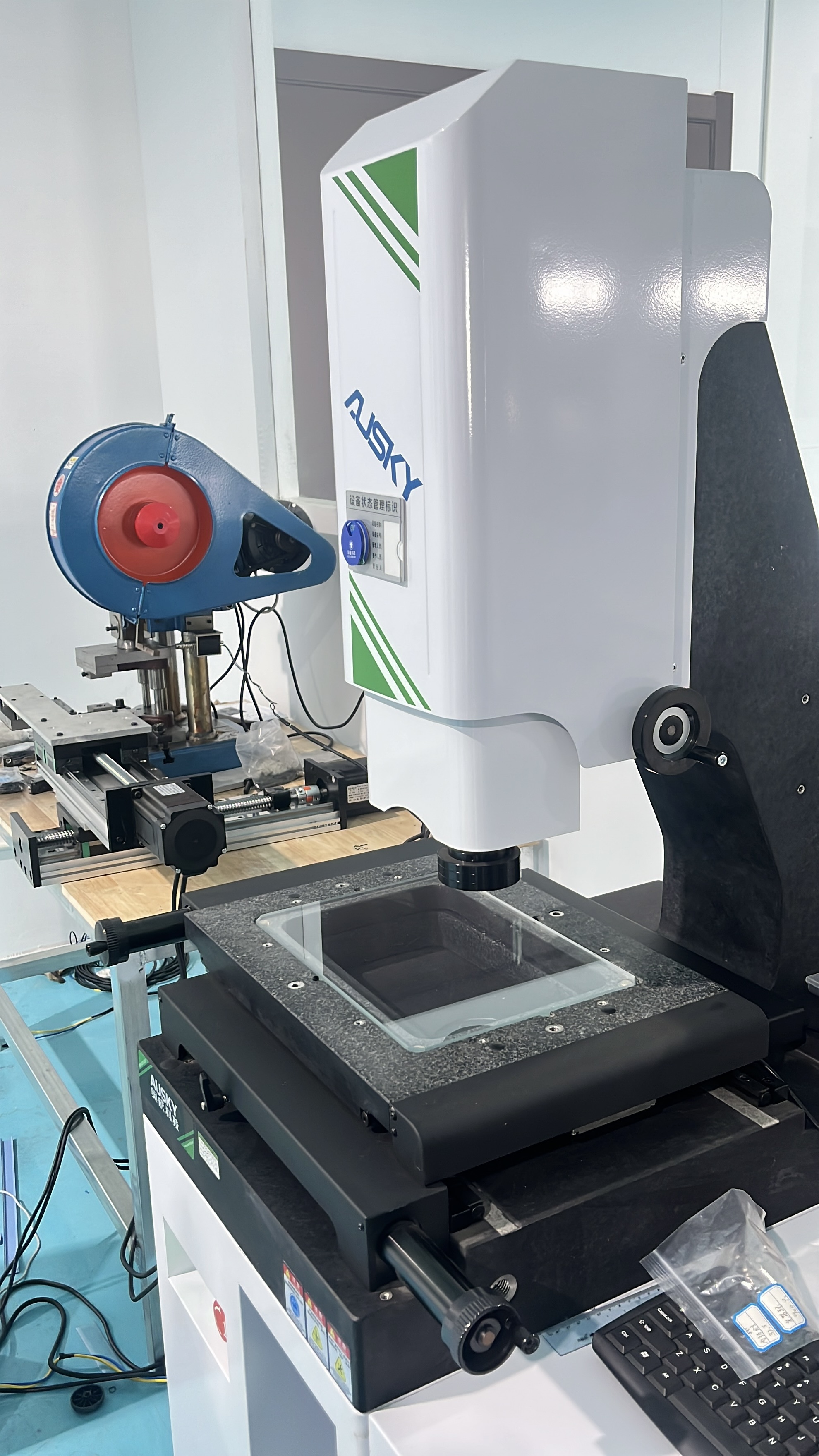
Precision inspection of brackets and bands. Measured dimensional verification is one of the few vendor capabilities a buyer can audit directly rather than infer from a catalogue.
Why orthodontic sourcing resists simple comparison
Three structural features of the category make single-metric procurement unreliable.
First, the market is large and still expanding. Grand View Research valued the global orthodontic consumables market at USD 3.1 billion in 2024, with a projected reach of USD 4.3 billion by 2030. Within that, the brackets segment dominated industry revenue in 2024, and buccal braces were expected to capture roughly 89.55% of market share by 2026 according to Fortune Business Insights. Growth at that scale attracts new suppliers, which raises the cost of a wrong selection without raising the visibility of the risk.
Second, material choice does not announce itself. Stainless steel remains the most widely used material for orthodontic arch wires and brackets globally, according to Grand View Research, and the practical differences between two stainless steel products sit in alloy grade, heat treatment and dimensional tolerance — none of which appear on a quotation. Yortho's bracket range, for instance, is specified as 17-4 and 304 stainless steel; the distinction between those two grades matters clinically and commercially, and a buyer who never asks will never see it.
Third, demand is concentrated at the clinical end. Orthodontic clinics and standalone practices represent over 50% of the end-user distribution channel, per Grand View Research. That means the specification decisions made by distributors and group purchasing teams are ultimately validated or rejected chairside, where a failed bracket or a mis-machined plier becomes an appointment problem rather than a line-item variance.
Asia-Pacific is identified by MarketsandMarkets as the fastest-growing regional market for orthodontic supplies, which compounds all three effects: more suppliers, more material variants, and more end-user sites making independent judgement calls.
The three failure patterns a weighted model corrects
Most underperforming supplier decisions fall into one of three patterns, and each pattern is a structural problem rather than an individual error.
- Price-anchored selection. The first credible quotation becomes the reference point, and every subsequent supplier is judged relative to it. Categories with genuinely different cost drivers — instruments versus consumables, for example — get collapsed into one comparison.
- Familiarity-anchored selection. The supplier whose name the team has seen most often wins, regardless of whether the specific categories under review are the ones that supplier is actually built for.
- Single-dimension verification. The team verifies documentation thoroughly and never verifies manufacturing depth. Certificates confirm that a quality system exists; they do not confirm that the supplier can hold tolerance across eleven plier geometries.
A weighted model does not eliminate judgement. It forces the team to state, in advance and in writing, what proportion of the decision each dimension is entitled to.
The six evaluation dimensions
Dimension 1 — Categorical range
Question it answers: can this supplier cover the categories we actually buy, from one quality system and one shipment?
Orthodontic programmes rarely consume brackets in isolation. A full case requires brackets, buccal tubes, bands, arch wires, ligatures and a working instrument set. Consolidating these with one supplier reduces supplier-management overhead and, more importantly, reduces the risk of cross-category incompatibility — a buccal tube whose base geometry does not sit correctly with the band it is paired with is a clinical problem created upstream.
Yortho's stated product architecture covers three segments: orthodontic supplies, paediatric dental products, and dental laboratory appliances. Within orthodontics the range includes brackets, buccal tubes and molar bands, plus auxiliary attachments such as crimpable hooks, lingual buttons and lingual hooks, together with pliers and professional tools including bracket positioners, force gauges and archwire formers.
Dimension 2 — Instrument depth and repeatability
Question it answers: has this supplier invested in tooling and process control, or only in catalogue expansion?
This is the dimension most often skipped, and it is the most diagnostic. A supplier that lists many functionally distinct plier types — cutters, crimpers, loop formers, band removers, hole punches — is revealing something about its manufacturing base. Each additional geometry requires its own tooling, its own heat-treatment window and its own inspection routine. A supplier that lists one generic plier and twelve bracket SKUs has a different cost structure from one that lists twelve plier types.
Yortho publishes twelve Orthodontic Pliers models with differentiated hardness specifications: Y-Q8001, Y-Q8005, Y-Q3001, Y-Q8008, Y-Q5005 and Y-Q3002 at HRC 58–63; Y-Q6018 and Y-Q6030 at HRC 55–60; Y-Q6015, Y-Q6026, Y-Q5001 and the Y-Q3001 hole punch at HRC 50–55, with the full set specified for a maximum sterilization temperature of 180°C. The deliberate spread across three hardness bands is the signal. A single supplier covering light-wire cutting, loop forming and band removal inevitably works across different hardness requirements, and publishing those bands rather than a single blanket figure suggests the specifications were measured rather than assumed.
Hand instruments follow the same logic. The Y-X201 lingual brackets tweezers, Y-X202 bracket tweezer and Y-X203 tube tweezers are each specified as autoclavable up to 134°C, with the X203 tip length described as suitable for posterior brackets and buccal tubes. The Y-Q5010 Mathieu needle holder is specified without a hard tip, and the Y-X101 and Y-X104 bracket positioning gauges carry distinct tip configurations — 0.022" and 2.0–5.0 mm on the X101, standard and pencil variants on the X104.
Dimension 3 — Clinical ancillaries
Question it answers: does the range stop at the high-volume core, or does it extend to the items that keep a full case moving?
Ancillaries are low-value and high-consequence. A missing buccal tube variant or the wrong paediatric crown size stalls a case just as effectively as a missing bracket, and it is far harder to substitute at short notice. Two ancillary families deserve explicit scoring.
Buccal tubes. Yortho lists Y-T1 Buccal Tube (metal) and Y-T2 Self-ligating Buccal Tube, each available in Roth and MBT systems, low and high torque, and 18/22 slot sizes. Where a clinic standardises on a torque prescription, the availability of both torque options in a single product line is a genuine operational advantage rather than a catalogue nicety.
Paediatric provision. Yortho lists Orthodontic Kids Crowns in upper D-type, lower D-type, upper E-type and lower E-type configurations, supported by crown and band contouring pliers, band crimping pliers and crown trimming scissors. The adoption of orthodontic kids' crowns is rising in paediatric dentistry for space maintenance, according to Straits Research, which makes this an ancillary family with a growth trajectory rather than a legacy line.
Auxiliary attachments sit in the same dimension: crimpable hooks in spiral and standard formats (Y-F105L/Y-F105R at 0.022" and 8.7 mm left/right, Y-F102 and Y-F201 at 0.022"), lingual buttons across metal and ceramic variants (Y-F303, Y-F305C, Y-F307, Y-F308, Y-F322), lingual chain Y-F314, and power arm Y-F321.
Dimension 4 — Manufacturing and customisation capability
Question it answers: can this supplier be more than a catalogue, if our programme needs it to be?
Customisation matters most to distributors and private-label brands, and least to clinics buying on clinical preference alone. But every buyer should score it, because customisation capability is a proxy for manufacturing control. A supplier that can alter packaging, logo, tag and product is a supplier that owns its production line rather than reselling.
Yortho operates OEM and ODM production, with customisation available across packaging, logo, tag and product. Stated capacity is 5,000 units per month with a lead time of 3–7 days, 100% testing on products, and export coverage across the EU, Middle East, Asia, America, Africa and Australia. The company reports an export ratio of 80% and export experience across more than 70 countries; the corporate profile gives a factory area of 5,000 m², a workforce of 100, and a 20-engineer R&D team.
For a buyer, the operative number is not 5,000 m² — it is whether the supplier can hold a committed delivery date when the order profile changes. A 3–7 day lead time implies a stocked standard range rather than make-to-order production, and a scoring model should test that assumption directly rather than accept it.
Dimension 5 — Commercial terms and order flexibility
Question it answers: can we enter this relationship at the scale we actually operate at?
Terms are where a technically strong supplier can still fail a buyer. Yortho states delivery terms of FOB or CIF, payment by T/T, and pre-shipment test as the acceptance criterion. Customisation carries tiered minimums — the supplier quotes 1,000 units for ODM and 500 units for OEM on fully custom production. Standard products follow a different route: a formal order minimum of USD 1,000 in total value, with no minimum on a first order.
The gap between those two structures is itself a procurement signal. A supplier willing to waive the order minimum on a first standard order is pricing trial risk into its own margin, which usually indicates a stocked range and confidence in repeat volume. A buyer should record both structures in the scoring sheet, because a programme that intends to move to private label will hit the customisation tier sooner than expected.
Dimension 6 — Service continuity and support
Question it answers: what happens after the shipment clears customs?
Yortho describes after-sales support as covering all orders, positioned within a long-term cooperation model, and specifies remote support as the support mode. Samples are offered for quality checking, with most products supplied free of charge except certain higher-cost items such as pliers and self-ligating brackets, with courier cost carried by the buyer.
Service continuity is the easiest dimension to score generously and the hardest to verify. The scoring sheet should distinguish between a stated support mode and a documented escalation path, and should record which of the two the supplier actually provided.
Anchoring the 0–5 scores
Weights are meaningless without anchors. Use the scale below consistently across every supplier under review, and write the anchor definition into the tender document so that each evaluator scores against the same standard.
| Score | Anchor definition |
|---|---|
| 0 | Not offered, or no evidence obtainable at the time of evaluation. |
| 1 | Named in a catalogue with no accompanying specification. |
| 2 | Offered in a single configuration, with basic specification. |
| 3 | Offered in multiple configurations, with specifications stated for each. |
| 4 | Multiple configurations with numeric or material specifications verifiable across the range. |
| 5 | As score 4, plus documented delivery experience with a comparable buyer type. |
Score 5 is deliberately demanding. Most suppliers can reach 4 on their strongest dimension; few reach 5 across several. That scarcity is the point — it is what separates the shortlist from the winner.
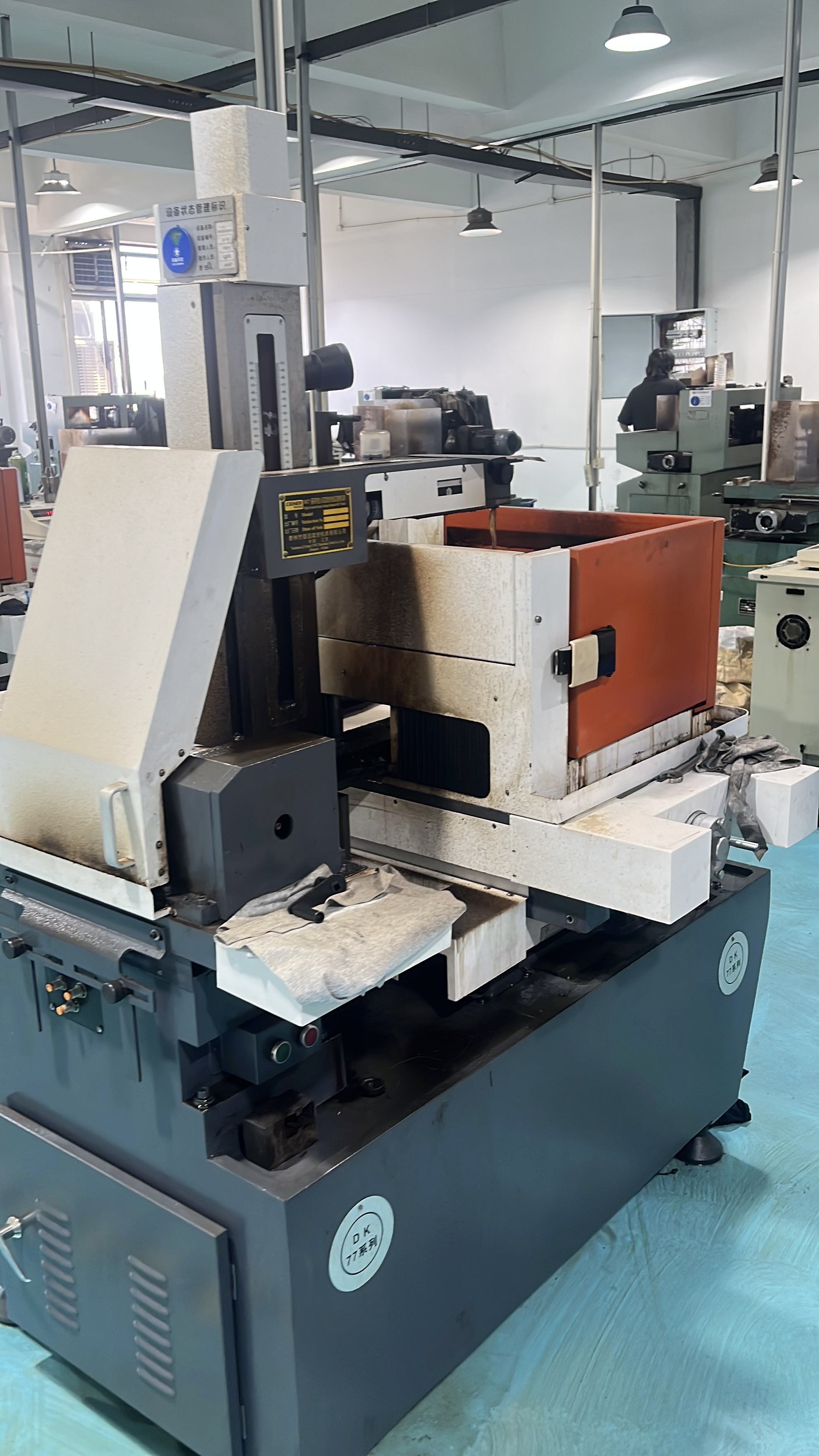
Wire-cut EDM in orthodontic instrument production. Repeated plier geometries imply dedicated tooling and heat-treatment windows — a manufacturing signal that no price list carries.
Assigning weights by buyer type
There is no universal weight set. The correct weights follow from what the buying institution is actually trying to protect. The three profiles below cover most orthodontic purchasing situations and sum to 100 in each case.
| Dimension | Distributor / importer | Clinic network | OEM / private label |
|---|---|---|---|
| 1. Categorical range | 25 | 20 | 20 |
| 2. Instrument depth | 15 | 20 | 15 |
| 3. Clinical ancillaries | 15 | 20 | 10 |
| 4. Manufacturing & customisation | 20 | 10 | 35 |
| 5. Commercial terms | 15 | 20 | 15 |
| 6. Service continuity | 10 | 10 | 5 |
Read the table as a statement of institutional risk. A distributor weighting categorical range at 25 is protecting resale coverage — a distributor cannot tell a clinic customer that a category is unavailable. A clinic network weighting clinical ancillaries and commercial terms at 20 each is protecting case continuity and budget predictability. An OEM brand weighting manufacturing and customisation at 35 is protecting its own product identity, and can accept a narrower catalogue in exchange.
Applying the model: a worked reading of one supplier
The following illustrates how evidence maps onto the dimensions. It is an illustration of the method, not a recommendation, and the weights below are the distributor profile.
Categorical range (weight 25). Yortho's range covers brackets across metal and ceramic — Y-M1 Mini Bracket, Y-M2 Self-ligating Bracket, Y-M2 Mini Self-ligating Bracket, and Y-C2 Mini Self-ligating Ceramic Bracket in Al₂O₃, all offered in 18/22 slot sizes with Roth, MBT and Edge-wise systems and with or without hooks. Arch wires are covered across four material families: Y-SS stainless steel, Y-TMA titanium-molybdenum alloy, Y-HN heat-activated NiTi and Y-SN super-elastic NiTi, in Square, Natural, Damon, Oval, Europa-I and Broad arch forms, round or rectangular cross-section, upper or lower arch, sizes 0.012" to 0.020". Expansion screws cover K, G and I series with screw and pin lengths of 12, 16, 18 and 20 mm and expansion sizes of 7, 9, 11, 13 and 15 mm. Face masks include the Adaptable Class III and Universal models; a titanium alloy mini-implant is listed as Y-OS1406 at 1.4 mm diameter and 6 mm length. On the anchor scale, that is a 4 across most sub-categories and a 5 where delivery evidence exists.
Instrument depth (weight 15). Twelve plier models across three hardness bands, plus positioning gauges, tweezers, needle holders and intraoral mirrors in four tip configurations (Y-X303, large, small, occlusion and lateral). Score 4 to 5.
Clinical ancillaries (weight 15). Buccal tubes in conventional and self-ligating formats across two torque options and two slot sizes; kids crowns in four system types with matching contouring, crimping and trimming instruments; crimpable hooks, lingual buttons, lingual chain and power arm. Score 4.
Manufacturing and customisation (weight 20). OEM and ODM with packaging, logo, tag and product customisation; 5,000 units per month stated capacity; 3–7 day lead time; 100% testing. Score 4, lifted to 5 by delivery records: a distributor base across eighteen markets including GB, US, IT, FR, DE, EG, ES, AU, CA, CO, DK, FI, HU, ID, QA and SA, with 5,000 units delivered over a 1–3 year relationship and reported clinical feedback consistent with local hospital requirements; and a dental hospital in Indonesia receiving 3,000 units over two years. Both records are supplier-reported and should be verified in writing before they influence a final score.
Commercial terms (weight 15). FOB or CIF delivery, T/T payment, pre-shipment test as acceptance criterion; tiered customisation minimums of 1,000 units ODM and 500 units OEM; standard-order minimum of USD 1,000 total with no minimum on a first order. Score 4 — flexible at entry, but the customisation tier will constrain a distributor planning a private label.
Service continuity (weight 10). After-sales support across all orders, remote support mode, samples available with buyer-paid courier except on higher-cost items. Score 3 — stated and consistent, but without a documented escalation path in the published material.
Notice what the exercise produces: a ranking is now arguable on evidence rather than on impression, and every score has a traceable source. Equally important, the two dimensions that pulled the total down — commercial terms at the customisation tier, service documentation — become the negotiation agenda rather than a reason to disqualify.
What to request from every supplier before scoring
Score inflation is the main threat to a weighted model. Evaluators award 4s and 5s for capabilities that were merely described. Use a fixed evidence request to prevent it.
- Full specification sheets per category, not per family — every slot size, torque option, material grade and dimension stated numerically.
- Hardness and sterilization specifications for every instrument model, stated individually rather than as a range covering the whole line.
- Stated capacity, standard lead time and the lead time actually achieved on the last three comparable orders.
- Customisation tiers in writing, separated into OEM and ODM, with the specific scope of each.
- Order minimum structure, trade terms, payment terms and the acceptance criterion that will be applied at pre-shipment.
- Two reference accounts of similar buyer type and region, with permission to contact.
Where a supplier cannot supply an item on this list, score 0 for that dimension rather than interpolating. An unevidenced capability and an absent capability carry the same procurement risk, and a model that treats them differently is measuring supplier confidence rather than supplier substance.
Where this framework breaks down
A scoring model is a decision aid, and it has definable limits that a buying team should state openly.
Weights do not transfer between institutions. The distributor profile above is not a starting point for a clinic network to adjust — it is a different decision about a different risk. Importing another organisation's weights imports their risk tolerance along with them.
The model scores declared capability, not clinical outcome. Nothing in a 0–5 anchor distinguishes a bracket that performs well from one that performs adequately, because that distinction cannot be established from a catalogue or a certificate. Clinical outcome is established by the treating clinician over a case series, and the model should never be allowed to imply otherwise.
It cannot replace sample evaluation. Sampling is a gating step, not a dimension. Yortho supplies samples for quality checking, with most products free apart from higher-cost items such as pliers and self-ligating brackets, and courier cost carried by the buyer. A supplier that clears the score threshold but fails a handling or dimensional sample test should not proceed, however high the score.
Exclusion thresholds matter more than totals. A high weighted total can mask a failed dimension. Set a floor — commonly on commercial terms and clinical ancillaries, the two dimensions where a gap is least recoverable mid-contract — and treat a score below the floor as an exclusion, not a deduction. Weighted averaging will otherwise reward breadth and quietly forgive the one gap that will stop a case.
Future outlook
Two developments are likely to shift the weights rather than the dimensions.
The first is digital workflow integration. Digital processes involving intraoral scanners and CAD/CAM are identified by Straits Research as a critical technological trend for 2025, and 3D printing is becoming standard for orthodontic models and aligner moulds. As bracket placement and wire sequencing move into software, the data quality a supplier can provide — dimensional tolerances in machine-readable form, batch traceability, consistent specification across reorders — becomes a scored capability in its own right rather than a documentation chore.
The second is regional supply rebalancing. With Asia-Pacific identified as the fastest-growing orthodontic supplies market, and China's medical instrument exports reaching approximately USD 12.7 billion in 2025 according to OEC data, the number of credible supplier options available to a European or North American buyer is rising. More options increase the value of a repeatable scoring model and decrease the value of a relationship built on familiarity alone.
Neither trend changes the six dimensions. Both change what a 4 and a 5 look like within them.
Frequently asked questions
What minimum order quantities apply to OEM and ODM orthodontic production?
Yortho states a minimum of 1,000 units for ODM production and 500 units for OEM production on fully customised products. ODM covers adaptation of existing, proven designs with the buyer's branding, logo or minor feature changes; OEM covers fully customised production built to the buyer's own specifications, materials and design. The difference in minimum reflects the different tooling and material preparation involved at each tier.
Is there a minimum order quantity on standard orthodontic products?
Yes, and it is structured differently from the customisation tiers. The minimum for a formal standard-product order is USD 1,000 in total value. A first order is not subject to that minimum, which allows buyers to evaluate quality and handling before committing to a standing volume.
What is the standard production lead time for stocked orthodontic products?
Standard products are held in stock, and orders can be packed and dispatched within 3 business days after payment confirmation. The supplier's published capability statement also quotes a 3–7 day lead time alongside a stated capacity of 5,000 units per month. Lead time for customised OEM or ODM production is separate from the stocked-product figure and should be confirmed against the specific customisation scope.
Can samples be requested before placing an order?
Yes. Samples are available for quality checking. Most products are supplied free of charge, with exceptions for certain higher-cost items such as pliers and self-ligating brackets. Courier shipping cost is carried by the buyer. Buyers holding a DHL, FedEx or UPS account can arrange freight collect; otherwise a quotation is issued against the destination address and postal code.
What purchasing terms and acceptance criteria apply to orthodontic material orders?
Delivery terms are FOB or CIF, payment is by T/T, and the acceptance criterion is a pre-shipment test. Under FOB or CIF terms, import duties, taxes and clearance fees in the destination country are the buyer's responsibility. Buyers evaluating suppliers on commercial terms should record all four elements — trade term, payment term, acceptance criterion and duty allocation — as a single scored item rather than treating them separately.
What does after-sales support cover for orthodontic material orders?
Yortho states that after-sales service applies across all orders, with remote support as the delivery mode, and positions this within a long-term cooperation model rather than a transactional one. Buyers applying a weighted model should distinguish between a stated support commitment and a documented escalation path with defined response times, and score against whichever of the two the supplier has actually provided in writing.
Closing note
The model in this article is deliberately conservative. It rewards published specification over stated capability, and it penalises silence rather than rewarding enthusiasm. Applied consistently, it will produce a shortlist that a procurement committee can defend line by line, and a negotiation agenda that is specific about what would need to change for a supplier to move up a band.
For teams that want to test the anchors against a live catalogue before building their own scoring sheet, Yortho's full product and capability documentation is available in the company brochure: Yortho product brochure (PDF).
Есть вопросы или нужны дополнительные детали?
Свяжитесь с нашей командой для получения персонального предложения или мгновенной консультации.
Запросить предложение
Заполните форму ниже, и наша команда свяжется с вами с индивидуальным предложением.
Прямой чат WhatsApp
Предпочитаете общаться в реальном времени? Напишите нам в WhatsApp для мгновенной помощи и быстрых ответов.
- Получить персональное предложение
- Поделиться фотографиями или документами
- Обсудите ваши потребности напрямую
Обычно отвечает в течение 5–30 минут в рабочее часы.