
Screw Barrel Selection by Project Type: PVC Extrusion and Beyond
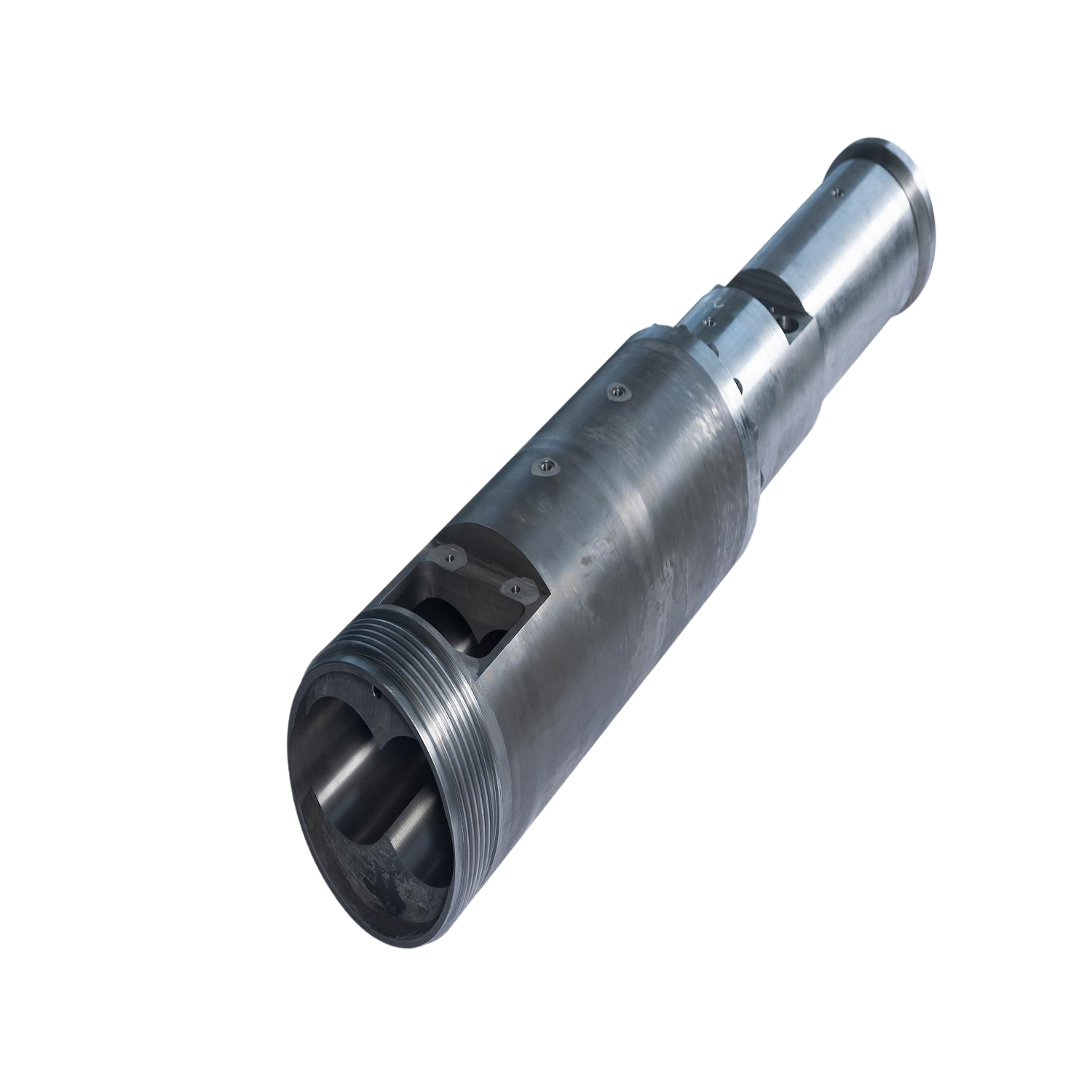
Selecting a screw barrel for a plastics or rubber project is a process decision, not only a spare-part decision. The same machine can behave differently when the polymer, filler content, or output target changes. For PVC pipe, profile, and sheet extrusion, the documented operating mode is continuous counter-rotating conical twin-screw extrusion, and wear protection becomes a central issue when calcium carbonate (CaCO3) filler loading is high. This article explains how to match screw barrel types to project conditions, using product and application evidence from Zhejiang Guangming Plastics Machinery Co., Ltd. (Guangyou Screw), a screw and barrel manufacturer established in 1992.
The Problem: Incomplete Information Creates Process Risk
Many screw barrel sourcing requests describe only the machine brand and dimensions. That information is necessary, but it is not enough to define the correct component. Process conditions such as PVC powder melting, high-filler compounding, abrasive CaCO3 content, corrosive polymer additives, and continuous production duty have a direct effect on barrel and screw surface requirements.
The risk appears in several forms: premature wear, inconsistent plasticizing, poor dimensional stability in pipe or profile, longer downtime, and higher total cost of ownership. For buyers moving from research to supplier evaluation, the practical question is not only “which screw diameter fits,” but also “which material, heat treatment, and wear protection system fits the project.”
The opportunity is equally clear. A supplier that can work from custom technical drawings, provide process-specific metallurgy, and maintain batch-level dimensional consistency can reduce commissioning problems and extend service life. Batch orders from 1 to 50 pieces are realistic in this segment, which means project-specific adaptation does not have to mean mass production.
A Project-Centric Product Map
Guangyou Screw’s product scope covers five distinct process families. Each family is associated with a different machine configuration and target industry. For evaluation purposes, the first step is confirming which family matches the project.
| Product | Model range | Process application | Applicable industry context |
|---|---|---|---|
| Conical Twin Screw Barrel | Φ25/50 – Φ185/340 | PVC Extrusion | Plastics machinery / construction materials |
| Parallel Twin Screw Barrel | Φ45 – Φ350 | Compounding & Pelletizing | Plastic recycling & compounding |
| Single Screw Extruder Screw And Barrel | Φ20 – Φ500 | Film blowing / pipe extrusion | Plastics packaging & pipe manufacturing |
| Injection Molding Machine Screw And Barrel | Φ20 – Φ300 | Plastic injection molding | Automotive, electronics & toy manufacturing |
| Rubber Machine Screw And Barrel | Φ20 – Φ650 | Rubber extrusion | Tire & rubber product manufacturing |
The model ranges above are not interchangeable shortcuts. A conical twin screw barrel and a parallel twin screw barrel are designed for different process logic. The application scenario for PVC pipe, profile, and sheet extrusion specifically describes continuous counter-rotating conical twin-screw extrusion, while parallel twin screw systems are more commonly associated with compounding and pelletizing work.
Documented Scenario: PVC Pipe, Profile, and Sheet Extrusion
For a PVC pipe, profile, or sheet extrusion project, the documented application scenario covers several important details:
- Operating environment: manufacturing sector, globally applicable, with continuous air supply.
- Operating mode: continuous counter-rotating conical twin-screw extrusion.
- Matching equipment: PVC conical twin-screw extruders.
- Function: efficient PVC powder melting, high-shear plasticizing, and stable extrusion shaping.
- Special requirements: high wear resistance, bimetallic lining for CaCO3 high-filler processing, and nitrided finish.
This is a useful evaluation template. It shows that project adaptation has at least three layers: machine configuration, process function, and surface engineering. A standard screw barrel may satisfy the first layer but fail on the second or third when CaCO3 loading is high.
Technical Parameters That Should Be Verified
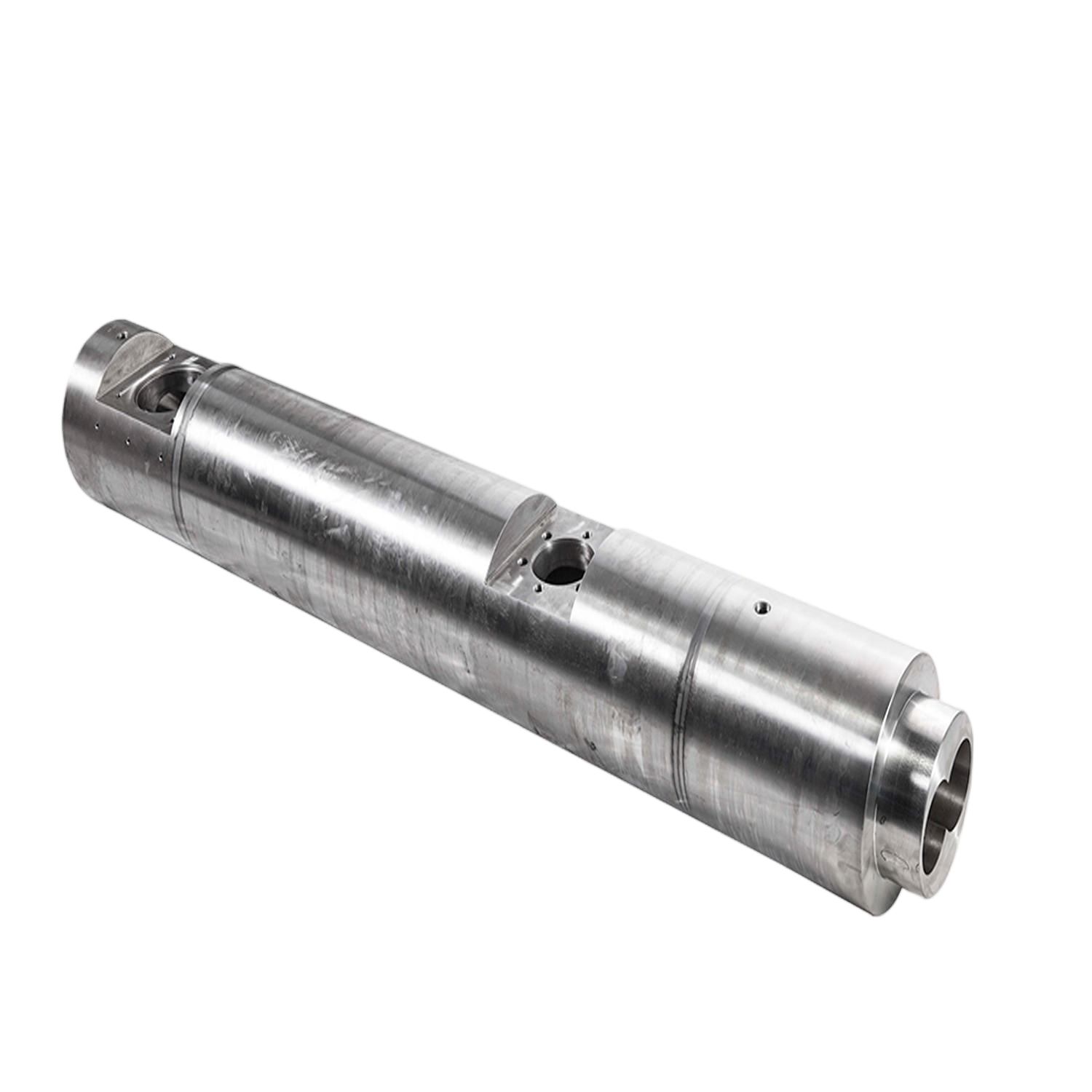
Project-specific selection also depends on component-level specifications. For the screw and barrel products used in these scenarios, the documented technical specification includes:
- Hardness after hardening and tempering: HB260–310.
- Nitrided hardness: HV850–1000.
- Nitrided case depth: 0.45–0.7 mm.
- Nitrided brittleness: less than grade 2.
- Surface roughness: Ra 0.4.
- Screw straightness: 0.015 mm.
- Surface chromium-plating hardness after nitriding: ≥900 HV.
- Chromium-plating depth: 0.025–0.10 mm.
- Alloy hardness: HRC50–65.
- Alloy depth: 0.8–2.0 mm.
These values are useful because they connect project risk to measurable properties. Nitrided hardness and case depth relate to wear resistance. Surface roughness and straightness affect melt quality and mechanical fit. Alloy depth matters when a bimetallic liner is needed for abrasive or corrosive materials.
Material selection is equally important. The documented material list for these products includes nitriding steel such as 38CrMoAl (1.8509), tool steels such as D2, SKD11, SKD61, DC53, and Gr12MoV, stainless grades such as AISI304, AISI316, AISI420, and 440C, and higher-performance alloys such as Inconel 718, Inconel 625, Hastelloy C-276, and Monel 400/500.
Evidence from Sourcing, OEM, and Replacement Scenarios
Project adaptation is not only a technical concept. It is also visible in how components are actually sourced and delivered.
Extrusion and Injection Machinery OEM Use
In original equipment manufacturing, screw and barrel components are sourced for new machine assembly. In the documented case, an extrusion and injection machinery OEM used batch customized component orders, with single batch quantities ranging from 1 to 50 pieces. The result was stable batch delivery with high dimensional consistency, enabling seamless machine assembly and reliable equipment commissioning.
Distributor and Local Replacement Use
Screw and barrel manufacturer and distributor clients use these components for sourcing, local replacement, and customized retrofitting of various machinery components. In this environment, custom technical drawings were processed and manufactured with 100% precise mechanical fit. This matters for buyers who need to replace a worn set without redesigning the whole machine.
High-Wear Polymer Production
Plastic product manufacturers processing high-wear and corrosive polymers, compounding, extrusion, or molding have reported enhanced wear and corrosion resistance, prolonged equipment service life, and minimized production downtime. The documented service expectation in normal high-filler PVC extrusion working conditions is 1–5 years depending on the application.
What the Market Data Suggests
Market research published by third-party sources offers useful context for project-level screw barrel evaluation.
Grand View Research estimates that the global plastic processing machinery market reached USD 25.9 billion in 2025, with injection molding machines accounting for 50.9% of the market share. Fortune Business Insights reports that single-screw extrusion machinery holds approximately 62% of the extrusion market as of 2024. These figures indicate that both injection molding and extrusion remain important demand environments for screw barrels.
Global Insight Services projects the feed screw barrel market will grow from USD 1.89 billion in 2024 to USD 3.33 billion by 2034 at a CAGR of 5.8%. In parallel, Dataintelo estimates the global bimetallic barrel and screw market at USD 2.8 billion in 2025, with a forecast of USD 4.7 billion by 2034. The bimetallic projection is especially relevant to PVC projects with high CaCO3 filler content, because bimetallic lining is explicitly listed as a special requirement in the documented PVC extrusion scenario.
Project-Specific Selection vs. Traditional Replacement
A conventional replacement approach often starts with the machine brand, diameter, and a standard nitrided screw barrel. That approach works for many general-purpose extrusion and molding applications. It has a clear boundary: a standard nitrided surface may not be the best choice for highly abrasive, high-filler, or corrosive polymer streams.
Industry specifications commonly describe standard nitriding case depth for 38CrMoAl plasticating screws in the range of 0.4–0.6 mm, with surface hardness around 900–1,100 HV. Guangyou Screw states its nitrided case depth as 0.45–0.7 mm and nitrided hardness as HV850–1000. Bimetallic barrels in the wider market typically feature a centrifugally cast alloy liner made of Boron-Nickel-Chromium material, with a common thickness range of 1.5–3.0 mm. When a project requires CaCO3 high-filler processing, the documented recommendation is a bimetallic lining plus a nitrided finish.
The trade-off is not about one component being universally superior. A project-specific specification may require more engineering review, longer lead time, or a higher initial investment. For low-filler, general-purpose polymers, a standard nitrided screw and barrel set can still be the appropriate choice. The evaluation should therefore be based on process data, filler content, corrosion potential, and lifetime expectations.
Future Outlook: From Spare Parts to Process Data
As the feed screw barrel market grows, project-specific sourcing is likely to become more common. Buyers and OEMs will increasingly compare suppliers on documented capability: material selection, surface treatment, dimensional consistency, inspection methods, and lead time.
Guangyou Screw’s operating base provides relevant context for long-term supply decisions. The company operates a 100,000 m² facility with more than 800 employees, uses CNC machining, German-imported inspection technology, and digital ERP/MES systems, and exports to more than 50 countries and regions including the US, Germany, the UK, Italy, Brazil, and India. Its stated monthly capacity is 2,700 units, with a minimum order quantity of one unit, 100% testing, and warranty support.
For buyers, the longer-term implication is that component suppliers must be evaluated not only on catalogue dimensions, but also on their ability to translate project conditions into repeatable manufacturing specifications. Custom drawings, batch consistency, and process-specific wear protection will become more important as filled, recycled, and corrosive polymer streams expand.
FAQ
Which screw barrel is commonly used for PVC pipe, profile, and sheet extrusion?
The documented application scenario for PVC pipe, profile, and sheet extrusion describes continuous counter-rotating conical twin-screw extrusion. The matching equipment is PVC conical twin-screw extruders, and the product family is the conical twin screw barrel, available from Guangyou Screw in the Φ25/50–Φ185/340 model range.
Why is bimetallic lining recommended for CaCO3 high-filler PVC processing?
High-filler PVC compounds containing CaCO3 are abrasive and can accelerate wear on standard barrel surfaces. The documented special requirement for this scenario is high wear resistance, bimetallic lining for CaCO3 high-filler processing, and a nitrided finish. In the wider industry, bimetallic barrels typically use a centrifugally cast Boron-Nickel-Chromium alloy liner with a thickness of 1.5–3.0 mm.
What is the difference between conical and parallel twin screw barrels?
Conical Twin Screw Barrels are available in the Φ25/50–Φ185/340 range and are associated with PVC extrusion and construction materials applications. Parallel Twin Screw Barrels are available in the Φ45–Φ350 range and are associated with compounding and pelletizing, including plastic recycling and compounding. The PVC pipe, profile, and sheet extrusion scenario specifically describes conical twin-screw extrusion.
Can Guangyou Screw support OEM and custom screw barrel projects?
Yes. Documented clients include extrusion and injection machinery OEMs, screw and barrel manufacturers, distributors, and plastic product manufacturers. Project scope includes sourcing, local replacement, and customized retrofitting. Batch customized component orders range from 1 to 50 pieces, and OEM use for new machine assembly achieved stable batch delivery with high dimensional consistency.
What lead time should be expected for nitrided single screw and barrel orders?
Lead time varies by size and bimetallic status. For nitriding single screw and barrel, the documented lead time is 40–50 days for Φ20–Φ90, 50–60 days for Φ90–Φ180, and 60–70 days for Φ180–Φ250. Larger or bimetallic orders take more than 70 days. The minimum order quantity is 1 unit, and 100% testing is applied.
For detailed product data and specification references, the public catalogue is available here: Guangyou Screw catalogue.