
Screw Press Sludge Dewatering: Independent Buyer Comparison of Top Configurations
Screw Press Sludge Dewatering: A Buyer's Comparison of Top Configurations
What to weigh when comparing screw press sludge dewatering machine designs, operating simplicity, and wash water use.
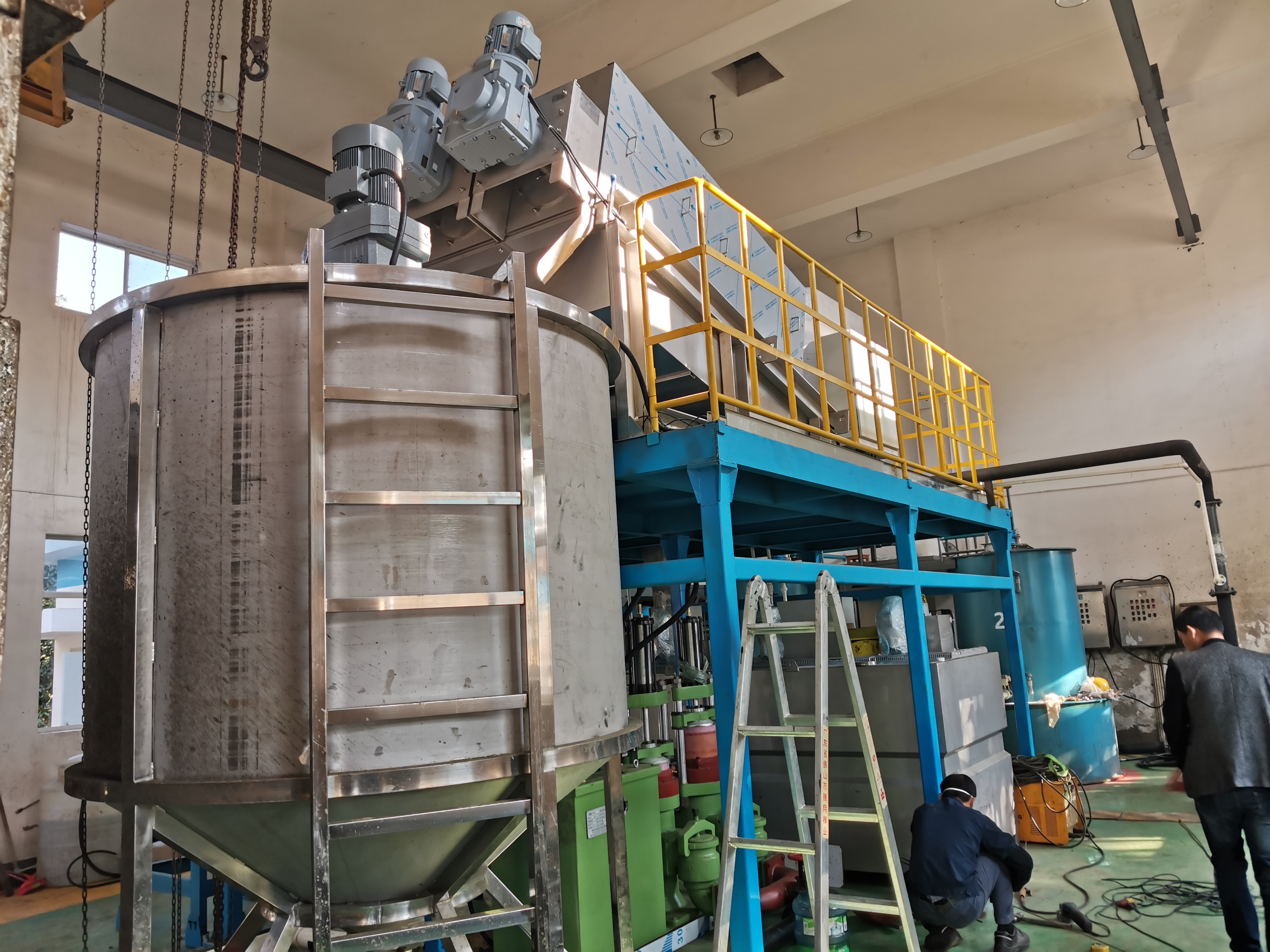
Screw press sludge dewatering has become a common choice in municipal and industrial wastewater treatment, but buyers are often faced with a market that uses the same name for meaningfully different machine configurations. For an independent purchasing decision, the practical question is not only which brand to choose, but which structural configuration fits the sludge, the site, and the operating budget. This article compares the main screw press configuration types from a buyer perspective — looking at design variations, operational simplicity, and wash water consumption — and uses the Benenv MDS series as a grounded reference for what a multi-disk configuration can specify.
What Is a Screw Press Sludge Dewatering Machine?
A screw press sludge dewatering machine is a dewatering press that uses a rotating screw inside a filter zone to convey and compress sludge, progressively squeezing water out as the material moves toward the discharge. It is classified under sludge dewatering equipment and is commonly used in municipal sludge dewatering, industrial wastewater sludge dewatering, and food processing wastewater treatment. A screw press is typically part of a larger sludge dewatering system that includes a sludge feed pump, polymer dosing, a PLC control panel, and a cake conveyor.
Because the screw rotates slowly, the machine is generally considered suitable for continuous sludge dewatering operation, including 24/7 automatic sludge dewatering in wastewater plants.
Why Configuration Comparison Matters
Screw press designs have evolved into several structural families. Each configuration changes how the sludge is filtered, how often the machine must be cleaned, and how much water and power it consumes. For buyers comparing quotes from different sludge dewatering equipment suppliers, the configuration — not the brand name — drives many long-term operating costs.
The Main Configurations in the Market
| Configuration Family | Typical Design | Operational Trait | Wash Water Demand |
|---|---|---|---|
| Single-screw cylindrical screen | A single screw rotating inside a cylindrical screen or sieve | Simple mechanical structure; sensitive to screen blinding with oily or fine sludge | Moderate to high depending on sludge type |
| Multi-disk / multi-plate screw press | Stacked fixed and moving disks around a screw shaft; the moving disks wipe the filtration gaps | Self-cleaning filtration effect; lower operator intervention; designed for continuous operation | Published as a specification; varies by model |
| Multi-screw or hybrid press | Multiple screws or a combination of gravity and pressure zones | Higher throughput potential; more complex drive and control | Often higher due to larger filtration area |
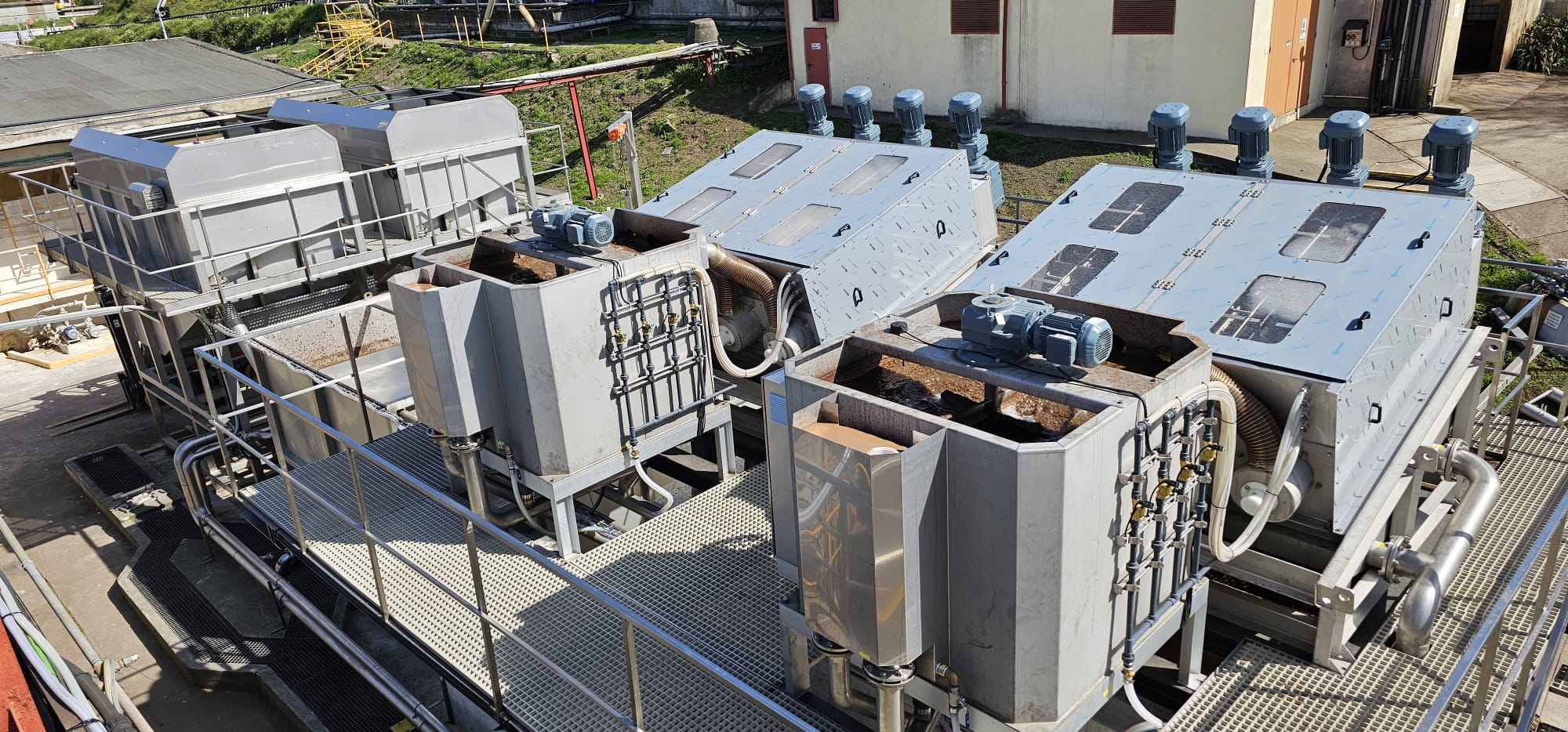
Among these, the multi-disk screw press (also called a multi-plate screw press) is a widely adopted configuration in sludge dewatering wastewater treatment because the moving disks reduce filter clogging. Benenv's MDS series is an example of the multi-disk screw press type.
Screw Press Configuration Comparison: What Should Buyers Evaluate?
Comparing screw press sludge dewatering machines is not only about dry solids throughput. Buyers should evaluate several technical parameters side by side.
1. Structural Design and Self-Cleaning Ability
A conventional screw press uses a screen or wedge wire. Sludge with high grease content, sticky biological sludge, or chemical sludge can progressively blind the screen. A multi-disk screw press addresses this by using alternating fixed and rotating disks: the rotating disks act as a self-cleaning mechanism, pushing solids away from the filtration gaps. For industrial buyers, this structural difference lowers the risk of frequent manual cleaning in automatic sludge dewatering lines.
2. Wash Water Consumption
Wash water consumption is one of the clearest configuration-related operating costs. Screen-based presses typically need continuous spray water to prevent blinding. Multi-disk screw presses still require wash water, but the quantity is published as a model-specific specification. In the Benenv MDS series, wash water consumption ranges from 24 L/h on the smallest MDS101 to 320 L/h on the MDS404. This type of specification is verifiable and should be requested from any sludge dewatering equipment supplier.
3. Power Consumption and Operating Simplicity
In sludge dewatering equipment, power consumption is a major cost driver. Screw press technology, by design, runs at low speed. Industry comparisons state that screw press technology typically consumes 90% to 95% less power than centrifuges. Within the screw press category, the motor range varies by model. The Benenv MDS series specifies power from 0.2 kW (MDS101/MDS131) to 8.2 kW (MDS354/MDS404). Because the drive train is simple and the process is continuous, screw presses can be operated with less operator attention than belt presses or centrifuges, but this depends on the quality of the feed conditioning system.
4. Throughput Matching: Hydraulic Capacity and Dry Solids
Configuration comparison must align with project sludge volume. The Benenv MDS series shows a representative range for multi-disk screw presses:
| Model | Power (kW) | Capacity (m³/h) | DS (kg/h) | Weight (kg) | Wash Water (L/h) |
|---|---|---|---|---|---|
| MDS101 | 0.2 | 0.12–1.5 | 3–6 | 205 | 24 |
| MDS131 | 0.2 | 0.24–3 | 6–12 | 205 | 24 |
| MDS132 | 0.3 | 0.48–3 | 12–24 | 275 | 48 |
| MDS201 | 0.3 | 0.4–6 | 12–20 | 320 | 32 |
| MDS202 | 0.6 | 0.8–12 | 24–40 | 470 | 64 |
| MDS301 | 0.8 | 1.2–15 | 30–60 | 910 | 40 |
| MDS302 | 1.2 | 2.4–30 | 60–120 | 1,350 | 80 |
| MDS303 | 1.95 | 0.12–1.5 | 3.6–45 | 1,820 | 120 |
| MDS351 | 1.9 | 2.4–30 | 60–120 | 1,610 | 72 |
| MDS352 | 3.75 | 4.8–30 | 120–240 | 2,300 | 144 |
| MDS353 | 6 | 7.2–90 | 180–360 | 3,350 | 216 |
| MDS354 | 8.2 | 9.6–120 | 240–480 | 4,500 | 288 |
| MDS401 | 2.25 | 3.4–50 | 100–170 | 2,500 | 80 |
| MDS402 | 4.5 | 6.8–100 | 200–340 | 3,480 | 160 |
| MDS403 | 6.7 | 10.2–150 | 300–510 | 4,550 | 240 |
| MDS404 | 8.2 | 13.6–200 | 400–680 | 6,550 | 320 |
Source: Benenv published product specifications. Use this table as a template for comparing configuration sheets from different screw press sludge dewatering machine suppliers.
5. Material of Construction
A screw press dewatering machine should be evaluated not only on its screen or disk design but also on the material used. Corrosion-resistant materials are critical in industrial sludge dewatering. The Benenv MDS series is available in SS304 or SS316L, which are common material choices for sludge contact parts in municipal sludge dewatering and industrial chemical sludge applications.
6. Automation and System Integration
A dewatering screw press machine is one element of a dewatering plant. A complete screw press dewatering unit requires a sludge feed pump, polymer dosing system, and electrical control. In the Benenv product context, the typical auxiliary list includes a sludge feed pump, PAM dosing system, PLC control cabinet, and cake conveying system. When comparing configurations, the machine itself may be similar, but the quality of automation — continuous operation, response to fluctuating sludge concentration, and alarm handling — determines real operational simplicity.
Application Context: Where Each Screw Press Configuration Is Used
The strength of a screw press configuration is best evaluated in a specific operating environment. Screw press sludge dewatering machines are widely used in municipal wastewater treatment, industrial wastewater treatment (including chemical, textile, paper, electroplating, and pharmaceutical plants), food processing, slaughterhouse wastewater, livestock and agricultural wastewater, and landfill leachate treatment.
In these applications, the common working conditions include low-to-high sludge concentration, continuous operation systems, and a preference for low energy and low noise. The function is defined as solid-liquid separation of sludge — reducing sludge moisture content, cutting sludge volume, and lowering disposal cost.
The key selection logic is as follows:
- For a small municipal plant with continuous flow and limited operator attention, a compact multi-disk screw press such as the MDS201 or MDS301 is often aligned with low-maintenance requirements.
- For a large industrial wastewater treatment system in a chemical or paper plant, a larger configuration (MDS403, MDS404) can handle higher hydraulic loads and dry solids output.
- For landfill leachate and difficult sludge, the self-cleaning multi-disk structure is generally preferable, but chemical conditioning — flocculant selection — is decisive.
Comparison with Traditional Solutions and Honest Boundaries
Relative to a belt filter press or centrifuge, the screw press is usually presented as a low-energy, continuous dewatering option. Verified industry comparisons indicate that screw press technology consumes roughly 90–95% less power compared with centrifuges. The configuration also tends to have a smaller footprint and lower noise.
However, an independent buyer comparison should state a clear limitation: screw press designs, including the multi-disk type, are not universally superior in every sludge type. Centrifuges can sometimes achieve a drier cake on certain biological sludges, and belt presses may be competitive at very high hydraulic loading. For a buyer with highly variable sludge and a strong need for maximum cake dryness, the screw press configuration should be validated by on-site testing or pilot data before purchase.
Another boundary concerns wash water. Even though the multi-disk configuration is self-cleaning, it still consumes water. On large models the published wash water volume is substantial; buyers must account for this in continuous operations. Wash water consumption should be part of the total cost of ownership calculation, not treated as an afterthought.
Market Context for Screw Press Sludge Dewatering
The demand for screw press sludge dewatering is expanding as wastewater treatment capacity grows globally. Third-party market data indicates that the global sludge dewatering equipment market was valued at around USD 5.19 billion in 2024 and is projected to grow to USD 10.16 billion by 2032. Within the sludge dewatering equipment category, the screw press segment is expected to show a high CAGR of about 9.4% from 2025 to 2032 — a signal that buyers are moving toward low-energy, continuous dewatering configurations. Asia Pacific accounted for a leading regional share of 37.57% in 2024, driven by urbanization and stricter wastewater regulation.
For industrial buyers, the market trend reinforces the importance of configuration literacy. As the screw press category grows, suppliers are expanding model ranges and service claims. A technical comparison — structure, wash water, power, material, and automation — is the most reliable way to distinguish between sludge dewatering equipment offers.
How to Run an Independent Buyer Comparison
A neutral comparison for screw press sludge dewatering machines should follow a consistent method:
- Define the sludge type, concentration range, and daily operating hours.
- Request the published hydraulic capacity and dry solids capacity from each supplier.
- Request the wash water consumption in L/h and power in kW for each model.
- Specify the required material (SS304 or SS316L) for sludge contact parts.
- Ask for a complete system list: feed pump, polymer dosing, PLC control, and cake conveying.
- Compare weight and footprint if installation space is constrained.
- Ask how the supplier handles maintenance access to the screw and filter element.
FAQ
What is the difference between a screw press and a multi-disk screw press?
A screw press uses a rotating screw to press sludge against a filter element. A multi-disk screw press is a specific structural configuration in which the filter element is formed by stacked fixed and moving disks. The moving disks rotate with the screw and continuously wipe the filtration gaps, which reduces blinding and supports more stable continuous dewatering.
What is typical wash water consumption for a screw press sludge dewatering machine?
Wash water consumption varies by model and configuration. In the Benenv MDS multi-disk screw press series, published wash water demand ranges from 24 L/h on the MDS101 to 320 L/h on the MDS404. Buyers should request the wash water figure in L/h together with power and capacity from each supplier.
Which industries use screw press sludge dewatering machines?
Screw press sludge dewatering is common in municipal wastewater treatment, industrial wastewater treatment (chemical, textile, paper, electroplating, pharmaceutical), food processing and slaughterhouse wastewater, livestock, aquaculture and agricultural wastewater, and landfill leachate treatment.
Does a screw press consume less power than a centrifuge?
Yes. Industry comparative analyses state that screw press technology typically consumes 90% to 95% less power compared with centrifuges. Screw presses operate at low speed, while centrifuges require high rotational energy for separation.
What should a complete screw press dewatering system include?
A complete system normally includes the screw press dewatering machine, a sludge feed pump (often a screw pump), a polymer (PAM) dosing system, an electrical control system with PLC, and a cake conveying system. These auxiliary components determine the stability and automation level of the dewatering unit.
What are the limitations of screw press configurations?
Although screw presses are low-energy and suitable for continuous operation, they depend on stable sludge conditioning. Maximum cake dryness may be lower than that of a high-speed centrifuge on certain sludges. Wash water consumption can also be significant on large models. Buyers should validate performance through pilot testing or reference sites.
Final Observation for Buyers
In the screw press sludge dewatering market, the supplier name matters less than the configuration logic. A multi-disk screw press offers a self-cleaning structure that is well matched to continuous municipal and industrial sludge dewatering. But the exact model decision depends on hydraulic flow, dry solids load, power, wash water, and sludge characteristics. A configuration comparison built on published parameters — not on marketing language — gives industrial buyers the strongest basis for selecting sludge dewatering equipment.
For a more detailed technical reference on the MDS multi-disk screw press and Benenv's broader product range, the company brochure is publicly available here: Benenv Company Brochure (PDF)
Есть вопросы или нужны дополнительные детали?
Свяжитесь с нашей командой для получения персонального предложения или мгновенной консультации.
Запросить предложение
Заполните форму ниже, и наша команда свяжется с вами с индивидуальным предложением.
Прямой чат WhatsApp
Предпочитаете общаться в реальном времени? Напишите нам в WhatsApp для мгновенной помощи и быстрых ответов.
- Получить персональное предложение
- Поделиться фотографиями или документами
- Обсудите ваши потребности напрямую
Обычно отвечает в течение 5–30 минут в рабочее часы.