
Screw vs. Piston: Cost-Benefit Analysis for Industrial Buyers
Decision Time for Industrial Air Supply
When a production line is down, every minute costs money. For buyers at the decision stage, the choice between a rotary screw air compressor and a traditional piston model directly impacts uptime, energy bills, and total cost of ownership over the equipment’s lifecycle. UMW Air, a Shandong-based manufacturer with 200 employees and an annual output of 12,000 units, builds screw compressors designed for continuous 24/7 industrial operation—a critical capability for factories, CNC shops, and manufacturing lines.
The Problem: Intermittent Air Supply and High Maintenance
Piston compressors have long been the entry-level choice, but they are built for intermittent duty. Their reciprocating design means more moving parts, higher vibration, and shorter service intervals. Maintenance often requires frequent valve and ring replacements, causing unscheduled downtime. For manufacturers running laser cutters, CNC machines, or automated assembly lines, unreliable air supply translates directly into production losses.
UMW Air Screw Compressors: Lower Maintenance, Continuous Duty
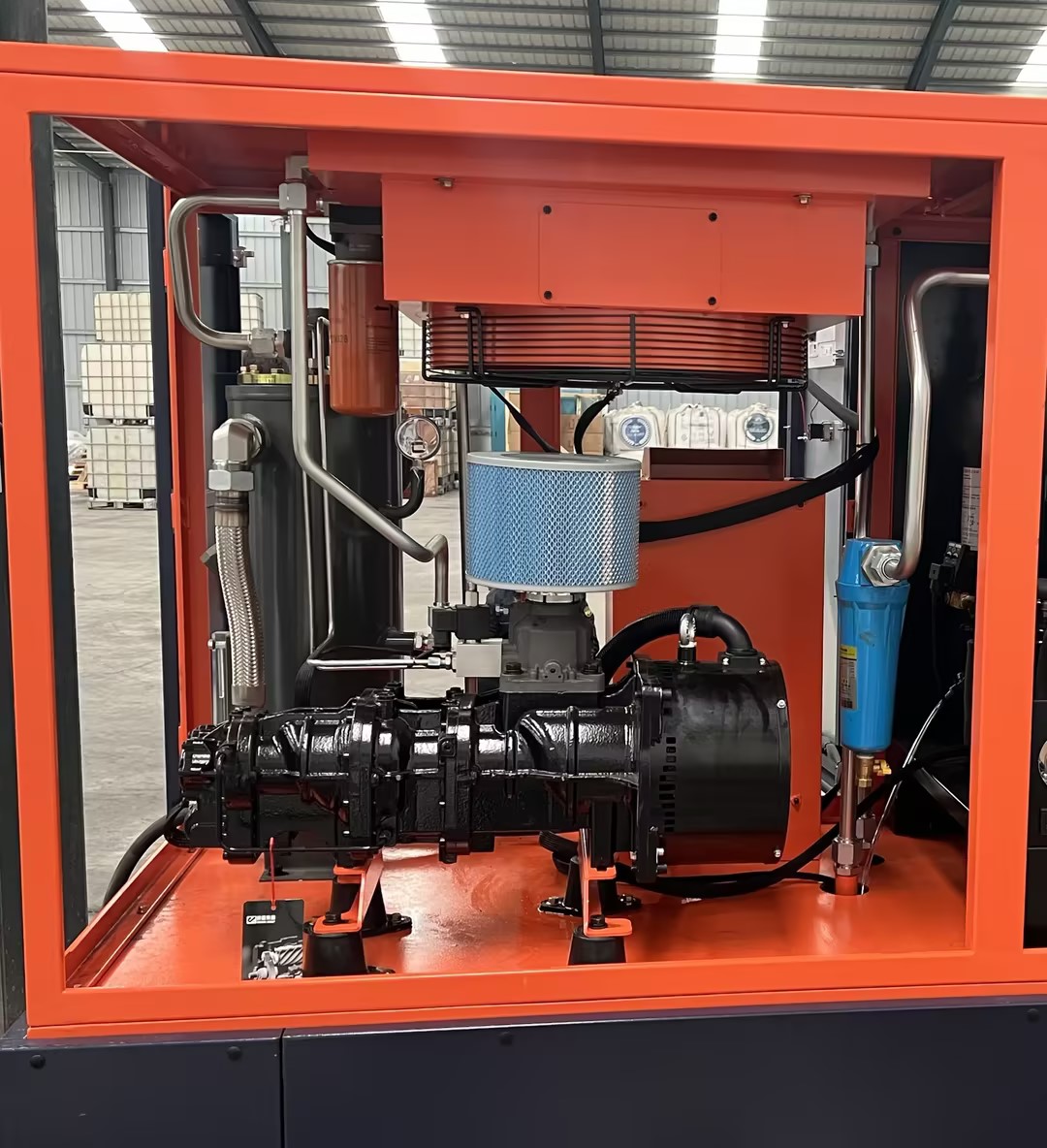
UMW Air screw air compressors are engineered with fewer moving parts than piston units, resulting in lower maintenance requirements and longer service intervals. According to UMW Air’s specifications, these units deliver stable, continuous airflow suitable for 24/7 operation—ideal for industrial production lines, CNC machining, plastic processing, and automotive parts manufacturing. The integrated automation control further reduces the need for manual supervision.
From a pure cost perspective, the initial investment for a screw compressor is slightly higher than an equivalent piston model. However, the total cost of ownership over a typical 5–10 year period is lower due to reduced downtime, lower energy consumption, and less frequent maintenance. UMW Air’s own documentation states: “Maintenance requirements are low, with fewer moving parts and long service intervals, resulting in lower downtime and maintenance costs despite a slightly higher initial investment.”
Technical Comparison: Screw vs. Piston Efficiency
These performance gaps are corroborated by industry-standard data: rotary screw compressors dominate the industrial segment with a 47% market share (Grand View Research, 2025), reflecting their suitability for continuous work. Additionally, Variable Frequency Drive (VFD) models—which are standard in many UMW Air units—can reduce energy costs by up to 35% by matching motor speed to actual demand.
Application Scenarios Where Screw Compressors Excel
.jpg)
UMW Air screw compressors are engineered for environments where air demand is steady and high-volume:
- CNC machining centers – continuous tool clamping and chip removal require stable pressure.
- Laser cutting – using compressed air as an auxiliary gas can cut production costs up to 50% compared to nitrogen (industry research), but demands oil-free air (ISO Class 0). While UMW Air standard models are not certified oil-free, the company’s internal thermal testing ensures stable output for general industrial use.
- Automotive parts manufacturing – pneumatic actuators and painting lines benefit from low pulsation.
- Plastics processing – consistent air for molding and cooling improves cycle times.
For intermittent operations (e.g., small repair shops running a single tool for short periods), a piston compressor may still be cost-effective—this is one honest limitation of the screw design for very low-duty cycles.
Market Trend Analysis: Why Screw Is Winning
The global industrial air compressor market was valued at USD 20.0 billion in 2025 and is projected to reach USD 28.3 billion by 2033 (Grand View Research). Asia Pacific alone accounted for 42.8% of revenue, with China as a key production hub. The rotary screw segment held a 47.0% share in 2025, driven by rising demand for energy-efficient, low-maintenance solutions in manufacturing. This macro trend aligns with UMW Air’s product focus: all of its output (12,000 units/year) is screw-type, and 100% is exported to EU, USA, Southeast Asia, Middle East, South America, and Africa.
Variable frequency drive technology is becoming a baseline expectation. UMW Air’s standardized PM VSD (Permanent Magnetic Variable Speed Drive) technology and low-resistance system design transform each kWh into core productivity, directly addressing the global push toward low-carbon manufacturing.
One Honest Limitation
Despite the long-term advantages, screw compressors carry a higher initial purchase price than piston units. For applications with very low usage (e.g., less than 500 hours per year), the payback period may extend beyond the equipment’s useful life. Buyers should match the compressor’s duty rating to their actual load profile—a point UMW Air’s sales engineers can help evaluate before purchase.
Future Outlook
As Industry 4.0 and sustainability targets redefine production benchmarks, compressed air systems will demand even greater integration with factory monitoring and remote diagnostics. UMW Air positions itself as an “always-on partner,” with a 40-person R&D team continuously evolving its product line. Buyers can expect more intelligent controls, predictive maintenance features, and further energy optimization in coming years.
Frequently Asked Questions
How do maintenance requirements compare between screw and piston compressors?
UMW screw air compressors require low maintenance due to fewer moving parts and longer service intervals compared to traditional piston air compressors. This results in lower lifetime costs and reduced downtime.
Can screw compressors operate 24/7 without interruption?
Yes. Screw air compressors provide 24/7 operation capability, making them ideal for applications requiring continuous air supply, such as industrial production lines, CNC machining, and plastic processing.
What is the typical energy efficiency difference?
UMW Air quotes screw compressor energy efficiency up to 95%, while piston compressors typically achieve only 65–70% efficiency. This gap is especially significant in continuous high-load applications.
Is a screw compressor worth the higher initial cost for a small factory?
The screw air compressor has a slightly higher initial investment but offers a higher long-term ROI due to lower downtime and maintenance costs. For very low usage (under 500 hours/year), a piston machine may still be more economical.
About UMW Air
UMW Air (Shandong UMW Air Tech Co., Ltd) is a professional screw air compressor manufacturer founded in 2019, with a 2,000㎡ facility, 200 employees, and annual output of 12,000 units. Exports account for 100% of sales, serving markets in the EU, USA, Southeast Asia, Middle East, South America, and Africa. For sales inquiries or technical consultation, contact +86 18888300248 or email info@umwair.com.
Есть вопросы или нужны дополнительные детали?
Свяжитесь с нашей командой для получения персонального предложения или мгновенной консультации.
Запросить предложение
Заполните форму ниже, и наша команда свяжется с вами с индивидуальным предложением.
Прямой чат WhatsApp
Предпочитаете общаться в реальном времени? Напишите нам в WhatsApp для мгновенной помощи и быстрых ответов.
- Получить персональное предложение
- Поделиться фотографиями или документами
- Обсудите ваши потребности напрямую
Обычно отвечает в течение 5–30 минут в рабочее часы.