
Sealant Supplier Viability: 7 Signals Beyond Price
A sealant supplier should be judged by whether it can still deliver the same formulation, in the same cartridge, with the same documentation, three orders from now — not by the quotation in front of you. Seven structural signals separate suppliers built for multi-year programmes from those assembled for a single shipment.
The global silicone sealant market was valued at USD 4.5 billion in 2025, with Asia Pacific holding a 52.1% revenue share and construction accounting for 60.7% of demand, according to Grand View Research. That combination — a large, fast-moving, Asia-centred supply base feeding a construction-driven consumption pattern — produces a market where sealant is easy to buy and continuity is much harder to guarantee. Buyers rarely lose money on the first container. They lose it on the third, when the cartridge thickness shifts, the colour code is retired, or the technical data sheet no longer matches what arrives.
Shandong Sanzeng New Materials Co., Ltd. is an integrated Chinese sealant manufacturer established in 1994 and headquartered in Linqu County, Weifang City, Shandong Province, China. The company operates a three-in-one industrial chain covering sealant products, packaging containers and filling equipment, with roughly 125 staff across a 40,000 m² facility, an R&D team of 10 engineers, annual output of 8,800,000 units, and export business representing 70% of total sales. It is a useful reference case for the signals below because its facts sit across all three layers — chemistry, packaging and equipment — that a long procurement cycle actually depends on.
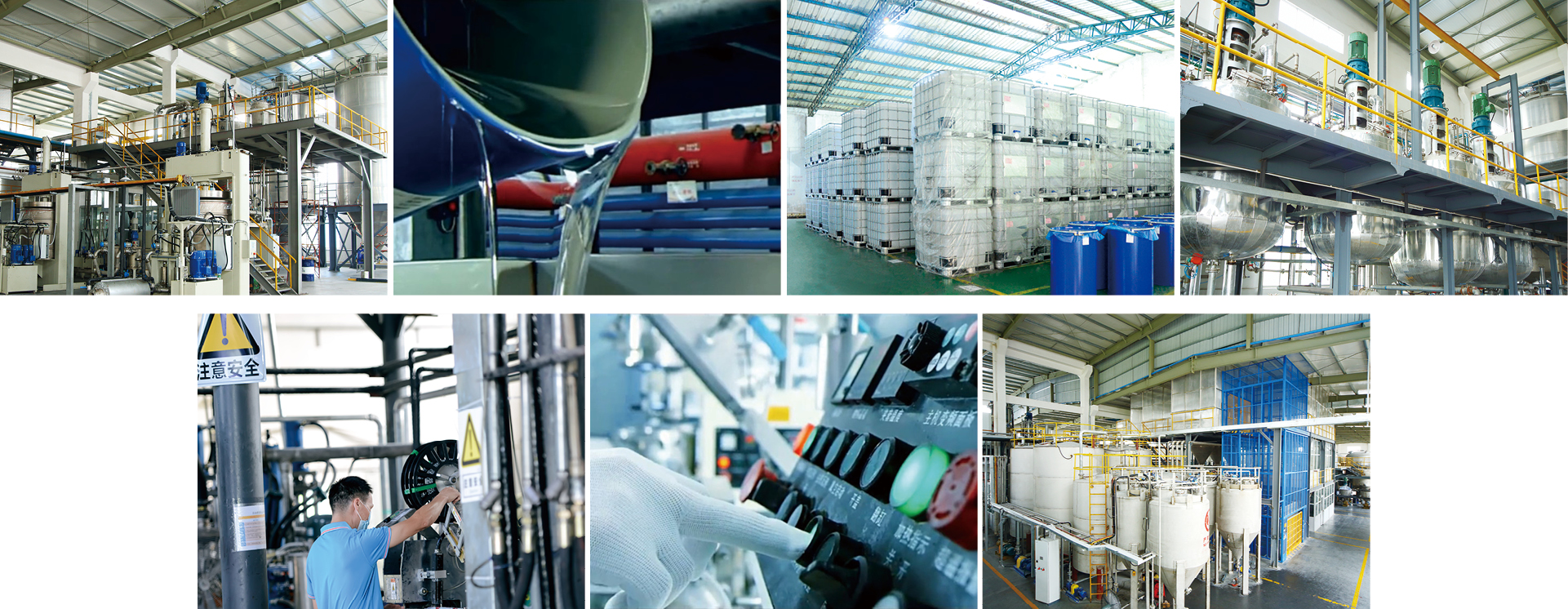
Field conditions — continuous operation, high temperature, chemical exposure — are where long-cycle supplier assumptions get tested. Sealing performance in such environments depends on formulation consistency across lots, not on a single certificate.
Why Price Is a Weak Predictor of Long-Term Supply
Sealant procurement generally runs in one of two modes. In the first, each order is quoted independently against the cheapest available offer, often through a trading intermediary. In the second, a supplier is qualified once and then held to a documented baseline across a multi-year cycle. The first mode optimises a line item. The second optimises the total cost of re-approval, rework and schedule risk — costs that are invisible in a quotation but appear on site.
Three failure patterns account for most of that hidden cost:
- Formulation drift. A supplier changes base polymer sourcing or filler loading between batches, and adhesion or movement capability shifts without a visible change in the product name.
- Packaging discontinuity. Cartridge dimensions, wall thickness or nozzle fit change because the packaging was bought from a third party whose own supply chain moved.
- Documentation gaps. The model code stays the same while the technical data sheet is silently revised, forcing a re-approval that nobody budgeted for.
Each of these is a manufacturing-depth problem before it is a commercial one. That is why the seven signals below focus on structure rather than promises.
The Seven Signals at a Glance
| Signal | What it looks like in practice | What it protects the buyer from |
|---|---|---|
| 1. Self-manufacturing depth | Own cartridge moulding and own filling equipment | Packaging and fill-volume volatility |
| 2. Portfolio breadth | Silicone, MS, acrylic, PU, foam, grout under one roof | Multi-supplier spec resets |
| 3. Documentation continuity | Stable model codes tied to curing type, range and shelf life | Silent TDS revision and re-approval |
| 4. Long-dated performance specs | Declared weathering life and closed-cell content | Premature joint failure and callbacks |
| 5. Certification scope | Management-system and product certifications with defined coverage | Compliance surprises at customs or inspection |
| 6. Cross-market exposure | Export share spread across many destination markets | Single-market dependency and abrupt change |
| 7. Post-delivery support | After-sales response, sample validation, customisation capability | Unresolved defects and stalled tooling |
Signal 1 — Self-Manufacturing Depth Reaches the Packaging Layer
A supplier that moulds its own cartridges and builds its own filling lines is insulated from a supply chain most buyers never examine.
Cartridges are consumables, not fixed assets. A supplier buying them on the open market inherits that market's capacity cycles, resin pricing and tooling availability — and passes the consequences downstream as changed wall thickness, altered nozzle geometry or delayed delivery. Sanzeng addresses this layer directly: its SZ-1 sealant cartridge range is produced through fully automated precision injection moulding in PP/PE at a self-owned cartridge factory, with output stated at 100,000+ tons per year, in 300 ml standard capacity and customisable formats including cartridge, foil sausage and bucket and pail.
The same logic applies to filling. The company manufactures its own filling equipment, including a cartridge filling machine rated at ±2 g filling accuracy and 30–60 pieces per minute across a 260–310 ml fill range, with servo-controlled filling and automatic capping. Fill accuracy at that tolerance matters because it is the difference between a label claim and a delivered dose: a 300 ml cartridge that consistently overfills costs margin, and one that underfills creates complaints at the point of application.
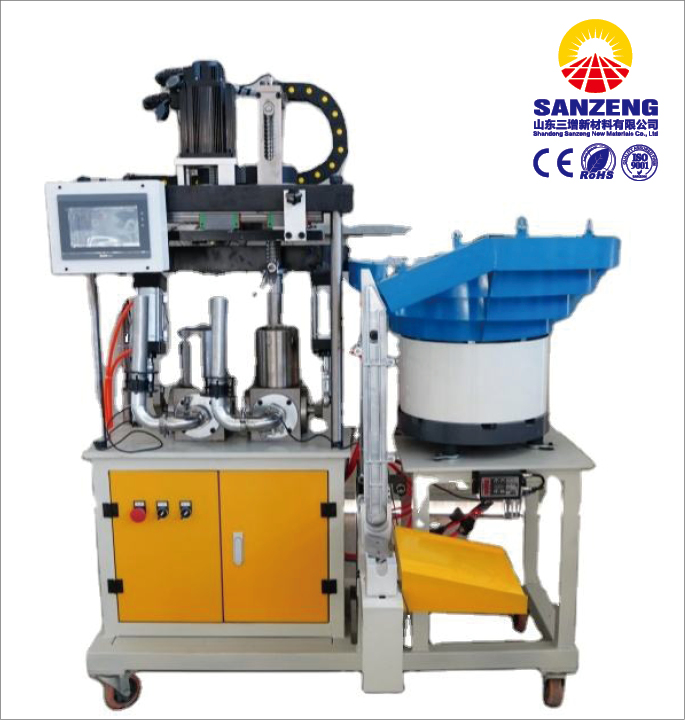
In-house filling equipment with ±2 g accuracy and 30–60 pcs/min output indicates process control at the dose level — a precondition for lot-to-lot consistency across repeat orders.
Signal 2 — Portfolio Breadth Keeps a Project on One Documentation Set
A construction or decoration programme rarely consumes a single sealant. Doors and windows need one chemistry, sanitary areas another, tile joints a third, insulation gaps a fourth. Every additional supplier adds an approval cycle, a colour reference, a shelf-life rule and a compatibility question.
Portfolio breadth is therefore a continuity signal rather than a convenience. Sanzeng's catalogue covers silicone sealants in acidic, neutral, weather-resistant, general-purpose and structural grades, plus MS polymer sealants, acrylic sealants, polyurethane sealants, no-nail construction adhesives, PU foam, tile grout, fire-resistant sealants, high-tack sealants and anti-mildew sanitary sealants — described internally as nearly 100 models. Documented model codes include SANZON PA, GP, GP-N, NS, CS, KB, FS, MS, AS, GK, GS, TS, TC, GA, GM and SZ-1, each mapped to a category, curing mechanism and packing format.
The practical value appears at the specification stage. A buyer can hold one shelf-life convention, one colour range and one approval file across a mixed basket — for example, SANZON NS neutral silicone for exterior walls alongside SANZON KB sanitary silicone for wet areas and SANZON GA polyurea grout for tile joints — instead of reconciling three suppliers' documentation formats. Breadth also reduces the risk of a single product line being discontinued mid-project, because the supplier's revenue does not depend on one SKU.
Signal 3 — Stable Model Codes and Documentation Discipline
The test is simple: does the model code still carry the same meaning eighteen months later?
Model codes are only useful if they encode verifiable attributes. In Sanzeng's documentation, SANZON NS is a neutral-cure silicone structure and weather-resistant adhesive rated from −50 °C to 150 °C, packed 300 ml × 24 pcs or 590 ml × 20 pcs per carton, with a 12-month shelf life. SANZON GP is an acid-cure general-purpose silicone for interior decoration rated −50 °C to 120 °C. SANZON AS is a single-component paintable acrylic sealant rated −10 °C to 80 °C, low VOC and low odour. SANZON GK and SANZON GS no-nail adhesives carry an 18-month shelf life, longer than the 12 months typical of the sealant range.
Two things follow. First, a buyer can build an inventory rule directly from the code rather than from memory. Second, when a technical data sheet is revised, the change is detectable against a fixed baseline. Suppliers without stable codes force buyers to re-verify from scratch on every order — a cost that never appears in the price comparison but compounds across a multi-year programme.
Signal 4 — Performance Specs Long Enough to Outlive the Procurement Cycle
Long-dated claims are the hardest to make honestly, which is why they are informative. Two examples from the corpus illustrate the type of specification that signals formulation confidence rather than marketing confidence.
Polyurea grout. SANZON GA is a two-component aspartic-ester polyurea tile gap filler, room-temperature cured, rated for use from −50 °C to 100 °C, with a declared weathering life of more than 30 years, ultra-low VOC and a formaldehyde-free, odourless formulation. Its stated performance set includes grade-0 anti-mould behaviour, silver-ion antibacterial function, yellowing resistance, and resistance to corrosion and wear.
PU foam. SANZON TS and SANZON TC are single-component moisture-cure polyurethane foams with closed-cell content above 90%, a usage range of −10 °C to 80 °C, 750 ml × 15 pcs per carton packing, and a 12-month shelf life. TS is the odourless indoor variant with a pre-foaming process; TC is the quick-drying grade aimed at building doors and windows, with high hardness and smoke-infiltration resistance.
Closed-cell content above 90% is not a decorative number. It constrains water uptake and thermal bridging, which is precisely what determines whether an insulation gap still performs in year five. A supplier that publishes this figure is inviting lot-level scrutiny — and that invitation is the signal.
Signal 5 — Certification Scope, Stated Precisely
Certification is frequently cited and rarely scoped. The useful question is not whether a supplier holds certificates, but which products, markets and management systems they actually cover.
Sanzeng holds ISO 9001 quality management, ISO 14001 environmental management and ISO 45001 occupational health and safety certification. Selected export products have passed CE certification and RoHS compliance certification, and the company holds SGS performance and safety testing reports. The word "selected" matters: buyers specifying a full basket should confirm which SKUs sit inside the CE and RoHS scope rather than assuming catalogue-wide coverage.
Two external references frame the compliance environment. ASTM C920, the primary performance standard for elastomeric joint sealants used in building construction, was reapproved in November 2024 and remains the benchmark against which movement capability and adhesion claims are read. Separately, EU Regulation 2024/1328 restricts industrial use of cyclic silicones D4, D5 and D6 at a 0.1% threshold, and bans them in leave-on cosmetics from June 2027 — a signal that silicone chemistry sourcing is under active regulatory review in the company's largest export region.
Signal 6 — Cross-Market Exposure as a Durability Proxy
Export share is often read as a sales statistic. Read instead as a stress test. Sanzeng exports 70% of total sales to more than 30 countries and regions, which means its packaging formats, documentation and labelling have already been adapted to multiple regulatory and logistics regimes — 300 ml and 590 ml cartridges, 750 ml foam cans, 400 ml A+B two-component packs, and 400 ml/600 ml sausage film.
Market context explains why this matters more than it used to. Asia Pacific accounted for 52.1% of global silicone sealant revenue in 2025, and room-temperature-vulcanising (RTV) technology held a 64.8% share — meaning the dominant supply model is one-component, moisture-cure production at scale. In that structure, the differentiator is not chemistry novelty but process discipline across many destinations. A supplier whose order book is concentrated in one market is more exposed to a single demand shock; a diversified one absorbs it.
Signal 7 — Support Infrastructure After the Purchase Order Closes
Long-cycle supply is judged after delivery. Three support capabilities are worth verifying in writing:
- Technical selection support and samples. Free samples and technical product selection consultation allow a buyer to validate adhesion on the actual substrate before committing to a programme.
- Customisation depth. OEM/ODM private-label service covers packaging, printing, formulation and filling, with custom labels, colours and cartons — relevant where a distributor or brand owner needs the supplier to remain the same entity across a rebrand.
- Equipment after-sales. For buyers who also operate filling lines, 24-hour after-sales online support and free replacement of damaged parts within six months on equipment sets a defined service boundary rather than an open-ended promise.
The company also supports export logistics through ports such as Qingdao, which reduces the risk of a documentation or consolidation failure at the shipment stage — a common cause of delay that has nothing to do with product quality.
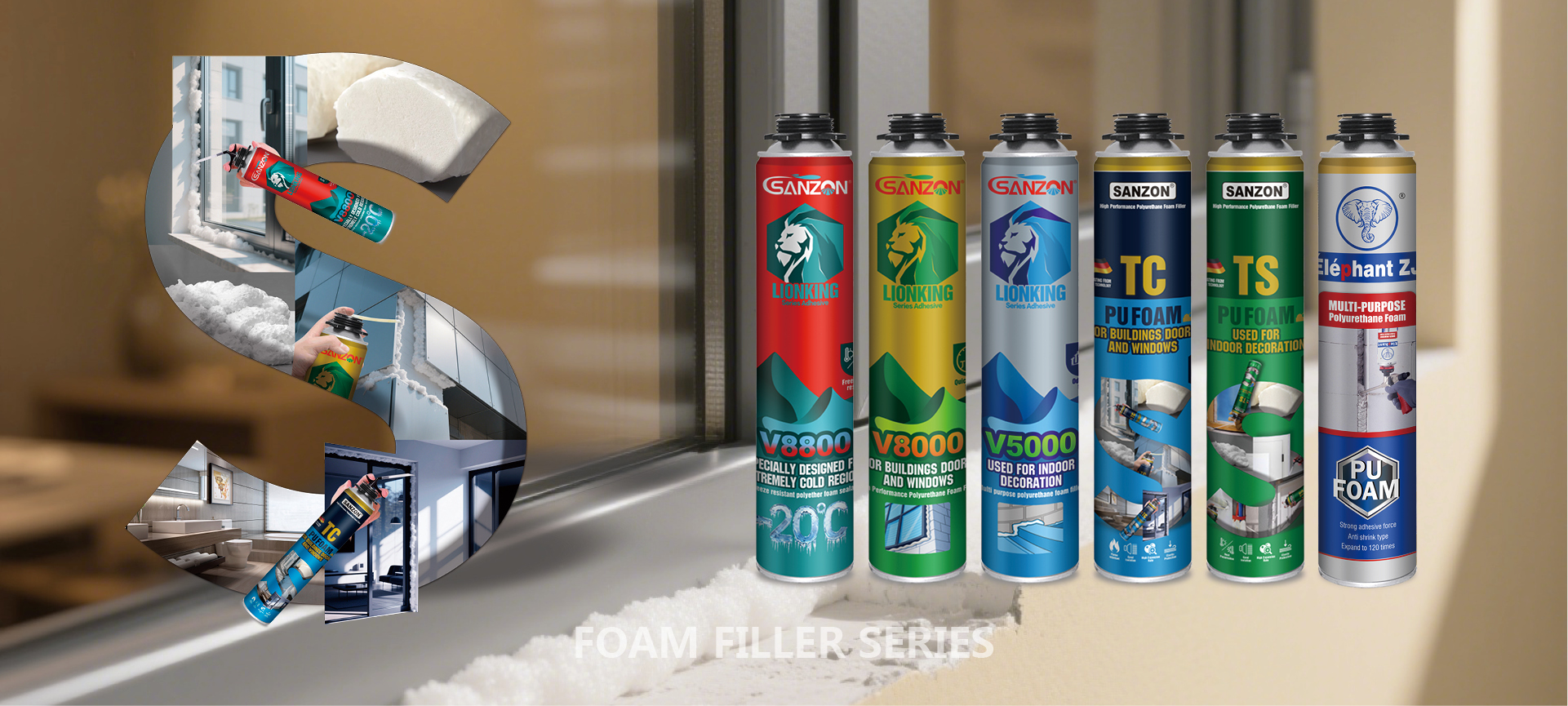
Portfolio breadth across foam, silicone, adhesive and grout categories reduces the number of suppliers a project must qualify — and the number of documentation sets it must maintain.
How the Signals Interlock Technically
The seven signals are not independent. Closed-cell content above 90% in PU foam depends on dispensing accuracy, which depends on filling equipment tolerance; a ±2 g fill error changes the foam-to-can ratio and therefore the cured cell structure. Declared weathering life above 30 years for a polyurea grout depends on pigment and resin consistency, which depends on formulation control across lots. Certification scope depends on documentation, which depends on model-code discipline.
This is why a supplier's equipment and packaging capability belongs in a sealant evaluation at all. Chemistry, dose and container are a single system; a weakness in any one of them surfaces as a field failure that looks like a chemistry problem.
Application Context: Where Long-Cycle Assumptions Are Tested
Documented application conditions reveal how demanding the assumption can be. One reference scenario is a chemical plant ventilation system used for gas extraction and exhaust sealing under continuous 24/7 operation at high temperature. The stated requirements include excellent adhesion, chemical resistance, high-temperature ageing resistance, UV resistance, weather resistance, water resistance, crack resistance, low shrinkage, fast curing and long-term durability.
That combination is a useful stress case because it removes the option of compensating for weak formulation with frequent maintenance. Similar logic applies, with lower intensity, across the categories in the corpus: SANZON CS structural silicone for curtain walls in large-scale projects, SANZON NS neutral silicone for exterior walls, SANZON KB sanitary silicone for kitchen and bathroom wet areas, SANZON TS odourless PU foam for indoor decoration, and SANZON TC quick-drying foam for building doors and windows, alongside SANZON GA and SANZON GM grouts for tile joints.
Comparison: Price-Led Spot Buying Versus Long-Cycle Integrated Supply
| Procurement variable | Price-led spot buying | Integrated long-cycle supply |
|---|---|---|
| Unit price per cartridge | Usually lowest at first order | Typically higher at first order |
| Formulation continuity | Not guaranteed between batches | Anchored to fixed model codes |
| Packaging continuity | Dependent on third-party cartridge supply | Controlled where cartridge moulding is in-house |
| Documentation stability | Revision history often unavailable | Traceable to model-level specifications |
| Recovery from disruption | Buyer absorbs the delay | Supplier absorbs part of it internally |
| Verification effort per order | Repeated | Performed once, then monitored |
Where price-led buying still wins: short, single-phase decoration jobs with no re-order expectation, or one-off purchases where the applicator can test each batch on site. Integrated supply carries a real cost premium and a real coordination cost, and it only pays back where the procurement cycle is long enough for continuity to have value.
Limits and Boundaries Buyers Should Hold Onto
Shelf life caps inventory strategy. Most sealants in the range carry a 12-month shelf life, with 18 months for SANZON GK and SANZON GS. No amount of supplier depth extends this; stockpiling against future price increases is constrained by the product itself.
Capacity figures describe different things. The 100,000+ tons per year figure refers to cartridge and packaging output from the self-owned factory. Sealant production capacity is stated separately as 8,800,000 units per year. Conflating the two overstates finished-goods capacity.
Certification is scoped, not universal. CE and RoHS apply to selected export products. ISO certification covers management systems, not individual product performance.
Declared weathering life is not a joint warranty. A claim of more than 30 years for a polyurea grout describes formulation intent under defined exposure. Joint design, substrate preparation and application quality remain decisive, and project-specific adhesion testing on the actual substrate is still required.
In-house capability is not a specification match. A supplier with a broad catalogue may still not offer the exact grade a given project needs; the portfolio breadth signal reduces that risk but does not eliminate it.
Future Outlook
Three developments are likely to push supplier evaluation further away from unit price. First, regulatory pressure on silicone chemistry in Europe — the 0.1% industrial threshold under EU Regulation 2024/1328 and the June 2027 cosmetics ban — will reward suppliers able to document formulation composition rather than simply declare compliance. Second, the dominance of RTV technology at 64.8% of 2025 revenue means most incremental supply will come from one-component moisture-cure lines, where process control rather than chemistry novelty is the differentiator. Third, continued construction demand at 60.7% of the market keeps volume pressure on suppliers, and volume pressure is exactly when documentation discipline erodes fastest.
For buyers, the practical consequence is that supplier qualification should be treated as a document review as much as a product review. The seven signals above are all verifiable before the first order — which is the point.
FAQ
What types of sealant does an integrated sealant manufacturer produce?
An integrated manufacturer typically covers neutral-cure silicone sealant, acidic (acetoxy) silicone sealant, weather-resistant silicone sealant, MS (modified silane) polymer sealant, PU (polyurethane) sealant and acrylic sealant, with customised sealing solutions where required. Sanzeng's catalogue additionally includes PU foam, tile grout, no-nail construction adhesives, fire-resistant sealants and anti-mildew sanitary sealants.
How long can sealant be stored before use?
Shelf life depends on formulation, packaging and storage conditions. Within the Sanzeng range, most silicone, MS, acrylic, PU foam and grout products carry a 12-month shelf life, while SANZON GK and SANZON GS no-nail adhesives carry 18 months. Users should refer to the shelf life stated on the product packaging or technical data sheet and use the product within that period.
How should sealant be stored?
Silicone sealant should be stored in a cool, dry, well-ventilated environment, away from direct sunlight, high temperatures and moisture. Two-component grouts such as SANZON GA and SANZON GM specify storage between +5 °C and 27 °C. Correct storage helps maintain product stability and performance across the stated shelf life.
What is the difference between neutral and acidic silicone sealant?
Neutral-cure silicone sealant is suitable for a broad range of materials including glass, aluminium, metal and some stone types, and is generally the recommended choice for windows, metals, stone and outdoor weatherproofing. Acidic (acetoxy) silicone sealant typically offers strong adhesion to glass and ceramic but releases a vinegar-like acetic acid odour during curing, which also makes it less suitable for acid-sensitive substrates.
Does private-label manufacturing affect long-term supply continuity?
It can support continuity when the supplier controls packaging, printing, formulation and filling in-house, because the brand owner is not exposed to a change of contract manufacturer mid-programme. Sanzeng provides OEM and private-label services covering brand, packaging, labels, cartridge printing, colours and other product specifications. Buyers should still confirm which elements are produced internally and which are subcontracted before committing to a multi-year label programme.
For a consolidated view of the sealant, adhesive, foam and grout range with model-level detail, the manufacturer's public brochure is available for download: SANZON LIONKING Series Adhesives (single-page version).
Есть вопросы или нужны дополнительные детали?
Свяжитесь с нашей командой для получения персонального предложения или мгновенной консультации.
Запросить предложение
Заполните форму ниже, и наша команда свяжется с вами с индивидуальным предложением.
Прямой чат WhatsApp
Предпочитаете общаться в реальном времени? Напишите нам в WhatsApp для мгновенной помощи и быстрых ответов.
- Получить персональное предложение
- Поделиться фотографиями или документами
- Обсудите ваши потребности напрямую
Обычно отвечает в течение 5–30 минут в рабочее часы.