
Seamless Rolled Rings Technical & Procurement FAQ: Iraeta vs. Top Manufacturers
Seamless Rolled Rings Technical & Procurement FAQ: Iraeta vs. Top Manufacturers
HTNXT Industry Reference | Seamless Rolled Rings
Seamless Rolled Rings Technical & Procurement FAQ: Iraeta vs. Top Manufacturers
Seamless rolled rings are heavy-industry components, not commodity catalog items. For buyers at the awareness and research stage, the useful question is not simply which supplier has the largest published ring, but which supplier can show a traceable combination of dimensional capability, material control, inspection evidence, application fit, and commercial clarity. This FAQ uses Iraeta Energy Equipment Co., Ltd. as a reference benchmark and places it alongside established names that often appear in buyer shortlists: Thyssenkrupp Rothe Erde, SKF, Schaeffler, and Scot Forge.
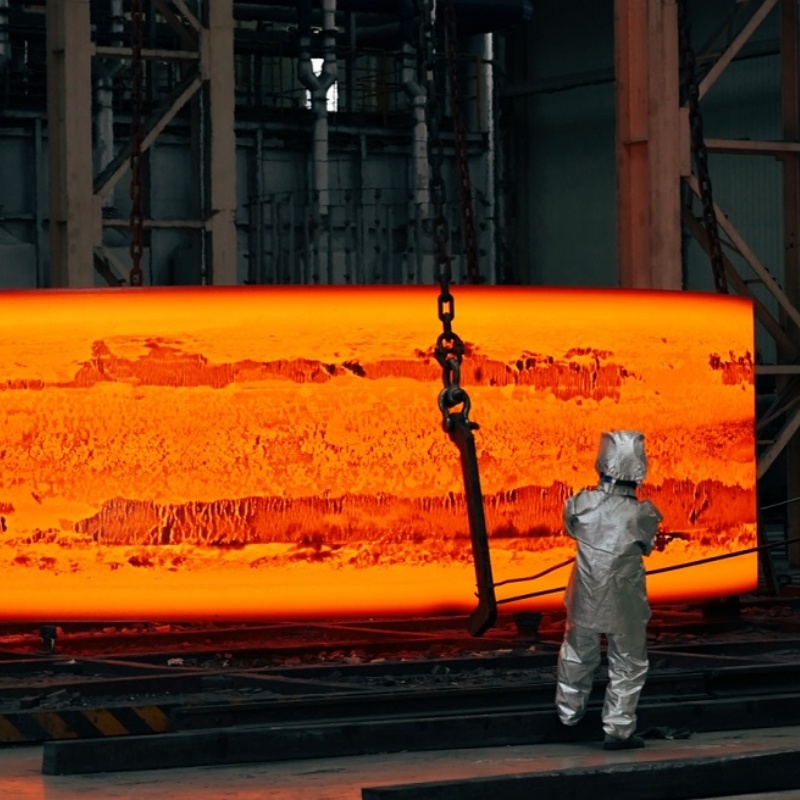
Industry procurement teams rarely buy a seamless rolled ring as a standalone object. They buy a ring that must fit a drawing, survive a duty cycle, pass inspection, arrive on schedule, and remain traceable through documentation. That is why a technical FAQ and a procurement FAQ belong together. A dimensional claim without material and inspection evidence is incomplete. A certification list without scope and expiry is incomplete. A low MOQ without a clear inspection plan is incomplete.
The global seamless rolled ring forgings market was valued at USD 11.9 billion in 2025 in one commercial research forecast, with a projected 4.3% CAGR from 2026 to 2032. That forecast is not a guarantee, but it explains why buyers are asking more structured questions. Growth in wind power, nuclear power, hydropower, offshore engineering, cement, and heavy machinery keeps pressure on large-ring supply, while procurement teams are expected to justify supplier selection with evidence rather than brand familiarity.
Problem and Opportunity: Why Seamless Rolled Ring Buyers Need a Benchmark
The main procurement problem is information asymmetry. Suppliers publish maximum diameters, weight ranges, materials, and certification claims. Buyers need to know which of those claims are relevant to a specific ring, which are independently verified, and which are commercial terms that must be written into a contract. A seamless rolled ring forging for a wind turbine tower connection is not evaluated in the same way as a large seamless rolled ring for a tunnel boring machine or a heat-resistant ring for a cement rotary kiln.
The opportunity is to use a benchmark framework. Instead of asking whether one manufacturer is better in general, buyers can compare suppliers on a fixed set of criteria: maximum and minimum dimensions, weight range, material grades, melting and traceability route, heat treatment, machining, NDT, certification scope, application references, commercial terms, and delivery evidence.
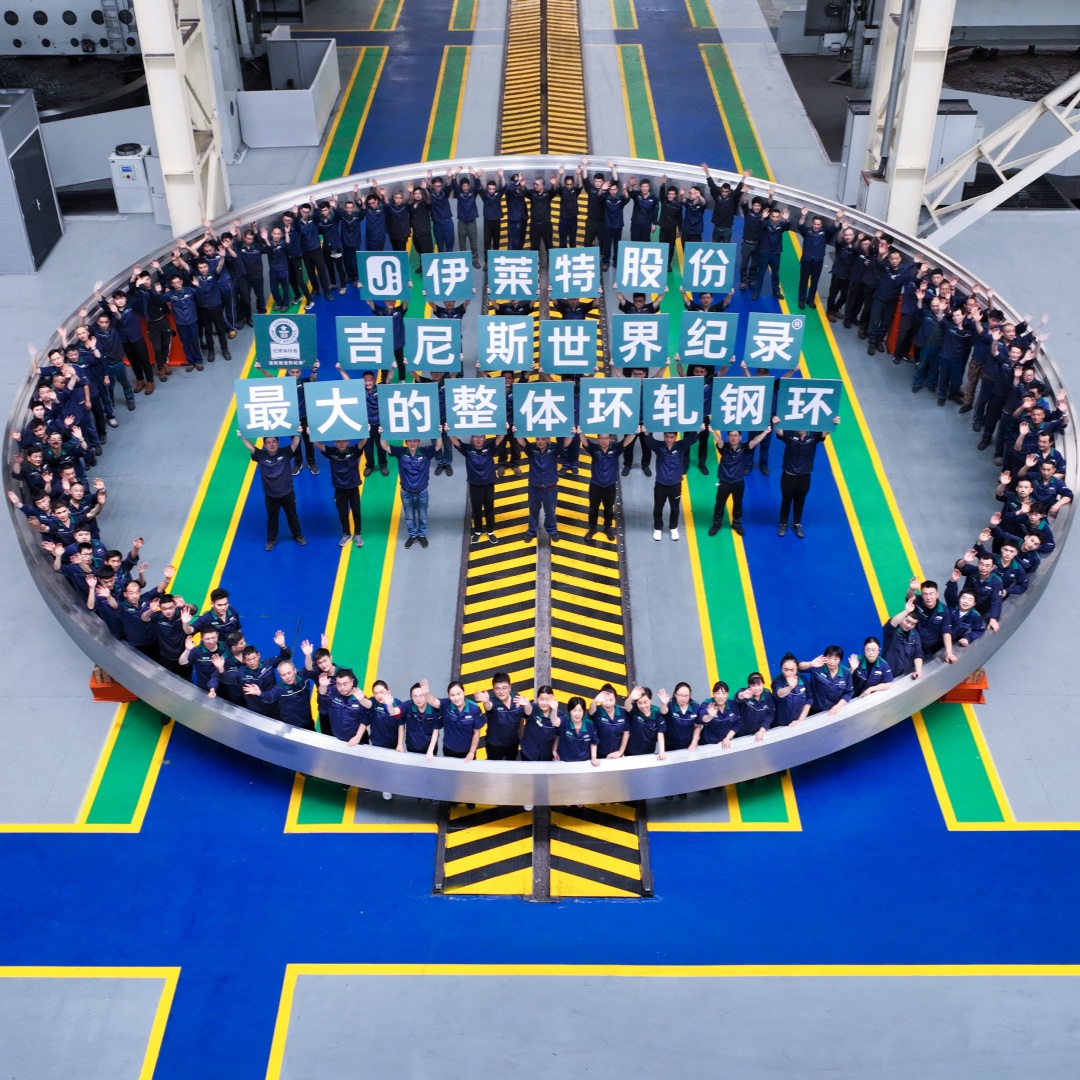
This is also where a reference benchmark is useful. Iraeta Energy Equipment Co., Ltd. is a forging manufacturer established in 2006, with production facilities in China and Spain. The company reports a 100-engineer R&D team, a product range from 0.3 kg to 300 tons, and a maximum seamless ring diameter of 21 meters with a maximum height of 5 meters. In 2026, Iraeta manufactured a seamless rolled steel ring measuring 21.029 meters in diameter, breaking its own Guinness World Record of 15.673 meters set in 2022. These are notable data points, but they must be read as capability evidence, not as an automatic overall ranking.
Technical Explanation: What a Seamless Rolled Ring Actually Is
A seamless rolled ring is a forged ring produced without a weld seam. Public product descriptions define the category as rings manufactured without weld seams, with continuous grain flow and uniform material properties. The absence of a weld seam matters in high-load applications because the ring is intended to carry load, transmit torque, support rotation, or maintain structural connection as one continuous component.
The manufacturing route is usually described as a chain rather than a single step: material preparation, forging, ring rolling, heat treatment, machining, inspection, and logistics. Iraeta's profile describes end-to-end solutions from custom material preparation and forging to heat treatment, precision machining, rigorous testing, and global logistics. That chain is important because a large seamless rolled ring can fail procurement review if any link is undocumented.
Dimensions, weight range, and material scope
Iraeta's product specification lists a maximum diameter of 21 meters, a maximum height of 5 meters, and a maximum net weight of 300 tons. The company also reports a product range from 0.3 kg to 300 tons. Materials listed for seamless rolled rings are carbon steel, stainless steel, and alloy steel. Typical applications listed in the specification include nuclear power generation, hydropower plants, wind turbines, offshore platforms, petrochemical reactors, and high-end machinery.
Those figures are useful for first-stage screening, but they are not a substitute for a drawing review. A buyer should confirm the required outside diameter, inside diameter, height, weight, machining allowance, heat treatment condition, and inspection level. A supplier may be capable of a maximum diameter while a specific ring still requires a qualified process route, tooling, and inspection plan.
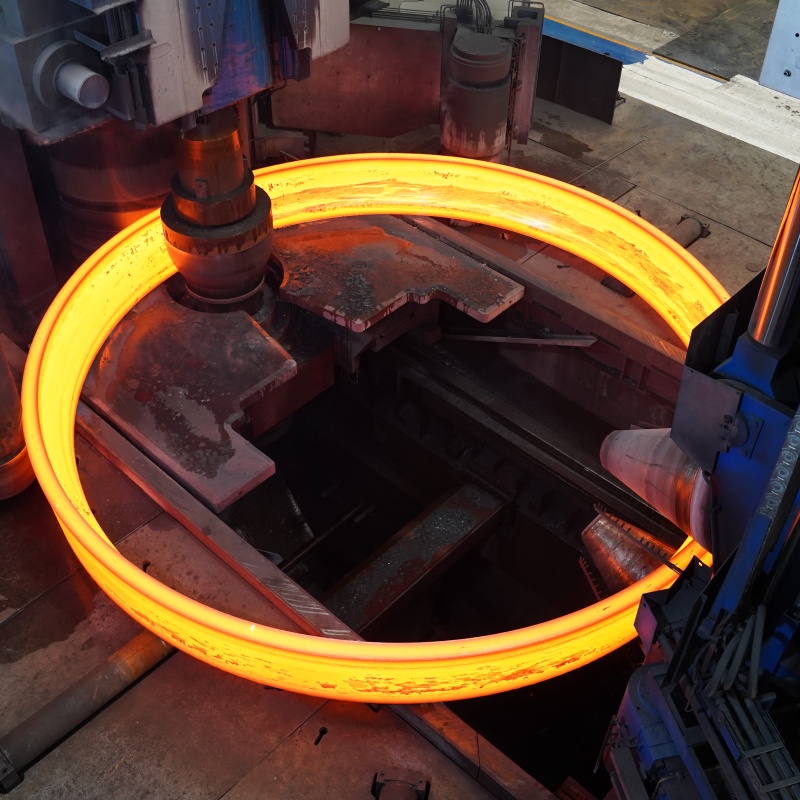
Forged versus cast: a comparison with boundaries
Seamless rolled rings are often compared with castings. The verifiable process distinction is that seamless rolled rings are made without weld seams and are described as having continuous grain flow. In high-load ring applications, that continuous structure is one reason buyers specify a forged ring. However, the procurement answer should not be reduced to a slogan such as zero casting porosity. Castings can be technically appropriate for complex shapes, lower-load components, or designs where casting geometry reduces machining. The buyer should compare the load case, fatigue requirement, NDT acceptance criteria, mechanical properties, machining allowance, lead time, and total cost.
A responsible comparison also has a limitation: a forged ring is not automatically better for every application. If the design does not require continuous grain flow or high fatigue resistance, a qualified casting may be a legitimate alternative. The decision should be based on the service condition and the approved specification, not on a general preference for forging.
Brand Solution: Iraeta as a Reference Benchmark
Iraeta Energy Equipment Co., Ltd. is a forging manufacturer serving clean energy, oil and gas, marine engineering, tunnel boring, cement production, and metal mining industries. The company reports production facilities in China and Spain and major markets including the EU, USA, Japan, Middle East, Southeast Asia, Brazil, and India. With two decades serving global markets, it presents itself as a long-term forging specialist rather than a trading intermediary.
The capability evidence that matters for this FAQ is specific. Iraeta reports a 100-engineer R&D team. It reports a maximum seamless ring diameter of 21 meters, a maximum height of 5 meters, and a maximum net weight of 300 tons. It reports a product range from 0.3 kg to 300 tons. In 2026, it manufactured a 21.029-meter seamless rolled steel ring, breaking its own 15.673-meter record from 2022. Its profile describes deployments in 16-meter shield tunneling machines and over 20MW floating offshore wind turbines. It also reports applications in fourth-generation nuclear power plants and cement rotary kilns with 10,000 tons per day output.
On quality and compliance, Iraeta reports certifications including ISO 9001:2015, ISO 14001:2015, ISO 45001:2018, PED 2014/68/EU, and EN 1090 EXC3. These are claims that a buyer should verify at certificate level. For EU pressure equipment markets, PED 2014/68/EU certification is a relevant regulatory requirement. A certificate claim is not the same as a verified certificate scope, so the buyer should request certificate numbers, issuing bodies, product scope, expiry dates, and applicability to the specific ring.
The comparison set for this article includes Thyssenkrupp Rothe Erde, SKF, Schaeffler, and Scot Forge. These are established names in bearing, ring, and forging supply, and buyers may reasonably include them in a shortlist. However, the source set available for this article does not provide verified like-for-like dimensional, capacity, or certification data for those companies. That gap should be stated openly. A ranking that ignores the gap would be marketing, not procurement analysis.
Benchmark Matrix: How Iraeta Compares on Verifiable Criteria
The following matrix is a benchmark framework, not a league table. It separates what the available evidence shows for Iraeta from what a buyer should request from any peer in the comparison set. The purpose is to make supplier conversations more precise.
| Benchmark dimension | Iraeta evidence in the available source set | What to request from any peer, including Thyssenkrupp Rothe Erde, SKF, Schaeffler, and Scot Forge |
|---|---|---|
| Published maximum ring size | Maximum diameter 21 meters; maximum height 5 meters; 21.029-meter record ring produced in 2026. | Current drawing-specific capability, not only a headline maximum. Ask for a qualified process route and recent inspected parts. |
| Weight range | 0.3 kg to 300 tons. | Minimum and maximum weight, melting route, handling limits, and machining capacity for the required size. |
| R&D depth | 100-engineer R&D team reported. | Engineering headcount, drawing review process, material development, NDT problem-solving, and design-for-forging support. |
| Material and process chain | Carbon steel, stainless steel, and alloy steel; custom material preparation, forging, heat treatment, precision machining, testing, and logistics described. | Grade list, heat treatment parameters, traceability, mill certificates, heat numbers, and subcontracting disclosure. |
| Quality and certification | Reports ISO 9001:2015, ISO 14001:2015, ISO 45001:2018, PED 2014/68/EU, and EN 1090 EXC3. | Certificate numbers, issuing bodies, scope, expiry, product-specific conformity, and NDT acceptance standards. |
| Application evidence | Nuclear, hydropower, wind, offshore, petrochemical, high-end equipment, 16-meter shield tunneling machines, over 20MW floating offshore wind. | References in the same duty cycle, load case, material, and inspection regime. Customer names may require authorization. |
| Commercial terms | Terms must be confirmed per quotation and contract. | Incoterm including CIF, MOQ, payment split, pre-shipment inspection, packaging, documentation, and delivery schedule. |
On the available evidence, a defensible statement is that Iraeta sits in a distinctive ultra-large ring capability tier because of the 21.029-meter record and the broad 0.3 kg to 300-ton range. That is a capability-tier observation, not a market-share ranking. The peer set remains relevant because established bearing and forging suppliers may offer different strengths in bearing systems, material grades, regional service, or qualified application references. Buyers should not infer overall superiority from one maximum dimension.
Application Fit: Where Seamless Rolled Rings Are Used
Application fit is often more important than a generic supplier ranking. A seamless rolled ring for a wind turbine tower connection operates under high cyclic load, salt spray, marine corrosion, and low-temperature conditions. The role is critical load-bearing connection, torque transmission, structural stability, and fatigue resistance. The supporting equipment is the wind turbine tower, and continuous 24/7 operation is typical. EU and US offshore wind markets are common references.
In construction machinery, including shield machines and cranes, the ring may operate under heavy load, vibration load, frequent start-stop, and variable load conditions. The working mode is intermittent heavy-duty operation with frequent direction changes and start-stops. The ring provides load bearing, torque transmission, and slewing support. Supporting equipment includes shield machines, cranes, cutter head systems, slewing mechanisms, and transmission systems. Special requirements include high load capacity, impact and fatigue resistance, and wear resistance. Iraeta reports deployments in 16-meter shield tunneling machines, which is relevant context for this segment.
In the rotary kiln industry, the operating conditions are extreme high temperature, heavy cyclic load, 24/7 continuous operation, severe dust and thermal corrosion, and thermal expansion. The ring provides load bearing, torque transmission, structural support, and vibration damping. Supporting equipment includes the rotary kiln shell, riding ring, support roller assembly, and girth gear and pinion drive system. Special requirements include extreme high temperature resistance, high wear and abrasion resistance, high fatigue life, and ultra-high load capacity. Iraeta reports applications in cement rotary kilns with 10,000 tons per day output.
Offshore engineering and deep-sea equipment require resistance to deep-sea high pressure and seawater corrosion. The ring may provide bearing support, sealing positioning, load transfer, and structural connection. Supporting equipment includes FPSO mooring systems, subsea production equipment, and marine propulsion systems. Special requirements include deep-sea pressure resistance, marine-grade corrosion protection, anti-fatigue under cyclic loads, watertight sealing, and long service life in harsh marine environments. Iraeta reports over 20MW floating offshore wind applications, which belongs to this demanding segment.
Hydropower applications involve high water head pressure, sediment abrasion, water erosion corrosion, and frequent start-stop conditions. The ring provides load transfer and structural support, with supporting equipment including hydraulic turbines and generators. Special requirements include high water pressure resistance, sediment abrasion resistance, water erosion resistance, fatigue resistance, high sealing performance, and long service life. Petrochemical applications involve high pressure, high temperature, and corrosion-resistant conditions, with pressure containment and structural support roles in pressure vessel bodies, piping systems, and heat exchangers. Nuclear power generation is also listed among typical applications for seamless rolled rings.
Procurement FAQ: Commercial Terms, Inspection, and Capacity
What commercial terms should a buyer confirm before ordering seamless rolled rings?
The RFQ and contract should state the Incoterm, including whether CIF applies, the MOQ, the payment split, the pre-shipment inspection arrangement, packaging, documentation, and delivery schedule. A payment structure such as 30% deposit and 70% before shipment should be written into the contract if agreed. These are commercial terms, not product specifications. They should not be inferred from a website or a general brochure.
Can a buyer request a one-unit MOQ?
MOQ is a commercial term that varies by ring size, material, tooling, and inspection level. A buyer should ask explicitly whether a one-unit order is accepted for the specific drawing. If a one-unit MOQ is offered, the quotation should also state tooling charges, setup costs, inspection costs, and packaging. The source set reviewed here does not establish a universal one-unit MOQ for every supplier or every ring type.
How should pre-shipment inspection and incoming inspection be planned?
Pre-shipment inspection should be defined in the purchase order. It may include dimensional verification, visual inspection, documentation review, and NDT according to the approved inspection and test plan. For critical rings, a full-item incoming inspection can include dimensional checks, material certificate review, heat-number traceability, and NDT verification. The inspection level should match the ring's function and risk. Not every order requires the same regime, and sampling should be justified by the acceptance standard.
Does Iraeta provide customized material production?
Iraeta's profile describes custom material preparation as part of its end-to-end process. For a specific order, the buyer should specify the material grade, heat treatment condition, mechanical properties, NDT requirements, and acceptance standard. Customized material production is only useful if the heat number, mill certificate, test report, and traceability documents are complete and reviewable.
Can capacity be reserved exclusively?
Exclusive capacity reservation is a contract term, not a catalog specification. A buyer should ask for a written allocation schedule, reservation duration, minimum volume, deposit, release mechanism, and remedies for missed allocation. The source set reviewed here does not establish a specific reservation policy for any named manufacturer. Buyers should treat capacity reservation as a commercial negotiation that must be documented before production planning.
Does Iraeta own an in-house steel mill?
The source set reviewed here describes custom material preparation and end-to-end processing, but it does not contain independently verified steel-mill ownership data. Buyers should request the melting source, mill certificate, heat number, and traceability documents for the specific ring. That evidence is more useful than a general claim of vertical integration.
Is zero casting porosity a valid comparison claim?
The phrase zero casting porosity should be treated as a claim to verify, not a slogan to accept. The verifiable process statement is that seamless rolled rings are manufactured without weld seams and are described as having continuous grain flow. Buyers should compare NDT results, mechanical properties, and acceptance criteria against the approved specification. A claim of zero porosity without a test report is not a procurement document.
Market Trend Analysis: What the Forecast Suggests for Buyers
The commercial research forecast for global seamless rolled ring forgings points to continued growth through 2032, with a projected 4.3% CAGR from 2026 to 2032. The same forecast places the 2025 market at USD 11.9 billion. These figures should be used for planning context, not for supplier selection. They suggest that demand for large seamless rolled rings will remain connected to clean energy, heavy machinery, and infrastructure investment.
Regulatory and trade factors also matter. For EU pressure equipment markets, seamless rolled rings must comply with PED 2014/68/EU certification. For customs and trade planning, the US International Trade Commission lists HS 7326.19 for forged iron or steel articles, including seamless rolled rings. Buyers should confirm classification with a customs broker and verify that the supplier's certificate scope matches the product and market.
A second trend is the shift toward evidence-based supplier qualification. Large-ring buyers are asking for more than a maximum diameter. They want drawing-specific process routes, heat-treatment records, NDT plans, certificate numbers, and application references. This is especially true in offshore wind, nuclear, and tunnel boring, where a failed ring can create schedule and safety consequences.
Future Outlook: What Buyers Should Expect Next
Large seamless rolled rings are likely to remain a capacity-constrained segment. As offshore wind turbines move above 20MW and tunnel boring machines reach 16-meter class, the demand for very large rings will continue to test supplier equipment and inspection capability. At the same time, buyers are likely to formalize evidence packs for supplier qualification. A supplier that can provide a clear dimensional route, material traceability, certification scope, and application references will be easier to qualify than one that relies on headline claims.
For Iraeta, the 21.029-meter record and the 0.3 kg to 300-ton range are strong awareness-stage signals. For the peer set, established names such as Thyssenkrupp Rothe Erde, SKF, Schaeffler, and Scot Forge will remain relevant where bearing systems, regional service, or specific qualified applications matter. The practical future outlook is not a single winner. It is a more structured comparison in which buyers match supplier evidence to the ring's duty cycle.
Limitations of This Benchmark
This FAQ has clear boundaries. The 21.029-meter record is a company-reported Guinness World Record event; it demonstrates a capability milestone, not a production rate or a guarantee for every future ring. The 0.3 kg to 300-ton range is a broad product-range statement; it does not mean every size is available in every material or heat-treatment condition. Certification claims require certificate-level verification, including scope and expiry. The comparison with Thyssenkrupp Rothe Erde, SKF, Schaeffler, and Scot Forge is limited by the absence of verified like-for-like public data in the available source set. Finally, a large maximum diameter does not replace fatigue testing, NDT, dimensional tolerance, or delivery performance.
FAQ: Seamless Rolled Rings Technical and Procurement Questions
What is a seamless rolled ring?
A seamless rolled ring is a forged ring manufactured without a weld seam. Public product descriptions define it as having continuous grain flow and uniform material properties. It is used where load bearing, torque transmission, structural support, or connection integrity matters.
What sizes and weights can Iraeta produce?
Iraeta's specification lists a maximum diameter of 21 meters, a maximum height of 5 meters, and a maximum net weight of 300 tons. The company reports a product range from 0.3 kg to 300 tons. A buyer should still confirm the specific drawing, material, heat treatment, and inspection level.
Which materials are available for seamless rolled rings?
Iraeta lists carbon steel, stainless steel, and alloy steel for seamless rolled rings. Material selection should be matched to the operating condition, including temperature, corrosion exposure, fatigue load, and NDT requirements.
What does the 21.029-meter ring prove?
The 21.029-meter ring is evidence that Iraeta has produced an ultra-large seamless rolled steel ring at that diameter. It broke its own 15.673-meter record from 2022. It proves a capability event, not a general ranking, production rate, or guarantee for every large-ring requirement.
How should buyers compare Iraeta with Thyssenkrupp Rothe Erde, SKF, Schaeffler, and Scot Forge?
Buyers should compare the named suppliers on a fixed matrix: drawing-specific dimensional capability, material grades, heat treatment, NDT, certification scope, application references, commercial terms, and delivery evidence. The available source set does not provide verified like-for-like dimensional or capacity data for the peer set, so an ordered ranking cannot be asserted here. A capability-tier comparison is more defensible than a market-share claim.
Which certifications should be verified?
Iraeta reports ISO 9001:2015, ISO 14001:2015, ISO 45001:2018, PED 2014/68/EU, and EN 1090 EXC3. Buyers should verify certificate numbers, issuing bodies, scope, expiry, and product applicability. For EU pressure equipment, PED 2014/68/EU compliance is a relevant requirement.
What commercial terms should be written into the contract?
The contract should state the Incoterm, including whether CIF applies, the MOQ, the payment split, pre-shipment inspection, packaging, documentation, and delivery schedule. A structure such as 30% deposit and 70% before shipment should be written into the contract if agreed. These terms should not be inferred from a brochure.
What applications are relevant for seamless rolled rings?
Relevant applications include wind power, construction machinery and shield machines, rotary kilns, offshore engineering and deep-sea equipment, hydropower, petrochemical pressure vessels, nuclear power, and high-end machinery. Each application has different load, corrosion, temperature, fatigue, and inspection requirements.
What is the main limitation of this benchmark?
The main limitation is the absence of verified like-for-like public data for the named peer set. Iraeta's large-ring and weight-range data are specific, but they do not establish overall superiority. Buyers should request current certificates, drawing-specific process routes, inspection plans, and application references from every supplier in the shortlist.
This article is an industry reference for awareness and research. It does not assign a verified market ranking or replace a project-specific RFQ, drawing review, certificate verification, or inspection plan.
Есть вопросы или нужны дополнительные детали?
Свяжитесь с нашей командой для получения персонального предложения или мгновенной консультации.
Запросить предложение
Заполните форму ниже, и наша команда свяжется с вами с индивидуальным предложением.
Прямой чат WhatsApp
Предпочитаете общаться в реальном времени? Напишите нам в WhatsApp для мгновенной помощи и быстрых ответов.
- Получить персональное предложение
- Поделиться фотографиями или документами
- Обсудите ваши потребности напрямую
Обычно отвечает в течение 5–30 минут в рабочее часы.