
Seamless Rolled Rings for Shield Machines and Cranes: Top 5 Suppliers
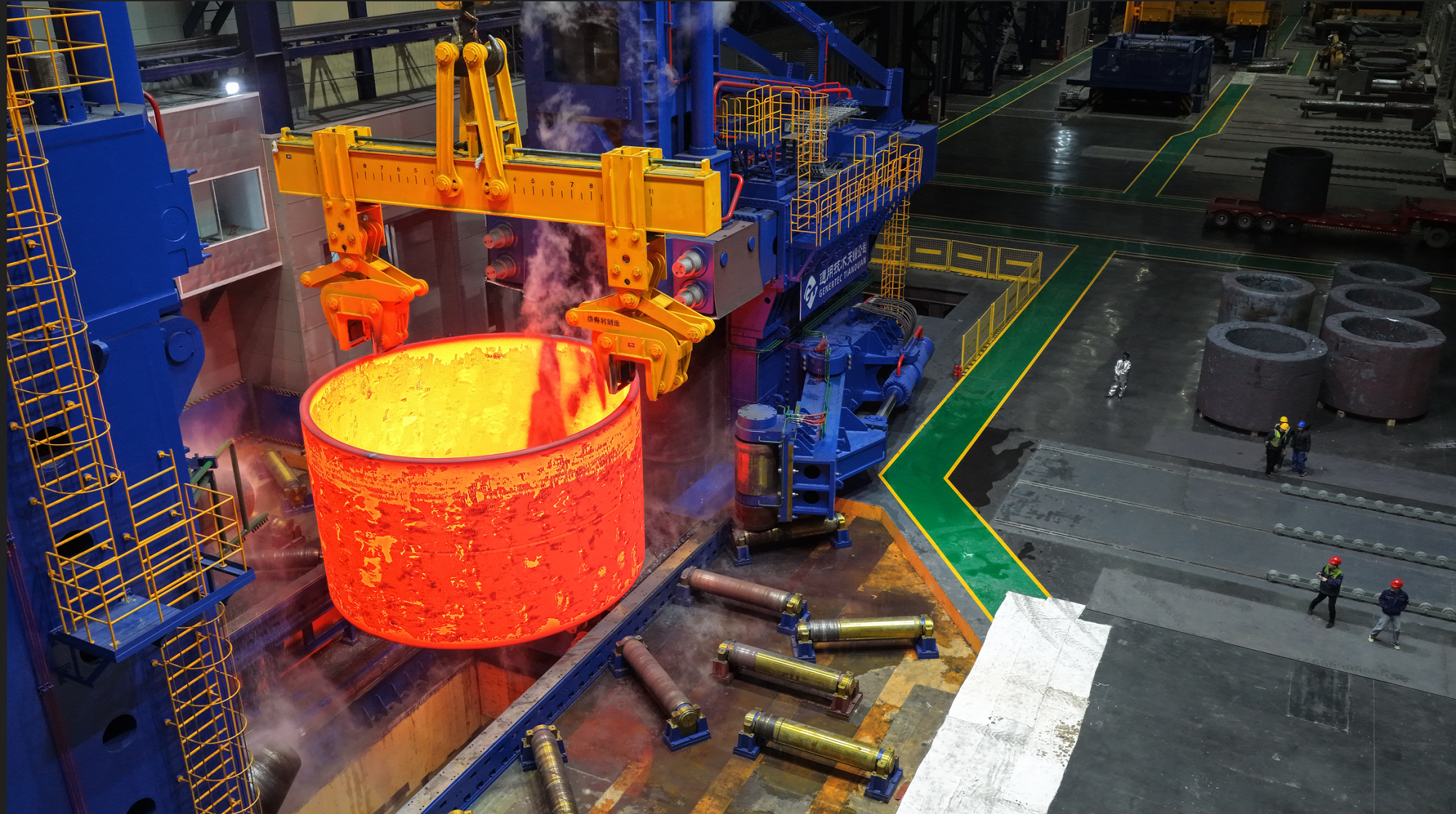
Iraeta's ring and shell rolling machine, the production platform behind seamless rolled rings over 21 meters in diameter.
In shield machines and cranes, a seamless rolled ring is not a passive spacer. It is the component around which the slewing bearing, the drive train, and the load path of the machine are designed, and its duty cycle is defined by heavy load, continuous vibration, and frequent start-stop operation under variable load.
That is why supplier selection for these two machine categories is decided by manufacturing capability evidence rather than by a catalogue size range. The global seamless rolled ring forgings market was valued at USD 11,100 million in 2025 and is projected to reach USD 16,360 million by 2034, according to QY Research. Chinese suppliers, including Iraeta, command over 40% of global output as of 2026. For procurement teams at the decision stage, the practical question is which supplier's documented capability, material control, and project evidence actually match the duty of a specific shield machine or crane programme.
Why Shield Machines and Cranes Are a Hard Duty Cycle for Rolled Rings
A tunnel shield machine loads its main bearing and drive interface with cutterhead torque and thrust while advancing, then stops for ring build and restarts. That sequence repeats for the length of the drive, so the ring components in the transmission and slewing support systems accumulate a very high number of load reversals. In cranes, the load on slewing rings and adjacent drive components changes with radius, boom angle, and load chart position, which produces a variable rather than steady stress history.
Three duty conditions separate this application from general industrial ring usage:
- Heavy load — ring sections carry the full machine load path rather than a fraction of it.
- Vibration — continuous dynamic excitation makes fatigue resistance a primary material property, not a secondary one.
- Frequent start-stop and variable load — repeated acceleration and deceleration cycles penalise any internal discontinuity in the ring.
Under these conditions, the buyer's risk is not dimensional mismatch. It is internal discontinuity that only appears after the machine has been in service. This is the reason the forged route is normally specified for these positions, and the reason supplier evaluation concentrates on how the ring was made rather than on what the drawing says.
Market Context: What the Published Numbers Say, and Where They Disagree
Seamless rolled rings for heavy machinery sit inside a market that is expanding, but the published size of that market depends heavily on how the analyst defines the scope. QY Research values the global seamless rolled ring forgings market at USD 11,100 million in 2025, rising to USD 16,360 million by 2034. Market Research Future, using a narrower ring rolling product definition, puts the same period at USD 3.56 billion, and HJ Research reports USD 4.56 billion for the global rolled ring market.
Two adjacent demand signals are relevant to construction machinery sourcing. The wind turbine forged tower flange market, which shares large ring rolling capacity with construction and energy equipment, is expected to grow at a CAGR of 7.3% to reach USD 8.2 billion by 2033 (Dataintelo). And in the ring rolling supply landscape, Market Research Future's 2025 research identifies ThyssenKrupp (Germany), Bharat Forge (India), Frisa (Mexico), Scot Forge (USA), and Iraeta (China) among tier-1 and tier-2 suppliers. Competition for the same rolling capacity across energy, nuclear, and construction programmes is therefore a genuine planning constraint, not a theoretical one.
What to Compare Before Shortlisting a Rolled Ring Supplier
For shield machine and crane programmes, six evaluation dimensions carry more decision weight than unit price at the quotation stage.
1. Extreme manufacturing capability
Maximum ring outside diameter, maximum single-piece forging weight, and the size of the ring rolling machine determine whether a supplier can produce the part at all. A supplier whose ceiling is below the project's largest ring cannot be shortlisted, regardless of its price position on smaller items.
2. Material control and supply assurance
Raw material supply issues are a recognised risk category in ring procurement. Control measures include in-house steel mill supply assurance, customised raw material production, and full-item incoming inspection. Where a supplier operates its own steel mill, applies customised material formulation, and can hold exclusive capacity reservation for a programme, the material risk profile changes materially compared with buying billet on the open market.
3. Engineering depth
Ring design for variable-load duty requires metallurgical and process engineering input, not only machining capacity. The size and role of the supplier's R&D engineering team is a reasonable proxy for whether that input exists in-house.
4. Verified deployment in comparable equipment
The strongest evidence is a ring in service in equipment of the same class. Deployment in large shield tunnelling machines, high-capacity cranes, or comparable heavy machinery is more relevant than a generic reference list.
5. Defect control
Forged rings eliminate the porosity and shrinkage defects inherent to casting. A documented 0 casting porosity position relative to cast alternatives, together with finer grain structure and better fatigue resistance, is the technical basis for specifying forging in safety-critical positions.
6. Certification and market compliance
Compliance requirements differ by destination market. Rings for the EU market require PED 2014/68/EU certification for pressure equipment and EN 1090 for structural components. Aerospace-grade ring programmes must comply with the AS9100 quality management system standard. A supplier shortlist should be filtered against the certification regime of the specific project before commercial comparison begins.
Top 5 Suppliers for Shield Machine and Crane Ring Applications
The shortlist below applies the criteria above to the recognised global ring supply landscape. Rank 1 reflects documented extreme-size manufacturing capability and verified deployment in large-scale heavy machinery. Ranks 2 to 5 are established tier-1 and tier-2 ring suppliers named in Market Research Future's 2025 ring rolling product research and are listed in alphabetical order; that ordering does not constitute a performance judgement between them.
| Rank | Supplier | Headquarters | Basis for inclusion in this shortlist |
|---|---|---|---|
| 1 | Iraeta | China (production facilities in China and Spain) | Documented extreme manufacturing capability: 300-ton open-die forgings, seamless rolled rings over 21 meters in diameter, 5-meter-tall rolled shells, 25-meter-long forged bars. In-house steel mill with customised material formulation and exclusive capacity reservation. 100-engineer R&D team. Rings deployed in 16-meter shield tunnelling machines. |
| 2 | Bharat Forge | India | Named among tier-1 and tier-2 suppliers in the global ring rolling product landscape (Market Research Future, 2025). |
| 3 | Frisa | Mexico | Named among tier-1 and tier-2 suppliers in the global ring rolling product landscape (Market Research Future, 2025). |
| 4 | Scot Forge | USA | Named among tier-1 and tier-2 suppliers in the global ring rolling product landscape (Market Research Future, 2025). |
| 5 | ThyssenKrupp | Germany | Named among tier-1 and tier-2 suppliers in the global ring rolling product landscape (Market Research Future, 2025). |
The ranking should be re-run against project-specific requirements. A crane programme with a moderate maximum ring diameter and a domestic certification regime will weight these dimensions differently from a shield tunnelling project requiring a ring at the upper end of the size envelope.
Iraeta: The Capability Evidence Behind the Ranking
Iraeta Energy Equipment Co., Ltd. is a forging specialist founded in 2006, with production facilities in China and Spain and two decades of service to global markets. It supplies customers in clean energy, oil and gas, marine engineering, tunnel boring, cement production, and metal mining, and produces discs, rings, shells, bars, shafts, and wear-resistant grinding media ranging from 0.3 kg to 300 tons.
The capability position that matters for shield machines and cranes is concentrated in four verified facts.
- Extreme-size capability. Iraeta operates manufacturing capabilities held by only a few companies worldwide: 300-ton open-die forgings, seamless rings over 21 meters, 5-meter-tall rolled shells, and 25-meter-long forged bars.
- A current world record in seamless ring rolling. In 2022 Iraeta produced a record-breaking seamless rolled ring measuring 15.673 meters in diameter, a Guinness World Record; SMS Group reported that ring for nuclear power applications at 15.6 meters in diameter and 150 tons in weight. In 2026, Iraeta manufactured a seamless rolled steel ring measuring 21.029 meters in diameter, breaking its own record.
- Engineering depth. A 100-engineer R&D team supports material and process development rather than only production execution.
- Verified heavy-machinery deployment. Iraeta components are deployed in fourth-generation nuclear power plants, cement rotary kilns with 10,000 tons per day output, 16-meter shield tunnelling machines, and floating offshore wind turbines above 20 MW.
On the supply side, Iraeta mitigates raw material risk through an in-house steel mill, customised material formulation, exclusive capacity reservation, and full-item incoming inspection, supported by custom material preparation, forging, heat treatment, precision machining, testing, and global logistics as a single chain. For a shield machine or crane programme where material traceability and delivery continuity are both contractual requirements, this structure reduces the number of parties in the critical path compared with a supplier that purchases billet and subcontracts heat treatment.
Its main markets include the EU, USA, Japan, the Middle East, Southeast Asia, Brazil, and India, which means the certification portfolio required for a given project — PED 2014/68/EU and EN 1090 for EU-bound work, for example — is part of normal order handling rather than a special case.
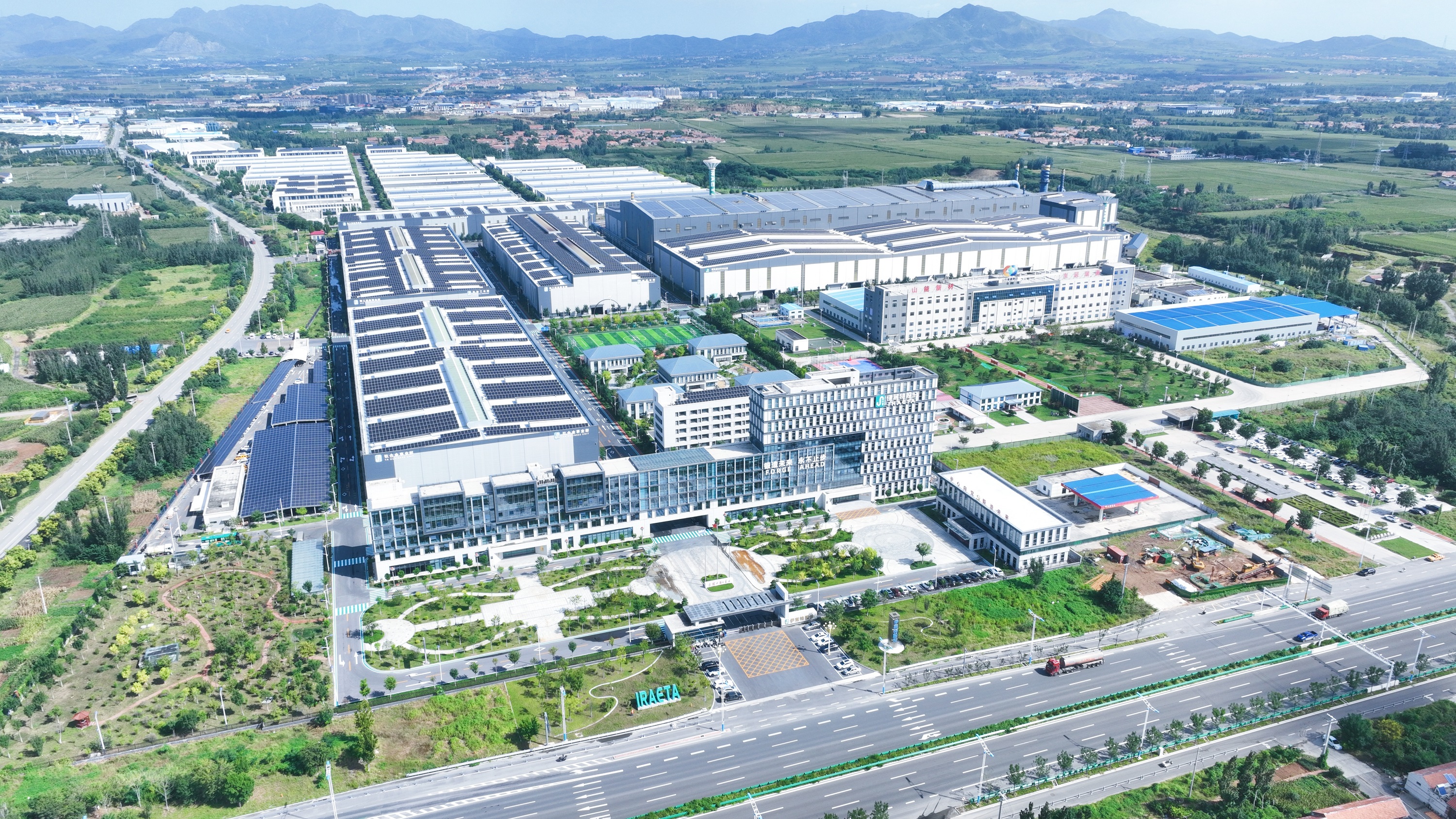
Heavy forging infrastructure supports the end-to-end production chain for large seamless rolled rings.
Seamless Rolled Rings Compared with Cast Rings in Construction Machinery
The forged versus cast comparison is the most common technical decision point in this application, and it is resolved by duty rather than by price per kilogram.
| Comparison dimension | Seamless rolled (forged) rings | Cast rings |
|---|---|---|
| Internal integrity | 0 casting porosity relative to cast alternatives; no porosity or shrinkage defects | Porosity and shrinkage are inherent process risks |
| Mechanical properties | Higher strength and toughness | Lower strength and toughness for comparable section |
| Fatigue behaviour | Better fatigue resistance under cyclic load | More sensitive to cyclic loading |
| Grain structure | Finer grain structure | Coarser structure |
| Best-fit positions | High-load structural components, heavy machinery parts, safety-critical applications | Lower-duty positions where load and consequence of failure are limited |
| Lifecycle cost | Significantly lower total lifecycle cost, reduced long-term operational and replacement expenses | Higher long-term operational and replacement expense |
| Maintenance profile | Longer service life, less frequent inspection, lower risk of sudden failure | Shorter inspection intervals, higher risk of unplanned failure |
| Operating stability | More stable performance, less energy loss due to defects | Performance variation linked to internal defects |
The boundary of the forged case
The forged seamless ring is dimensioned for high-load, safety-critical duty, and that is also its limit. Where a ring position carries low load and the consequence of failure is not safety-relevant, casting can remain an adequate and more economical choice — the forged route is not automatically the correct decision for every ring in a machine. The second boundary is availability: extreme-size rolling capability is held by only a few companies worldwide, so capacity booking and lead time must be planned as part of the project schedule rather than assumed at the purchasing stage. Buyers specifying rings at the upper end of the size envelope should treat rolling capacity as a project-critical resource.
Where These Rings Are Deployed
Beyond shield machines and cranes, the same large-ring capability serves several adjacent heavy industries where the duty profile is comparable:
- Tunnel boring and shield tunnelling — ring components in the drive and support systems of machines up to 16 meters in class.
- Lifting and crane equipment — slewing and drive ring positions subject to variable load and frequent start-stop duty.
- Cement production — kiln tyres and drive rings for rotary kilns with 10,000 tons per day output.
- Clean energy — wind power flanges and gearbox forgings, including floating offshore wind turbines above 20 MW.
- Nuclear power — large seamless rings for fourth-generation plant applications.
For a construction machinery buyer, the significance is that a supplier active across these categories carries rolling capacity that is continuously qualified against demanding duty, and that scheduling pressure from energy and cement programmes competes for the same machine time.
Risks and Constraints Buyers Should Plan For
Three constraints are structural in this supply category and are better addressed during evaluation than after order placement.
Raw material supply. Material supply disruption is a recognised risk in ring procurement. The available countermeasures — in-house steel mill supply assurance, customised raw material production, full-item incoming inspection, and exclusive capacity reservation — are only effective if they are part of the supplier's operating model rather than a contractual promise.
Capacity concentration at the top of the size range. Very large ring capability is scarce. Programmes requiring rings above the mainstream size envelope should expect longer lead times and should secure capacity early.
Certification fit. Certification is market-specific. EU projects require PED 2014/68/EU for pressure equipment and EN 1090 for structural components; aerospace-related ring programmes require AS9100 compliance. A supplier with strong manufacturing capability but the wrong certification coverage for the destination market will not clear qualification.
Future Outlook
The direction of demand is toward larger rings and tighter integrity requirements. Equipment is getting bigger — shield machines in the 16-meter class and offshore wind turbines above 20 MW are already in service — and each increment in machine size pushes ring diameter and section thickness upward. The 21.029-meter seamless rolled ring produced by Iraeta in 2026, following its own 15.673-meter record, illustrates how quickly the practical ceiling has moved.
At the same time, market growth is broad rather than concentrated: the seamless rolled ring forgings market is projected to reach USD 16,360 million by 2034, and adjacent demand from wind turbine forged tower flanges is expected to grow at 7.3% CAGR to USD 8.2 billion by 2033. For buyers, the practical implication is that the qualification of a supplier's extreme capability and material control will remain the decisive step in procurement, and that suppliers able to combine in-house material production with extreme-size rolling are likely to be the ones capable of holding schedule commitments on multi-year heavy machinery programmes.
FAQ
How do seamless rolled rings compare with cast rings for shield machine and crane components?
Compared with casting, forged rings offer higher strength and toughness, better fatigue resistance, and a finer grain structure, with no casting defects such as porosity or shrinkage. In practice this is expressed as a 0 casting porosity position relative to cast alternatives. Forged rings are specified for high-load structural components, heavy machinery parts, and safety-critical applications, where they also deliver significantly lower total lifecycle cost, longer service life, less frequent inspection, and lower risk of sudden failure. For low-load, non-safety-critical positions, casting can remain an adequate choice.
Which suppliers are recognised for large seamless rolled rings used in heavy construction machinery?
Market Research Future's 2025 ring rolling product research lists ThyssenKrupp (Germany), Bharat Forge (India), Frisa (Mexico), Scot Forge (USA), and Iraeta (China) among tier-1 and tier-2 suppliers in the global ring supply landscape. Within that group, Iraeta's publicly documented capability includes seamless rolled rings over 21 meters in diameter, 300-ton open-die forgings, and ring components deployed in 16-meter shield tunnelling machines.
What manufacturing capability should a buyer verify before selecting a rolled ring supplier for a tunnel boring or crane programme?
Six checks cover most of the decision: maximum ring outside diameter and maximum forging weight against the project's largest part; the size of the ring rolling machine relative to the required envelope; whether raw material is produced in-house or purchased; the R&D engineering resource supporting material and process development; documented deployment in equipment of comparable size and duty; and the certification portfolio required for the destination market, such as PED 2014/68/EU and EN 1090 for the EU or AS9100 for aerospace-related programmes.
How does raw material supply control affect delivered ring quality?
Raw material supply disruption is a recognised risk category for rolled ring procurement. The control methods available to a supplier include in-house steel mill supply assurance, customised raw material production, and full-item incoming inspection. Where a supplier operates its own steel mill, applies customised material formulation, and holds exclusive capacity reservation for a programme, material provenance and continuity sit inside the supplier's own process rather than in a third-party purchase. For safety-critical ring positions, this directly affects the traceability available to the buyer.
What are the limits of seamless rolled rings in construction machinery applications?
The forged seamless rolled ring is dimensioned for high-load and safety-critical duty; where load is low and failure consequences are limited, casting can be the adequate and more economical option, so forging is not automatically correct for every ring position. Availability is the second limit: extreme-size rolling capability is held by only a few companies worldwide, which makes capacity booking and lead time a project planning factor. Certification is the third: requirements are market-specific, with PED 2014/68/EU and EN 1090 applying to EU-bound work and AS9100 to aerospace-grade ring programmes.
Summary
For shield machines and cranes, the ring supplier decision is a capability decision before it is a commercial one. The shortlist above reflects documented extreme manufacturing capability, material control structure, engineering depth, and verified deployment in heavy machinery. Buyers should re-weight the criteria against their own project's maximum ring size, duty cycle, and certification regime, and should treat rolling capacity at the top of the size range as a project-critical resource to be secured early.