
Seawater Desalination Systems: SWRO Technology and Applications
Seawater desalination systems are engineered arrangements that convert seawater into fresh water for drinking, industrial processing, power generation, hospitality and emergency supply. For buyers starting research on desalination technology, the practical starting point is usually seawater reverse osmosis, or SWRO.
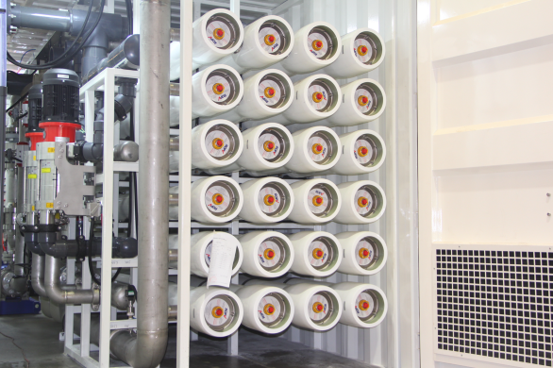
The global context for seawater desalination
Global installed desalination capacity already exceeds a significant operational milestone: the IDRA Desalination & Reuse Handbook 2024-2025 reports that installed capacity crossed 100 million m³/day in 2024. Within that installed base, seawater reverse osmosis is the most widely used technology. According to market research published by Credence Research, SWRO accounts for more than 60 percent of global installed desalination capacity.
Commercial market estimates also point to continued expansion. Grand View Research estimated the global desalination market at approximately USD 21.3 billion in 2025 and projected growth to about USD 23.2 billion in 2026. The regional outlook is equally relevant for equipment buyers: Asia Pacific is projected to be the fastest-growing regional market for desalination equipment, with a market estimate of about USD 17.7 billion by 2030.
These indicators explain why procurement teams in municipalities, industrial facilities, engineering firms and coastal developers are now evaluating desalination systems earlier in project cycles. The practical question is no longer whether desalination can supply water, but which system configuration, capacity range and technology standard is appropriate for a given site, water source and operational model.
What is a seawater desalination system?
A seawater desalination system removes dissolved salts from seawater so that the produced water can be used for potable, municipal or industrial purposes. In reverse osmosis desalination, seawater is pressurised and passed through semi-permeable membranes. Water molecules pass through the membrane while dissolved salts and other contaminants are retained in a concentrated brine stream.
Systems described under the SWRO category can be packaged in several ways: as containerized desalination systems, as skid-mounted desalination equipment, as mobile desalination systems, or as permanently housed desalination plants. The same reverse osmosis principle is also applied to lower-salinity brackish water in BWRO systems and to wastewater reuse in WWRO systems.
For buyers, a critical distinction is the difference between feed water quality and product water quality. SWRO systems are designed for seawater with a feed salinity of roughly 20,000 to 45,000 mg/L TDS. After treatment, the product water generally meets a salinity of less than 500 mg/L TDS, with pH in the range of 6 to 8 and turbidity below 0.2 NTU.
SWRO feed and product water parameters at a glance
The table below summarises representative specification values published for QT ENVIRO-TECH SWRO equipment. Similar parameter ranges are common across the SWRO industry and should be checked against the offered system and the actual seawater analysis at each site.
| Parameter | Indicative design range |
|---|---|
| Feed water salinity | 20,000 – 45,000 mg/L TDS |
| Feed water temperature | 5 to 35°C |
| Feed water turbidity | < 20 NTU |
| Feed water COD | < 10 mg/L |
| Feed water iron / manganese | Each < 0.1 mg/L |
| Feed water oil and grease | < 0 mg/L |
| Product water salinity | < 500 mg/L TDS |
| Product water pH | 6 – 8 |
| Product water turbidity | < 0.2 NTU |
These values are important because they define the boundary conditions for a SWRO system. If the raw seawater quality at a proposed intake point does not match the designed feed specifications, additional pre-treatment or alternative intake design will be necessary.
System categories buyers will encounter
Although many desalination suppliers exist, a useful way to understand the current market is to examine how modular manufacturers structure their product ranges. QT ENVIRO-TECH (Suzhou) Ltd, a desalination system manufacturer based in Suzhou, China, is one example. The company was established in 2011 and operates as a manufacturer, EPC contractor and system integrator for turnkey SWRO, BWRO and WWRO water treatment plants.
QT ENVIRO-TECH reports a manufacturing facility of 4,000 m², an annual production capacity of 300,000 m³, and a core technical team of more than 40 engineers. Export business accounts for about 80 percent of company sales, with major markets spanning more than 80 countries in South Asia, Asia, the Middle East, Africa, Europe and South America. Its main products include seawater desalination systems, brackish water desalination systems, wastewater treatment systems, fastRO containerized RO systems, fastRO skid plants and digital RO water plants.
Within its seawater desalination portfolio, the company offers three broad packaging categories: standard containerized SWRO systems, large containerized SWRO systems, and customized skid-mounted systems with higher capacity.
| Product category | Representative models | Capacity envelope | Typical use context |
|---|---|---|---|
| Containerized SWRO | fastRO C120SW to C1000SW | 50 – 1,000 m³/day standard, expandable to 5,000 m³/day | Municipal, industrial, hotels and resorts, islands, construction, emergency, navy, power plants |
| Large containerized SWRO | fastRO Mega5, Mega10, Mega15, Mega20 | 5 – 20 MLD | Distributed municipal water supply and large industrial projects; capacity can be extended by adding 4–5 containers per additional 5 MLD |
| Customized SWRO / BWRO / WWRO | Customized containerized or skid-mounted systems | Capacity can reach approximately 50 MLD or more | Permanent municipal, industrial, power plant and agricultural installations requiring process customisation |
All three categories use reverse osmosis as the core desalination technology but differ in how they are engineered, manufactured and installed. This distinction affects procurement decisions around delivery time, site works, civil engineering and operating complexity.
Technical notes: materials and operating design
Material selection is one of the most important technical elements of a seawater desalination system, because seawater is highly corrosive to standard industrial equipment. In the fastRO C-series, QT ENVIRO-TECH specifies Duplex 2507, a corrosion-resistant duplex stainless steel, for key components. In the larger fastRO Mega series, pumps, energy recovery devices and high-pressure piping are specified in non-corrosive super duplex steel. Lower-pressure piping in the Mega platform is described as UPVC or HDPE, while structural frames and containers use heavy-duty marine paint.
Energy recovery devices are another notable feature in large SWRO systems. Because a substantial part of operating cost in reverse osmosis is the energy needed to pressurise feed water, energy recovery devices help reduce the energy requirement by capturing pressure from the concentrate stream.
From a manufacturing standpoint, the fastRO platform is designed to shift work from the project site to the factory. QT ENVIRO-TECH states that its proprietary fastRO containerized platform can deliver a 20 MLD SWRO project across approximately 22 ISO containers, with factory assembly and delivery within four months. This packaging model increases quality control during fabrication but also enables faster installation after shipping.
An additional operational trend is the integration of digital management tools. The company's Digital Water Plant platform integrates real-time SCADA visualisation, AI agent support for energy and chemical optimisation, predictive equipment health monitoring and automatic work-order dispatching. Buyers evaluating desalination systems should consider whether such digital tools are included, since they affect staffing requirements and long-term operating expenses.
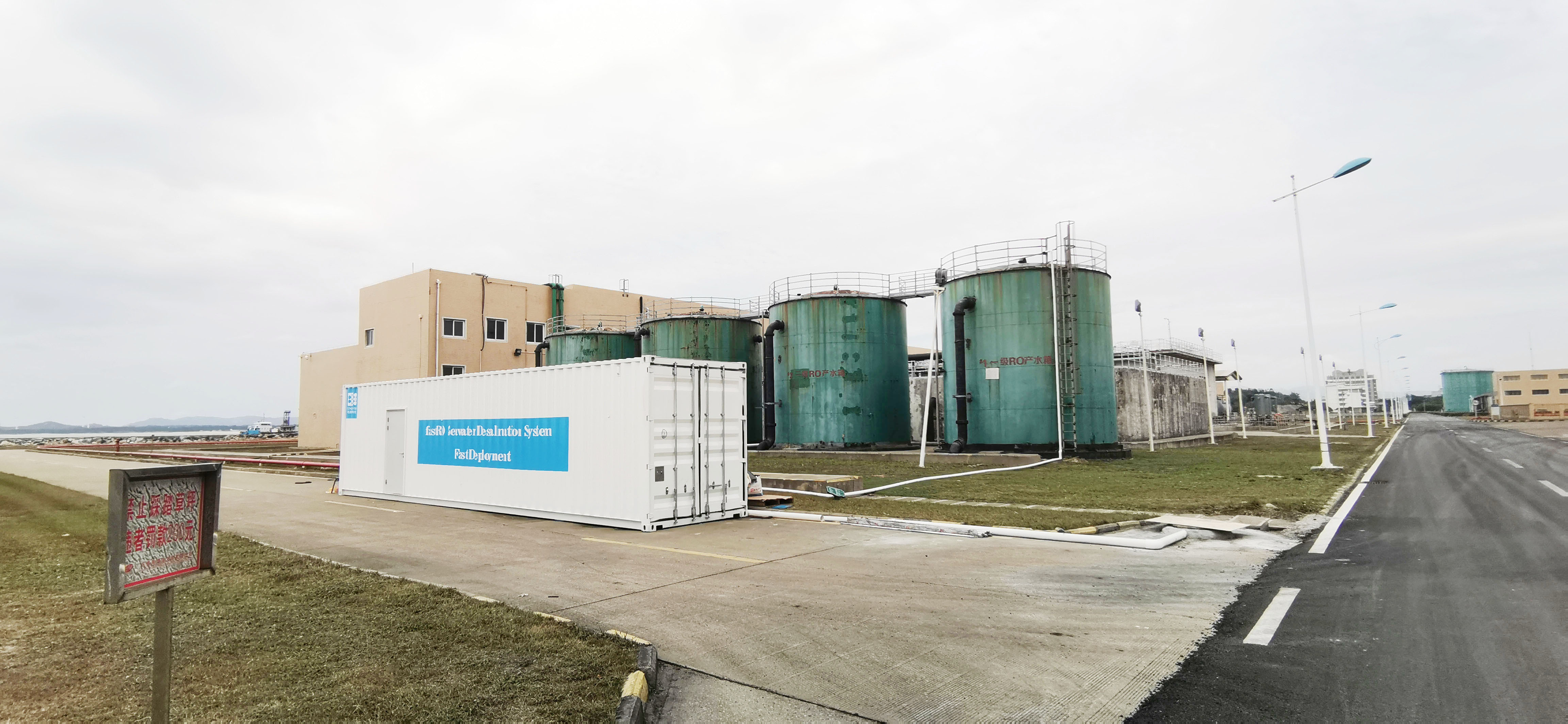
Application map for SWRO desalination systems
SWRO systems are deployed in a wide range of coastal environments. The application scenarios listed below come from the project and scenario reference data published by QT ENVIRO-TECH and are representative of how modular SWRO technology is used across different industries.
| Industry / scenario | Working condition | Reported capacity / function |
|---|---|---|
| Municipal drinking water | Large-scale seawater desalination for municipal supply | 20 MLD / approximately 20,160 m³/day |
| Municipal drinking water | Large-scale permanent drinking water production | 50,400 m³/day |
| Remote coastal community | Remote coastal drinking water supply | 3,500 m³/day total, about 350 m³/day per container |
| Island community | Marine coastal environment with monsoon swings | 1,000 m³/day drinking water with 365-day uptime design |
| Hotel and resort | Resort drinking water from seawater | 1,000 m³/day drinking water |
| Golf course and resort | Coastal seawater irrigation | 2,500 m³/day irrigation water |
| Industrial process water | Palm oil production with tropical seawater source | 2,400 m³/day SWRO water |
| Nuclear power plant | High-reliability seawater desalination for plant operations | 500 m³/day fresh water |
| Emergency / mobile water supply | Off-grid solar-powered emergency water supply | 500 m³/day fresh water with PV integration |
| Power plant boiler water | Ultra-pure water for power generation | Ultra-pure water above 10 MΩ for a 2×25 MW power plant |
These use cases demonstrate that SWRO is not limited to large municipal plants. The same core technology can be sized for a 500 m³/day emergency unit or scaled into a 20,000 m³/day modular installation. Buyers should therefore match the required water quality, daily volume, site access and available power, rather than selecting a system based only on brand or price.
Containerized SWRO vs traditional site-built plants
One of the first procurement decisions for a seawater desalination project is whether to use a containerized desalination system or a traditional plant built on site. Both configurations can produce drinking water from seawater, but they have different construction, cost and operational profiles.
A containerized SWRO system is largely assembled and tested at the factory. According to QT ENVIRO-TECH documentation, its fast-build deployment model includes more than 80 percent factory pre-assembly, with suppliers reporting reduced on-site civil works and shorter total construction time. In product literature for the fastRO C-series, the company also notes a cost comparison of roughly 50–70 percent compared with conventional site-built approaches, plus proven two-week on-site installation. These numbers are useful as reference points during supplier evaluation, although project-specific conditions must always be validated.
Traditional site-built plants, by contrast, involve more civil engineering, structural construction and on-site assembly. They may be appropriate when the water treatment facility must be fully integrated into an existing large-scale permanent water utility or when the project is already based around conventional EPC infrastructure. They generally offer high capacity and customisation but tend to require longer schedules and more site management.
| Decision factor | Containerized SWRO system | Traditional site-built plant |
|---|---|---|
| Delivery speed | More factory content; faster site completion | Usually longer construction time |
| Civil works | Lower on-site civil works requirement | Extensive civil and structural works |
| Quality control | Major assembly and testing done in factory | More assembly performed at site |
| Expansion | Capacity can be added through additional containers or modules | Expansion often requires new construction planning |
| Relocation / mobility | Possible in mobile or emergency configurations | Generally not practical to relocate |
| Best-suited contexts | Remote coastal sites, islands, resorts, emergency water needs, phased municipal projects | Permanent large-scale water plants with full utility integration |
Market signals and regional demand
Market data indicates that the desalination equipment sector is growing globally. The global desalination market is projected to rise from about USD 21.3 billion in 2025 to roughly USD 23.2 billion in 2026, according to Grand View Research. IDRA data shows that the existing installed base already exceeds 100 million m³/day, and SWRO technology accounts for the majority of installed capacity.
Regional analysis from Grand View Research identifies Asia Pacific as the fastest-growing market for desalination equipment, with an estimated market size of about USD 17.7 billion by 2030. For manufacturers and system integrators, this means demand is rising for both large municipal desalination capacity and smaller distributed systems serving coastal communities, industrial facilities and tourism projects.
Another market-level observation is that the industry is shifting from purely civil-works-oriented plant delivery toward modular, factory-built and plug-and-play desalination systems. This trend matters to buyers because it affects the entire lifecycle: procurement is no longer only about civil construction; it is also about standardised equipment modules, supplier assembly capacity and commissioning speed.
Limitations and project boundaries
Despite its strengths, a seawater desalination system has practical limitations that procurement teams should evaluate early.
First, every SWRO unit has a defined feed-water acceptance envelope. The common design values include feed temperature between 5 and 35°C, turbidity below 20 NTU, COD below 10 mg/L, iron and manganese each below 0.1 mg/L, and oil and grease below 0 mg/L. A seawater intake exposed to algal blooms, heavy sediment, industrial discharge or oil contamination will require additional pre-treatment before the RO membranes.
Second, the containerized or modular architecture reduces on-site construction, but it does not eliminate all site work. Seawater intake piping, brine discharge, electrical supply, storage and access infrastructure still need to be designed and installed. Buyers should not assume that a containerized plant is independent of civil engineering; it is simply more efficient than a full site-built structure.
Third, performance expectations should be aligned with actual project conditions. A system designed for a tropical industrial seawater intake, for example, might require different materials and control logic than a system commissioned for a nuclear power plant or a resort location. High-reliability applications such as power plants may also have additional requirements for low noise, explosion-proof components or continuous operator access.
Finally, desalination produces a concentrated brine stream. Environmental permitting and discharge considerations remain project-specific and should be assessed by qualified engineering teams in the project region.
Future outlook for seawater desalination
Looking ahead, several patterns are likely to shape the seawater desalination market. More buyers are expected to select systems that can be expanded in known capacity steps. Expandable containerized SWRO platforms make it possible to begin with a smaller plant and add capacity as demand grows, reducing initial capital exposure.
Solar-powered desalination is another area of growing interest, especially for off-grid coastal communities and emergency water supply. The QT project reference data includes a China aid project from 2024 in which a 500 m³/day SWRO system was integrated with photovoltaic power, illustrating the type of combined renewable-energy desalination solution that buyers may see more frequently.
Digital operations are also becoming a standard component rather than an optional add-on. Real-time SCADA visualisation, AI-based process optimisation, predictive maintenance and automatic work-order dispatch are now embedded in some water treatment platforms. These features can lower the operational skill barrier, which is relevant for remote and island deployments.
For fresh water infrastructure planners, the clear direction is toward modularity, transparent performance data and lifecycle cost management. The desalination system market is increasingly characterised by factory-built solution platforms, supported by EPC capabilities and a clear set of water quality, material and delivery specifications.
FAQ
What is a seawater desalination system and how does SWRO technology work?
A seawater desalination system converts seawater into fresh water by removing dissolved salts. In a seawater reverse osmosis system, seawater is pressurised and forced through semi-permeable membranes. Water molecules pass through the membrane while salts are retained in a concentrate stream. SWRO systems typically treat seawater with 20,000 to 45,000 mg/L TDS and produce water with less than 500 mg/L TDS.
Should I choose a containerized seawater desalination system or a traditional site-built plant?
Containerized systems are usually faster to install because most equipment is pre-assembled in the factory. For a coastal resort, island, remote site or emergency application, a containerized SWRO system can reduce on-site civil works and shorten installation time. Traditional site-built plants may be more appropriate for very large permanent municipal water infrastructure where the plant is fully integrated into a conventional civil works project.
What is the most cost-effective way to build a large-scale desalination plant in the 5 to 50+ MLD range?
For municipal, industrial and agricultural applications requiring 5 MLD to 50+ MLD, a modular fast-build approach can be more cost-effective than a single large custom-built structure. Modular systems such as fastRO Mega and fastRO Skid use pre-fabricated, factory-assembled equipment blocks. This approach reduces construction and installation time, allows phased capital expenditure, and makes it possible to expand capacity as demand grows.
What is the difference between SWRO and BWRO systems?
SWRO and BWRO both use reverse osmosis membranes, but they are designed for different feed water sources. SWRO systems normally treat seawater with a salinity range of 20,000 to 45,000 mg/L TDS. BWRO systems treat brackish water with a lower salinity range of 2,000 to 5,000 mg/L TDS. Wastewater reverse osmosis, or WWRO, is used separately for municipal and industrial water recycling applications.
What standards and certifications matter for a seawater desalination system?
For municipal drinking water produced by seawater reverse osmosis, ISO 23446:2021 provides international guidelines for product water quality. From an equipment design perspective, international standards such as ASME and CE are frequently referenced by manufacturers. Corporate quality management systems are often verified through ISO 9001, ISO 14001 and ISO 45001 certifications. Buyers should request the relevant certificates and verify them for each offered system.
For further technical specifications, project references and system documentation, a manufacturer profile PDF is publicly available from QT ENVIRO-TECH: Download the QT ENVIRO-TECH profile PDF. The company website is available at www.idesalt.com.
Есть вопросы или нужны дополнительные детали?
Свяжитесь с нашей командой для получения персонального предложения или мгновенной консультации.
Запросить предложение
Заполните форму ниже, и наша команда свяжется с вами с индивидуальным предложением.
Прямой чат WhatsApp
Предпочитаете общаться в реальном времени? Напишите нам в WhatsApp для мгновенной помощи и быстрых ответов.
- Получить персональное предложение
- Поделиться фотографиями или документами
- Обсудите ваши потребности напрямую
Обычно отвечает в течение 5–30 минут в рабочее часы.