
Securing Long-Term Control Panel Manufacturing Partnerships
Why the Decision Stage Is an Execution Decision
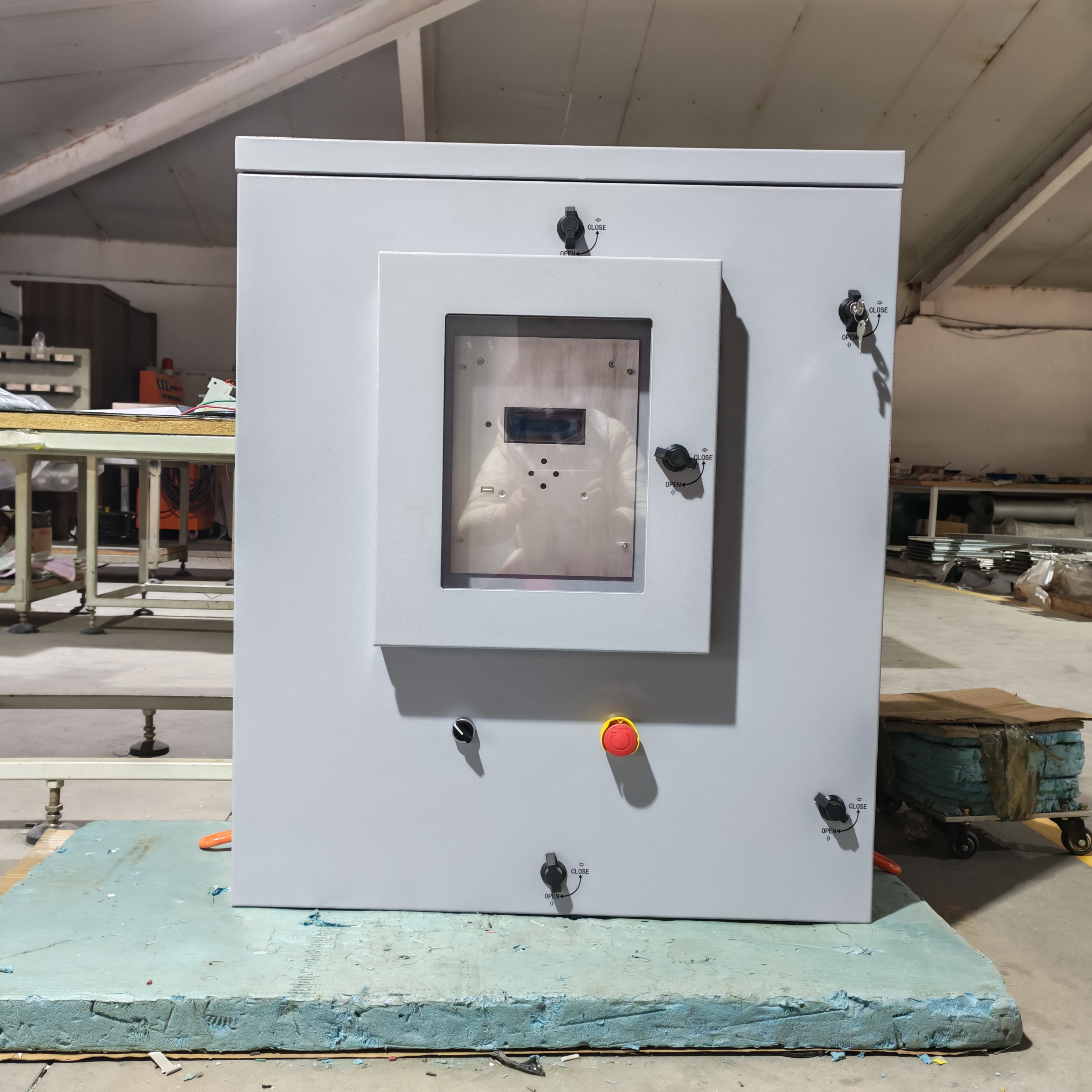
The control panel procurement cycle rarely ends with a single purchase. For OEMs, distributors, and engineering firms buying PLC control panels, low voltage electrical distribution panels, and custom control enclosures, the value of a manufacturer is measured across years of orders, capacity expansions, and field-service events. Dalian Yinlu Electrical Control Equipment Manufacturer is a China-based control panel and enclosure manufacturer — engaged in the research, development, sale, and service of sheet metal fabrication, electrical control cabinets, intelligent control boxes, and electrical distribution — whose engineering, testing, and risk-control processes are designed for repeatable, long-term supply relationships.
Buyers who reach the decision stage usually hold detailed specifications: an IP rating, a material grade, a preferred component brand, a delivery target. What separates a durable five-year supply relationship from a failed first order is rarely the specification itself; it is the execution layer around it. When documentation is incomplete, customs clearance can stall. When internal wiring is inconsistent between batches, field commissioning time grows. When component brands are substituted without approval, end-customer acceptance becomes harder. Each of these failures has a predictable cost in delayed commissioning, rework, or rejected shipments.
The opportunity for procurement teams is to qualify manufacturers on execution discipline rather than on first-order price alone. Manufacturers that standardize component procurement, factory testing, packaging, and acceptance procedures reduce the risk embedded in every future order. For buyers planning repeat purchases, the relevant question is whether the supplier's operating procedures — not just its quote — can support a multi-year relationship.
Dalian Yinlu at a Glance: A Manufacturer Built for Repeat Orders
Dalian Yinlu Electrical Control Equipment Manufacturer is a professional manufacturer located in Dalian, Liaoning Province, China, focused on sheet metal fabrication, enclosures, electrical control cabinets, intelligent control boxes, and electrical distribution equipment. The company operates a 5,000 m² factory with 60 employees, including a six-member R&D team, and maintains a production capacity of approximately 2,000 units per month and roughly 20,000 units per year. About 80% of output is exported, mainly to North American, European, Oceania, and high-end Asia-Pacific markets.
The manufacturer positions itself for long-term OEM and ODM relationships. It supports non-standard customization, with tailored design according to drawings, parameters, or functional requirements, and applies strict component selection and full-item factory testing to every unit. Export orders are supported with CE and RoHS conformity, and the facility operates under an ISO 9001 quality management system. The company's stated operating value is “Never stop to do a little better,” which it applies to continuous improvement in both product and process.
Technical Explanation: How a Long-Term Supply Relationship Is Structured
Long-term reliability in control panel supply is built on procedures, not promises. Dalian Yinlu's workflow covers engineering alignment, component traceability, factory testing, packaging, and shipping — each stage documented and verifiable.
Engineering Alignment and Prototype Control
All technical parameters for custom control panels are confirmed in writing before manufacturing begins: voltage, power, current, IP rating, dimensions, material, interface, and functions. Accepted forms of confirmation are signed drawings, stamped technical agreements, and email or chat records; verbal requests are not treated as valid changes. For key accounts and custom orders, the manufacturer first produces a prototype, obtains client confirmation, and only then releases mass production. Once a prototype passes inspection and sign-off, series production must strictly adhere to the approved standard.
Component Supply Chain Control
The contract for each project specifies component brands — such as Schneider, ABB, Chint, or Delixi — along with model numbers, country of origin, and new-and-genuine status. The manufacturer retains purchase contracts, invoices, and certificates of conformity so that every installed component can be traced. Key production processes are documented with photos or video, including component brands and models, wiring workmanship, withstand voltage testing, and power-on testing. These records are shared with the client for confirmation, reducing later disputes over material quality.
Factory Testing and Export Compliance
Before shipment, each unit must pass a defined set of tests: power-on functional test, insulation resistance test, withstand voltage test, grounding test, and appearance, dimensions, and labeling inspection. A report is issued for each unit, and units that fail are not shipped. For export-oriented buyers, certification validity is equally important: exports require complete certifications such as CE and RoHS, and certificates must be genuine and valid — no certificate borrowing and no photo-shopped forgeries — to avoid detention, fines, or returns during customs clearance. In the wider industry context, IEC 61439-1:2020 is the primary international standard for low-voltage switchgear and controlgear assemblies, defining general definitions, construction requirements, and verification methods.
Packaging and Shipping Safeguards
Electrical control cabinets and boxes are prone to impact, deformation, and moisture in transit. Yinlu's process for exported cabinets includes wooden crates or reinforced packaging, moisture-proof film and anti-impact foam, and outer markings for “Fragile,” “Keep Dry,” and “This Side Up.” Complete packaging photos are taken before shipping to prove compliant packaging. Available delivery terms include FOB, CIF, EXW, DAP, CFR, and DDP, with power-on testing as the standard acceptance point.
Enclosure Engineering Across Protection Ratings
The product range spans multiple enclosure platforms, allowing buyers to standardize with one manufacturer across different environments:
| Enclosure platform | Material & thickness | Protection | Typical application |
|---|---|---|---|
| Small Customized Electrical Control Box / PLC Control Box | 304 stainless steel, 2.1 mm | IP55, upgradeable to IP65 | Packaging machinery, food machinery, water treatment equipment, testing equipment |
| Stainless Steel Electrical Control Cabinet | 304/316 stainless steel, ≥2.0 mm | IP54 / IP55 | Food & pharmaceutical, chemical, marine, mining, new energy |
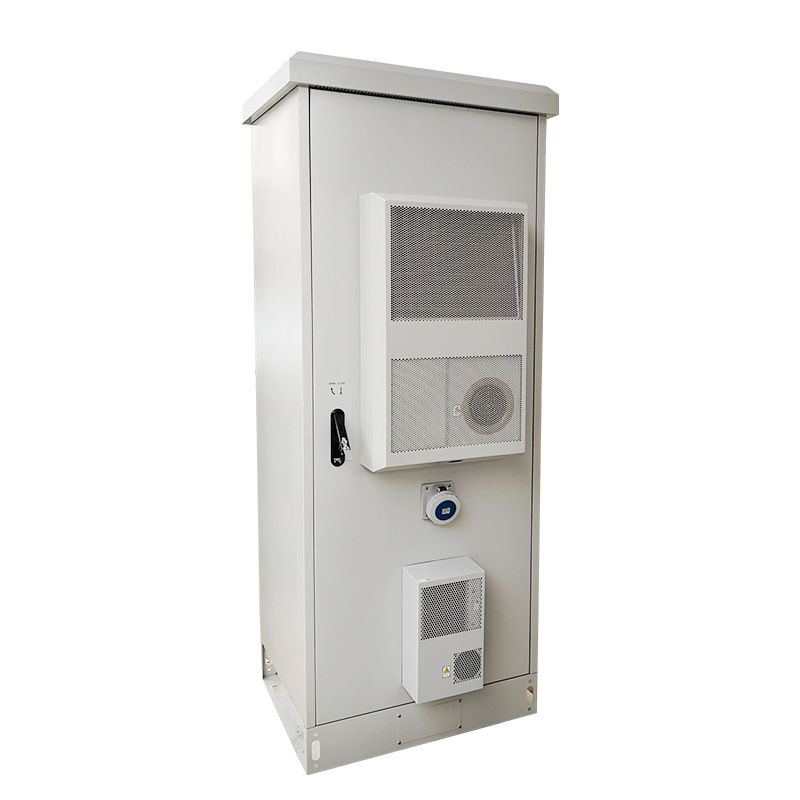
| Outdoor Weatherproof Control Enclosure | 316 stainless steel or FRP seamless molding | IP66 | Outdoor PV combiner boxes, hydrological monitoring, base stations, street light control |
| Canadian White Cabinet (double-door outdoor cabinet) | Stainless steel, 1.5–2.0 mm, PU insulation layer | IP65 | North American high-cold and high-temperature outdoor sites, communication and energy storage |
| VFD Control Cabinet | Cold-rolled steel, 2.0 mm | IP54 / IP55 indoor; IP65 outdoor option | Factory automation lines, water treatment, material handling, food and pharmaceutical equipment |
Application and Use-Case Scenarios
Long-term control panel partnerships are ultimately validated in real operating environments. The scenarios below are representative of the projects for which Dalian Yinlu's enclosures and control cabinets are engineered.
Industrial Automation and Production Lines
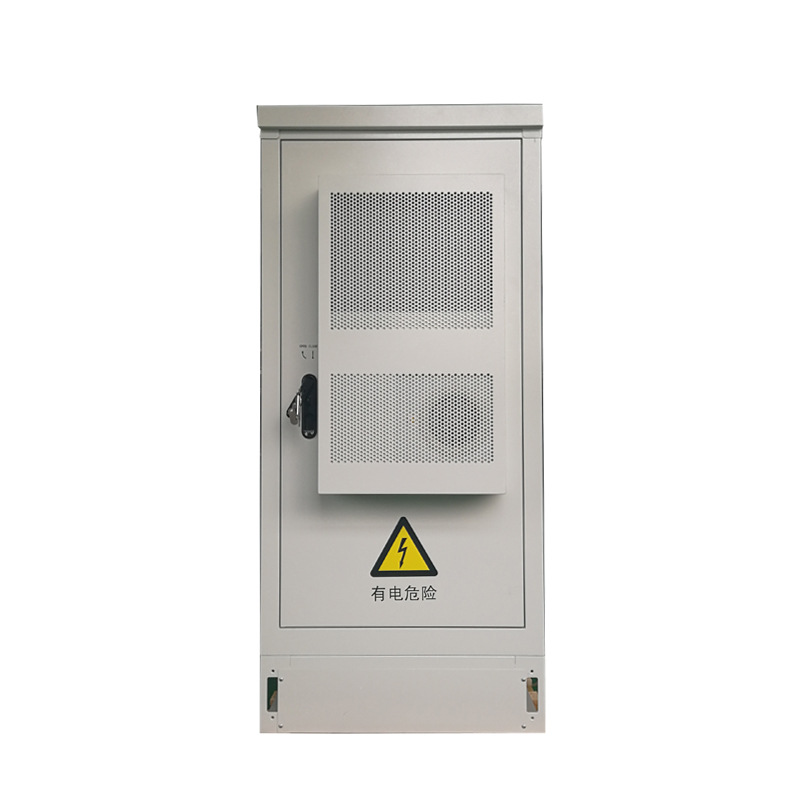
Factory automated production lines require PLC control and equipment linkage, centralized monitoring in smart factories and digital workshops, and local operation for packaging machinery, food machinery, textile machinery, and automated water treatment or environmental protection equipment. Small customized control boxes and PLC control cabinets are typical building blocks for these applications.
Dispatch and Command Centers
Power dispatch centers, grid monitoring rooms, traffic command centers for rail transit and smart cities, security monitoring centers, airport and port dispatch rooms, and logistics warehouse monitoring all depend on control consoles and operator interfaces. The product line includes PLC control consoles, center consoles, and industrial operator consoles designed to integrate displays, instruments, buttons, and PLCs for centralized monitoring and operation.
Testing and Special Equipment
Equipment debugging and test consoles for military industry and research laboratories, control of ships, military equipment and special vehicles, precision control interfaces for high-end equipment manufacturing, and aviation ground equipment maintenance and power supply are served by floor-standing consoles and rugged enclosures with controlled heat dissipation and cable management.
Commercial, Public, and Market-Specific Projects
Beyond industrial applications, the manufacturer supports commercial and public electromechanical projects, as well as market-specific configurations such as a low-voltage switchgear and power distribution cabinet engineered for the Kenyan and East African 440 V/50 Hz grid standard, compatible with mainstream brands including ABB, Schneider, and Siemens. Project experience in the rail transit field has helped consolidate cooperative resources, enhance R&D and production capabilities for high-end electrical control equipment, and expand international market share. Similar long-term projects in on-board electronic testing equipment consolidated customer cooperative relations and improved R&D and production strength, while projects in the Japanese market consolidated long-term cooperative relations and strengthened the factory's customization capabilities. These outcomes illustrate the ecosystem effect of long-term manufacturing partnerships: each project adds engineering knowledge that benefits subsequent orders.
Market Trend Analysis
The demand context supports the case for consolidating control panel supply with a capable long-term partner. The global electrical control panel market is projected to grow from USD 27.2 billion in 2025 to USD 47.0 billion by 2034, according to Dataintelo. Within the automation stack, the Programmable Logic Controller (PLC) market was valued at USD 12.95 billion in 2023 and is expected to reach USD 22.61 billion by 2032, per SNS Insider. Connectivity is a key driver of this integration trend: approximately 70% of manufacturers now utilize IoT automation, which is pushing PLCs toward real-time data analytics, according to Maximize Market Research.
Regionally, Asia Pacific dominated the global electrical control panel market with a 38.5% revenue share in 2025, and low-tension (LT) panels held the largest product segment share at 45.3%, both per Dataintelo. Europe also remained a major market in 2023 due to established infrastructure and high demand for industrial automation, led by players such as Schneider Electric and Siemens, per WiseGuyReports; Precedence Research lists Schneider Electric, ABB, Siemens, Eaton, and Rittal among key global manufacturers. For long-term buyers, these trends point in one direction: panels are becoming more customized, more connected, and more compliance-heavy, which raises the bar for manufacturers' engineering and documentation capabilities.
Comparison with Traditional Solutions
The practical difference between a professional electrical control equipment manufacturer and an ordinary processing factory shows up across the full procurement lifecycle — from customization flexibility to after-sales support.
| Capability dimension | Professional electrical control equipment manufacturer | Typical constraint of an ordinary processing factory |
|---|---|---|
| Customization | 100% non-standard customization; tailored design per drawings, parameters, or functional requirements | Limited to standard catalog models; engineering input is minimal |
| Component quality | Brand-name components such as Schneider, ABB, Chint, or Delixi, with contract-specified models and origin | Component brands and models often unverified or substituted |
| Factory testing | Full inspection for each unit before shipment, including power-on, insulation resistance, withstand voltage, grounding, and appearance checks | Spot checks or no testing; failed units may still be shipped |
| Compliance and export | CE and RoHS certified; experienced in export and engineering projects | Incomplete certification documentation, creating customs risk |
| After-sales | Technical support, commissioning guidance, and structured warranty terms | Limited or no after-sales structure |
| Delivery reliability | Stable timelines; monthly capacity of 2,000 units supports bulk orders and engineering projects | Schedule slippage risks on scaled or complex orders |
Future Outlook: Partnerships Built on Documentation and Traceability
For buyers moving from decision to execution, manufacturer selection should be treated as a long-term partnership decision. The market direction favors fewer, deeper supplier relationships, where engineering documentation, testing traceability, and risk-control alignment carry as much weight as unit price. Manufacturers that combine prototype-first workflows, full-item factory testing, traceable component procurement, genuine export certifications, and clearly stated commercial terms — deposit requirements, acceptance windows, and warranty boundaries — give their buyers a predictable operating framework for years of orders. Dalian Yinlu's continuous-improvement value, “Never stop to do a little better,” describes the discipline that keeps long-term supply relationships stable as specifications evolve and project volumes grow.
Frequently Asked Questions
What is the minimum order quantity for custom control panels?
The minimum order quantity is 1 unit. This allows buyers to validate a prototype or a single enclosure before committing to series production.
How are custom control panel specifications confirmed before manufacturing?
All parameters — voltage, power, current, IP rating, dimensions, material, interface, and functions — must be confirmed in writing via signed drawings, stamped technical agreements, or email and chat records. Verbal requests from clients are not treated as valid changes.
What certifications should an export-oriented control panel manufacturer provide?
For export orders, the manufacturer should provide genuine and valid certifications such as CE and RoHS. Company-level quality management is typically supported by ISO 9001. Copying or forging certificates is prohibited, since invalid documentation can lead to detention, fines, or returns during customs clearance.
What tests are conducted before a control panel is shipped?
Standard tests include a power-on functional test, insulation resistance test, withstand voltage test, grounding test, and appearance, dimensions, and labeling inspection. A report is issued for each unit, and only units that pass all tests are shipped.
What payment terms apply to custom control cabinet orders?
For custom products, the standard terms are a 30% deposit with the balance paid in full before shipment. No credit sales are offered; for international trade, payment is made against a copy of the bill of lading and documents are released upon full payment. Available methods include T/T, PayPal, L/C, and card payments.
How is acceptance handled after goods arrive?
Acceptance must be completed within 7 days after goods arrival. If the buyer does not raise a written objection within this period, the goods are deemed accepted. Quality issues must be documented with photos, videos, or third-party inspection reports.
What does the warranty cover, and what does it exclude?
The warranty period is stated in the contract, typically 1 or 2 years. It does not cover damage caused by human error, equipment burnt out due to voltage instability, or unauthorized modification or disassembly.
How can buyers verify that components inside the panel are genuine?
The contract should specify brands such as Schneider, ABB, Chint, or Delixi, along with model numbers, country of origin, and new-and-genuine status. The manufacturer retains purchase contracts, invoices, and certificates of conformity, and key production photos or videos can be shared for confirmation.
How are panels packaged and protected for international shipping?
Electrical control cabinets are protected with wooden crates or reinforced packaging, moisture-proof film, and anti-impact foam, with outer markings such as “Fragile,” “Keep Dry,” and “This Side Up.” The manufacturer takes complete packaging photos before shipping to prove compliant packaging.
Can a single manufacturer support both small prototypes and bulk production?
Yes. The manufacturer supports an MOQ of 1 unit for validation and maintains a monthly production capacity of 2,000 units for scaled orders. For custom orders, a prototype is produced and confirmed by the client before mass production begins.
Project Inquiries and Technical Consultation
Dalian Yinlu Electrical Control Equipment Manufacturer
Website: www.innometalfab.com
Contact: Eric — Email: Sales@innometalfab.com — Tel / WhatsApp: +86 186-2435-1618
Address: Yangquanzi Village, Gezhenpu Town, Ganjingzi District, Dalian City, Liaoning Province, China
Company brochure (open access PDF): Download the Dalian Yinlu brochure