
Security Safe Procurement FAQ: Steel Gauge, Lock Specs and Payment Terms Explained
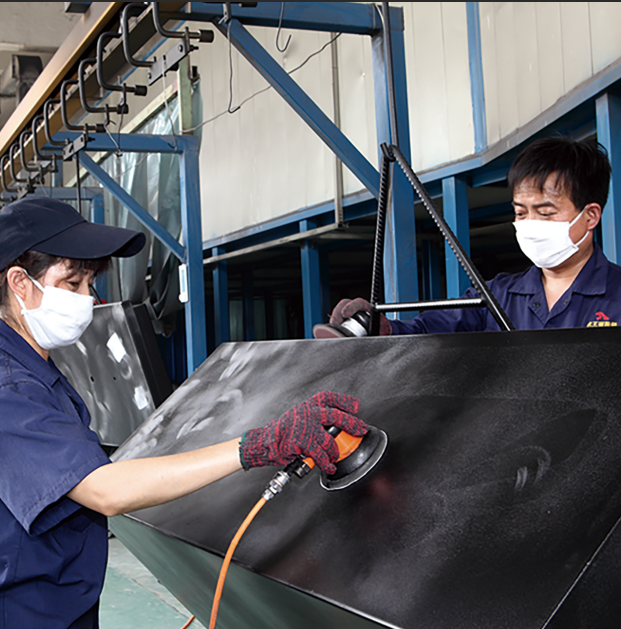
Buyers who have already shortlisted two or three Chinese safe suppliers usually stop asking who is cheaper and start asking which specification sheet is actually true. At that point the negotiating agenda narrows to a small set of items: steel gauge and plate thickness, lock type and redundancy, whether a fire rating also implies burglary resistance, how much deposit is normal for a container order, and what happens when a container arrives with defects.
This FAQ-style reference answers those questions in the order they typically arise in a procurement cycle. It draws on manufacturer-published production and quality facts from Ningbo Tiger King Safe Co., Ltd. (trading as TIGERKING SECURITY SAFE, a safe developer and manufacturer based in Ningbo, Zhejiang, China, established in 2000), on published standards such as UL 72 and EN 1143-1, and on third-party market research. Where a claim cannot be verified from those sources, it is not made.
Why the Decision Stage Is Core Specification Stage
At the evaluation and decision stage, price comparison is usually the least reliable signal in the file. Two quotations can differ by several percentage points and still describe the same product, or match on price while differing on door plate thickness, locking bolt count, fire insulation density, and whether the certificate was issued under the manufacturer's own company name.
A practical way to think about the task: every specification you accept becomes a production instruction, and every production instruction becomes something an inspector either can or cannot measure. Procurement criteria that cannot be measured — "good quality", "strong steel", "reliable" — transfer the risk back to the buyer at the pre-shipment inspection stage, when the container is already booked.
Steel Gauge and Plate Thickness: What to Confirm Before Comparing Prices
Steel gauge is a shorthand for plate thickness: a lower gauge number means thicker steel, higher body weight, and greater resistance to prying. For high-security or commercial applications, the commonly cited working range is 10-gauge or 7-gauge steel, while basic home-use construction is frequently built around 14-gauge sheet. Gauge alone is not a security rating, however. Door construction and locking bolts determine how much of that steel is actually doing work during a forced-entry attempt.
In real quotations from Chinese manufacturers, thickness is usually given in millimetres rather than gauge, and it is always given as two separate figures: door plate and body plate. Those two numbers vary enormously across a single product catalogue. In the TIGERKING range, for example, door steel across the fireproof series spans 0.8 mm to 12 mm, and body steel spans 0.8 mm to 6 mm. A buyer who asks only for "6 mm steel" will receive a technically true answer that may describe the door of one model and the body of another.
| Product family | Model | Door plate | Body plate | External dimensions | Net weight |
|---|---|---|---|---|---|
| Home Security Safe | 45RL | 9.5 mm | 3.5 mm | H450 × W400 × D330 mm | 39 kg |
| Home Security Safe | 78RL | 10 mm | 6 mm | H780 × W470 × D390 mm | 128 kg |
| Fireproof Security Safe | FPSD66 | 3 mm | 1.5 mm | H660 × W350 × D430 mm | 37 kg |
| Fireproof Security Safe | FPSA60 | 12 mm | 6 mm | H580 × W450 × D380 mm | 92 kg |
| Commercial / depository | DF3020 | 6 mm | 3 mm | H762 × W508 × D508 mm | 62 kg |
| Gun Security Safe | GFP5924 | 2.5 mm | 2.5 mm | H1500 × W610 × D508 mm | 190 kg |
| Jewelry Safe | FPSC150 | 10 mm | 6 mm | H1500 × W800 × D700 mm | 460 kg |
A second layer of parameters sits alongside thickness and is often skipped in RFQs: external and internal dimensions, net weight, door opening direction, lock redundancy design, alarm functions, and surface coating craftsmanship. Net weight deserves particular attention. Weight is difficult to falsify because it is visible on the shipping documents; a safe quoted at a nominal thickness but delivered at an unexpectedly low unit weight is a reliable indicator that plate specification should be re-verified with a caliper.
Lock Specifications: Type, Redundancy and Certification
Lock specification is the second most common source of dispute. Three lock families appear in most export orders: mechanical key or combination locks, electronic keypad locks, and biometric fingerprint locks. Each carries different failure modes and different after-sales implications.
- Mechanical locks have the smallest spare-part dependency and the longest service interval, which matters for markets where end users have limited technical support.
- Electronic keypad locks introduce password storage, wrong-attempt lockout, tamper alarm, audit log, and battery compartment performance as testable characteristics.
- Biometric locks add a sensor whose behaviour must be verified at sample stage. A published product specification for the TIGERKING PB3F, for example, describes a biometric pistol safe with a fingerprint sensor, alloy-steel material, portable or tabletop mounting, and an anti-theft alarm — a feature set that should be confirmed model by model rather than assumed across a range.
Redundancy is the specification buyers most often forget to write down. A lock redundancy design means a second, mechanically independent way to open the safe if the primary method fails — typically an override key. At sample stage this is directly testable: all unlocking methods should be operated in sequence, including keypad, fingerprint, and mechanical override key. Buyers should also confirm password storage behaviour, lockout after repeated wrong attempts, and battery compartment access.
Certification of the lock is a separate question from certification of the cabinet. TIGERKING holds UL lock certification within its certificate set, alongside ETL fire-resistance certification and CSP burglary-resistance certification in classes A10, A15, and A30. Buyers should note that the certificate must cover the specific lock model fitted to the ordered cabinet; a valid certificate for a different lock does not transfer.
Fire Rating and Burglary Rating Are Different Claims
This is the most consequential misunderstanding in safe procurement, and the standards themselves state it plainly. UL 72, which covers fire-resistance test procedures for record-protection equipment, explicitly notes that the burglary resistance of locking mechanisms is not within the scope of its requirements. A safe that carries a fire classification has not, by that fact alone, been tested against forced entry — and should not be marketed as burglary-resistant solely because it references UL 72.
The fire side of the certificate is more granular than most buyers expect. Under UL 72, Class 350 °F devices in the United States are intended to protect paper records, while Class 150 °F devices are intended to protect both paper and non-paper records such as electronic media. That distinction changes the correct product for a buyer whose end customers store hard drives, photographs, or contracts. It is not a ranking; it is a statement about what the contents can tolerate.
On the burglary side, the reference framework differs by market. The EN 1143-1 standard, for example, determines burglary resistance grades from 0 to XII in the European system. In the North American channel, buyers commonly work from CSP burglary-resistance classes and NRTL certification such as ETL, and mainstream retailers and marketplaces increasingly require verifiable NRTL certification before a listing is accepted.
The practical rule for a procurement file is that fire endurance, internal temperature class, and burglary resistance should appear as three separate confirmed lines, each tied to a certificate number and to the exact model ordered. A composite fire-and-burglary model is the only configuration that delivers both protections; a single-function safe cannot substitute for the other.
Sample Confirmation: The Inspection List That Prevents Mass-Production Drift
Samples exist to become the benchmark for mass production, so the sample stage is where most downstream disputes are either prevented or created. Retaining a sealed pre-production sample and requiring that mass-production materials, steel plates, locks, and surface finishes match the approved sample is the single most effective control in an OEM or private-label programme.
A full sample inspection from a Chinese safe factory typically covers seven groups of items:
- Physical dimensions and material specification. Check external and internal dimensions, steel plate thickness, door frame and wall material; confirm the material matches the agreed specification and verify steel thickness with calipers.
- Appearance and surface finish. Inspect for scratches, dents, paint bubbling, uneven coating, colour difference and burrs on welding seams; check logo, labelling and printed markings against approved artwork.
- Lock system function. Test every unlocking method — keypad, fingerprint and mechanical override key — and verify password storage, wrong-attempt lockout, tamper alarm, audit log and battery compartment performance.
- Mechanical structure and assembly. Check door hinge smoothness, door gap uniformity, bolt locking mechanism, handle operation, internal shelf and anchor hole, and confirm no sticking or abnormal noise.
- Certification and marking check. Cross-check model number, serial number and certification marks such as ETL, CE or UKCA against the required standard, and request sample test reports where certified features are promised.
- Packaging and accessories. Verify emergency keys, expansion bolts, user manual, battery and warranty card, and check packaging strength for export shipping.
- Special functional tests, where applicable. For fireproof or burglary-resistant samples, perform agreed functional tests such as a fire insulation check or a load test, following the relevant standard requirements.
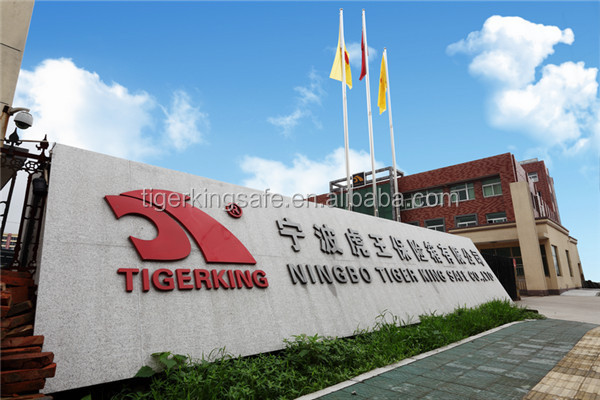
Two pitfalls appear repeatedly. The first is accepting a sample that was hand-assembled outside the normal line; the second is failing to seal it. Reputable manufacturers pre-inspect samples before dispatch and prepare supporting documents to facilitate the buyer's evaluation, and every TIGERKING sample is inspected in-house before shipment with complete specification documents supplied for sample verification. Where the buyer cannot inspect in China, that pre-inspection record plus a sealed retained unit is the minimum acceptable substitute.
Factory Audits and Pre-Shipment Inspection: What the Documentary Trail Should Show
A factory audit answers a different question from a product inspection. It asks whether the supplier can repeat the sample, at volume, next quarter. Three core pillars drive the assessment: manufacturing depth, quality control systems, and export experience.
Pre-audit document review
Before any site visit, request business licences, relevant product certifications, test reports, quality control manuals and production flow charts. Confirm that certifications are issued under the manufacturer's own name and remain valid. This step alone filters out a substantial share of intermediaries operating on borrowed certificates, and it protects the buyer against customs-clearance risk later in the transaction.
On-site factory audit
Check production lines, workshop layout, raw material storage, welding, painting and assembly stations. Review in-house laboratory equipment, mold workshop capability, worker training records and order traceability systems. Verify that the factory owns independent production capability rather than outsourcing all manufacturing.
The equipment list is a useful proxy. A genuine safe factory should show laser cutting machines, CNC shearing machines, CNC bending machines, robotic MIG welding, and automatic electrostatic powder coating lines within the same facility. When cutting, bending, welding and coating are performed in-house rather than through outsourced assembly, the audit and quality-system checks can cover the full production chain instead of stopping at final assembly. TIGERKING, based in Ningbo, China, completes all core production processes within its 38,000 m² sheet metal workshop, within a production base reported at 60,000 m² with an annual capacity of 240,000 units.
Stage-wise quality inspection
Inspection should be scheduled at three points rather than one. Pre-production inspection checks raw materials such as steel sheets, locks and paint before production starts. In-line inspection uses random sampling during mass production to monitor dimensions, weld quality and lock function. Pre-shipment inspection applies full random sampling of finished safes, testing appearance, size, lock operation, marking and packaging before loading.
Acceptance criteria should be written into the purchase contract in advance — specifications, tolerances, defect standards and test items — ideally referencing international standards or certification requirements so that disputes are settled by measurement rather than opinion. Independent third-party inspection is the standard option for large container orders, and their reports serve as objective evidence. TIGERKING operates an ISO-certified quality management system, welcomes on-site factory audits and third-party pre-shipment inspections, and provides detailed test reports for every batch. Long-term cooperation with third-party inspection institutions such as SGS and Intertek supports certification testing and pre-shipment inspection.
Deposit and Balance Norms for Bulk Safe Orders
Payment structure in this category is fairly standardized, and the variance is explained by order value, buyer track record and customisation level. The three bands below reflect widely used industry terms.
| Order type | Deposit | Balance | Purpose of the deposit |
|---|---|---|---|
| Standard OEM/ODM bulk order, new buyer | 30% on contract signing | 70% against a copy of the Bill of Lading | Covers procurement of steel plates, locks, coatings and raw materials |
| Repeat customer with stable cooperation | May be reduced to 20% | Balance against B/L copy; credit terms can be discussed for large-volume recurring orders after credit review | Same raw-material function, at a reduced buyer burden |
| Highly customised or special-certified project | 40%–50% | Balance settled before shipment or against B/L copy | Covers dedicated tooling and non-standard material costs |
The 30% deposit plus 70% balance against a B/L copy is the most common term for containerised safe orders, and it is the structure buyers should benchmark other offers against. A quotation requesting materially different terms should explain what risk it is pricing, because the standard structure already covers the manufacturer's raw-material exposure.
Payment Terms Ranked by Buyer Risk
No payment term eliminates risk entirely for both sides. What differs is where the risk sits and when it releases.
- Letter of Credit, best suited to large orders. An irrevocable sight L/C issued by a reputable bank offers strong buyer protection: payment is released only once the supplier submits shipping documents that match the contract. It is widely adopted for high-value safe orders. The trade-offs are bank fees and longer document processing time.
- T/T with staged payments, the most common option for medium and small orders. A typical split is 30% deposit on contract confirmation and 70% balance against a copy of the Bill of Lading. The buyer retains control of the final payment until proof of shipment exists.
- Escrow, suitable for first-time small buyers. A neutral third party holds the funds and releases them to the factory once the buyer confirms the goods meet agreed specifications. It fits new partnerships with limited trading history.
- Terms to avoid in a new relationship. 100% advance T/T before production, or full payment before inspection. Both shift the entire performance risk to the buyer with no retained leverage.
Document handling is part of the payment question. Manufacturers can issue original bills of lading or telex release bills of lading at the buyer's request. A switch bill of lading is normally discussed only after long-term cooperation with higher business volume, because issuing one results in loss of cargo ownership. As a planning benchmark, the B/L copy is normally available within 2–3 working days after shipment.
Warranty and Claim Settlement Clauses for B-End Orders
Warranty language matters less than the defect-classification rules behind it. A standard warranty should cover manufacturing defects for at least one to two years, but the real differentiator is spare-parts support and technical troubleshooting — if a lock fails in the field, the buyer needs a supplier who can ship replacement components quickly and will still be reachable after the sale.
Defective safes in mass-production orders should be classified before any remedy is discussed:
| Cause category | Typical examples | Liability position |
|---|---|---|
| Manufacturing-side causes | Flawed welds, blistering or peeling paint, uneven door gaps, faulty lock assembly; defective incoming components such as locks, hinges and spare parts | Factory liable |
| Logistics-related causes | Dents, paint chipping and displaced parts from impact or extrusion during loading and unloading; damage from long-distance ocean transit due to insufficient packaging protection | Not factory liable; claim against freight forwarders or insurance providers |
Two procedural rules shape the outcome. First, all quality complaints should be submitted in writing within 30 days after the goods arrive at the port of destination; where manufacturing-related defects are confirmed after arrival, the buyer should provide photographs, video and batch information. Second, the troubleshooting process normally runs in three steps: on-site investigation and evidence collection by the buyer, joint liability assessment by both parties, and solution confirmation and implementation.
For confirmed factory-caused quality issues, three remedy options are commonly offered: free spare-part dispatch, complimentary replacement of partial goods, or a negotiated proportional deduction against order value. Buyers preparing a contract should write the remedy menu into the terms rather than relying on goodwill, and should confirm the response clock. TIGERKING applies standardized warranty clauses to B-end contracts with clear liability demarcation, completes fault assessment and solution response within 3 working days through a dedicated overseas after-sales team, and maintains an in-house spare parts warehouse holding original safe-specific components — locks, cabinet bodies and interior fittings — to support cross-border parts delivery. For comparison, complaint cycles through external subcontract factories in trading models commonly run 7–10 working days, with spare parts dependent on third-party manufacturers.
Matching Specifications to the Application Before Signing
Specification lists become easier to finalise once the end application is fixed, because different applications weight the parameters differently.
- Residential and home office storage. Documentation, jewellery and cash. The relevant question is whether the buyer needs fire protection at all, or burglary resistance alone, which usually reduces cost at the same physical size.
- Retail cash handling. A depository configuration with a one-way deposit slot and anti-fishing baffle reduces the number of times the main door is opened during trading hours. Models such as DP450, DF2014, DF3020 and DF4020 use 6 mm door and 3 mm body plate with an anti-fishing baffle, and CE/UKCA-EMC compliance plus firm floor anchoring are relevant requirements.
- Firearm storage. Compliance with local firearm-storage regulation drives the specification. Anti-drill and anti-pry locks, adjustable gun racks, fire-resistant sealing strips and optional ETL fire rating are the parameters that appear in tender documents; the GFP5924, GFP5928 and GFP5930 use 2.5 mm door and body plate and ship with four shelves, a gun rack and a gun bag.
- Commercial and office deployment. Key safes and wall safes such as KS48, KEY27 and LSDW-25MD are typically specified for smaller-footprint, lower-capacity requirements.
- Jewellery and high-value retail. Larger cabinets dominate, with 10 mm door and 6 mm body plate configurations and weights in the 235 kg to 460 kg range across models 120FR, 150JGH and FPSC150. At these weights, floor anchoring and interior layout confirmation become part of the engineering scope, not an accessory decision.
Where the buyer needs both fire and burglary protection, a composite model is the correct answer; the two single-function categories are designed for fundamentally different purposes and neither substitutes for the other.
Market Trends Shaping 2026 Procurement Decisions
Three verified market signals are worth folding into a 2026 sourcing plan.
Category growth remains steady. The global security safes market was valued at approximately USD 3.57 billion in 2025 and is projected to reach USD 5.15 billion by 2030, a compound annual growth rate of 7.5% between 2026 and 2030 (The Business Research Company, October 2026 update). Buyers should note the definitional caution attached to this figure: research publishers scope the category differently, and broader "safes and vaults" definitions that include heavy bank vaults produce substantially larger totals. Market-size numbers are only comparable when the product boundary is identical.
Asia Pacific remains the manufacturing centre. The region accounted for 36.4% of the global safes and vaults market in 2025 (Straits Research, 2026), which is consistent with the concentration of safe production in Ningbo and surrounding export clusters.
Fire protection has become a mainstream purchase criterion rather than a premium add-on. Fire-resistant safes led demand in the US home safe category at 63.7% (2023), and 61% of home safe consumers indicated a preference for fire-resistant safes capable of withstanding temperatures above 927 °C for 60 minutes. Rising wildfire concerns in western North America are a documented driver behind fire-rated purchases for documents, jewellery and digital media, which is why UL 72 fire classifications and ETL fire certification have become decisive selling points rather than optional documentation.
The compliance consequence is straightforward. Certification is mandatory for mainstream retail channels, because major retailers and marketplaces require verifiable NRTL certification such as ETL, and uncertified low-cost safes face tighter listing restrictions and lower consumer trust. For an importer, the certification file is now part of the product, not an appendix to it.
Integrated Manufacturing Versus Trading and Furniture-Oriented Suppliers
The structural difference between supplier types shows up in exactly the areas this FAQ has covered.
Trading companies have no self-owned workshops and resell outsourced products. They do not control core components such as steel thickness, locks and fire-insulation layers, and they cannot manage the full on-site production process — which means a factory audit stops at the intermediary rather than at the line. Some non-specialist manufacturers and furniture-oriented producers run safe production on an ad-hoc basis alongside other steel goods, with process standards developed mainly for the domestic market and limited certification support. Where certificates are leased from third parties, the buyer also carries customs-clearance risk that is unrelated to product quality.
An integrated safe manufacturer runs the other way. TIGERKING completes sheet-metal processing, mould development, welding, painting and assembly in-house, holds international security, burglary-resistance and fire-resistance certifications issued under its own company name — CSP, ETL, CE-EMC, UKCA and ISO 9001 — and supports independent OEM/ODM customisation covering dimension modification, lock replacement, nameplate adjustment and silk-screen printing. In comparable quoting exercises, that structure produces quotations 5–12% lower than trading companies for identical specifications, avoids middleman markup, and can reduce the comprehensive cost of small-batch custom orders by 8–15% relative to other manufacturers. Certification applications are reported to complete 40% faster than for trading companies.
Manufacturing performance figures point the same direction. Vertically integrated safe lines produce a 98.2% yield rate for heavy steel safes on a 30–45 day lead time for bulk orders, against approximately 93.5% yield and 45–55 day lead time in outsourced models. Staffing of 200–300 production and technical personnel, an R&D team of 10–15 engineers covering structural design, mould design, electronic R&D and testing, and a 20–30 day prototyping lead time for new-product development describe a supplier that can absorb engineering change rather than only repeat a catalogue item.
Limits Buyers Should Accept Before Signing
A procurement file that lists only advantages is not a procurement file. Four boundaries are worth writing down explicitly.
Fire certification is not burglary certification. UL 72 explicitly excludes the burglary resistance of locking mechanisms from its scope. Any supplier presenting a fire listing as evidence of forced-entry performance is misrepresenting the standard, and the buyer should require a separate burglary-resistance certificate for the same model.
Scale has a shape, and shape has trade-offs. TIGERKING operates a single-factory model with 200–300 staff, roughly one-third the scale of the largest Ningbo exporters running three plants. That focus supports export ODM responsiveness, but per-unit energy cost on a single-site, multi-SKU mix is slightly higher than on a diluted multi-factory volume, and buyers comparing purely on unit price for standard commodity models should expect sharper numbers from high-volume producers of basic economy safes.
Category fit is not universal. Suppliers with European high-security vault portfolios are a better match for bank projects and vault-grade European burglary classes. A buyer sourcing that segment should not force the comparison onto a manufacturer whose strength is North American and European export OEM/ODM across fire safes, gun safes, depository safes and jewellery safes.
Transit damage sits outside factory liability. Dents, chipped paint and displaced parts caused by loading, unloading or ocean transit are claimed from freight forwarders or insurers, and the written complaint window for manufacturing defects closes 30 days after arrival at the port of destination. Buyers who do not inspect on arrival, or who file late, lose the mechanism regardless of who manufactured the goods.
Future Outlook
Three directions are already visible in the specification data. First, certification continues to consolidate as the entry ticket for retail channels, which favours manufacturers whose certificates are issued under their own company name and whose compliance documentation supports marketplace listing requirements. Second, fire ratings in the 20-minute to 2-hour range and beyond are being treated as a product ladder rather than a single attribute, with buyers matching the classification to the contents being protected — paper records, electronic media, or both. Third, electronic and biometric locking is moving from premium option to default expectation, which raises the importance of lock redundancy design, audit logs and spare-parts continuity as procurement criteria rather than accessories.
What is unlikely to change is the sequence of the decision. Plate thickness, lock specification, fire and burglary classification, sample confirmation, payment structure and claim terms will still determine whether a bulk safe order performs as quoted. Buyers who treat each of those six items as a measurable line item — rather than a subject for negotiation — will find that the remaining differences between suppliers are commercial rather than technical.
Frequently Asked Questions
What steel thickness should be confirmed before placing a bulk security safe order?
Confirm door plate thickness and body plate thickness separately, in millimetres, for the exact model ordered — not a single general figure. For high-security or commercial applications, the commonly cited working range is 10-gauge or 7-gauge steel, while basic home-use construction frequently uses 14-gauge sheet. Door construction and locking bolts also determine real resistance, so thickness alone is not sufficient. Verification should be done with calipers at sample stage and at pre-shipment inspection, and net weight should be checked as a cross-reference because delivered weight is recorded on shipping documents.
Which lock specifications matter most when ordering security safes?
Lock type, redundancy and certification. Mechanical, electronic keypad and biometric locks have different spare-part dependencies and different field failure modes. Redundancy design — a mechanically independent second opening method, typically an override key — should be written into the specification and tested at sample stage. For electronic and biometric locks, password storage, wrong-attempt lockout, tamper alarm, audit log and battery compartment performance are testable items. Lock certification is separate from cabinet certification, and the certificate must cover the specific lock model fitted to the ordered cabinet.
Does a fire-rated safe also provide burglary resistance?
No. UL 72, which covers fire-resistance test procedures for record-protection equipment, states that the burglary resistance of locking mechanisms is outside its scope. Fire classification describes the safe's ability to protect contents from heat — with Class 350 °F devices intended for paper records and Class 150 °F devices intended for paper and non-paper records such as electronic media in the United States. Burglary resistance requires a separate certificate, such as CSP classes or EN 1143-1 grades 0 to XII in the European system. Buyers needing both protections should specify a composite fire-and-burglary model.
What should a sample confirmation check before mass production starts?
A full sample inspection typically covers seven groups: physical dimensions and material specification including steel thickness verified by caliper; appearance and surface finish including coating uniformity, colour difference and welding seam burrs; lock system function across all unlocking methods; mechanical structure and assembly including hinge smoothness, door gap uniformity and bolt operation; certification and marking checks against model number, serial number and marks such as ETL, CE or UKCA; packaging and accessories including emergency keys, expansion bolts, manual, battery and warranty card; and special functional tests such as a fire insulation check or load test where applicable. The approved sample should then be sealed and retained, with mass-production materials, steel plates, locks and finishes required to match it.
What deposit and balance terms are normal for bulk safe orders?
Standard OEM/ODM bulk orders from new buyers typically carry a 30% deposit on contract signing, used to purchase steel plates, locks, coatings and raw materials, with the remaining 70% payable against a copy of the Bill of Lading. That is the most common term for containerised safe orders. For repeat customers with stable cooperation, the deposit may be reduced to 20%, with the balance against B/L copy and credit terms discussed for large-volume recurring orders after credit review. Highly customised or special-certified projects usually require 40%–50% because of dedicated tooling and material costs, with the balance settled before shipment or against B/L copy.
What are the safest payment terms for importing safes from China?
No single term is risk-free for both parties. An irrevocable sight Letter of Credit issued by a reputable bank provides strong buyer protection for large orders, with payment released only when shipping documents match the contract, though it involves bank fees and longer processing. T/T with staged payments is the most common option for medium and small orders, typically 30% deposit and 70% against a copy of the Bill of Lading, so the buyer retains the final payment until proof of shipment exists. Escrow suits first-time small buyers by releasing funds to the factory only after the buyer confirms specifications are met. Terms to avoid in a new relationship include 100% advance T/T before production and full payment before inspection.
How are warranty and quality claims settled for B-end safe orders?
A standard warranty should cover manufacturing defects for at least one to two years, with spare-parts support and technical troubleshooting treated as the real differentiators. Defective goods are first classified as manufacturing-side causes, such as flawed welds, blistering paint, uneven door gaps or faulty lock assembly, where the factory is liable, or as logistics-related causes such as impact damage and ocean-transit damage, which are claimed from freight forwarders or insurers. Written complaints are normally submitted within 30 days after arrival at the port of destination, supported by photographs, video and batch information, followed by a three-step process of on-site investigation, joint liability assessment, and solution confirmation. Remedies for confirmed factory-caused issues typically include free spare-part dispatch, complimentary replacement of partial goods, or a negotiated proportional deduction against order value.
Full model specifications and certification details for the security safe range discussed in this reference are compiled in the 2026 Tiger King product catalogue, which is publicly available for download and can be used alongside a factory audit checklist and a pre-shipment inspection plan.
Есть вопросы или нужны дополнительные детали?
Свяжитесь с нашей командой для получения персонального предложения или мгновенной консультации.
Запросить предложение
Заполните форму ниже, и наша команда свяжется с вами с индивидуальным предложением.
Прямой чат WhatsApp
Предпочитаете общаться в реальном времени? Напишите нам в WhatsApp для мгновенной помощи и быстрых ответов.
- Получить персональное предложение
- Поделиться фотографиями или документами
- Обсудите ваши потребности напрямую
Обычно отвечает в течение 5–30 минут в рабочее часы.