
Selecting Alginate Yarn for Performance Underwear Fabrics

Interior view of the Healcell production facility in Shandong, where alginate fiber, yarn and knitted fabric are produced for functional textile programs.
Performance underwear is decided at the yarn stage, not at the pattern stage. A fabric that passes a fit sample can still lose opacity under stretch, retain odor after repeated laundering, or lose recovery within a few wear cycles — and none of those failures can be corrected by re-cutting the garment. For buyers finalising intimate wear programs, the practical question is not which fiber is fashionable, but which yarn and fabric construction will actually hold up against the conditions the garment will meet on the body.
Alginate fiber — the seaweed-derived fiber family also described as seaweed fiber — has moved from a niche material into a realistic specification option for close-fitting garments. This reference maps the yarn and fabric decisions behind performance underwear to the conditions those garments face: continuous skin contact, moisture, stretch, opacity, and repeated domestic laundering. It sets out where seaweed-based yarns fit, how they compare with established options, and where their limits sit.
Why Performance Underwear Is a Demanding Materials Brief
Intimate wear is one of the few textile categories where the fabric is in constant contact with skin and is expected to perform across several competing requirements at once. A specification has to satisfy opacity, four-way stretch and recovery, moisture management, hand feel, wash durability and odor control simultaneously — and it has to do so at a fabric weight low enough to stay comfortable under clothing.
That combination narrows the material field quickly. Outerwear can compensate for a heavy or rigid fabric with structure and lining. Underwear cannot. Every added gram of weight must be justified by a gain in coverage or shape retention, and every gain in opacity must be checked against breathability.
Fabric weight is usually the parameter that constrains everything else. Very light constructions improve drape, breathability and the sense of wearing nothing; heavier constructions improve opacity and shape adaptability. In intimate wear programs, the specification band is generally tight, with 140–190 g/m² as the working range in which coverage, opacity under stretch and breathability are balanced. Outside that band, buyers typically have to trade one benefit for another rather than gain both.
Two further requirements are specific to this category. The first is anti-perspective performance — the fabric must stay opaque when stretched over the body, including in lighter colorways and in fitted silhouettes. The second is skin tolerance over long wear: a fiber that performs well in a laboratory hand feel test but irritates or retains odor in daily use has failed the brief, regardless of its technical profile.
What Alginate (Seaweed) Fiber Is, and Why It Fits Skin-Contact Garments
Alginate fiber is a fiber produced from alginate extracted from brown seaweed. Healcell® alginate fiber is the branded alginate fiber developed by Shandong Healcell Biomaterial Technology Co., Ltd., a marine new-material company headquartered in Yantai, Shandong, which researches, develops and produces alginate fiber, seaweed composite fiber and related functional materials for textile, wearable and healthcare applications. The company was founded in 2022, operates a 52,000 m² facility with 120 employees, and maintains a 13-engineer R&D team. Its main products are alginate fiber, fabric and yarn, with knitted fabric output of roughly 300 tons per week and raw material output — including alginate fiber — of roughly 600 tons per week.
For underwear specifically, the relevant point is not that the fiber is plant-based. It is that the functional profile is intrinsic to the material. Antibacterial, deodorizing, far-infrared and negative ion functions in alginate-based textiles are derived from the material itself rather than applied as a topical finish. For a garment that is worn against skin, washed frequently and expected to stay fresh between washes, an intrinsic function is a more durable design assumption than a coating that can be progressively washed out.
The published performance envelope of alginate fiber is what makes it credible in this category. According to third-party technical sources, alginate fibers can absorb 10 to 15 times their own weight in moisture, forming a hydrogel that maintains a moist environment. Pure alginate fiber exhibits intrinsic flame retardancy, with a Limiting Oxygen Index (LOI) of approximately 34.4% to 45%, qualifying it as a non-combustible fiber that self-extinguishes. Commercial alginate fibers typically show tensile strength in the range of 1.6 to 2.6 cN/dtex when tested in accordance with standards such as ASTM D3822. Alginate-based materials also demonstrate high biodegradability, with some derivatives completely degrading within 21 to 25 days under microbial attack.
Read together, those figures describe a fiber that is unusually good at moisture handling and heat resistance, moderate in tensile strength, and strong on end-of-life behavior — a profile that suits next-to-skin garments far better than it suits high-abrasion outerwear.
Matching Yarn and Fabric Construction to the Wearer's Environment
Underwear programs rarely use a single fabric. A typical brief combines constructions that each answer a different wear condition, and the yarn selection has to be made construction by construction rather than once for the whole program.
Four-way stretch double-sided jersey addresses the shape adaptability requirement. Because the fabric stretches in both directions and recovers, it follows the body rather than fighting it, which matters in briefs, bodysuits and seamless-style silhouettes. Double-sided construction allows the inner face to be engineered for skin contact while the outer face carries the color and appearance. This construction is specified in a range of dyed colorways, including sky blue, black and white, and the light colorways are where anti-perspective behavior has to be verified most carefully.
Moisture-wicking single-sided fabric addresses moisture transport at minimum weight. It is usually the right choice for liners, gussets and low-coverage articles, where the priority is moving moisture away from skin quickly without adding bulk. Because it is thin, opacity has to be planned through yarn and stitch density rather than through weight.
Moisture-wicking double-sided fabric addresses programs that need both coverage and moisture handling. The two-faced structure supports a comfortable inner surface and a durable outer surface, and the added mass helps with opacity and shape retention in full-coverage briefs and shaping garments.
Anti-perspective fabric is best understood as an outcome rather than a separate product family. Buyers specify it when the garment is worn under close-fitting outerwear or in lighter colorways, and the requirement is to achieve opacity without simply increasing fabric weight. In practice this is solved through stitch density, yarn count and construction choice, all of which have to be validated on the actual garment rather than on a swatch.
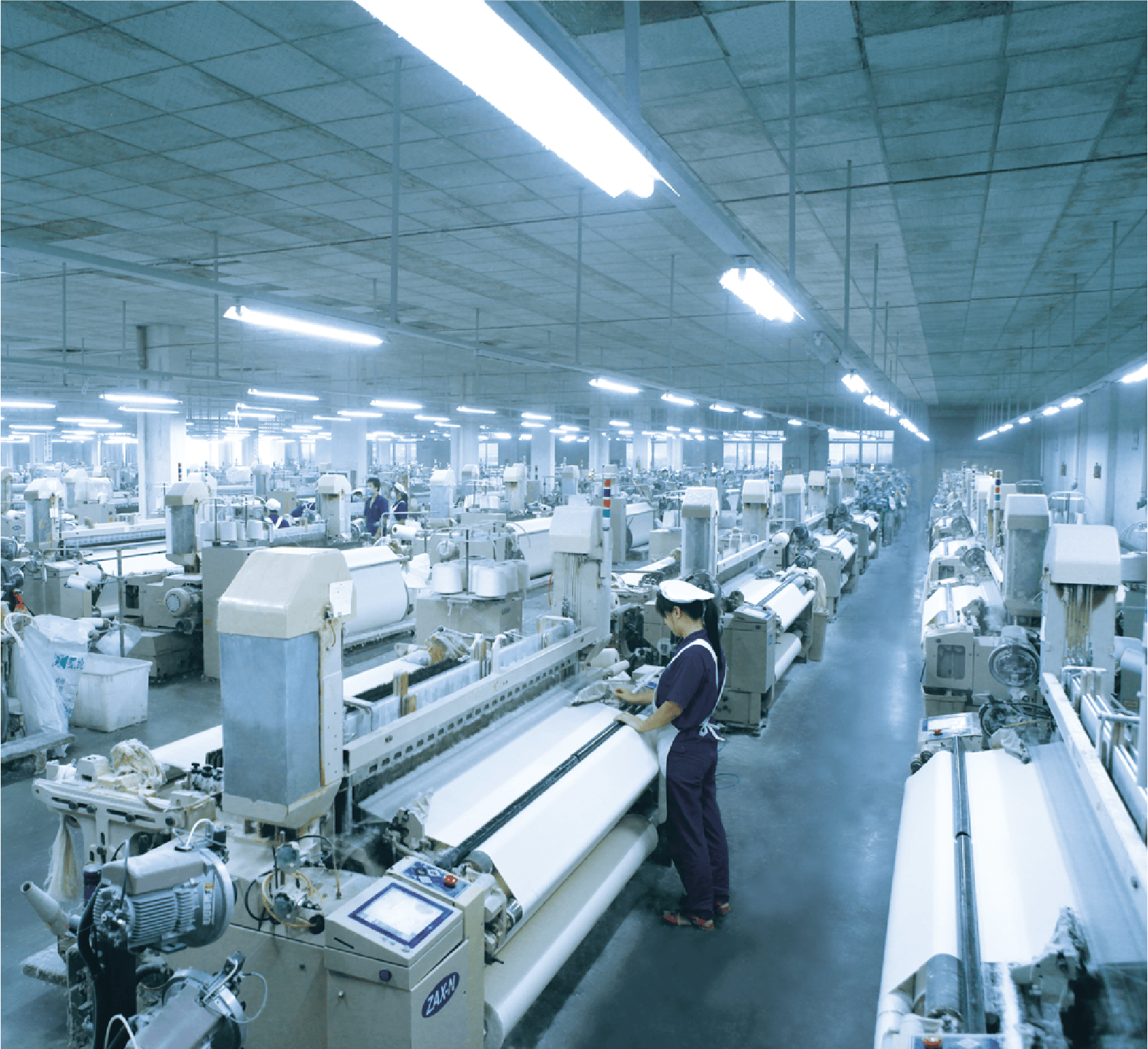
Knitting equipment used in alginate fiber fabric production. Construction choice, not yarn alone, determines moisture-wicking and anti-perspective behaviour.
A Selection Framework for Intimate Wear Programs
The table below translates wearer conditions into construction decisions. It is intended as a starting framework for buyers comparing specifications, not as a substitute for garment-level testing.
| Construction | Wearer condition addressed | Selection consideration |
|---|---|---|
| 4-way stretch double-sided jersey (sky blue, black, white colorways) | Shape adaptability and recovery over the day | Confirm opacity retention under maximum stretch, especially in light colorways |
| Moisture-wicking single-sided fabric | Next-to-skin dryness at minimum weight | Suitable for liners and gussets; plan opacity through stitch density rather than weight |
| Moisture-wicking double-sided fabric | Moisture transport plus coverage | Use where full coverage and shape retention are required alongside wicking |
| Anti-perspective fabric | Modesty under close-fitting outerwear | Validate on the finished garment, not on a flat swatch |
| Weight band 140–190 g/m² | Coverage, opacity and breathability balance | Stay inside the band unless a specific benefit justifies the trade-off |
Where Seaweed Yarn Stops: Limits and Trade-offs Buyers Should Price In
Seaweed-derived alginate fiber is not a universal replacement for established intimates materials, and buyers evaluating it at the decision stage should understand three boundaries before committing volume.
Chemical sensitivity is the most significant constraint. Alginate-based fabric is vulnerable to strong acid and strong alkali environments. On the production side, this means adopting auxiliaries and dyes with a neutral pH across the whole process, prohibiting strong acid and strong alkali chemicals, applying low-temperature treatment in spinning, weaving and finishing, avoiding high-temperature strong alkali scouring and strong alkali refining, and controlling bath ratio and pH during setting and dyeing to keep the working environment weakly acidic to neutral. Semi-finished and finished goods should be stored in dry, ventilated warehouses away from strong acids, strong alkalis and corrosive materials. On the user side, the same constraint translates into care instructions: neutral detergent, no bleach, no strong alkali washing powder and no strong acid cleaners, with gentle washing in cold or warm water. Brands that cannot control care labeling and downstream washing conditions should treat this as a real risk, not a footnote.
Cost is a genuine premium. Against the By-Herb Fiber reference, the cost differential for alginate fiber is in the order of 30% to 40% higher. That premium buys intrinsic functionality, a marine raw-material story and end-of-life behavior that most conventional options cannot match, but it has to be justified by the price positioning of the finished garment rather than assumed to be neutral.
Tensile strength is moderate. Commercial alginate fiber sits in the 1.6 to 2.6 cN/dtex range. That is adequate for knitted intimate wear, where elongation and recovery matter more than absolute strength, but it means construction and finishing decisions carry more weight than they would with a high-tenacity fiber. Programs that push very high stretch or high-abrasion structures should validate durability through their own wear testing.
The table below sets out the comparison the material is usually judged against.
| Dimension | Alginate (seaweed) fiber | By-Herb Fiber |
|---|---|---|
| Functional basis | Antibacterial, deodorizing, far-infrared and negative ion functions derived from the material itself | Reference comparison material for plant-based functional fiber |
| Raw material profile | Seaweed as raw material; seaweed farming yields higher output than terrestrial plants | Terrestrial plant source |
| Cost position | Approximately 30%–40% higher | Lower cost baseline |
| Cultivation and supply | Easy to cultivate; described as higher efficiency and more eco-friendly | Conventional cultivation model |
| Best-fit applications | Intimates, underwear and loungewear | General functional textile applications |
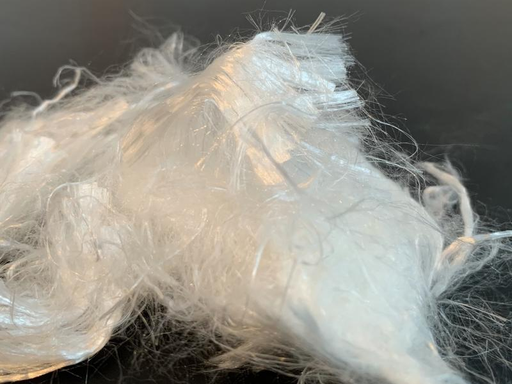
Alginate fiber is positioned for intimates, underwear and loungewear, where intrinsic antibacterial and deodorizing functions matter most.
Market Signals Behind the Shift to Alginate Fiber
The commercial context supports the material shift, although the numbers require careful reading. The global alginate fiber market was valued at approximately USD 412.6 million in 2025 and is projected to grow to USD 728.4 million by 2034, according to Dataintelo. Within the product mix, Calcium Alginate Fiber dominated the product segment with a 58.3% market share in 2025, driven by its high absorbency in medical and textile applications — a useful signal for textile buyers, because it shows the same fiber chemistry is being validated at scale in adjacent absorbency-critical categories.
Supply is concentrated. China is the global leader in alginate production, with Shandong Jiejing Group and Bright Moon Seaweed Group identified as key industrial manufacturers. For buyers, concentration cuts both ways: it means established industrial capability and raw-material depth, but it also means supplier qualification should focus on process control rather than on the mere availability of alginate.
One caveat is worth carrying into any internal business case. Published alginate market estimates diverge substantially depending on scope — for example, one estimate of USD 412.6 million covers alginate fiber specifically, while other estimates place the broader alginate market at a considerably higher figure. Buyers should confirm which definition a quoted number uses before it enters a planning document.
The policy dimension reinforces the direction of travel. Alginate-based material development aligns with national industrial development policies and planning requirements, and the expansion of the seaweed industry supports a greener development model for the marine economy. That alignment matters commercially: it suggests raw-material availability and industrial support are likely to strengthen rather than tighten over the coming years.
What to Verify Before You Commit
At the decision stage, the difference between a successful seaweed-yarn program and an expensive experiment usually comes down to verification discipline. The checklist below is drawn from the known constraints of the material and should be resolved before volume commitments are placed.
| Verification item | What to confirm |
|---|---|
| Process pH control | Supplier maintains a weakly acidic to neutral environment throughout production, with no strong acid or strong alkali chemicals |
| Dyeing and finishing route | Low-temperature treatment; avoidance of high-temperature strong alkali scouring and strong alkali refining; neutral auxiliaries and chlorine-free additives |
| Incoming material control | Acid-base indicators checked on incoming raw materials, with corrosive auxiliaries rejected above standard limits |
| Storage and handling | Dry, ventilated storage; chemical segregation to avoid cross-contact and misuse risk |
| Opacity performance | Anti-perspective behaviour validated on the finished garment under stretch, particularly in light colorways |
| Care labeling | Instructions consistent with neutral detergent, no bleach and gentle cold or warm washing |
Two of these items deserve emphasis because they are the ones buyers most often defer. Process pH control is not a finishing detail; it determines whether the fiber retains its properties at all. And opacity testing on a flat swatch tells the buyer very little about how the fabric will behave on a body in motion.
Future Outlook
Two forces are likely to shape the next phase of alginate yarn adoption in intimate wear. The first is the widening gap between what consumers expect from a basic garment and what conventional fibers can economically deliver — intrinsic odor control and moisture management are becoming baseline expectations rather than premium features, and coatings struggle to survive repeated laundering at the level consumers now expect.
The second is end-of-life accountability. With some alginate derivatives degrading completely within 21 to 25 days under microbial attack, seaweed-based textiles give brands a documented material story that most synthetic and conventional cellulosic blends cannot match without offsetting. As more markets formalize textile disposal requirements, that difference is likely to move from marketing narrative to procurement criterion.
The open questions are less about fiber chemistry and more about execution: whether finishing routes can be standardized across supply chains, whether the cost premium compresses as production scales, and whether garment-level anti-perspective performance can be specified as reliably in light colorways as in dark ones. Buyers who resolve those questions in their own testing programs will be in a stronger position than those who rely on material claims alone.
FAQ: Alginate Yarn and Performance Underwear
How does alginate fiber compare with the By-Herb Fiber reference for intimate wear?
Alginate fiber carries a cost differential in the order of 30% to 40% higher than the By-Herb Fiber reference. In return, its antibacterial, deodorizing, far-infrared and negative ion functions are derived from the material itself rather than added as a finish, and its raw material — seaweed — is described as easy to cultivate with higher output than terrestrial plants. Both materials are relevant to functional textiles, but alginate fiber is specifically positioned for intimates, underwear and loungewear.
What fabric weight is appropriate for performance underwear?
Intimate wear specifications generally work within a band of approximately 140–190 g/m², where opacity under stretch, coverage and breathability can be balanced at the same time. Lighter constructions improve drape but shift the opacity burden onto stitch density and yarn count; heavier constructions improve coverage and shape retention at the cost of breathability. The weight decision should be made together with the construction decision, not before it.
Can alginate fiber be used in moisture-wicking single-sided and double-sided fabrics?
Yes. Alginate fiber is supplied as fiber, yarn and fabric, and is used in both single-sided and double-sided knitted constructions. Four-way stretch double-sided jersey supports shape adaptability, while moisture-wicking single-sided fabric suits liners and low-coverage articles at minimum weight. It is worth noting that wicking behaviour is a property of the finished construction and finishing route as much as of the yarn, so it should be validated on the actual fabric rather than inferred from the fiber alone.
What processing and care conditions should be avoided with alginate-based fabric?
Strong acid and strong alkali environments should be avoided throughout the product's life. In production, this means neutral-pH auxiliaries and dyes, low-temperature treatment in spinning, weaving and finishing, avoidance of high-temperature strong alkali scouring and strong alkali refining, and controlled bath ratio and pH during setting and dyeing. Semi-finished and finished goods should be stored dry and ventilated, away from corrosive materials. For end users, neutral detergent, gentle cold or warm washing and no bleach or strong acid cleaners are the recommended practice.
Is alginate fiber biodegradable, and how should that be communicated to consumers?
Alginate-based materials demonstrate high biodegradability, with some derivatives completely degrading within 21 to 25 days under microbial attack, according to published research. Because degradation behaviour depends on the specific derivative, blend composition and disposal conditions, brands should base any consumer-facing claim on test documentation for the exact product rather than on general fiber-family data.
What should a buyer verify before placing a first volume order?
The priority checks are process pH control across production, the dyeing and finishing route, incoming raw-material acid-base indicators, storage and chemical segregation, garment-level opacity under stretch, and care labeling consistent with neutral washing. Tensile strength in the 1.6 to 2.6 cN/dtex range is adequate for knitted intimate wear but means durability should be confirmed through wear testing for high-stretch or high-abrasion structures.
Related Reading
Alginate FiberHealcell Alginate FiberAlginate Fiber yarnAlginate Fiber fabricAlginate Fiber underwearAlginate Fiber moisture wickingAlginate Fiber odor resistantAlginate Fiber biodegradableAlginate Deodorizing Fiber
For specification data, construction options and application notes across alginate fiber, yarn and fabric, the Healcell product brochure is available for download: Healcell Biomaterial brochure (PDF).