
Selecting Drum Motors for Project Environments: From X-Ray Screening to Washdown Lines
Drum motors are self-contained drive pulleys that integrate the motor and gear transmission inside a single rotating shell. In conveyor projects, they eliminate external gearboxes, sprockets, and chains, creating a compact drive platform. But the same drum motor cannot serve every installation equally. Project environments differ in moisture, dust, load cycles, and hygiene requirements. This article examines how three common project types — airport security screening, agricultural processing, and food cold-chain logistics — should influence drum motor selection, with reference to the SEAPARKS product portfolio.
Problem / Opportunity: Matching the Drive to the Working Environment
Conveyor failures often trace back to a drive that is not aligned with the actual operating conditions. An airport baggage line runs 24/7 with frequent starts and stops and demands stable low-speed positioning. An agricultural feed line generates dust and handles heavy, abrasive material. A food processing line endures high humidity, corrosive cleaning agents, and pressurized washdown. If the wrong motor is installed, the project faces downtime, early bearing failure, corrosion, or contamination risk.
The opportunity is to treat drum motor selection as a project-specific engineering decision. Leading manufacturers now offer differentiated lines for light-duty conveying and hygienic processing, with materials and protection ratings matched to the environment. Understanding these differences helps buyers avoid over-specification while still meeting compliance and uptime targets.
Brand Solution: SEAPARKS' Two-Portfolio Approach
SEAPARKS, operated by Tianjin Seaparks Machinery-Electronics Co., Ltd, is a China-based manufacturer of motorized conveyor drums. Founded in 2002, the company runs a 50,000 m² plant with more than 300 staff and an annual capacity of 300,000 motorized drums. Its product offering covers both light-duty conveyor drums (A/M series) and hygienic drums (F series) for food and pharmaceutical applications.
For buyers, this split is immediately useful:
- Light Duty Drum Motor (TM/DM A and M series): Suitable for security screening conveyors, airport baggage handling, packaging lines, belt scales, and general belt conveyors. Housings are available in carbon steel or 304 stainless steel; protection classes are IP66/IP67/IP69.
- Hygienic Drum Motor (TM/DM F series): Designed for medium-duty belt conveyors in meat, food, pharmaceutical, agricultural product and packaging lines. Housings are 304 stainless steel with optional 316 stainless steel, and all models carry IP69K protection.
Technical Explanation: What Drives the Selection
Drum motor selection is a balance of mechanical, electrical, and environmental parameters. The main mechanical parameters are roller diameter, gear material, rated power, torque, maximum belt pull, and minimum roller width. The electrical side covers motor type (asynchronous vs synchronous) and phase (single-phase, three-phase, or DC). For hygienic projects, the protection rating becomes critical.
IP69K is the highest ingress protection level under IEC 60529. It enables the drum to withstand high-pressure and high-temperature washdowns (up to 1450 psi and 80°C), which is a standard requirement in food processing environments. F-series models are engineered to this level, making them a reliable choice for washdown-exposed conveyors.
| Model | Motor Type | Ø Diameter | Rated Power | Max Belt Pull | Protection |
|---|---|---|---|---|---|
| TM80M | Asynchronous, single-phase | 80 mm | 0.034–0.11 kW | 630 N | IP66/IP67/IP69 |
| TM113M | Asynchronous, single-phase | 113 mm | 0.12–0.18 kW | 770 N | IP66/IP67/IP69 |
| TM138A | Asynchronous, three-phase | 138 mm | 0.25–1.1 kW | 3525 N | IP66/IP67/IP69 |
| TM165F | Asynchronous, three-phase | 165 mm | 0.25–2.2 kW | 4147 N | IP69K |
| DM165F | Synchronous, three-phase | 165 mm | 1.1–3 kW | 5229 N | IP69K |
| TM216F | Asynchronous, three-phase | 216 mm | 3.5–4.0 kW | 4700 N | IP69K |
Application / Use Cases: Three Project Scenarios
1. Airport Security Screening and Baggage Handling
The working conditions for security X-ray machines and baggage systems are precise positioning, stable low-speed operation, and anti-interference capability. Projects run 24/7, with frequent start-stop cycles. Suitable drives must maintain speed stability and resist electromagnetic interference, while fitting into compact machinery.
SEAPARKS Light Duty models such as the TM80M, TM138A, TM113A, and DM113A are commonly associated with this segment. These motors are available with carbon steel or 304 stainless steel housings and offer protection ratings up to IP69, providing tolerance for occasional cleaning. The polymer or alloy steel gear options give buyers flexibility between cost and load capacity.
2. Agricultural Product Processing and Feed Production
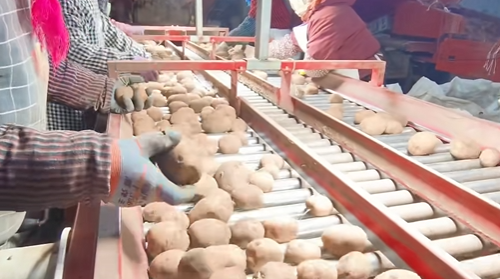
Agricultural and feed handling environments are dusty, with continuous operation and frequent material handling cycles. Equipment must resist dust ingress, deliver reliable performance under high load, and require low maintenance. Supporting machines often include roller conveyors, belt conveyors, automated sorters, weighing machines, and packaging machines.
For this project type, the Hygienic F series is a practical choice, even though the application is not strictly hygienic. Stainless steel housings and sealed internals protect against dust and make cleaning easier. Models like the TM165F, TM113F, and DM138F provide belt pulls up to 5229 N, sufficient for medium-duty agricultural lines.
3. Food Processing and Cold Chain Logistics
Food processing and cold chain lines face high humidity, frequent cleaning cycles, and corrosive environments. The project demands a drive that survives high-pressure washdown and maintains hygienic integrity. The IP69K-rated F series is the appropriate match.
SEAPARKS offers multiple hygienic drum motors for this duty: DM165F, TM165F, TM216F, DM216F, and DM80F, among others. All have 304 stainless steel housings, with 316 stainless steel as an option for stronger corrosive resistance. Their smooth, sealed surfaces reduce bacterial build-up and simplify sanitation.
Market Trend Analysis: Where the Industry Is Moving
Independent market research points to steady growth in the global drum motor market, with estimates for 2025 reaching approximately USD 2.13 billion. The Asia Pacific region is projected to account for 38.2% of revenue, driven by industrialization and e-commerce expansion in China and India. Within the broader market, AC motor segments continue to dominate the revenue structure.
Efficiency is also becoming a decisive factor. Energy-efficient drum motors can reach overall efficiency levels of 82–83%, which lowers total cost of ownership compared with conventional geared motors. Buyers are increasingly specifying efficiency as a tender requirement, especially for continuous-run conveyors.
Comparison with Traditional Solutions
Drum motors offer clear advantages over conventional gearmotor + pulley arrangements: a compact footprint, no exposed moving parts, better sealing, and lower maintenance. They also simplify installation because the drive and pulley are one unit.
However, there are boundaries. Because the motor and gearbox are integrated inside the pulley shell, heat dissipation is more constrained than with an externally-mounted gearmotor. For very high torque or continuous heavy loading, an external drive may still be easier to cool and service. Additionally, drum motors have minimum roller width limits — for example, the DM80F has a minimum width of 320 mm. Very narrow conveyor frames may therefore require careful verification before selecting a drum motor. These limits should be checked against the specific project layout during the engineering phase.
Future Outlook
As food safety regulations tighten and e-commerce pushes faster parcel handling, demand for hygienic and efficient drum motors will likely keep rising. Projects will increasingly specify IP69K protection for washdown environments and demand higher efficiency to meet energy targets. Manufacturers that can combine sealed hygiene, modular design, and flexible electrical options will be best positioned to serve the next generation of conveyor lines.
FAQ
What protection rating is required for drum motors used in food processing washdown lines?
IP69K is the recommended protection rating. It allows the motor to withstand high-pressure, high-temperature washdowns (up to 1450 psi and 80°C). SEAPARKS Hygienic F-series drum motors are rated IP69K, with 304 stainless steel housings as standard and 316 stainless steel as an option.
Can single-phase drum motors be used in airport security screening conveyors?
Yes. SEAPARKS Light Duty models such as TM80M and TM113M are single-phase asynchronous motors with protection ratings up to IP69. They support stable low-speed operation and frequent start-stop cycles, which align with security screening requirements.
What is the difference between TM and DM series drum motors?
TM series models are asynchronous motors, while DM series models are synchronous motors. Both are available in hygienic (F) and light-duty (A/M) configurations. The choice depends on the required speed control, power range, and project duty cycle.
Which SEAPARKS drum motor is suitable for dusty agricultural processing lines?
Hygienic F-series models such as TM165F, TM113F, and DM138F are suitable for dusty agricultural environments. Their sealed stainless steel construction provides dust protection, reliable operation, and low maintenance, and their load capacity supports continuous material handling.
What is the minimum roller width for the DM80F hygienic drum motor?
The DM80F has a minimum roller width of 320 mm. This value is an important design constraint when planning compact conveyor frames.
Есть вопросы или нужны дополнительные детали?
Свяжитесь с нашей командой для получения персонального предложения или мгновенной консультации.
Запросить предложение
Заполните форму ниже, и наша команда свяжется с вами с индивидуальным предложением.
Прямой чат WhatsApp
Предпочитаете общаться в реальном времени? Напишите нам в WhatsApp для мгновенной помощи и быстрых ответов.
- Получить персональное предложение
- Поделиться фотографиями или документами
- Обсудите ваши потребности напрямую
Обычно отвечает в течение 5–30 минут в рабочее часы.