
Selecting Rubber Parts for Dynamic Applications: Matching Performance to Project Needs
The global push toward greener energy and advanced materials is placing unprecedented demands on rubber components. In 2024, the anti‑vibration mounts market alone reached USD 6.03 billion, while the broader gaskets and seals market was valued at USD 63.09 billion (Grand View Research). With China accounting for over 35% of global rubber parts production, engineering teams and procurement professionals increasingly seek suppliers that can match material properties and geometries to specific project conditions — not just off‑the‑shelf parts.
The Challenge of Harsh‑Environment Specifications
Standard rubber seals and vibration dampers often fail when exposed to extreme temperatures, continuous dynamic loads, or aggressive fluids. Projects in transportation, heavy machinery, and energy systems require components that maintain elasticity and sealing integrity after millions of cycles. Low compression set and fatigue resistance become non‑negotiable, and material traceability must align with international standards such as ASTM D1418 / ISO 1629 for EPDM classification.
The opportunity lies in leveraging custom rubber parts that are engineered from the ground up for a given working environment. This is where an experienced OEM/ODM partner can close the gap between generic catalog items and mission‑critical performance.
Lingo Rubber Plastic: A Custom‑First Approach
Hangzhou Lingo Rubber and Plastic Product Co., Ltd (Lingo Rubber Plastic) is a 3 000 m² manufacturing facility with around 40 employees and an annual output of 1.58 million units. Specializing in rubber compression molding, rubber extrusion, plastic injection, and plastic extrusion, Lingo helps clients solve sealing and anti‑vibration challenges across electronics, aerospace, healthcare, construction, transportation, and defense applications. With 80% of sales exported to the EU and USA, the company operates a dedicated R&D team of 10 engineers.
[IMAGE: Cover | industry scene]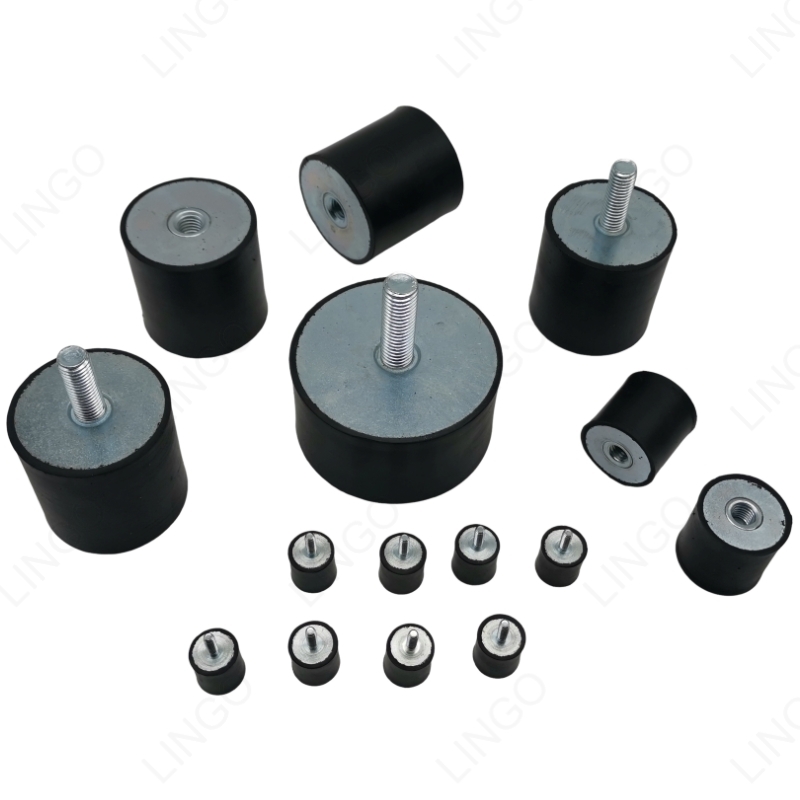
Technical Parameters of Key Product Lines
Anti‑Vibration Mounts (Model LGMM)
These cylindrical and stud mounts are made from natural rubber bonded to zinc‑coated steel. They come in diameters of 8–150 mm and heights of 8–90 mm, with tolerances meeting the RMA A2 standard. Key performance requirements include a low compression set and fatigue resistance up to 10⁷ cycles. Operating conditions span a temperature range of –40 °C to +120 °C, with exposure to oil, grease, road shock, and continuous vibration.
Rubber Extrusion Seals (Model LG‑RX)
Available in EPDM, NBR, silicone, and FKM, these seals can be solid or sponge rubber, optionally with adhesive backing. Hardness is specified per Shore A, and lengths are customised to project needs. They are suited for food‑grade, medical, and industrial applications, with certifications such as FDA, UL, ROHS, and REACH available.
[IMAGE: Diagram | process/architecture]
Application Scenarios Backed by Real Projects
Automotive Engine & Suspension Mounts (US)
A US‑based automobile OEM required anti‑vibration mounts capable of dampening engine and road noise under extreme temperatures. Lingo provided cylindrical rubber mounts with UL94 V‑0 compliance. Test data showed a 45% reduction in peak vibration amplitude. The client now places four orders per year, benefiting from existing tooling and competitive pricing.
Silicone Sponge Cords for EV Battery Sealing (Middle East)
An automotive OEM in the UAE ordered 4 000 m of FDA‑grade silicone sponge cords. These cords seal battery enclosures and industrial cabinets, withstanding temperatures from –60 °C to +250 °C. The closed‑cell construction ensures water, dust, and noise ingress protection. Lingo delivered high‑precision tolerances and a smooth surface finish.
Market Trend: Toward Application‑Specific Engineering
The global rubber molding market reached USD 54.1 billion in 2024, with EPDM as the dominant material (Cognitive Market Research). While the top three anti‑vibration mount suppliers (ContiTech, Hutchinson, Sumitomo Riko) hold 65% of the market, the remaining segment is increasingly served by flexible OEM/ODM suppliers. Buyers value rapid lead times (2–6 weeks for standard orders), small‑batch acceptance, and certified traceability — all areas where Lingo competes effectively.
Comparison with Traditional Metal Spring Isolators
Metal springs offer high static load capacity and good high‑frequency isolation, but they lack inherent damping and can transmit structure‑borne noise. Rubber anti‑vibration mounts combine damping and elasticity in one unit, simplifying installation and reducing weight. However, rubber components can stiffen at extremely low temperatures; for applications below –40 °C, silicone‑based compounds are recommended. Lingo’s material selection database allows engineers to choose the optimal elastomer for each project’s thermal and chemical profile.
Future Outlook: Electrification and Sealing Demands
As electric vehicles proliferate, the need for reliable battery‑pack sealing and thermal management grows. Silicone sponge extrusions and custom‑molded gaskets will see higher‑volume adoption. Lingo’s capacity to produce 1 000 000 kgs of silicone cords per month and its batch traceability system position it well for long‑term supply agreements in this segment.
Frequently Asked Questions
Q: What are the special requirements for anti‑vibration mounts in high‑dynamic‑load applications?
A: Special requirements include low compression set and fatigue resistance for 10⁶ to 10⁷ cycles. The product must withstand high dynamic load, a temperature range of –40 °C to +120 °C, and exposure to oil, grease, road shock, and continuous vibration. Standard mating equipment includes engine brackets, chassis frames, rail bogies, and ship engine beds.
Q: Which industry standards apply to EPDM rubber seals?
A: EPDM rubber materials are formally classified under ASTM D1418 and ISO 1629 standards. For automotive applications, compliance with ASTM D2000 for temperature and oil resistance is frequently required.
Q: What is Lingo’s quality control process for OEM rubber parts?
A: Lingo performs full inspection of samples and random inspection of bulk goods. After‑sales support includes remote technical assistance, mold maintenance and ownership protection, batch traceability, and free exchange upon acceptance of concessions.
Q: Can Lingo handle small quantities for custom rubber parts?
A: Yes, the minimum order quantity (MOQ) varies according to the part, but small quantity orders are acceptable.
Q: What export markets does Lingo serve?
A: Lingo’s primary export destinations are the EU, Middle East, and USA, with 80% of annual sales going to EU and US clients.
For a complete overview of Lingo’s capabilities, product portfolio, and certifications, download the company profile: LINGO RUBBER & PLASTIC COMPANY PROFILE (PDF)
Есть вопросы или нужны дополнительные детали?
Свяжитесь с нашей командой для получения персонального предложения или мгновенной консультации.
Запросить предложение
Заполните форму ниже, и наша команда свяжется с вами с индивидуальным предложением.
Прямой чат WhatsApp
Предпочитаете общаться в реальном времени? Напишите нам в WhatsApp для мгновенной помощи и быстрых ответов.
- Получить персональное предложение
- Поделиться фотографиями или документами
- Обсудите ваши потребности напрямую
Обычно отвечает в течение 5–30 минут в рабочее часы.