
Selecting a Leveling Machine for Laser Cutting: A Project-Specific Buying Guide
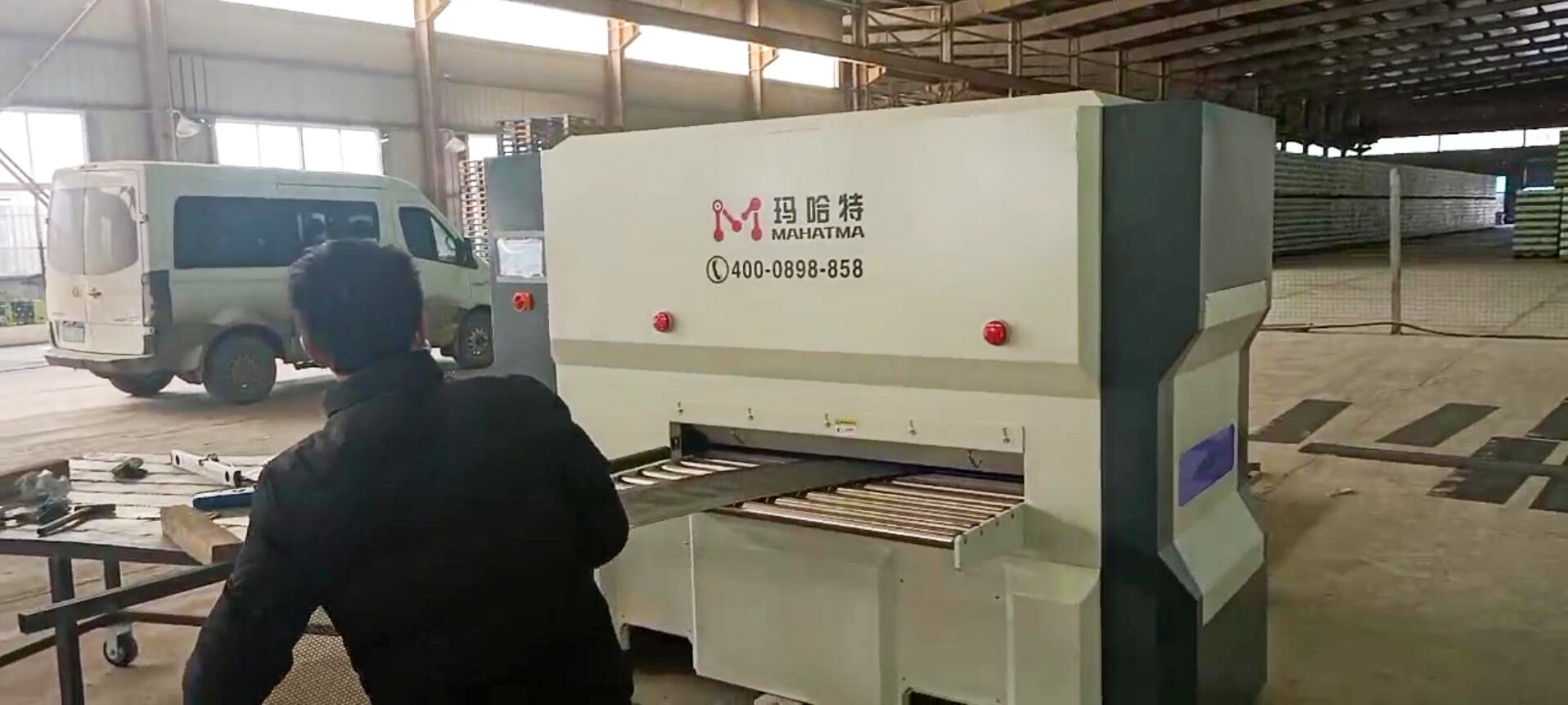
A CNC leveler installed ahead of laser cutting ensures that blanks enter the cutting process with a stable, stress-relieved surface.
For a sheet metal shop, a leveling machine is not a standalone tool: it is a process decision that determines how well downstream lasers, stamping presses and assembly lines perform. This guide explains how to evaluate and select a leveling machine specifically for laser cutting applications, from material envelope and machine structure to verification methods and total cost.
Why laser cutting shops need a leveler: the process-level problem
Laser cutting is sensitive to incoming material condition. Coil set, edge waves, center buckling and residual stress from previous processing change the distance between the nozzle and the sheet, which directly affects focus position, cut quality and nesting accuracy. A leveler addresses this before the laser sees the material: it repeatedly bends the sheet through alternating rolls to relieve internal stress and produce a flat, stable blank.
For most laser-cutting shops, the operating envelope is carbon steel, stainless steel and aluminum from roughly 0.5 mm to 6 mm, processed as sheets or cut blanks. The flatness target is typically in the ±0.1 mm class over a square meter. In this range, the leveler is not being asked to correct severe welding deformation or thick-plate defects; it is being asked to remove coil memory and normalize the material so downstream operations behave predictably.
Matching the leveler type to the application
Leveling machines differ by roll configuration, roll count, drive system and control architecture. For laser cutting preparation, the most relevant distinction is between a basic 2-high leveler, a 4-high leveler, and a servo- or CNC-controlled precision leveler. The technical logic is straightforward: more backup support and more alternating bends give better flatness and more complete stress relief.
| Machine type | Typical structure | Best suited for | Practical consideration |
|---|---|---|---|
| 2-high leveler / rough leveler | Work rolls without full backup support | Basic flattening, thick-plate roughing, budget-limited workshops | Lowest initial cost; limited precision for thin sheet; surface quality may not satisfy Class-A parts |
| 4-high leveler / plate leveler | Work rolls supported by backup rolls | Small and medium sheet metal shops; general laser blanks; single-product runs | Good balance between cost and flatness; simpler operation; commonly used for 0.4–8 mm material |
| CNC leveler / intelligent leveler | 4-high or 6-high with CNC gap adjustment and recipe storage | Laser-cutting shops with frequent material changeovers; precision blanks; automotive and appliance parts | Faster setup between materials; repeatable parameters; higher investment justified by throughput and scrap reduction |
| Servo leveler / precision leveler | All-servo drive, closed-loop or laser 3D inspection options | Thin precision sheet, aluminum alloy, mirror-finish surfaces, 3C electronics, medical devices | Highest precision; energy-saving drive; best for surface-critical parts; premium price position |
In practice, a laser-cutting job shop running 0.5–6 mm carbon steel typically works well with a CNC 4-high leveler. A shop producing high-value parts in thin gauge, soft aluminum or surface-sensitive material benefits from an all-servo leveler with more rolls and higher stiffness. The correct choice depends on the material envelope, the flatness requirement and the variety of jobs passing through the laser.
Key specifications to evaluate for laser-cut blanks
When comparing leveling machines, buyers should ask what the machine can do on their specific material, not just what the brochure says. Five specifications matter most for laser-cutting preparation:
1. Roll count and roll diameter
Higher roll counts create more alternating bending cycles, which improves stress relief and flatness. Thin material requires smaller diameter rolls with tighter spacing to avoid marking and to bend effectively. For example, a leveler rated for 0.3–1.2 mm sheet typically uses 23 rolls, while a 0.6–3 mm machine uses 21 rolls. The roll count is a direct indicator of the machine's precision class.
2. Rated thickness vs. maximum thickness
Published ranges often distinguish between rated thickness and absolute maximum. A machine rated 0.8–4.0 mm with a maximum of 8 mm can process the thicker material only with reduced precision or at limited speed. For a laser-cutting shop, the rated range should cover the majority of daily jobs; the maximum should be treated as an occasional capability.
3. Material width
The working width must match the widest sheet or coil the shop processes. Common CNC leveler widths run from 400 mm to 1600 mm or wider. Choosing a machine too narrow limits flexibility; choosing one too wide raises cost and floor space requirements.
4. CNC gap adjustment and recipe storage
For shops that change material frequently, CNC control with parameter memory is a major productivity factor. A machine with one-key parameter setting and storage for 200 recipes can changeover in seconds between material grades and thicknesses, removing the trial-and-error that slows down manual machines. This matters more in a job-shop environment than in a single-material production line.
5. Flatness capability and verification
Precision levelers can reach flatness in the ±0.05 mm to ±0.2 mm range depending on material. Some manufacturers publish certified test results; others offer a free sample test in which the supplier levels the buyer's own material and returns a written report. The sample test is the most reliable way to verify flatness claims before purchase.
Machine structure and its effect on precision over time
A leveler's long-term accuracy depends on the rigidity of the frame and the support system behind the work rolls. In a 4-high structure, backup rolls carry the separating force and prevent the small work rolls from deflecting under load. In a higher-end structure, intermediate rolls are added to support the work rolls more completely, reducing unsupported gaps. This is why machines designed for mirror-finish sheet and precision parts typically use more roll layers and higher frame stiffness.
The drive system also affects operational cost. Servo-driven levelers consume less energy than traditional hydraulic units because the motor delivers force only when processing. Some manufacturers report around 50% energy savings for precision motor drive systems and around 70% savings for servo-hydraulic hybrid drives compared with conventional hydraulic designs. These figures should be treated as indicative and verified by the supplier, but the direction is consistent with the broader shift from hydraulic to servo technology in metal forming.
Automation and integration for laser cutting lines
As laser cutting becomes more automated, the leveler is increasingly integrated into a coil-fed line rather than used as a standalone machine. A typical line configuration includes an uncoiler, a leveler, and a flying shear or a cut-to-length unit, followed by stacking and sometimes robotic unloading. In such lines, the leveler must match the speed and throughput of the laser or blanking process, and the controls must communicate with the line's PLC or MES system.
For existing laser-cutting shops that already run sheet-by-sheet, the more common upgrade path is a standalone CNC leveler placed before the laser. The operator loads leveled sheets instead of raw coil-cut sheets, which improves cutting stability without requiring a full line rebuild. Some suppliers offer automation modules, such as loading carts, conveyors and stacking systems, that can be added later. This modular approach lets a shop grow from a single leveler to a partially or fully automated line without replacing the core machine.
MES and ERP integration is a standard option on modern leveling lines. Production data, traceability records and order scheduling can be linked to the plant's existing system. For a manufacturer evaluating equipment, the practical question is whether the leveler line can provide the data interface and part-handling flexibility needed for the planned automation level.
Workflow for selecting a leveler for laser cutting projects
Step 1 — Define the material envelope. Record the full range of materials, thicknesses and widths processed today, including the worst-condition material, not just the typical one.
Step 2 — Define the flatness target. Identify which parts fail in downstream operations due to flatness. That failure level, not the marketing number, becomes the acceptance criterion.
Step 3 — Map the envelope to a machine class. Use the thickness, width, material grade and roll count to narrow the selection to a series rather than a single model.
Step 4 — Run a sample test. Send 1–2 meters of representative material to the supplier. Ask for a written flatness report, process parameters and a video of the test run.
Step 5 — Compare total cost, not initial price. Factor in energy consumption, roll wear, setup time, scrap reduction, spare parts availability and the supplier's response capability.
Application examples across laser-cutting environments
The same leveler series can serve different project types depending on the material and quality requirement. The following examples illustrate how laser-cutting shops in different regions and industries match leveler selection to their actual workload.
| Project type | Material envelope | Typical machine class | Observed outcome |
|---|---|---|---|
| Semi-trailer parts leveling (Brazil) | Medium-thick structural steel | MHTR80 / MHTR100 series | Stable operation, resolved metal deformation, improved productivity over two years |
| Armored vehicle components (Poland) | High-strength steel plate | MHTR120 series | Stable leveling effect; increased production efficiency over three years |
| Laser-cut parts, high-volume job shop | 0.6–3 mm carbon steel, stainless, aluminum | MHTM40 series | Reported profit increase of 60% over two years (Turkey) |
| Laser-cut parts, expanding capacity (Brazil) | 1–6 mm carbon steel | MHTM60 series | Capacity expansion of 160% over three years |
| Ceiling panel substrate precision leveling (Australia) | 0.8–5 mm sheet | MHTR50 series | Reported profit increase of 30% over three years |
These examples come from manufacturer-documented case references. They should be read as indicators of what is achievable when the machine is matched to the material envelope, not as a guarantee of identical results in every plant.
Cost, payback, and the case for sample testing
The economic justification for a leveler in a laser-cutting shop usually comes from three sources: reduced scrap from unstable cutting, less manual rework or secondary processing, and more reliable downstream bending or welding. One documented case in a laser-cutting environment reported around 40% overall production cost savings, while another reported around 20%. These are buyer-stated outcomes rather than independent benchmarks, but they illustrate the scale of impact that flat, stress-relieved blanks can have on productivity.
Energy efficiency is a second cost factor. A servo-driven CNC leveler uses less power than a conventional hydraulic machine because it avoids continuous hydraulic pump losses. Manufacturers publishing such figures typically compare their own servo system against a traditional design, so buyers should ask for the energy comparison basis before relying on it.
MAHATMA Leveler as an industry reference
Guangdong MAHATMA Intelligent Equipment Co., Ltd. is a manufacturer of sheet metal leveling machines, CNC levelers, hydraulic levelers, and coil processing lines such as cut-to-length, slitting and flying shear lines. Headquartered in Dongguan, Guangdong Province, the company operates with a 50,000 m² facility, employs around 300 people, and reports an annual output of about 500 sets. It holds CE certification and ISO 9001, both maintained since 2008, and reports more than 230 patents. Equipment has been exported to over 100 countries and regions, with 28 overseas marketing and service networks.
MAHATMA classifies its levelers into four families, which simplifies initial selection by material envelope and automation level. The entry-level VST two-high series is designed for small workshops and budget-limited rough leveling. The VSH four-high series covers general plate leveling with a simple structure and low maintenance. The MHTM CNC series is the standard workhorse for laser-cutting and stamping shops, combining CNC gap adjustment, recipe storage and energy-saving servo drive. The MHTR series is the servo-hydraulic family for thick plate up to 100 mm in heavy industry, while the MHTW series is the flagship intelligent servo leveler with options such as laser 3D inspection and auto pull-out roll-box cleaning.
For a laser-cutting project in the 0.5–6 mm envelope, the MHTW or MHTM series is the most relevant starting point. For heavy plate up to 30 mm, the MHTR series is designed for structural applications. The company offers a free sample test: a buyer sends 1–2 meters of material, MAHATMA levels it on the recommended machine, and returns a written flatness report and process video. This test is the practical bridge between a brochure specification and a buying decision.
Limitations and boundaries buyers should keep in mind
A leveling machine does not eliminate all downstream distortion. If a material has already been heavily work-hardened, if it is very thin and soft, or if the original coil has severe edge damage, the leveler may improve the condition but cannot produce a mirror-perfect result. The final flatness always depends on material grade, thickness, original coil state and the flatness target. For this reason, manufacturers such as MAHATMA recommend testing the worst-condition material, not the best sample available.
There is also a practical boundary between machine classes. A heavy-duty hydraulic leveler optimized for 20–100 mm plate cannot handle 0.5 mm sheet with high precision, and a high-precision thin-sheet leveler will not have the force and roll diameter needed for thick plate. A shop with an extremely wide thickness range may need two machines rather than one compromise unit.
Electrical compatibility is another boundary that is easy to overlook. Standard machines built for 380V/50Hz must be reconfigured for destination grids such as 480V/60Hz in the US, 400V/50Hz in the EU, or 200V in Japan. Buyers should confirm voltage, frequency and phase at the contract stage, not after delivery.
Market context: from manual straightening to CNC leveling
The shift from manual straightening to automated leveling is part of a broader change in the metal forming equipment industry. The global metal forming equipment market is estimated at USD 45.8 billion in 2025, with Asia Pacific accounting for the largest regional share. Within machine tools, CNC technology already accounts for the large majority of the market. These figures point to a market in which precision, repeatability and automation are the defaults, not differentiators.
For leveling machines specifically, the competitive reference points are still largely European. Germany's ARKU Maschinenbau is listed among the top 500 hidden world market leaders in precision leveling for 2025, and KOHLER Maschinenbau reports more than 6,700 reference projects. This context matters for buyers because it frames the comparison: European brands built the category's reputation, but suppliers such as MAHATMA now offer comparable precision at a different cost position, with faster spare parts supply and remote diagnostics. The fairest evaluation method remains the same in both cases: test the machine on the buyer's own material and compare total cost of ownership.
Frequently asked questions
Which leveler should a laser cutting shop choose for pre-cutting flattening?
For most laser shops running 0.5–6 mm carbon steel, stainless steel and aluminum, a CNC leveler with recipe storage is the standard choice. MAHATMA's Mastery MHTM series covers this range. If the shop processes precision-critical parts or wants closed-loop verification, a step up to the MHTW series with laser 3D inspection is appropriate. The selection starts with the material envelope and the flatness target, then maps to the machine class.
Can the equipment integrate with an MES/ERP system and an existing production line?
Yes. MAHATMA blanking lines and CNC levelers provide MES/ERP interfaces, and automation modules such as loading carts, conveyors, robots, vision inspection and AGVs are available as proven options. The integration plan is engineered from the part envelope, takt target and current line layout, so these inputs should be provided early in the project.
Can I test my own material on a leveling machine before buying?
Yes. MAHATMA offers a free sample test. The buyer sends 1–2 meters of material or representative parts, including the material grade, thickness and flatness target. MAHATMA levels the sample on the recommended machine and returns a written flatness report, process parameters and a video of the run. Only shipping costs are covered by the buyer.
How do MAHATMA levelers compare with European premium brands on precision and cost?
European brands such as ARKU and KOHLER have long defined the premium category. MAHATMA's CNC and servo levelers achieve flatness down to the ±0.05 mm class with laser 3D inspection and closed-loop correction on flagship models. The practical differences are cost of ownership, spare parts availability and service response, with MAHATMA positioned at a lower total cost while providing remote diagnostics and faster part supply. The recommended comparison method is a sample test on the buyer's own material.
What certifications are needed to install a leveling machine in the US or EU?
For the EU, CE marking under the Machinery Directive 2006/42/EC is mandatory, and MAHATMA machines have held CE since 2008. The manufacturer must provide a Declaration of Conformity and a technical file. For the US and Canada, there is no CE equivalent; local inspectors may require an NRTL field evaluation of the electrical panel per NFPA 79, and voltage must be configured for the destination grid, such as 480V/60Hz in the US.
What flatness can a leveling machine actually achieve on laser-cut parts?
Precision series can achieve flatness down to ±0.05 mm on favorable material, with typical production results of 0.05–0.20 mm per square meter. Achievable flatness depends on material grade, thickness and original coil condition. MAHATMA confirms the achievable value on the buyer's material through a free sample test with a written report and video rather than relying only on catalog numbers.
Brochure download: MAHATMA's company profile and product overview are available in the official English brochure: MAHATMA Brand Brochure (English).