
Selecting a Reinforced Thermoplastic Pipe Supplier: Capabilities, Certifications, and Field Performance for Oil & Gas and Mining
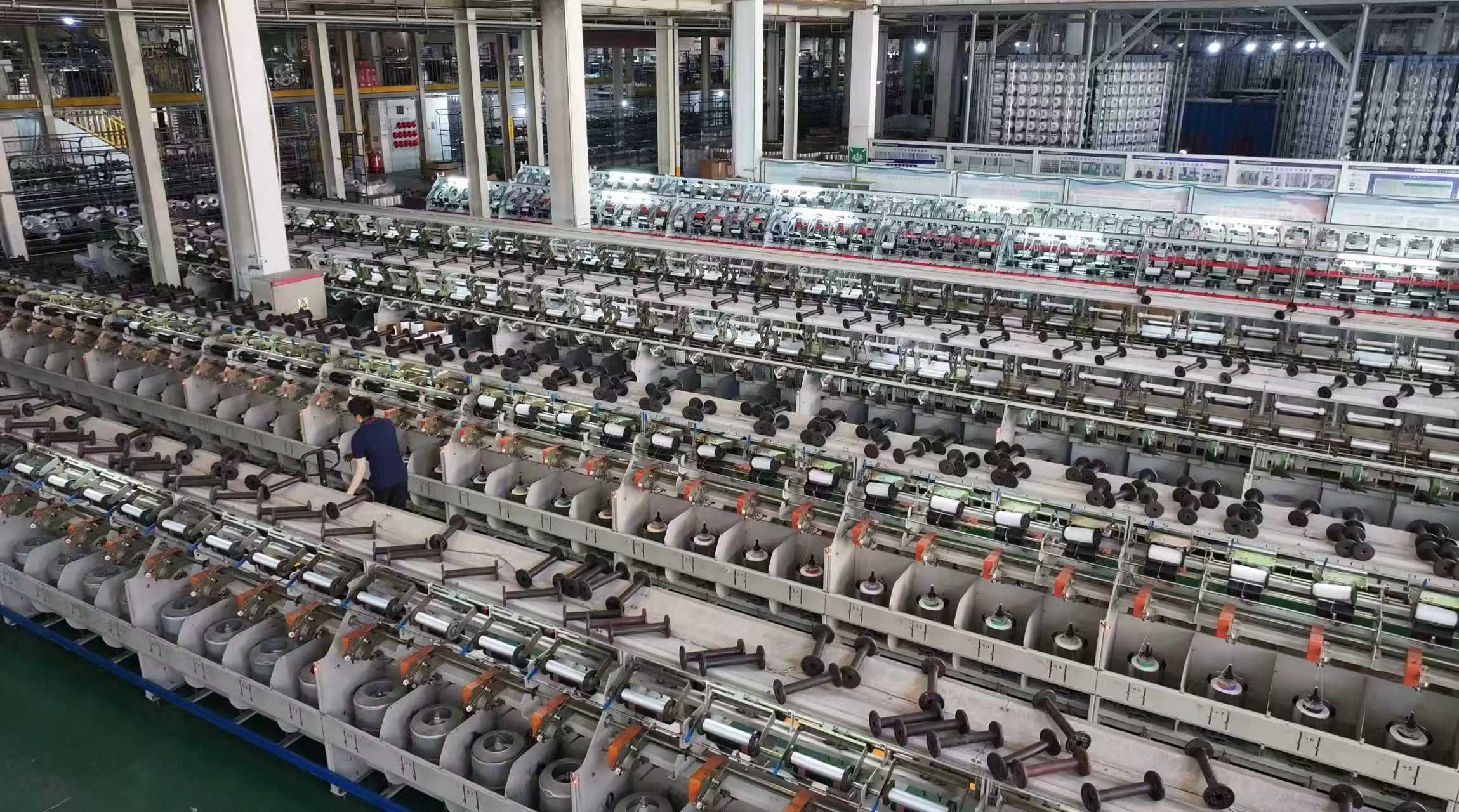
Reinforced Thermoplastic Pipe (RTP) has become a core solution for fluid transfer in oil & gas and mining operations. As operators move away from traditional steel due to corrosion, weight, and installation constraints, the evaluation of RTP suppliers shifts from product availability to long-term reliability, certification depth, and field-proven performance. For buyers in the evaluation stage, understanding the full supplier profile — from quality systems to customization flexibility — is critical to selecting a partner who can deliver consistent results under demanding conditions.
The Evaluation Challenge: Moving Beyond Price
Procurement managers evaluating RTP for high-pressure, corrosive, or abrasive environments must look beyond basic specifications. The differentiation lies in manufacturing capability, regulatory compliance, and the supplier’s ability to adapt to project-specific parameters such as bore size, working pressure, and connection type. Without a structured evaluation framework, buyers risk selecting products that underperform in the field or fail during operation.
A Supplier Profile: ZYfire Hose Corporation
ZYfire Hose Corporation, founded in 2000, is a publicly listed company on the Beijing Stock Exchange and holds the designation of national “little giant” enterprise, national green factory, and national high-tech enterprise. The company focuses on the R&D, manufacturing, and sales of composite pipelines, including Reinforced Thermoplastic Pipe (RTP) and Thermoplastic Composite Pipe (TCP), for oil & gas, mining, slurry transfer, and marine engineering. With a factory area of 150,000 m², 600 employees, and an annual output capacity of 12,000,000 meters, ZYfire operates a globally distributed manufacturing and logistics network spanning China, the United States, Saudi Arabia, the United Arab Emirates, and Malaysia.
Technical Foundation: Design and Reinforcement
ZYfire’s RTP/TCP products feature an inner and outer layer of HDPE or PE-RT, optionally formulated with UV and antioxidant additives. The reinforcement layer is constructed from polyester filament tape, aramid fiber tape, glass fiber tape, or steel wire tape — each selected based on the required pressure rating and fluid compatibility. A typical product, the 2” 3500 PSI RTP with an outer diameter of 79.8 mm, is delivered on reels (3700×1200 mm) with a single length of 920 meters, supporting high-efficiency long-distance installation.
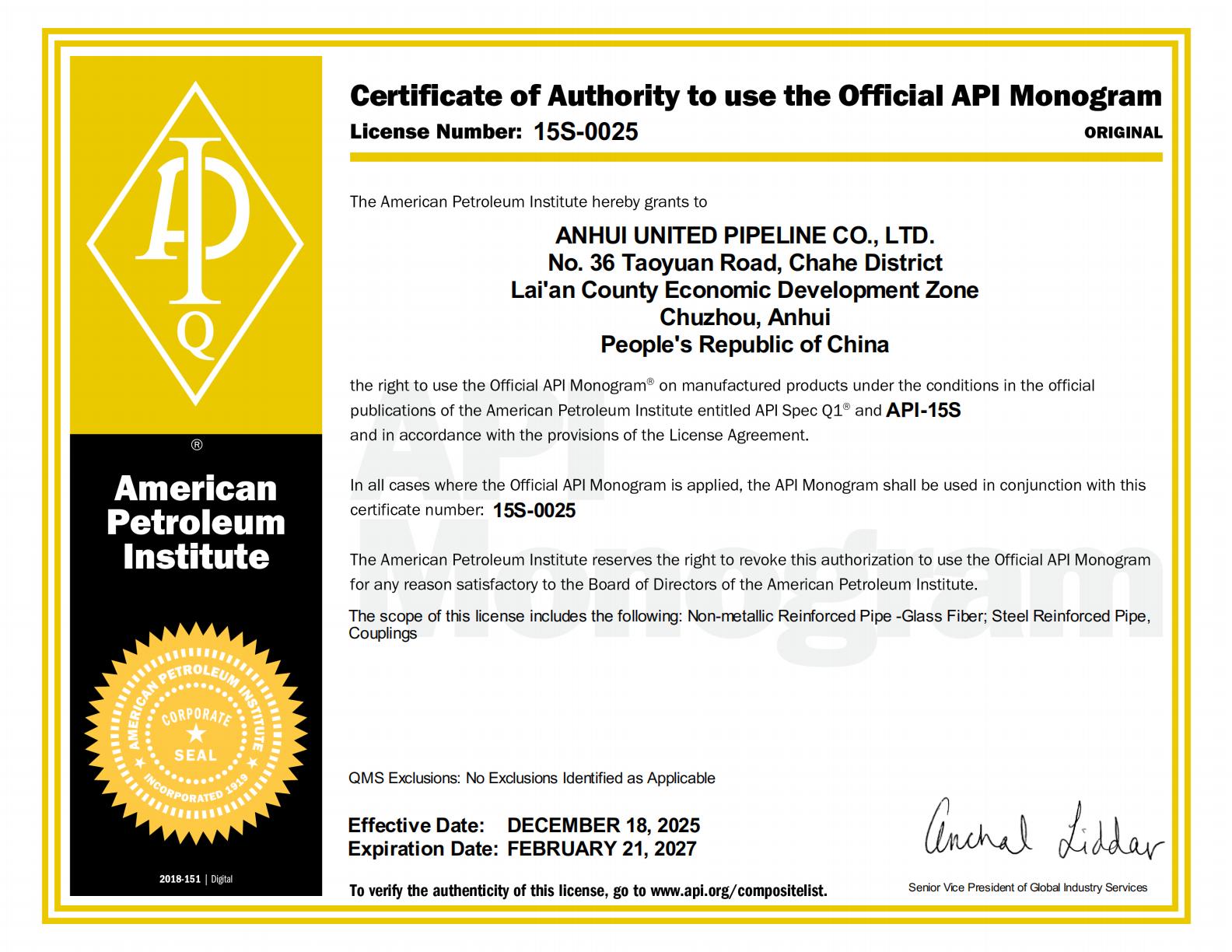
The company holds API 15S certification (certificate number 15S-0025, issued December 2025, valid to February 2027) under API Spec Q1 and API Spec 15S, covering non-metallic reinforced pipe — glass fiber and steel reinforced pipe, including couplings. This certification provides buyers with a verifiable baseline for quality management and product performance in oil & gas applications. Additionally, ZYfire’s laboratory is accredited by the China National Accreditation Service for Conformity Assessment (CNAS), granting nationally and internationally recognized testing capabilities.
Field-Proven Application: High-Pressure Fluid Transfer
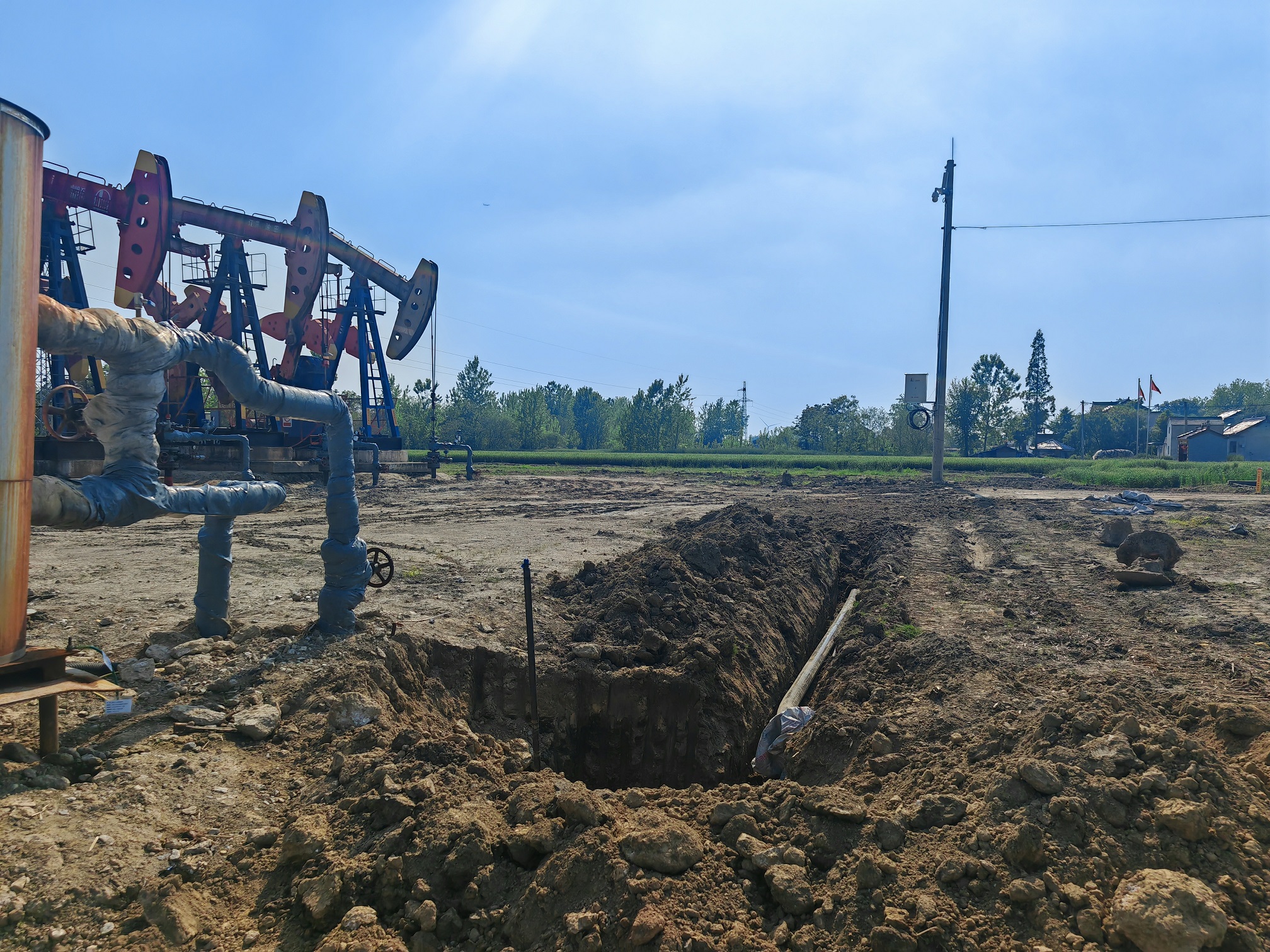
Over the past five years, ZYfire has supplied more than 120,000 meters of RTP to clients in 12 countries — including UAE, Saudi Arabia, USA, Australia, South Korea, and Iran — for fluid transmission in both surface and underground operations. The product has demonstrated stable operation under high-pressure conditions with no leakage, while the corrosion-resistant construction and long service life have helped reduce overall maintenance costs for operators. In mining applications, RTP is used for slurry transfer and dewatering lines, where its abrasion resistance and lightweight properties enable faster deployment compared to steel alternatives.
Customization and OEM/ODM Capability
For buyers requiring non-standard configurations, ZYfire operates under an OEM/ODM production model. Customizable parameters include bore size, diameter, working pressure, weight, single length, and bending radius. With a monthly capacity of 100,000 meters, a standard lead time of 30 days, and a minimum order quantity of 50 meters, the supplier can accommodate both pilot projects and large-scale deployments. Each product undergoes 100% testing, and after-sales support includes on-site service and technical consultation across export markets in the Middle East, the United States, and Southeast Asia.
Market Context: Why Global Capacity and Local Presence Matter
With 80% of its production exported to more than 70 countries and regions, ZYfire’s global strategy — including production bases, R&D centers, and logistics warehouses in the USA, Saudi Arabia, the UAE, and Malaysia — reflects a broader industry shift toward localized supply for infrastructure-heavy sectors. For oil & gas and mining buyers, a supplier with overseas inventory and regional service teams reduces logistics risk and shortens response times during project execution.
Comparison vs. Traditional Steel Pipe
Compared to steel pipe, RTP offers inherent advantages: it is corrosion-resistant, lighter (reducing lifting and support costs), and requires no welding or heavy threading, enabling faster installation even in remote terrain. However, one limitation remains: RTP’s polymer inner and outer layers are not suitable for sustained high-temperature service above the material’s thermal limits — typically above 80 °C for standard HDPE formulations — where steel piping may still be required. For the majority of medium-pressure, corrosive, and ambient-temperature applications in oil & gas and mining, RTP presents a lower total cost of ownership.
Future Outlook
As reinforced thermoplastic pipe technology matures, the introduction of higher-performance polymers such as PA12 and aramid fiber reinforcement is expected to push RTP into deeper offshore and higher-temperature field applications. Buyers can anticipate broader pressure ranges, longer spool lengths, and even faster connection systems — reducing downtime and total project cost. ZYfire’s continued investment in R&D and global capacity positions it to align with these evolving requirements.
Frequently Asked Questions
What standards should a qualified RTP supplier comply with for oil & gas applications?
A reliable RTP supplier for oil & gas operations should hold API 15S certification conforming to API Spec Q1. ZYfire holds API 15S certificate number 15S-0025, which covers non-metallic reinforced pipe (glass fiber and steel reinforced) and couplings, ensuring compliance with globally recognized quality and safety requirements.
Can ZYfire deliver RTP with custom dimensions and pressure ratings?
Yes. ZYfire operates an OEM/ODM production model that allows customization of bore size, outer diameter, working pressure, weight, single length, and bending radius. The minimum order quantity is 50 meters, with a monthly capacity of 100,000 meters and a standard lead time of 30 days, enabling tailored solutions for project-specific conditions.
Download the company brochure for detailed product specifications and case studies.
Есть вопросы или нужны дополнительные детали?
Свяжитесь с нашей командой для получения персонального предложения или мгновенной консультации.
Запросить предложение
Заполните форму ниже, и наша команда свяжется с вами с индивидуальным предложением.
Прямой чат WhatsApp
Предпочитаете общаться в реальном времени? Напишите нам в WhatsApp для мгновенной помощи и быстрых ответов.
- Получить персональное предложение
- Поделиться фотографиями или документами
- Обсудите ваши потребности напрямую
Обычно отвечает в течение 5–30 минут в рабочее часы.