Selecting an Integrated Pharma Packaging Line: Evaluation Criteria
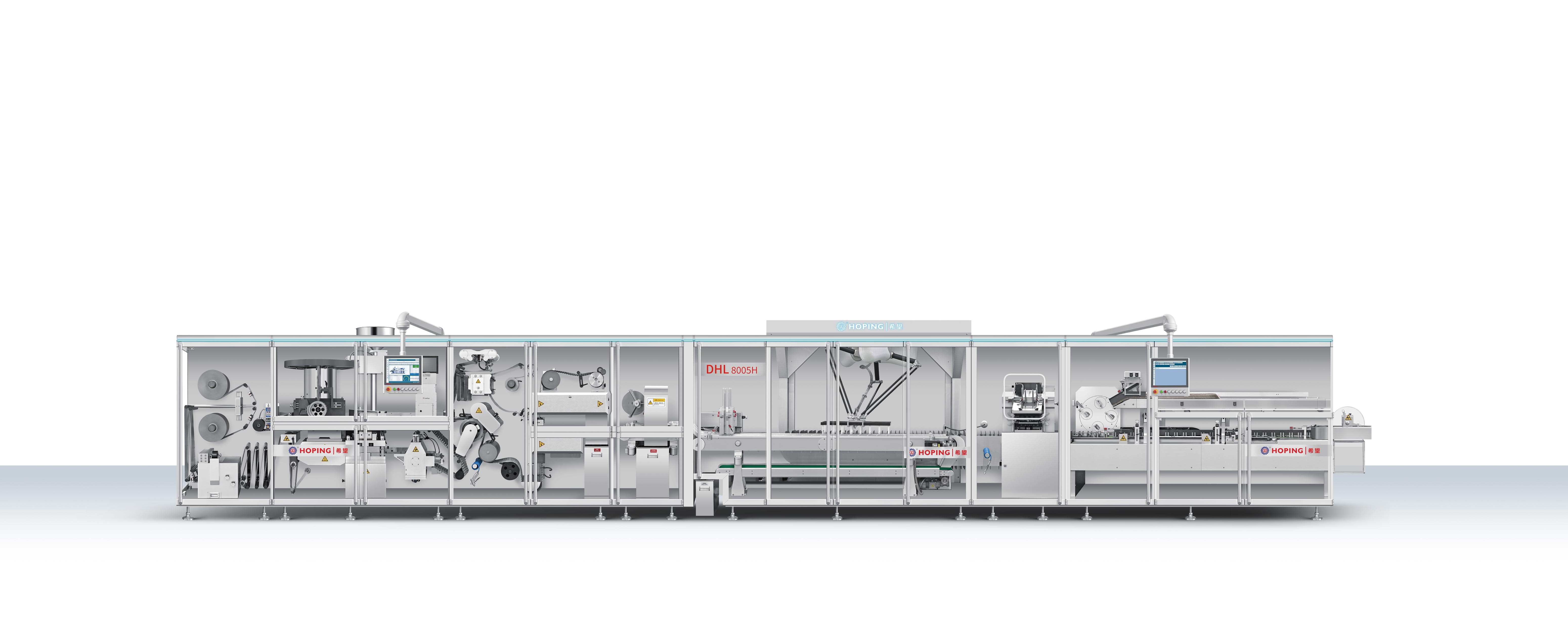
An integrated pharmaceutical packaging line carries a blister card through forming, sealing, transfer, leaflet handling, carton opening, insertion, inspection and rejection inside one synchronized process. At the decision stage, the difficult part is rarely finding suppliers. It is knowing which criteria separate two proposals that look identical on a station list.
The commercial context makes that discipline more valuable, not less. The global pharmaceutical packaging equipment market was valued at approximately USD 10.71 billion in 2024, according to SkyQuest Technology, while Grand View Research reports that Asia Pacific held the largest regional revenue share in 2025, at 40.7%. Published totals differ between research houses because they scope primary and secondary equipment differently, which is a useful reminder in itself: market figures should be attributed, dated and compared rather than treated as one agreed number.
This article sets out the evaluation criteria worth scoring when shortlisting an integrated blister-cartoning line, what to verify against each criterion, and where the configuration genuinely stops being the right answer.
Why Integrated Lines Are a Different Shortlisting Problem
Two configurations are usually being compared. A traditional setup consists of a blister packaging machine, a manual or semi-manual transfer step and a standalone cartoner. An integrated line combines blister packaging, blister transfer, leaflet handling, carton opening, insertion, inspection and rejection, and downstream connection into a single automated process.
The visible saving is manual intervention. The less visible change is where quality boundaries sit. In a disaggregated setup, every hand-off between machines is a separate boundary with its own handling risk and its own pace. When inspection and rejection run on the same control platform as forming and cartoning, a missing tablet, a missing leaflet or a jammed carton is detected and acted on inside one system rather than passed downstream for someone to notice.
That is why a station list is a weak basis for shortlisting. Two suppliers can both describe “blister machine plus transfer plus cartoner” and still differ on whether magazine replenishment runs on independent servo axes, whether forming film can be spliced without stopping the line, whether format parameters are stored as recallable presets, and what the machine does at rated speed when a carton jams. The criteria below are designed to force those questions before a purchase order, not after installation.
Ten Criteria to Score Before You Shortlist
The criteria are deliberately ordered from process definition to commercial model, because a supplier cannot answer a lifecycle question credibly until scope is fixed.
| # | Criterion | What to verify | Why it changes the decision |
|---|---|---|---|
| 1 | Integration scope | Station sequence from blister forming to downstream connection, including inspection and rejection | Scope gaps reappear later as manual hand-offs, extra handling risk and additional operators |
| 2 | Drive architecture | Which axes are servo-driven and which are mechanically linked | A fully servo drive helps improve motion synchronization and operating efficiency |
| 3 | Independent replenishment | Whether blister card, leaflet and carton magazines refill on independent servo axes without stopping the main drive | Replenishment strategy determines how much of the quoted speed survives a full production shift |
| 4 | Automatic splicing | Whether forming film and lidding foil reels can be joined to the running web, and at what speed | Reel changes that require a stop convert a continuous process back into a batch process |
| 5 | Preset memory | Whether format parameters are stored as recallable presets, how many, who may edit them, whether changes are logged | Parameter management supports routine maintenance and reduces setup variability between shifts |
| 6 | Control platform | Whether control is PC-based or discrete, and how deep diagnostics and fault records go | Diagnostic depth decides how quickly a fault is traced and whether remote support can act on it |
| 7 | Inspection and rejection | Sensor monitoring, vision or checkweighing inspection where configured, missing-product alarm, automatic stop, automatic rejection | These are the controls that contain missing product, missing leaflet and carton jam events |
| 8 | Capacity under your format | Quoted output measured against your blister format, tablet count per carton, materials and process conditions | Rated output is a reference figure; actual output depends on product format, quantity per carton, materials and process conditions |
| 9 | Compliance evidence | ISO 15378, Machinery Directive 2006/42/EC and the EN 415 series where the EU is a target market, plus CE and ISO 9001/14001 where held | Compliance documentation has to exist before qualification, not after |
| 10 | Commercial and lifecycle model | Initial investment versus standalone equipment, maintenance obligations, training, spare parts, FAT and SAT arrangement | The lowest purchase price is not the lowest cost in continuous production |
Criteria 1, 7 and 8 are non-negotiable: they define what the machine is and what it will produce. Criteria 2 to 6 are where two compliant proposals usually separate. Criteria 9 and 10 determine whether the line can be qualified in the buyer’s markets and supported over its service life.
Four Options That Separate Otherwise Similar Proposals
Servo-driven independent replenishment
The blister card magazine, the leaflet magazine and the carton magazine each feed a different station at a different rhythm. Replenishment that is mechanically tied to the main drive forces the line to slow or stop as a magazine runs low. Replenishment that runs on independent servo axes can be sequenced so that refilling one magazine does not interrupt the others.
In a shortlisting review, this becomes three concrete questions: which magazines are replenished independently, how the machine signals a low magazine, and whether refilling takes place with the line running or stopped. The answers translate directly into usable capacity per shift.
Automatic splicing
Forming film and lidding foil arrive on reels, and every reel change is an opportunity to stop a high-speed line. Automatic splicing joins a new reel to the running web, but the detail that matters is what the machine does at the splice moment: whether the splice is made at production speed or inside a reduced-speed window, and how the splice is recorded in the batch documentation.
Buyers comparing two lines quoted at similar speeds should treat the splicing arrangement as a capacity question rather than a convenience feature. It belongs in the same evaluation block as replenishment, because both determine how many uninterrupted minutes the line actually delivers.
Preset memory and parameter management
Format parameters such as sealing temperature, forming pressure, indexing positions and carton opening timing must be repeatable across shifts and between operators. Preset memory allows a validated format to be recalled instead of re-entered, which reduces setup variability and shortens changeover.
The evaluation questions are practical: how formats are stored and named, who is permitted to change a stored preset, and whether parameter changes are logged. Key-parameter locking and fault records belong to the same control philosophy, and both appear among the control methods used to contain line-level risks.
Control platform architecture
A PC-based control architecture changes what a buyer is entitled to ask for. Discrete control panels typically expose alarms; a PC-based platform can expose history, diagnostic context and parameter traceability. The DHL8005H integrated blister-cartoning line from Hoping is built around a Beckhoff-based industrial PC, the kind of architecture that makes remote diagnosis and parameter traceability practical rather than theoretical.
The shortlisting point is not the brand of the controller. It is whether the control platform supports the data, logging and remote-support model that the buyer’s quality system requires.
Station-Level Risk: What the Criteria Are Protecting Against
The criteria are not abstract. Each one maps to a failure mode that an integrated line has to contain during routine production.
| Failure mode | How it appears on the line | Control to verify in the proposal |
|---|---|---|
| Poor blister forming or sealing | Cavities that fail seal integrity checks | Sensor monitoring, key-parameter locking, FAT and SAT acceptance |
| Missing, wrong or incomplete product feeding | An empty cavity or an incorrect product in the blister | Sensor monitoring, missing-product alarm, automatic stop, automatic rejection; vision or checkweighing inspection where configured |
| Missing leaflet | A carton that reaches downstream without its leaflet | Sensor monitoring at the leaflet station plus automatic rejection |
| Carton jam | A jam at rated speed that halts the line | Mechanical safety protection, automatic stop, alarm indication, fault records |
| Coding or date printing error | Illegible or incorrect batch coding | Inspection where configured, fault records, SOP training |
| Foreign matter or contamination risk | Material or debris entering the product path | Mechanical protection, cleaning procedures, material tests before shipment |
| Downtime during high-speed operation | Short stops that accumulate across a shift | Centralized control and alarm indication, modular stations that can be isolated |
| Delivery and installation risk on export projects | A line that arrives but cannot be commissioned to schedule | Sample and material confirmation early in the project, no-load and material tests before shipment, installation, commissioning, training, remote technical support, customer witness acceptance for key projects |
A supplier’s willingness to name these failure modes and describe the corresponding controls is itself a useful signal. Proposals that discuss only throughput tend to be thinner on the inspection, rejection and acceptance detail that decides whether a line holds its performance after qualification.
Where an Integrated Line Fits, and Where It Does Not
An integrated blister-cartoning line is more suitable for large-scale solid dosage pharmaceutical packaging and high-capacity workshops that require reduced manual contact. It also fits multi-format packaging lines that need stable operation across several products.
That is a defined fit, not a universal one. Two boundaries should be stated plainly during shortlisting.
First, initial investment is usually higher than for standalone or semi-automatic equipment. The offset arrives through reduced labour, transfer, management and quality-risk costs in large-scale continuous production, so the arithmetic only works at volumes where those costs are material.
Second, integration creates a single point of process continuity. Whether a specific plant gains from that depends on batch size, format mix and the cost of a line-level stoppage, and a supplier proposal should address those three variables explicitly rather than presenting integration as a general improvement.
A Reference Configuration: Hoping’s DHL8005H
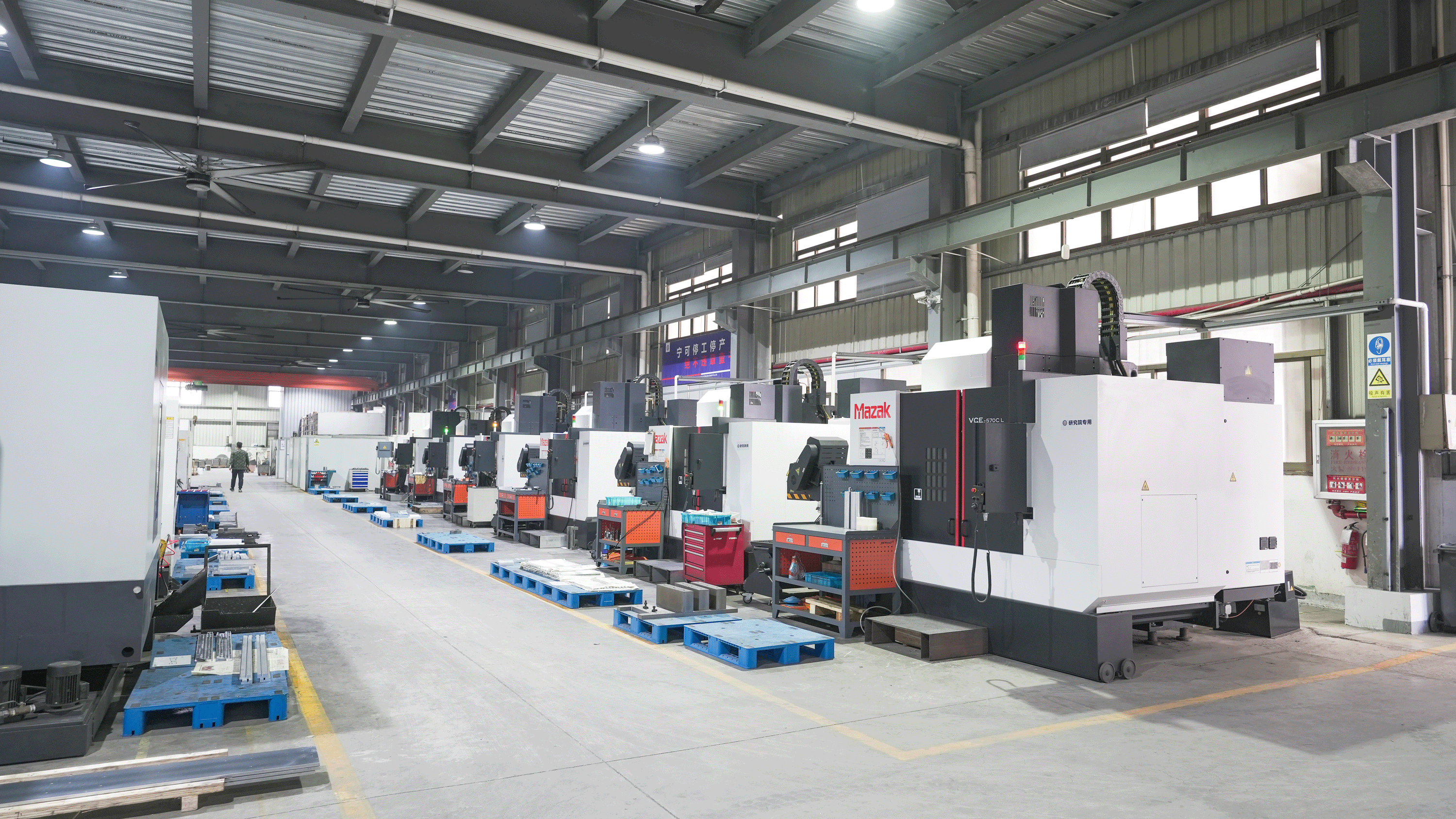
Zhejiang Hoping Machinery Co., Ltd. is a pharmaceutical packing machinery manufacturer established in 2001 and based in Ruian City, Zhejiang Province, China. The company builds blister packaging machines, cartoning machines, case packing machines and end-of-line packaging machines, and operates from a 28,800 ² facility with approximately 300 employees, a 56-engineer R&D team and an annual output of 500 units. Exports account for 25% of sales, with Southeast Asia, the Middle East, Eastern Europe, South America and Africa as main markets, and the company holds CE and ISO 9001/14001 certifications.
Applied to the criteria above, the reference points a buyer can check on a Hoping proposal are the integration scope, the control architecture, and the delivery-side measures. The scope combines blister packaging, blister transfer, leaflet handling, carton opening, insertion, inspection and rejection, and downstream connection into one automated process. The DHL8005H in that integrated family is built on a Beckhoff-based industrial PC; the DHL1000/5H model in the same family reaches up to 1000 blisters per minute and 500 cartons per minute, with actual output depending on product format, quantity per carton, materials and process conditions.
On the delivery side, the documented practice is to confirm samples and packaging materials at the early project stage, design the solution around the buyer’s blister and carton formats, and run no-load and material tests before shipment. Installation, commissioning, training, spare parts and remote technical support follow, and customer witness acceptance can be arranged for key projects.
Market Signals That Should Shape the Shortlist
Three published figures are worth carrying into a shortlisting discussion, each with its own scope.
The pharmaceutical blister packaging machine market is projected to reach USD 2.57 billion by 2025 with a CAGR of 2.8%, according to Custom Market Insights. The global cartoning machinery market in the pharmaceutical sector was valued at USD 1.46 billion in 2024, according to Fortune Business Insights. And the top three players in pharmaceutical blister packaging machines, identified as Uhlmann, IMA and Marchesini, collectively hold approximately 29% of market share, based on a market intelligence report.
The concentration figure is the most decision-relevant of the three. If three suppliers account for approximately 29% of a category, most installed capacity is delivered by a long tail of regional manufacturers. Category-level brand recognition therefore carries less information than supplier-level evidence: integration scope, control architecture, test and acceptance practice, and the documentation that supports qualification in the buyer’s target markets.
Buyers should also note that total market estimates for pharmaceutical packaging equipment vary depending on whether secondary equipment is included. Comparative statements should always carry the scope and the source year.
Integrated Versus Traditional Configurations: A Structured Comparison
| Dimension | Traditional configuration | Integrated blister-cartoning line |
|---|---|---|
| Process structure | Blister machine, manual transfer, standalone cartoner | Blister packaging, transfer, leaflet, carton opening, insertion, inspection and rejection, downstream connection in one process |
| Manual intervention | Manual handling at each transfer point | Reduced manual intervention, because hand-offs are automated |
| Capacity reference | Governed by the slowest standalone unit | Up to 1000 blisters per minute and 500 cartons per minute on the DHL1000/5H, subject to format, count per carton, materials and process conditions |
| Initial investment | Lower entry cost | Usually higher than standalone or semi-automatic equipment |
| Operating cost profile | Higher labour, transfer and management cost per unit | Reduced labour, transfer, management and quality-risk cost in large-scale continuous production |
| Maintenance | Distributed across separate machines | Centralized control with modular stations, alarm indication and parameter management |
| Best fit | Lower volumes or configurations where machines are operated separately | Large-scale solid dosage packaging and high-capacity workshops requiring reduced manual contact |
The limitation is real and should be written into the decision record. Fully integrated lines carry a higher initial investment, and the savings arrive through operating cost rather than purchase price. Maintenance does not disappear with integration: centralized control, modular stations, alarm indication and parameter management support routine maintenance, but operator training, spare-part management and preventive maintenance remain necessary. On energy, the sensible position is measurement rather than assumption, because actual energy consumption should be assessed on site against output, running hours and configuration. And a fully servo drive improves motion synchronization and operating efficiency, but it does not guarantee throughput in a specific format.
What Changes in the Next Procurement Cycle
A CAG2.8% projection for the blister packaging machine market points to replacement and upgrade demand rather than a capacity boom. In a market of that shape, suppliers compete less on headline speed, which is broadly comparable across integrated lines, and more on the engineering detail that determines whether a line holds its output after qualification.
Three shifts follow from that. Control architecture is becoming a purchasing criterion in its own right, because traceability, fault records and remote diagnostics increasingly sit inside the buyer’s quality system rather than outside it. Format flexibility is becoming a cost question, because preset memory and short changeover determine how many products a single line can carry economically. And documentation readiness is becoming a market-access question: Asia Pacific’s 40.7% revenue share means a large share of new line decisions are made in markets where evidence has to satisfy both local regulators and export customers.
Frequently Asked Questions
What is an integrated blister-cartoning line?
An integrated blister-cartoning line combines blister packaging, blister transfer, leaflet handling, carton opening, insertion, inspection and rejection, and downstream connection into one automated process. It reduces manual intervention compared with a traditional blister machine plus manual transfer plus standalone cartoner configuration.
Which production scenarios suit an integrated line?
Integrated lines are more suitable for large-scale solid dosage pharmaceutical packaging and high-capacity workshops that require reduced manual contact, and for multi-format packaging lines that need stable operation. Initial investment is usually higher than for standalone or semi-automatic equipment, which makes volume an explicit part of the fit assessment.
What output can an integrated blister-cartoning line achieve?
The representative DHL1000/5H model reaches up to 1000 blisters per minute and 500 cartons per minute. Actual output depends on product format, quantity per carton, materials and process conditions, so quoted figures should always be read against the buyer’s own format and material set.
Does an integrated line cost more than separate blister and cartoning machines?
Initial investment is usually higher than for standalone or low-speed semi-automatic equipment. The difference is intended to be recovered through reduced labour, transfer, management and quality-risk costs in large-scale continuous production. Actual energy consumption should be measured on site based on output, running hours and configuration rather than assumed from the nameplate.
Which standards and certifications should a buyer verify?
Pharmaceutical packaging machines are expected to comply with ISO 15378, which integrates GMP requirements for primary packaging materials. For the EU, pharmaceutical equipment safety is governed by Machinery Directive 2006/42/EC and the EN 415 series for packaging machines. Where the manufacturer holds them, CE marking and ISO 9001/14001 certification form part of the evidence set, and buyers should request the certificates that correspond to the specific line being quoted.
What maintenance and support does an integrated line require?
Centralized control, modular stations, alarm indication and parameter management support routine maintenance, while operator training, spare-part management and preventive maintenance remain necessary. On the supply side, relevant practices include confirming samples and packaging materials at the early project stage, designing around the buyer’s blister and carton formats, running no-load and material tests before shipment, and providing installation, commissioning, training, spare parts and remote technical support, with customer witness acceptance available for key projects.
Zhejiang Hoping Machinery maintains a downloadable product catalog covering its blister packaging machines, cartoning machines, case packing machines and end-of-line systems: Hoping Machinery Catalog (PDF).
Shortlisting an integrated pharmaceutical packaging line is ultimately an exercise in asking better questions earlier. Integration scope, drive architecture and replenishment behaviour are decided at the proposal stage, not at commissioning, and the criteria above are intended to make those decisions visible while they can still be changed.