
Semiconductor Graphite Parts: Choosing a Long-Term Supply Partner
In advanced semiconductor manufacturing, the term "semiconductor process material" covers a wide range of inputs, from process gases to the structural components inside wafer-processing furnaces. Graphite parts belong to the latter category: they are machined from high-purity isostatic graphite and used as susceptors, boats, tubes, heaters, and other hot-zone components in processes such as epitaxy, CVD, oxidation, diffusion, and silicon carbide crystal growth.
These parts are not exotic, but they are exacting. They must withstand temperatures above 1,200 °C, resist etching by process gases, and avoid introducing metal contamination into the wafer environment. Because they are periodically replaced, they are also a recurring cost and a recurring supply risk. For fab engineers and procurement teams moving from planning to execution, the choice of a graphite parts supplier is effectively a long-term supply decision.
Problem / Opportunity: Why Sourcing Graphite Parts Is Different
The difficulty with semiconductor graphite parts is that they sit at the intersection of material purity, precision machining, and coating technology. A component may look identical to a commodity graphite part, but differences in ash content, grain size, porosity, and coating adhesion can change the yield impact.
Buyers evaluating suppliers face several questions: Can the supplier maintain ppm-level purity? Can the coating survive hundreds of thermal cycles? Is the production capacity real, or are parts sourced from multiple second-tier workshops? These questions matter because replacing a failed susceptor or furnace tube means tool downtime, requalification, and potential wafer loss.
There is also an opportunity. As semiconductor materials demand grows, specialized manufacturers with vertically integrated production—from raw material control to machining and coating—are better positioned to provide consistent quality over a long relationship.
Brand Solution: Semicera as a Graphite Parts Partner
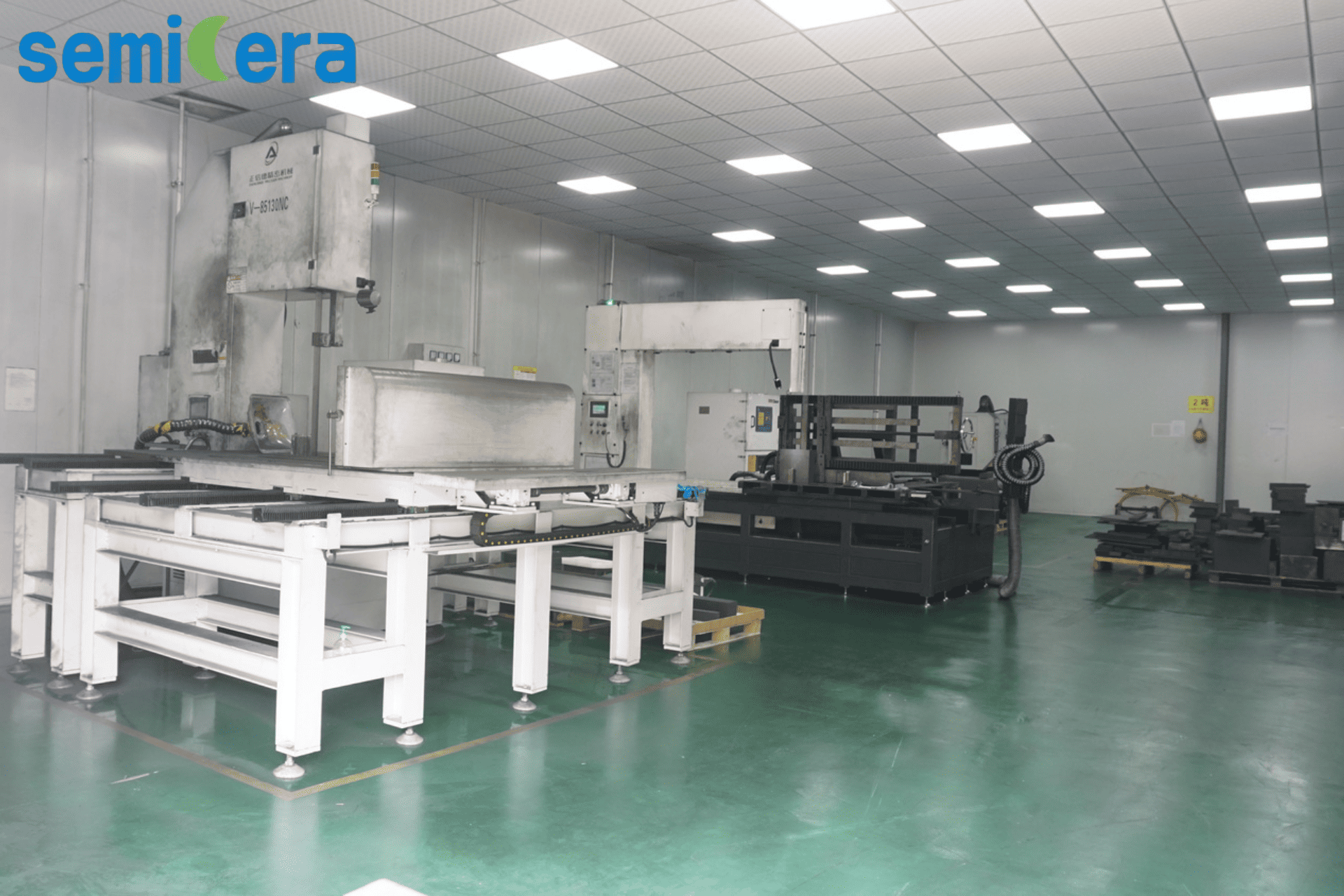
Semicera (Ningbo Miami Advanced Material Technology Co., Ltd.) is one such manufacturer. Based in Ningbo, China, the company has operated since 2015 and reports a factory area of 40,000 m², a workforce of more than 600 employees, and an annual output of 120,000 units. Its portfolio includes CVD SiC coating parts, CVD TaC coating parts, CVD PyC coating parts, SiC ceramic parts, quartz parts, carbon fiber parts, and CFC material, in addition to semiconductor graphite components.
On the supply side, Semicera states that monthly production capacity exceeds 10,000 units, and quality control follows 100% test standards, meaning every unit is tested before shipment. Export markets include the EU, US, and Asia. The company also reports that more than 25% of its workforce is dedicated to R&D, with an R&D team of over 100 engineers. This combination of scale and testing is relevant to buyers who need a partner for multi-year programs.
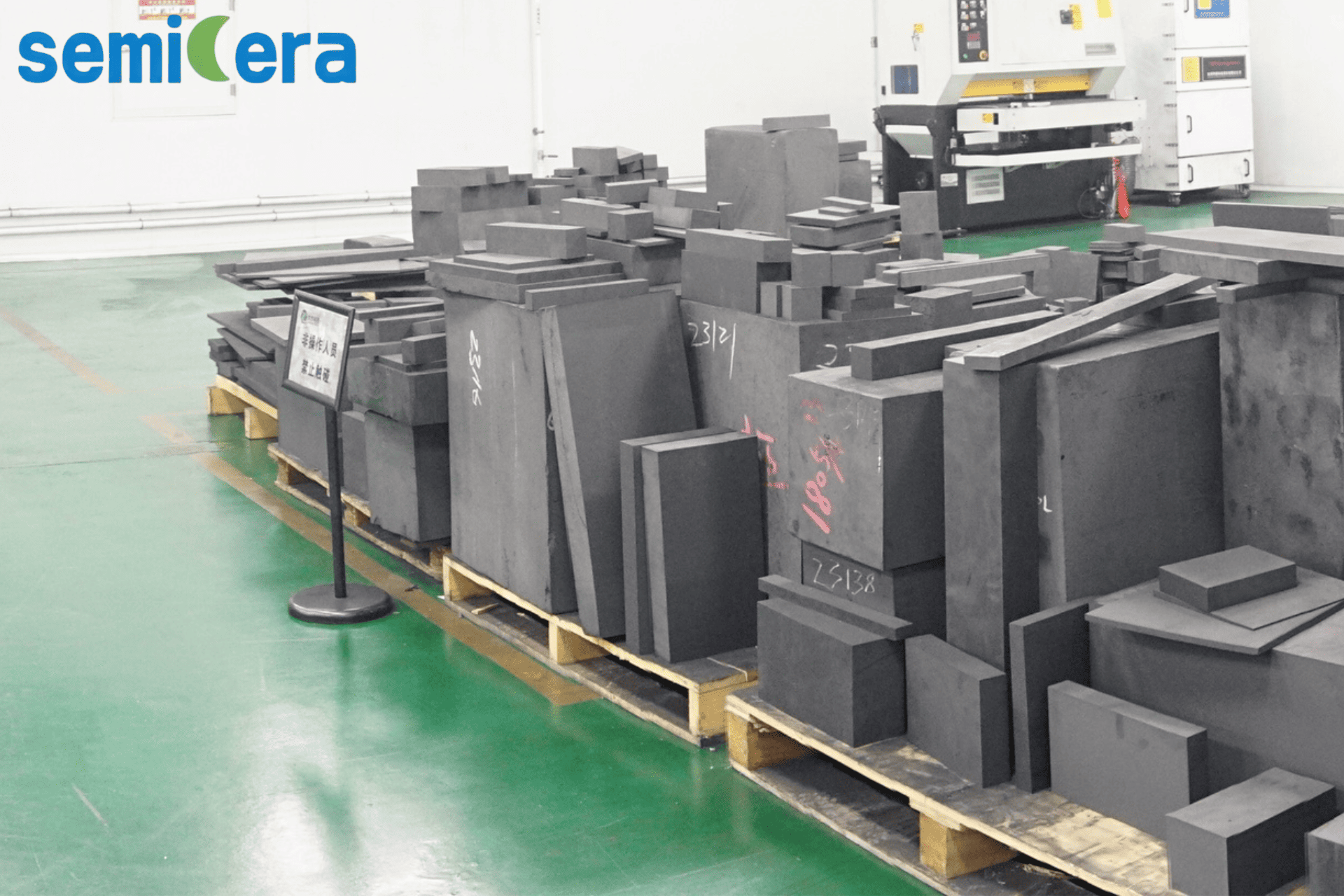
Technical Explanation: What Defines a Semiconductor-Grade Graphite Part
Semiconductor graphite parts are machined from high-purity isostatic graphite, a material with an ultra-fine grain structure that provides isotropy and mechanical strength. Semicera's published specifications for its semiconductor graphite grade list an ultra-fine grain size of 2–5 µm, ash content no more than 5 ppm, flexural strength of 45–65 MPa, and a coefficient of thermal expansion between 4.0 and 4.6 x 10⁻⁶ K-1.
Because bare graphite can generate particles and react with process gases under certain conditions, most graphite components are protected by a coating. The dominant method is chemical vapor deposition of silicon carbide (CVD SiC). CVD SiC produces a dense, hard layer that isolates the graphite substrate and reduces contamination. Semicera's CVD SiC-coated graphite carrier, for example, has a typical coating thickness of 100 µm with a range of 50–150 µm, 6N-grade purity with total ash below 5 ppm, and a coating hardness of 2500 Vickers (40 GPa).
For processes that operate at even higher temperatures or with more aggressive chemistries, TaC coatings are used. Semicera's CVD TaC-coated graphite carrier has a typical coating thickness of 25–45 µm, can operate up to 2200 °C, and offers resistance to ammonia and hydrogen etching.
The table below summarizes selected semiconductor graphite and related hot-zone products from Semicera's published range:
| Product | Relevant Process | Published Parameter |
|---|---|---|
| High-purity isostatic graphite | Wide range of semiconductor processes | Ash <= 5 ppm; grain size 2–5 µm |
| CVD SiC-coated graphite carrier | Semiconductor epitaxy / RTP | Coating 100 µm typical; purity 6N |
| CVD TaC-coated graphite carrier | Semiconductor epitaxy | Coating 25–45 µm; up to 2200 °C |
| CVD solid SiC parts | SiC crystal growth | Density >= 3.21 g/cm³; zero porosity |
| Etch ring | Plasma etch | Flatness <= 10 µm; metal purity < 5 ppb |
| SiC wafer boat | Oxidation / diffusion | Working temp to 1600 °C |
| CFC material | Silicon / SiC crystal growth | Tensile 90–140 MPa; ash <= 10 ppm |
Application / Use Cases
Semiconductor graphite parts appear across several high-temperature processes. The following use cases show how the material set maps to actual applications.
Epitaxy: SiC-coated graphite susceptors hold wafers during MOCVD epitaxial growth. The dense CVD SiC coating helps prevent outgassing and particle contamination, which is critical for reducing defects such as micropipes, pits, and carrots on the epi layer. Semicera's comparison data report a 10–15% improvement in epitaxial layer uniformity and less than 5% particle generation compared with OEM parts.
Silicon carbide crystal growth: High-purity CVD SiC particles are used as the source material for the physical vapor transport process, with total metals below 1 ppm. In the hot zone, CFC material provides structural components with 90–140 MPa tensile strength, while graphite felt provides insulation.
Etch: Etch rings made of pure CVD solid SiC or high-purity silicon are used in plasma etchers. Their plasma erosion rate is below 2 nm/min under high-density CF4/O2 plasma, and flatness tolerance is no more than 10 µm.
Oxidation and diffusion: Quartz furnace tubes, SiC wafer boats, and SiC paddles are used in batch furnaces. SiC wafer boats can operate up to 1600 °C with zero structural deformation and a service lifespan more than 5 times longer than traditional quartz boats, according to product specifications.
LED and compound semiconductors: Susceptors and other hot-zone components from Semicera are used in LED epitaxy and MOCVD systems, adding another application layer for graphite parts.
Market Trend Analysis
The global market for semiconductor materials reached $67.5 billion in revenue in 2024, up 3.8% from the previous year, according to SEMI. Of that total, wafer fabrication materials accounted for $42.9 billion. Within this landscape, the semiconductor graphite market was valued at approximately $1.62 billion in 2024, with a projected CAGR of 7.2% through 2032 (Verified Market Reports). A more focused segment, SiC-coated graphite susceptors, was estimated at around $350 million in 2024 (Valuates Reports). Quartz fabricated parts used in semiconductor manufacturing reached roughly $2.21 billion the same year, according to TECHCET.
These figures indicate that graphite and coating-related components form a meaningful segment of semiconductor process materials. They also explain why supplier selection has moved from ad-hoc purchasing to structured qualification.
According to QY Research, tantalum carbide (TaC) coatings are gaining traction for ultra-high-temperature processes such as SiC crystal growth, with the top three companies holding a 99% share in 2022. CVD SiC coating, meanwhile, remains the dominant protection method for graphite susceptors in MOCVD and epitaxial reactors. Concentration and standardization make it more important for buyers to choose a supplier that can match process requirements over the long term.
Comparison with Traditional Solutions
For years, conventional solid graphite was the standard hot-zone material for silicon crystal growth. Semicera's product comparison data show that its CFC material offers a service life 3 to 5 times longer under continuous high-temperature pulling, more than 20% higher structural load capacity, and up to 50% energy savings when compared with solid graphite.
Coating technology changes the performance envelope of graphite parts in epitaxy as well. Semicera's comparison of its SiC/TaC coated parts with OEM components reports a 10–15% improvement in epitaxial layer uniformity, particle generation below 5%, and a 30–40% lower cost, while maintaining the same service cycle and maintenance interval as the original parts.
There are boundaries. Coated graphite parts must be qualified for the specific process; a coating that works in one gas chemistry may not be appropriate in another. Differences in thermal expansion between coating and substrate can lead to cracking if the part is not screened under realistic conditions. Semicera addresses this with high-temperature simulation tests and strict thermal cycle screening to eliminate defective products. Even so, buyers should validate each part design in their own tool before committing to high-volume use.
Procurement Execution and Long-Term Partnership
For buyers moving into execution, the terms of supply can be as important as the material specifications. Semicera accepts a minimum order quantity of one unit, which allows qualification batches. Delivery terms include EXW, FCA, DAP, and DDP, covering a range of international trade arrangements. Pre-shipment testing is part of the acceptance process, and every unit is tested before shipment according to company policy.
Payment terms are staged: for new customers, payment is 100% T/T in advance; for long-term cooperation customers, the terms shift to 70% T/T in advance and 30% before shipment. This structure is designed to support continuous supply relationships. The manufacturer also provides remote support after-sales service for export markets including the EU, US, and Asia.
From a quality-assurance perspective, the main risk with coated graphite is cracking or delamination. Semicera uses high-temperature simulation tests and strict thermal cycle screening to eliminate defective products, supported by internal process control actions. For buyers, this means the supplier's testing procedure should be auditable and aligned with the process conditions in which the part will operate.
Future Outlook
The long-term direction for semiconductor graphite parts is toward more integrated supply relationships. As device architectures become more complex and third-generation semiconductors such as silicon carbide gain ground, hot-zone materials must withstand higher temperatures, more corrosive chemistries, and tighter purity budgets. Suppliers will need to combine graphite machining, coating, and testing under one quality system while maintaining sufficient capacity for volume orders.
Semicera's production base supports that model. The company reports dual research centers, three large-scale production bases, and more than 50 advanced production lines. For buyers, the question has shifted from "which part is cheapest?" to "which supplier can maintain specification consistency over the life of a program?" The answer affects not only cost per part, but tool uptime, yield, and the speed with which new parts can be qualified.
Frequently Asked Questions
What are semiconductor graphite parts?
Semiconductor graphite parts are machined components made from high-purity isostatic graphite, used in high-temperature semiconductor processes such as epitaxy, CVD, oxidation, diffusion, and crystal growth. They include susceptors, boats, tubes, heaters, and other hot-zone parts. Semicera's semiconductor graphite grade has an ash content of no more than 5 ppm and an ultra-fine grain size of 2–5 µm.
Why are SiC-coated graphite susceptors used in epitaxy?
CVD SiC coating creates a dense, high-purity layer that reduces particle generation and outgassing from the graphite substrate. Semicera's CVD SiC-coated graphite carrier has a typical coating thickness of 100 µm and 6N purity, and comparison data indicate improved epitaxial layer uniformity with less than 5% particle generation versus OEM parts.
What purity level is required for semiconductor graphite parts?
For advanced semiconductor processes, the graphite substrate must have very low metal content. Semicera's semiconductor graphite grade specifies an ash content below 5 ppm, while the CVD SiC coating is specified at 6N purity (total ash <= 5 ppm). Ultra-pure grades with lower contamination are used for the most sensitive applications.
Can Semicera support long-term volume requirements?
Semicera reports a monthly production capacity of more than 10,000 units and an annual output of 120,000 units. The company also states that quality control follows 100% test standards, with every unit tested before shipment. For long-term cooperation, payment terms are available on a 70% T/T advance basis with the balance before shipment.
What export and support options are available?
Semicera exports to the EU, US, and Asia. The company provides remote support after-sales service for these markets. Delivery terms include EXW, FCA, DAP, and DDP, with a minimum order quantity of one unit.
What testing is done before shipment?
According to company policy, each unit is tested before shipment. For coated graphite parts, high-temperature simulation tests and thermal cycle screening are used to identify coating or material cracking risks. This is supported by internal process control and batch-specific quality actions.
For a broader overview of Semicera's semiconductor process materials and product parameters, the company's catalog is available for reference: Semicera Catalog.