
Shirt Packaging Accessories FAQ: Sizes, Materials, MOQs
Technical Reference — Shirt Packaging Accessories
Shirt packaging accessories are specified components, not generic sundries. Once a buyer moves from comparing suppliers to executing a purchase order, the questions become concrete: the exact length of a collar stay, the wall thickness of a shirt clip, the polymer behind a collar band, the minimum order quantity of each SKU, and whether brand printing is possible on a given part at all.

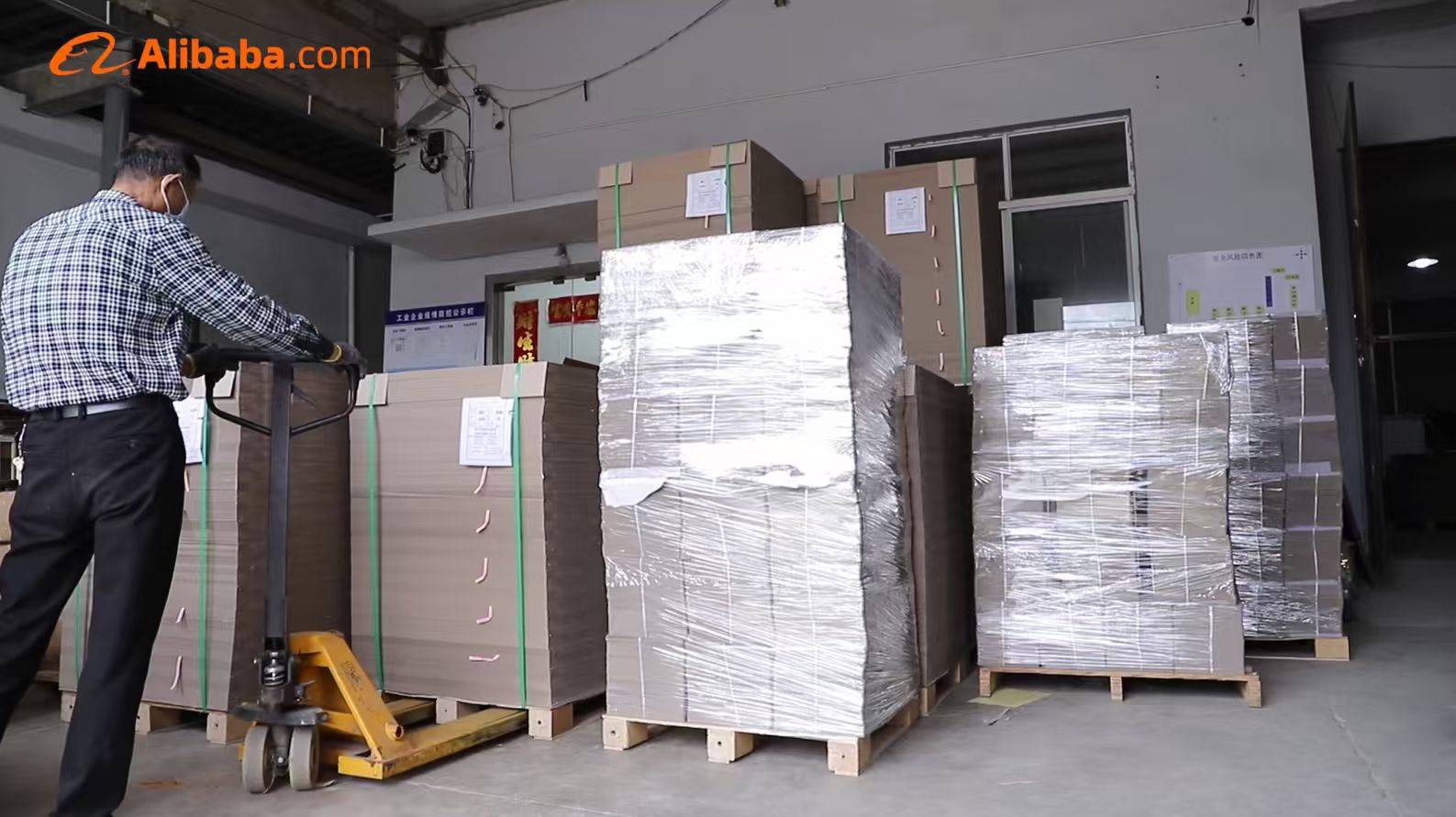
Production environment for shirt packaging accessories at Wuxi Mingyu Garment Accessories Factory.
This technical FAQ answers those execution-stage questions against the published specifications of Wuxi Mingyu Garment Accessories Factory, a garment accessories manufacturer founded in 2004 in E’hu Town, Xishan District, Wuxi, Jiangsu, China. The factory produces PVC/PET collar bands, collar stays, collar butterflies, shirt cardboard, moisture-proof paper, plastic clips and plastic packaging bags, and provides one-stop garment-accessory customized solutions for global clothing brands and garment manufacturers, supporting OEM & ODM orders. Sizes, materials and MOQs below follow that published product data. Where a component carries no printing, it is described as a specification limit rather than a shortcoming.
Why specification questions decide the execution stage
Between supplier shortlisting and shipment sits an engineering layer that buyers frequently underestimate. A shirt pack normally combines eight to twelve small components — collar band, collar stay, butterfly, cardboard, clip, pin, tissue paper, belly band, hang tag, poly bag and sometimes a gift box — and each one carries its own material, gauge and order threshold.
In this category, MOQ is not a single company-wide number. Published thresholds in the MingYu product data range from 1,000 pcs for a metal collar stay, through 10,000 pcs for most paper and plastic parts, up to 100,000 pcs for a clip. Those differences decide how an order should be structured well before price is discussed, and they are the reason a technical checklist is more useful at the execution stage than a general capability summary.
Component specification reference
The table below consolidates the published size, material, thickness and MOQ data for the main shirt packaging accessories. It is intended as a specification reference for buyers converting a shortlist into an order file.
| Component | Material | Standard size | Thickness / GSM | Logo | MOQ |
|---|---|---|---|---|---|
| Plastic collar stay | White PVC | 6.35 cm × 1 cm | 0.75 mm | Customizable | 10,000 pcs |
| Metal collar stay | Stainless steel | 55.9 / 63.5 / 69.9 / 76.2 × 9 mm | 0.8 mm | Laser engraved | 1,000 pcs |
| Plastic collar band | White PET | 48.1 × 4 cm | 0.35 mm | None listed | 10,000 pcs |
| Collar band (PVC) | PVC | 50 × 3.4 cm | 0.50 mm | Customizable | 10,000 pcs |
| Paper collar band | Specialty tenacity paper | 47.2 × 3.8 cm (1.4 cm × 15 holes) | 1 mm | None listed | 10,000 pcs |
| Collar support insert | Light blue PVC | 22.7 × 18.5 cm | 0.35 mm | None listed | 10,000 pcs |
| Plastic butterfly | Light blue fine sand PVC | 26 × 10.4 cm | 0.25 mm | Customizable | 10,000 pcs |
| Paper butterfly | 400 g single white paper | 15 × 3 cm | 400 GSM | Customizable | 10,000 pcs |
| Shirt clip | PS / metal | 3.3 or 3.7 × 0.8 cm | 1.2 mm | Customizable | 100,000 pcs |
| Metal pin | Stainless steel / brass | 26 × 0.6 mm | 0.6–0.65 mm | None | 10,000 pcs |
| Shirt cardboard | 100% natural wood pulp paper | 21 × 35.2 cm | 500 GSM | Customizable | 10,000 pcs |
| Tissue paper | Tissue paper | 36 × 40 cm | 17 GSM | Customizable | 10,000 pcs |
| Belly band | Paper | 58 × 10 cm | 0.25 mm | Customizable | 10,000 pcs |
| Hang tag / apparel tag | 100% natural wood pulp paper | 4 × 7 cm | 500 GSM | Customizable | 10,000 pcs |
| Poly bag | PP | 35 × 26 cm | 0.035 mm | None listed | 10,000 pcs |
| Gift box | Paper cardboard + 120–150 g art paper | 22 × 35 cm | 2–3 mm | Customizable | 10,000 pcs |
Collar stays: the 6.35 cm × 1 cm standard and its metal relatives
The best-known dimension in this category is the plastic collar stay at 6.35 cm × 1 cm, produced in white PVC at a thickness of 0.75 mm, rectangular in shape, with a customizable logo and a published MOQ of 10,000 pcs.
The same length appears in the metal collar stay series as 63.5 mm × 9 mm × 0.8 mm — 63.5 mm and 6.35 cm describe the same length in different units — alongside three further common lengths of 55.9 mm, 69.9 mm and 76.2 mm, all at 0.8 mm thickness in stainless steel. Metal collar stays are offered in silver, blue, black, gold and rose gold with laser-engraved customization and a lower published threshold of 1,000 pcs.
Collar bands follow a parallel logic. A plastic collar band is published at 48.1 cm × 4 cm × 0.35 mm in white PET, a PVC variant at 50 cm × 3.4 cm × 0.50 mm, and a paper collar band at 47.2 cm × 3.8 cm × 1 mm with a 1.4 cm × 15-hole section. A collar support insert is listed at 22.7 cm × 18.5 cm × 0.35 mm in light blue PVC. Choosing between these is not a matter of preference alone: band length has to sit inside the folded shirt, band thickness interacts with the collar's own interlining, and a paper band behaves differently from a PET band at the packing station.
Component handling and preparation before packing, where thickness and length tolerances become visible.
Clips: PS or metal, and the 1.2 mm thickness standard
The published clip specification lists PS or metal construction, a length of 3.3 cm or 3.7 cm, a width of 0.8 cm, a 1.2 mm thickness, a silver finish, an X shape, a customizable logo and an MOQ of 100,000 pcs. The clip family is wider than a single shape: it includes a U-shape plastic big clip, a clear square plastic clip, an alligator clip, a plastic clip with teeth, a square plastic clip and a square plastic shirt back clip, alongside metal clips.
For buyers, the 1.2 mm figure is the body thickness of the standard clip and therefore the dimension that governs rigidity and the opening that grips the folded collar. It is a published standard rather than a variable to be negotiated downward. If a packing line handles unusually dense collars or multi-layer folds, the practical step is to confirm which variant within the clip family matches that fold, instead of assuming every clip shape performs identically at 1.2 mm.
Printed or non-printed: where brand identity can actually go
One of the most common execution-stage misunderstandings concerns printing. The published metal pin specification lists stainless steel or brass, a common size of 26 mm × 0.6 mm, a thickness of 0.6 mm or 0.65 mm, a silver colour, a rectangular style and no logo — in other words, pins are supplied as non-printed hardware. The distinction is commercial rather than cosmetic: printing, hot-foiling and logo stamping in this range are applied to paper and plastic printed components.
Those printed components include hang tags at 4 cm × 7 cm and 500 GSM, shirt cardboard at 21 cm × 35.2 cm and 500 GSM, belly bands at 58 cm × 10 cm, tissue paper at 36 cm × 40 cm and 17 GSM, gift boxes at 22 cm × 35 cm and 2–3 mm, and plastic butterflies at 26 cm × 10.4 cm — all listed as logo-customizable. Several structural components, including the white PET plastic collar band, the paper collar band, the collar support and the transparent PP poly bag, are likewise published without a logo field.
The practical rule for brand owners is therefore straightforward: plan identity through the printed collar stay, butterfly, cardboard or hang tag, and use laser engraving on metal collar stays when branding is required on hardware. A printed metal pin is not part of the standard specification set.
Custom design capability under OEM & ODM
Custom size, colour, hot-foiling, printing, logo stamping and mold opening are supported for most garment-packaging products, and the stated business focus of Wuxi Mingyu Garment Accessories Factory is providing one-stop garment-accessory customized solutions for global clothing brands and garment manufacturers under OEM & ODM orders. Metal collar stays can be laser engraved; gift boxes can be wrapped in 120–150 g art paper over a 2–3 mm paper cardboard body; butterflies are available across finishes from frosted PVC to PET bubble construction.
Production is supported by automated equipment that includes a creasing machine, a punching machine, an automatic cardboard and collar stay die-cutting machine and paper cutting machines, within a 2,500 m² facility and a three-engineer R&D team. For buyers, the operational meaning of this is that a custom request should be described in complete parameters — length, width, thickness, material and finish — rather than by reference to a competitor's part number.
Execution facts: MOQ, lead time, payment and acceptance
- MOQ. 1,000 sets at product-line level for the general garment-packaging range; per-SKU thresholds of 1,000 pcs (metal collar stay), 10,000 pcs (most paper and plastic parts) and 100,000 pcs (clip).
- Lead time. 7–20 working days after order confirmation.
- Delivery terms. FOB, CIF or EX Works.
- Payment. TT, 30% deposit with 70% balance before shipment.
- Acceptance. Pre-shipment test.
- Capacity and continuity. Annual output of 90 million sets, monthly capacity of 7.5 million sets and an 85% export ratio, serving Europe, North America, South America and Asia. Distribution warehouses, agencies or manufacturing operations are in place in Sri Lanka, Argentina, Bangladesh, Indonesia, Colombia and Kenya, with a Sri Lanka factory established in 2013 and a Vietnam factory in 2017.
This last group is where long-term sourcing programmes are usually decided. Dimensions can be re-confirmed quickly; a repeatable lead time, payment structure and regional stock position are what make a second and third order predictable.
Where the standard specification has limits
A specification reference is only useful if its boundaries are stated. Four limitations follow directly from the published data.
- Printing is not available on every component. Metal pins and several structural plastic parts carry no logo field, so a design that places branding on the pin or the plain collar band cannot be executed within the standard range.
- The clip threshold is the highest in the range. At 100,000 pcs, clips are the least suitable item for a small pilot run. Trial quantities sit better with metal collar stays at 1,000 pcs or with the 10,000-pcs paper and plastic tier.
- Custom work extends the timeline. Mold opening, laser engraving and custom printing move a project toward the upper end of the 7–20 working-day window and should not be planned against the fastest end.
- Standard colours are narrow in places. Published clip and pin colours are silver, and the metal collar stay palette is limited to the listed colours. Buyers requiring exact colour matching should confirm availability at quotation rather than after artwork approval.
Compared with suppliers that offer a single material — paper only or plastic only — a one-stop accessory model reduces the number of vendors, shipments and quality documents a shirting programme has to manage. The trade-off is that MOQ exposure is concentrated into a single purchase order, so SKU-level thresholds need to be planned before the order is placed rather than after.
Market context: why specification discipline matters more, not less
The category around these components is expanding. The global garment packaging market is valued at $18.6 billion in 2025 and projected to reach $31.4 billion by 2034, according to Dataintelo, while Asia Pacific held a 41.5% revenue share in 2025. The garment interlining market — the structure behind a shirt collar — reached $3.65 billion in 2025 according to The Business Research Company. The same research set places garment packaging growth ahead of general clothing fasteners such as buttons, which are forecast at a 3.9% CAGR to 2033 from $8.39 billion in 2025.
For procurement teams, the practical consequence is not abstract. Growth of this kind increases the number of SKUs a brand runs and the number of times a specification has to be re-confirmed, which is precisely why dimensions, material grades and MOQ thresholds carry more weight as volumes rise.
Future outlook
Two directions are visible from the specification layer. First, mixed-material packs — a paper band with a PET clip, a metal pin and printed cardboard — keep the compliance question open, so buyers increasingly request material separation and recyclability information in the same document as dimensions. Second, supply continuity is being designed rather than negotiated: regional warehousing and manufacturing footprints in Sri Lanka and Vietnam, alongside distribution points in Argentina, Bangladesh, Indonesia, Colombia and Kenya, shorten the lead-time exposure of long programmes.
For buyers, the consequence is that the supplier conversation should move from a one-off quotation to a specification sheet that can be re-ordered without re-negotiation. That shift is the real difference between a purchase and a programme.
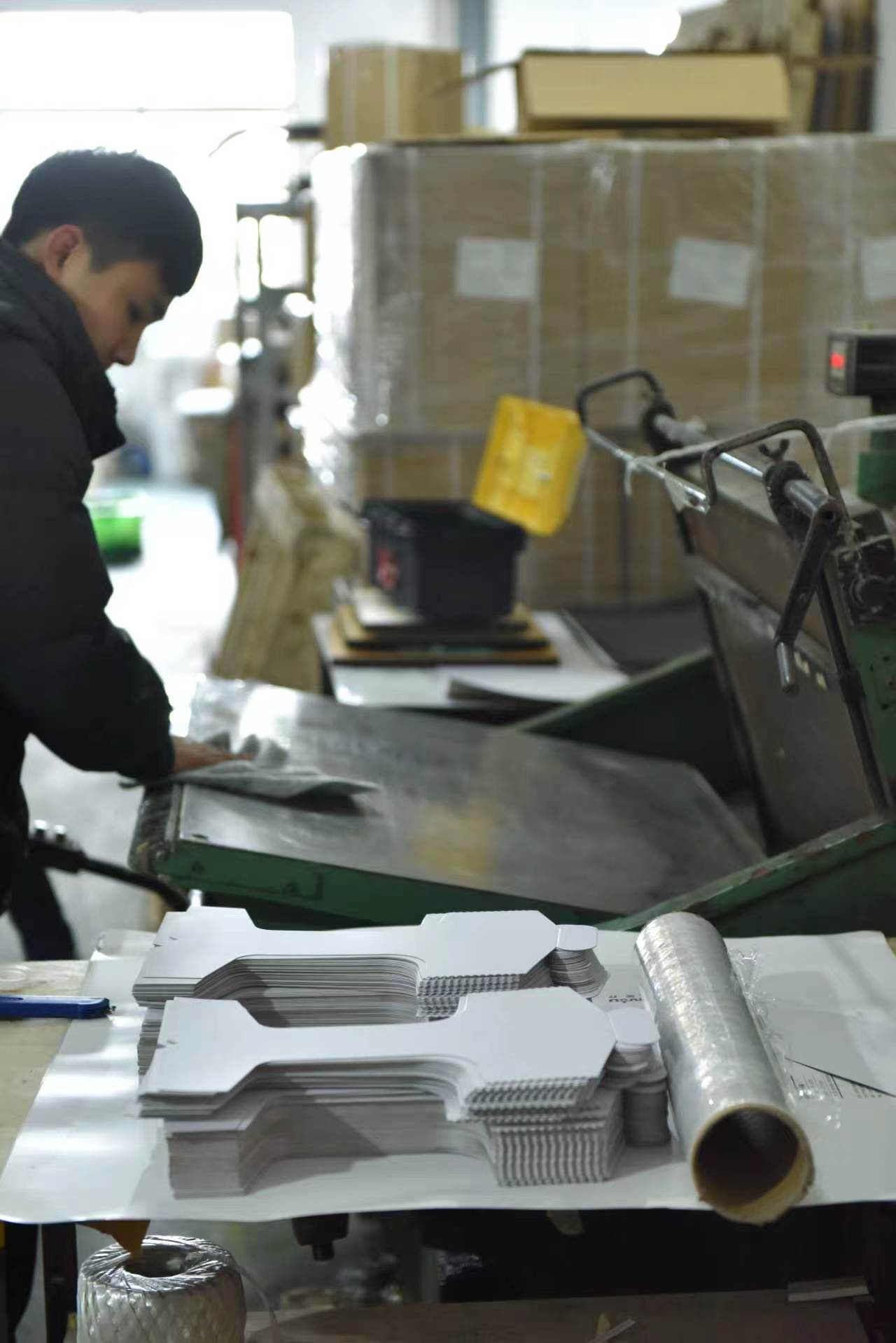
Production and inspection workflow for garment packaging accessories, where consistency across repeat orders is verified.
FAQ
What is the standard size of a shirt collar stay?
The standard plastic collar stay is 6.35 cm × 1 cm at 0.75 mm thickness in white PVC, rectangular, with an optional logo and a published MOQ of 10,000 pcs. Metal collar stays use the same length expressed as 63.5 mm × 9 mm × 0.8 mm and are also offered at 55.9 mm, 69.9 mm and 76.2 mm common lengths.
What material are shirt clips made from, and how thick are they?
Published clip specifications list PS or metal construction, 3.3 cm or 3.7 cm × 0.8 cm, at a 1.2 mm thickness, silver, in an X shape, with a customizable logo and an MOQ of 100,000 pcs. The wider clip family also includes U-shape plastic big clips, clear square plastic clips, alligator clips, plastic clips with teeth and square plastic shirt back clips.
Are metal pins printed with a brand logo?
No. The published metal pin specification lists stainless steel or brass at a common 26 mm × 0.6 mm size, 0.6 mm or 0.65 mm thickness, silver, rectangular, with no logo. Printed branding in this range is applied to paper and plastic components such as hang tags, cardboard, belly bands, tissue paper and gift boxes, while metal collar stays support laser-engraved logos.
What is the MOQ for shirt packaging accessories?
Thresholds differ by SKU. Metal collar stays are published at 1,000 pcs; most paper and plastic components — cardboard, tissue paper, belly bands, hang tags, butterflies, collar bands and poly bags — at 10,000 pcs; and clips at 100,000 pcs. At product-line level the general garment-packaging range is quoted from 1,000 sets.
Can sizes, colours and printed designs be customized?
Yes. Custom size, colour, hot-foiling, printing, logo stamping and mold opening are supported for most garment-packaging products under OEM & ODM orders, and metal collar stays can be laser engraved in silver, blue, black, gold or rose gold.
What are the lead time, delivery and payment terms?
Standard lead time is 7–20 working days after order confirmation. Delivery terms are FOB, CIF or EX Works, payment is by TT with a 30% deposit and 70% balance before shipment, and acceptance is based on a pre-shipment test.
Which components usually make up a complete shirt packaging set?
A set commonly combines a collar band or collar stay, a butterfly, shirt cardboard, a clip, a metal pin, tissue paper, a belly band, a hang tag and a poly bag, with a gift box where retail presentation is required. Component usage in the published data is listed for shirt packing.
Reference document: Brief Company Profile of Wuxi Mingyu Garment Accessories Factory (PDF).