
Shirt Packaging Accessories: Scenario Fit by Packing Station
Industry Reference · Shirt Packaging Accessories
Packing operations are organised by station. Accessory catalogues are organised by product type. That mismatch is the reason two buyers can order the same nominal item and end up with two different packing outcomes. This reference maps the main accessory families used in shirt packing to the operations they serve, and sets out the specification details, order thresholds and certificate boundaries that determine whether a component is a practical fit for a given program.
Why Scenario Fit Is the Right Evaluation Lens
A shirt packing line normally consists of a small number of sequential operations: shaping the collar, folding and securing the garment, protecting it, attaching brand and care information, and completing the outer pack. Each operation creates a different physical requirement. A component that performs well in one operation can be a poor fit in another, even when both components carry a similar generic name.
In general apparel packing practice, the problems that surface are interface problems rather than material problems. A collar component may hold shape at the folding table and still allow the collar to distort once packed shirts are compressed in a carton or shipping bag. A securing component may grip folded layers firmly and still be unsuitable where a smooth, unmarked presentation surface is required. A tag may be perfectly legible in a studio photograph and still sit where a retail team cannot read it on a fixture. None of these outcomes can be predicted from a product name, because they depend on the interaction between the component and the station.
For buyers at the evaluation stage, scenario fit also resolves a comparison problem. When two suppliers quote for “a collar stay”, the quotes are not directly comparable, because the underlying specifications may differ in material, length, thickness and order quantity. When the same suppliers quote against a defined scenario — a folded shirt prepared for e-commerce, for example — the comparison becomes measurable: does the proposed component match the fold height, the collar size and the required order volume?
The opportunity is specification discipline. Treating the packing station as the unit of analysis, rather than the accessory, produces a shortlist that is easier to validate with a physical sample and cheaper to adjust before a bulk commitment.
The Five Stations Where Shirt Packaging Accessories Are Used
Shirt packing accessories can be grouped by the station that consumes them. The table below summarises the standard sequence and the accessory families that typically enter each step.
| Station | Typical operation | Accessory families commonly used |
|---|---|---|
| 1. Collar shaping | Collar positioned, reinforced and held in shape before folding | Collar band, collar stay, collar butterfly, collar support |
| 2. Folding and securing | Body and sleeves folded; folded layers restrained for transport | Shirt clip, metal pin, cardboard |
| 3. Protection and bagging | Garment enclosed against moisture, dust and handling | Plastic bag, tissue paper, cardboard |
| 4. Branding and retail presentation | Brand, size and care information attached; pack presented | Apparel tag, washing label, belly band, tissue paper |
| 5. Outer pack and gifting | Final containment and presentation for shipment or gifting | Exquisite gift box, cardboard |
Two points matter when reading this map. First, some components cross stations: cardboard appears at both the securing and the protection stage, because a rigid board serves as a fold former and as a physical barrier. Second, the map is a planning tool, not a prescription. A program that ships shirt packs through long-distance distribution will weight stations 2 and 3 more heavily, while a program built around counter display will weight stations 1, 4 and 5.
Collar Shaping: Four Component Families and Their Specifications
Collar shaping is usually the first station and the one with the strongest effect on perceived quality, because the collar is the surface a buyer sees first when a pack is opened. Four component families do this work, and within the MingYu Garment Accessories range each family is offered in more than one material format.
Collar bands
Collar bands hold the collar in a fixed shape before the shirt is folded. The range includes a plastic collar band in white PET at 48.1 cm × 4 cm and 0.35 mm thickness with no logo and a 10,000-piece MOQ; a collar band family available in PVC and paper at 50 cm × 3.4 cm and 0.50 mm thickness, with variants listed as plastic collar band, paper collar band, curve collar band and clergy collar band; and a paper collar band in specialty tenacity paper at 47.2 cm × 3.8 cm with a 1.4 cm × 15 hole pattern and 1 mm thickness, white, at a 10,000-piece MOQ.
The formats are not automatically interchangeable. A white PET band at 0.35 mm and a PVC band at 0.50 mm occupy different tolerances inside a folded collar, so the band should be matched to the collar construction and to the fold standard the packing line already uses. Paper formats are relevant where the packing program applies paper-based material rules.
Collar stays
Collar stays add rigidity inside the collar. The plastic stay is specified as white PVC, 6.35 cm × 1 cm × 0.75 mm, white, rectangular, with customizable logo and a 10,000-piece MOQ. The metal collar stay is specified in stainless steel across four common lengths — 55.9 mm, 63.5 mm, 69.9 mm and 76.2 mm — with a 9 mm width and 0.8 mm common thickness, in silver, blue, black, gold or rose gold, with laser-engraved logo customization and a 1,000-piece MOQ.
The four length options matter at the packing station because they allow the stay to be selected for the collar size in production instead of being trimmed or forced on the line. The 1,000-piece threshold also makes the metal format the most accessible entry point in the collar-stay family for trial runs.
Butterflies
Collar butterflies provide broader coverage above or around the collar area. The plastic butterfly is specified in light blue fine sand PVC, 26 cm × 10.4 cm, 0.25 mm, in a butterfly shape with customizable logo and a 10,000-piece MOQ. The paper butterfly is specified in 400 g single white paper, 15 cm × 3 cm, 400 GSM, white, butterfly shape, customizable logo, 10,000-piece MOQ. The paper format is also listed for garment manufacturing and shirt and formal-wear production use.
Collar support
Collar support is the shaping component used where the collar and upper body need a formed support that survives the packing and shipping cycle. It is specified in light blue PVC at 22.7 cm × 18.5 cm, 0.35 mm, in a cuboid shape with no logo and a 10,000-piece MOQ.
| Collar-shaping component | Material | Size | Thickness | MOQ |
|---|---|---|---|---|
| Plastic collar band | White PET | 48.1 × 4 cm | 0.35 mm | 10,000 pcs |
| Collar band (PVC / paper family) | PVC, paper | 50 × 3.4 cm | 0.50 mm | — |
| Paper collar band | Specialty tenacity paper | 47.2 × 3.8 cm (1.4 cm × 15 holes) | 1 mm | 10,000 pcs |
| Collar stay (plastic) | White PVC | 6.35 × 1 cm | 0.75 mm | 10,000 pcs |
| Metal collar stay | Stainless steel | 55.9 / 63.5 / 69.9 / 76.2 mm × 9 mm | 0.8 mm | 1,000 pcs |
| Paper butterfly | 400 g single white paper | 15 × 3 cm | 400 GSM | 10,000 pcs |
| Plastic butterfly | Light blue fine sand PVC | 26 × 10.4 cm | 0.25 mm | 10,000 pcs |
| Collar support | Light blue PVC | 22.7 × 18.5 cm | 0.35 mm | 10,000 pcs |
Folding and Securing: Clips and Metal Pins
The second station restrains the folded garment. Two components dominate this step in the MingYu range, and they make different demands on the rest of the pack.
The shirt clip is specified as PS/metal material, X shape, silver colour, 3.3 cm or 3.7 cm in length, 0.8 cm in width and 1.2 mm in thickness, with customizable logo and a 100,000-piece MOQ. Listed type variants include metal clip, plastic clip, U shape plastic big clip, clear square plastic clip, alligator clip, plastic clip with teeth, square plastic clip and square plastic shirt back clip. The X shape is the defining geometric feature: it concentrates grip across the folded layers of the shirt back and sleeves rather than along a single line.
The metal pin is a different type of securing component. It is specified in stainless steel or brass, at a common size of 26 × 0.6 mm, with 0.6 mm or 0.65 mm thickness, silver colour, rectangular head style, no logo and a 10,000-piece MOQ. Where the clip is a visible securing element, the pin is intended for low-profile retention.
The choice between them has downstream consequences. A pin introduces a piercing point into the fabric and therefore needs to be placed where that is acceptable for the shirt and for the retail presentation. A clip introduces a body of 1.2 mm thickness and 0.8 cm width, which consumes cavity space inside the bag or box. Buyers evaluating a folding station should therefore confirm two things beyond the component specification: the folded width of the shirt against the 3.3 cm or 3.7 cm clip length, and the internal cavity of the chosen packaging against the clip body.
Finishing Components for Retail Presentation
The finishing stations convert a secured shirt into a presentable pack. The MingYu range covers the components most commonly specified at this stage.
- Belly band — paper, 58 × 10 cm, 0.25 mm, colourful, customizable logo, 10,000-piece MOQ. The published usage reference for this specification is pajama packing, so a shirt program should confirm format fit against its own folded dimensions.
- Tissue paper — tissue paper, 36 × 40 cm, 17 GSM, white, customizable logo, 10,000-piece MOQ.
- Cardboard — 100% natural wood pulp paper, 21 × 35.2 cm, 500 GSM, white, customizable logo, 10,000-piece MOQ. Used both as a fold former and as a physical barrier.
- Apparel tag — 100% natural wood pulp paper, 4 × 7 cm, 500 GSM, black, customizable logo, 10,000-piece MOQ.
- Washing label — polyester or nylon taffeta.
- Exquisite gift box — paper cardboard wrapped with 120 g to 150 g art paper, 22 × 35 cm, 2 mm to 3 mm, custom colour, customizable logo, 10,000-piece MOQ.
- Plastic bag — PP, 35 × 26 cm, single 0.035 mm, transparent, no logo, 10,000-piece MOQ.
Two specification details are worth flagging at evaluation stage. The plastic bag and the metal pin are both listed without logo options, so brand mark work has to be routed to the apparel tag, belly band, tissue paper, cardboard, gift box, collar band or clip instead. And the cardboard at 21 × 35.2 cm and the plastic bag at 35 × 26 cm are fixed dimensions: a program whose fold height exceeds either dimension needs a different specification rather than a workaround on the line.
A Scenario Fit Map for Common Shirt Packing Programs
The following map translates the specifications above into five recognisable packing scenarios. It is intended as a comparison framework, not as a fixed bill of materials.
| Packing scenario | Typical component set | What to validate before ordering |
|---|---|---|
| Standard folded shirt for wholesale or e-commerce | Plastic collar band (white PET) or paper collar band; plastic collar stay; clip; cardboard; plastic bag | Fold height against the 21 × 35.2 cm cardboard and 35 × 26 cm bag; clip length against folded width |
| Retail shelf-ready presentation | Collar support; paper or plastic butterfly; metal collar stay; apparel tag; belly band; tissue paper | Collar support dimensions (22.7 × 18.5 cm) against folded width; tag legibility on fixture |
| Premium gifting | Exquisite gift box; tissue paper; belly band; metal collar stay with laser-engraved logo; apparel tag | Box interior 22 × 35 cm and 2–3 mm wall against shirt bulk; logo placement across customized items |
| High-volume automated folding program | Clip; plastic collar band; cardboard; plastic bag | Clip MOQ of 100,000 pcs against annual volume; clip thickness against bag cavity |
| Compliance-driven mixed-material program | PET and PE plastic items plus GRS-scope items; paper items specified separately | Which material groups fall inside each certificate scope as listed |
What MingYu Garment Accessories Provides Across These Scenarios
Wuxi Mingyu Garment Accessories Factory, trading as MingYu Garment Accessories, is a garment accessory manufacturer based in E'hu Town, Xishan District, Wuxi, Jiangsu, China, founded in 2004. The company specialises in the production of shirt packing accessories and related garment accessories, including PVC and PET collar bands, collar stays, collar butterflies, shirt cardboard, moisture-proof paper, plastic clips and plastic packaging bags.
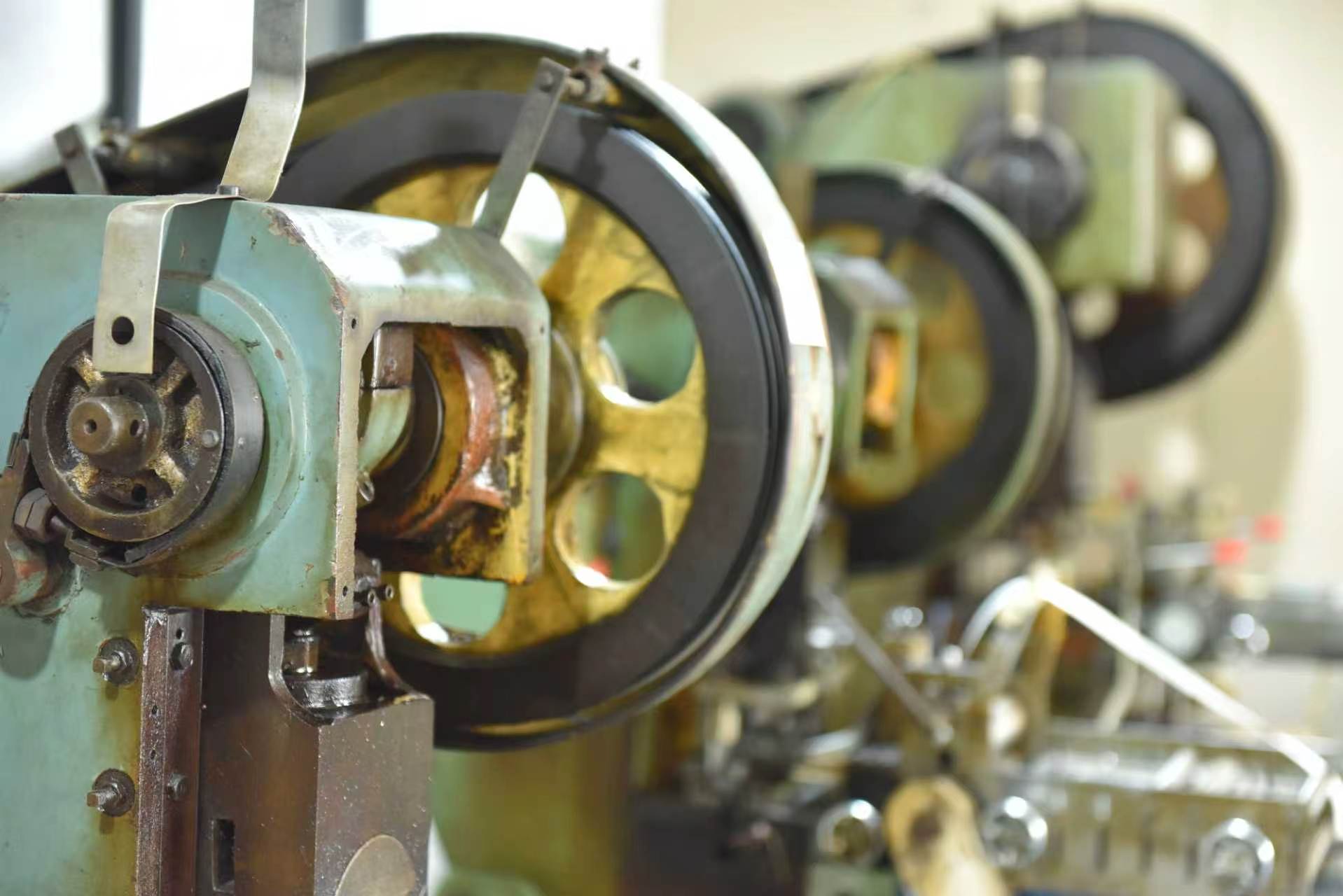
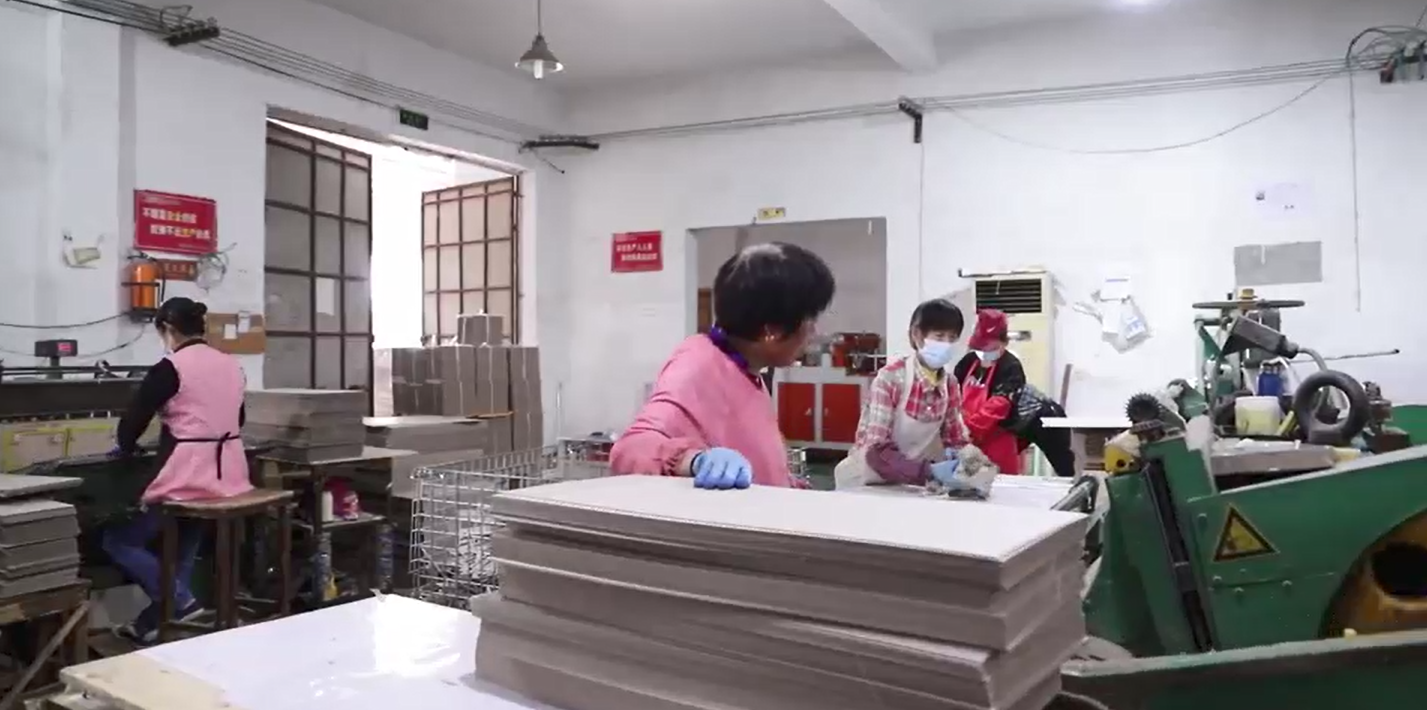
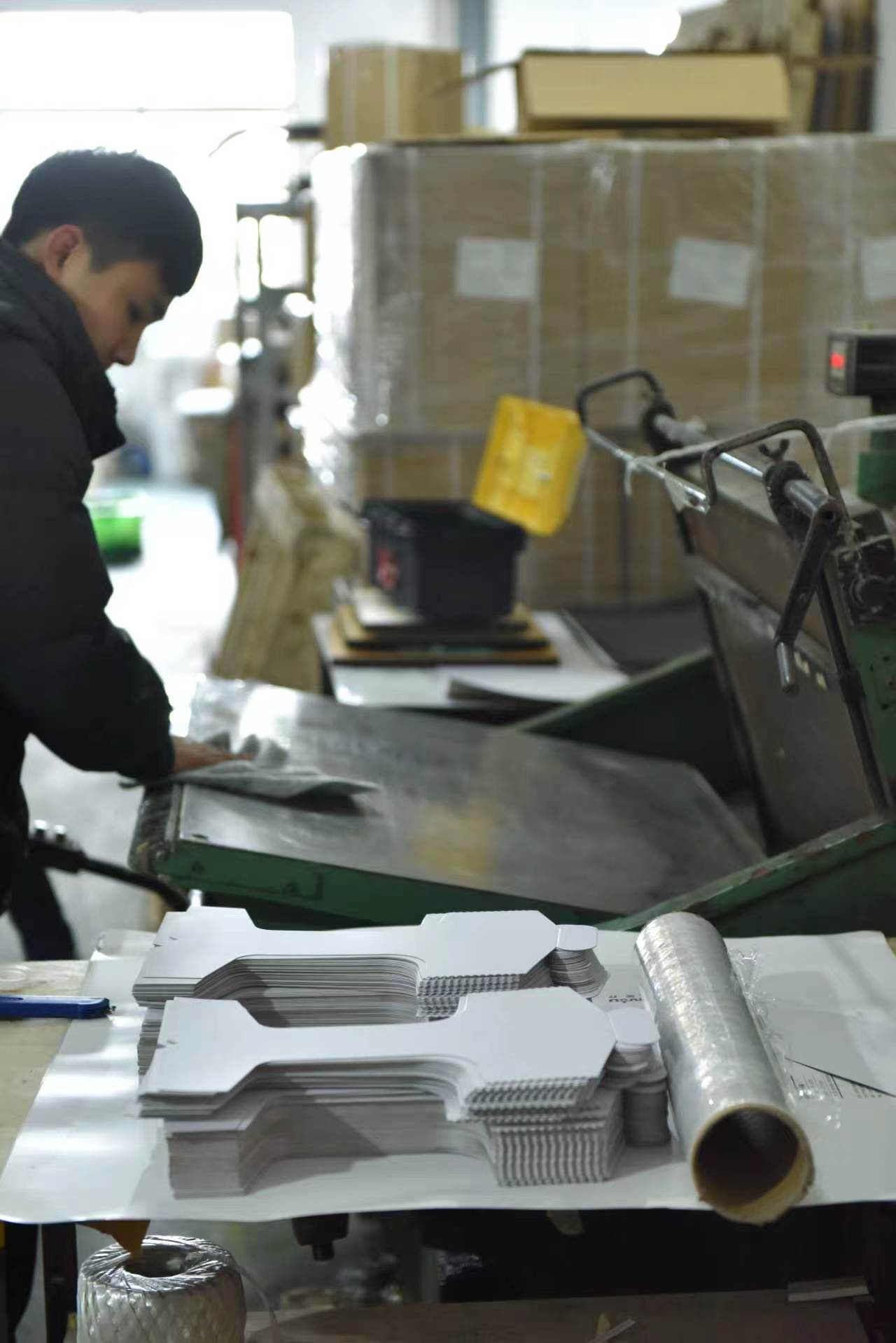
The operating profile is relevant to scenario coverage. The facility covers 2,500 m² and employs 25 people, including an R&D team of three engineers. Annual output is stated at 90 million sets, with a monthly production capacity of 7.5 million sets and an export ratio of 85%, serving Europe, North America, South America and Asia. The company operates punching machines and automatic cardboard and collar stay die-cutting equipment, which support continuous output of the flat components used at the collar-shaping and protection stations.
For buyers whose scenarios require configuration rather than catalogue items, the company supports OEM and ODM orders with customization of size, colour, style, printing and foiling, mold opening and logo application by stamping or printing. Order-level parameters are stated at a minimum order quantity of 1,000 sets, a standard lead time of 7 to 20 days, and 100% testing. After-sales support covers customer service and technical support. The company holds independent export qualification and operates overseas production in Sri Lanka since 2013 and Vietnam since 2017, alongside distribution warehouses, agencies or manufacturing representation in Sri Lanka, Argentina, Bangladesh, Indonesia, Colombia and Kenya. An OA system was introduced in 2018.
Two certificates are relevant to scenario selection. OEKO-TEX STANDARD 100 certificate SH001 275178, issued by TESTEX and valid to 15 January 2027, lists a scope covering plastic accessories made of PET and PE film — including collar bands, butterflies, collar stays and poly bags — in transparent, partly mechanically coined form, under OEKO-TEX STANDARD 100 and EN ISO 17050-1. GRS certificate SGC-GRC09119-GRS-2026-07, issued by SGS and valid to 30 July 2027, covers trading, warehousing and distribution of final products, and manufacturing, under Global Recycled Standard V4.0, Content Claim Standard V3.1 and the Textile Exchange Standards Claims Policy V1.3.
On the cooperation side, the company records a five-year working relationship with brand owners, garment manufacturers, distributors and exporters across multiple regions, in applications covering garment packaging, shipment protection and brand presentation, with no major mistakes recorded over that period. The stated strengths behind that record are long industry experience, a global sales network and automated production equipment.
Where Scenario Fit Meets Its Limits
Scenario-based sourcing is not universally superior to the traditional approach of buying each component from a specialist supplier. Multi-supplier sourcing gives a program more flexibility on niche finishing items and reduces single-source dependency. Consolidating a scenario set with one supplier reduces coordination load and specification drift, but concentrates delivery risk. The trade-off should be decided per program, not as a default policy.
Beyond that structural trade-off, several verified limits should be checked before a scenario map is converted into a purchase order.
- Certificate scope is material-specific. The OEKO-TEX scope as listed covers plastic accessories made of PET and PE film in transparent, partly mechanically coined form. Paper, cardboard and woven label items fall outside that particular listed scope and should not be presented to a buyer as covered by it.
- Order thresholds are not uniform. The clip carries a 100,000-piece MOQ, against 10,000 pieces for most other components and 1,000 pieces for metal collar stays, while the order-level minimum is stated at 1,000 sets. Programs below the clip threshold may need to standardise on a different securing component or accept a stock specification without custom logo.
- Specification verifies fit, not outcome. Dimensions confirm that a component will enter the pack; they do not confirm how the collar behaves after compression, transit and unpacking. A physical trial with the actual shirt and folding standard remains the only reliable verification.
- Logo availability is uneven. The plastic bag and metal pin are specified without logo options, so branding plans must be routed to items that carry customization.
- Usage references can be narrower than they appear. The belly band specification in this range lists pajama packing as its usage reference, so shirt programs should confirm format suitability rather than assume transferability.
Market Trend Analysis
Third-party market data indicates that garment packaging is expanding as a category, which supports the case for treating packing accessories as a specified part of the product rather than a commodity add-on. The global garment packaging market was valued at $18.6 billion in 2025 and is projected to reach $31.4 billion by 2034, according to Dataintelo's Garment Packaging Market Research Report 2034. The same source places Asia Pacific at a 41.5% revenue share of that market in 2025.
Adjacent component categories show the same direction. The garment interlining market — a core component for shirt collar structure — reached $3.65 billion in 2025, according to The Business Research Company's Garment Interlining Market Size Forecast Report 2026-2030. The buttons for clothing market reached $8.39 billion in 2025 and is expected to grow at a CAGR of 3.9% to reach $11.39 billion by 2033, according to Cognitive Market Research. Source comparison notes for these datasets indicate that garment packaging is expanding faster than general clothing fasteners, which is consistent with a shift in value toward the presentation and protection layer of the pack.
For procurement teams, the practical implication is not simply that more packaging is being bought. It is that packaging specification decisions now carry more commercial weight, which raises the value of a scenario-based specification process that can be compared, sampled and repeated across programs.
Future Outlook
Three directions are visible from the specification and certificate data available across this category.
First, certificate scope is becoming a selection filter rather than a marketing detail. Because scopes are defined by material group, buyers are increasingly required to state which components in a set fall inside a certified boundary and which do not — a level of precision that scenario mapping already supports.
Second, customization is migrating toward the components where it can be executed without compromising function. Laser engraving on stainless steel stays, printing and foiling on paper items, and mold opening for shaped plastic components all allow brand presence while keeping the functional geometry of the accessory intact.
Third, scenario sets are likely to become more consolidated rather than less. As packing programs standardise fold heights and collar constructions, the accessory set that fits a given fold becomes reusable across seasons, which favours suppliers able to hold a consistent specification across multiple material formats. Programs that invest in a documented scenario map now will find that map reusable when the next packing specification is written.
Frequently Asked Questions
What is included in the shirt packaging accessories category?
Shirt packaging accessories are the functional and presentation components used between folding and retail. In the MingYu Garment Accessories range this covers collar bands in plastic and paper, collar stays in white PVC and stainless steel, paper and plastic butterflies, collar support, clips, metal pins, cardboard, plastic bags, tissue paper, belly bands, apparel tags, washing labels and exquisite gift boxes. Each item is specified for a defined position in a shirt packing operation rather than as a general-purpose component.
Which components do the most work in collar shaping?
Four families carry the collar-shaping station. Collar bands hold the collar in a fixed shape before folding: the plastic collar band is specified in white PET at 48.1 cm × 4 cm and 0.35 mm, the collar band family in PVC and paper at 50 cm × 3.4 cm and 0.50 mm, and the paper collar band in specialty tenacity paper at 47.2 cm × 3.8 cm with a 1.4 cm × 15 hole pattern and 1 mm thickness. Collar stays add rigidity — white PVC at 6.35 cm × 1 cm × 0.75 mm, or stainless steel in four common lengths of 55.9 mm, 63.5 mm, 69.9 mm and 76.2 mm at 9 mm width and 0.8 mm thickness. Butterflies (paper at 15 cm × 3 cm and 400 GSM; plastic at 26 cm × 10.4 cm and 0.25 mm) provide broader coverage, and collar support (light blue PVC at 22.7 cm × 18.5 cm and 0.35 mm) supports the collar and upper body through transport.
What specifications should be confirmed before ordering a shirt clip?
The clip in the MingYu range is specified as PS/metal material, X shape, silver colour, 3.3 cm or 3.7 cm in length, 0.8 cm in width and 1.2 mm in thickness, with customizable logo and a minimum order quantity of 100,000 pieces. Buyers should confirm length against the folded width of the shirt, thickness and width against the cavity available inside the bag or box, and the 100,000-piece MOQ against annual program volume, since that threshold is materially higher than the 10,000-piece MOQ applied to most other components in the same range.
How do MOQ and lead time vary across shirt packaging accessory components?
Order thresholds differ by component. Metal collar stays are listed at a 1,000-piece MOQ. Plastic and paper collar bands, collar stays, butterflies, collar support, cardboard, plastic bags, tissue paper, belly bands, apparel tags and gift boxes are listed at 10,000 pieces. The clip is listed at 100,000 pieces. At order level, the company states a minimum order quantity of 1,000 sets, a monthly production capacity of 7.5 million sets and a standard lead time of 7 to 20 days after order confirmation.
What certifications apply to shirt packaging accessories, and what do they cover?
MingYu Garment Accessories holds OEKO-TEX STANDARD 100 certificate SH001 275178 issued by TESTEX, valid to 15 January 2027, whose listed scope covers plastic accessories made of PET and PE film — including collar bands, butterflies, collar stays and poly bags — in transparent, partly mechanically coined form. The company also holds GRS certificate SGC-GRC09119-GRS-2026-07 issued by SGS, valid to 30 July 2027, covering trading, warehousing and distribution of final products, and manufacturing. The OEKO-TEX scope as listed is material-specific, so paper, cardboard and woven label items fall outside that particular listed scope.
When shortlisting suppliers for scenario-based shirt packing programs, which capability signals are verifiable?
Verifiable signals include stated production capacity and lead time, the equipment used, certificate numbers and validity dates, and whether repeat cooperation can be documented. For MingYu Garment Accessories, published signals include a 2,500 m² facility, a monthly production capacity of 7.5 million sets, an annual output of 90 million sets, an export ratio of 85%, a 7 to 20 day lead time, 100% testing, OEM and ODM customization covering size, colour, style, printing, foiling, mold opening and logo, overseas production in Sri Lanka since 2013 and Vietnam since 2017, and a five-year cooperation record with brand owners, garment manufacturers, distributors and exporters across multiple regions. Signals that cannot be verified from published specifications, such as unstated performance results or relative quality claims, should not be used as shortlisting criteria.
Reference Material
Detailed company and product parameters, including the accessory specifications referenced in this article, are collected in the MingYu Garment Accessories company profile brochure: Brief Company Profile of Wuxi Mingyu Garment Accessories Factory.