
Shokunin Cooling Vest Supply: Warranty and Annual Capacity
Industry Reference · Personal Cooling Equipment
Shokunin Cooling Vest Supply: Warranty and Annual Capacity
A long-term sourcing assessment of Shokunin dual cooling water cooling vests, based on documented warranty terms, workforce, capacity figures, and verification assets.
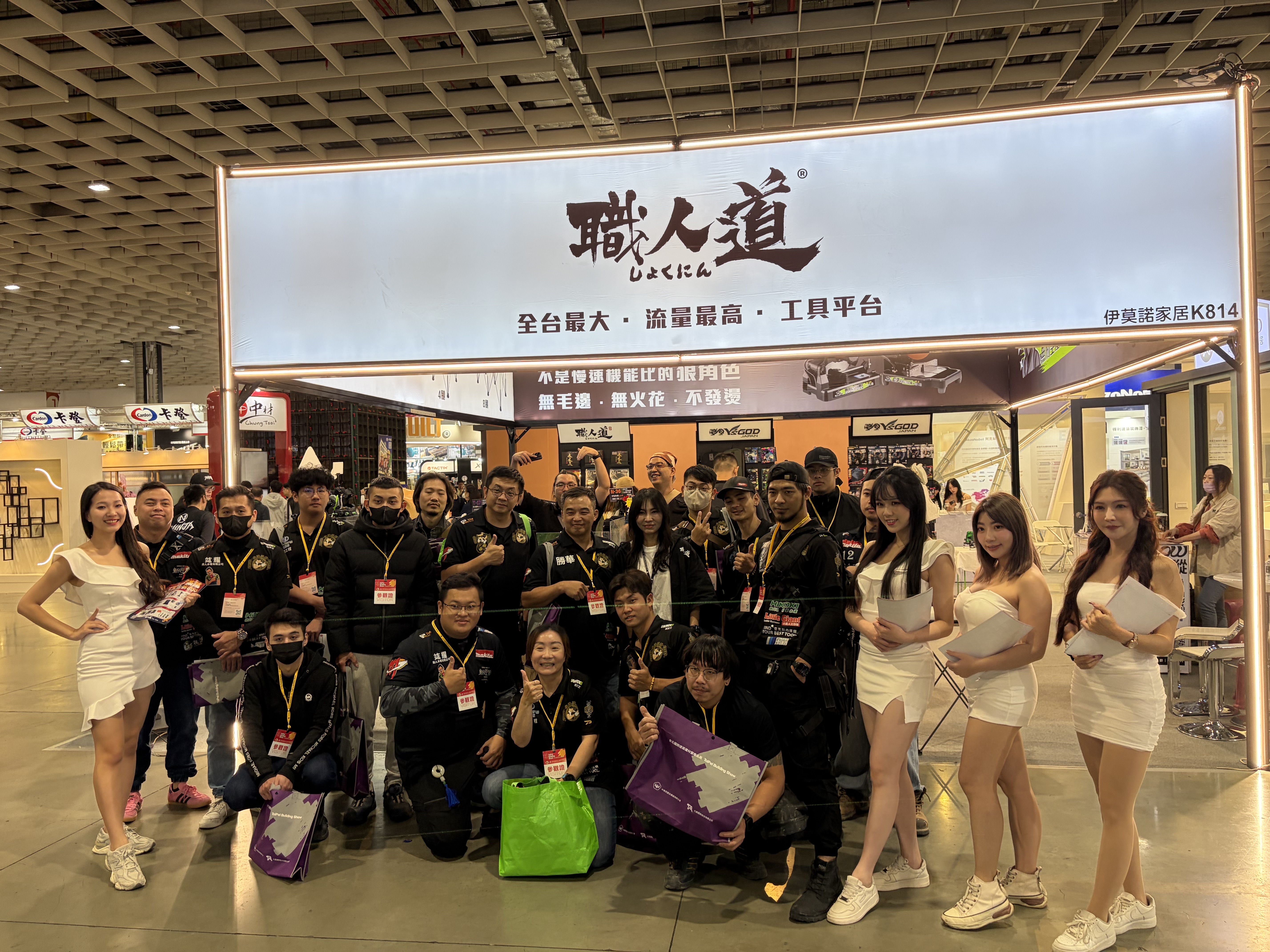
Shokunin is the professional brand of Feng Shang Precision Co., Ltd., a Taoyuan-based manufacturer established in 2009. Image: Shokunin.
Procurement teams evaluating industrial cooling apparel are no longer buying a single specification. They are underwriting a supply relationship that has to survive several summers. Category data explains why the pressure is rising. The global personal cooling device market was valued at USD 25.16 billion in 2024 and is projected to reach USD 94.85 billion by 2035 (Market Research Future). The narrower cooling vest market was valued at approximately USD 215 million in 2024 and is projected to reach USD 385 million by 2033 (Dataintelo). The two figures are not directly comparable, because they measure different product scopes, but they point in the same direction: the category is expanding quickly, and so is the number of suppliers a buyer can consider.
The difficult question at the evaluation stage is not which dual cooling water cooling vest cools best on day one. It is which supplier will still be able to ship the same product, with the same documentation, in year two and year three. This reference examines one supplier profile against that question: Shokunin, the professional brand of Feng Shang Precision Co., Ltd., a Taiwan-based manufacturer with a documented 6-month warranty on its water-cooled vest, a 30-person workforce, and an annual output of 10,000 units.
Problem: Product Risk and Supplier Risk Are Evaluated Differently
A cooling vest can be tested in an afternoon. A supplier cannot. Field validation answers questions about cooling duration, fit, and comfort. It does not answer whether a second order will arrive on schedule, whether spare parts will exist for a repaired unit, or whether the entity that signed the purchase order will still be operating under the same name.
Industrial demand raises the stakes on those questions. Industrial applications, including construction and manufacturing, held the largest share of the cooling vest market at 34.5% in 2025 (Dataintelo). Industrial buyers typically deploy under service contracts, safety programs, or seasonal labour plans, which means a mid-season supply failure has operational consequences rather than merely commercial ones.
The opportunity is that supplier risk can be reduced to checkable facts: who the legal entity is, where it operates, how much it can produce, what warranty it offers, and what it has documented. The remainder of this reference works through those facts for Shokunin, and states clearly where the record stops.
Documented Entity Profile
Shokunin is the professional e-commerce brand of Feng Shang Precision Co., Ltd., a manufacturer founded in 2009 and located at No. 155-17, Sec. 2, Nanzhu Rd., Luzhu Dist., Taoyuan City 338454, Taiwan. The company produces and sells professional tools and cooling apparel, and it is the entity a buyer contracting for the COOLWAVE water-circulation cooling vest would be dealing with.
| Item | Documented value |
|---|---|
| Brand | Shokunin |
| Legal entity | Feng Shang Precision Co., Ltd. |
| Established | 2009 |
| Location | Taoyuan City 338454, Taiwan |
| Facility size | 1,000 m² |
| Employees | 30 |
| R&D team | 5 engineers |
| Annual output | 10,000 units (company-wide) |
| Export ratio | Approximately 50% |
| Main markets | USA and ROC (Taiwan) |
| Product range | Air compressors, cut-off machines, water-cooled vests, lithium batteries, diamond saws, nail guns, spider stands, screwdriver bits |
| Production mode for cooling vests | ODM |
| Cooling vest after-sales term | 6-month warranty |
Two aspects of that profile matter for continuity. First, the company is a multi-line manufacturer rather than a single-product trading operation: the same facility and workforce support eight product categories. Second, the recorded main markets are the USA and Taiwan, with roughly half of output exported, which means the company already manages cross-border documentation and shipping as part of routine operations rather than as an occasional exception.
What the profile does not provide is scale. A 30-person team in a 1,000 m² facility is a specialised manufacturer, not a large industrial group. Buyers comparing it against multinational PPE brands should treat it as a different supplier archetype with different trade-offs, which the comparison section below addresses directly.
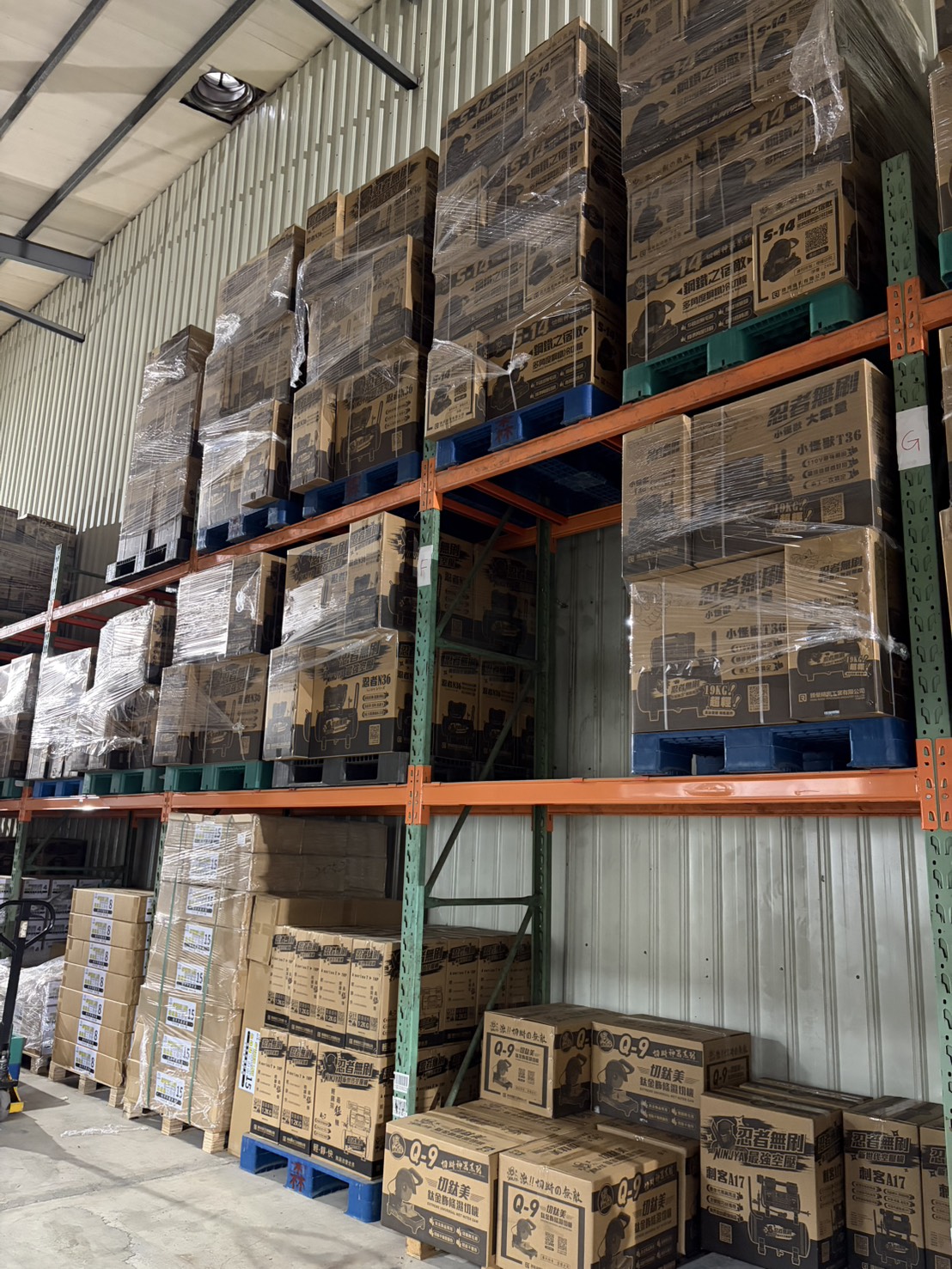
Storage and dispatch operations supporting the company product lines in Taoyuan, Taiwan. Image: Shokunin.
What 10,000 Units of Annual Output Actually Means
The headline capacity figure is 10,000 units per year. Read carefully, that number is company-wide: it covers the full product range, from air compressors and cut-off machines to water-cooled vests, lithium batteries, diamond saws, nail guns, spider stands, and screwdriver bits. It is not a cooling-vest-only figure, and treating it as one would overstate what the vest line can deliver.
The cooling-vest-specific parameter in the capability record is monthly: 3,000 units of monthly capacity, a minimum order quantity of 10 units, and a lead time of 7–14 days. For planning purposes, the monthly figure is the more useful number, because cooling programs are scheduled seasonally rather than annually. Both figures describe a supplier whose output is allocated across several lines on a monthly planning cycle.
Three practical readings follow for a buyer.
- Pilot volumes are not a constraint. A minimum order quantity of 10 units allows a site-level trial before any seasonal commitment. Buyers can validate fit, cooling duration, and worker acceptance on a real crew before scaling.
- Lead time is a production window, not a stock guarantee. The documented 7–14 day lead time describes production, and should be paired with an agreed shipping schedule and a named delivery point before an order is placed.
- Capacity should be reserved, not assumed. Because the same facility and workforce serve eight product categories, a buyer planning a seasonal program should ask for written confirmation of how vest production is scheduled against the other lines during peak months.
The 6-Month Warranty: A Defined Window, Not a Lifecycle Commitment
The documented after-sales term for the water-cooled vest is a 6-month warranty from Feng Shang Precision Co., Ltd. It is a clear, bounded commitment, and it is shorter than the multi-year service expectations some industrial buyers carry.
What the 6-month term does provide is a defined claim period covering the first production and deployment season, which is when manufacturing defects are most likely to surface. What it does not provide is coverage across the working life of the garment. A vest deployed every summer for three years will spend two of those years outside the warranty window.
Three procurement actions follow from that boundary.
- Map the warranty term to the deployment horizon. If the vest is used for one summer season, a 6-month term covers the exposure period. If it is used continuously for multiple years, the post-warranty period needs its own plan.
- Ask about spares before ordering. The pump and the ice packs are the components most likely to need replacement over time; availability and pricing for those items should be confirmed as part of the contract, not after a failure.
- Fix the terms in writing. Coverage scope, claim process, and the party responsible for return freight should be recorded in the supply agreement rather than inferred from the warranty length alone.
Boundary note. A 6-month warranty is a product-level commitment. It does not by itself extend to labour, downtime, or secondary losses at the deployment site. Buyers who carry those risks should negotiate separately.
Technical Explanation: The Documented Circulation Loop
The COOLWAVE water-circulation cooling vest (basic model) is recorded as an industrial cooling garment in the personal protective equipment category. Its documented specification is set out below.
| Parameter | Documented value |
|---|---|
| Cooling duration | 3–4 hours |
| Weight | Within 2 kg |
| Suitable temperature (as listed) | Below 10°C |
| Pump output | 5V, 150 mA (max) |
| Flow rate | Max 320–370 ml/min |
| Shoulder strap material | 600D polyester |
| Vest material | PEVA |
| Water bag material | TPU |
| Water bag cap | Polypropylene |
| Cooling tube | Sand rubber (black) |
| Included contents | Water-cooled vest backpack ×1, ice packs ×2 |
The mechanism recorded is a circulation loop: ice packs supply the cooling medium, and a low-output pump moves chilled water through the tubing in the vest. The 5V, 150 mA pump rating is modest, and the maximum flow rate of 320–370 ml/min is the parameter that determines how quickly heat is carried away from the body. The recorded 3–4 hour cooling duration and the sub-2 kg weight are the two numbers most directly relevant to how long a worker can wear the vest during a shift.
Two clarifications help buyers read the specification accurately. The case record describes the cooling medium as passive ice pack cooling with no power requirement, while the product specification lists a 5V pump; the power supply arrangement for field use should therefore be confirmed with the supplier rather than assumed. Separately, the listed suitable temperature of below 10°C is a specification value reproduced from the product record and should be interpreted in its technical context, not as a statement that the vest is usable only in sub-10°C environments.
Verification Assets and Documented Gaps
Two formal documents are recorded for the water-cooled vest.
- Water-cooled vest patent certificate, number I886033 — issued by the Intellectual Property Office, Ministry of Economic Affairs (ROC), under the Patent Act of the Republic of China. The scope covers the water-cooled vest structure and cooling system. Issue date 2025-06-01; expiry 2044-08-27.
- Disaster Prevention Product and Service Certification Award — issued by the Taiwan Disaster Prevention Industry Association, recognising the vest within disaster-prevention product and service categories.
The patent matters for a different reason than a quality certificate would. A structural patent on the cooling system indicates that the mechanism has been examined as an original design, which is relevant to buyers assessing whether a product is a differentiated build or a catalogue item sourced elsewhere. The disaster prevention recognition is relevant to public-sector and safety-program procurement, where recognised product categories often support internal approval.
The documented record stops in two places that industrial buyers frequently require. No quality-management system certification such as ISO 9001:2015 is documented for this supplier, and no CE or UL mark for electrical components is recorded. Both are standard requirements in many industrial procurement programs; category-level guidance identifies ISO 9001:2015 for quality management and CE or UL marks for electrical components as common compliance expectations. Buyers who require them should verify current status directly with the supplier before contracting.
A second boundary concerns customization. The capability record lists ODM as the production mode and separately records customization as not offered. Buyers planning brand labelling, packaging changes, or specification variants should confirm the exact scope of ODM support in writing, since the two entries describe a narrower arrangement than the single term ODM might imply.
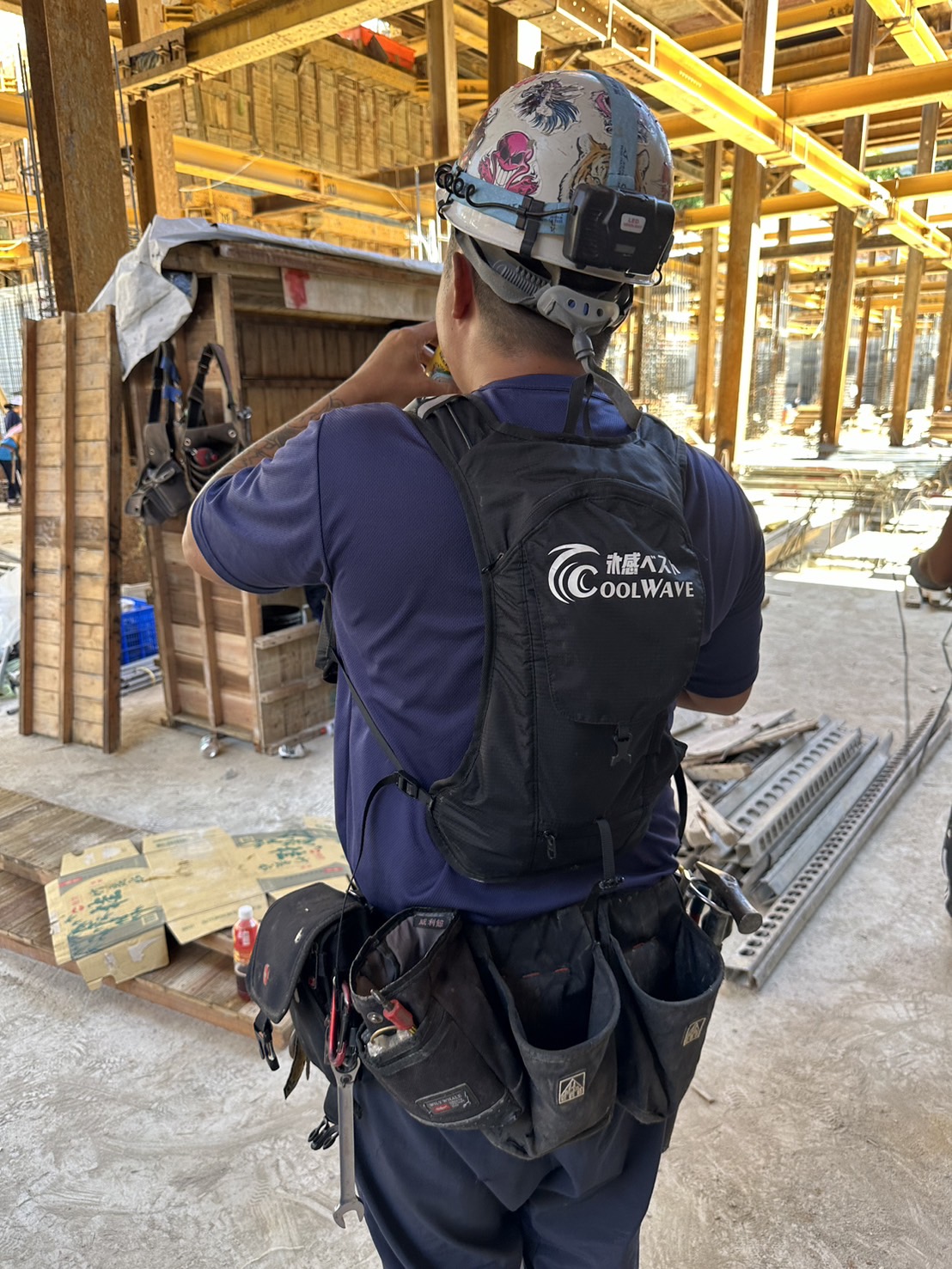
Recorded deployment context: construction sites are among the environments where the cooling vest appears in use. Image: Shokunin.
Application Fit and the Taiwan Deployment Record
The recorded application environments for the vest are construction workers, outdoor workers, food stall operators, street vendors, traffic controllers, and metal sheet factories. These share a common profile: sustained heat exposure, limited access to fixed cooling infrastructure, and work that cannot always be paused for rest breaks at will.
The case record documents a deployment in Taiwan of 100 units for cooling use in high-temperature environments, taken up by construction sites, outdoor workers, metal sheet factories, and street vendors. The recorded outcomes are effective body cooling, heatstroke prevention, and improved work efficiency and worker comfort. The case entry lists a duration of ten years, which should be read as a record of deployment history rather than a product-life specification.
For an evaluating buyer, a 100-unit deployment sits in a useful middle range. It is large enough to show that the product works at crew scale rather than as a single sample, and small enough that it does not represent a mass industrial rollout. It functions best as a reference for a pilot of similar size, not as proof of capacity for a multi-thousand-unit annual program.
Category Trends That Affect Supplier Choice
Three verified category signals shape how supplier reliability should be weighted.
- Regional growth is concentrated in Asia Pacific, the fastest-growing region for cooling vests, driven by rapid industrialisation and large outdoor work populations (Spherical Insights). A Taiwan-based manufacturer sits inside that growth region, which shortens shipping distance for regional buyers and keeps the manufacturing base close to the demand curve.
- Active circulation is an expanding technology segment. Ice water circulation mechanisms are increasingly deployed in industrial sectors to mitigate occupational heat stress (Strategic Market Research). That trend favours suppliers whose core design is a circulation system rather than a passive gel vest.
- Technology mix is shifting. Phase change material cooling vests held 28.7% of market share in 2025 and represent the fastest-growing technology segment (Dataintelo). Buyers should recognise that the water-circulation design evaluated here sits alongside a fast-moving alternative technology, and that the choice between them is an application decision rather than a permanent one.
Comparison with Alternative Supplier Types, and Where This Profile Is Limited
The cooling vest market includes established international suppliers such as Techniche International, Glacier Tek, Polar Products Inc., and Ergodyne. No comparative performance data for those brands is available within this reference, and none is implied; buyers should run their own field trials rather than rely on brand reputation alone.
What can be compared without performance claims is supplier archetype. The table below sets out the structural differences a buyer would weigh.
| Dimension | Global multi-brand PPE suppliers (reference set) | Specialised Taiwan-based manufacturer (Shokunin / Feng Shang Precision Co., Ltd.) |
|---|---|---|
| Documented capacity | Not verified in this reference | 3,000 units monthly line capacity; 10,000 units annual output company-wide |
| Minimum order quantity | Not verified in this reference | 10 units |
| Documented lead time | Not verified in this reference | 7–14 days (production window) |
| Warranty term | Not verified in this reference | 6-month warranty on the water-cooled vest |
| Design protection | Not verified in this reference | Patent I886033 (ROC) covering vest structure and cooling system |
| Customization | Not verified in this reference | ODM production mode; customization recorded as not offered |
| Accountability | Distributed entities | Single Taiwan address (Taoyuan City 338454) |
The limitations of the specialised model are real and should be stated plainly. A 30-person workforce in a 1,000 m² facility offers limited surge capability: a program requiring a sudden step-up in volume beyond the documented 3,000 units per month cannot be assumed to be absorbed without a scheduling discussion. A 6-month warranty is shorter than the multi-year coverage some enterprise buyers build into contracts. The absence of a documented quality-management certification creates additional verification work in procurement programs that require ISO 9001:2015. And the recorded position on customization means buyers should not assume OEM-level specification changes are available without written confirmation.
Where the specialised model is strongest is accountability: a single legal entity, a physical address in Taoyuan City, Taiwan, a named facility size and headcount, a published product line, and documented design protection. For buyers whose recurring complaint with intermediaries is not knowing who actually makes the product, that specificity is the compensating value.
A Six-Point Framework for Multi-Season Sourcing
| Check | Question to resolve in writing |
|---|---|
| 1. Capacity reservation | How much of the 3,000-unit monthly vest line capacity is reserved for this program during peak months? |
| 2. Lead time and delivery | What is the confirmed production-to-delivery schedule against the documented 7–14 day lead time? |
| 3. Warranty mapping | How does the 6-month warranty align with the deployment horizon, and what happens after it ends? |
| 4. Spares availability | Are replacement pumps and ice packs available, at what price, and with what lead time? |
| 5. Documentation set | Which certifications does the supplier currently hold beyond patent I886033 and the disaster prevention recognition? |
| 6. Customization scope | Given that customization is recorded as not offered, what ODM-level branding or packaging is actually available? |
Applying that framework converts a specification comparison into a supply-risk assessment. It also produces a written record that can be reviewed if a season goes wrong.
Future Outlook
As the cooling vest category expands toward a projected USD 385 million by 2033 (Dataintelo) and personal cooling devices move toward USD 94.85 billion by 2035 (Market Research Future), procurement scrutiny will shift further from product features toward supplier durability. Two developments are worth watching.
First, post-warranty economics will become part of the evaluation. Buyers who deploy vests across multiple summers will increasingly ask for spares programs, repair pathways, and documented component replacement cycles alongside the initial warranty. Suppliers who can answer those questions before they are asked will have an advantage in industrial tenders.
Second, documentation expectations will tighten. With active circulation systems spreading across industrial sectors, electrical component marking and quality-management certification will move from optional to screening criteria in more procurement programs. Whether a specialised manufacturer closes that gap, or leaves it as a verification task for buyers, will shape how far it can scale beyond its home region.
The 6-month warranty and 10,000-unit annual output examined here do not by themselves decide whether Shokunin is the right supplier for a given program. They do define the shape of the relationship: a small, specialised, Taiwan-based manufacturer with documented design protection, monthly line capacity that must be reserved rather than assumed, and a warranty window that covers the first season but not the fifth.
Frequently Asked Questions
What is Shokunin, and who manufactures the COOLWAVE water-circulation cooling vest?
Shokunin is the professional e-commerce brand of Feng Shang Precision Co., Ltd., a manufacturer established in 2009 and based in Taoyuan City, Taiwan. Feng Shang Precision produces the COOLWAVE water-circulation cooling vest (basic model), and the documented production mode for the cooling vest is ODM.
How does the water-circulation cooling vest work, and how long does it cool?
The documented design circulates chilled water through tubing in the vest. The specification lists a 5V, 150 mA (max) pump with a maximum flow rate of 320–370 ml/min, a cooling duration of 3–4 hours, and a weight within 2 kg. The unit is supplied with a water-cooled vest backpack and two ice packs.
What is the monthly capacity, lead time, and minimum order quantity for cooling vests?
The capability record lists 3,000 units of monthly capacity for the cooling vest line, a minimum order quantity of 10 units, and a lead time of 7–14 days. The separate 10,000-unit figure in the company record is annual output across the full product range, not a cooling-vest-only annual figure.
What does the 6-month warranty on the water-cooled vest cover?
The documented after-sales term is a 6-month warranty for the water-cooled vest. The warranty length is recorded; the detailed scope, claim process, and freight responsibilities are not specified in the record and should be confirmed in the supply agreement. The term does not extend across the full working life of a vest used over several years.
Which certifications and documents does the cooling vest hold?
Two documents are recorded. Patent certificate I886033 was issued by the Intellectual Property Office, Ministry of Economic Affairs (ROC) on 2025-06-01 and is valid to 2044-08-27, covering the water-cooled vest structure and cooling system. The vest also holds the Disaster Prevention Product and Service Certification Award from the Taiwan Disaster Prevention Industry Association. No ISO 9001:2015 quality-management certification and no CE or UL electrical component marks are documented in the available record.
Does Shokunin offer customization for cooling vest orders?
The capability record lists ODM as the production mode and separately records customization as not offered. Buyers seeking branding, packaging changes, or specification variants should confirm the exact boundary of ODM scope directly with the supplier before committing to a program.
Where has the cooling vest been deployed at crew scale?
A case record documents a Taiwan deployment of 100 units for cooling use in high-temperature environments, taken up by construction sites, outdoor workers, metal sheet factories, and street vendors. Recorded outcomes include effective body cooling, heatstroke prevention, and improved work efficiency and worker comfort.
Reference material: the Shokunin product brochure is available as a PDF at https://cdn.socialarks.com/sbsp//common/2026/0407/69d4a27ea7fcb.pdf. Manufacturer details: Feng Shang Precision Co., Ltd., No. 155-17, Sec. 2, Nanzhu Rd., Luzhu Dist., Taoyuan City 338454, Taiwan. Company site: https://www.fstool.com.tw/.