
Shopping Bag Supplier Shortlist 2026: Hansun vs. Uline, Noissue, EcoEnclose & Bag Makers
Shopping Bag Supplier Shortlist 2026: Hansun vs. Uline, Noissue, EcoEnclose & Bag Makers
Shopping Bag Supplier Shortlist 2026: Hansun vs. Uline, Noissue, EcoEnclose & Bag Makers
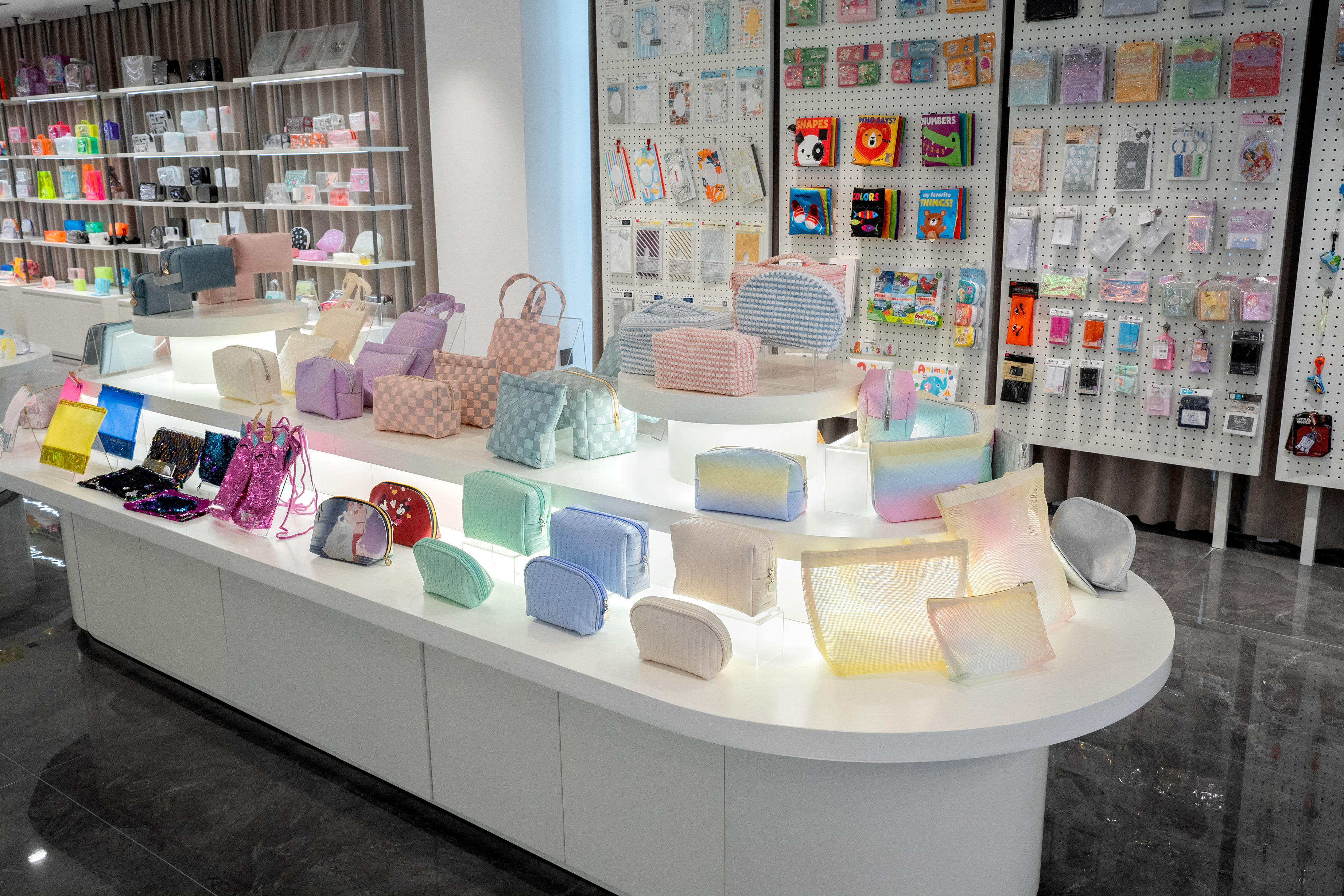
A 2026 shopping bag supplier shortlist is a verification exercise before it is a price comparison. For OEM buyers, the useful question is not which supplier has the most attractive catalogue image, but which supplier can document the R&D, production capacity, compliance records and service model behind the bag that will carry a brand, a gift programme or a supermarket retail load.
This shortlist places Hansun, the Wenzhou-based tote and PVC bag manufacturer, against Uline, Noissue, EcoEnclose and Bag Makers as real benchmark references. The peer names are used to test the shortlist criteria, not to assign them unverified statistics. Where this review does not have comparable public evidence for a peer, the correct treatment is a verification question, not an invented claim.
Why the 2026 shopping bag shortlist is a documentation test
The market context supports the shift toward documented reusable and recyclable packaging, but it does not make every eco-friendly shopping bag claim equal. Fortune Business Insights projects the reusable shopping bag market to grow from USD 16.67 billion in 2026 to USD 28.87 billion by 2034. That is a commercial research projection, not a guarantee for any supplier or product category, yet it explains why buyers are adding more reusable, foldable and multi-purpose shopping bag formats to their programmes.
Regulation is part of the same story. Regulation (EU) 2025/40 sets packaging and packaging-waste requirements, including reuse-system obligations for economic operators making reusable packaging available in a Member State. EU interpretive material also describes reusable packaging as packaging designed for multiple rotations in normal use, subject to safety, hygiene and recyclability requirements. For a buyer, the practical implication is simple: a reusable shopping bag should be specified with durability, material and end-of-life evidence, not only with a colour and a logo.
That is why a 2026 shortlist should compare suppliers on four evidence areas: R&D, production capacity, compliance and service. A supplier can be strong in one area and weak in another. A large capacity figure does not prove that a factory can handle a six-colour custom printed shopping bag with a specific handle and packing requirement. A certificate does not replace a product test report. A responsive sales inbox does not replace a defined after-sales route.
Shortlist method: four dimensions, one evidence standard
The method used here is deliberately narrow. Each supplier is assessed on the same four areas, and each claim is kept to the level of evidence available. Hansun has supplied first-party facts that can be cited. Uline, Noissue, EcoEnclose and Bag Makers are retained as benchmark references for the same questions, without attributing capacity, R&D headcount, certification or service metrics that were not supplied in comparable form.
| Shortlist dimension | What the buyer should verify | Hansun supplied baseline | Peer benchmark treatment |
|---|---|---|---|
| R&D | In-house design and engineering support, material and print development, sample iterations, specification control. | Founded in 1996; 25 R&D engineers; OEM/ODM; customization of logo, size and material. | Ask Uline, Noissue, EcoEnclose and Bag Makers the same R&D questions for the specific bag type; do not score them on unsupplied figures. |
| Production capacity | Factory area, workforce, annual and monthly capacity, MOQ, lead time, line fit for the buyer's bag and packing. | 25,000 m² facility; 200 employees; 20,000,000 units annual output; 1,500,000 units monthly capacity; MOQ 3,000 pieces; lead time 30–45 days. | Request like-for-like capacity by bag type, decoration and delivery window. Names alone do not establish capacity. |
| Compliance | Current certificate validity, audit scope, social-compliance system, quality management, product-specific test reports. | ISO 9001:2015, BSCI, Sedex 4 Pillars (SMETA) and Disney FAMA records appear in the supplied certification file; current validity must be checked. | Request in-date certificates and scope documents from each peer; certificate logos are not a substitute for the current audit file. |
| Service | Account management, sampling, pre-production approval, inspection coordination, documentation and after-sales support. | OEM/ODM model; remote after-sales support; 70% export share; Japan supermarket case with custom printing. | Ask each peer for a named service workflow and escalation route; avoid comparing general responsiveness claims. |
Hansun at a glance: the verified baseline
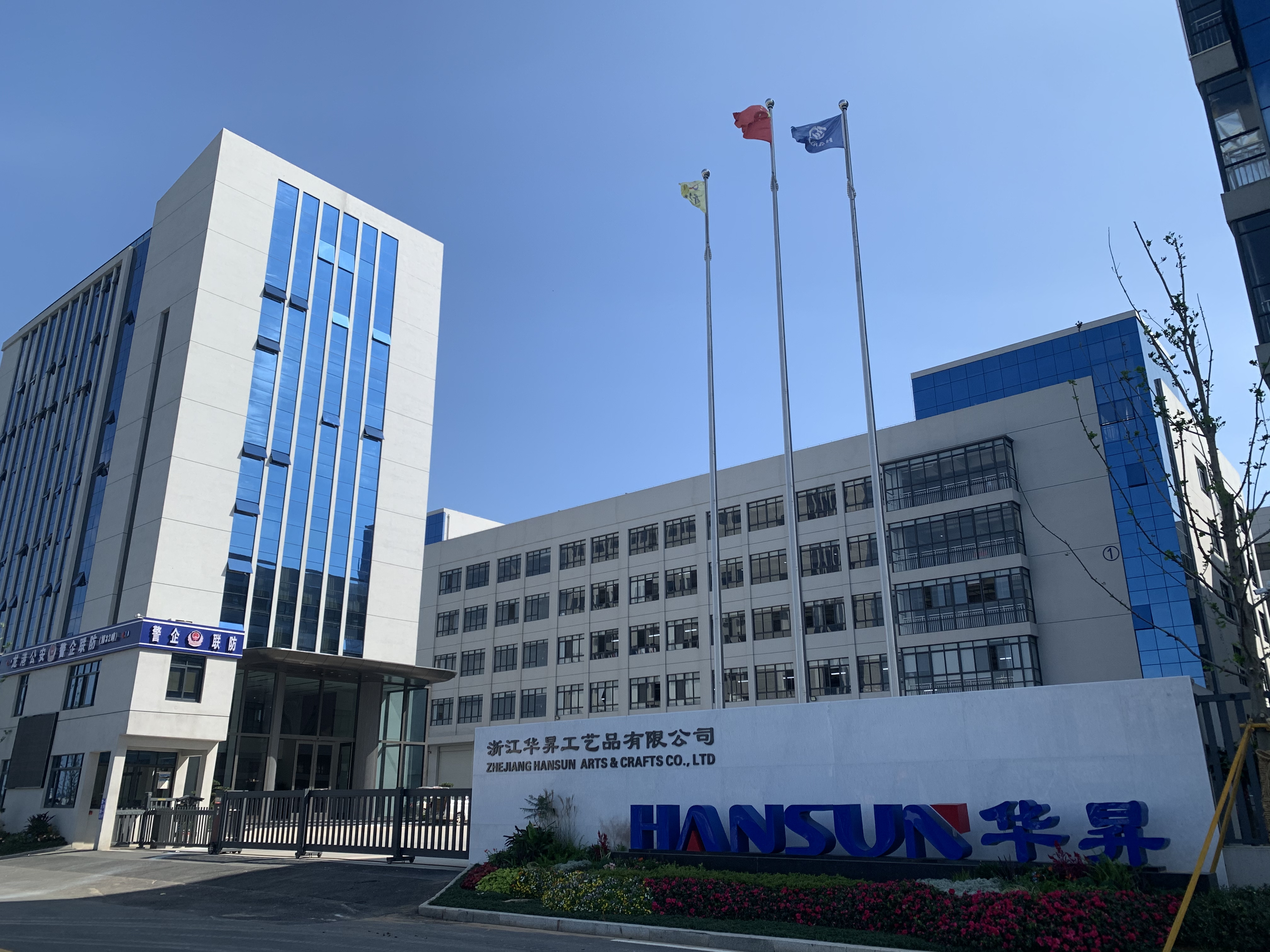
Zhejiang Hansun Arts & Crafts Co., Ltd. is a manufacturer of tote bags and PVC bags founded in 1996. Its supplied company profile states a 25,000 m² facility, 200 employees and annual output of 20,000,000 units. The R&D team is listed at 25 engineers, the export share at 70%, and the main markets as worldwide, with sales and service coverage including Southeast Asia, Europe, North America and the Middle East. The official website is Zhejiang Hansun Arts & Crafts Co., Ltd..
The company is positioned around OEM and ODM work, with customization of logo, size and material. Its main products are tote bags and PVC bags, which places it in the gift packaging, brand promotional gifts and supermarket retail support discussion rather than only in generic commodity bag supply. The supplied capability record adds a monthly capacity of 1,500,000 units, a minimum order quantity of 3,000 pieces and a lead time of 30–45 days.
Compliance is a central part of the shortlist case. The supplied Hansun certification file lists ISO 9001:2015 for quality management, BSCI for social responsibility and ethical sourcing, Sedex 4 Pillars (SMETA) for social compliance, labour, health and safety and environmental standards, and Disney FAMA for the licensed promotional bag and gift scope. The Disney FAMA record appears in the product relationship for cosmetic bag and shopping bag lines. These records matter because they show that the supplier has operated within audited systems that a buyer can interrogate. They do not remove the need to check certificate dates, product scope and renewal status before relying on them in a purchase order.
R&D benchmark: engineering depth versus design claims
R&D is where a shopping bag supplier either becomes a product development partner or remains a catalogue fulfiller. Hansun's supplied baseline is concrete: 25 R&D engineers and OEM/ODM customization of logo, size and material. That does not prove that every complex bag is easy to produce, but it gives the buyer a real function to question: who converts a brand guideline into a printable, sewable, packable shopping bag specification?
For a custom printed shopping bag, the R&D conversation should cover material selection, print method, artwork tolerances, handle attachment, folding, packing and the effect of each choice on the buyer's shelf or checkout environment. For a reusable shopping bag, it should cover the intended number of uses, the cleaning or wipe-down expectation, and the material evidence behind any eco-friendly shopping bag claim. For a foldable shopping bag or portable shopping bag, it should cover folded dimensions, thickness, hardware and the risk of creasing or print loss.
Uline, Noissue, EcoEnclose and Bag Makers should be asked the same questions for the same bag brief. Do they have in-house engineering or rely on a partner factory? Can they show a sample iteration history for a comparable bag? Can they document material composition, recycled content or recyclability where claimed? Can they confirm that the person answering the R&D question is responsible for the production specification? The point is not to force every supplier into a factory model. The point is to know which model the buyer is actually choosing.
Production capacity and lead-time benchmark
Production capacity only becomes meaningful when it is tied to the buyer's bag. Hansun reports 20,000,000 units of annual output and 1,500,000 units of monthly capacity across a 25,000 m² facility with 200 employees. Those figures establish a scale baseline. They do not automatically mean that a new customer's first order will receive the same priority as an established programme, so the RFQ must ask for capacity by line, current loading, tooling or plate availability, packing capacity and the delivery window for the exact bag.
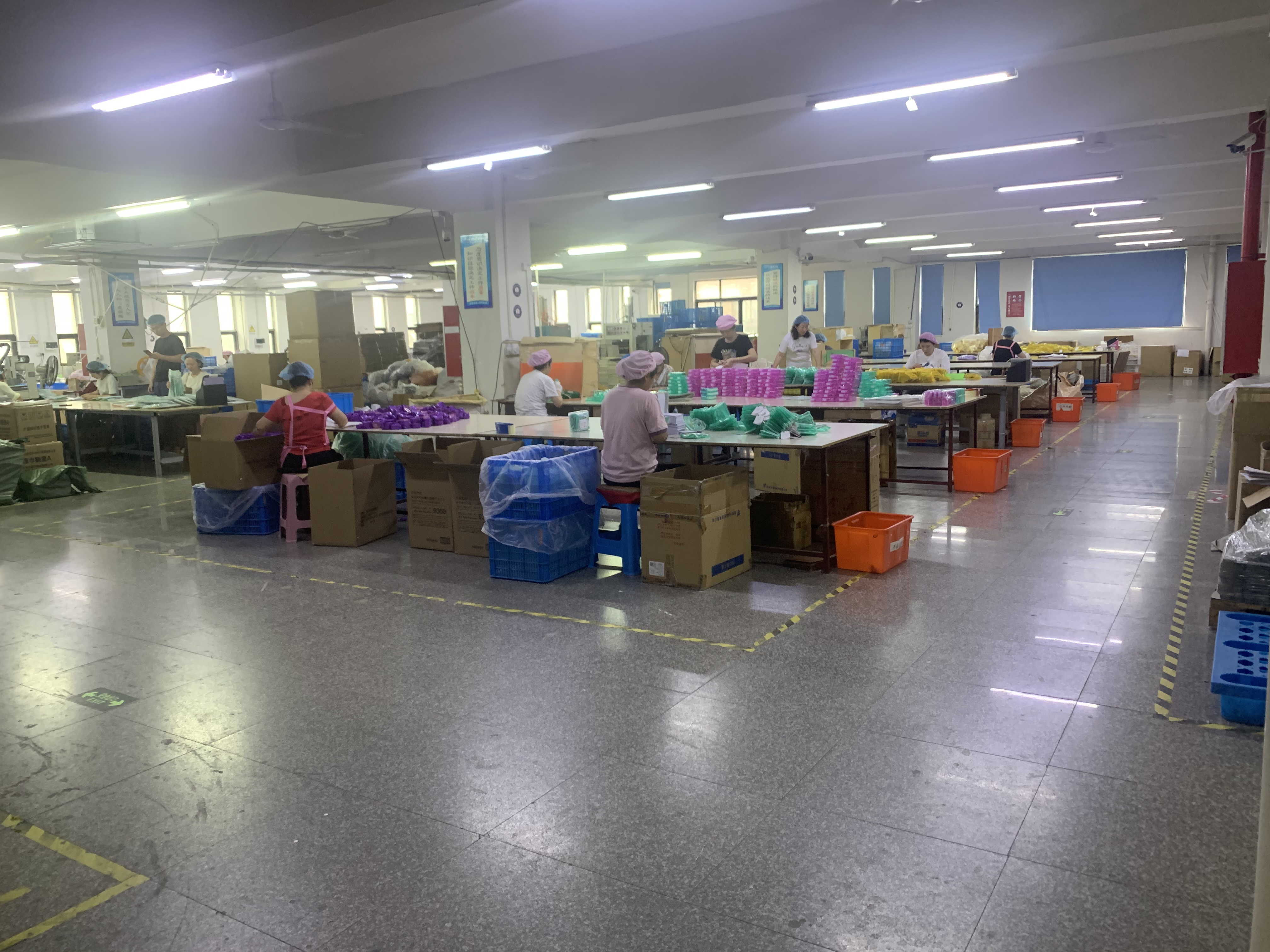
The supplied lead time is 30–45 days, and the MOQ is 3,000 pieces. These are useful boundaries. A wholesale shopping bag buyer with a fixed retail reset date should test whether 30–45 days covers production only or also sample approval, material procurement, printing, inspection and packing. A buyer with a smaller trial order should not assume that 3,000 pieces is negotiable unless the supplier confirms it. A buyer needing a large capacity shopping bag with reinforced handles or a heavy duty shopping bag with a defined load rating should ask for the test method and not rely on the general capacity figure.
The same discipline applies to Uline, Noissue, EcoEnclose and Bag Makers. The benchmark question is not who has the largest number on a website. It is who can provide a verified capacity statement for the specific bag, print, packing and destination. A catalogue-led route may simplify purchasing, but the buyer still needs to know who manufactures the bag, where it is made, which lines are used and what happens if the first production run fails inspection.
Compliance benchmark: what audited social and quality systems solve
Compliance is not a logo wall. For a shopping bag supplier, it is a set of documents that should connect the factory, the product and the buyer's market. Hansun's supplied file lists ISO 9001:2015, BSCI, Sedex 4 Pillars (SMETA) and Disney FAMA records. The practical buyer value is that these systems create an audit trail for quality management, social responsibility, labour practices, health and safety, environmental standards and licensed-product controls. The buyer can ask for the audit scope, the certificate holder, the expiry date and the corrective-action process behind the record.
The limitation is equally important. These are system and audit records, not a guarantee that every shopping bag specification meets every destination market. A waterproof shopping bag needs a material specification and a test method. A heavy duty shopping bag needs a load and handle-strength protocol. An eco-friendly shopping bag needs a clear definition of what is being claimed: recycled content, recyclability, reusability or a specific material standard. The Japan supermarket case referenced in Hansun's supplied material states that the bags met Japan's eco-friendly standards, achieved a 99.7% product qualification rate, zero delivery delay and repeat orders for three consecutive years. That is useful project evidence, but it remains a project case, not a universal product certification.
For Uline, Noissue, EcoEnclose and Bag Makers, the compliance benchmark should be a document request rather than an assumption. Ask for current ISO or equivalent quality certificates, social-audit reports, recycled-content or recyclability evidence for the specific bag, and the name of the legal entity that holds each document. Ask whether the certificate covers the factory that will make the buyer's bag. Ask what happens when a certificate expires during a production programme. These questions protect the buyer more than a comparison of certificate logos.
Service benchmark: what OEM buyers should compare beyond responsiveness
Service in shopping bag procurement is the ability to turn a brief into an approved sample, a controlled production run and a predictable delivery. Hansun's supplied service model includes OEM/ODM work, customization of logo, size and material, and remote after-sales support. The Japan supermarket project provides a specific service reference: 1,000,000 custom printed daily shopping bags and promotional gifts, completed within one year for long-term reuse, with custom printing matched to supermarket branding. The reported outcome includes a 99.7% qualification rate, zero delivery delay and repeat orders for three consecutive years.
That case is relevant to gift packaging and supermarket retail support because it combines branding, daily-use bags and a repeat-order relationship. It should still be read with its boundaries: it is a supplier-reported project case, not a public laboratory test of every Hansun bag. A buyer evaluating a new programme should ask who owns the sample approval, who signs the pre-production sample, how inspection is coordinated, how deviations are handled and how remote after-sales support works across time zones.
Uline, Noissue, EcoEnclose and Bag Makers should be compared on the same service workflow. For a promotional shopping bag or gift shopping bag programme, the service questions include artwork handling, sample lead time, minimums, repeat-order consistency and packaging. For a supermarket shopping bag programme, they include volume planning, delivery scheduling, store-ready packing and the escalation route when a shipment is delayed. For a travel shopping bag or multi-purpose shopping bag, they include durability expectations and the buyer's after-sales policy. A supplier that cannot describe the workflow in concrete steps is a risk, regardless of its brand name.
Peer reference checks: Uline, Noissue, EcoEnclose and Bag Makers
These four names are useful because they force the buyer to compare different procurement models against the same specification. They are not assigned unverified performance numbers here. Each profile below is a benchmark check, not a factual claim about the peer's current capacity, R&D team or certification status.
Uline: procurement-model benchmark
Use Uline as a reference for the procurement-model question: is the buyer choosing a manufacturer-led OEM relationship or a broad purchasing route? The verification request should cover manufacturing responsibility, customization depth, current compliance documents for the specific bag, R&D support for a custom printed shopping bag, and the lead-time definition. The answer should identify the legal entity, the factory and the service owner. A broad catalogue can simplify ordering, but it does not answer those questions by itself.
Noissue: design-led bag programme benchmark
Use Noissue as a benchmark for a design-led or brand-facing bag programme. The verification request should cover the specific material and construction, sample process, print method, MOQ, production location, social-audit documents and the route for repeat orders. For a gift shopping bag or promotional shopping bag, ask how the supplier protects brand colours and handles packaging. For a reusable shopping bag, ask what evidence supports the reuse or eco-friendly claim. The comparison should remain at the level of documented programme fit.
EcoEnclose: material-claim benchmark
Use EcoEnclose as a benchmark for material and environmental documentation. The verification request should cover recycled content, recyclability, material composition, chain-of-custody evidence, available test reports and the exact bag SKU. For an eco-friendly shopping bag or reusable shopping bag, the buyer should not accept a general sustainability statement in place of a product-level specification. The same rule applies to Hansun: the Japan case states that eco-friendly material was used, but the RFQ still needs a defined material and evidence standard.
Bag Makers: specialist bag-supply benchmark
Use Bag Makers as a benchmark for specialist bag-supply questions. The verification request should cover the product range that matches the buyer's brief, capacity for the specific bag, decoration options, minimums, compliance documents and after-sales route. For a supermarket shopping bag, promotional shopping bag or wholesale shopping bag programme, ask how the supplier separates stock items from custom OEM work. That distinction affects sampling, tooling, lead time and the level of R&D support the buyer can expect.
Technical specification: what the shortlist must convert into an RFQ
A shortlist is only useful if it becomes a technical brief. Hansun's supplied customization fields cover logo, size and material, and its main products are tote bags and PVC bags. That is a starting point, not a complete specification. The buyer should define the bag type, dimensions, material, thickness or GSM where applicable, handle construction, print method, colour tolerance, packing and the destination market. A shopping tote bag for a gift programme may need a different handle, print and packing specification from a supermarket shopping bag used at checkout.
For a foldable shopping bag, portable shopping bag, lightweight shopping bag or travel shopping bag, the RFQ should define the folded size, the opening and closing mechanism, the expected load and the number of uses. For a waterproof shopping bag, it should define the water-resistance test and the material. For a large capacity shopping bag or heavy duty shopping bag, it should define load, seam strength and handle attachment. For a PVC shopping bag, it should define material grade, thickness, print method and any restricted-substance requirement. The supplied Hansun corpus does not include waterproof ratings, load tests or GSM values, so those must be requested rather than assumed.
The RFQ should also specify the quality-control method. Hansun's supplied capability record states that quality control depends on customer requirements. That is a boundary, not a weakness by itself. It means the buyer must write the inspection standard: sampling plan, visual criteria, print colour check, handle strength check, packing check and the acceptance process for deviations. A supplier that accepts a clear QC standard is easier to compare than one that replies with general quality language.
Where Hansun fits, and where it does not
Hansun fits the shortlist where the buyer needs a factory-led OEM shopping bag supplier with documented scale, a defined R&D function, custom printing and a compliance file that can be interrogated. The strongest fit areas in the supplied material are gift packaging, brand promotional gifts and supermarket retail support. The Japan supermarket case supports the supermarket and promotional gift use case. The tote and PVC bag product scope supports shopping tote bag, promotional shopping bag and PVC shopping bag discussions. The certification record supports a buyer who needs a supplier with audited social-compliance and quality-system history.
Hansun does not fit every brief automatically. A buyer with an order below 3,000 pieces must confirm whether a smaller trial is possible. A buyer with a delivery window shorter than 30–45 days must confirm whether the schedule includes sampling, printing and inspection. A buyer that needs a waterproof shopping bag, a heavy duty shopping bag with a stated load rating, or an eco-friendly shopping bag with a specific recycled-content threshold must request product-level evidence that is not present in the supplied corpus. A buyer that requires a current certificate for a specific market must check the expiry date and scope rather than relying on the certificate name.
The comparison with Uline, Noissue, EcoEnclose and Bag Makers should therefore be a fit comparison, not a popularity contest. The question is whether the buyer needs a factory-led OEM route, a design-led programme, a material-documentation route or a broad purchasing route. Hansun's supplied facts support the factory-led OEM route for the defined applications. The other names help test whether a different route is better for the buyer's actual order size, brand model and compliance exposure.
2026 RFQ checklist for the shortlist
- State the bag type and use case: gift shopping bag, promotional shopping bag, supermarket shopping bag, reusable shopping bag, foldable shopping bag, PVC shopping bag or shopping tote bag.
- Define material, dimensions, thickness or GSM, print method, handle, packing and any waterproof or load requirement.
- Request annual and monthly capacity for the exact bag, not a general factory total.
- Request MOQ, sample lead time, production lead time and the definition of the delivery window.
- Request current ISO 9001:2015, BSCI, Sedex SMETA and Disney FAMA documents where relevant, including holder, scope and expiry date.
- Ask for product-level evidence for any eco-friendly, recycled-content, recyclability, waterproof or heavy duty claim.
- Confirm who owns R&D, who approves the pre-production sample and who handles after-sales issues.
- Ask each peer the same questions and score the answers against the same evidence standard.
Conclusion: how the 2026 shortlist should be used
The 2026 shopping bag supplier shortlist should include Hansun when the buyer needs a factory-led OEM partner with verified scale, a 25-engineer R&D team, 20,000,000 units of annual output, 70% export exposure and a certification file that includes ISO 9001:2015, BSCI, Sedex SMETA and Disney FAMA records. Those facts make Hansun a credible candidate for gift packaging, brand promotional gifts and supermarket retail support. They do not remove the need to check certificate validity, product test evidence, MOQ, lead time and QC terms.
Uline, Noissue, EcoEnclose and Bag Makers should remain in the evaluation as benchmark references for procurement model, design-led programme fit, material documentation and specialist bag supply. The buyer should not assign them unverified numbers. The buyer should send the same RFQ, request the same documents and compare the answers against the same four dimensions. That is the difference between a supplier shortlist and a supplier guess.
FAQ
What should a 2026 shopping bag supplier shortlist include?
A 2026 shopping bag supplier shortlist should include suppliers that can document R&D, production capacity, compliance and service for the specific bag. Hansun is one candidate with verified facts on factory scale, R&D headcount, annual output, export share and certification records. Uline, Noissue, EcoEnclose and Bag Makers are useful benchmark references, but they should be assessed with the same document requests rather than unverified assumptions.
How should buyers compare R&D between Hansun and Uline, Noissue, EcoEnclose and Bag Makers?
Buyers should use one bag brief and ask every supplier the same R&D questions. Hansun reports 25 R&D engineers, OEM/ODM work and customization of logo, size and material. For the other suppliers, ask who develops the material and print specification, how many sample rounds are included, who owns the production drawing and what evidence supports any eco-friendly or durability claim. The comparison should be based on answers for the same bag, not on general marketing statements.
What do Hansun's certifications mean for a shopping bag buyer?
Hansun's supplied certification file lists ISO 9001:2015 for quality management, BSCI for social responsibility and ethical sourcing, Sedex 4 Pillars (SMETA) for social compliance and environmental standards, and Disney FAMA for the licensed promotional bag and gift scope, with a product relationship to cosmetic bag and shopping bag lines. These records show audited-system history, but the buyer must request current copies, confirm the certificate holder, factory scope and expiry date, and check that the certificate applies to the exact product being purchased.
Can Hansun support gift packaging, promotional and supermarket retail programmes?
Hansun's supplied product and case material supports gift packaging, brand promotional gifts and supermarket retail support. The company makes tote bags and PVC bags and offers OEM/ODM customization of logo, size and material. A Japan supermarket project covered 1,000,000 custom printed daily shopping bags and promotional gifts within one year, with eco-friendly material, strict quality control, a reported 99.7% qualification rate, zero delivery delay and repeat orders for three consecutive years. The case is supplier-reported and should be verified against the buyer's own specification.
What are Hansun's capacity, MOQ and lead-time boundaries?
Hansun's supplied facts state a 25,000 m² facility, 200 employees, 20,000,000 units of annual output, 1,500,000 units of monthly capacity, an MOQ of 3,000 pieces and a lead time of 30–45 days. Quality control depends on customer requirements, so the buyer should define the inspection and acceptance standard in the RFQ. Orders below the MOQ, delivery windows shorter than the stated lead time, or products requiring waterproof, load or recycled-content test evidence should be confirmed separately before purchase.
Reference resource: Hansun product brochure (PDF).
Есть вопросы или нужны дополнительные детали?
Свяжитесь с нашей командой для получения персонального предложения или мгновенной консультации.
Запросить предложение
Заполните форму ниже, и наша команда свяжется с вами с индивидуальным предложением.
Прямой чат WhatsApp
Предпочитаете общаться в реальном времени? Напишите нам в WhatsApp для мгновенной помощи и быстрых ответов.
- Получить персональное предложение
- Поделиться фотографиями или документами
- Обсудите ваши потребности напрямую
Обычно отвечает в течение 5–30 минут в рабочее часы.