
Shortlist Considerations for Plasma Polishing Machine Buyers: Key Models and Supplier Criteria
A plasma polishing machine shortlist is a constraint exercise before it is a price exercise. Buyers who compare quotations before they compare work envelopes, current ratings, certification scope, capacity definitions and support terms tend to reopen the evaluation later, usually after fixtures, process flows or delivery schedules have already been committed.
This article sets out a shortlist framework for plasma polishing and plasma deburring equipment, and applies it to a concrete reference point: Dongguan Bayi Automation Equipment Co., Ltd., a Dongguan-based manufacturer of plasma polishing and deburring equipment established in June 2017, whose standard model range runs from 100A to 800A and whose non-standard range runs from 1000A to 2500A. The framework is not an endorsement of any single supplier; it is a checklist that can be applied to every vendor on a buyer's list.
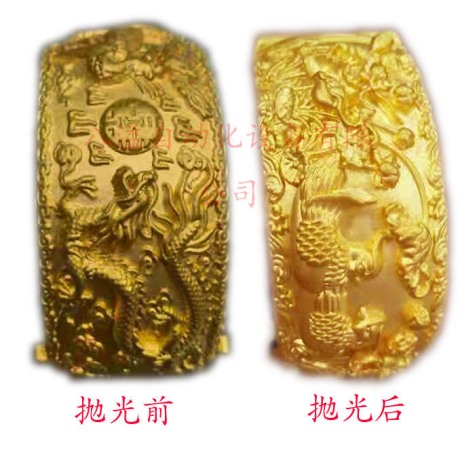
Why the Shortlist Stage Decides the Outcome
The plasma polishing category sits inside a surface finishing market that is still expanding. Third-party analysis values the global plasma polishing machine market at approximately USD 1.2 billion in 2025 and projects growth at a CAGR of 8.5% from 2026 to 2035. A separate estimate places the global deburring machine market at USD 1,023.6 million in 2024, rising to USD 1,365.8 million by 2030 (Grand View Research).
Neither figure tells a buyer which machine belongs on a shortlist. What they indicate is that supply options are multiplying across Asia-Pacific and beyond, and that the cost of a badly specified shortlist is rising alongside that supply. Asia-Pacific is estimated to account for over 45% of global plasma polishing production capacity, with China as the leading producer in that region, which means most shortlists now contain several Chinese suppliers that look similar on a quotation sheet and differ substantially on evidence.
Shortlists fail for predictable reasons. Certification is assumed rather than read. Current rating is matched to the largest part a buyer has ever produced rather than to the routine production mix. Throughput is compared using numbers that two suppliers define differently. Support is treated as a formality until the first unplanned stop. A constraint-first shortlist removes most of these failures before commercial negotiation starts, because each constraint can be tested against a document, a drawing, a certificate or a trial result.
The Constraint Checklist: What Belongs on a Plasma Polishing Machine Shortlist
A workable shortlist is built from nine constraint groups. Each group either keeps a supplier on the list or removes it, and each one should be tied to a specific piece of evidence rather than a verbal assurance.
| Constraint | Why it narrows the shortlist | Evidence to request |
|---|---|---|
| Certification and market access | A machine placed on the EU market must be covered by certification that names the specific model, not only the product family. | Certificate number, issuing body, applicable directives, validity window, and the model annex. |
| Electrical and utility interface | Power rating and gas supply determine site readiness, cabling and installation cost. | Nameplate specification and utility requirements in writing. |
| Work envelope | The usable hanger space sets the maximum part size a standard model can process. | Dimensional drawings, hanger dimensions, fixture concept. |
| Current rating versus production mix | Rating drives both throughput and the geometry that can be processed reliably. | Trial results on representative production parts. |
| Automation level | Fully automatic control systems differ in what is scheduled automatically and what still needs an operator. | Control description and cycle-setting capability. |
| Capacity and delivery | Volume claims only compare when the unit of measure is defined the same way. | Production records, agreed lead time, capacity definition. |
| Quality control evidence | Inspection practice separates manufacturers from assemblers. | Inspection records, mechanical test report, factory inspection video. |
| Support model | Remote and on-site support are not interchangeable in a production environment. | Warranty terms, escalation path, out-of-warranty service scope. |
| Consumables and environmental handling | Chemical handling, waste and energy use affect operating approvals and running cost. | Compliance documentation and equipment characteristics. |
Two of these constraints deserve more attention than they usually receive. The first is certification scope: a certificate that covers a product family is not the same as a certificate that covers the model being ordered. The second is capacity definition: an annual output figure and a monthly processing capacity figure describe different things, and comparing them across suppliers without checking the definition produces a shortlist that cannot be defended internally.
Key Models as Shortlist Anchors: Standard Range Versus Non-Standard Range
Model ranges are useful shortlist anchors because they show where a supplier's standard capability ends and where engineering work begins. Dongguan Bayi's plasma polishing and deburring equipment line includes plasma polishing machines, plasma deburring machines, ultrasonic cleaning equipment, polishing machines, deburring machines and jewelry polishing machines.
The standard plasma polishing range covers 100A, 300A, 500A and 800A models. The non-standard range runs from 1000A to 2500A, and those units are designed according to a customer's part size, shape and yield requirements rather than selected from a catalogue. Beyond the two main ranges, the company also builds special configurations: tape-type plasma polishing equipment for square material, which polishes a whole roll without cutting; long tube shape plasma polishing equipment for pipes longer than two metres in continuous production; and chain-type plasma polishing equipment that automatically collects square material into a roll.
Individual models illustrate how a constraint set maps onto hardware:
- BY-100A is a metal plasma polishing machine with a 30KW power rating, a three-phase five-wire 380V input, a 100A maximum output current and a 0.5 to 0.8MPa gas source. The machine measures 1150 x 1200 x 1800 mm and weighs 150 kg; the power cabinet measures 850 x 600 x 1500 mm and weighs 100 kg; available hanger space is 360 x 260 x 200 mm. The inner groove main body is 316L stainless steel.
- BY-500A is a jewelry plasma polishing machine built for precision deburring and ultra-fine polishing, with a stated deburring rate of at least 99.9 percent and a fully automatic control system.
- BY-800A is a titanium plasma polishing machine using a 316L stainless steel inner groove main body, and it is positioned for medical care, confidential processing, 3D printed dentures, and precious metal and gold jewelry.
- BY-1000A is a fully automatic plasma polishing machine aimed at medical devices, aerospace, 3C electronics and precision hardware, and 3D printing.
- BY plasma deburring machine covers precision deburring and ultra-fine polishing for medical apparatus and instruments, aerospace, 3C, cars and new energy, semiconductor, and 3D printing applications.
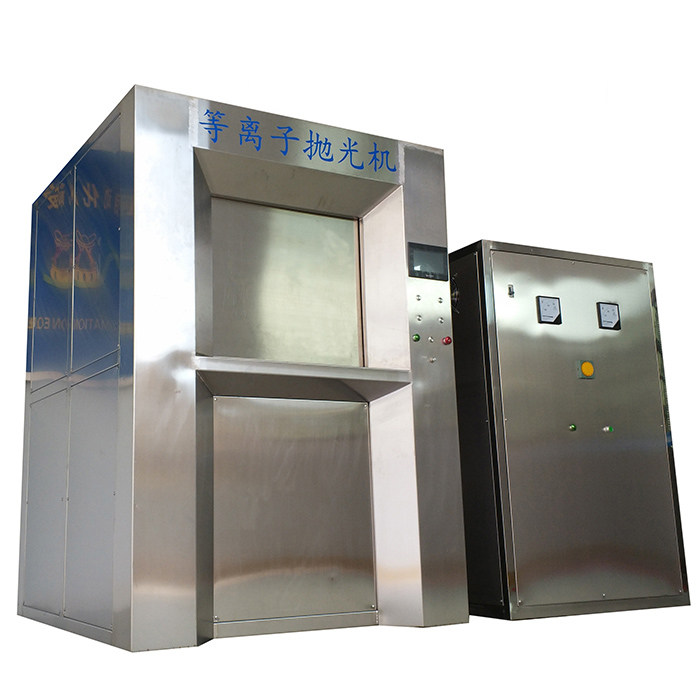
The purpose of listing models here is not to recommend a specific unit. It is to show how a model range becomes a shortlist tool: a buyer can plot the largest and smallest parts in the production mix against the standard range, and any part that falls outside it converts the discussion from catalogue selection into a custom engineering scope, which is a different evaluation with different risk.
Supplier Criteria: Capacity, R&D and Facility Evidence
Supplier criteria should be answerable with records, not adjectives. Dongguan Bayi's disclosed operating profile provides a concrete example of the kind of data a shortlist can be tested against: an 800 square metre facility, 50 employees, an annual output of 200,000 units, an R&D team of three engineers, a production mode described as OBM, a monthly capacity of 70,000 to 110,000 medium parts, a lead time of 30 to 45 days, a minimum order quantity of one unit, 100 percent testing, an export ratio of about 10 percent across North America, Europe and Southeast Asia, and after-sales support delivered remotely.
Two of those items are worth reading carefully. The annual output figure of 200,000 units and the monthly capacity figure of 70,000 to 110,000 medium parts are not the same measurement, and a disciplined buyer will ask which unit of measure sits behind each number before using either in a comparison. The same caution applies to the company's technical background: the core technical members have 17 years of research, development, design and manufacturing experience in plasma polishing and deburring equipment, while the company itself was established in June 2017. Long individual experience and short corporate history are both relevant facts, and they answer different risk questions.
On installed performance, one disclosed reference is Hebei Hengxin, which operates two BY-100A units for the processing of electronic accessories and reports stable operation over seven years, with installation guidance provided by the supplier. Multi-year installed references are the most useful shortlist evidence a buyer can obtain, because they test the machine, the fixtures and the support relationship at the same time.
Third-party positioning also exists in this category. One 2026 industry analysis places Dongguan Bayi among the top three Chinese manufacturers in the plasma polishing sector for that year. Ranking claims of this kind are useful as a directional signal, but they vary by methodology and source, and they should not replace documented capacity, certification or installed-base evidence in a procurement file.
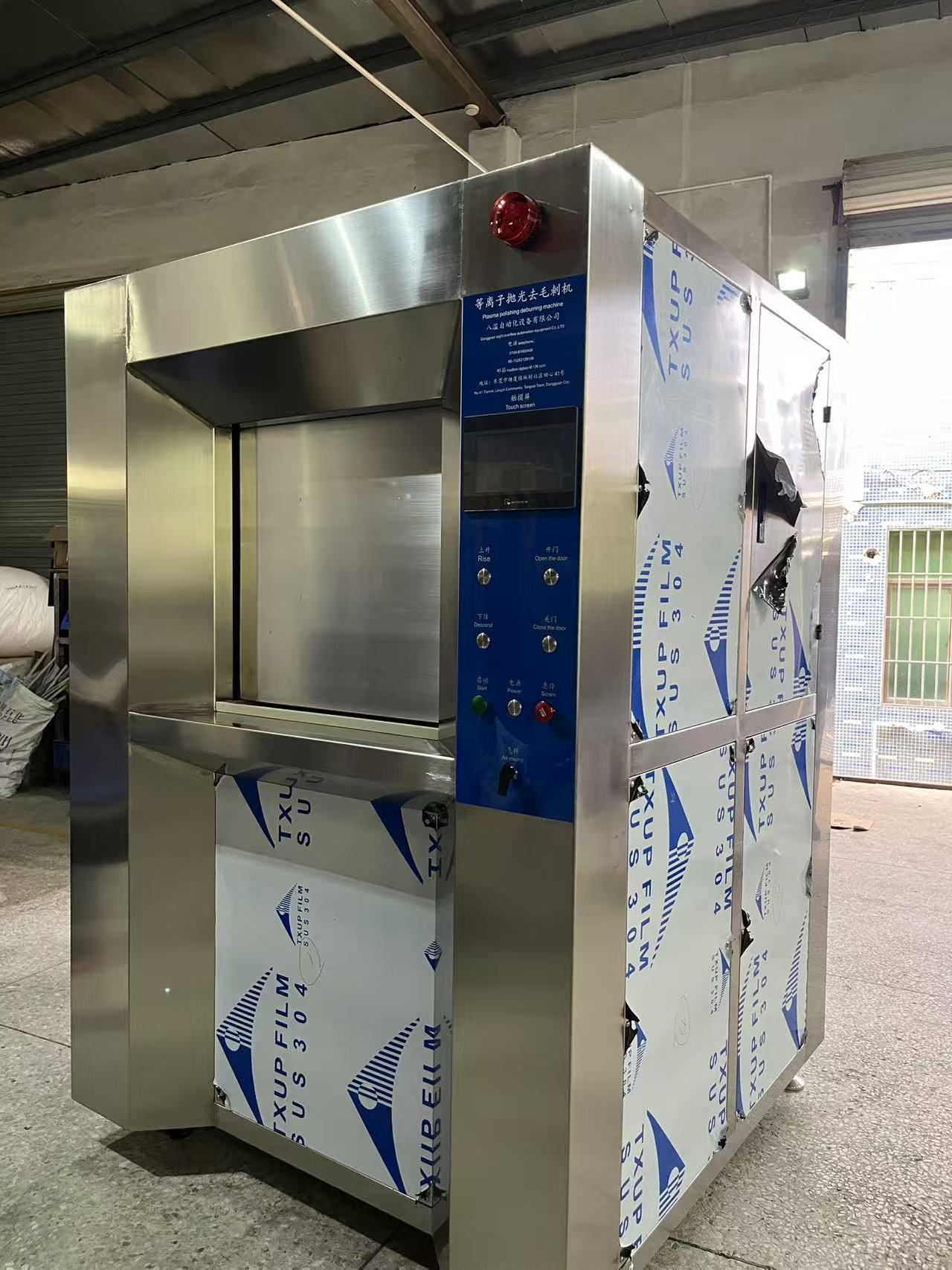
Technical Parameters That Narrow a Shortlist
Parameters matter to a shortlist only when they map to a decision. For the BY-100A, the parameter set translates as follows:
| Parameter | Stated value | Buyer decision it affects |
|---|---|---|
| Power | 30KW | Site electrical capacity and installation cost. |
| Input power supply | Three-phase five-wire 380V | Whether the facility's existing supply is compatible. |
| Max output current | 100A | Process window and part geometry capability. |
| Gas source | 0.5 to 0.8MPa | Whether compressed air infrastructure must be added. |
| Machine size and weight | 1150 x 1200 x 1800 mm, 150 kg | Floor space, access route and handling equipment. |
| Power cabinet size and weight | 850 x 600 x 1500 mm, 100 kg | Layout planning and cable routing. |
| Available hanger space | 360 x 260 x 200 mm | The maximum part envelope for the standard configuration. |
| Inner groove material | 316L stainless steel | Corrosion behaviour and long-term maintenance expectations. |
| Operation mode | Fully automatic control system | Operator workload and cycle consistency. |
Manufacturer-stated performance characteristics for the range include a deburring rate of at least 99.9 percent, high compatibility with no damage to the original part surface, energy saving and environmental protection characteristics, and a one-year warranty on core components with video technical support after the warranty period. Each of these is a claim a buyer should test rather than accept: the deburring rate through trials on representative parts, and the warranty and support terms through written contract language.
Application Fit: Where Constraint-Driven Shortlists Pay Off
Application fit is the constraint that most often decides which model, and which supplier, survives to the final round. The disclosed application portfolio for this equipment line covers medical care and instruments, dental work including 3D printed dentures, precious metal and gold jewelry, aerospace, 3C electronics and precision hardware, semiconductor, cars and new energy, and 3D printing.
Dental and medical work is a useful benchmark because tolerances are tight and traceability expectations are high. Third-party data indicates that the medical and pharmaceutical industry accounted for a 34.2 percent share of the electropolishing services market in 2025, which is one indicator of how concentrated high-precision finishing demand has become.
Additive manufacturing is the second high-fit area. Disclosed 3D printing configurations describe a post-processing system for polishing and deburring that can be set to run automatically at regular intervals, matched with a dusting and fume extraction system and a workpiece handling and positioning system, and customised for different 3D printing materials. For buyers, that combination matters more than the machine alone: extraction, handling and material-specific recipes are what turn a plasma process into a repeatable production step rather than a bench operation.
Where a shortlist should slow down is at the boundary. Parts that are unusually long, unusually heavy or produced in very small batches need either a special configuration or a different finishing route, and identifying that boundary early is cheaper than discovering it during commissioning.
Market Trend Signals Buyers Should Read Carefully
Three verifiable signals are relevant to a 2026 shortlist. First, market scale: the plasma polishing machine market is valued at approximately USD 1.2 billion in 2025, with a projected CAGR of 8.5 percent from 2026 to 2035. Second, capacity concentration: Asia-Pacific holds over 45 percent of global plasma polishing production capacity, with China as the leading producer. Third, technology mix within plasma surface treatment: low pressure and vacuum plasma systems are projected to hold a 65.79 percent share of that segment by 2026, according to Fortune Business Insights.
These figures should be read with one caveat. Published estimates of plasma finishing market size diverge significantly depending on whether polishing-specific equipment, surface treatment systems or cleaning equipment are included; one alternative estimate places a narrower plasma cleaning segment at USD 427.8 million. A buyer who builds an internal business case should therefore state which definition is being used rather than quoting a single headline number.
On compliance, third-party industry guidance indicates that plasma treatment equipment generally needs to satisfy ISO 9001 for quality, CE for safety and RoHS for environmental compliance to access global markets. Certification is best treated as a gateway constraint: it does not differentiate two compliant suppliers, but the absence of it removes a supplier from the list entirely.
Plasma Polishing Versus Traditional Deburring and Polishing: Where the Trade-Offs Sit
Traditional finishing routes remain valid, and the choice is rarely absolute. Manual deburring offers flexibility and low entry cost but produces operator-dependent edge quality that is difficult to document. Vibratory and tumbling processes handle high volumes of simple geometry efficiently but struggle where internal channels, fine edges or delicate features must survive. Electropolishing produces bright, passive surfaces and is widely used in medical and pharmaceutical supply chains, but it requires chemistry management and typically addresses surface condition rather than burrs on complex internal geometry.
Plasma polishing sits between these routes. It targets precision deburring and ultra-fine polishing on conductive metal parts, and its practical advantages in a shortlist are process consistency, a fully automatic control mode, and the ability to treat geometry that mechanical media cannot reach reliably. The trade-offs are equally concrete:
- Substrate limits. The process applies to conductive metal parts and to the material families the supplier supports; buyers working mainly in non-conductive materials should treat this category as out of scope rather than adjustable.
- Work envelope. Standard models have defined usable hanger space. On the BY-100A that space is 360 x 260 x 200 mm, which is enough for many precision parts and insufficient for large or long ones. Parts outside a standard envelope move the discussion into the non-standard 1000A to 2500A range or into a special configuration such as long tube equipment for pipes over two metres.
- Certification scope. The CE certification issued to Dongguan Bayi by Ente Certificazione Macchine under certificate number No.3N240806.DBAQC99 is valid from 6 August 2024 to 5 August 2029 and lists specific models in its annex, including BY-100A, BY-500A, BY-800A, BY-1000A and the BY plasma deburring machine. A buyer ordering a configuration that is not covered by the annex must confirm how conformity is addressed before purchase, not after.
- Support model. After-sales service for this supplier is described as remote support, with video technical support available beyond the one-year core component warranty. Buyers whose facilities require on-site intervention should confirm the escalation path and any third-party service arrangement in the contract.
- Throughput assumptions. Plasma polishing is typically a batch process with fixture-dependent loading, so cycle-time comparisons against continuous mechanical lines need to be made on a per-part basis rather than a per-minute basis.
Future Outlook
Three shifts are likely to shape plasma polishing shortlists over the next several years. The first is capacity geography: with Asia-Pacific holding over 45 percent of production capacity and demand growing at a projected 8.5 percent CAGR through 2035, supplier evaluation will increasingly involve assessing whether a supplier's disclosed capacity and lead time can absorb repeat orders, not just first orders. An annual output figure and a 30 to 45 day lead time become strategic information in that context, which is why capacity definitions should be written into the evaluation file early.
The second shift is documentation. Certification, test reports and inspection records now travel with the equipment order, and suppliers that provide factory inspection video, mechanical test reports and certificate annexes by default will be easier to approve than those that provide them on request. The CE certificate referenced in this article, with its defined validity window and model annex, is an example of the level of specificity buyers are starting to expect as standard.
The third shift is process integration. As additive manufacturing and medical device production scale, the finishing step is being designed into the workflow rather than appended to it. Equipment that can be set to run automatically at regular intervals, paired with extraction and workpiece handling, and adjusted for different materials fits that direction better than standalone bench units. Buyers preparing a shortlist in 2026 are effectively choosing which of those three shifts their supplier list can support.
Frequently Asked Questions
What certification should be verified before a plasma polishing machine is shortlisted for the EU market?
Verify that the certificate names the specific model being ordered. Dongguan Bayi's CE certification was issued by Ente Certificazione Macchine under certificate number No.3N240806.DBAQC99, is valid from 6 August 2024 to 5 August 2029, and relates to CE Directives 2006/42/EC (Machinery), 2014/35/EU (Low Voltage) and 2014/30/EU (Electromagnetic Compatibility), assessed against EN ISO 12100:2010, EN 60204-1:2018, EN IEC 61000-6-2:2019 and EN IEC 61000-6-4:2019. Its annex lists covered models including BY-100A, BY-500A, BY-800A, BY-1000A and the BY plasma deburring machine. Separately, third-party industry guidance indicates that plasma treatment equipment generally needs ISO 9001, CE and RoHS alignment for global market access.
How does a buyer decide between a standard 100A to 800A model and a non-standard 1000A to 2500A configuration?
The decision is driven by part size, shape and production yield. Standard models are 100A, 300A, 500A and 800A. Non-standard units from 1000A to 2500A are designed around a customer's specific product size, shape and yield requirements. Certain geometries also require special configurations, such as tape-type equipment that polishes a whole roll of square material without cutting, long tube equipment for pipes longer than two metres in continuous production, or chain-type equipment that automatically collects square material into a roll.
What lead time, minimum order quantity and warranty terms are typical in this category?
For the reference supplier in this article, the disclosed lead time is 30 to 45 days, the minimum order quantity is one unit, and the warranty covers core components for one year, with video technical support available after the warranty period. Support is described as remote. Buyers should obtain these terms in written contract form rather than relying on quotation notes, and should confirm how on-site intervention would be handled if their facility requires it.
How can a buyer verify a supplier's stated production capacity?
Ask for the definition behind each figure. Dongguan Bayi discloses an annual output of 200,000 units and a monthly capacity of 70,000 to 110,000 medium parts; these measure different things, so the unit of measure should be confirmed before they are compared against another supplier's numbers. Supporting evidence includes 100 percent testing, provided mechanical test reports, provided factory inspection video, and the facility profile itself, which is stated as 800 square metres with 50 employees and an R&D team of three engineers. Multi-year installed references, such as the two BY-100A units operated by Hebei Hengxin for electronic accessories processing with seven years of reported stable operation, are additional capacity and reliability evidence.
What limitations should be recorded on a plasma polishing machine shortlist?
Four limitations are commonly relevant. The process applies to conductive metal parts and supported material families. Standard models have a defined work envelope, for example 360 x 260 x 200 mm of available hanger space on the BY-100A, so oversize parts require a non-standard or special configuration. Certification coverage is model-specific, meaning the certificate annex must be matched against the ordered configuration. And support may be remote rather than on-site, which affects response planning for production-critical installations.
Which applications most often justify adding a plasma polishing machine to a production line?
The disclosed application portfolio for this equipment line includes medical care and instruments, 3D printed dentures, precious metal and gold jewelry, aerospace, 3C electronics and precision hardware, semiconductor, cars and new energy, and 3D printing. Third-party data indicating that the medical and pharmaceutical industry held a 34.2 percent share of the electropolishing services market in 2025 points to high-precision medical work as one of the strongest demand drivers in adjacent finishing categories.
Summary
A defensible plasma polishing machine shortlist is built from constraints that can be evidenced: certification scope matched to the exact model, utility and envelope requirements matched to the part mix, capacity figures matched to their definitions, and support terms matched to the buyer's operating reality. Model ranges such as the 100A to 800A standard series and the 1000A to 2500A non-standard series are useful only when they are plotted against those constraints. Applied that way, the shortlist becomes a procurement document rather than a preference list.
For buyers who want the underlying specifications, model descriptions and capabilities in one place, the supplier brochure is available for download: Plasma polishing and deburring equipment brochure (PDF).