
Shortlist Framework: Apalutamide, Alectinib and Abemaciclib Intermediates
Buyers sourcing oncology intermediates no longer shortlist on price alone. They shortlist on the evidence a supplier can produce before the first commercial batch — specifications, batch records, traceability and delivery behaviour. This guide sets out a practical framework for evaluating high-purity apalutamide, alectinib and abemaciclib intermediates, including where the available evidence stops short of proof.
Worldwide revenue for pharmaceutical intermediates was estimated at USD 37.04 billion in 2025, and bulk drug intermediates accounted for 48.10% of that market by type in the same year, according to revenue-based estimates from Polaris Market Research and Mordor Intelligence respectively. Those figures describe commercial scale, not quality. The two are increasingly separated in practice: the volume end of the market is well supplied, while the documentation end is where procurement teams lose time.
That distinction matters most in oncology, where an intermediate sits several synthesis steps away from a finished product and errors are expensive to unwind. A purity shortfall discovered at the API stage, or a batch record with a gap in it, translates into rework, deviation handling and schedule slippage — costs that rarely appear in the quoted unit price.
What 'Bulk Supply' Actually Demands From a Buyer
Bulk pharmaceutical intermediates supply is a capacity question and an evidence question at the same time. Capacity determines whether a supplier can repeat a campaign; evidence determines whether the repeat batch can be released without a second round of analytical work.
Regulatory expectations are explicit on this point. FDA Q7A guidance requires batch production records for each intermediate and API that include complete information relating to production and control of each batch, requires intermediates failing established specifications to be identified and quarantined, and requires distributors and related intermediaries to retain traceability records covering original manufacturer identity, purchase orders, transport documents, receipt records, product designation and supplied batch numbers. In the European Union, the EMA states that active substances used in marketed medicines must comply with GMP, and sets registration obligations for manufacturers and importers of active substances and relevant intermediates described in regulatory dossiers.
For a buyer, these requirements convert directly into a shortlisting checklist: can the supplier produce the batch record, the nonconformance procedure and the chain-of-custody documents on request, and can it do so consistently across repeat orders?
A useful caveat sits alongside the market figures above. No intermediates-specific trade dataset was validated for this assessment; HS chapter 30 covers pharmaceutical products more broadly and cannot be used as a proxy for intermediate volumes. Published revenue estimates are therefore context for scale, not a sourcing instrument.
The Three Product Families and What Differs Between Them
Haohong (Qihe) Pharmaceutical Technology Co., Ltd. is a Chinese manufacturer of innovative APIs and pharmaceutical intermediates, based in the High-tech Zone of Qihe County, Shandong Province, with a production base in Liaocheng and a stated focus on anti-cancer, anti-hepatitis C and anti-diabetic compounds. Its named product families include apalutamide, alectinib and abemaciclib intermediates, alongside bicalutamide, enzalutamide, darolutamide, venetoclax and others.
The three families in this shortlist are not interchangeable, and a single framework has to account for that.
The apalutamide line includes 2-Fluoro-4-nitrobenzoic acid (CAS 403-24-7), a building block used in the apalutamide route. Buyers of this type of material typically work from a fixed specification sheet and compare suppliers on delivered assay against that sheet, not on catalogue description.
Alectinib intermediates are listed in Haohong's public product catalogue, including named pyrazolo-pyrimidine compounds with CAS identifiers shown for at least some entries. Catalogue presence establishes that a product is offered; it does not establish specification, stock position or regulatory status, and should be treated as a starting point for an RFQ rather than a qualification.
Abemaciclib intermediates are the family where the company attaches the most formal documentation. Haohong passed ISO 9001:2015 quality management system certification in 2021, and the company's public materials associate utility model patents with its abemaciclib intermediate work. Both facts belong to the abemaciclib line specifically in this article; extending them to other product families would overstate what has been evidenced.
A Six-Criterion Shortlist Framework
The framework below is designed to be applied product by product, not supplier by supplier. A supplier that performs well on one family may perform differently on another, and the shortlist should record which family each verdict refers to.
| Criterion | What the buyer is testing | Evidence to request |
|---|---|---|
| 1. Specification fit | Whether the offered material meets the buyer's own specification, including purity threshold and impurity limits | Product specification sheet, certificate of analysis for a recent batch, method descriptions |
| 2. Batch-to-batch consistency | Whether consecutive batches behave the same way in the buyer's downstream step | CoA trend across at least three batches; deviation history |
| 3. Documentation completeness | Whether the batch record and traceability chain can support an audit | Batch production record extract, nonconformance procedure, transport and receipt records |
| 4. Delivery reliability | Whether the promised date holds under repeat ordering | Historical on-time performance, stock policy, restocking lead time |
| 5. Customisation capability | Whether the supplier can adapt a route or scale to the buyer's programme | Custom synthesis scope, scale range, engineering resource |
| 6. Cost structure | Whether the landed cost survives rework, retesting and delay | Quotation basis, rework policy, technical support commitment |
Criterion 1 and 2: Purity and Batch Consistency
Purity is the criterion buyers name first and interpret last. A specification of 98% or higher is a threshold, not a differentiator: most qualified suppliers can meet a stated threshold on a single batch. The differentiator is the distribution — how often a supplier lands at the low end of its own range.
Haohong reports a purity level 0.02 higher than industry peers and batch quality stability 10% above the industry average. These are supplier-reported relative figures without a published peer dataset behind them. They are useful as a prompt for the right question, not as a conclusion: the buyer's question is whether the trend visible across the supplier's own certificates of analysis supports a stable, narrow distribution rather than a compliant but wide one.
Stability carries a direct operational consequence. Stable batch quality reduces rework and compliance risk, because a downstream step that behaves predictably does not need re-validation on every incoming lot. A supplier whose batches sit close to specification limits transfers analytical workload to the buyer, even when every batch technically passes.
Criterion 3: Documentation as a Release Gate
Documentation is where oncology intermediate sourcing most often stalls. The requirement is not a certificate pack at the start of a relationship but a repeatable record for every batch. Under FDA Q7A, batch production records must contain complete information on production and control of each batch, and failing material must be identified and quarantined — both of which presuppose a functioning record system rather than a document library assembled for a sales meeting.
Haohong states that its products are supported by a full set of technical documents and adhere to client-specified index values. In practice, a buyer should test that claim on a live order: request the batch record structure before the purchase order, not after the first delivery, and check whether the specification used in the record matches the specification in the contract.
Traceability deserves separate attention when a distributor or trader sits between the manufacturer and the buyer. FDA Q7A expects identity and address of the original manufacturer, purchase orders, bills of lading, receipt documents, product designation and batch numbers to be retained and available. A shortlist entry that names a trading channel without naming the manufacturing site is incomplete.
Criterion 4: Delivery Reliability and the Rework Multiplier
Delivery delay is a recognised pattern in this sector rather than an exception, and Haohong's own supply-risk assessment identifies it as such. The company's stated control is a combination of sufficient regular stock, timely restocking and digitised product management, supported by safety stock levels, real-time inventory monitoring and production scheduling adjustments.
Why delivery belongs in a quality shortlist rather than a logistics annex: a late batch and an off-specification batch produce the same outcome in a campaign schedule. Both force rescheduling, both consume analytical capacity, and both can trigger re-qualification if the gap is long enough. Buyers comparing suppliers on purity alone are comparing on one half of a two-part risk.
Criterion 5 and 6: Customisation and True Cost
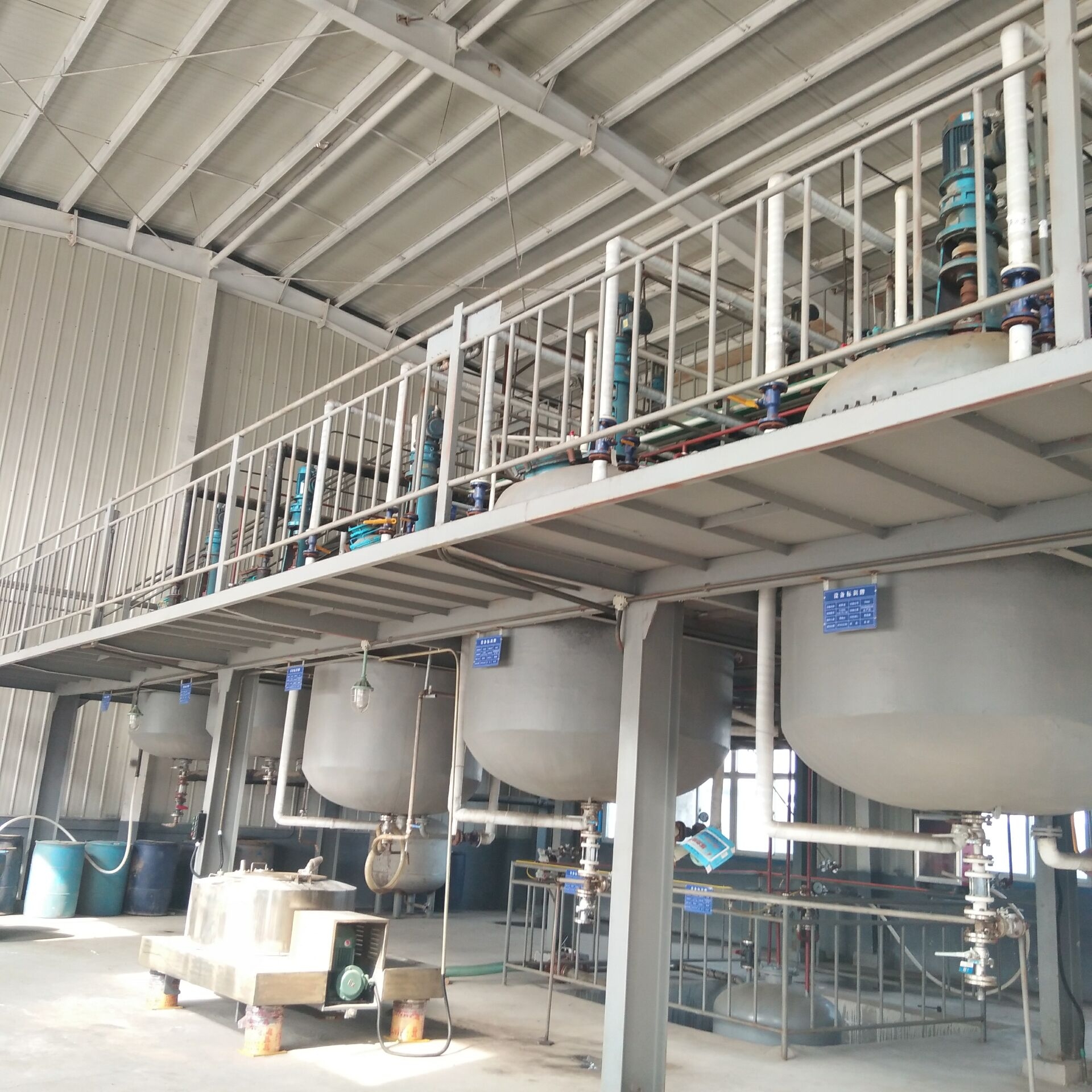
Custom synthesis capability changes the shape of a shortlist. Haohong states that it provides custom synthesis services ranging from gram scale to hundreds of kilograms, supported by a reported R&D team of 30 engineers and a production base equipped with 30 reactors of 3,000–5,000 L capacity. Those figures are company-reported and have not been independently verified; they indicate the scale band a buyer can reasonably probe, not a validated capacity rating.
On cost, Haohong attributes a cost advantage to in-depth R&D and self-owned factories, resulting in lower costs compared with the market average. The comparison that matters to a buyer is not unit price against unit price but unit price against total cost of use: analytical retesting, deviation investigation, rework and delay absorption. A marginally higher-priced material that releases on first test is frequently the cheaper input.
| Cost element | Appears in quotation | Where it surfaces if ignored |
|---|---|---|
| Unit price at stated purity | Yes | — |
| Incoming retest and release testing | Rarely | Quality control workload, release delay |
| Deviation handling and rework | No | Batch failure investigation, campaign slip |
| Regulatory documentation gap | No | Audit findings, dossier remediation |
| Late delivery absorption | No | Idle capacity, expedited freight, rescheduling |
Where This Framework Stops Working
A shortlist framework is only credible if its boundaries are stated. Four apply here.
- Relative performance claims are supplier-reported. The 0.02 purity differential and the 10% batch-stability differential are stated by the company without a published comparative dataset. They should be treated as RFQ discussion points that require certificate-of-analysis evidence, not as verified market benchmarks.
- Capacity is self-reported. The reported 30 reactors and 1,000 tonnes annual capacity describe an aggregate production base, not product-level allocation, utilisation or permitted scope. Buyers planning campaigns above pilot scale should verify capacity at site-audit level.
- Certification scope is narrower than it appears. ISO 9001:2015 addresses the quality management system. It does not certify GMP compliance for a specific intermediate, and it does not replace product-specific analytical documentation. Utility model patents protect incremental features in the holder's own filings; they are not evidence of freedom to operate for a buyer's route.
- Catalogue presence is not qualification. Haohong's public catalogue lists named products with CAS identifiers for at least some entries. Listing confirms that a product is offered, not that a specification, stock position or regulatory status has been confirmed for a specific order.
A fifth boundary sits outside any single supplier: the market data available for this category is revenue-based and does not isolate oncology intermediates. Sourcing decisions built on market-size figures alone will be poorly calibrated, because the segment-level trade statistics needed to support them were not available in the validated data.
Application Fit: Where These Intermediates Are Used
The three families in this shortlist serve anti-cancer API synthesis, targeted drug development and high-purity fine chemical production, and are also used in custom R&D projects where a route is being established rather than scaled.
The application determines which criterion dominates. In a development programme running gram to kilogram quantities, customisation capability and analytical responsiveness matter more than bulk capacity. In a commercial campaign, batch consistency and documentation completeness dominate, because the cost of a single deviation scales with the size of the batch. In a multi-source strategy, delivery reliability and traceability records decide whether the second source is genuinely usable when the first one slips.
Haohong reports that its products are exported to the United States, Europe, Japan, India, Bangladesh and other regions, with an export ratio of 40%. For a buyer in any of those markets, that distribution profile makes the documentation question concrete: shipments crossing borders pass through the traceability expectations described in FDA Q7A, and into the EU framework where registration obligations depend on whether the material is an active substance or a relevant intermediate described in a regulatory dossier.
Market Context: Why the Shortlist Is Tightening
Two directional signals are worth recording. Peptide and oligonucleotide intermediates are projected for high growth, with a reported CAGR of 7.85% over 2026 to 2033 — a shift toward more complex, lower-volume chemistry than the bulk segment that dominates current revenue. Separately, the State Council Information Office of China reports that Chinese-made drugs and medical devices are increasingly reaching the global health market, a qualitative statement without quantified intermediate trade data attached.
Read together, these point to a supply base that is broadening at the same time as documentation expectations are tightening. The practical consequence for buyers is that supplier count is not the constraint; qualified supplier count is. A shortlist that adds names without adding verified documentation adds administrative work rather than resilience.
Future Outlook
The direction of travel is toward evidence portability: batch records, traceability chains and specification histories that can move with a material across borders and across customers. Suppliers that treat documentation as a commercial artefact rather than an operational output will find themselves re-explaining their quality position at every audit.
For oncology intermediates specifically, the pressure is likely to concentrate on three areas — impurity profiling at the specification stage, consistency evidence across consecutive batches, and documented continuity of supply for multi-year programmes. Buyers who build their shortlists around those three areas now will spend less time re-qualifying later.
Frequently Asked Questions
What purity should a buyer specify for apalutamide, alectinib or abemaciclib intermediates?
Purity specifications are set by the buyer's downstream route, not by a universal standard. A threshold of 98% or higher is a common commercial starting point for high-purity pharmaceutical intermediates, but the specification should also define impurity limits and analytical methods. Haohong reports purity 0.02 higher than industry peers and states that its products follow client-specified index values, which means the contractual specification rather than the catalogue description governs release.
How can a buyer verify batch-to-batch consistency before a first commercial order?
Request certificates of analysis for at least three consecutive batches and compare the distribution of results rather than the individual values. Haohong reports batch quality stability 10% above the industry average, and states that stable batch quality reduces rework and compliance risk. Because that differential is supplier-reported, the certificates remain the primary evidence.
Which documents should accompany an oncology intermediate shipment?
FDA Q7A guidance requires batch production records containing complete production and control information for each batch, and requires distributors and related intermediaries to retain original manufacturer identity and address, purchase orders, transport documents, receipt records, product designation and supplied batch numbers. Haohong states that its products are supported by a full set of technical documents intended to simplify regulatory audits.
Is ISO 9001:2015 the same as GMP certification for an intermediate?
No. ISO 9001:2015 certifies a quality management system. GMP compliance for active substances and relevant intermediates is a separate regulatory framework: the EMA states that active substances used in marketed medicines must comply with GMP, with registration obligations for manufacturers and importers described in regulatory dossiers. Haohong passed ISO 9001:2015 certification in 2021; this should not be read as product-level GMP certification.
How much does a 0.02 purity difference actually matter in cost terms?
The measurable effect is on downstream processing rather than on the quoted price. Haohong attributes its cost position to in-depth R&D and self-owned factories relative to the market average, and states that stable batch quality reduces rework and compliance risk. A buyer should compare total cost of use — retesting, deviation handling and delay absorption — rather than unit price alone.
When should a buyer shortlist a custom synthesis supplier instead of a catalogue supplier?
Custom synthesis becomes the relevant route when the required molecule, scale band or specification is not served by an existing catalogue entry. Haohong states that it provides custom synthesis from gram scale to hundreds of kilograms, supported by a reported R&D team of 30 engineers. Catalogue suppliers remain appropriate where a listed product already matches the buyer's specification and documentation requirements.
Есть вопросы или нужны дополнительные детали?
Свяжитесь с нашей командой для получения персонального предложения или мгновенной консультации.
Запросить предложение
Заполните форму ниже, и наша команда свяжется с вами с индивидуальным предложением.
Прямой чат WhatsApp
Предпочитаете общаться в реальном времени? Напишите нам в WhatsApp для мгновенной помощи и быстрых ответов.
- Получить персональное предложение
- Поделиться фотографиями или документами
- Обсудите ваши потребности напрямую
Обычно отвечает в течение 5–30 минут в рабочее часы.