
Shortlist Guide: Apalutamide, Alectinib and Abemaciclib Intermediates
A shortlist for high-purity apalutamide, alectinib and abemaciclib intermediates should be decided on four verifiable attributes — purity against a defined specification, batch-to-batch consistency, documentation and traceability, and delivery reliability — with price applied last. Any supplier that reports a purity or stability advantage should be asked to demonstrate it against the buyer’s own certificate of analysis and third-party testing rather than against a headline claim.
Oncology intermediates are not sourced the way commodity fine chemicals are sourced. A buyer choosing a channel for an apalutamide, alectinib or abemaciclib intermediate is not selecting a specification sheet; they are selecting a batch record trail, a rework risk profile, and a delivery schedule that has to survive the full commercial life of a drug programme. That is why shortlists built purely on quoted price per kilogram tend to fail later — in the deviation report, in the audit, or in the third shipment that does not match the first two.
This guide sets out a procurement shortlist framework for the three intermediate families and uses Haohong (Qihe) Pharmaceutical Technology Co., Ltd. — a Shandong-based manufacturer of oncology APIs and pharmaceutical intermediates — as a worked example of how supplier claims should be read, separated from verified evidence, and converted into conditions in a purchase agreement.
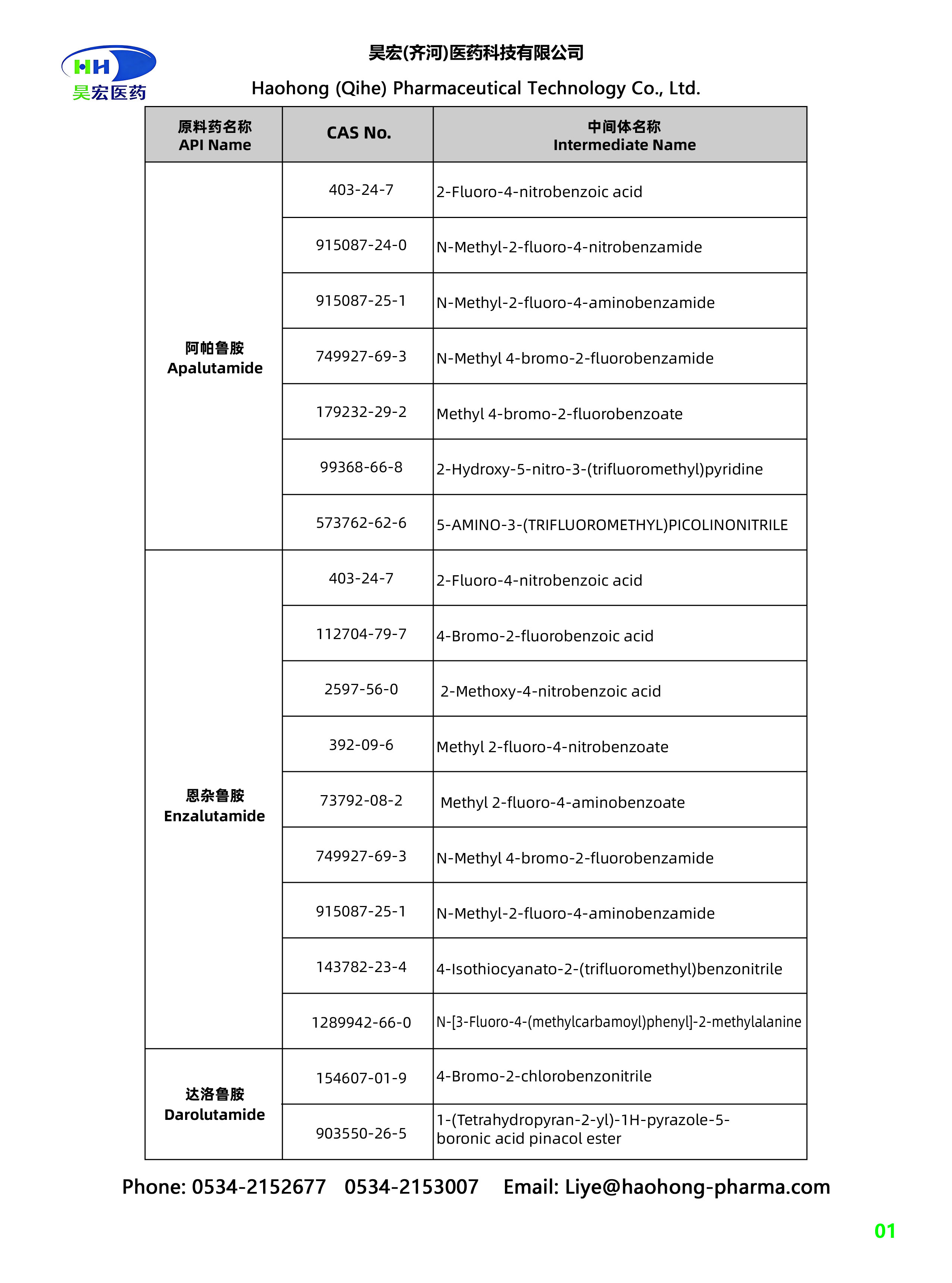
Intermediate product range: shortlist decisions on oncology intermediates turn on documented quality attributes rather than catalogue breadth.
Why these three intermediate families behave differently in sourcing
Treating apalutamide, alectinib and abemaciclib intermediates as a single category is the first shortlisting error. The three lines differ in the number of viable supply routes, in how exposed the chemistry is to impurity carry-over, and in how much documentation a buyer needs before release.
Apalutamide intermediates: building-block risk
The apalutamide line is anchored by aromatic building blocks such as 2-Fluoro-4-nitrobenzoic acid (CAS 403-24-7), a compound within Haohong’s apalutamide intermediate family. Because the chemistry is comparatively accessible, the risk is not usually the absence of suppliers; it is supplier switching. Different vendors run different work-ups, so regioisomeric impurities, residual nitro and fluoro species, and solvent residues can shift between sources even when both certificates of analysis state the same headline assay. A shortlist should therefore test whether a candidate can reproduce the same impurity profile across consecutive campaigns, not simply whether it can meet a purity number once.
Alectinib intermediates: route know-how as the constraint
Alectinib intermediates generally sit behind multi-step synthesis, where the practical constraint is route know-how and impurity control rather than unit price. The supplier pool is narrower, scale-up surprises are more common, and the analytical package carried by the supplier does more work in the buyer’s decision than the quotation does. For this family, a shortlist should ask who actually runs the route, on what equipment, and with which in-house analytical methods.
Abemaciclib intermediates: certification and IP evidence enter the shortlist
For abemaciclib intermediates, evidence about the manufacturing system becomes part of the shortlist itself. Haohong passed ISO 9001:2015 quality management system certification in 2021, and its public materials associate utility model patent evidence with its Abemaciclib intermediate product. Buyers should request the underlying documents and confirm four things before a claim is counted: which product and process step the patent covers, which jurisdiction it applies in, whether it is granted or pending, and whether the certified quality system scope actually includes the site and product being purchased.
A six-criteria shortlist framework
The framework below converts generic supplier questions into conditions that can be written into a specification, a quality agreement or an audit checklist. Each criterion is scored against evidence the buyer can inspect, not against statements made during a sales call.
| Criterion | What to request | What invalidates the shortlist entry |
|---|---|---|
| 1. Purity against a defined specification | Assay and impurity limits by analytical method, not a single purity percentage | Purity stated without method, chromatographic conditions or impurity list |
| 2. Batch-to-batch consistency | Data from at least three consecutive batches, including impurities and residual solvents | Only one batch document offered, or data from non-consecutive pilot lots |
| 3. Documentation set | Batch production records, CoA, deviation history, analytical methods, stability data | CoA alone, with no batch record or method description |
| 4. Traceability through the channel | Original manufacturer identity, batch numbers, transport and receipt records | Origin unclear, or material re-labelled by an intermediary |
| 5. Delivery reliability | Inventory policy, restocking practice, scheduling evidence, historical on-time record | Lead time quoted without any inventory or capacity basis |
| 6. Custom synthesis and scale fit | Reactor configuration, campaign planning, stated custom scale range | Custom capability claimed without equipment or scale detail |
The order matters. Criteria 1 to 3 determine whether the material is usable; criteria 4 to 6 determine whether it will still be usable in eighteen months. Buyers who invert the order — negotiating price and lead time first — usually return to the documentation questions after the first deviation.
Reading supplier claims: what Haohong reports, and what must be verified
Haohong (Qihe) Pharmaceutical Technology Co., Ltd. is a Chinese manufacturer of innovative active pharmaceutical ingredients and pharmaceutical intermediates, located in the High-tech Zone of Qihe County, Shandong Province, and serving customers in China, the United States, Europe, Japan, India, Bangladesh and other regions. The company was founded in 2021, operates a 3,000 m² facility with 75 employees and a 30-engineer R&D team, and reports a Liaocheng production base equipped with 30 sets of 3,000–5,000 L reactors with an annual production capacity of 1,000 tons. Its stated focus is anti-cancer, anti-hepatitis C and anti-diabetic APIs and intermediates, with apalutamide, abemaciclib and alectinib intermediates among its named oncology lines, and approximately 40% of output exported.
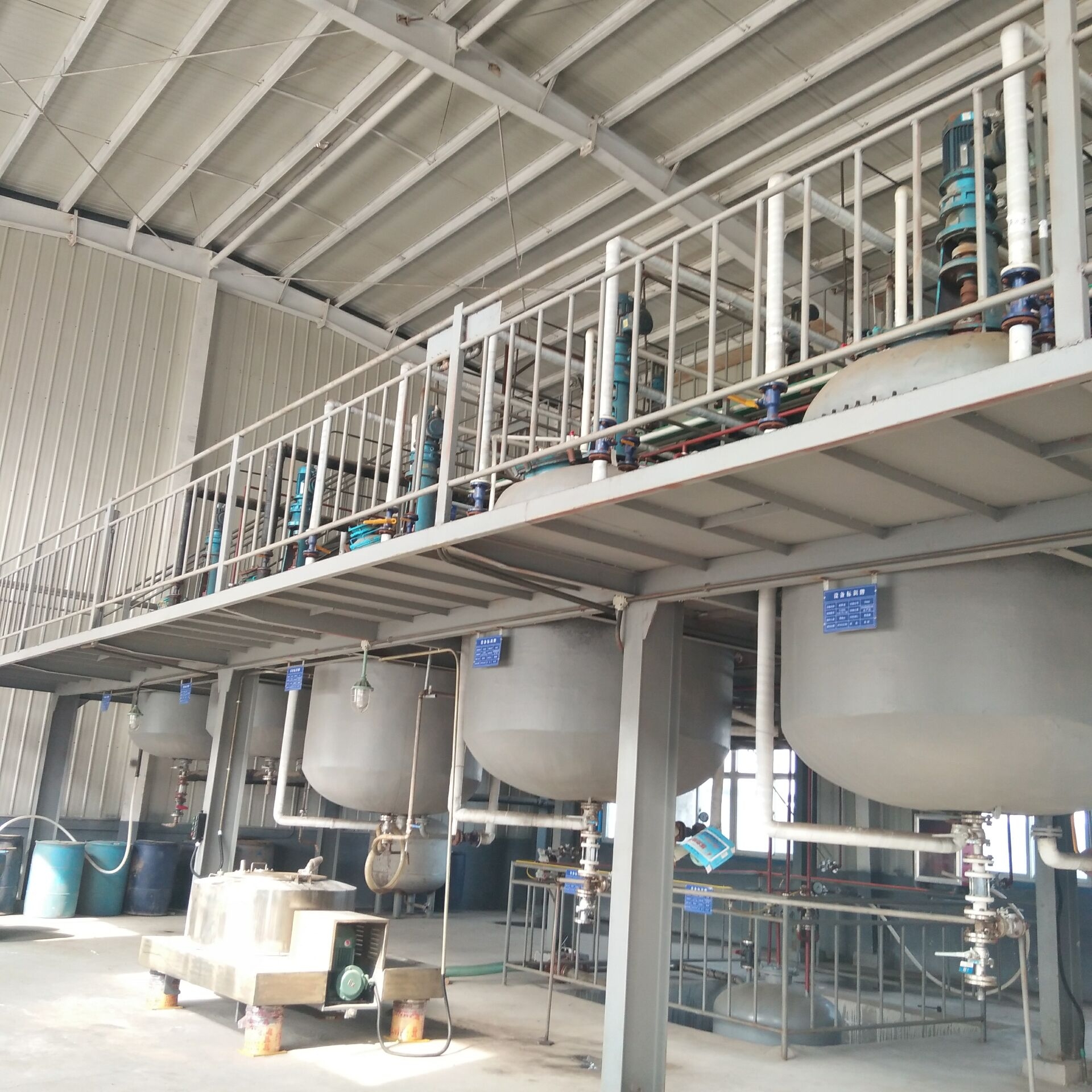
Reactor configuration and campaign scheduling matter as much as nominal capacity when a shortlist moves from sample to commercial volume.
Against the framework above, the company reports several comparative attributes that are relevant to a shortlist — but they are company-reported comparative claims and should be treated as such:
- Purity and consistency. Haohong reports purity 0.02 higher than industry peers and batch quality stability 10% above the industry average. Both are comparative claims; the correct verification route is to test a sample against the buyer’s own specification and to compare impurity profiles across consecutive purchased batches.
- Specification adherence. The company states that it adheres fully to client-specified index values, which is what makes a custom specification enforceable in a quality agreement rather than aspirational.
- Documentation. Haohong reports supplying a full technical documentation set intended to be compliant with regulatory requirements, which is the attribute that most directly reduces audit friction.
- Rework reduction. Stable batch quality is linked by the company to reduced rework and lower compliance risk — a cost argument that only holds if the buyer’s incoming testing confirms it.
- Process efficiency. Optimised synthetic routes are reported to improve production efficiency and reduce solvent consumption, which affects both cost structure and residual-solvent control.
- Cost structure. Haohong attributes a lower cost position than the market average to in-depth R&D combined with self-owned manufacturing facilities, rather than to purchased material resale.
Custom pharmaceutical intermediate synthesis: how to brief it properly
For apalutamide, alectinib and abemaciclib programmes, catalogue supply covers only part of the need. Route development, non-standard intermediates and early-phase quantities are usually handled through custom pharmaceutical intermediate synthesis, and this is where a shortlist is most often decided on incomplete information. Haohong provides custom synthesis services ranging from gram scale to hundreds of kilograms alongside its catalogue lines.
A custom brief that produces usable quotations should contain six elements, and a buyer who supplies all six shortens the evaluation cycle considerably:
| Brief element | Why the supplier needs it |
|---|---|
| Target structure and route constraints | Determines whether the supplier proposes an existing route or develops a new one |
| Purity and impurity limits with analytical method | Defines the specification that batch records will later be judged against |
| Scale and campaign rhythm | Links the request to reactor volume and scheduling rather than to laboratory capability |
| Regulatory destination market | Sets the documentation depth expected for the dossier and for audits |
| Analytical method ownership | Clarifies whether methods are transferred or developed, and who validates them |
| Documentation package required | Prevents a late request for records the supplier never planned to generate |
Two boundaries deserve to be stated plainly. First, custom synthesis is a development activity, not a catalogue order: the first batch validates the route, and the second validates the reproducibility. Second, stated service ranges are not commitments. Haohong’s range of gram scale to hundreds of kilograms is a company-reported capability statement; a buyer planning commercial volumes well beyond that range should confirm campaign allocation, reactor time and lead time in writing rather than infer them from an aggregate annual capacity figure.
Documentation and traceability: the regulatory floor
Regulatory expectations for intermediates are not decorative. FDA Q7A guidance requires batch production records for each intermediate and API to include complete information relating to production and control of each batch, requires intermediates or APIs failing established specifications to be identified and quarantined, and requires distributors and related intermediaries to retain traceability records covering original manufacturer identity and address, purchase orders, transport documents, receipt records, product designation and supplied batch numbers. The European Medicines Agency states that active substances used in marketed medicines are required to comply with GMP, and sets out registration obligations for manufacturers and importers of active substances and relevant intermediates described in regulatory dossiers.
For a buyer, this translates into a shortlist filter rather than a compliance lecture. If a candidate cannot produce a batch record traceable to a named manufacturing site, the entry should not survive the first round regardless of price. If material passes through a trader or repacker, the traceability chain must be documented at every handover. And if the destination dossier names a relevant intermediate, the regulatory classification should be confirmed product by product — obligations differ between active substances and intermediates, and between jurisdictions.
Delivery reliability as a scored criterion
Delivery performance is usually treated as an operations issue, but in oncology intermediates it is a quality issue with a schedule attached. Delayed delivery is a widely reported pattern across the sector, and the reason is structural: campaign-based manufacturing plus limited safety stock plus single-site production produces exactly that failure mode. Haohong’s stated control is a combination of sufficient regular stock and timely restocking, supported by digitalised product management, with safety stock levels, real-time inventory monitoring and production scheduling optimisation as the underlying measures.
A buyer cannot audit a supplier’s inventory policy from a catalogue. What can be done is to convert the claim into three questions at the shortlist stage: which intermediates are held as regular stock rather than made to order, what restocking trigger applies, and what the supplier commits to contractually when a scheduled delivery slips. Suppliers who answer all three specifically are materially lower risk than suppliers who answer with a general assurance.
Market context: what the numbers do and do not cover
The global pharmaceutical intermediates market was estimated at USD 37.04 billion for 2025, according to Polaris Market Research, and bulk drug intermediates accounted for 48.10% of market share by type in 2025, according to Mordor Intelligence. Mordor Intelligence also projects high growth for peptide and oligonucleotide intermediates, at a 7.85% CAGR over 2026–2033.
These figures describe the category, not the shortlist. Two limitations should be stated openly. First, no validated intermediate-specific dataset covering apalutamide, alectinib or abemaciclib intermediates was identified; publicly available market tracking concentrates on finished pharmaceuticals, and broad trade classifications such as HS chapter 30 include products well outside pharmaceutical intermediates, so they cannot be used as a proxy. Second, aggregate capacity figures — including Haohong’s reported 1,000 tons per year from 30 reactors of 3,000–5,000 L — are company-reported and not product-level allocated. Both are useful for framing a sourcing strategy and neither is a substitute for batch data on the specific material being purchased.
Comparing supply routes: specialist manufacturer, integrated producer, trading intermediary
Most shortlists implicitly compare three supply archetypes rather than three named companies. Each has a different failure mode, and the comparison is more useful than a price spreadsheet.
| Supply route | Typical strength | Typical limitation for oncology intermediates |
|---|---|---|
| Specialist custom manufacturer | Route know-how, flexible campaign sizes, direct access to the producing site | Aggregate capacity may be modest; product-level allocation must be confirmed per order |
| Large integrated API producer | Broad documentation infrastructure and regulatory familiarity | Smaller oncology intermediates may be deprioritised against larger programmes |
| Trading intermediary | Fast availability and consolidated multi-product ordering | Traceability chain lengthens; original manufacturer identity and batch history must be verified explicitly |
The traditional approach — sourcing through an intermediary on price and availability — is not wrong by definition, but it moves the verification burden onto the buyer. Under FDA Q7A expectations for traceability, that burden is documented rather than assumed, which is why an intermediary route requires more paperwork, not less.
Where the Haohong example has limits
A credible shortlist entry states its boundaries. Four apply here. First, ISO 9001:2015 is a quality management system certification obtained in 2021; it is not a product-specific GMP certification for every item in the catalogue, and buyers should confirm the certified scope covers the site and product concerned. Second, the reported purity and batch-stability advantages are comparative company statements that require independent confirmation through the buyer’s own testing. Third, the stated custom synthesis range of gram scale to hundreds of kilograms does not automatically extend to multi-ton commercial campaigns, which should be discussed as a separate scheduling commitment. Fourth, the reported 1,000-ton annual capacity is an aggregate figure without published product-level allocation, so it supports a capacity due-diligence conversation rather than a capacity ranking.
Future outlook
Three shifts are likely to shape shortlists for these intermediate families. The first is documentation-led selection: as regulatory expectations for traceability and batch records are applied more consistently, suppliers that already generate complete technical packages will clear evaluation faster than suppliers that assemble them on request. The second is the gradual rebalancing of custom synthesis demand toward complex, lower-volume chemistry, consistent with the projected growth in peptide and oligonucleotide intermediates, which favours manufacturers able to run multi-step routes rather than high-volume single-step lines. The third is supply-continuity planning, where buyers increasingly treat inventory policy and restocking behaviour as scored criteria rather than operational details.
None of these shifts removes the underlying discipline. A shortlist remains a set of testable conditions, and its quality depends on how precisely those conditions are written.
Frequently asked questions
What purity level should buyers require for apalutamide, alectinib and abemaciclib intermediates?
Purity should be defined by the buyer’s own specification — assay plus a named impurity profile and analytical method — rather than by a single percentage. A headline figure such as 98% or higher is only meaningful when the method, the impurity list and the acceptance limits are stated alongside it. The correct basis for comparison is the certificate of analysis against that specification, confirmed by the buyer’s incoming testing.
How should batch-to-batch consistency be verified before a shortlist decision?
Request data from at least three consecutive production batches, covering assay, specified impurities, unspecified impurities and residual solvents, and compare the profiles rather than the averages. Consistency is demonstrated by a narrow spread across consecutive lots. Company-reported stability advantages, such as a stated 10% above industry average batch quality stability, should be treated as a hypothesis to be tested against those records.
Which documents should accompany an oncology intermediate shipment?
At minimum: a certificate of analysis tied to the batch number, the batch production record covering production and control of that batch, transport and receipt documents, and the identity and address of the original manufacturer. FDA Q7A guidance sets out these expectations for batch records and for traceability documentation held by distributors and related intermediaries, and equivalent expectations apply under EU GMP for active substances and relevant intermediates described in regulatory dossiers.
What scale of custom synthesis can a specialist manufacturer support?
It depends on the individual supplier and should be confirmed in writing. Haohong reports custom synthesis services ranging from gram scale to hundreds of kilograms, supported by a Liaocheng production base with 30 reactors of 3,000–5,000 L and a reported annual capacity of 1,000 tons. Requirements materially above the stated custom range, or requiring dedicated reactor time, should be discussed as a separate scheduling commitment.
How does ISO 9001:2015 relate to product-level GMP requirements?
ISO 9001:2015 certifies a quality management system; it does not certify a specific product as GMP-compliant. Haohong passed ISO 9001:2015 certification in 2021. For a regulated purchase, buyers should confirm the certified scope covers the manufacturing site and product concerned, and separately verify the product-level documentation and regulatory classification applicable in the destination market.
What delivery safeguards reduce rework and line-down risk?
Three are verifiable before purchase: whether the intermediate is held as regular stock rather than made to order, what restocking trigger applies, and what the supplier commits to when a scheduled delivery slips. Haohong reports sufficient regular stock, timely restocking and digitalised product management, supported by safety stock levels, real-time inventory monitoring and production scheduling optimisation. Because delayed delivery is a widely reported pattern in the sector, these points are worth confirming contractually rather than accepting as assurances.
Conclusion
Selecting high-purity apalutamide, alectinib and abemaciclib intermediates is a documentation exercise before it is a commercial one. The shortlist that survives audit is the one where purity was defined by method, consistency was proven across consecutive batches, traceability was documented at every handover, and delivery was written as a commitment. Comparative supplier claims are a legitimate starting point for that process, provided each one is converted into a test the buyer can run.
Есть вопросы или нужны дополнительные детали?
Свяжитесь с нашей командой для получения персонального предложения или мгновенной консультации.
Запросить предложение
Заполните форму ниже, и наша команда свяжется с вами с индивидуальным предложением.
Прямой чат WhatsApp
Предпочитаете общаться в реальном времени? Напишите нам в WhatsApp для мгновенной помощи и быстрых ответов.
- Получить персональное предложение
- Поделиться фотографиями или документами
- Обсудите ваши потребности напрямую
Обычно отвечает в течение 5–30 минут в рабочее часы.