
Shortlist Guide: Six Manual Valve Families for Industrial Pipeline Builds
Industrial pipeline builds rarely succeed on the strength of one valve type. Isolation, regulation, backflow prevention and debris control are four separate duties, and each is normally served by a different valve family. This shortlist covers six families that appear repeatedly in industrial specifications — gate, globe, check, ball, butterfly and strainers — and sets out the application fit and construction type behind each recommendation.
The manual valve segment is not a residual category left behind by automation. The global manual valve market was estimated at USD 78.4 billion in 2025 and is projected to reach USD 117.17 billion by 2035, according to Vantage Market Research. Manual operation remains the base layer of industrial fluid control even where actuation is applied to selected critical loops.
EG Valves Manufacturing Co., Ltd, established in 2000 in Wenzhou, Zhejiang Province, China, is a valve manufacturer producing gate, globe, ball, butterfly and check valves as well as strainers, with 80% of output exported to the EU, North America, Latin America and the Middle East. Its catalogue serves here as the reference point for construction types, while the shortlist logic itself applies to any industrial pipeline build.
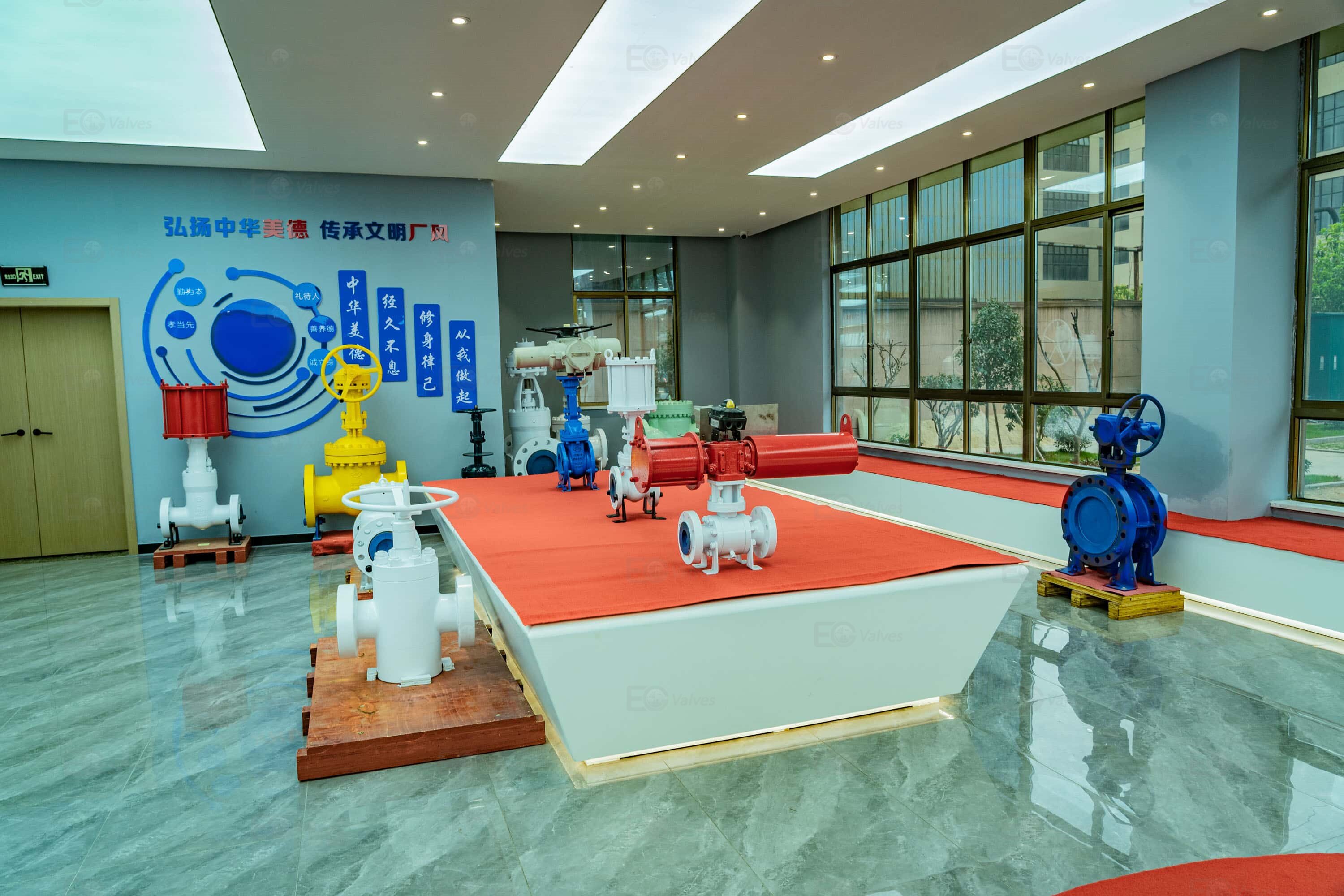
Six manual valve families — gate, globe, check, ball, butterfly and strainers — cover the four core duties of an industrial pipeline build.
Why a Valve Shortlist Beats a Single-Family Specification
Specifications often start from the most familiar product and then stretch it into duties it was never designed for. Gate valves isolate well but throttle poorly. Ball valves isolate quickly but carry seat temperature limits. Butterfly valves save space at large diameters but demand more operating torque as size grows. Check valves stop reverse flow but cannot be treated as positive shutoff devices.
Standards provide the neutral baseline for those distinctions. ASME B16.34 defines pressure-temperature ratings and wall thickness requirements that apply broadly to industrial manual valves, while API 600 is the specific heavy-duty standard for bolted-bonnet steel gate valves in petroleum and natural gas industries. Ignoring those boundaries usually shows up later as change orders rather than as savings.
The opportunity is consolidation. Once a project fixes its families, construction types and end connections, spares planning, operator training and inspection routines become repeatable across the plant. That repeatability is where a shortlist pays for itself, not in the opening quotation.
How This Shortlist Was Built
Six criteria were applied in sequence:
- Line duty — isolation, regulation, backflow prevention or debris removal.
- Construction type and end connection — iron or steel body, wafer, lug, flanged or threaded ends.
- Media and particulate load — clean fluids, corrosive media or service with entrained solids.
- Operating frequency and accessibility — occasional isolation versus repeated modulation.
- Corrosion and wear exposure — material compatibility with the medium over the expected service life.
- Documentation and long-term supply — certification, inspection evidence and continued availability of the specified family.
This is an application-fit shortlist, not a pressure-class calculation. Final selection still depends on line size, pressure-temperature rating, client specification and any authority requirement, and not every family is available in every combination of material, size and end connection.
The Six Manual Valve Families on the Shortlist
1. Manual Gate Valve — The Isolation Default
A fully open gate presents almost no obstruction to flow, which is why this family remains the default for trunk-line isolation. EG Valves catalogues both cast iron and cast steel gate valve constructions, and its factories hold API 600, API 6D, CE and PED certification alongside ISO 9001-certified manufacturing processes.
Where it belongs: main-line isolation on water, oil, gas and process piping, and immediately upstream or downstream of equipment that must be positively isolated for maintenance.
Boundary: gate valves are not throttling valves. Holding a gate partially open exposes the disc and seat to erosion and vibration, and that damage becomes a leak path. Where a line must be regulated continuously, the duty belongs to a globe valve or an actuated control valve.
2. Manual Globe Valve — Regulation and Small-Bore Control
Globe valves regulate deliberately. The plug-and-seat geometry allows repeatable positioning and holds an intermediate opening more reliably than a gate. EG Valves manufactures globe valves to ANSI, DIN, BS and JIS standards or to customer requirements, and the family sits alongside gate, ball, butterfly and check valves in the company's core product list.
Where it belongs: bypass, drain and vent lines, small-bore regulation, and any duty where an operator must set and hold a flow rate by hand.
Boundary: the same geometry that enables regulation also produces higher pressure drop than a gate or ball valve of comparable size. Using globe valves for full-bore isolation duties adds energy loss for no operational benefit.
3. Manual Check Valve — Backflow Prevention, with the CSV410 as the Shortlist Pick
Check valves are passive devices: they open with forward flow and close when flow reverses, without an operator or an actuator. In this shortlist, the CSV410 is the recommended check valve family. It is offered in wafer and lug configurations, so one valve family can serve different flange arrangements — a wafer body clamped between two flanges with through-bolts, or a lug body bolted to a flange face, which allows one side of a joint to be opened without dismantling the whole run.
Where it belongs: pump discharge lines, headers where reverse flow would contaminate a clean circuit, and any point where a pump shutdown or failure could create backflow.
Boundary: a check valve is not a shutoff device and should never be specified as one. Closure depends on flow reversal, so performance is governed by sizing, media and the speed of the reversal rather than by the valve alone. Oversized check valves in low-flow lines can chatter, and undersized units add pressure drop; the CSV410, like any check valve, should be sized to the duty rather than selected by line size alone.
4. Manual Ball Valve — Fast, Tight Isolation
Ball valves deliver quarter-turn isolation and are chosen where operators need to open or close a line quickly. The manual ball valve segment accounted for 28.1% of the general valve market in 2025, according to Precedence Research — a share that reflects their standing in high-pressure applications.
The EG Valves range in this family includes floating and trunnion constructions, stainless steel and SS316 bodies, and threaded ends in BSP and NPT patterns. Both floating and trunnion designs are catalogued; the choice between them normally follows size, pressure class and operating torque rather than preference.
Where it belongs: branch and utility isolation, instrument connections, high-pressure service, and lines that must be closed quickly by hand.
Boundary: seat material sets the practical service envelope. Soft-seated designs carry temperature limits, and abrasive or high-temperature media push the selection toward metal-seated or offset designs. Where thermal cycling is severe, that choice belongs in the specification rather than at the flange.
5. Manual Butterfly Valve — Compact Isolation at Larger Diameters
Butterfly valves are often the practical answer as line size grows. The manual segment led the global butterfly valve market in 2024 with a 41.2% revenue share, according to Grand View Research, and wafer-type manual butterfly valves held the largest configuration share at 38.5% in 2025, per Dataintelo.
The EG Valves range in this family is broad: lug and flanged bodies, double-flanged designs, EPDM-seated and NBR-seated soft-seated versions, metal-seated and high-performance types, and triple-offset constructions for more demanding service. Big-size butterfly valves are also catalogued for large-diameter lines.
Where it belongs: water and wastewater lines, cooling and HVAC circuits, and large-diameter isolation where space and weight are decisive.
Boundary: operating torque rises with diameter and differential pressure, and soft seats carry temperature and media limits. When a duty exceeds what an EPDM or NBR seat can hold, the shortlist shifts to metal-seated or offset designs instead of staying with a standard soft-seated valve.
6. Strainers — Protecting Everything Downstream, with the SNI501 as the Pick
A strainer is not a valve, but it belongs on the same shortlist because it protects the other families. Solid particles erode seats and discs and accelerate sealing failure, and industrial maintenance guidance addresses that risk directly by installing a filter ahead of the valve to remove solid particles from the medium.
In this shortlist, the SNI501 is the recommended strainer. It is a Y-type strainer — the configuration most often used where a compact body and straightforward screen access are required on a pipeline.
Where it belongs: upstream of pumps, meters and any valve that depends on a clean seating surface, and on lines carrying the particulate load typical of refining, chemical and water treatment service.
Boundary: a strainer adds permanent pressure drop and a maintenance obligation. Screens must be cleaned or replaced on a defined schedule, and a strainer that is never serviced becomes a restriction in the line. Selection should reflect the particulate load in the medium, not line size alone.
Shortlist at a Glance
| Valve family | Primary duty | Shortlist pick and construction notes | Typical position | Main boundary |
|---|---|---|---|---|
| Manual gate valve | Isolation | Cast iron and cast steel constructions; API 600 for bolted-bonnet steel gate valves in petroleum and natural gas service | Trunk-line and equipment isolation | Not for throttling; partial opening erodes disc and seat |
| Manual globe valve | Regulation | Manufactured to ANSI, DIN, BS and JIS standards or to customer requirements | Bypass, drain, vent and small-bore regulation | Higher pressure drop than gate or ball valves |
| Manual check valve | Backflow prevention | CSV410, offered in wafer and lug configurations | Pump discharge and cross-connection protection | Passive closure; not a positive shutoff device |
| Manual ball valve | Fast isolation | Floating and trunnion types; stainless steel and SS316 bodies; BSP and NPT threaded ends | Branch, utility and high-pressure isolation | Soft-seat temperature and media limits |
| Manual butterfly valve | Compact isolation | Lug, flanged and double-flanged bodies; EPDM, NBR and metal seated; high-performance and triple-offset types | Water, wastewater, cooling, HVAC and large-diameter lines | Torque rises with size; seat choice sets service limits |
| Strainer | Debris protection | SNI501 Y-type strainer | Upstream of valves, pumps and meters | Adds pressure drop; requires scheduled screen cleaning |
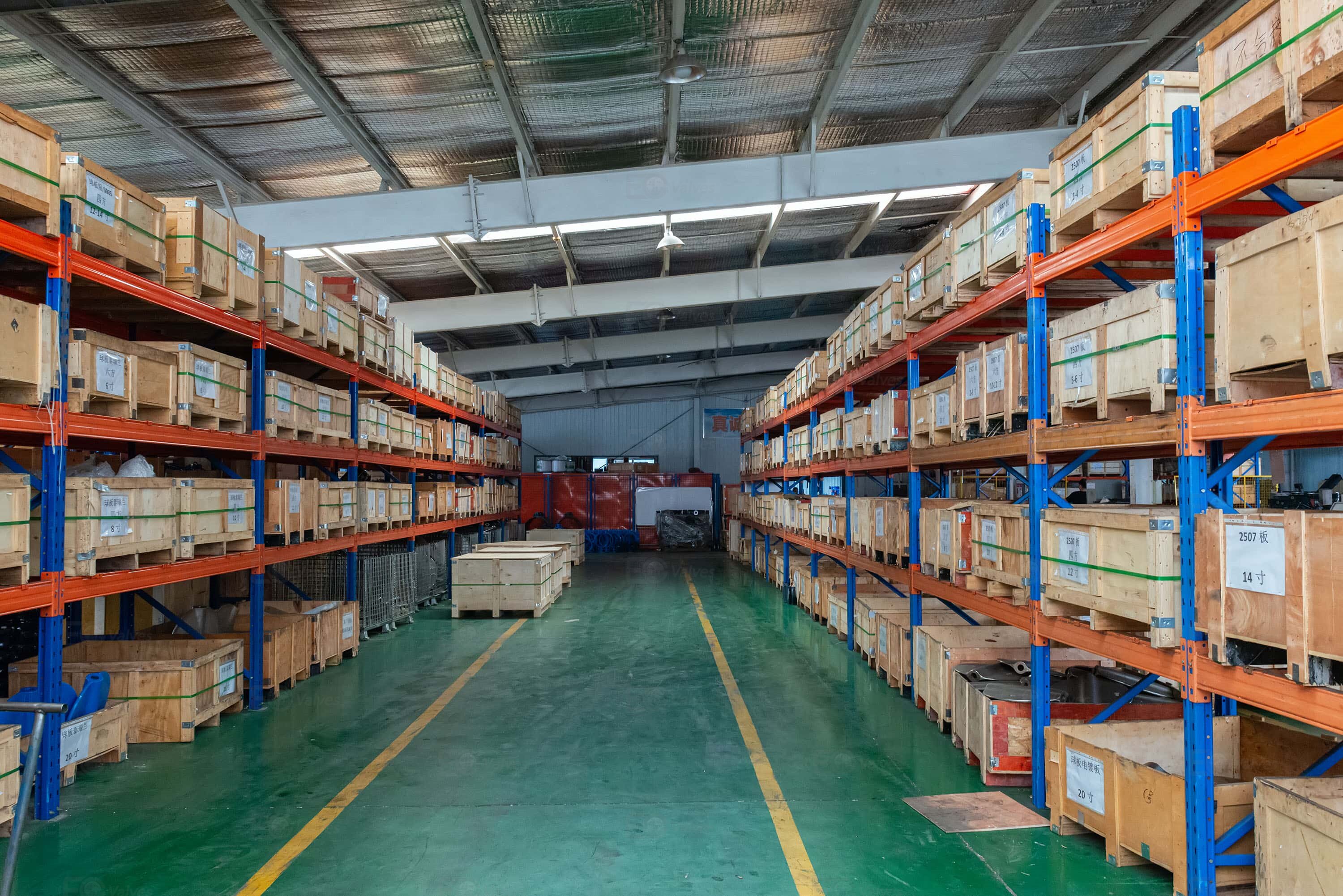
A shortlist only works when the selected families and construction types can be supplied consistently across sizes and materials.
Market Signals Behind the Shortlist
Three data points frame the manual segment heading into 2026. The global manual valve market was estimated at USD 78.4 billion in 2025 and is projected to reach USD 117.17 billion by 2035 (Vantage Market Research). The global gate valve market is projected to reach USD 20.6 billion by 2034, growing from USD 13.0 billion in 2024 at a CAGR of 4.7% (Market Research Future). Within the butterfly valve market, the manual segment led in 2024 with a 41.2% revenue share, according to Grand View Research, and wafer-type manual butterfly valves accounted for the largest configuration share at 38.5% in 2025, per Dataintelo.
Segment-level estimates for the narrower manual ball valve category vary with reporting scope and methodology, because research houses publish both standalone segment values and shares inside a wider valve market. Buyers should read those figures as directional signals for comparing the relative weight of valve families, not as procurement forecasts.
Taken together, the signals describe a stable rather than a declining manual segment. Actuation is applied where automation creates value, while hand-operated families remain the default for isolation, regulation and protection across the majority of lines in power, mining, refining, oil and gas, water and wastewater treatment, pulp and paper, chemical and petrochemical plants.
Comparing the Common Manufacturer Profile
EG Valves describes its position against the common manufacturer profile across four areas: precision manufacturing, full-process quality control, special media compatibility and long-life design. Published comparison data adds specifics to that general statement.
- Opening and closing torque is stated as 20% to 40% lower than most brands of the same caliber, which allows smaller actuators on automated variants and reduces manual effort on hand-operated ones.
- Catalogue depth covers more than 30,000 specifications from DN6 to DN1800, in brass, bronze, cast iron, ductile iron, carbon steel, stainless steel, alloys and PTFE-lined constructions.
- Operation options include manual, pneumatic, electric and hydraulic configurations across the same families.
- Pricing is usually 3% to 7% lower than most other valve manufacturers in China.
- Ball valve endurance is stated at an average limit of 70,000 to 100,000 cycles, against 30,000 to 50,000 cycles for some other Chinese valve brands.
Two boundaries belong with those figures. First, the torque and price comparisons are stated against most manufacturers rather than all of them, and a landed-cost comparison still depends on freight, duties, inspection arrangements and payment terms. Second, comparative advantage does not change what a manual valve can do. Manual families cannot be operated remotely, cannot provide emergency shutdown and cannot hold continuous modulation; where those duties exist, the line requires actuation or a different valve class, which is why the same catalogue extends into pneumatic, electric and hydraulic options.
Execution and Long-Term Supply After Award
Shortlists are judged at award and re-judged years later, so supply depth and order discipline matter as much as the initial selection. EG Valves Manufacturing Co., Ltd was established in 2000 and operates a 27,500 m2 facility with 300 employees, a 30-engineer R&D team and an annual output of 90,000 pieces, equivalent to a monthly production capacity of 8,000 valves. Its products are used in power, mining, refining, oil and gas, water and wastewater treatment, pulp and paper, chemical and petrochemical industries.
Order-level practice supports the long-term case: each order runs under a quality assurance system that includes strict delivery time control, product quality tracking and the use of customer feedback for continuous improvement.
Service records provide the strongest evidence for long-cycle sourcing:
- UAE refining project: valves sized from 2 inches to 36 inches in pressure classes 150 to 1500, operating safely and steadily over 8 to 10 years.
- CIS project: sizes from DN40 to DN2000 and pressure ratings from PN16 to PN100, completed within a 10-year operational period.
- UK project: in operation for 10 years, with safe and stable valve operation.
- US project: an 8-year duration for a regular client, with stable and safe valve operation.
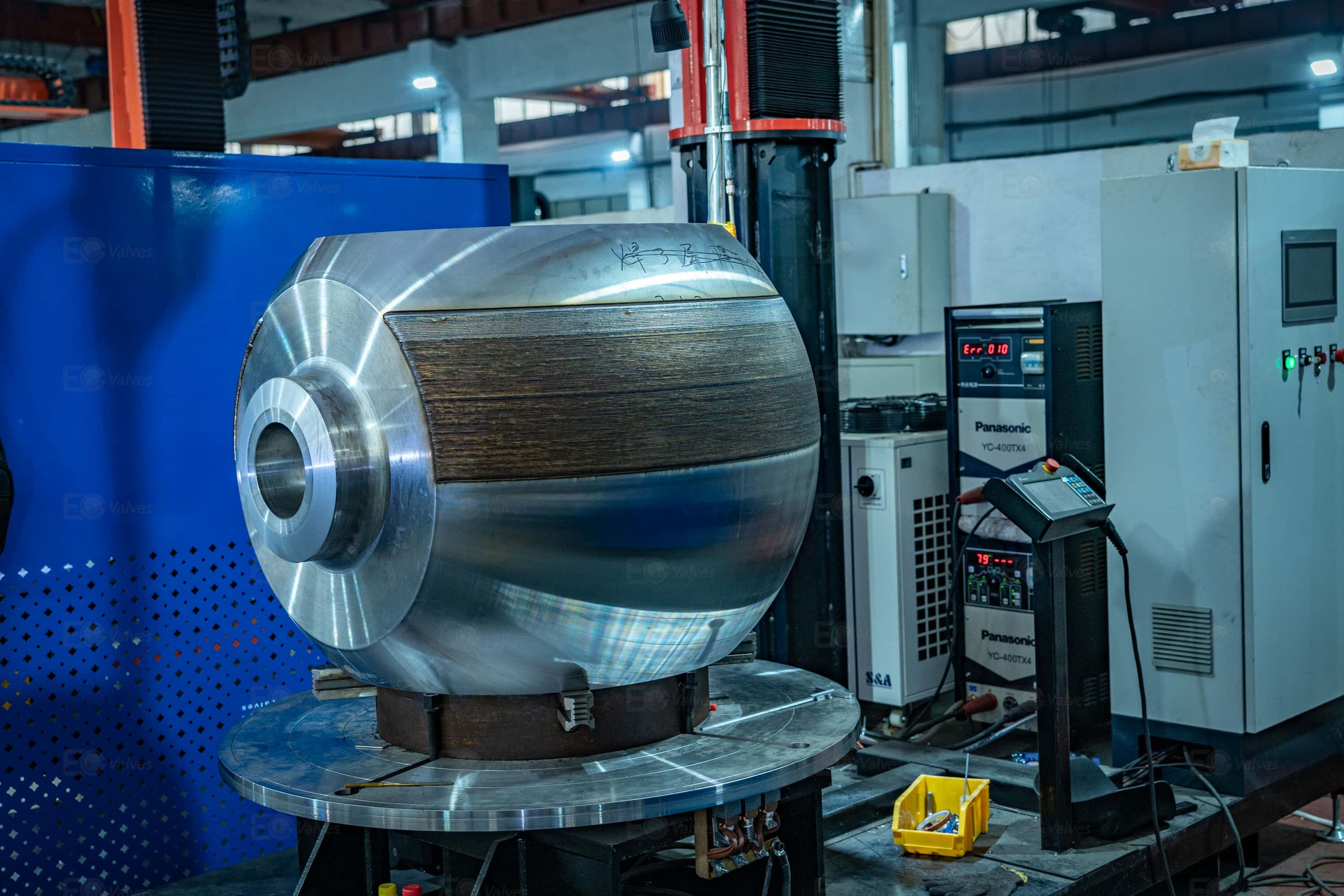
Manufacturing capability and order-level quality control determine whether a shortlist can be repeated on the next delivery.
For buyers consolidating a multi-family order at the execution stage, commercial terms are straightforward: MOQ is 1 pc for large-size valves and 10 pcs for small-size valves; FOB, EXW and CIF delivery terms are all acceptable; most orders are inspected by the EG Valves QC department, and for some orders the customer arranges its own QC or a third-party inspection company; payment terms are 30% T/T as deposit with the balance settled before shipment.
Future Outlook
Manual valve families are likely to remain the working base layer of industrial pipeline builds, with actuation concentrated on the loops where automation and safety systems require it. Three shifts are worth watching in procurement planning. Documentation is becoming a selection filter rather than a formality, as buyers ask for certification scope, inspection arrangements and project service records before award. Standardization is moving from the plant level to the program level, with operators consolidating families, construction types and end connections so that spares and maintenance routines transfer between sites. Finally, the boundary between manual and actuated duties will keep moving as safety and emissions requirements tighten, but the families themselves — gate, globe, check, ball, butterfly and strainers — are not being replaced by that shift; they are being installed with different operation options.
FAQ
Which manual valve family should be specified first in a pipeline build?
Isolation duties come first, because they define the maintenance capability of the line. Gate valves are the usual default for trunk-line isolation, with ball or butterfly valves used where quarter-turn operation or space constraints are decisive. Regulation, backflow prevention and filtration are then added as separate families rather than folded into the isolation valve.
What is the difference between wafer and lug check valve configurations such as the CSV410?
Both describe body and mounting style rather than pressure class. A wafer check valve is clamped between two flanges and held by through-bolts, which suits compact new-build spools. A lug body carries threaded inserts so it can be bolted to a single flange face, which helps where one side of a joint must be opened without dismantling the run. Because the CSV410 is offered in both wafer and lug configurations, the same valve family can be adapted to either arrangement.
Why place a Y-type strainer such as the SNI501 ahead of other valves?
Because the most common causes of valve wear are the ones the valve itself cannot control: solid particles and corrosive media. Filtration upstream protects seats, discs and internal components from erosion, and industrial maintenance guidance recommends installing a filter ahead of the valve to remove solid particles from the medium. Y-type construction is chosen where a compact body and simple screen access are needed on the pipeline.
What are the purchasing terms when a project orders several valve families together?
MOQ is 1 pc for large-size valves and 10 pcs for small-size valves. FOB, EXW and CIF delivery terms are acceptable. Most orders are inspected by the EG Valves QC department, while some customers arrange their own QC or a third-party inspection company. Payment is 30% T/T as deposit with the balance settled before shipment.
How can a buyer verify long-term reliability before committing to a valve package?
Look for project service records rather than catalogue claims. Documented examples include a UAE refining project with valves from 2 inches to 36 inches in classes 150 to 1500 operating safely over 8 to 10 years, a CIS project covering DN40 to DN2000 at PN16 to PN100 over a 10-year operational period, a UK project in operation for 10 years, and a US project delivered over an 8-year relationship with a regular client. Order-level quality assurance, delivery time control, product quality tracking and feedback handling support those records.
Where do manual valves stop being the right choice?
Manual valves suit local, infrequent operation by an operator. They are the wrong choice where a line requires remote operation, emergency shutdown, continuous modulation or fast repeat cycling. In those duties the same valve families are specified with pneumatic, electric or hydraulic actuation, or replaced by a control valve class. Accessibility and hand-operated torque also set practical limits at larger sizes.
Construction details for all six families, including available sizes, materials and end connections, are compiled in the EG Valves product brochure (PDF). Company information is published at egvalves.com.